🏠 Real Estate Investors — need your input on structuring a deal!
Investor · Irvine, CA · Member since 2009 · 259 posts · 183 votes
I came across a property with some interesting numbers:
📍 Asking price: $330k
📍 Market value: ~$440k
📍 Needs about $65k in repairs (no floors in most rooms, so it won't qualify for conventional financing as-is)
Here's what I'm thinking:
Instead of buying it in its current condition — which would require a huge down payment AND renovation capital upfront — I want to negotiate an OPTION with the seller. The option would lock in a purchase price of $300k within a set timeframe. During that time, I'd complete the $65k renovation, and by the time the option is exercised, the property would qualify for conventional financing.
My question is around the financing structure at the time of purchase:
I want to make sure I can recover the $65k I put into renovations at or around closing. What are the cleanest and most lender-compliant ways to structure this so that my renovation investment is recognized — whether through the appraised value, a cash-out refi after purchase, or some other mechanism?
Have any of you done something similar? How did you structure it? What worked, what didn't?
Drop your experience below 👇 I'd love to hear how seasoned investors have handled this!
The option strategy makes a lot of sense here given the spread you're working with. $300K option price against a $440K ARV with $65K in rehab means you're looking at roughly $75K in built equity after the work is done — that's a solid margin of safety.
For recovering the $65K, the cleanest path in my experience is a delayed financing exception if you can close the option and purchase within 6 months. Basically you buy at $300K, and then immediately do a cash-out refi based on the new appraised value (which should come in around $440K post-rehab). At 75% LTV on $440K, you'd qualify for a $330K loan — that covers your $300K purchase price and $30K of the rehab. The remaining $35K you'd need to float from savings or a short-term line of credit until the refi closes.
The other route is finding a lender who does renovation loans or a portfolio lender comfortable with the option structure. Some local banks and credit unions will underwrite based on as-completed value rather than as-is, which could let you finance both the acquisition and rehab in one shot. That said, the option agreement itself can make some lenders nervous — they want to see a standard purchase contract, not an option. Worth having that conversation with your lender early before you lock in the option terms.
One thing I'd flag — make sure your option fee is reasonable relative to the deal. Sellers sometimes want a big non-refundable deposit to grant an option, and if the rehab goes sideways or takes longer than expected, that's money at risk. What's the timeline you're thinking for the renovation?
The option strategy makes a lot of sense here given the spread you're working with. $300K option price against a $440K ARV with $65K in rehab means you're looking at roughly $75K in built equity after the work is done — that's a solid margin of safety.
For recovering the $65K, the cleanest path in my experience is a delayed financing exception if you can close the option and purchase within 6 months. Basically you buy at $300K, and then immediately do a cash-out refi based on the new appraised value (which should come in around $440K post-rehab). At 75% LTV on $440K, you'd qualify for a $330K loan — that covers your $300K purchase price and $30K of the rehab. The remaining $35K you'd need to float from savings or a short-term line of credit until the refi closes.
The other route is finding a lender who does renovation loans or a portfolio lender comfortable with the option structure. Some local banks and credit unions will underwrite based on as-completed value rather than as-is, which could let you finance both the acquisition and rehab in one shot. That said, the option agreement itself can make some lenders nervous — they want to see a standard purchase contract, not an option. Worth having that conversation with your lender early before you lock in the option terms.
One thing I'd flag — make sure your option fee is reasonable relative to the deal. Sellers sometimes want a big non-refundable deposit to grant an option, and if the rehab goes sideways or takes longer than expected, that's money at risk. What's the timeline you're thinking for the renovation?
I came across a property with some interesting numbers:
📍 Asking price: $330k
📍 Market value: ~$440k
📍 Needs about $65k in repairs (no floors in most rooms, so it won't qualify for conventional financing as-is)
Here's what I'm thinking:
Instead of buying it in its current condition — which would require a huge down payment AND renovation capital upfront — I want to negotiate an OPTION with the seller. The option would lock in a purchase price of $300k within a set timeframe. During that time, I'd complete the $65k renovation, and by the time the option is exercised, the property would qualify for conventional financing.
My question is around the financing structure at the time of purchase:
I want to make sure I can recover the $65k I put into renovations at or around closing. What are the cleanest and most lender-compliant ways to structure this so that my renovation investment is recognized — whether through the appraised value, a cash-out refi after purchase, or some other mechanism?
Have any of you done something similar? How did you structure it? What worked, what didn't?
Drop your experience below 👇 I'd love to hear how seasoned investors have handled this!
Hey Dani, getting creative with an Option contract is a fantastic instinct to minimize upfront capital, and locking in a $300k purchase price on a $440k ARV is a really solid spread! However, the hard truth is that pouring $65k of your own cash into a property you don't legally own is incredibly dangerous; if the seller gets hit with a tax lien, files bankruptcy, or simply refuses to close, your renovation money is entirely trapped in their asset. Furthermore, conventional lenders base your loan-to-value ratio on the lesser of the purchase price or the appraised value, meaning you cannot just arbitrarily add your $65k rehab cost to the standard purchase mortgage to get cash back at the closing table. The cleanest, most lender-compliant way to execute this without exposing yourself to massive legal risk is to either use a conventional renovation loan (like a Fannie Mae HomeStyle or FHA 203k) that funds both the purchase and the rehab in one single closing based on the future value, or to structure this as a formal "Novation Agreement" where you partner with the seller, legally record your financial interest on the title, and split the final retail profits.
I hope that helps!
Interesting idea. The main thing I’d look closely at is the lender side of it.
Most conventional lenders won’t let you immediately pull cash out based on the new value right at closing. They usually require some seasoning period (often 6–12 months) before you can do a cash-out refinance using the improved appraisal. So recovering the $65k at the purchase closing might be harder than it looks.
The other piece is control. If you’re putting $65k into renovations before actually owning the property, you’d want the option agreement written very tightly so the seller can’t back out after the value has been created.
The concept itself isn’t crazy though — people do versions of this with seller financing, novations, or delayed financing, depending on the lender.
If the seller is motivated, sometimes seller financing during the renovation period can simplify the whole structure. I just would never do contract for deed. Too risky in my book.
Creative approach, but the piece that usually determines whether this works is control of the asset during the renovation period.
If you’re spending $65K improving the property before exercising the option, the value you create technically sits on the seller’s balance sheet until you close. That’s where most of the risk lives — not the financing.
A lot of investors solve that by structuring the agreement so their interest is recorded or by converting the option into something closer to a novation or seller-finance bridge during the renovation period.
The spread looks attractive on paper ($300K vs ~$440K ARV), but the structure matters more than the numbers here.
Curious how cooperative the seller is on the legal side of the agreement.
You can try, but I doubt the seller will agree. They are renting a 400k house to you and will have to watch you take it apart while you are just a renter; probably not going to happen.
Post this on BP: my tenant wants to gut remodel my house, should I let them?
Hi @Dani Beit-Or, nice to meet you here on BP! Here's my thoughts, the challenge you’ll run into is that lenders generally won’t allow you to be reimbursed for improvements you made before you actually own the property. From their perspective, you don’t have title yet, so that $65k is essentially at risk.
There's a couple ways you could handle this. One is to structure it as a true purchase with renovation financing from the start, such as hard money or a bridge loan, then refinance once the property is stabilized and appraises higher. The other approach is to negotiate a deeper discount so that when you close at $300k and the property appraises closer to the $440k value, you already have built-in equity. Then you refinance after closing and pull some of that capital back out.
The option strategy can work, but I’d just be cautious about putting significant renovation dollars into a property you don’t yet own unless it’s very well documented with the seller.
i can't tell whether most of the responses didn't read your numbers, or are AI, or both.
the spread just isn't big enough here. period.
on to the next
i can't tell whether most of the responses didn't read your numbers, or are AI, or both.
the spread just isn't big enough here. period.
on to the next
Haha Nicholas, I had the same thought, this deal is not that great at all when you apply the 70% rule of thumb.
Do you not have a bank that does buy and improve construction loans? Usually most around were I'm at do 80 percent of purchase and 100 percent of "cost" of repairs,
what down payment are you trying to achieve?
you could have someone else buy it and renovate it and sell it to you but you will not get the down payment part of the financing like you want as contractor / owner would want lot of skin in game from you

Solid play on the option—locking in $300k while rehabbing is smart, especially with no floors killing conventional as-is.
Recovering your $65k rehab "cleanly" at exercise/closing is tricky with straight conventional (they base on as-completed appraisal but won't directly reimburse pre-purchase out-of-pocket).
What works best for investors in similar setups:
Straight conventional post-rehab rarely credits your sunk costs directly—appraisal helps loan size, but no auto-reimbursement.
I've seen folks use the option to rehab, then exercise with DSCR financing at improved value—fast (<30 days), keeps personal DTI clean, scales easier.
What's your hold plan (flip or rental)? Got ARV/rent comps? Happy to brainstorm fits—no pitch.
@Dani Beit-Or — That’s an interesting deal structure and the numbers definitely suggest there’s value to capture there. One thing you may want to consider that could simplify the process is using a Fix & Flip loan for the acquisition and renovation rather than trying to structure the improvements before taking ownership.
With a fix & flip loan, many lenders can finance both the purchase and the rehab, which means you wouldn’t have to front the entire $65k renovation budget out of pocket. For example, programs like ours typically allow investors to finance a large portion of the purchase price along with 100% of the rehab budget, depending on the deal and borrower profile. This allows you to close on the property quickly, complete the renovations, and benefit from the higher after-repair value once the work is finished.
Once the renovations are complete, you would have two clear exit strategies:
1. Sell the property (traditional fix & flip)
You capture the equity created through the renovation and sell based on the improved market value.
2. Refinance into a DSCR cash-out loan if you want to hold it as a rental
If you decide to keep the property, you can refinance into a DSCR (Debt Service Coverage Ratio) rental loan. These loans are designed specifically for investors and qualify the property based primarily on rental income rather than personal income. If the property appraises near that $440k value and the rents support the loan, you could potentially pull out a significant portion of your invested capital while turning the property into a long-term rental.
This type of Fix & Flip → DSCR refinance strategy is actually very common for investors doing value-add projects because it allows you to:
Acquire distressed properties that won’t qualify for conventional financing
Finance the renovation
Create appreciation
Then refinance and recycle your capital into the next deal
It keeps the structure clean from a lender standpoint since you own the property before the renovations begin and the value is documented through the post-renovation appraisal.
If you’re comfortable sharing, what market is the property in? Deals with that kind of spread are exactly the type many investors are using this strategy for right now.
I came across a property with some interesting numbers:
📍 Asking price: $330k
📍 Market value: ~$440k
📍 Needs about $65k in repairs (no floors in most rooms, so it won't qualify for conventional financing as-is)
Here's what I'm thinking:
Instead of buying it in its current condition — which would require a huge down payment AND renovation capital upfront — I want to negotiate an OPTION with the seller. The option would lock in a purchase price of $300k within a set timeframe. During that time, I'd complete the $65k renovation, and by the time the option is exercised, the property would qualify for conventional financing.
My question is around the financing structure at the time of purchase:
I want to make sure I can recover the $65k I put into renovations at or around closing. What are the cleanest and most lender-compliant ways to structure this so that my renovation investment is recognized — whether through the appraised value, a cash-out refi after purchase, or some other mechanism?
Have any of you done something similar? How did you structure it? What worked, what didn't?
Drop your experience below 👇 I'd love to hear how seasoned investors have handled this!
The deal math works, but only with the right structure.
The replies warning about renovating property you don't own are correct — but incomplete. An equitable interest via a recorded option gives you standing. Pair it with:
- Recorded memorandum of option — clouds title so the seller can't sell from under you
- Mechanic's lien rights — your $65K in improvements creates a lien position even before closing
- Title insurance endorsement — get the title company to issue an endorsement covering your renovation spend
The financing path:
Skip the delayed financing exception. At $300K purchase + $65K rehab = $365K all-in against $440K ARV, you're at 83% cost-to-value. Cleaner play:
1. Hard money acquisition + rehab loan — one close, one set of points. Borrow 85-90% of cost ($310-328K), bring $37-55K cash
2. Refi to conventional at 6 months — 75% LTV on $440K appraisal = $330K loan, pays off your hard money and recovers most of your cash
3. Net equity position: $110K equity, $37-55K out of pocket
The question nobody asked: What are rents at $440K ARV in that KC submarket? If this is B-class pulling $2,800-3,200/mo, the DSCR works. If it's C-class at $2,200/mo, you're buying a job, not an investment.
The people saying "the spread isn't big enough" are applying the 70% flip rule to a hold strategy. Different math. $110K in forced equity on a $55K cash outlay is a 200% equity return. The question is whether the rental income services the debt — that's where this deal lives or dies.
The deal math works, but only with the right structure.
The replies warning about renovating property you don't own are correct — but incomplete. An equitable interest via a recorded option gives you standing. Pair it with:
- Recorded memorandum of option — clouds title so the seller can't sell from under you
- Mechanic's lien rights — your $65K in improvements creates a lien position even before closing
- Title insurance endorsement — get the title company to issue an endorsement covering your renovation spend
The financing path:
Skip the delayed financing exception. At $300K purchase + $65K rehab = $365K all-in against $440K ARV, you're at 83% cost-to-value. Cleaner play:
1. Hard money acquisition + rehab loan — one close, one set of points. Borrow 85-90% of cost ($310-328K), bring $37-55K cash
2. Refi to conventional at 6 months — 75% LTV on $440K appraisal = $330K loan, pays off your hard money and recovers most of your cash
3. Net equity position: $110K equity, $37-55K out of pocket
The question nobody asked: What are rents at $440K ARV in that KC submarket? If this is B-class pulling $2,800-3,200/mo, the DSCR works. If it's C-class at $2,200/mo, you're buying a job, not an investment.
The people saying "the spread isn't big enough" are applying the 70% flip rule to a hold strategy. Different math. $110K in forced equity on a $55K cash outlay is a 200% equity return. The question is whether the rental income services the debt — that's where this deal lives or dies.
Totally chat gpt answer lol.
@Ken M. — If you think recording a memorandum of option "can get you sued," then explain the specific cause of action. Slander of title? Only applies if the memorandum is fraudulent or filed without a legitimate interest. A properly structured option agreement IS a legitimate equitable interest in the property. That's not AI — that's Lis Pendens law in every state I've operated in.
If you've got a real-world example where a recorded memorandum on a valid option blew up, I'd genuinely like to hear it. That's the kind of detail that actually helps people here.
@Alex — "Totally ChatGPT" is easy to type. Pointing out what's actually wrong with the analysis is harder. The deal math, the title strategy, the entity structuring — which part is incorrect? I'll wait.
I've been in RE for 26 years. I don't need a chatbot to tell someone how options work. But I'm also not going to dumb down an answer because someone thinks detail = artificial.
If either of you want to add substance to the thread, the OP would probably appreciate it more than drive-by comments.
@Ken M. — If you think recording a memorandum of option "can get you sued," then explain the specific cause of action. Slander of title? Only applies if the memorandum is fraudulent or filed without a legitimate interest. A properly structured option agreement IS a legitimate equitable interest in the property. That's not AI — that's Lis Pendens law in every state I've operated in.
If you've got a real-world example where a recorded memorandum on a valid option blew up, I'd genuinely like to hear it. That's the kind of detail that actually helps people here.
@Alex — "Totally ChatGPT" is easy to type. Pointing out what's actually wrong with the analysis is harder. The deal math, the title strategy, the entity structuring — which part is incorrect? I'll wait.
I've been in RE for 26 years. I don't need a chatbot to tell someone how options work. But I'm also not going to dumb down an answer because someone thinks detail = artificial.
If either of you want to add substance to the thread, the OP would probably appreciate it more than drive-by comments.
Your language indicates that either you're close to an attorney or you've been sued. With that in mind, you might find it interesting that here is a sample of people who thought they knew what they were doing, using memorandums was part of it. It's a common rookie mistake to listen to a guru and claim ignorance when confronted by the court. Here are some
I'm told there are about 100 cases in Florida and the cases follow the "SubTo" community, whatever that is.
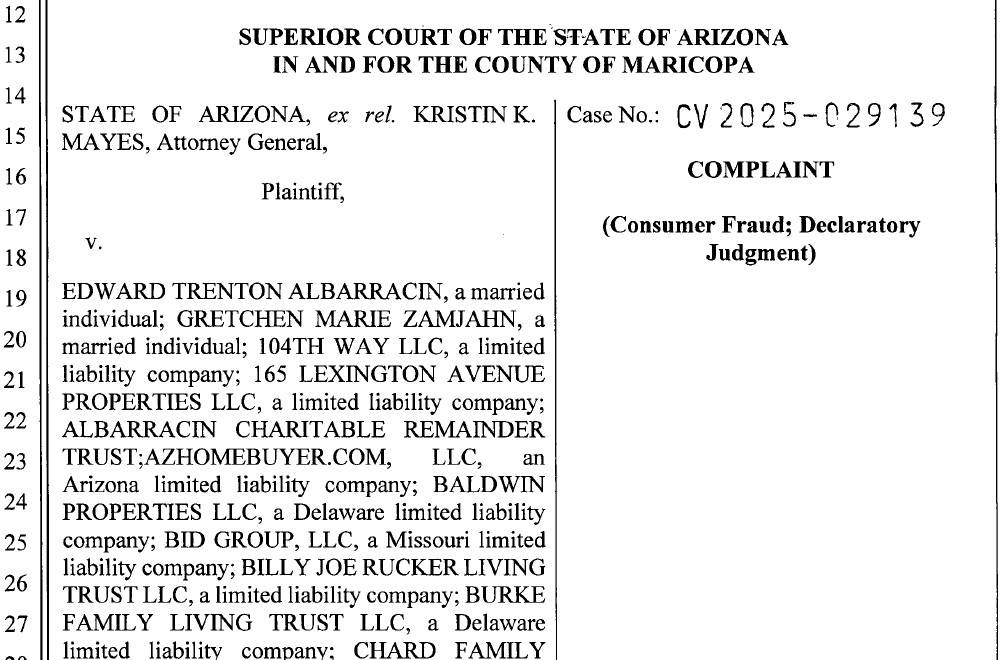
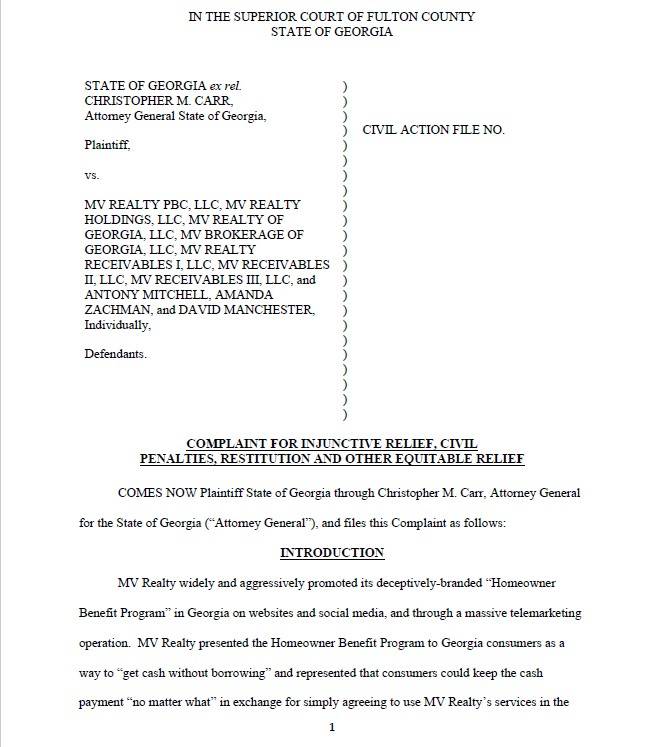
 Florida Attorney General’s Office Secures Order Prohibiting MV Realty from Enforcing Liens or Encumbrances on Homes After Deceiving Florida Homeowners
View PDFRelease DateFeb 13, 2025
"MV Realty must also record terminations of all memoranda recorded on the properties of homeowners associated with an HBA within 14 days of the injunction order date or within two days of being notified by any Florida homeowner, title agent real estate agent, closing attorney, lender, or prospective purchaser that a termination is required to be recorded in order to proceed with any transaction related to a Florida homeowner's property, including but not limited to, a loan, refinancing, reverse mortgage, or sale of the property.
@Ken M. — Thanks for the quote. Let me add some data to the conversation.
MV Realty used the exact mechanism we're discussing — recording memorandums on residential property to secure their position. Twelve state Attorneys General sued them. Here's the scoreboard:
- Florida: $18M judgment, 9,303 homeowners, principals banned from real estate for 10 years
- Georgia: 3,300 contracts terminated by court order (1,000 of those homeowners were over 60)
- New Jersey: $2.8M settlement
- California: Preliminary injunction protecting 1,500 homeowners
- Minnesota, North Carolina, Indiana, Massachusetts, Ohio, Pennsylvania: All filed enforcement actions
Every single one of these cases centers on the same thing: recording memorandums or liens on property the filer doesn't own to create leverage they haven't earned.
The court in Florida used the word "unconscionable." Not "aggressive." Not "creative." Unconscionable.
I'm not close to an attorney and I haven't been sued. I've managed properties for over two decades and I read case law because it's my job to know what puts my business at risk. The question isn't whether recording a memorandum is legal in isolation — it's whether the pattern of behavior around how it's being taught and used creates liability that the person recording it doesn't understand until they're a defendant.
The ~100 Florida cases I referenced are separate from MV Realty. But the playbook is the same. And the courts are clearly not impressed.
Sources:
- https://www.myfloridalegal.com/newsrelease/attorney-general-...
- https://law.georgia.gov/press-releases/2025-09-04/carr-secur...
- https://www.njoag.gov/ag-platkin-new-jersey-division-of-cons...
- https://oag.ca.gov/news/press-releases/attorney-general-bont...
@Ken M. — Thanks for the quote. Let me add some data to the conversation.
MV Realty used the exact mechanism we're discussing — recording memorandums on residential property to secure their position. Twelve state Attorneys General sued them. Here's the scoreboard:
- Florida: $18M judgment, 9,303 homeowners, principals banned from real estate for 10 years
- Georgia: 3,300 contracts terminated by court order (1,000 of those homeowners were over 60)
- New Jersey: $2.8M settlement
- California: Preliminary injunction protecting 1,500 homeowners
- Minnesota, North Carolina, Indiana, Massachusetts, Ohio, Pennsylvania: All filed enforcement actions
Every single one of these cases centers on the same thing: recording memorandums or liens on property the filer doesn't own to create leverage they haven't earned.
The court in Florida used the word "unconscionable." Not "aggressive." Not "creative." Unconscionable.
I'm not close to an attorney and I haven't been sued. I've managed properties for over two decades and I read case law because it's my job to know what puts my business at risk. The question isn't whether recording a memorandum is legal in isolation — it's whether the pattern of behavior around how it's being taught and used creates liability that the person recording it doesn't understand until they're a defendant.
The ~100 Florida cases I referenced are separate from MV Realty. But the playbook is the same. And the courts are clearly not impressed.
Sources:
- https://www.myfloridalegal.com/newsrelease/attorney-general-...
- https://law.georgia.gov/press-releases/2025-09-04/carr-secur...
- https://www.njoag.gov/ag-platkin-new-jersey-division-of-cons...
- https://oag.ca.gov/news/press-releases/attorney-general-bont...
.
The website https://www.mortgagefraudblog.com/ reports on a lot of this kind of thing. According to them the SubTo community uses names like "MFV AZ LLC", "MFV FL LLC", "MFV TN LLC", "MFV GA LLC" and so on. It's supposed to be short for "MOVING FORWARD VENTURES LLC" and they use a few other name, so be careful. Often with recorded "MEMORANDUMS" and not recording the Warranty Deed. Scary stuff.
Oddly, I have been sued. :-)
It went all the way to the 9th Dist. Court of Appeals, because I won at the lower levels and they kept appealing. Which is a very long, corrupt(?), story, in itself.
Anyway, the 9th Dist sided with me too. The only reason I won, was because I knew & followed the law, before I bought.
Most people who follow the SubTo guru haven't been exposed to what the law does not allow (not so odd, because it makes it easier to sell memberships when you omit the dangers) but the chickens are coming home to roost, as your links show.
I appreciate the links you include because there is so much going on now, I can't keep up.
@Ken M. — Great intel on the MFV LLC naming conventions. That's exactly the kind of pattern recognition that helps people protect themselves. I hadn't tracked mortgagefraudblog.com closely enough — adding it to my regular rotation now.
Your court case is fascinating. The fact that you won at lower levels AND on appeal at the 9th District tells me you did the work upfront that most SubTo practitioners skip entirely. That's the whole point — the strategy itself isn't inherently illegal, but the way the guru community teaches it strips out every legal safeguard that makes it work.
Since you mentioned you can't keep up with everything happening — here's a big one from this year:
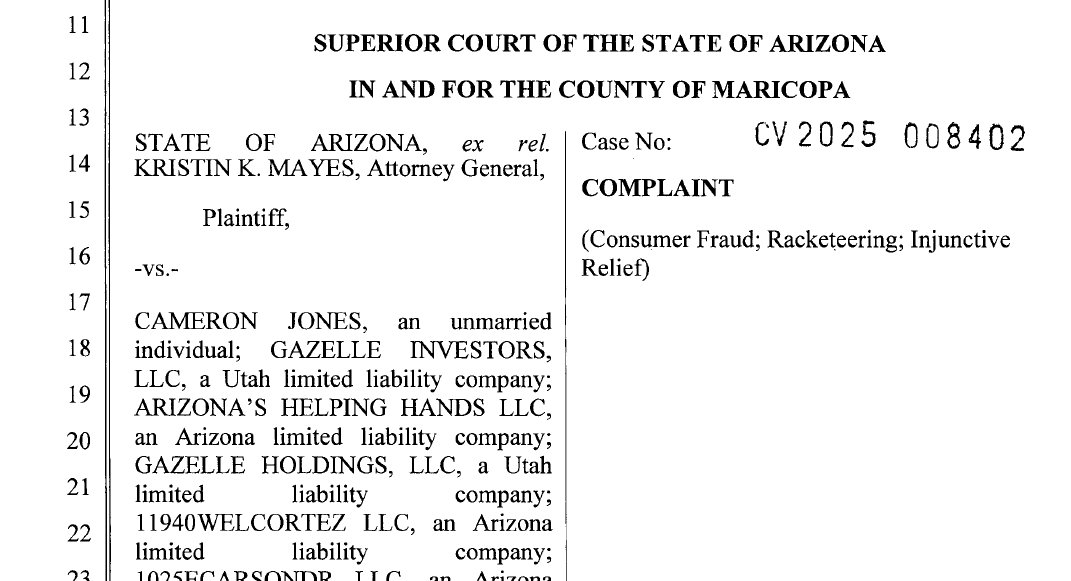
Arizona AG Kris Mayes filed CV2025-008024 in Maricopa County Superior Court (March 2025) against Cameron Jones (Gazelle Investors), Samuel Sutton (Magnum Financial), and a network of title companies and law firms. The scheme:
- Monitored county recorder foreclosure notices
- Sent "door knockers" posing as foreclosure relief specialists using a fake charity called "Arizona's Helping Hands"
- Acquired properties far below market value through contracts that were invalid under AZ law
- Filed fraudulent bankruptcy and probate filings to delay auctions
- Rapid-flipped through shell companies while title companies looked the other way
They're going after them under both the Arizona Consumer Fraud Act AND the Racketeering Act — that's not a slap on the wrist. They're seeking $10K per instance, company dissolution, and a permanent ban from AZ real estate.
The pattern I keep seeing: it's not just the operators getting caught anymore. The title companies and attorneys who facilitated it are named defendants too. That's a shift. The enforcement net is widening.
Your point about gurus omitting the dangers to sell memberships is the core of the problem. The strategy knowledge is out there — what's missing is the legal compliance framework around it. You clearly built that framework for yourself, which is why you're still standing.
Would be curious to hear more about your appeals case if you're open to sharing. The specific legal principles that held up under appeal would be genuinely useful for this community — that's the kind of real-world, court-tested knowledge that no $50K coaching program teaches.
@Ken M. — Great intel on the MFV LLC naming conventions. That's exactly the kind of pattern recognition that helps people protect themselves. I hadn't tracked mortgagefraudblog.com closely enough — adding it to my regular rotation now.
Your court case is fascinating. The fact that you won at lower levels AND on appeal at the 9th District tells me you did the work upfront that most SubTo practitioners skip entirely. That's the whole point — the strategy itself isn't inherently illegal, but the way the guru community teaches it strips out every legal safeguard that makes it work.
Since you mentioned you can't keep up with everything happening — here's a big one from this year:
Arizona AG Kris Mayes filed CV2025-008024 in Maricopa County Superior Court (March 2025) against Cameron Jones (Gazelle Investors), Samuel Sutton (Magnum Financial), and a network of title companies and law firms. The scheme:
- Monitored county recorder foreclosure notices
- Sent "door knockers" posing as foreclosure relief specialists using a fake charity called "Arizona's Helping Hands"
- Acquired properties far below market value through contracts that were invalid under AZ law
- Filed fraudulent bankruptcy and probate filings to delay auctions
- Rapid-flipped through shell companies while title companies looked the other way
They're going after them under both the Arizona Consumer Fraud Act AND the Racketeering Act — that's not a slap on the wrist. They're seeking $10K per instance, company dissolution, and a permanent ban from AZ real estate.
The pattern I keep seeing: it's not just the operators getting caught anymore. The title companies and attorneys who facilitated it are named defendants too. That's a shift. The enforcement net is widening.
Your point about gurus omitting the dangers to sell memberships is the core of the problem. The strategy knowledge is out there — what's missing is the legal compliance framework around it. You clearly built that framework for yourself, which is why you're still standing.
Would be curious to hear more about your appeals case if you're open to sharing. The specific legal principles that held up under appeal would be genuinely useful for this community — that's the kind of real-world, court-tested knowledge that no $50K coaching program teaches.
What makes it interesting is it was in Seattle and ran from 2008 to 2016 on a property I bought in Aug 2001, just before the twin towers was hit. The case was filed 6 years after the purchase transaction. The SOL (Statute of Limitations on contracts in Washington is 3 years). He stated in writing and in court that he never signed the documents.
All legal cases have a standard course of action and timing when filed, so it got into the system and the other side got to make their complaint. It was filed by a seller of minority race, using a pro se attorney of minority race from the local law school. Ultimately 12 different law school students worked on the case for credit. They brought in the multi billion dollar Title Company Fidelity and their "crack expert" (hah!) team of attorneys and witnesses. What a zoo. I guess they thought the case would change how the system would work or something. But, I digress.
So, "I'm the white rich guy who took advantage of the poor minority who wasn't paying his mortgage, while he was in foreclosure", according to the attorney. Nothing illegal, just inconvenient for him. Since he had sold the house, rather than lose it to foreclosure, and it had gone up in value several hundred thousand dollars over the years, he claimed the increase belonged to him as though he had kept the house and made the payments. Lol No, there is no award for stupidity in this case.
At the time, creative finance did not have the visibility it has now. I suppose the Title Company and court wanted to contain creative financing or something. I even had to carefully explain to my attorney what was going on, including documentation, because as a real estate attorney he had never heard of creative finance like I did it. Legally.
The seller admitted in court he had not made any payments and that I had been making the payments. The Warranty Deed, witnessed by Notary was in my name. Now, if you're as smart as I think you are, you can see the absurdity.
But, for the sake of the lurkers, and we love lurkers; when you sell a house, the benefits and expenses stop. They now belong to the new owner. The judge agreed with that assessment.
The losing side used their 12 law students to conjure up items to appeal on, which were heard by the 9th Dist Court and remanded back.
Because the case went for so long, there were numerous replacement judges involved, various appeals made, various defenses stated and each time a new judge was assigned, you had to restate what had gone on previously to get them up to speed.
I think I clocked as much time in court as Perry Mason, but once again I digress.
After the case was remanded, they had nothing to argue, so they changed the scope of the case to try to shoehorn in a different complaint and for that one to work he needed to have signed the documents. So, He stated in writing and in court that he HAD signed the documents. Gee willikers, can he make up his mind?
Well, the judge was reading the transcript of his previous testimony where he claimed he hadn't signed the documents, as he was saying that he had signed and the judge almost fell off his chair. He declared the "defendant (seller) is not reliable". Which is a nice way of saying he was caught lying.
The moral of story is if you do enough transactions, you will be sued. It doesn't mean you did anything wrong but the system is the punishment.
He got off scott free, no perjury, no punishment, attorney was prose, so no fees.
So, we sold our properties and moved to the sane state of Arizona and buy in Arizona and Texas and other places and we help people avoid the mistakes promulgated by groups like the SubTo community.\
I later heard that Fidelity changed how they do business after that, but I'm SURE it had nothing to do with this case. ;-) Lol
@Ken M. — I appreciate you sharing the case history and the MFV intel. That's genuinely valuable for this community, and I've added mortgagefraudblog.com to my research sources because of you.
One thing I'd encourage the lurkers reading this thread to always do: before you take advice from anyone in this space — including me — look them up. Google their name. Find their website. Check if their business entity is registered. Look at their content. See if their track record matches their claims.
In creative finance safeguarding against malicious guidance involves understanding the identity of any self-proclaimed experts and their motives.
Good luck out there, Ken. Genuinely.
I came across a property with some interesting numbers:
📍 Asking price: $330k
📍 Market value: ~$440k
📍 Needs about $65k in repairs (no floors in most rooms, so it won't qualify for conventional financing as-is)
Here's what I'm thinking:
Instead of buying it in its current condition — which would require a huge down payment AND renovation capital upfront — I want to negotiate an OPTION with the seller. The option would lock in a purchase price of $300k within a set timeframe. During that time, I'd complete the $65k renovation, and by the time the option is exercised, the property would qualify for conventional financing.
My question is around the financing structure at the time of purchase:
I want to make sure I can recover the $65k I put into renovations at or around closing. What are the cleanest and most lender-compliant ways to structure this so that my renovation investment is recognized — whether through the appraised value, a cash-out refi after purchase, or some other mechanism?
Have any of you done something similar? How did you structure it? What worked, what didn't?
Drop your experience below 👇 I'd love to hear how seasoned investors have handled this!
I'd start with Hard money and refi into a no-seasoning cash out after your rehab and rental is complete. You will recover the most cash this way, and you will keep control of the project. Others have detailed a few concepts so I'll just mention them. Delayed financing is not ideal. You will keep more money in the property, and in the end will be no better off than purchasing with financing today. In fact, you will be worse off because refi pricing is worse than purchase financing.
Your structure comes with risk on so many levels that can be avoided, with a BRRRR. This is not a true get-all-your-cash-back BRRRR, but it is best executed this way. Someone mentioned seasoning periods. That's a real thing. You can finance cash out based on full ARV with a few lenders, but nearly all will require 6 months seasoning to use the appraised value. PM me fi you want to talk offline.
Even the house flipping shows on HGTV no longer subtract the purchase price from the ARV to claim a good deal, and no one here should be claiming that for this one either. The $75k spread is irrelevant. It does not account for lender fees, sales commissions, property taxes, property insurance, escrow/title/attorney fees, and lots more. In fact, using the rule of thumb, ($300+$65)/$440, this is an 83% deal, which is awful. You will break even just above 86%, which leaves about a 4% of ARV profit margin, or $17K. Is that the "solid" deal many here claim?
You didn't state your exit strategy, Dani. You're in CA. Your thread location is MO. You said once complete, the property will qualify for conventional lending. Since I assume you will not be moving in, and you didn't mention renting (BRRRR), I assume you mean flipping to an end buyer who could get a conventional loan. If so, this is a terrible deal for you.
On the other hand, this was an interesting thread on financing if that was your intent.
(FWIW, I used to attend your REI club in Northern CA about a hundred years ago. I know you know better.)
