The real estate market crash has already happened

The real estate market crash has already happened

Investor · Milwaukee - Mequon, WI · Member since 2010 · 5k+ posts · 7k+ votes

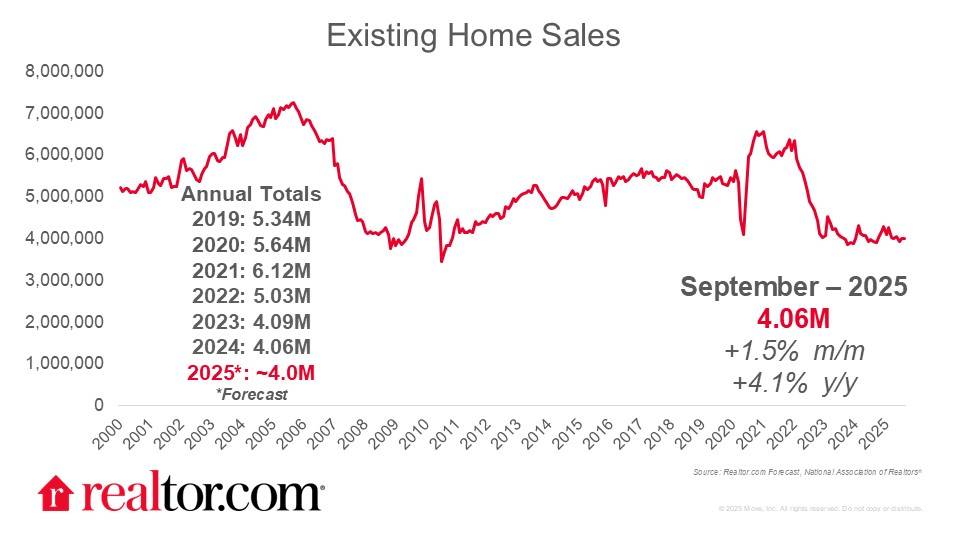
It just looks different. When you see home sales drop from 6.1 million to 4 million, what else would you call it other than a crash? We are basically at 2008 levels. If car sales in the US would drop by 25 to 30%, the news would be screaming that the US auto market has crashed. 

Post 2008 and GFC our public definition of housing market crash is tied to forclosures and huge price drops. People who look at housing supply data understand that price drops are not going to happen any time soon. 

But nevertheless the housing market already crashed in 2023, we just have a different label for it. We call it housing affordability. The implications for the economy are profound, estimates are that housing makes up for 18% of GDP. I am guessing about half of that is rent, but still a huge number. 

I don't think that will change any time soon. The 50y mortgage idea is going to be a total fail, even people who think now this is a great idea, will start looking at numbers before they actually sign on the line and decide that paying tripple and uptil they are 90 only to save $200 per month may not be the best idea. 

And new construction is not going scale that fast either, that will take a decade. The only way out would be sub 5%-ish mortgage rates and the financial markets (MBS) are not going to make that happen as long as global inflation outlooks are elevated.

So, I think we are pretty much stuck on the current path for years to come and I don't see much potential for change. Thoughts? 
9Reply
2,141 views

Most Popular Reply

Theresa HarrisPro Member
Member since 2019 · 15k+ posts · 11k+ votes
11mo

This is regional.  Where I am house prices are still going up (slowly) and selling quickly.  Higher end homes might sit for a bit.

See this reply in the discussion

82 Replies

Jump to latestLatest
  • Investor · Milwaukee - Mequon, WI · Member since 2010 · 5k+ posts · 7k+ votes
    11mo

    @Henry Clark, you are not wrong. This is happening in south FL with the condo market, in some countires you have 12 months of inventory. STR investors see their numbers drop + covid snowbirds from NY get cold feet + Canadians get harassed at the border - that sent the condo market over the edge.

    But I think you are overestimating the impact. You've got about 1.2 million STR's in the US, and if 20% panic sell thats 240,000 units in a 4-5 million unit market. Not enough. In most markets that would only be a welcome increase in inventory and absorbed quickly.

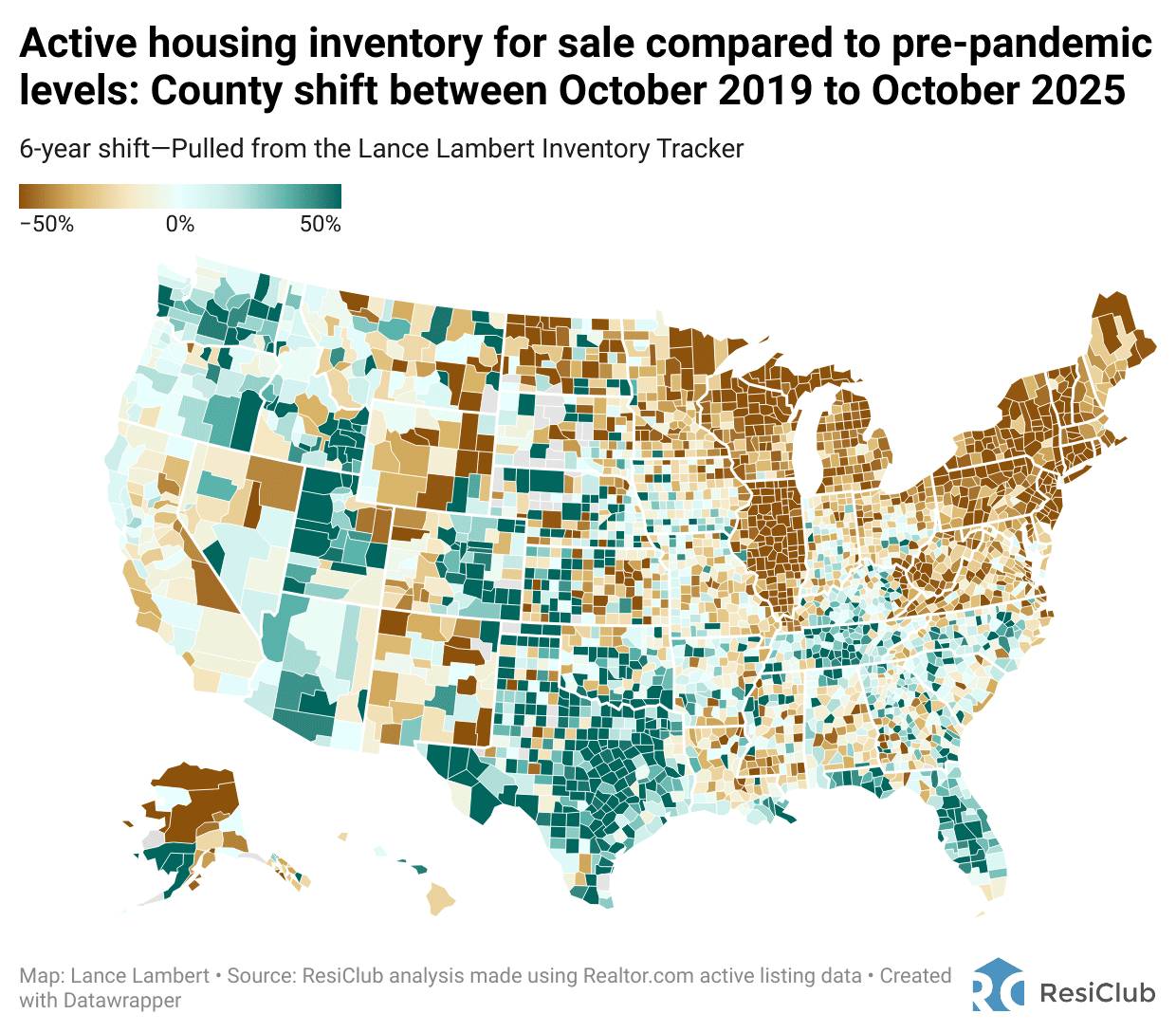
    Most, but not all - so in some pockets you'll see DOM go over the 5 months we consider a buyers market. I think this chart explains how different the situation is regionally.

  • Eric FernwoodBusiness Member
    Realtor · Las Vegas, NV · Member since 2014 · 1k+ posts · 1k+ votes
    11mo

    Hello Marcus,

    National statistics don't represent any individual market—they're simply averages. Has there been a crash in transaction volume everywhere? No. Even within a single market, transaction volume varies: some property types or price ranges see high volumes while others struggle.

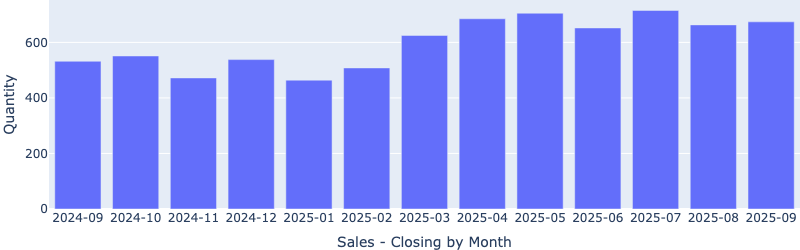
    Our target segment—Las Vegas single-family homes priced between $350,000 and $475,000—has continued to perform better than expected despite usual seasonal trends. See the chart below. We expected the number of closings to decline in September, but they actually increased slightly. YoY is also up significantly.

    In conclusion, national averages don't apply to any specific market. Real estate is local, not national.

    FERNWOOD Team, KW VIP Realty520 Reviews
  • Dr · VA · Member since 2025 · 154 posts · 35 votes
    11mo

    Housing prices in the DMV (DC–Maryland–Virginia) area really are tough right now—especially for older homes that still cost $500k+ with multiple offers and high competition. Many people are in the same situation, so you’re not alone. Here are some realistic, practical strategies that can help you get closer to owning a home even in such an expensive market

  • Henry ClarkPro Member
    Developer · Member since 2020 · 4k+ posts · 4k+ votes
    11mo

    Folks you have put some really great graphs up and they do address specific issues. "But" they don't address the recommendation I am making. They are either to broad covering all housing including Homeowners, I'm just referencing Investor properties or they are to narrow and address just STR, and I'm addressing all Investor properties for housing.

    BP readers look at the 5 or 6 options I put up above.   And the situations that will hit investors.  They aren’t going to sale their new BMW, pull from their 401k for living costs, or move back in with their parents.   They will sale their RV, boat and their rental units first.  

    I’m recommending you get to a liquid position to do a deal, trim any dog investments that have little cashflow or appreciation potential.  Identify a market where you have heard your fellow investors focusing on.  Whether high BNB areas or high rental areas Ohio/Memphis and others.  I believe Phoenix and Vegas had some of the highest sales at the last downturn.  Get to know the markets, realtors, lenders.  Identify a Buy Box.  Put data filters out for price reductions, days in market, etc.  Pick your purchase point. 

    Yes.   Who would ever sale a 3% rate property, great cash flow, great appreciation property, low inventory location, etc?   A person who just lost their job, or their company had a large downsizing, stock investments fell 40%, BNB occupancy dropped 50%, etc. 

    But those properties will be snapped up?  No they won’t.  Lenders will pull back.  Potential investors won’t pull the trigger due to fear or not liquid.   It’s great to reference Warren Buffet about investing when there is blood in the streets.  But how many BP investors had the foresight to position themselves.   Had the resolve to pull the trigger?  

    Look at the BP posts.  Where is the best market?  How do I get financing?  How do I scale I’m at 3 units and hit the wall. Anyone know a good plumber.  Yes, yell with me,  “where?”.  Negative cash flowing.  Etc.   These people will sell.

      Very few investors or BP posters will have 50 or more units.  Enough to where they don’t need a day job.  So most investors will get stressed by their employment status and their Stock market holdings.  

    Am I right?  Who cares.  It’s your money.  Do your research.  Position.   Then make your bet.  

    Example.   We are doing a Country Subdivision.  I would tell you a Subdivision  is one of the worst RE investments you could do right now.  

    Interest rates are high, job market is scary, economy is scary, people locked into low rates not wanting to move, etc.  

    Why then?  We are doing lot only sales thus our exposure is lower, our sale time cycle is faster than houses, people want to move to the country side, city riots/protests are great for us, 20 minutes from 1mm metro area, did all cash deal and no loan pressure, inventory is low, etc.

    Know your market, know your buy box, position yourself for the next 12 months.  After 12 months I’m just another Sky is falling person.
     
    Good luck on your investments.  

  • Investor · Milwaukee - Mequon, WI · Member since 2010 · 5k+ posts · 7k+ votes
    11mo

    @Henry Clark developing country subdivisions is an advanced strategy and it requires capital and experience. You are also operating outside of the protection bubble that surrounds someone who wants to buy a duplex and can rely on an agent, a home inspector, an appraiser and other to prevent them from doing something completley stupid. When you develop land, the buck stops with you. And you have to have deep enough pockets that you can survive a flop. I think that's great for you, but not for everyone and it is more characteristic of a business and not investing. You are generating cash that (after tax) you can roll into investments. I would also say it's one of the riskiest investments during an economic downturn, at least temporaily. So as long as you don't have a bank breathing down your neck you are fine. I ventured into spec home building years ago and ultimatley decided I did not like the risk/reward profile, plus if you are the builder, its a HUGE amount of work. That's why I run a brokerage team, it is scalable, high revenue and high cash flow. But it takes also time to build and grow, as they say: simple, but not easy

    • Jay HinrichsBusiness Member
      Real Estate Consultant · Summerlin, NV · Member since 2014 · 45k+ posts · 66k+ votes
      11mo
      Quote from @Marcus Auerbach:

      @Henry Clark developing country subdivisions is an advanced strategy and it requires capital and experience. You are also operating outside of the protection bubble that surrounds someone who wants to buy a duplex and can rely on an agent, a home inspector, an appraiser and other to prevent them from doing something completley stupid. When you develop land, the buck stops with you. And you have to have deep enough pockets that you can survive a flop. I think that's great for you, but not for everyone and it is more characteristic of a business and not investing. You are generating cash that (after tax) you can roll into investments. I would also say it's one of the riskiest investments during an economic downturn, at least temporaily. So as long as you don't have a bank breathing down your neck you are fine. I ventured into spec home building years ago and ultimatley decided I did not like the risk/reward profile, plus if you are the builder, its a HUGE amount of work. That's why I run a brokerage team, it is scalable, high revenue and high cash flow. But it takes also time to build and grow, as they say: simple, but not easy


      comparing development from farm to table to buying a rental is totally apples to oranges .. very different skill sets and risk profiles.. Along with Market conditions etc.  Even comparing rural developement like Henry talks about to development in a Urban or a large metro area is apples and Oranges.. many rural areas develpment can be as easy as deed descriptions and record and you created lots to the Developments I fund for instance on the West coast that take 2 years and hundreds of thousands just to get a preliminary yes.. Currently doing 3 in the WA DC area ( one just paid off Toll Brothers bought it) However these were 18 to 24 months in prelim design to get to prelim approvals and 500 to 1.2 mil each UP FRONT with no guarantee that your project is going to get approved in the way you want it to get approved. 

      Then you have financing which for rentals is dead simple for anyone with a JOB and good credit and hiring a Team like Marcus has can basically do it all for you.. Land development not so much you have to seek out all your different consultants.. The Virginia projects ( Loudon county) The teams we need there are about 12 consultants and at least 150 different points that have to be addressed.. Each area is specific to its peccadilloes Out west here its Indian artifacts in a state like CA  Water in Oregon  Timber in oregon and WA  in Virginia is civil war artifacts that have to be explored and mitigated along with all the other stuff Water runoff traffic etc etc..  Rural areas with very little regulations none of this is in play. its basically can u find water with a well and Perc the lot and run a road to it and hope power is nearby and they power company will run power at their cost.  etc etc. 
  • Henry ClarkPro Member
    Developer · Member since 2020 · 4k+ posts · 4k+ votes
    11mo

    Folks read my post.  Not comparing country  subdivision development versus investing in a house.  I’m recommending to the reader to define their buy box and understand their risk no matter what they invest in.  

    Actually just drove south of my house.  One of the realtors bought a couple hundred acres.   Divided into 10 acre lots and selling for $250,000.  Popped in shared driveways along the county road.  This just opened up this summer.  Already selling quite a few lots.  He bought at farmland price of say $10,000 and with very little effort is selling at $25,000.  Won’t directly compete with our subdivision since total price of $250,000 is significantly higher than our $90,000 to $190,000 lots. 

    He understood his risk and executed.  Unless you have $1mm dont recommend you do this.  

    But as I have said twice above.  I think the RE market will roll over in the next 12 months.  Get liquid.  Hold off. Pick a market.  Put sensors out.  Identify a market.  Identify a realtor and lender.  Identify a buy box.  Don’t worry about my RE strategy, get yours set.   Dont wait for the national news to say RE has rolled over.  Start making Buyer market bids.  So you don’t waste your time or the realtor making low bids.  Only look at properties that have been on the market for 6 months or more.  Or have had price reductions already.  You don’t know the sellers life situation and don’t care.  You just want one of them to accept your offer.  My crystal ball is as good or bad as yours, but I would get set and start to watch the market starting after March to start to turn.  But individual sellers are being impacted even now.  

    Remember all markets are local.  All sellers have their own situations to deal with.  Dont get hung up on specific market analysis even if it covers your area.  It’s about the seller in a Buyers Market.  

  • Crystal SmithPro Member
    Moderator
    Real Estate Broker · Chicago, IL · Member since 2014 · 2k+ posts · 1k+ votes
    11mo
    Quote from @Marcus Auerbach:

    It just looks different. When you see home sales drop from 6.1 million to 4 million, what else would you call it other than a crash? We are basically at 2008 levels. If car sales in the US would drop by 25 to 30%, the news would be screaming that the US auto market has crashed. 

    Post 2008 and GFC our public definition of housing market crash is tied to forclosures and huge price drops. People who look at housing supply data understand that price drops are not going to happen any time soon. 

    But nevertheless the housing market already crashed in 2023, we just have a different label for it. We call it housing affordability. The implications for the economy are profound, estimates are that housing makes up for 18% of GDP. I am guessing about half of that is rent, but still a huge number. 

    I don't think that will change any time soon. The 50y mortgage idea is going to be a total fail, even people who think now this is a great idea, will start looking at numbers before they actually sign on the line and decide that paying tripple and uptil they are 90 only to save $200 per month may not be the best idea. 

    And new construction is not going scale that fast either, that will take a decade. The only way out would be sub 5%-ish mortgage rates and the financial markets (MBS) are not going to make that happen as long as global inflation outlooks are elevated.

    So, I think we are pretty much stuck on the current path for years to come and I don't see much potential for change. Thoughts? 

     It's difficult to argue with any of your points at a macro level including the premise that home sales drop from 6.1 million to $4M can be interpreted as a crash.  But don't most of us make decisions at a micro level; finding the pockets where the numbers & the business work? 

  • JD MartinBusiness Member
    Moderator
    Rock Star Extraordinaire · Northeast, TN · Member since 2015 · 10k+ posts · 17k+ votes
    11mo
    Quote from @Marcus Auerbach:

    It just looks different. When you see home sales drop from 6.1 million to 4 million, what else would you call it other than a crash? We are basically at 2008 levels. If car sales in the US would drop by 25 to 30%, the news would be screaming that the US auto market has crashed. 

    Post 2008 and GFC our public definition of housing market crash is tied to forclosures and huge price drops. People who look at housing supply data understand that price drops are not going to happen any time soon. 

    But nevertheless the housing market already crashed in 2023, we just have a different label for it. We call it housing affordability. The implications for the economy are profound, estimates are that housing makes up for 18% of GDP. I am guessing about half of that is rent, but still a huge number. 

    I don't think that will change any time soon. The 50y mortgage idea is going to be a total fail, even people who think now this is a great idea, will start looking at numbers before they actually sign on the line and decide that paying tripple and uptil they are 90 only to save $200 per month may not be the best idea. 

    And new construction is not going scale that fast either, that will take a decade. The only way out would be sub 5%-ish mortgage rates and the financial markets (MBS) are not going to make that happen as long as global inflation outlooks are elevated.

    So, I think we are pretty much stuck on the current path for years to come and I don't see much potential for change. Thoughts? 

     If I was ambitious enough (I'm not!), somewhere in these forums a few years ago we had some kind of discussion about this and my prediction was that the housing market would not see any precipitous decline in prices, just an overall shrinking of the total market the same way that a lack of buyers for rare books never caused a price crash - it just shrunk the total market. Rare book prices are still incredibly high, there's just fewer buyers, and because most sellers would rather hold their books than sell at a discount they just dropped out of the market altogether. Same thing for the RE market, except the ramifications are a lot worse than in the rare book market. 

    Skyline Properties
    View Page
  • Investor · Milwaukee - Mequon, WI · Member since 2010 · 5k+ posts · 7k+ votes
    11mo

    @Todd Dexheimerright. Collaps might be a better word.

    • Real Estate Broker · Minneapolis, MN · Member since 2011 · 5k+ posts · 6k+ votes
      11mo
      Quote from @Marcus Auerbach:

      @Todd Dexheimerright. Collaps might be a better word.


      Stagflation.... 

      Stagflation is most fitting word. Crash or Collapse people get a notion of $ coming down, no matter how one explains it, that's just the value people connect to those words. 

      And this is a Stagflation event taking hold. With the same pickle of catch-22's for any mitigation. 

      Stimulus to increase access and activity = inflation, pressing prices higher, thus continuing the same problem just repricing where the problem trades sideways. 

      Any QT actions to try and deflate, just drops volume not price, thus making the problem more entrenched. 

      They spent over 30 years trying to solve this riddle in Japan; how do you increase activity without increasing inflation. They never solved it. Nobody has. 

      Our entire economy is based on an economic theory and system that's mono-directional, it's designed for growth. 

      This is why all it's levers are growth specific. 

      To either increase growth, or slow growth. But always GROWTH. 

      Growth = inflation. So yeah, our economic system is an inflation system. 

      So how do you get activity, without inflation, in an inflation-4-growth system? You don't, it's just that simple. 

      Just as NINJa loans were a ticking time bomb for impending default, this situation is a ticking time bomb of inflation. It's not a question of if, but when. 

      Volume collapses because liquidity collapses. Volume comes more so from liquidity than it does affordability. 

      I know to many this may make the brain throw sparks hearing affordability doesn't actually matter much but look at the data, it doesn't. COVID inflation spiked prices and dumped affordability, and how did spending go? Consumers spend what they have, they kept spending, borrowed more. Consumers reached for liquidity much more then reduced spending, right. And then as liquidity has dried up, volume has declined. 

      Volume follows liquidity, not affordability. 

      Affordability is like cash-flow, a thing many hyper fixate on but it's not a thing in and of itself, it's a result. 

      Cash-flow is the result of the spread between monetization and expense. 

      Affordability is the spread between liquidity access and price. 

      If a hamburger and coke is $25 is it "affordable"? 

      Well, if your liquidity access is $300k yr, heck yeah it's dirt cheap. If your liquidity access is $30k yr, heck no, that's a spendy special treat. 

      Same thing, same price, all that changes is liquidity access. 

      What will RAISE home sales volume? Well, all are saying when it's "more affordable". 

      Using our Secret Economic Decoder Ring we know "more affordable" translates to MORE liquidity spread. 

      Thus, the direction is more liquidity. Which is inflation. The inflation will need more liquidity to cover the inflation. More more more..... 

      The alternative, AUSTERITY. The price of that is only every politicians job.   

    • Investor · Milwaukee - Mequon, WI · Member since 2010 · 5k+ posts · 7k+ votes
      11mo
      Quote from @James Hamling:
      Quote from @Marcus Auerbach:

      @Todd Dexheimerright. Collaps might be a better word.


      Stagflation.... 

      Stagflation is most fitting word. Crash or Collapse people get a notion of $ coming down, no matter how one explains it, that's just the value people connect to those words. 

      And this is a Stagflation event taking hold. With the same pickle of catch-22's for any mitigation. 

      Stimulus to increase access and activity = inflation, pressing prices higher, thus continuing the same problem just repricing where the problem trades sideways. 

      Any QT actions to try and deflate, just drops volume not price, thus making the problem more entrenched. 

      They spent over 30 years trying to solve this riddle in Japan; how do you increase activity without increasing inflation. They never solved it. Nobody has. 

      Our entire economy is based on an economic theory and system that's mono-directional, it's designed for growth. 

      This is why all it's levers are growth specific. 

      To either increase growth, or slow growth. But always GROWTH. 

      Growth = inflation. So yeah, our economic system is an inflation system. 

      So how do you get activity, without inflation, in an inflation-4-growth system? You don't, it's just that simple. 

      Just as NINJa loans were a ticking time bomb for impending default, this situation is a ticking time bomb of inflation. It's not a question of if, but when. 

      Volume collapses because liquidity collapses. Volume comes more so from liquidity than it does affordability. 

      I know to many this may make the brain throw sparks hearing affordability doesn't actually matter much but look at the data, it doesn't. COVID inflation spiked prices and dumped affordability, and how did spending go? Consumers spend what they have, they kept spending, borrowed more. Consumers reached for liquidity much more then reduced spending, right. And then as liquidity has dried up, volume has declined. 

      Volume follows liquidity, not affordability. 

      Affordability is like cash-flow, a thing many hyper fixate on but it's not a thing in and of itself, it's a result. 

      Cash-flow is the result of the spread between monetization and expense. 

      Affordability is the spread between liquidity access and price. 

      If a hamburger and coke is $25 is it "affordable"? 

      Well, if your liquidity access is $300k yr, heck yeah it's dirt cheap. If your liquidity access is $30k yr, heck no, that's a spendy special treat. 

      Same thing, same price, all that changes is liquidity access. 

      What will RAISE home sales volume? Well, all are saying when it's "more affordable". 

      Using our Secret Economic Decoder Ring we know "more affordable" translates to MORE liquidity spread. 

      Thus, the direction is more liquidity. Which is inflation. The inflation will need more liquidity to cover the inflation. More more more..... 

      The alternative, AUSTERITY. The price of that is only every politicians job.   


      You can also go into game theory here and model our economy. We all believe in the infinite game, but when you look at the parameters, it exhibits a lot of elements of a finite game, which means after enough rounds there is one winner (in our case a small group) who holds all the chips.

      I don't think austerity or small gov are the right answer either. If you imagine you explain our society to an alien: we elect leaders, who are supposed to decide on behalf of us, but really they decide on whats best for special interest groups. (I am part of a group that advocates for landlord frindly laws - so, guilty as charged). And special interest groups are very simple, only one goal: money.

      The small country of Bhutan offers an inspring take: they talk about Gross Domestic Happiness - and actuelly measure it. They have their own problems, but it's an interesting angle. We gauge the good for the people by GDP: the conclusion is if GDP is up then people are happy. or worse: if the stock market is up, life must be good for Americans!

      You can see that on social media: the path to happiness leads mostly through building fincial wealth. Most things that make you happy we have figured out a way to put a gate around and charge admission. Europe is on the same path, but not as extreme as the US.

      Playing soccer in my childhood was a completley free activity. Sometimes an adult would come and coach a little, just for fun. But regardless there was zero cost to it. Fast forward a friend of mine runs a soccer training facility for kids - the facilities are amazing, so is the monthly fee. Plus the time and travel expense for the parents. Yes they are doing drills and get one on one coaching, but it's not like there is a professional soccer career in the US - they play until they are in high school. The end. We just found a way to monetize something that should be free.

      If you think about it, as soon as you go out the door, you need to bring your credit card. Short of walking down the street (lucky if you have a sidewalk) everything costs money. People don't have "third spaces" outside of work and home where they hang out and socialize. Except going on a Disney Cruise..

      I should say I appreciate capitalism, free markets is the way to go and I love beeing a business owner. But the way we have set the rules for this game, there is only one outcome and BP is the best example: if you live long enough as an investor you are going to be a bazillionaire. Compounding interest, baby. 

      So, yes: inflation. House prices in Milwaukee doubled in the last 10 years. My operating assumption is that this will happen again in the next ten. But its not necessarily that homes get that much more expensive (maybe a little), but mostly the devaluation of the currency.

    • Real Estate Broker · Minneapolis, MN · Member since 2011 · 5k+ posts · 6k+ votes
      11mo
      Quote from @Marcus Auerbach:
      Quote from @James Hamling:
      Quote from @Marcus Auerbach:

      @Todd Dexheimerright. Collaps might be a better word.


      Stagflation.... 

      Stagflation is most fitting word. Crash or Collapse people get a notion of $ coming down, no matter how one explains it, that's just the value people connect to those words. 

      And this is a Stagflation event taking hold. With the same pickle of catch-22's for any mitigation. 

      Stimulus to increase access and activity = inflation, pressing prices higher, thus continuing the same problem just repricing where the problem trades sideways. 

      Any QT actions to try and deflate, just drops volume not price, thus making the problem more entrenched. 

      They spent over 30 years trying to solve this riddle in Japan; how do you increase activity without increasing inflation. They never solved it. Nobody has. 

      Our entire economy is based on an economic theory and system that's mono-directional, it's designed for growth. 

      This is why all it's levers are growth specific. 

      To either increase growth, or slow growth. But always GROWTH. 

      Growth = inflation. So yeah, our economic system is an inflation system. 

      So how do you get activity, without inflation, in an inflation-4-growth system? You don't, it's just that simple. 

      Just as NINJa loans were a ticking time bomb for impending default, this situation is a ticking time bomb of inflation. It's not a question of if, but when. 

      Volume collapses because liquidity collapses. Volume comes more so from liquidity than it does affordability. 

      I know to many this may make the brain throw sparks hearing affordability doesn't actually matter much but look at the data, it doesn't. COVID inflation spiked prices and dumped affordability, and how did spending go? Consumers spend what they have, they kept spending, borrowed more. Consumers reached for liquidity much more then reduced spending, right. And then as liquidity has dried up, volume has declined. 

      Volume follows liquidity, not affordability. 

      Affordability is like cash-flow, a thing many hyper fixate on but it's not a thing in and of itself, it's a result. 

      Cash-flow is the result of the spread between monetization and expense. 

      Affordability is the spread between liquidity access and price. 

      If a hamburger and coke is $25 is it "affordable"? 

      Well, if your liquidity access is $300k yr, heck yeah it's dirt cheap. If your liquidity access is $30k yr, heck no, that's a spendy special treat. 

      Same thing, same price, all that changes is liquidity access. 

      What will RAISE home sales volume? Well, all are saying when it's "more affordable". 

      Using our Secret Economic Decoder Ring we know "more affordable" translates to MORE liquidity spread. 

      Thus, the direction is more liquidity. Which is inflation. The inflation will need more liquidity to cover the inflation. More more more..... 

      The alternative, AUSTERITY. The price of that is only every politicians job.   


      You can also go into game theory here and model our economy. We all believe in the infinite game, but when you look at the parameters, it exhibits a lot of elements of a finite game, which means after enough rounds there is one winner (in our case a small group) who holds all the chips.

      I don't think austerity or small gov are the right answer either. If you imagine you explain our society to an alien: we elect leaders, who are supposed to decide on behalf of us, but really they decide on whats best for special interest groups. (I am part of a group that advocates for landlord frindly laws - so, guilty as charged). And special interest groups are very simple, only one goal: money.

      The small country of Bhutan offers an inspring take: they talk about Gross Domestic Happiness - and actuelly measure it. They have their own problems, but it's an interesting angle. We gauge the good for the people by GDP: the conclusion is if GDP is up then people are happy. or worse: if the stock market is up, life must be good for Americans!

      You can see that on social media: the path to happiness leads mostly through building fincial wealth. Most things that make you happy we have figured out a way to put a gate around and charge admission. Europe is on the same path, but not as extreme as the US.

      Playing soccer in my childhood was a completley free activity. Sometimes an adult would come and coach a little, just for fun. But regardless there was zero cost to it. Fast forward a friend of mine runs a soccer training facility for kids - the facilities are amazing, so is the monthly fee. Plus the time and travel expense for the parents. Yes they are doing drills and get one on one coaching, but it's not like there is a professional soccer career in the US - they play until they are in high school. The end. We just found a way to monetize something that should be free.

      If you think about it, as soon as you go out the door, you need to bring your credit card. Short of walking down the street (lucky if you have a sidewalk) everything costs money. People don't have "third spaces" outside of work and home where they hang out and socialize. Except going on a Disney Cruise..

      I should say I appreciate capitalism, free markets is the way to go and I love beeing a business owner. But the way we have set the rules for this game, there is only one outcome and BP is the best example: if you live long enough as an investor you are going to be a bazillionaire. Compounding interest, baby. 

      So, yes: inflation. House prices in Milwaukee doubled in the last 10 years. My operating assumption is that this will happen again in the next ten. But its not necessarily that homes get that much more expensive (maybe a little), but mostly the devaluation of the currency.


      The #1 push-back I get from people on inflation is why would big business support inflation. That inflation is "bad" so wouldn't they influence against inflation. 

      The opposite is true. Take Walmart, who's profit margin is ~3%. 

      2024, about $650b in sales = $19.5b in profits.

      Say there is a 20% inflation (eh-hem, covid) that moves sales too $780b. And with that profits are $23.4b...... A $3.9 billion increase to profits, BILLION.... 

      How many millions are in a billion? Say just half that added profit goes to C-suite chairs in form of bonuses. And lets pretend there is 125 of them..... That's a $15.6million bonus. More then $1,000,000.00 per month bonus.... For inflation..... 

      Inflation not only doesn't harm big business, it benefits them. Inflation is paid by the consumer, always has, always will.

      And Government, don't get me started on that scam. They take their money in % and not whole dollar for this exact reason. Every increase of inflation is a TAX INCREASE. No votes needed. 

      The system is DESIGNED to inflate. And the top level of the pyramid, they are positioned to reap the rewards of inflation. 

    • Rental Property Investor · St. Paul, MN · Member since 2016 · 3k+ posts · 3k+ votes
      10mo
      Quote from @Marcus Auerbach:

      @Todd Dexheimerright. Collaps might be a better word.


       Nope, not a crash, not a collapse. Small correction maybe

  • Investor · Milwaukee - Mequon, WI · Member since 2010 · 5k+ posts · 7k+ votes
    11mo

    @Jay Hinrichs we are somewhere in the middle, but you can still get screwed as a developer. For example when you buy land and with the plan to create 28 lots and then after a public neighborhood hearing and concerns about "too much traffic noise" by 3 people living on that street, they cut you down to 17 lots. And now the math does not work anymore. We have a bonafied housing shortage and try to please every last neighbor depending on which side they got out of bed that morning - good grief!

    And: the Chinese are laughing at America!

    • Jay HinrichsBusiness Member
      Real Estate Consultant · Summerlin, NV · Member since 2014 · 45k+ posts · 66k+ votes
      11mo
      Quote from @Marcus Auerbach:

      @Jay Hinrichs we are somewhere in the middle, but you can still get screwed as a developer. For example when you buy land and with the plan to create 28 lots and then after a public neighborhood hearing and concerns about "too much traffic noise" by 3 people living on that street, they cut you down to 17 lots. And now the math does not work anymore. We have a bonafied housing shortage and try to please every last neighbor depending on which side they got out of bed that morning - good grief!

      And: the Chinese are laughing at America!


      I had the exact scenario in Corvallis Oregon.. Very liberal governance .  in contract to buy 40 acres from local prominent doctor. It was full of mature timber I wanted it for Timber originally. However he would not sell me a Timber deed only the whole property.. So we went into contract for the whole property subject to us getting a certain amount of lots. property surrounded on 3 sides by owner occ homes.. and this 40 acres these folks felt was there open space gorgeous timbered parcel backing right up to their yards. So working through it and doing public meetings ( U have not notify anyone within 300 feet of your proposed project and offer to have them come to a public meeting for input.. So I do those and of course TREES TREES TREES are the issue. Normally we would just cut the trees and leave what we felt were appropriate for Esthetics etc. Well neighbors just went crazy so I negotiated that we would leave a 50 foot buffer around the entire 40 acres and only take trees out of the right of way and building pads..  But we needed our density to make the numbers work. Some neighbors still not satisfied as they did not want a house right behind them. 

      So at the planning commish hearing to get pre plat approval with Conditions.. The Nimby's were out in force planning commissioners asked if I would be ok to drop 20% of the lots I said no they still approved with 20% drop in lots.. Seller would not lower price and deal died. I lost 80k in development fees and a year of my time.

      Fast forward a few years later.. In Oregon you cant stop logging at the planning commish level or any level once you have a cutting permit which the Doctor got and he CLEAR CUT the entire 40 acres and left a stump farm .. so neighbors screwed themselves out of what would have been a great project into full blown logging show and NO trees left other than the few leave trees required by law.. And there was probably 500k plus in net timber value the doctor pulled.  He then sold to a developer who put lots in and built homes.. Was not me someone else. So neighbors shot themselves in the foot big time. And well we moved on to the next project.. But thats development make a lot and can lose a little if it does not go right.
    • Investor · Milwaukee - Mequon, WI · Member since 2010 · 5k+ posts · 7k+ votes
      11mo
      Quote from @Jay Hinrichs:
      Quote from @Marcus Auerbach:

      @Jay Hinrichs we are somewhere in the middle, but you can still get screwed as a developer. For example when you buy land and with the plan to create 28 lots and then after a public neighborhood hearing and concerns about "too much traffic noise" by 3 people living on that street, they cut you down to 17 lots. And now the math does not work anymore. We have a bonafied housing shortage and try to please every last neighbor depending on which side they got out of bed that morning - good grief!

      And: the Chinese are laughing at America!


      I had the exact scenario in Corvallis Oregon.. Very liberal governance .  in contract to buy 40 acres from local prominent doctor. It was full of mature timber I wanted it for Timber originally. However he would not sell me a Timber deed only the whole property.. So we went into contract for the whole property subject to us getting a certain amount of lots. property surrounded on 3 sides by owner occ homes.. and this 40 acres these folks felt was there open space gorgeous timbered parcel backing right up to their yards. So working through it and doing public meetings ( U have not notify anyone within 300 feet of your proposed project and offer to have them come to a public meeting for input.. So I do those and of course TREES TREES TREES are the issue. Normally we would just cut the trees and leave what we felt were appropriate for Esthetics etc. Well neighbors just went crazy so I negotiated that we would leave a 50 foot buffer around the entire 40 acres and only take trees out of the right of way and building pads..  But we needed our density to make the numbers work. Some neighbors still not satisfied as they did not want a house right behind them. 

      So at the planning commish hearing to get pre plat approval with Conditions.. The Nimby's were out in force planning commissioners asked if I would be ok to drop 20% of the lots I said no they still approved with 20% drop in lots.. Seller would not lower price and deal died. I lost 80k in development fees and a year of my time.

      Fast forward a few years later.. In Oregon you cant stop logging at the planning commish level or any level once you have a cutting permit which the Doctor got and he CLEAR CUT the entire 40 acres and left a stump farm .. so neighbors screwed themselves out of what would have been a great project into full blown logging show and NO trees left other than the few leave trees required by law.. And there was probably 500k plus in net timber value the doctor pulled.  He then sold to a developer who put lots in and built homes.. Was not me someone else. So neighbors shot themselves in the foot big time. And well we moved on to the next project.. But thats development make a lot and can lose a little if it does not go right.

      Karma is a B :-))

      My friend is in the school administration. We are a wealthy community, the old school is pathetic. The carpet is 50 years old I think, the water is rusty, the windows are drafty (and they replaced some for $22k a PIECE! - I was going to become a window supplier over night when I heard that. Half price!! Ask questions later lol). So finally a new school, beautiful plans, public hearing. And a older lady speaks up, she has her even older father living with her and he likes to go in the yard NAKED. And with the new school building the kids could see into the back yard. They almost killed the plans over this, meaning back to the drawing board, redesign, delay, cost,..

      This is where democracy finds it limits. Uneducated people having opinions and putting their naked father's interest ahead of the community. BTW he's not going to do that during the winter! 

      We have the same thing with the data centers. We will get one in Port Washington and the public is up in arms, social media and everything. So they have 3 main arguments: needs a lot of power, burries 160 acres of arable land, and uses 1.2 million gallons of fresh water from Lake Michigan per day. 

      The last point did not sound right to me, the arument was that it will warm up Lake Michigan. Good thing I remember a little from thermodynamics classes and have AI run some back of the napkin math to see how big of a warm wate plume 1.2 million gallons per day will make. I limit the allowable water temperature increase to two degrees. As you know better than most, fish deal with a lot more than two degrees on a daily basis depending on wind and how deep they swim. 

      That is really no problem - and turns out the plume is not even 100 meters by 5 meters deep. That is like beeing concerned that if a little boy pees in an olympic size swimming pool the water will get too warm. Wrong concern!! 

      And never mind that the Port Washington Power plant consumes 1.2 million gallons EVERY 2 MINUTES! And to make the arument even worse, the 1.2 million is peak emergency cooling - usually the system runs on a closed loop system that does not need any water at all. The land arument is total BS too. None of these people were every concerned about a couple farm fields. The only real issue is power: 3.5 GW is a lot. That's 3 times the current power plant. But the public debate is all about the water, somehow people love simple arguments they can understand. (Like build a wall, duh). 

      Big rabbit hole, how do I get back to the real estate market crash/collapse?

  • Charles ClarkBusiness Member
    Real Estate Broker · Milwaukee, WI · Member since 2020 · 306 posts · 209 votes
    11mo

    @Marcus Auerbach

    You make some strong points. The drop in transactions is definitely a major signal, even if prices haven’t followed like 2008. Affordability is the real “crash,” and unless rates come down meaningfully, it’s hard to see a quick turnaround. New construction and policy ideas won’t scale fast enough either, so I agree — we’re likely in a prolonged adjustment phase rather than a short-term cycle shift.

    Raise the Standard RE LLC55 Reviews
    View Page
  • Jonathan KlemmBusiness Member
    Moderator
    Contractor · Chicago, IL · Member since 2016 · 4k+ posts · 2k+ votes
    11mo

    I always love your post @Marcus Auerbach!

    I also agree with @Crystal Smith this is for sure marco data and for most of us real estate investing is at the micro level....I still love our Chicago and Milwaukee markets for a long time to come!

    • Investor · Milwaukee - Mequon, WI · Member since 2010 · 5k+ posts · 7k+ votes
      11mo
      Quote from @Jonathan Klemm:

      I always love your post @Marcus Auerbach!

      I also agree with @Crystal Smith this is for sure marco data and for most of us real estate investing is at the micro level....I still love our Chicago and Milwaukee markets for a long time to come!

      We have a clear case of stagflating real estate market in Milwaukee: low volume, higher prices. I don't really see a realistic path out any time soon. We would need a lot more new construction of more dense homes (like townhomes) to make them affordable and much lower mortgage rates (which the Fed has little control over). Prices are up 7%, volume down 25%. As an investor, whats not to like? Even inflation is great, as it pays down my financing faster than my tenants ever could. But it's not great for our society.

  • Member since 2020 · 168 posts · 50 votes
    11mo

    What state do you live in, here in Arizona homes are still high priced.

  • Nicholas L.Pro Member
    Flipper/Rehabber · Pittsburgh · Member since 2018 · 6k+ posts · 5k+ votes
    10mo

    @Todd Dexheimer

    I think he means a sales crash, not a price crash

Join the conversationCreate a free account to reply, vote on answers and follow this thread.