The real estate market crash has already happened

The real estate market crash has already happened

Investor · Milwaukee - Mequon, WI · Member since 2010 · 5k+ posts · 7k+ votes

It just looks different. When you see home sales drop from 6.1 million to 4 million, what else would you call it other than a crash? We are basically at 2008 levels. If car sales in the US would drop by 25 to 30%, the news would be screaming that the US auto market has crashed. 

Post 2008 and GFC our public definition of housing market crash is tied to forclosures and huge price drops. People who look at housing supply data understand that price drops are not going to happen any time soon. 

But nevertheless the housing market already crashed in 2023, we just have a different label for it. We call it housing affordability. The implications for the economy are profound, estimates are that housing makes up for 18% of GDP. I am guessing about half of that is rent, but still a huge number. 

I don't think that will change any time soon. The 50y mortgage idea is going to be a total fail, even people who think now this is a great idea, will start looking at numbers before they actually sign on the line and decide that paying tripple and uptil they are 90 only to save $200 per month may not be the best idea. 

And new construction is not going scale that fast either, that will take a decade. The only way out would be sub 5%-ish mortgage rates and the financial markets (MBS) are not going to make that happen as long as global inflation outlooks are elevated.

So, I think we are pretty much stuck on the current path for years to come and I don't see much potential for change. Thoughts? 

9Reply
1,996 views

Most Popular Reply

Theresa HarrisPro Member
Member since 2019 · 15k+ posts · 11k+ votes
10mo

This is regional.  Where I am house prices are still going up (slowly) and selling quickly.  Higher end homes might sit for a bit.

See this reply in the discussion

82 Replies

Jump to latestLatest
  • Theresa HarrisPro Member
    Member since 2019 · 15k+ posts · 11k+ votes
    10mo

    This is regional.  Where I am house prices are still going up (slowly) and selling quickly.  Higher end homes might sit for a bit.

    • Investor · Milwaukee - Mequon, WI · Member since 2010 · 5k+ posts · 7k+ votes
      10mo
      Quote from @Theresa Harris:

      This is regional.  Where I am house prices are still going up (slowly) and selling quickly.  Higher end homes might sit for a bit.


      Same in the US: the Midwest and the North East are seeing prices go up, the rest of the country is seeing prices soften, some of the previous highflyers like FL, TX, CO and Washington State are correcting a bit. 

      My market Milwaukee is on track for 7.1% median increase YTD, which has been very consistent in  that range for many years. But the volume is down by 25% and if thats not a "recession" I don't know what is 

    • Member since 2018 · 1k+ posts · 1k+ votes
      10mo
      Quote from @Marcus Auerbach:
      Quote from @Theresa Harris:

      This is regional.  Where I am house prices are still going up (slowly) and selling quickly.  Higher end homes might sit for a bit.


      Same in the US: the Midwest and the North East are seeing prices go up, the rest of the country is seeing prices soften, some of the previous highflyers like FL, TX, CO and Washington State are correcting a bit. 

      My market Milwaukee is on track for 7.1% median increase YTD, which has been very consistent in  that range for many years. But the volume is down by 25% and if thats not a "recession" I don't know what is 

      "But the volume is down by 25% and if that's not a "recession" I don't know what is."
      ----------------------------------------------

      Then you don't know what is. You assume that supply is constant and demand has cratered, as has ability to pay.

      First -- Multi-million dollar houses have constant demand but volatile prices. Always have.

      Second -- You are looking at a doughnut hole in the prices of multi-million dollar homes. Specifically, houses under 6 million but more than 2 million. People buying in this range need mortgages. Over 6 or 7 million buyers are usually cash buyers who don't care about financing. People who are in the market for two million dollar homes are often paying cash as well. It's people who are wealthy but stretching to buy who need financing, and interest rates have hurt them. Since they can't make the nut, the seller has a choice: Bring the nut to them, or continue to hold and carry the costs of the house.

      So, no, not a recession as any normal person would define the term.

      I think there's a difference between "won't buy" and "can't buy." The buyers could buy those 2-6 million houses, but tying up so much money in order to bring the mortgage down is not something they want to do.


    • Investor · Milwaukee - Mequon, WI · Member since 2010 · 5k+ posts · 7k+ votes
      10mo
      Quote from @John Clark:
      Quote from @Marcus Auerbach:
      Quote from @Theresa Harris:

      This is regional.  Where I am house prices are still going up (slowly) and selling quickly.  Higher end homes might sit for a bit.


      Same in the US: the Midwest and the North East are seeing prices go up, the rest of the country is seeing prices soften, some of the previous highflyers like FL, TX, CO and Washington State are correcting a bit. 

      My market Milwaukee is on track for 7.1% median increase YTD, which has been very consistent in  that range for many years. But the volume is down by 25% and if thats not a "recession" I don't know what is 

      "But the volume is down by 25% and if that's not a "recession" I don't know what is."
      ----------------------------------------------

      Then you don't know what is. You assume that supply is constant and demand has cratered, as has ability to pay.

      First -- Multi-million dollar houses have constant demand but volatile prices. Always have.

      Second -- You are looking at a doughnut hole in the prices of multi-million dollar homes. Specifically, houses under 6 million but more than 2 million. People buying in this range need mortgages. Over 6 or 7 million buyers are usually cash buyers who don't care about financing. People who are in the market for two million dollar homes are often paying cash as well. It's people who are wealthy but stretching to buy who need financing, and interest rates have hurt them. Since they can't make the nut, the seller has a choice: Bring the nut to them, or continue to hold and carry the costs of the house.

      So, no, not a recession as any normal person would define the term.

      I think there's a difference between "won't buy" and "can't buy." The buyers could buy those 2-6 million houses, but tying up so much money in order to bring the mortgage down is not something they want to do.


      You are probably thinking of exploding unemplyment and general economic uncertainty as in 2008, but an economic definition of a recession is generally just a prolonged reduction is economic activity,  When we look at a country the benchmark is 2 consecutive quarters with negative GDP. Just negative, maybe 2 or 3%, not minus 25% as we see in redsidential real estate. 

      You must live in CA: multi-million dollar home prices would explain the affordability issues: in my market only 5% or homes break the million $ mark. That market behaves indeed differently and is not very representative of the wider market.

      But for the other 95% we have a chronic supply shortage, not enough new construction, which are also priced about 50% over the median and therefore out of reach for the majority of the population. First time home buyer activity has dropped to 21%, the lowest we have ever seen in history, it used to be in 40% range. Boomers age in place, the Silent generation lives longer and the rest feels tied to their 2.75% mortgage and will not move unless rates get back down at least closer to 5%. 

      Nevertheless we demand is well exceeding supply and prices are up 7% YTD which is great for us investors and every homeowner. We don't even see the market soften as much as we typically see it ahead of winter, so you may take that as an indication of a hot spring market. 

      It looks like the Northeast and the Midwest will finish the year with postive appreciation, while the rest of the US, espcially the sunbelt, specifically FL, TX, AZ, are seeing prices soften. But regardless of prices, we see a 20-25% reducation economic activity, that is a substantial reduction in economic activity in the RE market.

    • Investor · Get yourself trained before doing something inadvisable. · Member since 2024 · 3k+ posts · 1k+ votes
      10mo
      Quote from @Marcus Auerbach:
      Quote from @John Clark:
      Quote from @Marcus Auerbach:
      Quote from @Theresa Harris:

      This is regional.  Where I am house prices are still going up (slowly) and selling quickly.  Higher end homes might sit for a bit.


      Same in the US: the Midwest and the North East are seeing prices go up, the rest of the country is seeing prices soften, some of the previous highflyers like FL, TX, CO and Washington State are correcting a bit. 

      My market Milwaukee is on track for 7.1% median increase YTD, which has been very consistent in  that range for many years. But the volume is down by 25% and if thats not a "recession" I don't know what is 

      "But the volume is down by 25% and if that's not a "recession" I don't know what is."
      ----------------------------------------------

      Then you don't know what is. You assume that supply is constant and demand has cratered, as has ability to pay.

      First -- Multi-million dollar houses have constant demand but volatile prices. Always have.

      Second -- You are looking at a doughnut hole in the prices of multi-million dollar homes. Specifically, houses under 6 million but more than 2 million. People buying in this range need mortgages. Over 6 or 7 million buyers are usually cash buyers who don't care about financing. People who are in the market for two million dollar homes are often paying cash as well. It's people who are wealthy but stretching to buy who need financing, and interest rates have hurt them. Since they can't make the nut, the seller has a choice: Bring the nut to them, or continue to hold and carry the costs of the house.

      So, no, not a recession as any normal person would define the term.

      I think there's a difference between "won't buy" and "can't buy." The buyers could buy those 2-6 million houses, but tying up so much money in order to bring the mortgage down is not something they want to do.


      You are probably thinking of exploding unemplyment and general economic uncertainty as in 2008, but an economic definition of a recession is generally just a prolonged reduction is economic activity,  When we look at a country the benchmark is 2 consecutive quarters with negative GDP. Just negative, maybe 2 or 3%, not minus 25% as we see in redsidential real estate. 

      You must live in CA: multi-million dollar home prices would explain the affordability issues: in my market only 5% or homes break the million $ mark. That market behaves indeed differently and is not very representative of the wider market.

      But for the other 95% we have a chronic supply shortage, not enough new construction, which are also priced about 50% over the median and therefore out of reach for the majority of the population. First time home buyer activity has dropped to 21%, the lowest we have ever seen in history, it used to be in 40% range. Boomers age in place, the Silent generation lives longer and the rest feels tied to their 2.75% mortgage and will not move unless rates get back down at least closer to 5%. 

      Nevertheless we demand is well exceeding supply and prices are up 7% YTD which is great for us investors and every homeowner. We don't even see the market soften as much as we typically see it ahead of winter, so you may take that as an indication of a hot spring market. 

      It looks like the Northeast and the Midwest will finish the year with postive appreciation, while the rest of the US, espcially the sunbelt, specifically FL, TX, AZ, are seeing prices soften. But regardless of prices, we see a 20-25% reducation economic activity, that is a substantial reduction in economic activity in the RE market.

      A recession is defined as two quarters of negative growth. The population is declining.
      We just need to use the empty houses sitting out there. !4,000,000 to 16,000,000 vacant homes. https://unitedwaynca.org/blog/vacant-homes-vs-homelessness-b...
    • Rental Property Investor · St. Paul, MN · Member since 2016 · 3k+ posts · 3k+ votes
      10mo
      Quote from @Marcus Auerbach:
      Quote from @Theresa Harris:

      This is regional.  Where I am house prices are still going up (slowly) and selling quickly.  Higher end homes might sit for a bit.


      Same in the US: the Midwest and the North East are seeing prices go up, the rest of the country is seeing prices soften, some of the previous highflyers like FL, TX, CO and Washington State are correcting a bit. 

      My market Milwaukee is on track for 7.1% median increase YTD, which has been very consistent in  that range for many years. But the volume is down by 25% and if thats not a "recession" I don't know what is 


       That's not a crash. Prices increasing by 7.1% is not a crash. You have a supply and demand imbalance, not a pricing crash. 

  • Josh C.Pro Member
    Property Manager · Indianapolis, IN · Member since 2010 · 1k+ posts · 1k+ votes
    10mo

    I think the word crash does have to do with the price and that’s why no one is using that word. The prices need to crash for it to be a crash and most people don’t think that will happen nationally.

    Car sales did significantly drop during Covid and I never heard the word crash mentioned as prices went up.

    Things are sitting longer because everything is so freaking expensive.

    I don’t have a crystal ball, but my guess is flat prices for 2 years and then summer of 28 inflation spike before trump runs a fourth time. :)

    • Investor · Milwaukee - Mequon, WI · Member since 2010 · 5k+ posts · 7k+ votes
      10mo
      Quote from @Josh C.:

      I think the word crash does have to do with the price and that’s why no one is using that word. The prices need to crash for it to be a crash and most people don’t think that will happen nationally.

      Car sales did significantly drop during Covid and I never heard the word crash mentioned as prices went up.

      Things are sitting longer because everything is so freaking expensive.

      I don’t have a crystal ball, but my guess is flat prices for 2 years and then summer of 28 inflation spike before trump runs a fourth time. :)


      I think you are right about "crash" being associated with prices. Real estate recession is more appropriate. I looked up Indy and you are up +1% YoY, that is not much. And 21 DOM. 

      I think a lot of the US markets will go sideways for the next few years and thereby quietly restoring affordability. Wage growth is almost 4%, that's helping.

  • Josh C.Pro Member
    Property Manager · Indianapolis, IN · Member since 2010 · 1k+ posts · 1k+ votes
    10mo

    @John Clark

    I think the chart is showing number of homes sold. Not the prices. These aren’t luxury homes, just 5 million homes sold of any and all prices. Total sales dropping. But I agree with you this doesn’t mean crash or recession. Just softening as people adjust to these prices, which I think are sadly just the new normal.

  • John MorganPro Member
    Rental Property Investor · Grand Prairie, TX · Member since 2018 · 2k+ posts · 2k+ votes
    10mo

    The real estate market hasn’t crashed. Just a crash in transactions. There’s a lot of pent up demand to buy from first time home buyers, but today’s prices with current interest rates takes most people out of it. If the payments could be a little lower then a lot of people will jump in. The 50 year mortgage will help some people like a few of my tenants. They’ll obviously refi or sell within 5-7 years, but it’ll get them in the game. Lower interest rates come summer time with a new fed who will aggressively lower interest rates will help. Prices may drop in some markets if people really need to sell. Otherwise, the 70% of home owners that have interest rates under 5% are in no rush to sell their homes. Inventory is still less than pre COVID so we’re almost at normal days on market and inventory. That will help keep prices in check. Most homes values have gone up 100% in the last 6 years so a 5% price reduction or close to normal historic inventory doesn’t mean we have a housing crash. The doomers and crash bros will tell you that, but we still have a huge demand for first time buyers waiting for interest rates or home prices to come down a little.

  • Real Estate Agent · Kansas City · Member since 2018 · 4k+ posts · 3k+ votes
    10mo

    We are seeing prices go up but activity is down. It has been busier than 2023, that was a rough year. 2025 has been better than 2024. We are seeing inventory continuing to creep up, DOM tick up and buyers have leverage. It seems to be this awkward middle. Not a stand still but certainly not what it was 2018-2022. All of the recent deals I have won for buyers have seen concessions or price discount of 5-15% off the list price. 

  • Flipper/Rehabber · CA · Member since 2023 · 1k+ posts · 1k+ votes
    10mo

    Personally I haven't seen any real estate crash. What i do see is a rather stagnant market, high price points $ low transactional volume. Inflation is funny that way & i highly suspect this drags on longer than folks would like. The last time an economic environment like this happened, it took well over a decade to work out for the middle class. There's still alot of liquidity out there chasing Inflation resistant assets.

  • Real Estate Agent · Chicago, IL · Member since 2018 · 1k+ posts · 1k+ votes
    10mo

    @Marcus Auerbach

    For sure there has been a sales crash, but not a price crash on a national scale. Of course there are regional differences where prices continue to rise in some markets and fall in others.

    Many people still want to buy homes but the dramatic rise in mortgage rates has largely froze the market along with the golden handcuffs of the low mortgage rates for those who bought 2020-2022. But since undersupply is still a serious problem in many markets, prices continue to climb.

    I think we're in the "winner's curse" phase of the cycle and we'll see prices peak next year.

    The bill for cheap money and inflation always comes due.

    • Investor · Milwaukee - Mequon, WI · Member since 2010 · 5k+ posts · 7k+ votes
      10mo
      Quote from @Paul De Luca:

      @Marcus Auerbach

      For sure there has been a sales crash, but not a price crash on a national scale. Of course there are regional differences where prices continue to rise in some markets and fall in others.

      Many people still want to buy homes but the dramatic rise in mortgage rates has largely froze the market along with the golden handcuffs of the low mortgage rates for those who bought 2020-2022. But since undersupply is still a serious problem in many markets, prices continue to climb.

      I think we're in the "winner's curse" phase of the cycle and we'll see prices peak next year.

      The bill for cheap money and inflation always comes due.


      I have heard about the 18 year cycle, this is the first time I see this chart. What strikes me is the comparison of 2025 with 2007 and 1989. They have literally nothing in common. 

      2007 was literally the polar opposite of today's landscape: I am sure you have seen the movie The Big Short. We had missivley overbuilt residential real estate fueld by toxic subprime loans taking the global banking system down. We had millions of vacant homes nobody needed (2025: we are 3-5 million homes short) and nobody had equity, forcing foclosure sales (2025: about 40% of all homes have no mortgage, most of the rest is equity rich, very few do not have enough equity to be threatened by foclosure)

      If I have my histroy right 1989 was mostly a commercial real estate recession: early 1980's tax code allowed w2 income to get wiped off by passive real estate losses causing a missive overbuilding of strip malls, office space and apartments to generate losses for high income earners. The tax act of 1986 put an end to that and commercial real estate real estate correct sharply, then you had the fed tightening and the oil shock from the golf war. And in the wake of commercial real estate prices crashing, the economy fell into a recession, residential real estate fell into s slump, prices went sideways in the US (and some markets like CA and TX saw prices go down, but not like 2007).

      So two very different scenarios 1989 and 2007 - literally nothing in common with 2025. It's very possible that we will see a recession starting in 2026 or 2027, but I don't see how that would substantically impact residentiual real estate prices (at scale). Lower sales activity - probably yes, just like we already see since 2023

    • Real Estate Agent · Chicago, IL · Member since 2018 · 1k+ posts · 1k+ votes
      10mo
      Quote from @Marcus Auerbach:
      Quote from @Paul De Luca:

      @Marcus Auerbach

      For sure there has been a sales crash, but not a price crash on a national scale. Of course there are regional differences where prices continue to rise in some markets and fall in others.

      Many people still want to buy homes but the dramatic rise in mortgage rates has largely froze the market along with the golden handcuffs of the low mortgage rates for those who bought 2020-2022. But since undersupply is still a serious problem in many markets, prices continue to climb.

      I think we're in the "winner's curse" phase of the cycle and we'll see prices peak next year.

      The bill for cheap money and inflation always comes due.


      I have heard about the 18 year cycle, this is the first time I see this chart. What strikes me is the comparison of 2025 with 2007 and 1989. They have literally nothing in common. 

      2007 was literally the polar opposite of today's landscape: I am sure you have seen the movie The Big Short. We had missivley overbuilt residential real estate fueld by toxic subprime loans taking the global banking system down. We had millions of vacant homes nobody needed (2025: we are 3-5 million homes short) and nobody had equity, forcing foclosure sales (2025: about 40% of all homes have no mortgage, most of the rest is equity rich, very few do not have enough equity to be threatened by foclosure)

      If I have my histroy right 1989 was mostly a commercial real estate recession: early 1980's tax code allowed w2 income to get wiped off by passive real estate losses causing a missive overbuilding of strip malls, office space and apartments to generate losses for high income earners. The tax act of 1986 put an end to that and commercial real estate real estate correct sharply, then you had the fed tightening and the oil shock from the golf war. And in the wake of commercial real estate prices crashing, the economy fell into a recession, residential real estate fell into s slump, prices went sideways in the US (and some markets like CA and TX saw prices go down, but not like 2007).

      So two very different scenarios 1989 and 2007 - literally nothing in common with 2025. It's very possible that we will see a recession starting in 2026 or 2027, but I don't see how that would substantically impact residentiual real estate prices (at scale). Lower sales activity - probably yes, just like we already see since 2023


       The cycle never repeats exactly as it previously occurred, but the underlying driving forces are always the same. The "good times" occur when there is an expansion of the money supply and credit which increases land speculation, and the "bad times" occur when there is a contraction of the money supply and credit which reveals stress in the banking system and can cause things to implode.

      The Great Financial Crisis was a banking crisis disguised as a real estate crisis.

    • Investor · Milwaukee - Mequon, WI · Member since 2010 · 5k+ posts · 7k+ votes
      10mo
      Quote from @Paul De Luca:
      Quote from @Marcus Auerbach:
      Quote from @Paul De Luca:

      @Marcus Auerbach

      For sure there has been a sales crash, but not a price crash on a national scale. Of course there are regional differences where prices continue to rise in some markets and fall in others.

      Many people still want to buy homes but the dramatic rise in mortgage rates has largely froze the market along with the golden handcuffs of the low mortgage rates for those who bought 2020-2022. But since undersupply is still a serious problem in many markets, prices continue to climb.

      I think we're in the "winner's curse" phase of the cycle and we'll see prices peak next year.

      The bill for cheap money and inflation always comes due.


      I have heard about the 18 year cycle, this is the first time I see this chart. What strikes me is the comparison of 2025 with 2007 and 1989. They have literally nothing in common. 

      2007 was literally the polar opposite of today's landscape: I am sure you have seen the movie The Big Short. We had missivley overbuilt residential real estate fueld by toxic subprime loans taking the global banking system down. We had millions of vacant homes nobody needed (2025: we are 3-5 million homes short) and nobody had equity, forcing foclosure sales (2025: about 40% of all homes have no mortgage, most of the rest is equity rich, very few do not have enough equity to be threatened by foclosure)

      If I have my histroy right 1989 was mostly a commercial real estate recession: early 1980's tax code allowed w2 income to get wiped off by passive real estate losses causing a missive overbuilding of strip malls, office space and apartments to generate losses for high income earners. The tax act of 1986 put an end to that and commercial real estate real estate correct sharply, then you had the fed tightening and the oil shock from the golf war. And in the wake of commercial real estate prices crashing, the economy fell into a recession, residential real estate fell into s slump, prices went sideways in the US (and some markets like CA and TX saw prices go down, but not like 2007).

      So two very different scenarios 1989 and 2007 - literally nothing in common with 2025. It's very possible that we will see a recession starting in 2026 or 2027, but I don't see how that would substantically impact residentiual real estate prices (at scale). Lower sales activity - probably yes, just like we already see since 2023


       The cycle never repeats exactly as it previously occurred, but the underlying driving forces are always the same. The "good times" occur when there is an expansion of the money supply and credit which increases land speculation, and the "bad times" occur when there is a contraction of the money supply and credit which reveals stress in the banking system and can cause things to implode.

      The Great Financial Crisis was a banking crisis disguised as a real estate crisis.


      I absolutley agree with about the GFC, but the reason the fire spread into real estate was because of unqualified borrowers without enough income to sustain or enough equity to sell and avoid forclosure. So, okay, we could see the fed restrict money supply and raise rates (prob not under Trump), so how exactly do you see that impacting residential real estate prices? Sorry, I am calling you out here, but I think the whole idea of an invisible 18 years cycle is an internet conspiracy theory. Someone prove me wrong, please!

    • Real Estate Agent · Chicago, IL · Member since 2018 · 1k+ posts · 1k+ votes
      10mo
      Quote from @Marcus Auerbach:
      Quote from @Paul De Luca:
      Quote from @Marcus Auerbach:
      Quote from @Paul De Luca:

      @Marcus Auerbach

      For sure there has been a sales crash, but not a price crash on a national scale. Of course there are regional differences where prices continue to rise in some markets and fall in others.

      Many people still want to buy homes but the dramatic rise in mortgage rates has largely froze the market along with the golden handcuffs of the low mortgage rates for those who bought 2020-2022. But since undersupply is still a serious problem in many markets, prices continue to climb.

      I think we're in the "winner's curse" phase of the cycle and we'll see prices peak next year.

      The bill for cheap money and inflation always comes due.


      I have heard about the 18 year cycle, this is the first time I see this chart. What strikes me is the comparison of 2025 with 2007 and 1989. They have literally nothing in common. 

      2007 was literally the polar opposite of today's landscape: I am sure you have seen the movie The Big Short. We had missivley overbuilt residential real estate fueld by toxic subprime loans taking the global banking system down. We had millions of vacant homes nobody needed (2025: we are 3-5 million homes short) and nobody had equity, forcing foclosure sales (2025: about 40% of all homes have no mortgage, most of the rest is equity rich, very few do not have enough equity to be threatened by foclosure)

      If I have my histroy right 1989 was mostly a commercial real estate recession: early 1980's tax code allowed w2 income to get wiped off by passive real estate losses causing a missive overbuilding of strip malls, office space and apartments to generate losses for high income earners. The tax act of 1986 put an end to that and commercial real estate real estate correct sharply, then you had the fed tightening and the oil shock from the golf war. And in the wake of commercial real estate prices crashing, the economy fell into a recession, residential real estate fell into s slump, prices went sideways in the US (and some markets like CA and TX saw prices go down, but not like 2007).

      So two very different scenarios 1989 and 2007 - literally nothing in common with 2025. It's very possible that we will see a recession starting in 2026 or 2027, but I don't see how that would substantically impact residentiual real estate prices (at scale). Lower sales activity - probably yes, just like we already see since 2023


       The cycle never repeats exactly as it previously occurred, but the underlying driving forces are always the same. The "good times" occur when there is an expansion of the money supply and credit which increases land speculation, and the "bad times" occur when there is a contraction of the money supply and credit which reveals stress in the banking system and can cause things to implode.

      The Great Financial Crisis was a banking crisis disguised as a real estate crisis.


      I absolutley agree with about the GFC, but the reason the fire spread into real estate was because of unqualified borrowers without enough income to sustain or enough equity to sell and avoid forclosure. So, okay, we could see the fed restrict money supply and raise rates (prob not under Trump), so how exactly do you see that impacting residential real estate prices? Sorry, I am calling you out here, but I think the whole idea of an invisible 18 years cycle is an internet conspiracy theory. Someone prove me wrong, please!


      Rate cuts will help push asset prices up higher, adding to more speculation.

      The 18 year cycle is hardly an internet conspiracy theory. It's been well-documented by people like Homer Hoyt, Fred Harrison, and Philip Anderson. You can do some online searches and read the multiple books on the topic if you don't believe me. "The Secret Life of Real Estate and Banking" by Philip Anderson lays it all out. 

    • Jay HinrichsBusiness Member
      Real Estate Consultant · Summerlin, NV · Member since 2014 · 45k+ posts · 66k+ votes
      10mo
      Quote from @Marcus Auerbach:
      Quote from @Paul De Luca:

      @Marcus Auerbach

      For sure there has been a sales crash, but not a price crash on a national scale. Of course there are regional differences where prices continue to rise in some markets and fall in others.

      Many people still want to buy homes but the dramatic rise in mortgage rates has largely froze the market along with the golden handcuffs of the low mortgage rates for those who bought 2020-2022. But since undersupply is still a serious problem in many markets, prices continue to climb.

      I think we're in the "winner's curse" phase of the cycle and we'll see prices peak next year.

      The bill for cheap money and inflation always comes due.


      I have heard about the 18 year cycle, this is the first time I see this chart. What strikes me is the comparison of 2025 with 2007 and 1989. They have literally nothing in common. 

      2007 was literally the polar opposite of today's landscape: I am sure you have seen the movie The Big Short. We had missivley overbuilt residential real estate fueld by toxic subprime loans taking the global banking system down. We had millions of vacant homes nobody needed (2025: we are 3-5 million homes short) and nobody had equity, forcing foclosure sales (2025: about 40% of all homes have no mortgage, most of the rest is equity rich, very few do not have enough equity to be threatened by foclosure)

      If I have my histroy right 1989 was mostly a commercial real estate recession: early 1980's tax code allowed w2 income to get wiped off by passive real estate losses causing a missive overbuilding of strip malls, office space and apartments to generate losses for high income earners. The tax act of 1986 put an end to that and commercial real estate real estate correct sharply, then you had the fed tightening and the oil shock from the golf war. And in the wake of commercial real estate prices crashing, the economy fell into a recession, residential real estate fell into s slump, prices went sideways in the US (and some markets like CA and TX saw prices go down, but not like 2007).

      So two very different scenarios 1989 and 2007 - literally nothing in common with 2025. It's very possible that we will see a recession starting in 2026 or 2027, but I don't see how that would substantically impact residentiual real estate prices (at scale). Lower sales activity - probably yes, just like we already see since 2023


      I was front and center for 89 and your right Marcus I worked for a large syndicator at the time and this caused them massive stress.. however for us in Northern CA.. we also had the Earthquake and the start of the war in the middle east it was a triple whammy.. and values crashed all through out the SF Bay ARea and northern CA.. its was more regional but it was ugly I know I lived it. and prior to that you had the S and L crisis and all those foreclosures.
    • Investor · Get yourself trained before doing something inadvisable. · Member since 2024 · 3k+ posts · 1k+ votes
      10mo
      Quote from @Jay Hinrichs:
      Quote from @Marcus Auerbach:
      Quote from @Paul De Luca:

      @Marcus Auerbach

      For sure there has been a sales crash, but not a price crash on a national scale. Of course there are regional differences where prices continue to rise in some markets and fall in others.

      Many people still want to buy homes but the dramatic rise in mortgage rates has largely froze the market along with the golden handcuffs of the low mortgage rates for those who bought 2020-2022. But since undersupply is still a serious problem in many markets, prices continue to climb.

      I think we're in the "winner's curse" phase of the cycle and we'll see prices peak next year.

      The bill for cheap money and inflation always comes due.


      I have heard about the 18 year cycle, this is the first time I see this chart. What strikes me is the comparison of 2025 with 2007 and 1989. They have literally nothing in common. 

      2007 was literally the polar opposite of today's landscape: I am sure you have seen the movie The Big Short. We had missivley overbuilt residential real estate fueld by toxic subprime loans taking the global banking system down. We had millions of vacant homes nobody needed (2025: we are 3-5 million homes short) and nobody had equity, forcing foclosure sales (2025: about 40% of all homes have no mortgage, most of the rest is equity rich, very few do not have enough equity to be threatened by foclosure)

      If I have my histroy right 1989 was mostly a commercial real estate recession: early 1980's tax code allowed w2 income to get wiped off by passive real estate losses causing a missive overbuilding of strip malls, office space and apartments to generate losses for high income earners. The tax act of 1986 put an end to that and commercial real estate real estate correct sharply, then you had the fed tightening and the oil shock from the golf war. And in the wake of commercial real estate prices crashing, the economy fell into a recession, residential real estate fell into s slump, prices went sideways in the US (and some markets like CA and TX saw prices go down, but not like 2007).

      So two very different scenarios 1989 and 2007 - literally nothing in common with 2025. It's very possible that we will see a recession starting in 2026 or 2027, but I don't see how that would substantically impact residentiual real estate prices (at scale). Lower sales activity - probably yes, just like we already see since 2023


      I was front and center for 89 and your right Marcus I worked for a large syndicator at the time and this caused them massive stress.. however for us in Northern CA.. we also had the Earthquake and the start of the war in the middle east it was a triple whammy.. and values crashed all through out the SF Bay ARea and northern CA.. its was more regional but it was ugly I know I lived it. and prior to that you had the S and L crisis and all those foreclosures.
      No, no, no we are assured by the newer investors, that all we have to do is buy overpriced properties, (even in San Diego) using 100% financing, hang on to it for 10 years, none of those bad things will happen, *( there will be no cap ex or evictions) and we'll be rich.

      Yeah, cool. "Life is a breeze".
  • Henry ClarkPro Member
    Developer · Member since 2020 · 4k+ posts · 4k+ votes
    10mo

    OP let’s keep house prices higher and increasing.  There is always a good and bad side to a situation.

    We do country subdivision lots.  2 to 6 acres.  This is our second subdivision of 75 and 80 acres.  

    Our latest subdivision has 18 lots and we just went to market around May.  Just signed our 3rd lot sale yesterday.  

    Housing shortage or affordability is great.  We just sell the lots.  People would rather build their dream house than pay a high price for someone else’s dream.   Roots are great.  People want to move to the countryside.

    We are 25 minutes from a 1mm metro.  With 18 lots we only need .000001% of them.  Views, walk out basement, trees, boulders, stream, etc things people want.  

    All three buyers will do loans but can pay cash.  All are older couples retiring or want less neighbors.   

    Basically markets are local, buyers are specific, features are specific. The housing market can crash, affordability issues can increase or stagnate, riots can occur. Pick your REI type to adjust.

    Buyer having a well dug.  They can’t wait to move to the country side.  With 3 sales the word will start to spread.  Once we reach about 10 sold we will raise the prices in the rest of the lots.  FOMO price increase.  

    • Investor · Milwaukee - Mequon, WI · Member since 2010 · 5k+ posts · 7k+ votes
      10mo
      Quote from @Henry Clark:

      OP let’s keep house prices higher and increasing.  There is always a good and bad side to a situation.

      We do country subdivision lots.  2 to 6 acres.  This is our second subdivision of 75 and 80 acres.  

      Our latest subdivision has 18 lots and we just went to market around May.  Just signed our 3rd lot sale yesterday.  

      Housing shortage or affordability is great.  We just sell the lots.  People would rather build their dream house than pay a high price for someone else’s dream.   Roots are great.  People want to move to the countryside.

      We are 25 minutes from a 1mm metro.  With 18 lots we only need .000001% of them.  Views, walk out basement, trees, boulders, stream, etc things people want.  

      All three buyers will do loans but can pay cash.  All are older couples retiring or want less neighbors.   

      Basically markets are local, buyers are specific, features are specific. The housing market can crash, affordability issues can increase or stagnate, riots can occur. Pick your REI type to adjust.

      Buyer having a well dug.  They can’t wait to move to the country side.  With 3 sales the word will start to spread.  Once we reach about 10 sold we will raise the prices in the rest of the lots.  FOMO price increase.  


      100%! The psychologie of new subdivisions is interesting, nobody wants to go first. I hear my buyer clients talk about it. Once you have the first homes get framed up the ice breaks, once you have 50% sold FOMO kicks in.

      We even see that with existing homes. Nobody wants a competing offer, but at the same time it makes them feel better about their decision to make an offer, when they know there are other people interested - or the other way arround, they question their own judgement and wonder why nobody else has made an offer..

  • Charles ClarkBusiness Member
    Real Estate Broker · Milwaukee, WI · Member since 2020 · 306 posts · 209 votes
    10mo

    @Marcus Auerbach

    Great breakdown — you’re spot on that the “crash” people expected wasn’t a price collapse, it was a volume collapse. A 30% drop in transactions is a market crash, just a different kind. Instead of falling prices, we got an affordability crisis that froze supply, demand, and mobility all at once.

    Where I agree with you:
    • Rates won’t meaningfully drop until inflation is truly under control.
    • A 50-year mortgage won’t fix affordability — it just stretches the pain.
    • New construction can’t scale fast enough to solve the shortage.

    Where I’d add:
    Even in this environment, investors who understand micro-markets, creative financing, and high-demand rental pockets are still finding strong opportunities. The national story looks bleak, but the local story varies massively.

    If you’re positioned well—cash, strong underwriting, and a long-term strategy—this market still rewards disciplined buyers.

    Happy to dig into specific markets or strategies if you want to go deeper.

    Raise the Standard RE LLC55 Reviews
    View Page
  • Alan AsriantsBusiness Member
    Real Estate Agent · Philadelphia, PA · Member since 2019 · 1k+ posts · 1k+ votes
    10mo

    The best way to fix todays market is to incentivize builders to build affordable housing. This comes in the form of Tax rebates/abatements, permitting incentives, easier zoning variances, etc. 

    In our area especially it is incredibly difficult to build anything that sells under 600-700k for a TOWNHOME!

    Most new construction only makes sense when you push sales price to north of $1M+ and then make your money on "builder upgrades"

    Builders need to be able to build higher density with less zoning and soft cost restrictions so that we can put up 400-500k townhouse in solid areas with 10 year tax abatements. 

    You're right - 50 year mortgage is a scam for most Americans. Minimal savings for loads more interest and no end in sight for payoff. However - for investors that extra cash flow could make sense. I think its a better investment product. 

    Alan Asriants - New Century Real Estate 590 Reviews
    View Page
  • Henry ClarkPro Member
    Developer · Member since 2020 · 4k+ posts · 4k+ votes
    10mo

    OP. Your 6.1 down to 4 mm homes sold doesn’t mean a crash to me.  Again it depends on which position in the RE market you are.

    People have interest rates, losing jobs or hearing about it, stock market will crash within a year (whether I’m right or not, question of sentiment).  People are holding their positions.

    The transactions are RE transaction folks, agents, title, lending officers, etc since the transactions are crashing, the market is crashing to them.  

    I would be holding my cash, selling bottom end or troublesome properties, if near retirement positioning a Good portion over to bonds, not job hopping, etc.  The people who aren’t taking defensive positions and living large will be selling their toys.  Rental units, Bnb, etc.  Baby boomers have to go to rest homes.  Etc. Start looking for a resilient market even during a reset.  Line up realtors with what you are looking for.  Lenders in that market.  

    Start treating this as a buyers market.  Start

    Making one offer a week.  You don’t know who the seller is and their life position.   Someone will start to bite as the economy turns.  

  • Henry ClarkPro Member
    Developer · Member since 2020 · 4k+ posts · 4k+ votes
    10mo

    People above are talking about fixing the market.   Don’t fix it.  Adapt your strategy to it.  The market will fix itself.  And it will never be in balance.  

    • Chris SeveneyBusiness Member
      Moderator
      Investor · VA · Member since 2015 · 21k+ posts · 19k+ votes
      10mo

      @Henry Clark - 100% agree. I am not trying to change the rules of the game, I am trying to perfect my strategy to take advantage of every rule and win

      7e investments53 Reviews
  • Real Estate Broker · Minneapolis, MN · Member since 2011 · 5k+ posts · 6k+ votes
    10mo
    Quote from @Marcus Auerbach:

    It just looks different. When you see home sales drop from 6.1 million to 4 million, what else would you call it other than a crash? We are basically at 2008 levels. If car sales in the US would drop by 25 to 30%, the news would be screaming that the US auto market has crashed. 

    Post 2008 and GFC our public definition of housing market crash is tied to forclosures and huge price drops. People who look at housing supply data understand that price drops are not going to happen any time soon. 

    But nevertheless the housing market already crashed in 2023, we just have a different label for it. We call it housing affordability. The implications for the economy are profound, estimates are that housing makes up for 18% of GDP. I am guessing about half of that is rent, but still a huge number. 

    I don't think that will change any time soon. The 50y mortgage idea is going to be a total fail, even people who think now this is a great idea, will start looking at numbers before they actually sign on the line and decide that paying tripple and uptil they are 90 only to save $200 per month may not be the best idea. 

    And new construction is not going scale that fast either, that will take a decade. The only way out would be sub 5%-ish mortgage rates and the financial markets (MBS) are not going to make that happen as long as global inflation outlooks are elevated.

    So, I think we are pretty much stuck on the current path for years to come and I don't see much potential for change. Thoughts? 


    1,000$ Marcus!

    And it's not that there not reporting on it, they CAN'T report on it, seriously. They can't because it is, in economic terms, the single WORST economic cycle to be in, STAGFLATION. 

    Fed Chairs have spoken on Stagflation in the past that they'd go to extreme measures, accept recession, inflation, anything other than stagflation. 

    It took Japan literally generations to slog up from. 

    We know the pwers that be know this, because there now to the point of willing to throw anything at the wall to see what sticks, be it a 50yr mortgage, or now these transient mortgage whatever there floating, and saying there open to anything and everything. 

    And heres the thing, we can't build our way out of this in any speed. Even if mortgages went to 0% and everyone could buy, it won't matter because we have no capacity to build fast enough. 

    This is all happening at same time we have the biggest shortage of skilled tradesmen in home building, with median ages at all time record highs, record low's of new persons entering to replace aging journeys..... 

    Capacity can't ramp up with any speed, it literally takes years to make a journey, on average 4+. 

    The housing shortage isn't just a housing shortage, it's a skilled tradesmen shortage, the lost decade we call it. 

    The solution starts by making being a Sparky, Plumber, Tinner, mason, Carpenter "cool" again, a profession of respect that people are again proud of and not looked down upon as just a J.O.B.. 

    Supply demand curve. 

    #1 way to lower housing costs is meet demand. Then AFTER supply capacity can meet demand is where all the other stuff will matter. As long as supply is strained, all the jazzy stuff will be of little impact. 

    Trade schools, apprenticeships, these are way better impact then 50yr mortgages. 

    Small biz is struggling hard. Offer incentives for apprenticeships. Tax write off of 200% for first 10, 100% for next 10, and tier it down from there. Watch every shop go on hiring blitz, raising wages, more economic output, which feeds more economic output, a big feedback loop. 

    But no, makes too much sense and lands the $ at main street vs Nancys portfolio...... Who knew a senator was the greatest stock trader of human history..... X10. 

  • Investor · Milwaukee - Mequon, WI · Member since 2010 · 5k+ posts · 7k+ votes
    10mo

    @James Hamling I literally don't know a carpenter who is younger than me and I'm 50. I was on a new build job last summer and they had 3 carpenters there hanging cabinets that looked like they were past their mid 70s... My clients were even concerned about it: they look too old to be working! And they are probably forced to work, because they are to poor to retire. It did not pay well to be in the trades in the 80s and 90s.

    Stagflation is a big word, but I suppose you are right, at least for the Midwest and the NE we have prices go up while the economic activity is shrinking. For now this is just limited to the housing industry, if it were the whole economy, there is no way out for the Fed: can't lower the rates without driving inflation and can't raise them either without slowing the economy even further. It's literally the Fed's worst case scenario.

    The trades shortage is driving prices. We offer a service for our luxury clients to review estimates for them before they sign, the stuff that people are sending me is nuts. $3,800 for a waterheater $98,000 for windows, $12,000 for HVAC. My new favorite: $17,000 to replace EVERY receptacle in an 1988 home, becasue one (1) GFCI was toast..

    And the trend is not getting better, look where most carpenters are from:

    https://datausa.io/profile/soc/carpenters

    • Real Estate Broker · Minneapolis, MN · Member since 2011 · 5k+ posts · 6k+ votes
      10mo
      Quote from @Marcus Auerbach:

      @James Hamling I literally don't know a carpenter who is younger than me and I'm 50. I was on a new build job last summer and they had 3 carpenters there hanging cabinets that looked like they were past their mid 70s... My clients were even concerned about it: they look too old to be working! And they are probably forced to work, because they are to poor to retire. It did not pay well to be in the trades in the 80s and 90s.

      Stagflation is a big word, but I suppose you are right, at least for the Midwest and the NE we have prices go up while the economic activity is shrinking. For now this is just limited to the housing industry, if it were the whole economy, there is no way out for the Fed: can't lower the rates without driving inflation and can't raise them either without slowing the economy even further. It's literally the Fed's worst case scenario.

      The trades shortage is driving prices. We offer a service for our luxury clients to review estimates for them before they sign, the stuff that people are sending me is nuts. $3,800 for a waterheater $98,000 for windows, $12,000 for HVAC. My new favorite: $17,000 to replace EVERY receptacle in an 1988 home, becasue one (1) GFCI was toast..

      And the trend is not getting better, look where most carpenters are from:

      https://datausa.io/profile/soc/carpenters


      Were both "young" punk X'ers Marcus. I don't feel my age, but all I have to do is look at my Grandkids and it reminds me of it..... or the Wife reminds me of it, lol. 

      I am a Master Journey myself, and you'd be surprised Marcus. We get begged by GC's and others we know to come help. They throw crazy $ at the legit skilled "old school" Journeys. It may be they need the $, it's most likely there getting $$$$ thrown at em to do it. And as said, it's near to impossible to hire younger guys, they simply don't want to put in the work. 

      I'd reopen my shop if there was the labor. I closed it in '18' when I had to fire my 100th person. I was done, too much brain damage. 

      And yeah, if the Stagflation takes hold across other sectors...... Oh-man, it'll get ugly. 

      But I think we will see NINJa 2.0 before that happens. As said, anything is better in FED eyes, so could see really nuts things coming. Question is do they choose Recession or inflation? Burn it down or inflate it up? 

  • Henry ClarkPro Member
    Developer · Member since 2020 · 4k+ posts · 4k+ votes
    10mo

    If you guys need carpenters my 6 guys might help you.  We pay $3 per hour.  They do rough and finish carpentry, concrete, masonry, tiles, roofs, plumbing, etc.  They just don’t do electric.  

  • Denise WebsterBusiness Member
    Financial Advisor · Albuquerque, NM · Member since 2014 · 82 posts · 30 votes
    10mo

    Marcus, I think you’re right to call out that the “crash” this time is really a volume/affordability crash, not a price/inventory crash.

    From the investor side (and as someone who helps people structure financing), I’m seeing exactly what you describe:

    • Deals still pencil, but only with very tight underwriting and realistic rent/expense assumptions.
    • The “win” is less about riding appreciation and more about buying right, adding real value, and locking in durable debt.  
      Additionally, a lot of would-be buyers are simply on the sidelines because the payment doesn’t work, which is its own kind of crash.

    I also agree the 50-year mortgage “solution” doesn’t fix the core problem. Stretching the term to save a couple hundred dollars a month while paying 2–3x the total interest cost won’t feel like affordability once people really see the math.

    So yes — if we define “crash” as “severely impaired market function and affordability,” it’s hard to argue it hasn’t already happened. The question for all of us now is less “will it crash?” and more how do we operate profitably in a low-volume, high-cost environment for years, not months?

    R.E.P. Financial LLC
  • Investor · Milwaukee - Mequon, WI · Member since 2010 · 5k+ posts · 7k+ votes
    10mo

    @Henry Clark - we could use them, the skilled labor shortage is one of the reasons it is next to impossible for our local builders to increase their output. Problem is they would also have to live here, pay rent, buy food and health care..

    @James Hamling I did not know you are a master journeyman! Are you a sparky? About the economy, IDK, so many variables incl AI robots replacing human labor and UBI etc, so who knows, but my gut feeling is I think it's going to be inflation. The stock market is telling the story, that's the only way we can sustain these high P/E ratios. Gold and crypot as well. Inflation sovles the debt problem for the government, favors the rich (and also the not so rich, but invested in real estate). We might see a new currency, I've been through Schillings to Euros (at a 13.743 conversion rate, makes doing the math in your head super easy), so maybe I'll see USD to some CBDC?

    @Jay Hinrichs I totally forgot about the earthquake! You fly around a lot, do you think we could see a meaningful reginal price correction in the next years anywhere in the US?

    • Real Estate Broker · Minneapolis, MN · Member since 2011 · 5k+ posts · 6k+ votes
      10mo
      Quote from @Marcus Auerbach:

      @Henry Clark - we could use them, the skilled labor shortage is one of the reasons it is next to impossible for our local builders to increase their output. Problem is they would also have to live here, pay rent, buy food and health care..

      @James Hamling I did not know you are a master journeyman! Are you a sparky? About the economy, IDK, so many variables incl AI robots replacing human labor and UBI etc, so who knows, but my gut feeling is I think it's going to be inflation. The stock market is telling the story, that's the only way we can sustain these high P/E ratios. Gold and crypot as well. Inflation sovles the debt problem for the government, favors the rich (and also the not so rich, but invested in real estate). We might see a new currency, I've been through Schillings to Euros (at a 13.743 conversion rate, makes doing the math in your head super easy), so maybe I'll see USD to some CBDC?

      @Jay Hinrichs I totally forgot about the earthquake! You fly around a lot, do you think we could see a meaningful reginal price correction in the next years anywhere in the US?


      Master Journey Carpenter, Journey mason, Journey HVAC, Building Contractor with near a decade in multi phasic development, and back in the day I had won some design awards when did the whole parade of homes thing and what not. I was not a dabbler in the construction and remodeling world, it was my everything for decades. 

      And it really was the labor side of things that broke me, mentally just broke me. 

      I long had a passion for investment real estate, so I decided to focus singularly into investment real estate via focusing on the #1 problem I had ran into as an investor, the complete and total lack of laser focused proficient, effective agency for investors. 

      It's a gut-feel thing but I think your right that the direction selected is Inflation. Gold is telling us this as is the P/E's. Because they make no sense in present tense, but forward casting if some have knowledge of coming inflation of the gargantuan size necessary to print way up and out of this hole, yeah, all of a sudden Gold and P/E's are not so inflated. 

      Think, if Marty McFly stopped over for dinner and said in 3 years everything will cost triple what it is now.... Sure, wages doubled with minimum wage at $22hr, but an iphone then costs same as what a used Toyota used to be. 

    • Jay HinrichsBusiness Member
      Real Estate Consultant · Summerlin, NV · Member since 2014 · 45k+ posts · 66k+ votes
      10mo
      Quote from @Marcus Auerbach:

      @Henry Clark - we could use them, the skilled labor shortage is one of the reasons it is next to impossible for our local builders to increase their output. Problem is they would also have to live here, pay rent, buy food and health care..

      @James Hamling I did not know you are a master journeyman! Are you a sparky? About the economy, IDK, so many variables incl AI robots replacing human labor and UBI etc, so who knows, but my gut feeling is I think it's going to be inflation. The stock market is telling the story, that's the only way we can sustain these high P/E ratios. Gold and crypot as well. Inflation sovles the debt problem for the government, favors the rich (and also the not so rich, but invested in real estate). We might see a new currency, I've been through Schillings to Euros (at a 13.743 conversion rate, makes doing the math in your head super easy), so maybe I'll see USD to some CBDC?

      @Jay Hinrichs I totally forgot about the earthquake! You fly around a lot, do you think we could see a meaningful reginal price correction in the next years anywhere in the US?


      to certain extent as you mentioned we are already in it many markets.. I get the auto responder MLS feeds for about 15 markets I fund deals in and you are seeing a lot of price drops so its happening in real time not a crash but for sure prices are being lowered to spark buyers and convert to contracts.  Now this is primarily own occ product .  REntals tend to sell for whatever a buyer will pay for a  given cash flow as well as Risk IE neighborhood and tenant risks. 

      If you recall my last trip to Milwaukee I was looking at lots in a market outside of the metro and I did tour and get approved to buy modular homes at dealers costs.. this is where money can be saved on new builds. The factory I drove to was all the way out at the Iowa border with WI .  And small town to wages not through the roof and pretty nice modular s coming off the line at about 75 to 100 a foot all in.. U do need to pay for your own site work.. However they can be installed in a week so you save a ton there. The 60k question is will public buy them as new builds in areas that are traditionally stick built.  I know you and I have long conversations on this and looked at lots in the Milwuakee metro and for now hard to pioneer this IE build it and they will come.. I did talk personally to a few other developer/investors who have done this successfully in rural WI while it works numbers are not eye watering for sure. 

      https://www.foxbusiness.com/markets/toyota-opens-massive-nor...  this is my new target area I am already funding one fix and flipper here that does about 15 to 20 a year with me. And thats the area we are in and the product he goes for is Modulars that are on the tax rolls on small acreages that need full rehabs and can be bought for the right price and then resold in the 200 to 275k range and they sell quite well and have been for the 2 years or so we have been providing capital for his enterprise. Now to be fair he is quite good and has a deep background in construction management. Lastly I know we all see the CA to TX or FLA  moves or NY NJ to FLA or somewhere south I see those folks move for tax burden and weather as much as anything. CA at least up until a few years ago it was price of property but values in Austin blew up. So other than prime silicon valley or coastal LA were values are 2 mil plus for 1500 sq ft ranchers .. values are not that much better in Austin say than a city like Sacramento CA. Plus property tax's are eye watering in TExas .  I just moved to my place in Vegas and took up NV residency for the same reasons OR is a very high tax burden state and my 90 home project there is down to the last 4 homes so no reason to live there and earn money in the 15 other markets I earn money in a few with zero tax. Also NV has some of the cheapest property tax in the country and environmentally the houses here ( post 90 or so) are all stucco tile roofs and generally desert landscaping so for rentals very cheap on on going maintenance rentals here look too expensive on just rent to price but if you factor in tax's insurance and on going maintenance and a pretty quality rental pool they really stack up quite well compared to other markets. There was also a ton of So CAL folks moving over that has created a boom here new construction is really quite robust. 
  • Real Estate Agent · Chicago, IL · Member since 2017 · 2k+ posts · 2k+ votes
    10mo

    Just went to an open house with 30 people lol theres no crash. Nearly every property priced right in my market Chicago goes over ask with multiple offers. Way more buyer demand then sellers. The whole affordability debate is very silly, rentals need to stay affordable but homes do not as they are not for everyone to own. I forecast we see a drop or flattening in regards to rent growth but home prices will keep soaring, adding supply is too costly in major markets such as Chicago, LA, NYC, etc. You can add cheap supply in rural areas but not class A cities. 

  • Errol GrahamPro Member
    Investor · FL · Member since 2020 · 38 posts · 25 votes
    10mo

    @Marcus Auerbach, I am in Central Florida and I agree with you about the real estate market. My “worriedness” index is flashing like 8 out of 10 at the moment. My property manager just told me that she has to be reducing rents by 8-10 percent in order to attract qualified renters. 

    So, we find ourselves in a situation where rent is falling but taxes, HOA and insurance are rising. For investors with mortgaged properties that are now cash flow negative, they have to be digging into reserves to avoid a fire sale in a down market or worse a foreclosure.

    What is the remedy? Given the high inventory of properties for sale and currently low demand from investors and first time buyers alike, rates needs to fall below 5 percent; municipalities need to depend less on property taxes to fill the revenue gaps; and we also need better regulations of home insurance companies to prevent “cherry picking” in states and regions. 

    In the meantime, the more challenging times are forcing investors to penny pinch, if you can find a penny to pinch! 

  • Specialist · Member since 2025 · 12 posts · 3 votes
    10mo

    Interesting perspective, Marcus. The sales volume comparison is definitely eye-opening, and affordability has become a major factor everywhere. I agree that the dynamics today look very different from 2008, especially with inventory staying so tight.

    It will be interesting to see how rates, supply, and long-term demand play out over the next few years. Curious to hear how others are seeing this trend in their local markets too.

  • John MorganPro Member
    Rental Property Investor · Grand Prairie, TX · Member since 2018 · 2k+ posts · 2k+ votes
    10mo

    We're in a crash with transactions. But demand for real estate (especially SFH) is still strong, so expect home prices to remain high. And if the fed lowers rates much more, expect more demand if mortgage rates go sub 6%.

  • Charles ClarkBusiness Member
    Real Estate Broker · Milwaukee, WI · Member since 2020 · 306 posts · 209 votes
    10mo

    @Marcus Auerbach

    You’re absolutely right — it is a crash, just not the kind people are used to talking about. Transaction volume collapsed, affordability hit historic lows, and the market basically froze. Prices didn’t fall because supply is locked, not because demand is healthy.

    A 50-year mortgage won’t fix anything, and new construction won’t scale fast enough. Until rates drop meaningfully — and MBS markets don’t support that yet — we’re stuck in this affordability crisis for years. The fundamentals just aren’t there for a quick recovery.

    Raise the Standard RE LLC55 Reviews
    View Page
  • Investor · Pittsburgh, PA · Member since 2025 · 20 posts · 9 votes
    10mo

    An unspoken part of it is that the 18-30 age group is not just pessimistic about home ownership, they're apathetic. This means that even if they could buy a home with a conventional retail mortgage, they don't care to buy. Young Millennials and Gen Zs care about experiences, travel, and ease of living. They watched older people suffer and get suckered. You're seeing this in college enrollment too. 

    Not many young Americans see college as much of a golden ticket that their Gen X and Boomer parents told them it was. Same thing with home ownership. Not to mention they all have memories of how 2008, the ACA, and other major economic events have disrupted their early lives.

    So what happens when the demand is organically low? When the demand problem can't be solved with economic gaming? When the young, engine of the economy opts out? When the cash buyers have no one to flip to? When the low- to mid-landlords have a smaller pool of tenants? When the Blackstones and Blackrocks don't have retail buyers to mortgage?

    Most of them can't have kids even if they wanted to. They're not getting married. They hate dating. They hate the ordeal of socializing. When they think of having children, they get angry at how the economy made kids so expensive, and therefore out of reach.

    There is a massive wave of nihilist, angry, disenfranchised, unmarried, childless adults (who prefer doing their own thing than trusting in a system) coming into the majority of the market, in nearly all industries. What do they have to buy a house for? Especially single family?

    Millennials and Gen Z are the lion's share of the consumer market and they will continue to dominate well into the 2040s. And Gen Alpha is even more distrusting of the conventional institutions.

    Until young adults, especially the men, have something to live and hope for, the gap will continue to expand and things will continue to polarize. 

    Good luck selling them on full commission, cash buying at asking, or a 50-year inflated mortgage! When comps and creative strategies can be Googled? When platforms can already be the marketplace? And AI can already summarize the gist of the homebuying process? Not to mention their politics and opinions of banking and conventional finance? LOL 

    Wake up and read the room: conventional strategy is going out the door. 

    • Investor · Milwaukee - Mequon, WI · Member since 2010 · 5k+ posts · 7k+ votes
      10mo
      Quote from @Taylor Evans:

      An unspoken part of it is that the 18-30 age group is not just pessimistic about home ownership, they're apathetic. This means that even if they could afford a home with a conventional retail mortgage, they don't care. Young Milennials and Gen Zs care about experiences, travel, and ease of living. They watched older people suffer and get suckered. You're seeing this in college enrollment too. 

      Not many young Americans see college as much of a gold ticket that their Gen X and Boomer parents told them. Same thing with home ownership. Not to mention they all have memories of how 2008, the ACA, and other major economic events have disrupted their early lives.

      So what happens when the demand is organically low? When the demand problem can't be solved with economic gaming? When the young, engine of the economy opts out? Most of them can't have kids even if they wanted to. They're not getting married. They hate dating. They hate the ordeal of socializing. When they think of having children, they get angry at how the economy made kids so expensive, and therefore out of reach.

      There is a massive wave of nihilist, angry, disenfranchised, unmarried, childless adults (who prefer doing their own thing than trusting in a system) coming into the majority of the market, in nearly all industries. What do they have to buy a house for? Especially single family?

      Until young adults, especially the men, have something to live and hope for, the gap will continue to expand and things will continue to polarize.

      Great perspective and very relevant context. The first time home buyer segment has always been above the 40% mark - cosistently over for the last 50 years. Now we are at 21% and who knows where the bottom is. If've been looking at this mostly through the lense of interest rates and affordability, but I think you just connected some dots for me. I definitley observe the same notions you describe on social media. The question is will they grow out of it? For the longest time the millenials demonstrated similar behaviour and suddenly (within a couple years) they all turned into home buyers and complely got the industry by surprise. At age 38!

      If I play this forward in my mind and demand softens indeed, home prices will probably just freeze where they are and go sideways (more or less).

      To some extend this will be offset by immigration (37 million legal + whatever illegal), most of them still believeing in the American dream, work hard, house with kids etc. 

      But you are definitly right about that group of disenfranchised, angry, single, anti-social, generally frustrated young generation. I'll add one more, Gary Vee is predicting that virtual AI girlfiends and even spouses will be a thing - he might be right. 

    • Investor · Pittsburgh, PA · Member since 2025 · 20 posts · 9 votes
      10mo

      @Marcus Auerbach I think Gen Z will not grow out of their distrust of conventional institutions. However, they will want families and to settle if they're not van-lifers or nomads (which a lot are!). I see a future for them where they settle in the suburbs and work remote jobs or at-home self employment. I do not see metros, especially as crime intensifies and cultural identity is blurred/erased, as the cash cow they are now.

      As far as immigration, that is another boiling pot waiting to bubble over. I wouldn't bank on them propping things up forever. Young Americans are very right wing. The women have veered leftward but they will come around as they start to grow up, negotiate with their dating standards, and seriously start to want children. I believe the kids call it "hitting the wall." Throughout history, the women usually come around to the dominant culture.

      A very right wing disenfranchised male youth from the majority group ("foundational/ethnic" Americans) is a recipe for bad times, especially for anyone outside that majority group. Tensions are bad enough already. Don't see it getting better sadly.

    • Flipper/Rehabber · CA · Member since 2023 · 1k+ posts · 1k+ votes
      10mo
      Quote from @Mike Kirby:
      Quote from @Marcus Auerbach:
      Quote from @Taylor Evans:

      An unspoken part of it is that the 18-30 age group is not just pessimistic about home ownership, they're apathetic. This means that even if they could afford a home with a conventional retail mortgage, they don't care. Young Milennials and Gen Zs care about experiences, travel, and ease of living. They watched older people suffer and get suckered. You're seeing this in college enrollment too. 

      Not many young Americans see college as much of a gold ticket that their Gen X and Boomer parents told them. Same thing with home ownership. Not to mention they all have memories of how 2008, the ACA, and other major economic events have disrupted their early lives.

      So what happens when the demand is organically low? When the demand problem can't be solved with economic gaming? When the young, engine of the economy opts out? Most of them can't have kids even if they wanted to. They're not getting married. They hate dating. They hate the ordeal of socializing. When they think of having children, they get angry at how the economy made kids so expensive, and therefore out of reach.

      There is a massive wave of nihilist, angry, disenfranchised, unmarried, childless adults (who prefer doing their own thing than trusting in a system) coming into the majority of the market, in nearly all industries. What do they have to buy a house for? Especially single family?

      Until young adults, especially the men, have something to live and hope for, the gap will continue to expand and things will continue to polarize.

      Great perspective and very relevant context. The first time home buyer segment has always been above the 40% mark - cosistently over for the last 50 years. Now we are at 21% and who knows where the bottom is. If've been looking at this mostly through the lense of interest rates and affordability, but I think you just connected some dots for me. I definitley observe the same notions you describe on social media. The question is will they grow out of it? For the longest time the millenials demonstrated similar behaviour and suddenly (within a couple years) they all turned into home buyers and complely got the industry by surprise. At age 38!

      If I play this forward in my mind and demand softens indeed, home prices will probably just freeze where they are and go sideways (more or less).

      To some extend this will be offset by immigration (37 million legal + whatever illegal), most of them still believeing in the American dream, work hard, house with kids etc. 

      But you are definitly right about that group of disenfranchised, angry, single, anti-social, generally frustrated young generation. I'll add one more, Gary Vee is predicting that virtual AI girlfiends and even spouses will be a thing - he might be right. 

      https://www.msn.com/en-in/family-and-relationships/marriage/...

       Lol, I wonder if he's taking out the garbage & cleaning up the dog poop when she tells him to?

  • Adam BartomeoBusiness Member
    Real Estate Broker · Cape Coral, FL · Member since 2015 · 2k+ posts · 1k+ votes
    10mo

    I don't think that looking at sales volume continues a crash. When the stock market crashes we do not say that the volume of trades is low, we say that the prices have dropped drastically. Although, prices have dropped they have not dropped drastically. Even where I am. Cape Coral and SWFL have made national attention as being the worst market in the US but prices haven't dropped to drastic levels. 

    There isn't enough information to say that a 50 yr mortgage will be a fail. It allow people to get into a house and start building wealth at an affordable payment. They can then refi out in the following year or sell the property and get into a 30 yr. The average homeowner is in a house for 7 yrs.

    Your thoughts seem to revolve more around a supply and demand concern than anything else. If no one is buying how do you get them to buy - lower prices, lower interest rates, lower inventory, etc. Maybe, we could focus on how do you create more buyers - increase higher paying jobs, growing population, etc.

    • Investor · Milwaukee - Mequon, WI · Member since 2010 · 5k+ posts · 7k+ votes
      10mo
      Quote from @Adam Bartomeo:

      I don't think that looking at sales volume continues a crash. When the stock market crashes we do not say that the volume of trades is low, we say that the prices have dropped drastically. Although, prices have dropped they have not dropped drastically. Even where I am. Cape Coral and SWFL have made national attention as being the worst market in the US but prices haven't dropped to drastic levels. 

      There isn't enough information to say that a 50 yr mortgage will be a fail. It allow people to get into a house and start building wealth at an affordable payment. They can then refi out in the following year or sell the property and get into a 30 yr. The average homeowner is in a house for 7 yrs.

      Your thoughts seem to revolve more around a supply and demand concern than anything else. If no one is buying how do you get them to buy - lower prices, lower interest rates, lower inventory, etc. Maybe, we could focus on how do you create more buyers - increase higher paying jobs, growing population, etc.


      That's true Adam and I can appreciate your perspective, we are in polar opposite markets: home prices are up in Milwaukee 7% and multiple offers the norm, 8DOM - basically the opposite of FL, but to your point, prices are holding up pretty good.

      I don't know how we can create more buyers; I think FL is just on the bottom of a cycle after the 2022 boom and it will probably balance out in the next couple years. 

  • Henry ClarkPro Member
    Developer · Member since 2020 · 4k+ posts · 4k+ votes
    10mo

    OP 2 dominoes if/when they fall will Crash the housing market in terms of price, on market inventory and days on market.  From the bottom end of the market Illegal alien removal forget the politics and then when the stock market crashes and people lose jobs they will sell their investment units.  

    Another domino to look at are the large REITS and Funds.  Just like failing Syndications, if their fundamentals such as occupancy, rates, capex change and financing they can be stressed.  

    I would be holding cash, identifying markets, putting in market notices on price drops on houses you’re tracking.  Pick a 30/40% price drop point then invest.  Dont wait for the bottom.   Just make sure your personal income is secure.  We are looking at buying a house in Italy but will rent.   Then wait for prices to drop.  

    The downside of my notes above is inflation will creep in and the US dollar has to devalue.   So waiting and holding cash has its downsides if done for an extended time.  

    • Real Estate Broker · Minneapolis, MN · Member since 2011 · 5k+ posts · 6k+ votes
      10mo
      Quote from @Henry Clark:

      OP 2 dominoes if/when they fall will Crash the housing market in terms of price, on market inventory and days on market.  From the bottom end of the market Illegal alien removal forget the politics and then when the stock market crashes and people lose jobs they will sell their investment units.  

      Another domino to look at are the large REITS and Funds.  Just like failing Syndications, if their fundamentals such as occupancy, rates, capex change and financing they can be stressed.  

      I would be holding cash, identifying markets, putting in market notices on price drops on houses you’re tracking.  Pick a 30/40% price drop point then invest.  Dont wait for the bottom.   Just make sure your personal income is secure.  We are looking at buying a house in Italy but will rent.   Then wait for prices to drop.  

      The downside of my notes above is inflation will creep in and the US dollar has to devalue.   So waiting and holding cash has its downsides if done for an extended time.  


      The notion of removal of illegal immigrants crashing any market, more or less housing, is a "Spruce Goose". Proof, let's look to the "Deporter in Chief" administration of Obama. I have seen estimates in excess of over 3 million deported during Obama administration. While Trump "trumps" in deportation rhetoric, there deportation numbers are a fraction of that. 

      And what effect did we experience from deportations during Obama era? I don't recall any at all. 

      Do I think Trump will be able to deport tens of millions, no. 

      So while it makes good click bait and holds good political value to propagandize Trump will tank everything via deportations, the facts simply don't support any of it. 

      Next, persons loosing jobs. 

      The problem there is it's a transition, not freeing of realty. Every home owner gone bust, is a new tenant born into the rental market. 

      Surge the market with let's say 5 million foreclosures, means surging tenancy base by 5 million new tenant groups. There is not any excess of rental supply to uptake that. So what happens is a surge in owner occupant housing transitioning into rentals. 

      You won't get the post '08' style collapse. Tight inventory see's to that. 

      Prices would drop only as far as it takes for Investors to competitively step in. And what is it we hear day in and day out right now? Persons complaining they can't find a good buy. 

      I see investor purchasing stepping in around $200 monthly net cash-flow. And surging in volume as cash-flow grows from there. There will not be big paychecks on discount. Way too much pent up demand. 

      And yes, all roads lead to dollar devaluation.... And only 1 of the roads has dollar UP while simultaneously being inflated away; WW III. 

    • Henry ClarkPro Member
      Developer · Member since 2020 · 4k+ posts · 4k+ votes
      10mo
      Quote from @James Hamling:
      Quote from @Henry Clark:

      OP 2 dominoes if/when they fall will Crash the housing market in terms of price, on market inventory and days on market.  From the bottom end of the market Illegal alien removal forget the politics and then when the stock market crashes and people lose jobs they will sell their investment units.  

      Another domino to look at are the large REITS and Funds.  Just like failing Syndications, if their fundamentals such as occupancy, rates, capex change and financing they can be stressed.  

      I would be holding cash, identifying markets, putting in market notices on price drops on houses you’re tracking.  Pick a 30/40% price drop point then invest.  Dont wait for the bottom.   Just make sure your personal income is secure.  We are looking at buying a house in Italy but will rent.   Then wait for prices to drop.  

      The downside of my notes above is inflation will creep in and the US dollar has to devalue.   So waiting and holding cash has its downsides if done for an extended time.  


      The notion of removal of illegal immigrants crashing any market, more or less housing, is a "Spruce Goose". Proof, let's look to the "Deporter in Chief" administration of Obama. I have seen estimates in excess of over 3 million deported during Obama administration. While Trump "trumps" in deportation rhetoric, there deportation numbers are a fraction of that. 

      And what effect did we experience from deportations during Obama era? I don't recall any at all. 

      Do I think Trump will be able to deport tens of millions, no. 

      So while it makes good click bait and holds good political value to propagandize Trump will tank everything via deportations, the facts simply don't support any of it. 

      Next, persons loosing jobs. 

      The problem there is it's a transition, not freeing of realty. Every home owner gone bust, is a new tenant born into the rental market. 

      Surge the market with let's say 5 million foreclosures, means surging tenancy base by 5 million new tenant groups. There is not any excess of rental supply to uptake that. So what happens is a surge in owner occupant housing transitioning into rentals. 

      You won't get the post '08' style collapse. Tight inventory see's to that. 

      Prices would drop only as far as it takes for Investors to competitively step in. And what is it we hear day in and day out right now? Persons complaining they can't find a good buy. 

      I see investor purchasing stepping in around $200 monthly net cash-flow. And surging in volume as cash-flow grows from there. There will not be big paychecks on discount. Way too much pent up demand. 

      And yes, all roads lead to dollar devaluation.... And only 1 of the roads has dollar UP while simultaneously being inflated away; WW III. 


       Realize the wording above can turn a conversation easily.  

      “If/when” above.   Forget the politics.  Selling their “investment” properties.   

      The degree or magnitude of any change making an impact is hard to know.  It’s a matter of Herd mentality.  

      Is it “less” new lower end renters?  Is it 1mm people less, is it 20mm less?  Is it a stock market correction of 10%, 20%, 50% that causes people to sell their investment properties?   
        Investors will sell their investment properties when they hit a certain point.  Then your point other people will jump in.  They have to have the cash or justify with a lender in the middle of a market downturn.  

      I’ll give you a hard number about markets.  I used to raise cattle.   There is a 10 year cattle price cycle.  If the cowherd varies by 5% up or down, the price of beef goes up or down.  Then ranchers will either sell their cowherd or build it up.  Just a 5% shift dictates that market.  

      So the market changes I noted above will impact housing prices and availability just the timing and magnitude is a question.  

      Another example.  We do business in Belize.  One beachfront community had 1/2 of the units for sale during covid.  Their revenue stream changed.  No one was buying their units.  

    • Real Estate Broker · Minneapolis, MN · Member since 2011 · 5k+ posts · 6k+ votes
      10mo
      Quote from @Henry Clark:
      Quote from @James Hamling:
      Quote from @Henry Clark:

      OP 2 dominoes if/when they fall will Crash the housing market in terms of price, on market inventory and days on market.  From the bottom end of the market Illegal alien removal forget the politics and then when the stock market crashes and people lose jobs they will sell their investment units.  

      Another domino to look at are the large REITS and Funds.  Just like failing Syndications, if their fundamentals such as occupancy, rates, capex change and financing they can be stressed.  

      I would be holding cash, identifying markets, putting in market notices on price drops on houses you’re tracking.  Pick a 30/40% price drop point then invest.  Dont wait for the bottom.   Just make sure your personal income is secure.  We are looking at buying a house in Italy but will rent.   Then wait for prices to drop.  

      The downside of my notes above is inflation will creep in and the US dollar has to devalue.   So waiting and holding cash has its downsides if done for an extended time.  


      The notion of removal of illegal immigrants crashing any market, more or less housing, is a "Spruce Goose". Proof, let's look to the "Deporter in Chief" administration of Obama. I have seen estimates in excess of over 3 million deported during Obama administration. While Trump "trumps" in deportation rhetoric, there deportation numbers are a fraction of that. 

      And what effect did we experience from deportations during Obama era? I don't recall any at all. 

      Do I think Trump will be able to deport tens of millions, no. 

      So while it makes good click bait and holds good political value to propagandize Trump will tank everything via deportations, the facts simply don't support any of it. 

      Next, persons loosing jobs. 

      The problem there is it's a transition, not freeing of realty. Every home owner gone bust, is a new tenant born into the rental market. 

      Surge the market with let's say 5 million foreclosures, means surging tenancy base by 5 million new tenant groups. There is not any excess of rental supply to uptake that. So what happens is a surge in owner occupant housing transitioning into rentals. 

      You won't get the post '08' style collapse. Tight inventory see's to that. 

      Prices would drop only as far as it takes for Investors to competitively step in. And what is it we hear day in and day out right now? Persons complaining they can't find a good buy. 

      I see investor purchasing stepping in around $200 monthly net cash-flow. And surging in volume as cash-flow grows from there. There will not be big paychecks on discount. Way too much pent up demand. 

      And yes, all roads lead to dollar devaluation.... And only 1 of the roads has dollar UP while simultaneously being inflated away; WW III. 


       Realize the wording above can turn a conversation easily.  

      “If/when” above.   Forget the politics.  Selling their “investment” properties.   

      The degree or magnitude of any change making an impact is hard to know.  It’s a matter of Herd mentality.  

      Is it “less” new lower end renters?  Is it 1mm people less, is it 20mm less?  Is it a stock market correction of 10%, 20%, 50% that causes people to sell their investment properties?   
        Investors will sell their investment properties when they hit a certain point.  Then your point other people will jump in.  They have to have the cash or justify with a lender in the middle of a market downturn.  

      I’ll give you a hard number about markets.  I used to raise cattle.   There is a 10 year cattle price cycle.  If the cowherd varies by 5% up or down, the price of beef goes up or down.  Then ranchers will either sell their cowherd or build it up.  Just a 5% shift dictates that market.  

      So the market changes I noted above will impact housing prices and availability just the timing and magnitude is a question.  

      Another example.  We do business in Belize.  One beachfront community had 1/2 of the units for sale during covid.  Their revenue stream changed.  No one was buying their units.  

      Normally such a thing as what were entertaining here would be an item of speculating how it would unfold. But as chance has it, we don't need to speculate, we have data from a case study to go off of; the 2008 Global Financial Crisis. 

      In the GFC, mortgage lending all but completely stopped. Because, contrary to what younger persons think, that's what the GFC originated, the mortgage financing system melting down in grand fashion, the MBS (Mortgage backed Securities) imploded in a cascade effect. 

      So we had in the most extreme way possible, limited access to mortgage financing to the extent of no mortgage financing for next to anyone, full stop. And as it slowly came back to life, it did such incrementally.  

      Next, we had MASSIVE housing surplus. I reference and site the data below. By late '08' it was a record setting 19 million vacant housing units. To put that in contrast that's more than the entire inventory of many states. Picture that, entire states worth of excess housing. We really went bonkers with over-building. I know, as I was one of them doing the building. 

      Today, the pendulum has fully swung as USA is with an estimated housing unit SHORTAGE of nearly 5 million units. Setting a completely polar opposite stage of things. 

      Now keep in mind why it was coining the Global Financial Collapse; because it was the 2nd worst "crash" in the history of the USA, secondly only to the Great Depression.  

      Now using this extreme of 08 GFC, which is so extreme it's the 2nd worst ever to have ever happened..... When mortgage's all but vanished, during a time of massive excess housing supply, kicking off massive recession, the median drop in housing values was 30%. 

      And the bottom was on average 3yrs later, with full recovery of "lost" housing values on average within 7yrs. Yes there was outliers to both extremes but best to keep to medians. 

      All this historical data of case study in-hand I think it's to say any housing "collapse" of 30% or more is off the table barring apocalypse. 

      I believe it's rather safe to say there is nothing out there that presents any realistic capability to stop all mortgage lending. So with that, I think it's also safe to say with massive unit shortage, it's equally safe to assume any "crash" would not have any chance of exceeding 50% of what '08' drop was. 

      Now we have capped things at 15%. 

      What we have next is MOTIVATION. What motivations do people have to sell there properties, at reduced prices. Because we don't have 3/4yr arm's resetting like ticking time bombs. 

      Per the data about 50% of households are sitting with 30yr locks at 4% or less. And about 75% have a lock under 5%. 

      Holy-cow! 25% of households held at significantly lower rates than today, making having to move be it to rent much more expensive than current housing expense. And 50% being about HALF or less than todays prevailing rates..... 

      Motivation couldn't be stronger to HOLD the properties, and mortgages persons have because the cost of loosing that is SIGNIFICANT. 

      Now one could argue what if a person looses their job. 

      Yup, that could happen. And if a person was strongly enough motivated to, like say risk of loosing their home and having to pay 2X as much as their mortgage for rent, they could get another job in a week. Yes, probably a much worse job but one COULD. 

      A person can readily go out and get 2,3 jobs on demand today, as there is currently about 7 million open jobs. 

      So by the numbers, to get to a matching recipe that made a 30% drop in home prices we would need to: 

      Eliminate about 8 million households, the people that is, poof gone. And being households that probably about 20 million people, if not more. 

      PLUS figure out some way to stop the global financial machine for a few months. This is one that's so difficult to figure out how to do it makes Thanos snapping 20 million people out of existence seem simple. 

      And then were there......

      So as I have been saying for years, the absolute GARBAGE BS being put out by assorted wanna-b YT "gurus" telling wanna-b investors to "hold tight" some whatever half baked cracker jack theory of a 30% housing collapse is "imminent" is utter prairie frisbee's (rolling with your cattle theme). 

      I know the feelings are somethings gotta give, and we all have this fear baked into us because of what weve gone through in past decades. But this time, it really is different. Just like '08' was different from previously experienced things. And dot com was a bit different than prior ones. And S&L was a bit different from previous things. And and and. 

      Things rhyme, but they are always a bit different. That's why we tend to stumble into them like drunken sailors, and only realize the full fledged idiocy after the hang over. 

      This one feels to follow a theme more like 70's/80's. Erosion of wealth for most, explosion of wealth for the few. Complex mechanisms that few had any education even existed. 

      Man I really hope K-cars don't come back.... But I guess it's better than being seen in a Pinto. 

      - Per Google ai below -

      Leading up to the 2008 financial crisis, there were approximately 3 to 3.5 million excess housing units built. By late 2008, the U.S. had a record 19 million vacant homes, a number that included about 2.23 million homes for sale and 4.1 million vacant for rent. This oversupply was a national phenomenon caused by a housing boom fueled by factors like speculation and subprime lending.

      • Excess units built: Research suggests the boom cycle led to the construction of 3 to 3.5 million more housing units than were needed based on historical trends.
      • Peak vacancy: By the fourth quarter of 2008, the total number of vacant homes reached a record 19 million, or roughly 11% of all housing units.
      • Types of vacant homes: This total included a significant number of properties not for sale, such as seasonal homes (around 4.8 million) and rental vacancies.
      • Homes for sale: Around 2.23 million empty homes were for sale, and 4.1 million were vacant and available for rent.
      • ---- ---- ---- ---- ---- ----
      • The USA has a housing shortage of approximately 4.7 million to 4.9 million units, according to 2023 and 2024 estimates from sources like Zillow Group and Brookings. This deficit has been growing, with new data from NewsNation and Brookings indicating an increase of 159,000 to 200,000 units in 2023 alone.
      • ---- ---- ---- ---- ---- ----
      • The total median U.S. home price drop from its peak during the 2008 Great Financial Crisis (GFC) and over the following five years resulted in a national average decline of nearly 30% from the market peak in early 2006 to its lowest point in 2011.
      • ---- ---- ---- ---- ---- ----
      • Approximately 52.5% to just over 54% of U.S. households with a mortgage have an interest rate of 4% or less, as of data from mid-to-late 2025.
      • ---- ---- ---- ---- ---- ----
      • Approximately 70% to 73.3% of U.S. mortgage borrowers have an interest rate of 5% or less. The vast majority of these are 30-year fixed-rate mortgages.
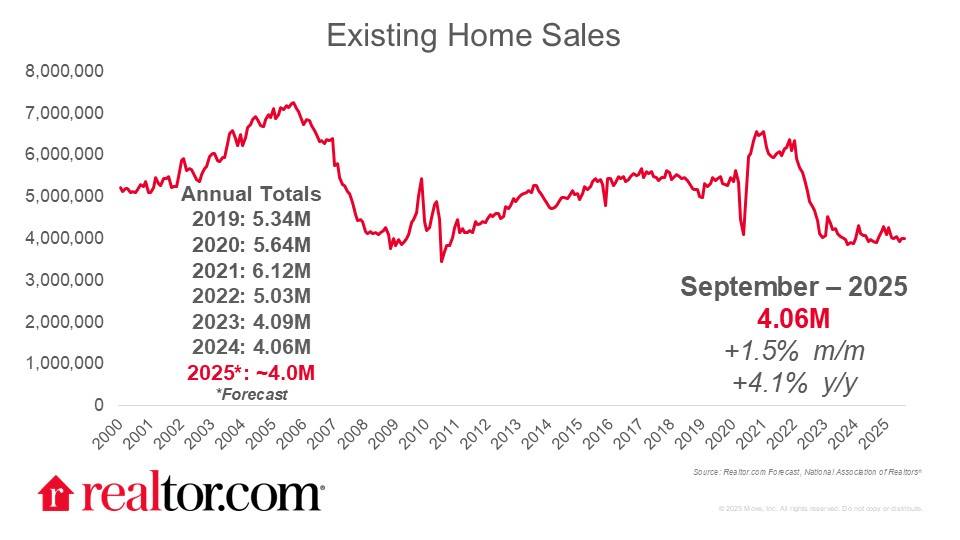
    • Henry ClarkPro Member
      Developer · Member since 2020 · 4k+ posts · 4k+ votes
      10mo
      Quote from @James Hamling:
      Quote from @Henry Clark:
      Quote from @James Hamling:
      Quote from @Henry Clark:

      OP 2 dominoes if/when they fall will Crash the housing market in terms of price, on market inventory and days on market.  From the bottom end of the market Illegal alien removal forget the politics and then when the stock market crashes and people lose jobs they will sell their investment units.  

      Another domino to look at are the large REITS and Funds.  Just like failing Syndications, if their fundamentals such as occupancy, rates, capex change and financing they can be stressed.  

      I would be holding cash, identifying markets, putting in market notices on price drops on houses you’re tracking.  Pick a 30/40% price drop point then invest.  Dont wait for the bottom.   Just make sure your personal income is secure.  We are looking at buying a house in Italy but will rent.   Then wait for prices to drop.  

      The downside of my notes above is inflation will creep in and the US dollar has to devalue.   So waiting and holding cash has its downsides if done for an extended time.  


      The notion of removal of illegal immigrants crashing any market, more or less housing, is a "Spruce Goose". Proof, let's look to the "Deporter in Chief" administration of Obama. I have seen estimates in excess of over 3 million deported during Obama administration. While Trump "trumps" in deportation rhetoric, there deportation numbers are a fraction of that. 

      And what effect did we experience from deportations during Obama era? I don't recall any at all. 

      Do I think Trump will be able to deport tens of millions, no. 

      So while it makes good click bait and holds good political value to propagandize Trump will tank everything via deportations, the facts simply don't support any of it. 

      Next, persons loosing jobs. 

      The problem there is it's a transition, not freeing of realty. Every home owner gone bust, is a new tenant born into the rental market. 

      Surge the market with let's say 5 million foreclosures, means surging tenancy base by 5 million new tenant groups. There is not any excess of rental supply to uptake that. So what happens is a surge in owner occupant housing transitioning into rentals. 

      You won't get the post '08' style collapse. Tight inventory see's to that. 

      Prices would drop only as far as it takes for Investors to competitively step in. And what is it we hear day in and day out right now? Persons complaining they can't find a good buy. 

      I see investor purchasing stepping in around $200 monthly net cash-flow. And surging in volume as cash-flow grows from there. There will not be big paychecks on discount. Way too much pent up demand. 

      And yes, all roads lead to dollar devaluation.... And only 1 of the roads has dollar UP while simultaneously being inflated away; WW III. 


       Realize the wording above can turn a conversation easily.  

      “If/when” above.   Forget the politics.  Selling their “investment” properties.   

      The degree or magnitude of any change making an impact is hard to know.  It’s a matter of Herd mentality.  

      Is it “less” new lower end renters?  Is it 1mm people less, is it 20mm less?  Is it a stock market correction of 10%, 20%, 50% that causes people to sell their investment properties?   
        Investors will sell their investment properties when they hit a certain point.  Then your point other people will jump in.  They have to have the cash or justify with a lender in the middle of a market downturn.  

      I’ll give you a hard number about markets.  I used to raise cattle.   There is a 10 year cattle price cycle.  If the cowherd varies by 5% up or down, the price of beef goes up or down.  Then ranchers will either sell their cowherd or build it up.  Just a 5% shift dictates that market.  

      So the market changes I noted above will impact housing prices and availability just the timing and magnitude is a question.  

      Another example.  We do business in Belize.  One beachfront community had 1/2 of the units for sale during covid.  Their revenue stream changed.  No one was buying their units.  

      Normally such a thing as what were entertaining here would be an item of speculating how it would unfold. But as chance has it, we don't need to speculate, we have data from a case study to go off of; the 2008 Global Financial Crisis. 

      In the GFC, mortgage lending all but completely stopped. Because, contrary to what younger persons think, that's what the GFC originated, the mortgage financing system melting down in grand fashion, the MBS (Mortgage backed Securities) imploded in a cascade effect. 

      So we had in the most extreme way possible, limited access to mortgage financing to the extent of no mortgage financing for next to anyone, full stop. And as it slowly came back to life, it did such incrementally.  

      Next, we had MASSIVE housing surplus. I reference and site the data below. By late '08' it was a record setting 19 million vacant housing units. To put that in contrast that's more than the entire inventory of many states. Picture that, entire states worth of excess housing. We really went bonkers with over-building. I know, as I was one of them doing the building. 

      Today, the pendulum has fully swung as USA is with an estimated housing unit SHORTAGE of nearly 5 million units. Setting a completely polar opposite stage of things. 

      Now keep in mind why it was coining the Global Financial Collapse; because it was the 2nd worst "crash" in the history of the USA, secondly only to the Great Depression.  

      Now using this extreme of 08 GFC, which is so extreme it's the 2nd worst ever to have ever happened..... When mortgage's all but vanished, during a time of massive excess housing supply, kicking off massive recession, the median drop in housing values was 30%. 

      And the bottom was on average 3yrs later, with full recovery of "lost" housing values on average within 7yrs. Yes there was outliers to both extremes but best to keep to medians. 

      All this historical data of case study in-hand I think it's to say any housing "collapse" of 30% or more is off the table barring apocalypse. 

      I believe it's rather safe to say there is nothing out there that presents any realistic capability to stop all mortgage lending. So with that, I think it's also safe to say with massive unit shortage, it's equally safe to assume any "crash" would not have any chance of exceeding 50% of what '08' drop was. 

      Now we have capped things at 15%. 

      What we have next is MOTIVATION. What motivations do people have to sell there properties, at reduced prices. Because we don't have 3/4yr arm's resetting like ticking time bombs. 

      Per the data about 50% of households are sitting with 30yr locks at 4% or less. And about 75% have a lock under 5%. 

      Holy-cow! 25% of households held at significantly lower rates than today, making having to move be it to rent much more expensive than current housing expense. And 50% being about HALF or less than todays prevailing rates..... 

      Motivation couldn't be stronger to HOLD the properties, and mortgages persons have because the cost of loosing that is SIGNIFICANT. 

      Now one could argue what if a person looses their job. 

      Yup, that could happen. And if a person was strongly enough motivated to, like say risk of loosing their home and having to pay 2X as much as their mortgage for rent, they could get another job in a week. Yes, probably a much worse job but one COULD. 

      A person can readily go out and get 2,3 jobs on demand today, as there is currently about 7 million open jobs. 

      So by the numbers, to get to a matching recipe that made a 30% drop in home prices we would need to: 

      Eliminate about 8 million households, the people that is, poof gone. And being households that probably about 20 million people, if not more. 

      PLUS figure out some way to stop the global financial machine for a few months. This is one that's so difficult to figure out how to do it makes Thanos snapping 20 million people out of existence seem simple. 

      And then were there......

      So as I have been saying for years, the absolute GARBAGE BS being put out by assorted wanna-b YT "gurus" telling wanna-b investors to "hold tight" some whatever half baked cracker jack theory of a 30% housing collapse is "imminent" is utter prairie frisbee's (rolling with your cattle theme). 

      I know the feelings are somethings gotta give, and we all have this fear baked into us because of what weve gone through in past decades. But this time, it really is different. Just like '08' was different from previously experienced things. And dot com was a bit different than prior ones. And S&L was a bit different from previous things. And and and. 

      Things rhyme, but they are always a bit different. That's why we tend to stumble into them like drunken sailors, and only realize the full fledged idiocy after the hang over. 

      This one feels to follow a theme more like 70's/80's. Erosion of wealth for most, explosion of wealth for the few. Complex mechanisms that few had any education even existed. 

      Man I really hope K-cars don't come back.... But I guess it's better than being seen in a Pinto. 

      - Per Google ai below -

      Leading up to the 2008 financial crisis, there were approximately 3 to 3.5 million excess housing units built. By late 2008, the U.S. had a record 19 million vacant homes, a number that included about 2.23 million homes for sale and 4.1 million vacant for rent. This oversupply was a national phenomenon caused by a housing boom fueled by factors like speculation and subprime lending.

      • Excess units built: Research suggests the boom cycle led to the construction of 3 to 3.5 million more housing units than were needed based on historical trends.
      • Peak vacancy: By the fourth quarter of 2008, the total number of vacant homes reached a record 19 million, or roughly 11% of all housing units.
      • Types of vacant homes: This total included a significant number of properties not for sale, such as seasonal homes (around 4.8 million) and rental vacancies.
      • Homes for sale: Around 2.23 million empty homes were for sale, and 4.1 million were vacant and available for rent.
      • ---- ---- ---- ---- ---- ----
      • The USA has a housing shortage of approximately 4.7 million to 4.9 million units, according to 2023 and 2024 estimates from sources like Zillow Group and Brookings. This deficit has been growing, with new data from NewsNation and Brookings indicating an increase of 159,000 to 200,000 units in 2023 alone.
      • ---- ---- ---- ---- ---- ----
      • The total median U.S. home price drop from its peak during the 2008 Great Financial Crisis (GFC) and over the following five years resulted in a national average decline of nearly 30% from the market peak in early 2006 to its lowest point in 2011.
      • ---- ---- ---- ---- ---- ----
      • Approximately 52.5% to just over 54% of U.S. households with a mortgage have an interest rate of 4% or less, as of data from mid-to-late 2025.
      • ---- ---- ---- ---- ---- ----
      • Approximately 70% to 73.3% of U.S. mortgage borrowers have an interest rate of 5% or less. The vast majority of these are 30-year fixed-rate mortgages.

       Again I’m referencing investment units.  Whether section 8 or BNB.  Or even LTR.  I’m not referencing 100% of property owners.     Let’s ask BP investors what they would do.

      1.  Stock market is at an all time high.  P/E ratios are not obtainable.  Focused on primarily 7 companies around one industry.  Product or life cycle times have steadily sped up over the last 200 years.  In other words those 7 companies will go from shining stars to commodity companies in a decade.   Not able to repay their current high PE ratios.  “Stock” market, not the “Housing” market crashes.  Stock market has to.

       2.  You or your spouse lose your $80k to $150k salary job.  And you won’t be able to find a comparable job in that market. Or you have to sale and move. 

      3.  Renter base- Section 8 or similar housing on the low end they lose their jobs due to slowed economy.  BNB renters back off vacations.  You either have people not paying or your rental drops to 30%.

      4.  Government has to print money causing inflation.  They can’t raise the interest rate since the government has to much debt to pay higher interest.  Which while your in the above predicament and want to maintain the same lifestyle your costs are going up.

      BP investors.  Your debts are still the same.   You want to keep the same lifestyle.  But the above is your new world.  What actions will you take in order?  1.  Sale an “investment” property even if the interest rate is say 3%., 2.  RAID your 401k., 3.  Sale your extra corvette, RV, boat. take your kids out of private school or college, stop vacations and eating out., 4.  Get 3 part time jobs stocking shelves at the hardware store and flipping burgers?, 5. Move back in with your parents.  

      For the BP investors who take a liquid position, the Investors above will first sell their investment property.  Buy premium properties at a discount.  Keep funds on the side to weather the storm. 

       
      It’s your money, you’re always right even if you’re wrong.  The good thing about any forum especially BP you get different perspectives from which you can add to your thought process.  

    • Real Estate Broker · Minneapolis, MN · Member since 2011 · 5k+ posts · 6k+ votes
      10mo
      Quote from @Henry Clark:
      Quote from @James Hamling:
      Quote from @Henry Clark:
      Quote from @James Hamling:
      Quote from @Henry Clark:

      OP 2 dominoes if/when they fall will Crash the housing market in terms of price, on market inventory and days on market.  From the bottom end of the market Illegal alien removal forget the politics and then when the stock market crashes and people lose jobs they will sell their investment units.  

      Another domino to look at are the large REITS and Funds.  Just like failing Syndications, if their fundamentals such as occupancy, rates, capex change and financing they can be stressed.  

      I would be holding cash, identifying markets, putting in market notices on price drops on houses you’re tracking.  Pick a 30/40% price drop point then invest.  Dont wait for the bottom.   Just make sure your personal income is secure.  We are looking at buying a house in Italy but will rent.   Then wait for prices to drop.  

      The downside of my notes above is inflation will creep in and the US dollar has to devalue.   So waiting and holding cash has its downsides if done for an extended time.  


      The notion of removal of illegal immigrants crashing any market, more or less housing, is a "Spruce Goose". Proof, let's look to the "Deporter in Chief" administration of Obama. I have seen estimates in excess of over 3 million deported during Obama administration. While Trump "trumps" in deportation rhetoric, there deportation numbers are a fraction of that. 

      And what effect did we experience from deportations during Obama era? I don't recall any at all. 

      Do I think Trump will be able to deport tens of millions, no. 

      So while it makes good click bait and holds good political value to propagandize Trump will tank everything via deportations, the facts simply don't support any of it. 

      Next, persons loosing jobs. 

      The problem there is it's a transition, not freeing of realty. Every home owner gone bust, is a new tenant born into the rental market. 

      Surge the market with let's say 5 million foreclosures, means surging tenancy base by 5 million new tenant groups. There is not any excess of rental supply to uptake that. So what happens is a surge in owner occupant housing transitioning into rentals. 

      You won't get the post '08' style collapse. Tight inventory see's to that. 

      Prices would drop only as far as it takes for Investors to competitively step in. And what is it we hear day in and day out right now? Persons complaining they can't find a good buy. 

      I see investor purchasing stepping in around $200 monthly net cash-flow. And surging in volume as cash-flow grows from there. There will not be big paychecks on discount. Way too much pent up demand. 

      And yes, all roads lead to dollar devaluation.... And only 1 of the roads has dollar UP while simultaneously being inflated away; WW III. 


       Realize the wording above can turn a conversation easily.  

      “If/when” above.   Forget the politics.  Selling their “investment” properties.   

      The degree or magnitude of any change making an impact is hard to know.  It’s a matter of Herd mentality.  

      Is it “less” new lower end renters?  Is it 1mm people less, is it 20mm less?  Is it a stock market correction of 10%, 20%, 50% that causes people to sell their investment properties?   
        Investors will sell their investment properties when they hit a certain point.  Then your point other people will jump in.  They have to have the cash or justify with a lender in the middle of a market downturn.  

      I’ll give you a hard number about markets.  I used to raise cattle.   There is a 10 year cattle price cycle.  If the cowherd varies by 5% up or down, the price of beef goes up or down.  Then ranchers will either sell their cowherd or build it up.  Just a 5% shift dictates that market.  

      So the market changes I noted above will impact housing prices and availability just the timing and magnitude is a question.  

      Another example.  We do business in Belize.  One beachfront community had 1/2 of the units for sale during covid.  Their revenue stream changed.  No one was buying their units.  

      Normally such a thing as what were entertaining here would be an item of speculating how it would unfold. But as chance has it, we don't need to speculate, we have data from a case study to go off of; the 2008 Global Financial Crisis. 

      In the GFC, mortgage lending all but completely stopped. Because, contrary to what younger persons think, that's what the GFC originated, the mortgage financing system melting down in grand fashion, the MBS (Mortgage backed Securities) imploded in a cascade effect. 

      So we had in the most extreme way possible, limited access to mortgage financing to the extent of no mortgage financing for next to anyone, full stop. And as it slowly came back to life, it did such incrementally.  

      Next, we had MASSIVE housing surplus. I reference and site the data below. By late '08' it was a record setting 19 million vacant housing units. To put that in contrast that's more than the entire inventory of many states. Picture that, entire states worth of excess housing. We really went bonkers with over-building. I know, as I was one of them doing the building. 

      Today, the pendulum has fully swung as USA is with an estimated housing unit SHORTAGE of nearly 5 million units. Setting a completely polar opposite stage of things. 

      Now keep in mind why it was coining the Global Financial Collapse; because it was the 2nd worst "crash" in the history of the USA, secondly only to the Great Depression.  

      Now using this extreme of 08 GFC, which is so extreme it's the 2nd worst ever to have ever happened..... When mortgage's all but vanished, during a time of massive excess housing supply, kicking off massive recession, the median drop in housing values was 30%. 

      And the bottom was on average 3yrs later, with full recovery of "lost" housing values on average within 7yrs. Yes there was outliers to both extremes but best to keep to medians. 

      All this historical data of case study in-hand I think it's to say any housing "collapse" of 30% or more is off the table barring apocalypse. 

      I believe it's rather safe to say there is nothing out there that presents any realistic capability to stop all mortgage lending. So with that, I think it's also safe to say with massive unit shortage, it's equally safe to assume any "crash" would not have any chance of exceeding 50% of what '08' drop was. 

      Now we have capped things at 15%. 

      What we have next is MOTIVATION. What motivations do people have to sell there properties, at reduced prices. Because we don't have 3/4yr arm's resetting like ticking time bombs. 

      Per the data about 50% of households are sitting with 30yr locks at 4% or less. And about 75% have a lock under 5%. 

      Holy-cow! 25% of households held at significantly lower rates than today, making having to move be it to rent much more expensive than current housing expense. And 50% being about HALF or less than todays prevailing rates..... 

      Motivation couldn't be stronger to HOLD the properties, and mortgages persons have because the cost of loosing that is SIGNIFICANT. 

      Now one could argue what if a person looses their job. 

      Yup, that could happen. And if a person was strongly enough motivated to, like say risk of loosing their home and having to pay 2X as much as their mortgage for rent, they could get another job in a week. Yes, probably a much worse job but one COULD. 

      A person can readily go out and get 2,3 jobs on demand today, as there is currently about 7 million open jobs. 

      So by the numbers, to get to a matching recipe that made a 30% drop in home prices we would need to: 

      Eliminate about 8 million households, the people that is, poof gone. And being households that probably about 20 million people, if not more. 

      PLUS figure out some way to stop the global financial machine for a few months. This is one that's so difficult to figure out how to do it makes Thanos snapping 20 million people out of existence seem simple. 

      And then were there......

      So as I have been saying for years, the absolute GARBAGE BS being put out by assorted wanna-b YT "gurus" telling wanna-b investors to "hold tight" some whatever half baked cracker jack theory of a 30% housing collapse is "imminent" is utter prairie frisbee's (rolling with your cattle theme). 

      I know the feelings are somethings gotta give, and we all have this fear baked into us because of what weve gone through in past decades. But this time, it really is different. Just like '08' was different from previously experienced things. And dot com was a bit different than prior ones. And S&L was a bit different from previous things. And and and. 

      Things rhyme, but they are always a bit different. That's why we tend to stumble into them like drunken sailors, and only realize the full fledged idiocy after the hang over. 

      This one feels to follow a theme more like 70's/80's. Erosion of wealth for most, explosion of wealth for the few. Complex mechanisms that few had any education even existed. 

      Man I really hope K-cars don't come back.... But I guess it's better than being seen in a Pinto. 

      - Per Google ai below -

      Leading up to the 2008 financial crisis, there were approximately 3 to 3.5 million excess housing units built. By late 2008, the U.S. had a record 19 million vacant homes, a number that included about 2.23 million homes for sale and 4.1 million vacant for rent. This oversupply was a national phenomenon caused by a housing boom fueled by factors like speculation and subprime lending.

      • Excess units built: Research suggests the boom cycle led to the construction of 3 to 3.5 million more housing units than were needed based on historical trends.
      • Peak vacancy: By the fourth quarter of 2008, the total number of vacant homes reached a record 19 million, or roughly 11% of all housing units.
      • Types of vacant homes: This total included a significant number of properties not for sale, such as seasonal homes (around 4.8 million) and rental vacancies.
      • Homes for sale: Around 2.23 million empty homes were for sale, and 4.1 million were vacant and available for rent.
      • ---- ---- ---- ---- ---- ----
      • The USA has a housing shortage of approximately 4.7 million to 4.9 million units, according to 2023 and 2024 estimates from sources like Zillow Group and Brookings. This deficit has been growing, with new data from NewsNation and Brookings indicating an increase of 159,000 to 200,000 units in 2023 alone.
      • ---- ---- ---- ---- ---- ----
      • The total median U.S. home price drop from its peak during the 2008 Great Financial Crisis (GFC) and over the following five years resulted in a national average decline of nearly 30% from the market peak in early 2006 to its lowest point in 2011.
      • ---- ---- ---- ---- ---- ----
      • Approximately 52.5% to just over 54% of U.S. households with a mortgage have an interest rate of 4% or less, as of data from mid-to-late 2025.
      • ---- ---- ---- ---- ---- ----
      • Approximately 70% to 73.3% of U.S. mortgage borrowers have an interest rate of 5% or less. The vast majority of these are 30-year fixed-rate mortgages.

       Again I’m referencing investment units.  Whether section 8 or BNB.  Or even LTR.  I’m not referencing 100% of property owners.     Let’s ask BP investors what they would do.

      1.  Stock market is at an all time high.  P/E ratios are not obtainable.  Focused on primarily 7 companies around one industry.  Product or life cycle times have steadily sped up over the last 200 years.  In other words those 7 companies will go from shining stars to commodity companies in a decade.   Not able to repay their current high PE ratios.  “Stock” market, not the “Housing” market crashes.  Stock market has to.

       2.  You or your spouse lose your $80k to $150k salary job.  And you won’t be able to find a comparable job in that market. Or you have to sale and move. 

      3.  Renter base- Section 8 or similar housing on the low end they lose their jobs due to slowed economy.  BNB renters back off vacations.  You either have people not paying or your rental drops to 30%.

      4.  Government has to print money causing inflation.  They can’t raise the interest rate since the government has to much debt to pay higher interest.  Which while your in the above predicament and want to maintain the same lifestyle your costs are going up.

      BP investors.  Your debts are still the same.   You want to keep the same lifestyle.  But the above is your new world.  What actions will you take in order?  1.  Sale an “investment” property even if the interest rate is say 3%., 2.  RAID your 401k., 3.  Sale your extra corvette, RV, boat. take your kids out of private school or college, stop vacations and eating out., 4.  Get 3 part time jobs stocking shelves at the hardware store and flipping burgers?, 5. Move back in with your parents.  

      For the BP investors who take a liquid position, the Investors above will first sell their investment property.  Buy premium properties at a discount.  Keep funds on the side to weather the storm. 

       
      It’s your money, you’re always right even if you’re wrong.  The good thing about any forum especially BP you get different perspectives from which you can add to your thought process.  


      1. The stock market doesn't "have to crash". To USD could inflate, to meet the mark. Or a combination of step down a bit and USD inflate to meet. Gold prices is one scary indicator that the USD is inflating at a break neck pace, mitigating some of that P/E factor as not being necessarily as much "high" as it may be EARLY. 

      PLTR, that's just insane PE regardless. TSLA is on this gamble it will be "The" robot manufacturer and have literally trillions upon trillions in orders. Big gamble in my opinion. 

      2. As I said, there is more then enough motivation in the #'s for persons in such situation to replace 1 lost job with 2, if push came to shove. The alternative is doubling or tripling ones cost of shelter. 

      3. STR is a totally different thing. That's talking hospitality, a whole different beast. Comparing STR to standard housing stock is comparing Retail space too Cold/mini storage. Kinda similar, wildly different.

      4. Yes, 1,000%, Government HAS to print $, no 2 ways about it, HAVE-to. How they thread this needle with the inflation brick, is going to be interesting and is already interesting. They have the FED doing QT to MBS starting Dec 1st, at same time their doing QE to treasuries. That won't be enough alone, but it tips their hand of how they are trying to do this; they will slit the peoples throats to save Gov debt. Simultaneous QE and QT. 

      Why do you think investors would sell properties when inflation is happening? Rents up, or flat, mortgage rates up, cost of new units up. Investors will hold on tighter to what they have because of Opportunity Cost. 

      And tight housing supply will only get tighter, thus forcing rents up.      Especially for properties on lowest rung of the value ladder, like sec8 etc.. 

    • Henry ClarkPro Member
      Developer · Member since 2020 · 4k+ posts · 4k+ votes
      10mo
      Quote from @James Hamling:
      Quote from @Henry Clark:
      Quote from @James Hamling:
      Quote from @Henry Clark:
      Quote from @James Hamling:
      Quote from @Henry Clark:

      OP 2 dominoes if/when they fall will Crash the housing market in terms of price, on market inventory and days on market.  From the bottom end of the market Illegal alien removal forget the politics and then when the stock market crashes and people lose jobs they will sell their investment units.  

      Another domino to look at are the large REITS and Funds.  Just like failing Syndications, if their fundamentals such as occupancy, rates, capex change and financing they can be stressed.  

      I would be holding cash, identifying markets, putting in market notices on price drops on houses you’re tracking.  Pick a 30/40% price drop point then invest.  Dont wait for the bottom.   Just make sure your personal income is secure.  We are looking at buying a house in Italy but will rent.   Then wait for prices to drop.  

      The downside of my notes above is inflation will creep in and the US dollar has to devalue.   So waiting and holding cash has its downsides if done for an extended time.  


      The notion of removal of illegal immigrants crashing any market, more or less housing, is a "Spruce Goose". Proof, let's look to the "Deporter in Chief" administration of Obama. I have seen estimates in excess of over 3 million deported during Obama administration. While Trump "trumps" in deportation rhetoric, there deportation numbers are a fraction of that. 

      And what effect did we experience from deportations during Obama era? I don't recall any at all. 

      Do I think Trump will be able to deport tens of millions, no. 

      So while it makes good click bait and holds good political value to propagandize Trump will tank everything via deportations, the facts simply don't support any of it. 

      Next, persons loosing jobs. 

      The problem there is it's a transition, not freeing of realty. Every home owner gone bust, is a new tenant born into the rental market. 

      Surge the market with let's say 5 million foreclosures, means surging tenancy base by 5 million new tenant groups. There is not any excess of rental supply to uptake that. So what happens is a surge in owner occupant housing transitioning into rentals. 

      You won't get the post '08' style collapse. Tight inventory see's to that. 

      Prices would drop only as far as it takes for Investors to competitively step in. And what is it we hear day in and day out right now? Persons complaining they can't find a good buy. 

      I see investor purchasing stepping in around $200 monthly net cash-flow. And surging in volume as cash-flow grows from there. There will not be big paychecks on discount. Way too much pent up demand. 

      And yes, all roads lead to dollar devaluation.... And only 1 of the roads has dollar UP while simultaneously being inflated away; WW III. 


       Realize the wording above can turn a conversation easily.  

      “If/when” above.   Forget the politics.  Selling their “investment” properties.   

      The degree or magnitude of any change making an impact is hard to know.  It’s a matter of Herd mentality.  

      Is it “less” new lower end renters?  Is it 1mm people less, is it 20mm less?  Is it a stock market correction of 10%, 20%, 50% that causes people to sell their investment properties?   
        Investors will sell their investment properties when they hit a certain point.  Then your point other people will jump in.  They have to have the cash or justify with a lender in the middle of a market downturn.  

      I’ll give you a hard number about markets.  I used to raise cattle.   There is a 10 year cattle price cycle.  If the cowherd varies by 5% up or down, the price of beef goes up or down.  Then ranchers will either sell their cowherd or build it up.  Just a 5% shift dictates that market.  

      So the market changes I noted above will impact housing prices and availability just the timing and magnitude is a question.  

      Another example.  We do business in Belize.  One beachfront community had 1/2 of the units for sale during covid.  Their revenue stream changed.  No one was buying their units.  

      Normally such a thing as what were entertaining here would be an item of speculating how it would unfold. But as chance has it, we don't need to speculate, we have data from a case study to go off of; the 2008 Global Financial Crisis. 

      In the GFC, mortgage lending all but completely stopped. Because, contrary to what younger persons think, that's what the GFC originated, the mortgage financing system melting down in grand fashion, the MBS (Mortgage backed Securities) imploded in a cascade effect. 

      So we had in the most extreme way possible, limited access to mortgage financing to the extent of no mortgage financing for next to anyone, full stop. And as it slowly came back to life, it did such incrementally.  

      Next, we had MASSIVE housing surplus. I reference and site the data below. By late '08' it was a record setting 19 million vacant housing units. To put that in contrast that's more than the entire inventory of many states. Picture that, entire states worth of excess housing. We really went bonkers with over-building. I know, as I was one of them doing the building. 

      Today, the pendulum has fully swung as USA is with an estimated housing unit SHORTAGE of nearly 5 million units. Setting a completely polar opposite stage of things. 

      Now keep in mind why it was coining the Global Financial Collapse; because it was the 2nd worst "crash" in the history of the USA, secondly only to the Great Depression.  

      Now using this extreme of 08 GFC, which is so extreme it's the 2nd worst ever to have ever happened..... When mortgage's all but vanished, during a time of massive excess housing supply, kicking off massive recession, the median drop in housing values was 30%. 

      And the bottom was on average 3yrs later, with full recovery of "lost" housing values on average within 7yrs. Yes there was outliers to both extremes but best to keep to medians. 

      All this historical data of case study in-hand I think it's to say any housing "collapse" of 30% or more is off the table barring apocalypse. 

      I believe it's rather safe to say there is nothing out there that presents any realistic capability to stop all mortgage lending. So with that, I think it's also safe to say with massive unit shortage, it's equally safe to assume any "crash" would not have any chance of exceeding 50% of what '08' drop was. 

      Now we have capped things at 15%. 

      What we have next is MOTIVATION. What motivations do people have to sell there properties, at reduced prices. Because we don't have 3/4yr arm's resetting like ticking time bombs. 

      Per the data about 50% of households are sitting with 30yr locks at 4% or less. And about 75% have a lock under 5%. 

      Holy-cow! 25% of households held at significantly lower rates than today, making having to move be it to rent much more expensive than current housing expense. And 50% being about HALF or less than todays prevailing rates..... 

      Motivation couldn't be stronger to HOLD the properties, and mortgages persons have because the cost of loosing that is SIGNIFICANT. 

      Now one could argue what if a person looses their job. 

      Yup, that could happen. And if a person was strongly enough motivated to, like say risk of loosing their home and having to pay 2X as much as their mortgage for rent, they could get another job in a week. Yes, probably a much worse job but one COULD. 

      A person can readily go out and get 2,3 jobs on demand today, as there is currently about 7 million open jobs. 

      So by the numbers, to get to a matching recipe that made a 30% drop in home prices we would need to: 

      Eliminate about 8 million households, the people that is, poof gone. And being households that probably about 20 million people, if not more. 

      PLUS figure out some way to stop the global financial machine for a few months. This is one that's so difficult to figure out how to do it makes Thanos snapping 20 million people out of existence seem simple. 

      And then were there......

      So as I have been saying for years, the absolute GARBAGE BS being put out by assorted wanna-b YT "gurus" telling wanna-b investors to "hold tight" some whatever half baked cracker jack theory of a 30% housing collapse is "imminent" is utter prairie frisbee's (rolling with your cattle theme). 

      I know the feelings are somethings gotta give, and we all have this fear baked into us because of what weve gone through in past decades. But this time, it really is different. Just like '08' was different from previously experienced things. And dot com was a bit different than prior ones. And S&L was a bit different from previous things. And and and. 

      Things rhyme, but they are always a bit different. That's why we tend to stumble into them like drunken sailors, and only realize the full fledged idiocy after the hang over. 

      This one feels to follow a theme more like 70's/80's. Erosion of wealth for most, explosion of wealth for the few. Complex mechanisms that few had any education even existed. 

      Man I really hope K-cars don't come back.... But I guess it's better than being seen in a Pinto. 

      - Per Google ai below -

      Leading up to the 2008 financial crisis, there were approximately 3 to 3.5 million excess housing units built. By late 2008, the U.S. had a record 19 million vacant homes, a number that included about 2.23 million homes for sale and 4.1 million vacant for rent. This oversupply was a national phenomenon caused by a housing boom fueled by factors like speculation and subprime lending.

      • Excess units built: Research suggests the boom cycle led to the construction of 3 to 3.5 million more housing units than were needed based on historical trends.
      • Peak vacancy: By the fourth quarter of 2008, the total number of vacant homes reached a record 19 million, or roughly 11% of all housing units.
      • Types of vacant homes: This total included a significant number of properties not for sale, such as seasonal homes (around 4.8 million) and rental vacancies.
      • Homes for sale: Around 2.23 million empty homes were for sale, and 4.1 million were vacant and available for rent.
      • ---- ---- ---- ---- ---- ----
      • The USA has a housing shortage of approximately 4.7 million to 4.9 million units, according to 2023 and 2024 estimates from sources like Zillow Group and Brookings. This deficit has been growing, with new data from NewsNation and Brookings indicating an increase of 159,000 to 200,000 units in 2023 alone.
      • ---- ---- ---- ---- ---- ----
      • The total median U.S. home price drop from its peak during the 2008 Great Financial Crisis (GFC) and over the following five years resulted in a national average decline of nearly 30% from the market peak in early 2006 to its lowest point in 2011.
      • ---- ---- ---- ---- ---- ----
      • Approximately 52.5% to just over 54% of U.S. households with a mortgage have an interest rate of 4% or less, as of data from mid-to-late 2025.
      • ---- ---- ---- ---- ---- ----
      • Approximately 70% to 73.3% of U.S. mortgage borrowers have an interest rate of 5% or less. The vast majority of these are 30-year fixed-rate mortgages.

       Again I’m referencing investment units.  Whether section 8 or BNB.  Or even LTR.  I’m not referencing 100% of property owners.     Let’s ask BP investors what they would do.

      1.  Stock market is at an all time high.  P/E ratios are not obtainable.  Focused on primarily 7 companies around one industry.  Product or life cycle times have steadily sped up over the last 200 years.  In other words those 7 companies will go from shining stars to commodity companies in a decade.   Not able to repay their current high PE ratios.  “Stock” market, not the “Housing” market crashes.  Stock market has to.

       2.  You or your spouse lose your $80k to $150k salary job.  And you won’t be able to find a comparable job in that market. Or you have to sale and move. 

      3.  Renter base- Section 8 or similar housing on the low end they lose their jobs due to slowed economy.  BNB renters back off vacations.  You either have people not paying or your rental drops to 30%.

      4.  Government has to print money causing inflation.  They can’t raise the interest rate since the government has to much debt to pay higher interest.  Which while your in the above predicament and want to maintain the same lifestyle your costs are going up.

      BP investors.  Your debts are still the same.   You want to keep the same lifestyle.  But the above is your new world.  What actions will you take in order?  1.  Sale an “investment” property even if the interest rate is say 3%., 2.  RAID your 401k., 3.  Sale your extra corvette, RV, boat. take your kids out of private school or college, stop vacations and eating out., 4.  Get 3 part time jobs stocking shelves at the hardware store and flipping burgers?, 5. Move back in with your parents.  

      For the BP investors who take a liquid position, the Investors above will first sell their investment property.  Buy premium properties at a discount.  Keep funds on the side to weather the storm. 

       
      It’s your money, you’re always right even if you’re wrong.  The good thing about any forum especially BP you get different perspectives from which you can add to your thought process.  


      1. The stock market doesn't "have to crash". To USD could inflate, to meet the mark. Or a combination of step down a bit and USD inflate to meet. Gold prices is one scary indicator that the USD is inflating at a break neck pace, mitigating some of that P/E factor as not being necessarily as much "high" as it may be EARLY. 

      PLTR, that's just insane PE regardless. TSLA is on this gamble it will be "The" robot manufacturer and have literally trillions upon trillions in orders. Big gamble in my opinion. 

      2. As I said, there is more then enough motivation in the #'s for persons in such situation to replace 1 lost job with 2, if push came to shove. The alternative is doubling or tripling ones cost of shelter. 

      3. STR is a totally different thing. That's talking hospitality, a whole different beast. Comparing STR to standard housing stock is comparing Retail space too Cold/mini storage. Kinda similar, wildly different.

      4. Yes, 1,000%, Government HAS to print $, no 2 ways about it, HAVE-to. How they thread this needle with the inflation brick, is going to be interesting and is already interesting. They have the FED doing QT to MBS starting Dec 1st, at same time their doing QE to treasuries. That won't be enough alone, but it tips their hand of how they are trying to do this; they will slit the peoples throats to save Gov debt. Simultaneous QE and QT. 

      Why do you think investors would sell properties when inflation is happening? Rents up, or flat, mortgage rates up, cost of new units up. Investors will hold on tighter to what they have because of Opportunity Cost. 

      And tight housing supply will only get tighter, thus forcing rents up.      Especially for properties on lowest rung of the value ladder, like sec8 etc.. 

      Investors will sell.  Look at the 5 options I gave above.  Add any other options you think.  I’m recommending new investors hold onto their liquid cash.  Existing investors postpone their next deal.  I believe in the next 12 months  rental properties whether sec 8 or Bnb will be going on the market at a discounted price.  Irregardless of a housing shortage, lost opportunity cost, giving up a 3% loan, impending inflation, etc.  

      Pick your market.  Start watching days on market growth, price reductions, inventory for sale increase, From an investors standpoint start watching the large REITS financial stability.  
    • Real Estate Broker · Minneapolis, MN · Member since 2011 · 5k+ posts · 6k+ votes
      10mo
      Quote from @Henry Clark:
      Quote from @James Hamling:
      Quote from @Henry Clark:
      Quote from @James Hamling:
      Quote from @Henry Clark:
      Quote from @James Hamling:
      Quote from @Henry Clark:

      OP 2 dominoes if/when they fall will Crash the housing market in terms of price, on market inventory and days on market.  From the bottom end of the market Illegal alien removal forget the politics and then when the stock market crashes and people lose jobs they will sell their investment units.  

      Another domino to look at are the large REITS and Funds.  Just like failing Syndications, if their fundamentals such as occupancy, rates, capex change and financing they can be stressed.  

      I would be holding cash, identifying markets, putting in market notices on price drops on houses you’re tracking.  Pick a 30/40% price drop point then invest.  Dont wait for the bottom.   Just make sure your personal income is secure.  We are looking at buying a house in Italy but will rent.   Then wait for prices to drop.  

      The downside of my notes above is inflation will creep in and the US dollar has to devalue.   So waiting and holding cash has its downsides if done for an extended time.  


      The notion of removal of illegal immigrants crashing any market, more or less housing, is a "Spruce Goose". Proof, let's look to the "Deporter in Chief" administration of Obama. I have seen estimates in excess of over 3 million deported during Obama administration. While Trump "trumps" in deportation rhetoric, there deportation numbers are a fraction of that. 

      And what effect did we experience from deportations during Obama era? I don't recall any at all. 

      Do I think Trump will be able to deport tens of millions, no. 

      So while it makes good click bait and holds good political value to propagandize Trump will tank everything via deportations, the facts simply don't support any of it. 

      Next, persons loosing jobs. 

      The problem there is it's a transition, not freeing of realty. Every home owner gone bust, is a new tenant born into the rental market. 

      Surge the market with let's say 5 million foreclosures, means surging tenancy base by 5 million new tenant groups. There is not any excess of rental supply to uptake that. So what happens is a surge in owner occupant housing transitioning into rentals. 

      You won't get the post '08' style collapse. Tight inventory see's to that. 

      Prices would drop only as far as it takes for Investors to competitively step in. And what is it we hear day in and day out right now? Persons complaining they can't find a good buy. 

      I see investor purchasing stepping in around $200 monthly net cash-flow. And surging in volume as cash-flow grows from there. There will not be big paychecks on discount. Way too much pent up demand. 

      And yes, all roads lead to dollar devaluation.... And only 1 of the roads has dollar UP while simultaneously being inflated away; WW III. 


       Realize the wording above can turn a conversation easily.  

      “If/when” above.   Forget the politics.  Selling their “investment” properties.   

      The degree or magnitude of any change making an impact is hard to know.  It’s a matter of Herd mentality.  

      Is it “less” new lower end renters?  Is it 1mm people less, is it 20mm less?  Is it a stock market correction of 10%, 20%, 50% that causes people to sell their investment properties?   
        Investors will sell their investment properties when they hit a certain point.  Then your point other people will jump in.  They have to have the cash or justify with a lender in the middle of a market downturn.  

      I’ll give you a hard number about markets.  I used to raise cattle.   There is a 10 year cattle price cycle.  If the cowherd varies by 5% up or down, the price of beef goes up or down.  Then ranchers will either sell their cowherd or build it up.  Just a 5% shift dictates that market.  

      So the market changes I noted above will impact housing prices and availability just the timing and magnitude is a question.  

      Another example.  We do business in Belize.  One beachfront community had 1/2 of the units for sale during covid.  Their revenue stream changed.  No one was buying their units.  

      Normally such a thing as what were entertaining here would be an item of speculating how it would unfold. But as chance has it, we don't need to speculate, we have data from a case study to go off of; the 2008 Global Financial Crisis. 

      In the GFC, mortgage lending all but completely stopped. Because, contrary to what younger persons think, that's what the GFC originated, the mortgage financing system melting down in grand fashion, the MBS (Mortgage backed Securities) imploded in a cascade effect. 

      So we had in the most extreme way possible, limited access to mortgage financing to the extent of no mortgage financing for next to anyone, full stop. And as it slowly came back to life, it did such incrementally.  

      Next, we had MASSIVE housing surplus. I reference and site the data below. By late '08' it was a record setting 19 million vacant housing units. To put that in contrast that's more than the entire inventory of many states. Picture that, entire states worth of excess housing. We really went bonkers with over-building. I know, as I was one of them doing the building. 

      Today, the pendulum has fully swung as USA is with an estimated housing unit SHORTAGE of nearly 5 million units. Setting a completely polar opposite stage of things. 

      Now keep in mind why it was coining the Global Financial Collapse; because it was the 2nd worst "crash" in the history of the USA, secondly only to the Great Depression.  

      Now using this extreme of 08 GFC, which is so extreme it's the 2nd worst ever to have ever happened..... When mortgage's all but vanished, during a time of massive excess housing supply, kicking off massive recession, the median drop in housing values was 30%. 

      And the bottom was on average 3yrs later, with full recovery of "lost" housing values on average within 7yrs. Yes there was outliers to both extremes but best to keep to medians. 

      All this historical data of case study in-hand I think it's to say any housing "collapse" of 30% or more is off the table barring apocalypse. 

      I believe it's rather safe to say there is nothing out there that presents any realistic capability to stop all mortgage lending. So with that, I think it's also safe to say with massive unit shortage, it's equally safe to assume any "crash" would not have any chance of exceeding 50% of what '08' drop was. 

      Now we have capped things at 15%. 

      What we have next is MOTIVATION. What motivations do people have to sell there properties, at reduced prices. Because we don't have 3/4yr arm's resetting like ticking time bombs. 

      Per the data about 50% of households are sitting with 30yr locks at 4% or less. And about 75% have a lock under 5%. 

      Holy-cow! 25% of households held at significantly lower rates than today, making having to move be it to rent much more expensive than current housing expense. And 50% being about HALF or less than todays prevailing rates..... 

      Motivation couldn't be stronger to HOLD the properties, and mortgages persons have because the cost of loosing that is SIGNIFICANT. 

      Now one could argue what if a person looses their job. 

      Yup, that could happen. And if a person was strongly enough motivated to, like say risk of loosing their home and having to pay 2X as much as their mortgage for rent, they could get another job in a week. Yes, probably a much worse job but one COULD. 

      A person can readily go out and get 2,3 jobs on demand today, as there is currently about 7 million open jobs. 

      So by the numbers, to get to a matching recipe that made a 30% drop in home prices we would need to: 

      Eliminate about 8 million households, the people that is, poof gone. And being households that probably about 20 million people, if not more. 

      PLUS figure out some way to stop the global financial machine for a few months. This is one that's so difficult to figure out how to do it makes Thanos snapping 20 million people out of existence seem simple. 

      And then were there......

      So as I have been saying for years, the absolute GARBAGE BS being put out by assorted wanna-b YT "gurus" telling wanna-b investors to "hold tight" some whatever half baked cracker jack theory of a 30% housing collapse is "imminent" is utter prairie frisbee's (rolling with your cattle theme). 

      I know the feelings are somethings gotta give, and we all have this fear baked into us because of what weve gone through in past decades. But this time, it really is different. Just like '08' was different from previously experienced things. And dot com was a bit different than prior ones. And S&L was a bit different from previous things. And and and. 

      Things rhyme, but they are always a bit different. That's why we tend to stumble into them like drunken sailors, and only realize the full fledged idiocy after the hang over. 

      This one feels to follow a theme more like 70's/80's. Erosion of wealth for most, explosion of wealth for the few. Complex mechanisms that few had any education even existed. 

      Man I really hope K-cars don't come back.... But I guess it's better than being seen in a Pinto. 

      - Per Google ai below -

      Leading up to the 2008 financial crisis, there were approximately 3 to 3.5 million excess housing units built. By late 2008, the U.S. had a record 19 million vacant homes, a number that included about 2.23 million homes for sale and 4.1 million vacant for rent. This oversupply was a national phenomenon caused by a housing boom fueled by factors like speculation and subprime lending.

      • Excess units built: Research suggests the boom cycle led to the construction of 3 to 3.5 million more housing units than were needed based on historical trends.
      • Peak vacancy: By the fourth quarter of 2008, the total number of vacant homes reached a record 19 million, or roughly 11% of all housing units.
      • Types of vacant homes: This total included a significant number of properties not for sale, such as seasonal homes (around 4.8 million) and rental vacancies.
      • Homes for sale: Around 2.23 million empty homes were for sale, and 4.1 million were vacant and available for rent.
      • ---- ---- ---- ---- ---- ----
      • The USA has a housing shortage of approximately 4.7 million to 4.9 million units, according to 2023 and 2024 estimates from sources like Zillow Group and Brookings. This deficit has been growing, with new data from NewsNation and Brookings indicating an increase of 159,000 to 200,000 units in 2023 alone.
      • ---- ---- ---- ---- ---- ----
      • The total median U.S. home price drop from its peak during the 2008 Great Financial Crisis (GFC) and over the following five years resulted in a national average decline of nearly 30% from the market peak in early 2006 to its lowest point in 2011.
      • ---- ---- ---- ---- ---- ----
      • Approximately 52.5% to just over 54% of U.S. households with a mortgage have an interest rate of 4% or less, as of data from mid-to-late 2025.
      • ---- ---- ---- ---- ---- ----
      • Approximately 70% to 73.3% of U.S. mortgage borrowers have an interest rate of 5% or less. The vast majority of these are 30-year fixed-rate mortgages.

       Again I’m referencing investment units.  Whether section 8 or BNB.  Or even LTR.  I’m not referencing 100% of property owners.     Let’s ask BP investors what they would do.

      1.  Stock market is at an all time high.  P/E ratios are not obtainable.  Focused on primarily 7 companies around one industry.  Product or life cycle times have steadily sped up over the last 200 years.  In other words those 7 companies will go from shining stars to commodity companies in a decade.   Not able to repay their current high PE ratios.  “Stock” market, not the “Housing” market crashes.  Stock market has to.

       2.  You or your spouse lose your $80k to $150k salary job.  And you won’t be able to find a comparable job in that market. Or you have to sale and move. 

      3.  Renter base- Section 8 or similar housing on the low end they lose their jobs due to slowed economy.  BNB renters back off vacations.  You either have people not paying or your rental drops to 30%.

      4.  Government has to print money causing inflation.  They can’t raise the interest rate since the government has to much debt to pay higher interest.  Which while your in the above predicament and want to maintain the same lifestyle your costs are going up.

      BP investors.  Your debts are still the same.   You want to keep the same lifestyle.  But the above is your new world.  What actions will you take in order?  1.  Sale an “investment” property even if the interest rate is say 3%., 2.  RAID your 401k., 3.  Sale your extra corvette, RV, boat. take your kids out of private school or college, stop vacations and eating out., 4.  Get 3 part time jobs stocking shelves at the hardware store and flipping burgers?, 5. Move back in with your parents.  

      For the BP investors who take a liquid position, the Investors above will first sell their investment property.  Buy premium properties at a discount.  Keep funds on the side to weather the storm. 

       
      It’s your money, you’re always right even if you’re wrong.  The good thing about any forum especially BP you get different perspectives from which you can add to your thought process.  


      1. The stock market doesn't "have to crash". To USD could inflate, to meet the mark. Or a combination of step down a bit and USD inflate to meet. Gold prices is one scary indicator that the USD is inflating at a break neck pace, mitigating some of that P/E factor as not being necessarily as much "high" as it may be EARLY. 

      PLTR, that's just insane PE regardless. TSLA is on this gamble it will be "The" robot manufacturer and have literally trillions upon trillions in orders. Big gamble in my opinion. 

      2. As I said, there is more then enough motivation in the #'s for persons in such situation to replace 1 lost job with 2, if push came to shove. The alternative is doubling or tripling ones cost of shelter. 

      3. STR is a totally different thing. That's talking hospitality, a whole different beast. Comparing STR to standard housing stock is comparing Retail space too Cold/mini storage. Kinda similar, wildly different.

      4. Yes, 1,000%, Government HAS to print $, no 2 ways about it, HAVE-to. How they thread this needle with the inflation brick, is going to be interesting and is already interesting. They have the FED doing QT to MBS starting Dec 1st, at same time their doing QE to treasuries. That won't be enough alone, but it tips their hand of how they are trying to do this; they will slit the peoples throats to save Gov debt. Simultaneous QE and QT. 

      Why do you think investors would sell properties when inflation is happening? Rents up, or flat, mortgage rates up, cost of new units up. Investors will hold on tighter to what they have because of Opportunity Cost. 

      And tight housing supply will only get tighter, thus forcing rents up.      Especially for properties on lowest rung of the value ladder, like sec8 etc.. 

      Investors will sell.  Look at the 5 options I gave above.  Add any other options you think.  I’m recommending new investors hold onto their liquid cash.  Existing investors postpone their next deal.  I believe in the next 12 months  rental properties whether sec 8 or Bnb will be going on the market at a discounted price.  Irregardless of a housing shortage, lost opportunity cost, giving up a 3% loan, impending inflation, etc.  

      Pick your market.  Start watching days on market growth, price reductions, inventory for sale increase, From an investors standpoint start watching the large REITS financial stability.  

      While I can't speak for all institutional investors, the ones I've worked with, and have any vision of, there very well capitalized to not only weather even an '08' GFC type event, but to take advantage of it and go shopping. 

      I would say it's equally a folly to hold cash trying to time the market, as I would warn NOT to over leverage oneself. 

      As they recently said on Bloomberg, these analysts have predicted 33 of the last 4 market crashes. In other words, it's all but impossible to time the market even for best of the pro's. Time-in the market beat's timing the market ever time. 

      But again, NO, I don't condone people over-leveraging. I don't support HELOC's on primary residence to get deployable investment capitol UNLESS your not exceeding maximum 65% LTV, and you can afford like in any investment, your investment capitol going to $0.

      If loss of invested capitol will take food off the table, it's not investment capitol, it's bills $, and it need be kept for bills. 

    • Real Estate Broker · Minneapolis, MN · Member since 2011 · 5k+ posts · 6k+ votes
      10mo
      Quote from @Henry Clark:
      Quote from @James Hamling:
      Quote from @Henry Clark:
      Quote from @James Hamling:
      Quote from @Henry Clark:
      Quote from @James Hamling:
      Quote from @Henry Clark:

      OP 2 dominoes if/when they fall will Crash the housing market in terms of price, on market inventory and days on market.  From the bottom end of the market Illegal alien removal forget the politics and then when the stock market crashes and people lose jobs they will sell their investment units.  

      Another domino to look at are the large REITS and Funds.  Just like failing Syndications, if their fundamentals such as occupancy, rates, capex change and financing they can be stressed.  

      I would be holding cash, identifying markets, putting in market notices on price drops on houses you’re tracking.  Pick a 30/40% price drop point then invest.  Dont wait for the bottom.   Just make sure your personal income is secure.  We are looking at buying a house in Italy but will rent.   Then wait for prices to drop.  

      The downside of my notes above is inflation will creep in and the US dollar has to devalue.   So waiting and holding cash has its downsides if done for an extended time.  


      The notion of removal of illegal immigrants crashing any market, more or less housing, is a "Spruce Goose". Proof, let's look to the "Deporter in Chief" administration of Obama. I have seen estimates in excess of over 3 million deported during Obama administration. While Trump "trumps" in deportation rhetoric, there deportation numbers are a fraction of that. 

      And what effect did we experience from deportations during Obama era? I don't recall any at all. 

      Do I think Trump will be able to deport tens of millions, no. 

      So while it makes good click bait and holds good political value to propagandize Trump will tank everything via deportations, the facts simply don't support any of it. 

      Next, persons loosing jobs. 

      The problem there is it's a transition, not freeing of realty. Every home owner gone bust, is a new tenant born into the rental market. 

      Surge the market with let's say 5 million foreclosures, means surging tenancy base by 5 million new tenant groups. There is not any excess of rental supply to uptake that. So what happens is a surge in owner occupant housing transitioning into rentals. 

      You won't get the post '08' style collapse. Tight inventory see's to that. 

      Prices would drop only as far as it takes for Investors to competitively step in. And what is it we hear day in and day out right now? Persons complaining they can't find a good buy. 

      I see investor purchasing stepping in around $200 monthly net cash-flow. And surging in volume as cash-flow grows from there. There will not be big paychecks on discount. Way too much pent up demand. 

      And yes, all roads lead to dollar devaluation.... And only 1 of the roads has dollar UP while simultaneously being inflated away; WW III. 


       Realize the wording above can turn a conversation easily.  

      “If/when” above.   Forget the politics.  Selling their “investment” properties.   

      The degree or magnitude of any change making an impact is hard to know.  It’s a matter of Herd mentality.  

      Is it “less” new lower end renters?  Is it 1mm people less, is it 20mm less?  Is it a stock market correction of 10%, 20%, 50% that causes people to sell their investment properties?   
        Investors will sell their investment properties when they hit a certain point.  Then your point other people will jump in.  They have to have the cash or justify with a lender in the middle of a market downturn.  

      I’ll give you a hard number about markets.  I used to raise cattle.   There is a 10 year cattle price cycle.  If the cowherd varies by 5% up or down, the price of beef goes up or down.  Then ranchers will either sell their cowherd or build it up.  Just a 5% shift dictates that market.  

      So the market changes I noted above will impact housing prices and availability just the timing and magnitude is a question.  

      Another example.  We do business in Belize.  One beachfront community had 1/2 of the units for sale during covid.  Their revenue stream changed.  No one was buying their units.  

      Normally such a thing as what were entertaining here would be an item of speculating how it would unfold. But as chance has it, we don't need to speculate, we have data from a case study to go off of; the 2008 Global Financial Crisis. 

      In the GFC, mortgage lending all but completely stopped. Because, contrary to what younger persons think, that's what the GFC originated, the mortgage financing system melting down in grand fashion, the MBS (Mortgage backed Securities) imploded in a cascade effect. 

      So we had in the most extreme way possible, limited access to mortgage financing to the extent of no mortgage financing for next to anyone, full stop. And as it slowly came back to life, it did such incrementally.  

      Next, we had MASSIVE housing surplus. I reference and site the data below. By late '08' it was a record setting 19 million vacant housing units. To put that in contrast that's more than the entire inventory of many states. Picture that, entire states worth of excess housing. We really went bonkers with over-building. I know, as I was one of them doing the building. 

      Today, the pendulum has fully swung as USA is with an estimated housing unit SHORTAGE of nearly 5 million units. Setting a completely polar opposite stage of things. 

      Now keep in mind why it was coining the Global Financial Collapse; because it was the 2nd worst "crash" in the history of the USA, secondly only to the Great Depression.  

      Now using this extreme of 08 GFC, which is so extreme it's the 2nd worst ever to have ever happened..... When mortgage's all but vanished, during a time of massive excess housing supply, kicking off massive recession, the median drop in housing values was 30%. 

      And the bottom was on average 3yrs later, with full recovery of "lost" housing values on average within 7yrs. Yes there was outliers to both extremes but best to keep to medians. 

      All this historical data of case study in-hand I think it's to say any housing "collapse" of 30% or more is off the table barring apocalypse. 

      I believe it's rather safe to say there is nothing out there that presents any realistic capability to stop all mortgage lending. So with that, I think it's also safe to say with massive unit shortage, it's equally safe to assume any "crash" would not have any chance of exceeding 50% of what '08' drop was. 

      Now we have capped things at 15%. 

      What we have next is MOTIVATION. What motivations do people have to sell there properties, at reduced prices. Because we don't have 3/4yr arm's resetting like ticking time bombs. 

      Per the data about 50% of households are sitting with 30yr locks at 4% or less. And about 75% have a lock under 5%. 

      Holy-cow! 25% of households held at significantly lower rates than today, making having to move be it to rent much more expensive than current housing expense. And 50% being about HALF or less than todays prevailing rates..... 

      Motivation couldn't be stronger to HOLD the properties, and mortgages persons have because the cost of loosing that is SIGNIFICANT. 

      Now one could argue what if a person looses their job. 

      Yup, that could happen. And if a person was strongly enough motivated to, like say risk of loosing their home and having to pay 2X as much as their mortgage for rent, they could get another job in a week. Yes, probably a much worse job but one COULD. 

      A person can readily go out and get 2,3 jobs on demand today, as there is currently about 7 million open jobs. 

      So by the numbers, to get to a matching recipe that made a 30% drop in home prices we would need to: 

      Eliminate about 8 million households, the people that is, poof gone. And being households that probably about 20 million people, if not more. 

      PLUS figure out some way to stop the global financial machine for a few months. This is one that's so difficult to figure out how to do it makes Thanos snapping 20 million people out of existence seem simple. 

      And then were there......

      So as I have been saying for years, the absolute GARBAGE BS being put out by assorted wanna-b YT "gurus" telling wanna-b investors to "hold tight" some whatever half baked cracker jack theory of a 30% housing collapse is "imminent" is utter prairie frisbee's (rolling with your cattle theme). 

      I know the feelings are somethings gotta give, and we all have this fear baked into us because of what weve gone through in past decades. But this time, it really is different. Just like '08' was different from previously experienced things. And dot com was a bit different than prior ones. And S&L was a bit different from previous things. And and and. 

      Things rhyme, but they are always a bit different. That's why we tend to stumble into them like drunken sailors, and only realize the full fledged idiocy after the hang over. 

      This one feels to follow a theme more like 70's/80's. Erosion of wealth for most, explosion of wealth for the few. Complex mechanisms that few had any education even existed. 

      Man I really hope K-cars don't come back.... But I guess it's better than being seen in a Pinto. 

      - Per Google ai below -

      Leading up to the 2008 financial crisis, there were approximately 3 to 3.5 million excess housing units built. By late 2008, the U.S. had a record 19 million vacant homes, a number that included about 2.23 million homes for sale and 4.1 million vacant for rent. This oversupply was a national phenomenon caused by a housing boom fueled by factors like speculation and subprime lending.

      • Excess units built: Research suggests the boom cycle led to the construction of 3 to 3.5 million more housing units than were needed based on historical trends.
      • Peak vacancy: By the fourth quarter of 2008, the total number of vacant homes reached a record 19 million, or roughly 11% of all housing units.
      • Types of vacant homes: This total included a significant number of properties not for sale, such as seasonal homes (around 4.8 million) and rental vacancies.
      • Homes for sale: Around 2.23 million empty homes were for sale, and 4.1 million were vacant and available for rent.
      • ---- ---- ---- ---- ---- ----
      • The USA has a housing shortage of approximately 4.7 million to 4.9 million units, according to 2023 and 2024 estimates from sources like Zillow Group and Brookings. This deficit has been growing, with new data from NewsNation and Brookings indicating an increase of 159,000 to 200,000 units in 2023 alone.
      • ---- ---- ---- ---- ---- ----
      • The total median U.S. home price drop from its peak during the 2008 Great Financial Crisis (GFC) and over the following five years resulted in a national average decline of nearly 30% from the market peak in early 2006 to its lowest point in 2011.
      • ---- ---- ---- ---- ---- ----
      • Approximately 52.5% to just over 54% of U.S. households with a mortgage have an interest rate of 4% or less, as of data from mid-to-late 2025.
      • ---- ---- ---- ---- ---- ----
      • Approximately 70% to 73.3% of U.S. mortgage borrowers have an interest rate of 5% or less. The vast majority of these are 30-year fixed-rate mortgages.

       Again I’m referencing investment units.  Whether section 8 or BNB.  Or even LTR.  I’m not referencing 100% of property owners.     Let’s ask BP investors what they would do.

      1.  Stock market is at an all time high.  P/E ratios are not obtainable.  Focused on primarily 7 companies around one industry.  Product or life cycle times have steadily sped up over the last 200 years.  In other words those 7 companies will go from shining stars to commodity companies in a decade.   Not able to repay their current high PE ratios.  “Stock” market, not the “Housing” market crashes.  Stock market has to.

       2.  You or your spouse lose your $80k to $150k salary job.  And you won’t be able to find a comparable job in that market. Or you have to sale and move. 

      3.  Renter base- Section 8 or similar housing on the low end they lose their jobs due to slowed economy.  BNB renters back off vacations.  You either have people not paying or your rental drops to 30%.

      4.  Government has to print money causing inflation.  They can’t raise the interest rate since the government has to much debt to pay higher interest.  Which while your in the above predicament and want to maintain the same lifestyle your costs are going up.

      BP investors.  Your debts are still the same.   You want to keep the same lifestyle.  But the above is your new world.  What actions will you take in order?  1.  Sale an “investment” property even if the interest rate is say 3%., 2.  RAID your 401k., 3.  Sale your extra corvette, RV, boat. take your kids out of private school or college, stop vacations and eating out., 4.  Get 3 part time jobs stocking shelves at the hardware store and flipping burgers?, 5. Move back in with your parents.  

      For the BP investors who take a liquid position, the Investors above will first sell their investment property.  Buy premium properties at a discount.  Keep funds on the side to weather the storm. 

       
      It’s your money, you’re always right even if you’re wrong.  The good thing about any forum especially BP you get different perspectives from which you can add to your thought process.  


      1. The stock market doesn't "have to crash". To USD could inflate, to meet the mark. Or a combination of step down a bit and USD inflate to meet. Gold prices is one scary indicator that the USD is inflating at a break neck pace, mitigating some of that P/E factor as not being necessarily as much "high" as it may be EARLY. 

      PLTR, that's just insane PE regardless. TSLA is on this gamble it will be "The" robot manufacturer and have literally trillions upon trillions in orders. Big gamble in my opinion. 

      2. As I said, there is more then enough motivation in the #'s for persons in such situation to replace 1 lost job with 2, if push came to shove. The alternative is doubling or tripling ones cost of shelter. 

      3. STR is a totally different thing. That's talking hospitality, a whole different beast. Comparing STR to standard housing stock is comparing Retail space too Cold/mini storage. Kinda similar, wildly different.

      4. Yes, 1,000%, Government HAS to print $, no 2 ways about it, HAVE-to. How they thread this needle with the inflation brick, is going to be interesting and is already interesting. They have the FED doing QT to MBS starting Dec 1st, at same time their doing QE to treasuries. That won't be enough alone, but it tips their hand of how they are trying to do this; they will slit the peoples throats to save Gov debt. Simultaneous QE and QT. 

      Why do you think investors would sell properties when inflation is happening? Rents up, or flat, mortgage rates up, cost of new units up. Investors will hold on tighter to what they have because of Opportunity Cost. 

      And tight housing supply will only get tighter, thus forcing rents up.      Especially for properties on lowest rung of the value ladder, like sec8 etc.. 

      Investors will sell.  Look at the 5 options I gave above.  Add any other options you think.  I’m recommending new investors hold onto their liquid cash.  Existing investors postpone their next deal.  I believe in the next 12 months  rental properties whether sec 8 or Bnb will be going on the market at a discounted price.  Irregardless of a housing shortage, lost opportunity cost, giving up a 3% loan, impending inflation, etc.  

      Pick your market.  Start watching days on market growth, price reductions, inventory for sale increase, From an investors standpoint start watching the large REITS financial stability.  

      I don't know if your seeing different things in other markets Henry, or just feeling stuff, but in my home market Henry there is no data flashing red or even yellow: 

      What i shared here is the monthly too, what many consider the "ugly" view as it shows the seasonal adjustments.

      Not only is price holding up, but both sold dollar and price per sqft is holding up. Listing inventory holds under 3mnths inventory as it has for years now, and it's trending down following normal seasonal adjustment of less inventory in winter months. 

      If anything, the Shows To Pending is showing us things are selling faster then normal for this time of year. 

      I'm no Nostradamus; yesterdays history, tomorrow a mystery, today is a gift that's why we call it the present.    Call me a fool but I go off what I know, and I take the rest as it comes whatever it may be. 

    • Henry ClarkPro Member
      Developer · Member since 2020 · 4k+ posts · 4k+ votes
      10mo
      Quote from @James Hamling:
      Quote from @Henry Clark:
      Quote from @James Hamling:
      Quote from @Henry Clark:
      Quote from @James Hamling:
      Quote from @Henry Clark:
      Quote from @James Hamling:
      Quote from @Henry Clark:

      OP 2 dominoes if/when they fall will Crash the housing market in terms of price, on market inventory and days on market.  From the bottom end of the market Illegal alien removal forget the politics and then when the stock market crashes and people lose jobs they will sell their investment units.  

      Another domino to look at are the large REITS and Funds.  Just like failing Syndications, if their fundamentals such as occupancy, rates, capex change and financing they can be stressed.  

      I would be holding cash, identifying markets, putting in market notices on price drops on houses you’re tracking.  Pick a 30/40% price drop point then invest.  Dont wait for the bottom.   Just make sure your personal income is secure.  We are looking at buying a house in Italy but will rent.   Then wait for prices to drop.  

      The downside of my notes above is inflation will creep in and the US dollar has to devalue.   So waiting and holding cash has its downsides if done for an extended time.  


      The notion of removal of illegal immigrants crashing any market, more or less housing, is a "Spruce Goose". Proof, let's look to the "Deporter in Chief" administration of Obama. I have seen estimates in excess of over 3 million deported during Obama administration. While Trump "trumps" in deportation rhetoric, there deportation numbers are a fraction of that. 

      And what effect did we experience from deportations during Obama era? I don't recall any at all. 

      Do I think Trump will be able to deport tens of millions, no. 

      So while it makes good click bait and holds good political value to propagandize Trump will tank everything via deportations, the facts simply don't support any of it. 

      Next, persons loosing jobs. 

      The problem there is it's a transition, not freeing of realty. Every home owner gone bust, is a new tenant born into the rental market. 

      Surge the market with let's say 5 million foreclosures, means surging tenancy base by 5 million new tenant groups. There is not any excess of rental supply to uptake that. So what happens is a surge in owner occupant housing transitioning into rentals. 

      You won't get the post '08' style collapse. Tight inventory see's to that. 

      Prices would drop only as far as it takes for Investors to competitively step in. And what is it we hear day in and day out right now? Persons complaining they can't find a good buy. 

      I see investor purchasing stepping in around $200 monthly net cash-flow. And surging in volume as cash-flow grows from there. There will not be big paychecks on discount. Way too much pent up demand. 

      And yes, all roads lead to dollar devaluation.... And only 1 of the roads has dollar UP while simultaneously being inflated away; WW III. 


       Realize the wording above can turn a conversation easily.  

      “If/when” above.   Forget the politics.  Selling their “investment” properties.   

      The degree or magnitude of any change making an impact is hard to know.  It’s a matter of Herd mentality.  

      Is it “less” new lower end renters?  Is it 1mm people less, is it 20mm less?  Is it a stock market correction of 10%, 20%, 50% that causes people to sell their investment properties?   
        Investors will sell their investment properties when they hit a certain point.  Then your point other people will jump in.  They have to have the cash or justify with a lender in the middle of a market downturn.  

      I’ll give you a hard number about markets.  I used to raise cattle.   There is a 10 year cattle price cycle.  If the cowherd varies by 5% up or down, the price of beef goes up or down.  Then ranchers will either sell their cowherd or build it up.  Just a 5% shift dictates that market.  

      So the market changes I noted above will impact housing prices and availability just the timing and magnitude is a question.  

      Another example.  We do business in Belize.  One beachfront community had 1/2 of the units for sale during covid.  Their revenue stream changed.  No one was buying their units.  

      Normally such a thing as what were entertaining here would be an item of speculating how it would unfold. But as chance has it, we don't need to speculate, we have data from a case study to go off of; the 2008 Global Financial Crisis. 

      In the GFC, mortgage lending all but completely stopped. Because, contrary to what younger persons think, that's what the GFC originated, the mortgage financing system melting down in grand fashion, the MBS (Mortgage backed Securities) imploded in a cascade effect. 

      So we had in the most extreme way possible, limited access to mortgage financing to the extent of no mortgage financing for next to anyone, full stop. And as it slowly came back to life, it did such incrementally.  

      Next, we had MASSIVE housing surplus. I reference and site the data below. By late '08' it was a record setting 19 million vacant housing units. To put that in contrast that's more than the entire inventory of many states. Picture that, entire states worth of excess housing. We really went bonkers with over-building. I know, as I was one of them doing the building. 

      Today, the pendulum has fully swung as USA is with an estimated housing unit SHORTAGE of nearly 5 million units. Setting a completely polar opposite stage of things. 

      Now keep in mind why it was coining the Global Financial Collapse; because it was the 2nd worst "crash" in the history of the USA, secondly only to the Great Depression.  

      Now using this extreme of 08 GFC, which is so extreme it's the 2nd worst ever to have ever happened..... When mortgage's all but vanished, during a time of massive excess housing supply, kicking off massive recession, the median drop in housing values was 30%. 

      And the bottom was on average 3yrs later, with full recovery of "lost" housing values on average within 7yrs. Yes there was outliers to both extremes but best to keep to medians. 

      All this historical data of case study in-hand I think it's to say any housing "collapse" of 30% or more is off the table barring apocalypse. 

      I believe it's rather safe to say there is nothing out there that presents any realistic capability to stop all mortgage lending. So with that, I think it's also safe to say with massive unit shortage, it's equally safe to assume any "crash" would not have any chance of exceeding 50% of what '08' drop was. 

      Now we have capped things at 15%. 

      What we have next is MOTIVATION. What motivations do people have to sell there properties, at reduced prices. Because we don't have 3/4yr arm's resetting like ticking time bombs. 

      Per the data about 50% of households are sitting with 30yr locks at 4% or less. And about 75% have a lock under 5%. 

      Holy-cow! 25% of households held at significantly lower rates than today, making having to move be it to rent much more expensive than current housing expense. And 50% being about HALF or less than todays prevailing rates..... 

      Motivation couldn't be stronger to HOLD the properties, and mortgages persons have because the cost of loosing that is SIGNIFICANT. 

      Now one could argue what if a person looses their job. 

      Yup, that could happen. And if a person was strongly enough motivated to, like say risk of loosing their home and having to pay 2X as much as their mortgage for rent, they could get another job in a week. Yes, probably a much worse job but one COULD. 

      A person can readily go out and get 2,3 jobs on demand today, as there is currently about 7 million open jobs. 

      So by the numbers, to get to a matching recipe that made a 30% drop in home prices we would need to: 

      Eliminate about 8 million households, the people that is, poof gone. And being households that probably about 20 million people, if not more. 

      PLUS figure out some way to stop the global financial machine for a few months. This is one that's so difficult to figure out how to do it makes Thanos snapping 20 million people out of existence seem simple. 

      And then were there......

      So as I have been saying for years, the absolute GARBAGE BS being put out by assorted wanna-b YT "gurus" telling wanna-b investors to "hold tight" some whatever half baked cracker jack theory of a 30% housing collapse is "imminent" is utter prairie frisbee's (rolling with your cattle theme). 

      I know the feelings are somethings gotta give, and we all have this fear baked into us because of what weve gone through in past decades. But this time, it really is different. Just like '08' was different from previously experienced things. And dot com was a bit different than prior ones. And S&L was a bit different from previous things. And and and. 

      Things rhyme, but they are always a bit different. That's why we tend to stumble into them like drunken sailors, and only realize the full fledged idiocy after the hang over. 

      This one feels to follow a theme more like 70's/80's. Erosion of wealth for most, explosion of wealth for the few. Complex mechanisms that few had any education even existed. 

      Man I really hope K-cars don't come back.... But I guess it's better than being seen in a Pinto. 

      - Per Google ai below -

      Leading up to the 2008 financial crisis, there were approximately 3 to 3.5 million excess housing units built. By late 2008, the U.S. had a record 19 million vacant homes, a number that included about 2.23 million homes for sale and 4.1 million vacant for rent. This oversupply was a national phenomenon caused by a housing boom fueled by factors like speculation and subprime lending.

      • Excess units built: Research suggests the boom cycle led to the construction of 3 to 3.5 million more housing units than were needed based on historical trends.
      • Peak vacancy: By the fourth quarter of 2008, the total number of vacant homes reached a record 19 million, or roughly 11% of all housing units.
      • Types of vacant homes: This total included a significant number of properties not for sale, such as seasonal homes (around 4.8 million) and rental vacancies.
      • Homes for sale: Around 2.23 million empty homes were for sale, and 4.1 million were vacant and available for rent.
      • ---- ---- ---- ---- ---- ----
      • The USA has a housing shortage of approximately 4.7 million to 4.9 million units, according to 2023 and 2024 estimates from sources like Zillow Group and Brookings. This deficit has been growing, with new data from NewsNation and Brookings indicating an increase of 159,000 to 200,000 units in 2023 alone.
      • ---- ---- ---- ---- ---- ----
      • The total median U.S. home price drop from its peak during the 2008 Great Financial Crisis (GFC) and over the following five years resulted in a national average decline of nearly 30% from the market peak in early 2006 to its lowest point in 2011.
      • ---- ---- ---- ---- ---- ----
      • Approximately 52.5% to just over 54% of U.S. households with a mortgage have an interest rate of 4% or less, as of data from mid-to-late 2025.
      • ---- ---- ---- ---- ---- ----
      • Approximately 70% to 73.3% of U.S. mortgage borrowers have an interest rate of 5% or less. The vast majority of these are 30-year fixed-rate mortgages.

       Again I’m referencing investment units.  Whether section 8 or BNB.  Or even LTR.  I’m not referencing 100% of property owners.     Let’s ask BP investors what they would do.

      1.  Stock market is at an all time high.  P/E ratios are not obtainable.  Focused on primarily 7 companies around one industry.  Product or life cycle times have steadily sped up over the last 200 years.  In other words those 7 companies will go from shining stars to commodity companies in a decade.   Not able to repay their current high PE ratios.  “Stock” market, not the “Housing” market crashes.  Stock market has to.

       2.  You or your spouse lose your $80k to $150k salary job.  And you won’t be able to find a comparable job in that market. Or you have to sale and move. 

      3.  Renter base- Section 8 or similar housing on the low end they lose their jobs due to slowed economy.  BNB renters back off vacations.  You either have people not paying or your rental drops to 30%.

      4.  Government has to print money causing inflation.  They can’t raise the interest rate since the government has to much debt to pay higher interest.  Which while your in the above predicament and want to maintain the same lifestyle your costs are going up.

      BP investors.  Your debts are still the same.   You want to keep the same lifestyle.  But the above is your new world.  What actions will you take in order?  1.  Sale an “investment” property even if the interest rate is say 3%., 2.  RAID your 401k., 3.  Sale your extra corvette, RV, boat. take your kids out of private school or college, stop vacations and eating out., 4.  Get 3 part time jobs stocking shelves at the hardware store and flipping burgers?, 5. Move back in with your parents.  

      For the BP investors who take a liquid position, the Investors above will first sell their investment property.  Buy premium properties at a discount.  Keep funds on the side to weather the storm. 

       
      It’s your money, you’re always right even if you’re wrong.  The good thing about any forum especially BP you get different perspectives from which you can add to your thought process.  


      1. The stock market doesn't "have to crash". To USD could inflate, to meet the mark. Or a combination of step down a bit and USD inflate to meet. Gold prices is one scary indicator that the USD is inflating at a break neck pace, mitigating some of that P/E factor as not being necessarily as much "high" as it may be EARLY. 

      PLTR, that's just insane PE regardless. TSLA is on this gamble it will be "The" robot manufacturer and have literally trillions upon trillions in orders. Big gamble in my opinion. 

      2. As I said, there is more then enough motivation in the #'s for persons in such situation to replace 1 lost job with 2, if push came to shove. The alternative is doubling or tripling ones cost of shelter. 

      3. STR is a totally different thing. That's talking hospitality, a whole different beast. Comparing STR to standard housing stock is comparing Retail space too Cold/mini storage. Kinda similar, wildly different.

      4. Yes, 1,000%, Government HAS to print $, no 2 ways about it, HAVE-to. How they thread this needle with the inflation brick, is going to be interesting and is already interesting. They have the FED doing QT to MBS starting Dec 1st, at same time their doing QE to treasuries. That won't be enough alone, but it tips their hand of how they are trying to do this; they will slit the peoples throats to save Gov debt. Simultaneous QE and QT. 

      Why do you think investors would sell properties when inflation is happening? Rents up, or flat, mortgage rates up, cost of new units up. Investors will hold on tighter to what they have because of Opportunity Cost. 

      And tight housing supply will only get tighter, thus forcing rents up.      Especially for properties on lowest rung of the value ladder, like sec8 etc.. 

      Investors will sell.  Look at the 5 options I gave above.  Add any other options you think.  I’m recommending new investors hold onto their liquid cash.  Existing investors postpone their next deal.  I believe in the next 12 months  rental properties whether sec 8 or Bnb will be going on the market at a discounted price.  Irregardless of a housing shortage, lost opportunity cost, giving up a 3% loan, impending inflation, etc.  

      Pick your market.  Start watching days on market growth, price reductions, inventory for sale increase, From an investors standpoint start watching the large REITS financial stability.  

      I don't know if your seeing different things in other markets Henry, or just feeling stuff, but in my home market Henry there is no data flashing red or even yellow: 

      What i shared here is the monthly too, what many consider the "ugly" view as it shows the seasonal adjustments.

      Not only is price holding up, but both sold dollar and price per sqft is holding up. Listing inventory holds under 3mnths inventory as it has for years now, and it's trending down following normal seasonal adjustment of less inventory in winter months. 

      If anything, the Shows To Pending is showing us things are selling faster then normal for this time of year. 

      I'm no Nostradamus; yesterday’s history, tomorrow a mystery, today is a gift that's why we call it the present.    Call me a fool but I go off what I know, and I take the rest as it comes whatever it may be. 

      Dont know your market. Last time I was in Minneapolis about 3 years ago on a weekend it seemed heavy recent immigration population influx.  So is the market more homeowner driven than Section 8 or BNB driven?   
      My major point I keep
      driving is I expect investors to sell if they get stressed financially in the next 12 months especially in the BNB investment areas.  Not homeowners.  

      Pick your markets that are heavy investor or BNB markets and start tracking DOM, price reductions and inventory.  


    • Real Estate Broker · Minneapolis, MN · Member since 2011 · 5k+ posts · 6k+ votes
      10mo
      Quote from @Henry Clark:
      Quote from @James Hamling:
      Quote from @Henry Clark:
      Quote from @James Hamling:
      Quote from @Henry Clark:
      Quote from @James Hamling:
      Quote from @Henry Clark:
      Quote from @James Hamling:
      Quote from @Henry Clark:

      OP 2 dominoes if/when they fall will Crash the housing market in terms of price, on market inventory and days on market.  From the bottom end of the market Illegal alien removal forget the politics and then when the stock market crashes and people lose jobs they will sell their investment units.  

      Another domino to look at are the large REITS and Funds.  Just like failing Syndications, if their fundamentals such as occupancy, rates, capex change and financing they can be stressed.  

      I would be holding cash, identifying markets, putting in market notices on price drops on houses you’re tracking.  Pick a 30/40% price drop point then invest.  Dont wait for the bottom.   Just make sure your personal income is secure.  We are looking at buying a house in Italy but will rent.   Then wait for prices to drop.  

      The downside of my notes above is inflation will creep in and the US dollar has to devalue.   So waiting and holding cash has its downsides if done for an extended time.  


      The notion of removal of illegal immigrants crashing any market, more or less housing, is a "Spruce Goose". Proof, let's look to the "Deporter in Chief" administration of Obama. I have seen estimates in excess of over 3 million deported during Obama administration. While Trump "trumps" in deportation rhetoric, there deportation numbers are a fraction of that. 

      And what effect did we experience from deportations during Obama era? I don't recall any at all. 

      Do I think Trump will be able to deport tens of millions, no. 

      So while it makes good click bait and holds good political value to propagandize Trump will tank everything via deportations, the facts simply don't support any of it. 

      Next, persons loosing jobs. 

      The problem there is it's a transition, not freeing of realty. Every home owner gone bust, is a new tenant born into the rental market. 

      Surge the market with let's say 5 million foreclosures, means surging tenancy base by 5 million new tenant groups. There is not any excess of rental supply to uptake that. So what happens is a surge in owner occupant housing transitioning into rentals. 

      You won't get the post '08' style collapse. Tight inventory see's to that. 

      Prices would drop only as far as it takes for Investors to competitively step in. And what is it we hear day in and day out right now? Persons complaining they can't find a good buy. 

      I see investor purchasing stepping in around $200 monthly net cash-flow. And surging in volume as cash-flow grows from there. There will not be big paychecks on discount. Way too much pent up demand. 

      And yes, all roads lead to dollar devaluation.... And only 1 of the roads has dollar UP while simultaneously being inflated away; WW III. 


       Realize the wording above can turn a conversation easily.  

      “If/when” above.   Forget the politics.  Selling their “investment” properties.   

      The degree or magnitude of any change making an impact is hard to know.  It’s a matter of Herd mentality.  

      Is it “less” new lower end renters?  Is it 1mm people less, is it 20mm less?  Is it a stock market correction of 10%, 20%, 50% that causes people to sell their investment properties?   
        Investors will sell their investment properties when they hit a certain point.  Then your point other people will jump in.  They have to have the cash or justify with a lender in the middle of a market downturn.  

      I’ll give you a hard number about markets.  I used to raise cattle.   There is a 10 year cattle price cycle.  If the cowherd varies by 5% up or down, the price of beef goes up or down.  Then ranchers will either sell their cowherd or build it up.  Just a 5% shift dictates that market.  

      So the market changes I noted above will impact housing prices and availability just the timing and magnitude is a question.  

      Another example.  We do business in Belize.  One beachfront community had 1/2 of the units for sale during covid.  Their revenue stream changed.  No one was buying their units.  

      Normally such a thing as what were entertaining here would be an item of speculating how it would unfold. But as chance has it, we don't need to speculate, we have data from a case study to go off of; the 2008 Global Financial Crisis. 

      In the GFC, mortgage lending all but completely stopped. Because, contrary to what younger persons think, that's what the GFC originated, the mortgage financing system melting down in grand fashion, the MBS (Mortgage backed Securities) imploded in a cascade effect. 

      So we had in the most extreme way possible, limited access to mortgage financing to the extent of no mortgage financing for next to anyone, full stop. And as it slowly came back to life, it did such incrementally.  

      Next, we had MASSIVE housing surplus. I reference and site the data below. By late '08' it was a record setting 19 million vacant housing units. To put that in contrast that's more than the entire inventory of many states. Picture that, entire states worth of excess housing. We really went bonkers with over-building. I know, as I was one of them doing the building. 

      Today, the pendulum has fully swung as USA is with an estimated housing unit SHORTAGE of nearly 5 million units. Setting a completely polar opposite stage of things. 

      Now keep in mind why it was coining the Global Financial Collapse; because it was the 2nd worst "crash" in the history of the USA, secondly only to the Great Depression.  

      Now using this extreme of 08 GFC, which is so extreme it's the 2nd worst ever to have ever happened..... When mortgage's all but vanished, during a time of massive excess housing supply, kicking off massive recession, the median drop in housing values was 30%. 

      And the bottom was on average 3yrs later, with full recovery of "lost" housing values on average within 7yrs. Yes there was outliers to both extremes but best to keep to medians. 

      All this historical data of case study in-hand I think it's to say any housing "collapse" of 30% or more is off the table barring apocalypse. 

      I believe it's rather safe to say there is nothing out there that presents any realistic capability to stop all mortgage lending. So with that, I think it's also safe to say with massive unit shortage, it's equally safe to assume any "crash" would not have any chance of exceeding 50% of what '08' drop was. 

      Now we have capped things at 15%. 

      What we have next is MOTIVATION. What motivations do people have to sell there properties, at reduced prices. Because we don't have 3/4yr arm's resetting like ticking time bombs. 

      Per the data about 50% of households are sitting with 30yr locks at 4% or less. And about 75% have a lock under 5%. 

      Holy-cow! 25% of households held at significantly lower rates than today, making having to move be it to rent much more expensive than current housing expense. And 50% being about HALF or less than todays prevailing rates..... 

      Motivation couldn't be stronger to HOLD the properties, and mortgages persons have because the cost of loosing that is SIGNIFICANT. 

      Now one could argue what if a person looses their job. 

      Yup, that could happen. And if a person was strongly enough motivated to, like say risk of loosing their home and having to pay 2X as much as their mortgage for rent, they could get another job in a week. Yes, probably a much worse job but one COULD. 

      A person can readily go out and get 2,3 jobs on demand today, as there is currently about 7 million open jobs. 

      So by the numbers, to get to a matching recipe that made a 30% drop in home prices we would need to: 

      Eliminate about 8 million households, the people that is, poof gone. And being households that probably about 20 million people, if not more. 

      PLUS figure out some way to stop the global financial machine for a few months. This is one that's so difficult to figure out how to do it makes Thanos snapping 20 million people out of existence seem simple. 

      And then were there......

      So as I have been saying for years, the absolute GARBAGE BS being put out by assorted wanna-b YT "gurus" telling wanna-b investors to "hold tight" some whatever half baked cracker jack theory of a 30% housing collapse is "imminent" is utter prairie frisbee's (rolling with your cattle theme). 

      I know the feelings are somethings gotta give, and we all have this fear baked into us because of what weve gone through in past decades. But this time, it really is different. Just like '08' was different from previously experienced things. And dot com was a bit different than prior ones. And S&L was a bit different from previous things. And and and. 

      Things rhyme, but they are always a bit different. That's why we tend to stumble into them like drunken sailors, and only realize the full fledged idiocy after the hang over. 

      This one feels to follow a theme more like 70's/80's. Erosion of wealth for most, explosion of wealth for the few. Complex mechanisms that few had any education even existed. 

      Man I really hope K-cars don't come back.... But I guess it's better than being seen in a Pinto. 

      - Per Google ai below -

      Leading up to the 2008 financial crisis, there were approximately 3 to 3.5 million excess housing units built. By late 2008, the U.S. had a record 19 million vacant homes, a number that included about 2.23 million homes for sale and 4.1 million vacant for rent. This oversupply was a national phenomenon caused by a housing boom fueled by factors like speculation and subprime lending.

      • Excess units built: Research suggests the boom cycle led to the construction of 3 to 3.5 million more housing units than were needed based on historical trends.
      • Peak vacancy: By the fourth quarter of 2008, the total number of vacant homes reached a record 19 million, or roughly 11% of all housing units.
      • Types of vacant homes: This total included a significant number of properties not for sale, such as seasonal homes (around 4.8 million) and rental vacancies.
      • Homes for sale: Around 2.23 million empty homes were for sale, and 4.1 million were vacant and available for rent.
      • ---- ---- ---- ---- ---- ----
      • The USA has a housing shortage of approximately 4.7 million to 4.9 million units, according to 2023 and 2024 estimates from sources like Zillow Group and Brookings. This deficit has been growing, with new data from NewsNation and Brookings indicating an increase of 159,000 to 200,000 units in 2023 alone.
      • ---- ---- ---- ---- ---- ----
      • The total median U.S. home price drop from its peak during the 2008 Great Financial Crisis (GFC) and over the following five years resulted in a national average decline of nearly 30% from the market peak in early 2006 to its lowest point in 2011.
      • ---- ---- ---- ---- ---- ----
      • Approximately 52.5% to just over 54% of U.S. households with a mortgage have an interest rate of 4% or less, as of data from mid-to-late 2025.
      • ---- ---- ---- ---- ---- ----
      • Approximately 70% to 73.3% of U.S. mortgage borrowers have an interest rate of 5% or less. The vast majority of these are 30-year fixed-rate mortgages.

       Again I’m referencing investment units.  Whether section 8 or BNB.  Or even LTR.  I’m not referencing 100% of property owners.     Let’s ask BP investors what they would do.

      1.  Stock market is at an all time high.  P/E ratios are not obtainable.  Focused on primarily 7 companies around one industry.  Product or life cycle times have steadily sped up over the last 200 years.  In other words those 7 companies will go from shining stars to commodity companies in a decade.   Not able to repay their current high PE ratios.  “Stock” market, not the “Housing” market crashes.  Stock market has to.

       2.  You or your spouse lose your $80k to $150k salary job.  And you won’t be able to find a comparable job in that market. Or you have to sale and move. 

      3.  Renter base- Section 8 or similar housing on the low end they lose their jobs due to slowed economy.  BNB renters back off vacations.  You either have people not paying or your rental drops to 30%.

      4.  Government has to print money causing inflation.  They can’t raise the interest rate since the government has to much debt to pay higher interest.  Which while your in the above predicament and want to maintain the same lifestyle your costs are going up.

      BP investors.  Your debts are still the same.   You want to keep the same lifestyle.  But the above is your new world.  What actions will you take in order?  1.  Sale an “investment” property even if the interest rate is say 3%., 2.  RAID your 401k., 3.  Sale your extra corvette, RV, boat. take your kids out of private school or college, stop vacations and eating out., 4.  Get 3 part time jobs stocking shelves at the hardware store and flipping burgers?, 5. Move back in with your parents.  

      For the BP investors who take a liquid position, the Investors above will first sell their investment property.  Buy premium properties at a discount.  Keep funds on the side to weather the storm. 

       
      It’s your money, you’re always right even if you’re wrong.  The good thing about any forum especially BP you get different perspectives from which you can add to your thought process.  


      1. The stock market doesn't "have to crash". To USD could inflate, to meet the mark. Or a combination of step down a bit and USD inflate to meet. Gold prices is one scary indicator that the USD is inflating at a break neck pace, mitigating some of that P/E factor as not being necessarily as much "high" as it may be EARLY. 

      PLTR, that's just insane PE regardless. TSLA is on this gamble it will be "The" robot manufacturer and have literally trillions upon trillions in orders. Big gamble in my opinion. 

      2. As I said, there is more then enough motivation in the #'s for persons in such situation to replace 1 lost job with 2, if push came to shove. The alternative is doubling or tripling ones cost of shelter. 

      3. STR is a totally different thing. That's talking hospitality, a whole different beast. Comparing STR to standard housing stock is comparing Retail space too Cold/mini storage. Kinda similar, wildly different.

      4. Yes, 1,000%, Government HAS to print $, no 2 ways about it, HAVE-to. How they thread this needle with the inflation brick, is going to be interesting and is already interesting. They have the FED doing QT to MBS starting Dec 1st, at same time their doing QE to treasuries. That won't be enough alone, but it tips their hand of how they are trying to do this; they will slit the peoples throats to save Gov debt. Simultaneous QE and QT. 

      Why do you think investors would sell properties when inflation is happening? Rents up, or flat, mortgage rates up, cost of new units up. Investors will hold on tighter to what they have because of Opportunity Cost. 

      And tight housing supply will only get tighter, thus forcing rents up.      Especially for properties on lowest rung of the value ladder, like sec8 etc.. 

      Investors will sell.  Look at the 5 options I gave above.  Add any other options you think.  I’m recommending new investors hold onto their liquid cash.  Existing investors postpone their next deal.  I believe in the next 12 months  rental properties whether sec 8 or Bnb will be going on the market at a discounted price.  Irregardless of a housing shortage, lost opportunity cost, giving up a 3% loan, impending inflation, etc.  

      Pick your market.  Start watching days on market growth, price reductions, inventory for sale increase, From an investors standpoint start watching the large REITS financial stability.  

      I don't know if your seeing different things in other markets Henry, or just feeling stuff, but in my home market Henry there is no data flashing red or even yellow: 

      What i shared here is the monthly too, what many consider the "ugly" view as it shows the seasonal adjustments.

      Not only is price holding up, but both sold dollar and price per sqft is holding up. Listing inventory holds under 3mnths inventory as it has for years now, and it's trending down following normal seasonal adjustment of less inventory in winter months. 

      If anything, the Shows To Pending is showing us things are selling faster then normal for this time of year. 

      I'm no Nostradamus; yesterday’s history, tomorrow a mystery, today is a gift that's why we call it the present.    Call me a fool but I go off what I know, and I take the rest as it comes whatever it may be. 

      Dont know your market. Last time I was in Minneapolis about 3 years ago on a weekend it seemed heavy recent immigration population influx.  So is the market more homeowner driven than Section 8 or BNB driven?   
      My major point I keep
      driving is I expect investors to sell if they get stressed financially in the next 12 months especially in the BNB investment areas.  Not homeowners.  

      Pick your markets that are heavy investor or BNB markets and start tracking DOM, price reductions and inventory.  


      So you might have seen a wee-little thing we had going on here in Minneapolis some time back, where roving mob's were looting and burning down entire sections of the city. It was actually in several, not just 1. 

      The market's always been a bit of a "doughnut" in a "doughnut" market. 

      We have the "outside the loop" as in outside 494/694 loop. The stuff outside is predominantly owner occupant, really nice suburbs.  

      We have "inside the loop" which is interior suburbs. Ranges in area from "meah" too "wow". That's a good mix of OO and tenancy, and of all property types imaginable.

      Than we have "downtown". Now keep in mind, TWIN cities as in more then 1. So our "downtown" area is flipping gigantic. It's Minneapolis AND St.Paul, and yes there connected, it's all concrete jungle, very very densely populated and developed. Demographics shift of course to much higher saturation of tenancy, and sec8. But still some really exceptional OO areas, such as North Loop in DT Minneapolis or some exclusive areas of St Paul.

      I really don't like St Paul but I gotta admit, those DT nice neighborhoods have some cool stuff. There is 1 where almost every house has full underground garages under the homes. It's really cool, I'd love to have a basement under my basement that I can do doughnuts in. 

      To your point of investors mass panic selling, heres a good example to keep in mind Henry, an example from the Twin Cities. 

      For days, literally days on end there was giant mobs running the street looting and burning. No police, no fire, no nothing. I don't care what anyone may post saying "but the media..." no, I was there, I saw this with my own 2 eyes! NO PD, FD, NOTHING. The police were to busy being hunted, literally. 

      What I don't think most know that came after that when our PD and others took charge, NOT the politicians, was our city was militarized. Soldiers with machine guns all over. And crime still ran rampant. This went on forever. 

      And in many ways it continues to today. We have streets and parking lot's lined with tent cities and all kinds of craziness that happens connected to that. Crime off the charts. If call 911 they will literally tell you depending on the crime they may be out in days, a week, or maybe not at all and just file a report. Again, 1st hand experience so ignore the propaganda picture box. 

      At the same time St Paul passes THE #1 strictest most anti-landlord regulations in the USA. Minneapolis elects into city council loud and proud socialists and communists. No, not accusing them of this, they campaign on it, there proud to be communists and socialists. 

      And we don't have the mass collapse of housing your forecasting. 

      Oh, stuff happened, heck yeah. Oh yeah, people sold. And the inventory got absorbed like a desert dry sponge receiving a spring shower. 

      And many investors stayed. 

      Landlords stayed through the riots. Stayed through the weeks and months of unrest. Stayed through anti-landlord action after anti-landlord action. Stayed through homeless encampments. Stayed through socialists and communists coming into power. 

      I don't know how you can get more extreme an environment than what we went through here for investors. Many exited and relocated to the outer ring where life couldn't be more opposite. But many didn't. Many stayed, to today. And many kept entering the market, snatching up those rental units. 

      The #1 biggest thing that changed, the median age of a landlord in the central urban market. That's it. 

      No collapse. Hell prices went up, can you believe that, UP..... 

      So what your telling people, expecting a major drop in housing prices via a mass route of landlords and real estate investors.... I'm sorry, I don't see it at all, not even 1%. 

      With a city in ashes and Communists grabbing power, residential real estate held up.

      With covid mandates of no evictions and what not, residential real estate held up. 

      I think telling people to expect a 20% - 30% collapse in real estate prices is very much false hope. And those stacking devaluing dollars waiting on such, will be done a disservice. 

      Just as they were when told same in 2020, 2021, 2022, 2023 etc etc..  

    • Henry ClarkPro Member
      Developer · Member since 2020 · 4k+ posts · 4k+ votes
      10mo
      Quote from @James Hamling:
      Quote from @Henry Clark:
      Quote from @James Hamling:
      Quote from @Henry Clark:
      Quote from @James Hamling:
      Quote from @Henry Clark:
      Quote from @James Hamling:
      Quote from @Henry Clark:
      Quote from @James Hamling:
      Quote from @Henry Clark:

      OP 2 dominoes if/when they fall will Crash the housing market in terms of price, on market inventory and days on market.  From the bottom end of the market Illegal alien removal forget the politics and then when the stock market crashes and people lose jobs they will sell their investment units.  

      Another domino to look at are the large REITS and Funds.  Just like failing Syndications, if their fundamentals such as occupancy, rates, capex change and financing they can be stressed.  

      I would be holding cash, identifying markets, putting in market notices on price drops on houses you’re tracking.  Pick a 30/40% price drop point then invest.  Dont wait for the bottom.   Just make sure your personal income is secure.  We are looking at buying a house in Italy but will rent.   Then wait for prices to drop.  

      The downside of my notes above is inflation will creep in and the US dollar has to devalue.   So waiting and holding cash has its downsides if done for an extended time.  


      The notion of removal of illegal immigrants crashing any market, more or less housing, is a "Spruce Goose". Proof, let's look to the "Deporter in Chief" administration of Obama. I have seen estimates in excess of over 3 million deported during Obama administration. While Trump "trumps" in deportation rhetoric, there deportation numbers are a fraction of that. 

      And what effect did we experience from deportations during Obama era? I don't recall any at all. 

      Do I think Trump will be able to deport tens of millions, no. 

      So while it makes good click bait and holds good political value to propagandize Trump will tank everything via deportations, the facts simply don't support any of it. 

      Next, persons loosing jobs. 

      The problem there is it's a transition, not freeing of realty. Every home owner gone bust, is a new tenant born into the rental market. 

      Surge the market with let's say 5 million foreclosures, means surging tenancy base by 5 million new tenant groups. There is not any excess of rental supply to uptake that. So what happens is a surge in owner occupant housing transitioning into rentals. 

      You won't get the post '08' style collapse. Tight inventory see's to that. 

      Prices would drop only as far as it takes for Investors to competitively step in. And what is it we hear day in and day out right now? Persons complaining they can't find a good buy. 

      I see investor purchasing stepping in around $200 monthly net cash-flow. And surging in volume as cash-flow grows from there. There will not be big paychecks on discount. Way too much pent up demand. 

      And yes, all roads lead to dollar devaluation.... And only 1 of the roads has dollar UP while simultaneously being inflated away; WW III. 


       Realize the wording above can turn a conversation easily.  

      “If/when” above.   Forget the politics.  Selling their “investment” properties.   

      The degree or magnitude of any change making an impact is hard to know.  It’s a matter of Herd mentality.  

      Is it “less” new lower end renters?  Is it 1mm people less, is it 20mm less?  Is it a stock market correction of 10%, 20%, 50% that causes people to sell their investment properties?   
        Investors will sell their investment properties when they hit a certain point.  Then your point other people will jump in.  They have to have the cash or justify with a lender in the middle of a market downturn.  

      I’ll give you a hard number about markets.  I used to raise cattle.   There is a 10 year cattle price cycle.  If the cowherd varies by 5% up or down, the price of beef goes up or down.  Then ranchers will either sell their cowherd or build it up.  Just a 5% shift dictates that market.  

      So the market changes I noted above will impact housing prices and availability just the timing and magnitude is a question.  

      Another example.  We do business in Belize.  One beachfront community had 1/2 of the units for sale during covid.  Their revenue stream changed.  No one was buying their units.  

      Normally such a thing as what were entertaining here would be an item of speculating how it would unfold. But as chance has it, we don't need to speculate, we have data from a case study to go off of; the 2008 Global Financial Crisis. 

      In the GFC, mortgage lending all but completely stopped. Because, contrary to what younger persons think, that's what the GFC originated, the mortgage financing system melting down in grand fashion, the MBS (Mortgage backed Securities) imploded in a cascade effect. 

      So we had in the most extreme way possible, limited access to mortgage financing to the extent of no mortgage financing for next to anyone, full stop. And as it slowly came back to life, it did such incrementally.  

      Next, we had MASSIVE housing surplus. I reference and site the data below. By late '08' it was a record setting 19 million vacant housing units. To put that in contrast that's more than the entire inventory of many states. Picture that, entire states worth of excess housing. We really went bonkers with over-building. I know, as I was one of them doing the building. 

      Today, the pendulum has fully swung as USA is with an estimated housing unit SHORTAGE of nearly 5 million units. Setting a completely polar opposite stage of things. 

      Now keep in mind why it was coining the Global Financial Collapse; because it was the 2nd worst "crash" in the history of the USA, secondly only to the Great Depression.  

      Now using this extreme of 08 GFC, which is so extreme it's the 2nd worst ever to have ever happened..... When mortgage's all but vanished, during a time of massive excess housing supply, kicking off massive recession, the median drop in housing values was 30%. 

      And the bottom was on average 3yrs later, with full recovery of "lost" housing values on average within 7yrs. Yes there was outliers to both extremes but best to keep to medians. 

      All this historical data of case study in-hand I think it's to say any housing "collapse" of 30% or more is off the table barring apocalypse. 

      I believe it's rather safe to say there is nothing out there that presents any realistic capability to stop all mortgage lending. So with that, I think it's also safe to say with massive unit shortage, it's equally safe to assume any "crash" would not have any chance of exceeding 50% of what '08' drop was. 

      Now we have capped things at 15%. 

      What we have next is MOTIVATION. What motivations do people have to sell there properties, at reduced prices. Because we don't have 3/4yr arm's resetting like ticking time bombs. 

      Per the data about 50% of households are sitting with 30yr locks at 4% or less. And about 75% have a lock under 5%. 

      Holy-cow! 25% of households held at significantly lower rates than today, making having to move be it to rent much more expensive than current housing expense. And 50% being about HALF or less than todays prevailing rates..... 

      Motivation couldn't be stronger to HOLD the properties, and mortgages persons have because the cost of loosing that is SIGNIFICANT. 

      Now one could argue what if a person looses their job. 

      Yup, that could happen. And if a person was strongly enough motivated to, like say risk of loosing their home and having to pay 2X as much as their mortgage for rent, they could get another job in a week. Yes, probably a much worse job but one COULD. 

      A person can readily go out and get 2,3 jobs on demand today, as there is currently about 7 million open jobs. 

      So by the numbers, to get to a matching recipe that made a 30% drop in home prices we would need to: 

      Eliminate about 8 million households, the people that is, poof gone. And being households that probably about 20 million people, if not more. 

      PLUS figure out some way to stop the global financial machine for a few months. This is one that's so difficult to figure out how to do it makes Thanos snapping 20 million people out of existence seem simple. 

      And then were there......

      So as I have been saying for years, the absolute GARBAGE BS being put out by assorted wanna-b YT "gurus" telling wanna-b investors to "hold tight" some whatever half baked cracker jack theory of a 30% housing collapse is "imminent" is utter prairie frisbee's (rolling with your cattle theme). 

      I know the feelings are somethings gotta give, and we all have this fear baked into us because of what weve gone through in past decades. But this time, it really is different. Just like '08' was different from previously experienced things. And dot com was a bit different than prior ones. And S&L was a bit different from previous things. And and and. 

      Things rhyme, but they are always a bit different. That's why we tend to stumble into them like drunken sailors, and only realize the full fledged idiocy after the hang over. 

      This one feels to follow a theme more like 70's/80's. Erosion of wealth for most, explosion of wealth for the few. Complex mechanisms that few had any education even existed. 

      Man I really hope K-cars don't come back.... But I guess it's better than being seen in a Pinto. 

      - Per Google ai below -

      Leading up to the 2008 financial crisis, there were approximately 3 to 3.5 million excess housing units built. By late 2008, the U.S. had a record 19 million vacant homes, a number that included about 2.23 million homes for sale and 4.1 million vacant for rent. This oversupply was a national phenomenon caused by a housing boom fueled by factors like speculation and subprime lending.

      • Excess units built: Research suggests the boom cycle led to the construction of 3 to 3.5 million more housing units than were needed based on historical trends.
      • Peak vacancy: By the fourth quarter of 2008, the total number of vacant homes reached a record 19 million, or roughly 11% of all housing units.
      • Types of vacant homes: This total included a significant number of properties not for sale, such as seasonal homes (around 4.8 million) and rental vacancies.
      • Homes for sale: Around 2.23 million empty homes were for sale, and 4.1 million were vacant and available for rent.
      • ---- ---- ---- ---- ---- ----
      • The USA has a housing shortage of approximately 4.7 million to 4.9 million units, according to 2023 and 2024 estimates from sources like Zillow Group and Brookings. This deficit has been growing, with new data from NewsNation and Brookings indicating an increase of 159,000 to 200,000 units in 2023 alone.
      • ---- ---- ---- ---- ---- ----
      • The total median U.S. home price drop from its peak during the 2008 Great Financial Crisis (GFC) and over the following five years resulted in a national average decline of nearly 30% from the market peak in early 2006 to its lowest point in 2011.
      • ---- ---- ---- ---- ---- ----
      • Approximately 52.5% to just over 54% of U.S. households with a mortgage have an interest rate of 4% or less, as of data from mid-to-late 2025.
      • ---- ---- ---- ---- ---- ----
      • Approximately 70% to 73.3% of U.S. mortgage borrowers have an interest rate of 5% or less. The vast majority of these are 30-year fixed-rate mortgages.

       Again I’m referencing investment units.  Whether section 8 or BNB.  Or even LTR.  I’m not referencing 100% of property owners.     Let’s ask BP investors what they would do.

      1.  Stock market is at an all time high.  P/E ratios are not obtainable.  Focused on primarily 7 companies around one industry.  Product or life cycle times have steadily sped up over the last 200 years.  In other words those 7 companies will go from shining stars to commodity companies in a decade.   Not able to repay their current high PE ratios.  “Stock” market, not the “Housing” market crashes.  Stock market has to.

       2.  You or your spouse lose your $80k to $150k salary job.  And you won’t be able to find a comparable job in that market. Or you have to sale and move. 

      3.  Renter base- Section 8 or similar housing on the low end they lose their jobs due to slowed economy.  BNB renters back off vacations.  You either have people not paying or your rental drops to 30%.

      4.  Government has to print money causing inflation.  They can’t raise the interest rate since the government has to much debt to pay higher interest.  Which while your in the above predicament and want to maintain the same lifestyle your costs are going up.

      BP investors.  Your debts are still the same.   You want to keep the same lifestyle.  But the above is your new world.  What actions will you take in order?  1.  Sale an “investment” property even if the interest rate is say 3%., 2.  RAID your 401k., 3.  Sale your extra corvette, RV, boat. take your kids out of private school or college, stop vacations and eating out., 4.  Get 3 part time jobs stocking shelves at the hardware store and flipping burgers?, 5. Move back in with your parents.  

      For the BP investors who take a liquid position, the Investors above will first sell their investment property.  Buy premium properties at a discount.  Keep funds on the side to weather the storm. 

       
      It’s your money, you’re always right even if you’re wrong.  The good thing about any forum especially BP you get different perspectives from which you can add to your thought process.  


      1. The stock market doesn't "have to crash". To USD could inflate, to meet the mark. Or a combination of step down a bit and USD inflate to meet. Gold prices is one scary indicator that the USD is inflating at a break neck pace, mitigating some of that P/E factor as not being necessarily as much "high" as it may be EARLY. 

      PLTR, that's just insane PE regardless. TSLA is on this gamble it will be "The" robot manufacturer and have literally trillions upon trillions in orders. Big gamble in my opinion. 

      2. As I said, there is more then enough motivation in the #'s for persons in such situation to replace 1 lost job with 2, if push came to shove. The alternative is doubling or tripling ones cost of shelter. 

      3. STR is a totally different thing. That's talking hospitality, a whole different beast. Comparing STR to standard housing stock is comparing Retail space too Cold/mini storage. Kinda similar, wildly different.

      4. Yes, 1,000%, Government HAS to print $, no 2 ways about it, HAVE-to. How they thread this needle with the inflation brick, is going to be interesting and is already interesting. They have the FED doing QT to MBS starting Dec 1st, at same time their doing QE to treasuries. That won't be enough alone, but it tips their hand of how they are trying to do this; they will slit the peoples throats to save Gov debt. Simultaneous QE and QT. 

      Why do you think investors would sell properties when inflation is happening? Rents up, or flat, mortgage rates up, cost of new units up. Investors will hold on tighter to what they have because of Opportunity Cost. 

      And tight housing supply will only get tighter, thus forcing rents up.      Especially for properties on lowest rung of the value ladder, like sec8 etc.. 

      Investors will sell.  Look at the 5 options I gave above.  Add any other options you think.  I’m recommending new investors hold onto their liquid cash.  Existing investors postpone their next deal.  I believe in the next 12 months  rental properties whether sec 8 or Bnb will be going on the market at a discounted price.  Irregardless of a housing shortage, lost opportunity cost, giving up a 3% loan, impending inflation, etc.  

      Pick your market.  Start watching days on market growth, price reductions, inventory for sale increase, From an investors standpoint start watching the large REITS financial stability.  

      I don't know if your seeing different things in other markets Henry, or just feeling stuff, but in my home market Henry there is no data flashing red or even yellow: 

      What i shared here is the monthly too, what many consider the "ugly" view as it shows the seasonal adjustments.

      Not only is price holding up, but both sold dollar and price per sqft is holding up. Listing inventory holds under 3mnths inventory as it has for years now, and it's trending down following normal seasonal adjustment of less inventory in winter months. 

      If anything, the Shows To Pending is showing us things are selling faster then normal for this time of year. 

      I'm no Nostradamus; yesterday’s history, tomorrow a mystery, today is a gift that's why we call it the present.    Call me a fool but I go off what I know, and I take the rest as it comes whatever it may be. 

      Dont know your market. Last time I was in Minneapolis about 3 years ago on a weekend it seemed heavy recent immigration population influx.  So is the market more homeowner driven than Section 8 or BNB driven?   
      My major point I keep
      driving is I expect investors to sell if they get stressed financially in the next 12 months especially in the BNB investment areas.  Not homeowners.  

      Pick your markets that are heavy investor or BNB markets and start tracking DOM, price reductions and inventory.  


      So you might have seen a wee-little thing we had going on here in Minneapolis some time back, where roving mob's were looting and burning down entire sections of the city. It was actually in several, not just 1. 

      The market's always been a bit of a "doughnut" in a "doughnut" market. 

      We have the "outside the loop" as in outside 494/694 loop. The stuff outside is predominantly owner occupant, really nice suburbs.  

      We have "inside the loop" which is interior suburbs. Ranges in area from "meah" too "wow". That's a good mix of OO and tenancy, and of all property types imaginable.

      Than we have "downtown". Now keep in mind, TWIN cities as in more then 1. So our "downtown" area is flipping gigantic. It's Minneapolis AND St.Paul, and yes there connected, it's all concrete jungle, very very densely populated and developed. Demographics shift of course to much higher saturation of tenancy, and sec8. But still some really exceptional OO areas, such as North Loop in DT Minneapolis or some exclusive areas of St Paul.

      I really don't like St Paul but I gotta admit, those DT nice neighborhoods have some cool stuff. There is 1 where almost every house has full underground garages under the homes. It's really cool, I'd love to have a basement under my basement that I can do doughnuts in. 

      To your point of investors mass panic selling, heres a good example to keep in mind Henry, an example from the Twin Cities. 

      For days, literally days on end there was giant mobs running the street looting and burning. No police, no fire, no nothing. I don't care what anyone may post saying "but the media..." no, I was there, I saw this with my own 2 eyes! NO PD, FD, NOTHING. The police were to busy being hunted, literally. 

      What I don't think most know that came after that when our PD and others took charge, NOT the politicians, was our city was militarized. Soldiers with machine guns all over. And crime still ran rampant. This went on forever. 

      And in many ways it continues to today. We have streets and parking lot's lined with tent cities and all kinds of craziness that happens connected to that. Crime off the charts. If call 911 they will literally tell you depending on the crime they may be out in days, a week, or maybe not at all and just file a report. Again, 1st hand experience so ignore the propaganda picture box. 

      At the same time St Paul passes THE #1 strictest most anti-landlord regulations in the USA. Minneapolis elects into city council loud and proud socialists and communists. No, not accusing them of this, they campaign on it, there proud to be communists and socialists. 

      And we don't have the mass collapse of housing your forecasting. 

      Oh, stuff happened, heck yeah. Oh yeah, people sold. And the inventory got absorbed like a desert dry sponge receiving a spring shower. 

      And many investors stayed. 

      Landlords stayed through the riots. Stayed through the weeks and months of unrest. Stayed through anti-landlord action after anti-landlord action. Stayed through homeless encampments. Stayed through socialists and communists coming into power. 

      I don't know how you can get more extreme an environment than what we went through here for investors. Many exited and relocated to the outer ring where life couldn't be more opposite. But many didn't. Many stayed, to today. And many kept entering the market, snatching up those rental units. 

      The #1 biggest thing that changed, the median age of a landlord in the central urban market. That's it. 

      No collapse. Hell prices went up, can you believe that, UP..... 

      So what your telling people, expecting a major drop in housing prices via a mass route of landlords and real estate investors.... I'm sorry, I don't see it at all, not even 1%. 

      With a city in ashes and Communists grabbing power, residential real estate held up.

      With covid mandates of no evictions and what not, residential real estate held up. 

      I think telling people to expect a 20% - 30% collapse in real estate prices is very much false hope. And those stacking devaluing dollars waiting on such, will be done a disservice. 

      Just as they were when told same in 2020, 2021, 2022, 2023 etc etc..  


       I will say it for a 4th time.  I'm referencing Investor properties and not homeowners.  My reference to your market with immigrants, was not in reference to the issues that arose, but due to the fact there was an "infusion" of "renters and homeowners into your market.  Your market looks great on the graphs you showed.  But all markets are local.  And all properties are specific to the buyer and the seller.  

      Using our market in the Midwest in the Omaha metro area.  Would not recommend people use the data for our market to make decisions across the board or for their market.  We have a great market that doesn't go up or down very much.  That's bad if you want price swings.

      I would view my opinions and thoughts the same as any other poster on BP.  As just another Data point.  Without knowing each person's assets, liabilities, risk tolerance, age, talents, family situation, investment background, job security, health, etc etc. none of our opinions mean a thing.  But a reader can take each input and add as a datapoint to their thought process.  As far as holding cash or holding off investing; believe I mentioned it is a bad decision in the long term.  For us within the next 12 months we will need to deploy our funds we are holding on the side back into hard assets, except our living expense funds.

      As far as Sellers and their mindset.    Listing/Purchase price- $600,000/$210,000; $310,000/$180,000; $500,000/$275,000; $1,200,000/$800,000; $400,000/$225,000; $267,000/$89,000.  You don't know what the Sellers situation is.  FBI investigation of their partner who needs cash, on market for 15 years, 85 years old and the dream has gone by, has 13,000 rental units and just wants to get rid of this small piece of land, don't have $200 to even begin to develop.  The above are in Normal economies and markets.  Not what we are headed into.

      Folks determine your view of the market.  Look at your personal situation.  Develop your game plan and action points.  Am I going to be right with my notes above?  NO  NO.  Magnitude, timing, location, market will all be wrong to some degree.  But I have taken action with our financials based on our background and views of the economy.  Whether they fit you or not.  "I'm not your Financial Advisor".

      It's your money, your right, even if you're wrong.  Own your situation and decisions.

    • Real Estate Broker · Minneapolis, MN · Member since 2011 · 5k+ posts · 6k+ votes
      10mo
      Quote from @Henry Clark:
      Quote from @James Hamling:
      Quote from @Henry Clark:
      Quote from @James Hamling:
      Quote from @Henry Clark:
      Quote from @James Hamling:
      Quote from @Henry Clark:
      Quote from @James Hamling:
      Quote from @Henry Clark:
      Quote from @James Hamling:
      Quote from @Henry Clark:

      OP 2 dominoes if/when they fall will Crash the housing market in terms of price, on market inventory and days on market.  From the bottom end of the market Illegal alien removal forget the politics and then when the stock market crashes and people lose jobs they will sell their investment units.  

      Another domino to look at are the large REITS and Funds.  Just like failing Syndications, if their fundamentals such as occupancy, rates, capex change and financing they can be stressed.  

      I would be holding cash, identifying markets, putting in market notices on price drops on houses you’re tracking.  Pick a 30/40% price drop point then invest.  Dont wait for the bottom.   Just make sure your personal income is secure.  We are looking at buying a house in Italy but will rent.   Then wait for prices to drop.  

      The downside of my notes above is inflation will creep in and the US dollar has to devalue.   So waiting and holding cash has its downsides if done for an extended time.  


      The notion of removal of illegal immigrants crashing any market, more or less housing, is a "Spruce Goose". Proof, let's look to the "Deporter in Chief" administration of Obama. I have seen estimates in excess of over 3 million deported during Obama administration. While Trump "trumps" in deportation rhetoric, there deportation numbers are a fraction of that. 

      And what effect did we experience from deportations during Obama era? I don't recall any at all. 

      Do I think Trump will be able to deport tens of millions, no. 

      So while it makes good click bait and holds good political value to propagandize Trump will tank everything via deportations, the facts simply don't support any of it. 

      Next, persons loosing jobs. 

      The problem there is it's a transition, not freeing of realty. Every home owner gone bust, is a new tenant born into the rental market. 

      Surge the market with let's say 5 million foreclosures, means surging tenancy base by 5 million new tenant groups. There is not any excess of rental supply to uptake that. So what happens is a surge in owner occupant housing transitioning into rentals. 

      You won't get the post '08' style collapse. Tight inventory see's to that. 

      Prices would drop only as far as it takes for Investors to competitively step in. And what is it we hear day in and day out right now? Persons complaining they can't find a good buy. 

      I see investor purchasing stepping in around $200 monthly net cash-flow. And surging in volume as cash-flow grows from there. There will not be big paychecks on discount. Way too much pent up demand. 

      And yes, all roads lead to dollar devaluation.... And only 1 of the roads has dollar UP while simultaneously being inflated away; WW III. 


       Realize the wording above can turn a conversation easily.  

      “If/when” above.   Forget the politics.  Selling their “investment” properties.   

      The degree or magnitude of any change making an impact is hard to know.  It’s a matter of Herd mentality.  

      Is it “less” new lower end renters?  Is it 1mm people less, is it 20mm less?  Is it a stock market correction of 10%, 20%, 50% that causes people to sell their investment properties?   
        Investors will sell their investment properties when they hit a certain point.  Then your point other people will jump in.  They have to have the cash or justify with a lender in the middle of a market downturn.  

      I’ll give you a hard number about markets.  I used to raise cattle.   There is a 10 year cattle price cycle.  If the cowherd varies by 5% up or down, the price of beef goes up or down.  Then ranchers will either sell their cowherd or build it up.  Just a 5% shift dictates that market.  

      So the market changes I noted above will impact housing prices and availability just the timing and magnitude is a question.  

      Another example.  We do business in Belize.  One beachfront community had 1/2 of the units for sale during covid.  Their revenue stream changed.  No one was buying their units.  

      Normally such a thing as what were entertaining here would be an item of speculating how it would unfold. But as chance has it, we don't need to speculate, we have data from a case study to go off of; the 2008 Global Financial Crisis. 

      In the GFC, mortgage lending all but completely stopped. Because, contrary to what younger persons think, that's what the GFC originated, the mortgage financing system melting down in grand fashion, the MBS (Mortgage backed Securities) imploded in a cascade effect. 

      So we had in the most extreme way possible, limited access to mortgage financing to the extent of no mortgage financing for next to anyone, full stop. And as it slowly came back to life, it did such incrementally.  

      Next, we had MASSIVE housing surplus. I reference and site the data below. By late '08' it was a record setting 19 million vacant housing units. To put that in contrast that's more than the entire inventory of many states. Picture that, entire states worth of excess housing. We really went bonkers with over-building. I know, as I was one of them doing the building. 

      Today, the pendulum has fully swung as USA is with an estimated housing unit SHORTAGE of nearly 5 million units. Setting a completely polar opposite stage of things. 

      Now keep in mind why it was coining the Global Financial Collapse; because it was the 2nd worst "crash" in the history of the USA, secondly only to the Great Depression.  

      Now using this extreme of 08 GFC, which is so extreme it's the 2nd worst ever to have ever happened..... When mortgage's all but vanished, during a time of massive excess housing supply, kicking off massive recession, the median drop in housing values was 30%. 

      And the bottom was on average 3yrs later, with full recovery of "lost" housing values on average within 7yrs. Yes there was outliers to both extremes but best to keep to medians. 

      All this historical data of case study in-hand I think it's to say any housing "collapse" of 30% or more is off the table barring apocalypse. 

      I believe it's rather safe to say there is nothing out there that presents any realistic capability to stop all mortgage lending. So with that, I think it's also safe to say with massive unit shortage, it's equally safe to assume any "crash" would not have any chance of exceeding 50% of what '08' drop was. 

      Now we have capped things at 15%. 

      What we have next is MOTIVATION. What motivations do people have to sell there properties, at reduced prices. Because we don't have 3/4yr arm's resetting like ticking time bombs. 

      Per the data about 50% of households are sitting with 30yr locks at 4% or less. And about 75% have a lock under 5%. 

      Holy-cow! 25% of households held at significantly lower rates than today, making having to move be it to rent much more expensive than current housing expense. And 50% being about HALF or less than todays prevailing rates..... 

      Motivation couldn't be stronger to HOLD the properties, and mortgages persons have because the cost of loosing that is SIGNIFICANT. 

      Now one could argue what if a person looses their job. 

      Yup, that could happen. And if a person was strongly enough motivated to, like say risk of loosing their home and having to pay 2X as much as their mortgage for rent, they could get another job in a week. Yes, probably a much worse job but one COULD. 

      A person can readily go out and get 2,3 jobs on demand today, as there is currently about 7 million open jobs. 

      So by the numbers, to get to a matching recipe that made a 30% drop in home prices we would need to: 

      Eliminate about 8 million households, the people that is, poof gone. And being households that probably about 20 million people, if not more. 

      PLUS figure out some way to stop the global financial machine for a few months. This is one that's so difficult to figure out how to do it makes Thanos snapping 20 million people out of existence seem simple. 

      And then were there......

      So as I have been saying for years, the absolute GARBAGE BS being put out by assorted wanna-b YT "gurus" telling wanna-b investors to "hold tight" some whatever half baked cracker jack theory of a 30% housing collapse is "imminent" is utter prairie frisbee's (rolling with your cattle theme). 

      I know the feelings are somethings gotta give, and we all have this fear baked into us because of what weve gone through in past decades. But this time, it really is different. Just like '08' was different from previously experienced things. And dot com was a bit different than prior ones. And S&L was a bit different from previous things. And and and. 

      Things rhyme, but they are always a bit different. That's why we tend to stumble into them like drunken sailors, and only realize the full fledged idiocy after the hang over. 

      This one feels to follow a theme more like 70's/80's. Erosion of wealth for most, explosion of wealth for the few. Complex mechanisms that few had any education even existed. 

      Man I really hope K-cars don't come back.... But I guess it's better than being seen in a Pinto. 

      - Per Google ai below -

      Leading up to the 2008 financial crisis, there were approximately 3 to 3.5 million excess housing units built. By late 2008, the U.S. had a record 19 million vacant homes, a number that included about 2.23 million homes for sale and 4.1 million vacant for rent. This oversupply was a national phenomenon caused by a housing boom fueled by factors like speculation and subprime lending.

      • Excess units built: Research suggests the boom cycle led to the construction of 3 to 3.5 million more housing units than were needed based on historical trends.
      • Peak vacancy: By the fourth quarter of 2008, the total number of vacant homes reached a record 19 million, or roughly 11% of all housing units.
      • Types of vacant homes: This total included a significant number of properties not for sale, such as seasonal homes (around 4.8 million) and rental vacancies.
      • Homes for sale: Around 2.23 million empty homes were for sale, and 4.1 million were vacant and available for rent.
      • ---- ---- ---- ---- ---- ----
      • The USA has a housing shortage of approximately 4.7 million to 4.9 million units, according to 2023 and 2024 estimates from sources like Zillow Group and Brookings. This deficit has been growing, with new data from NewsNation and Brookings indicating an increase of 159,000 to 200,000 units in 2023 alone.
      • ---- ---- ---- ---- ---- ----
      • The total median U.S. home price drop from its peak during the 2008 Great Financial Crisis (GFC) and over the following five years resulted in a national average decline of nearly 30% from the market peak in early 2006 to its lowest point in 2011.
      • ---- ---- ---- ---- ---- ----
      • Approximately 52.5% to just over 54% of U.S. households with a mortgage have an interest rate of 4% or less, as of data from mid-to-late 2025.
      • ---- ---- ---- ---- ---- ----
      • Approximately 70% to 73.3% of U.S. mortgage borrowers have an interest rate of 5% or less. The vast majority of these are 30-year fixed-rate mortgages.
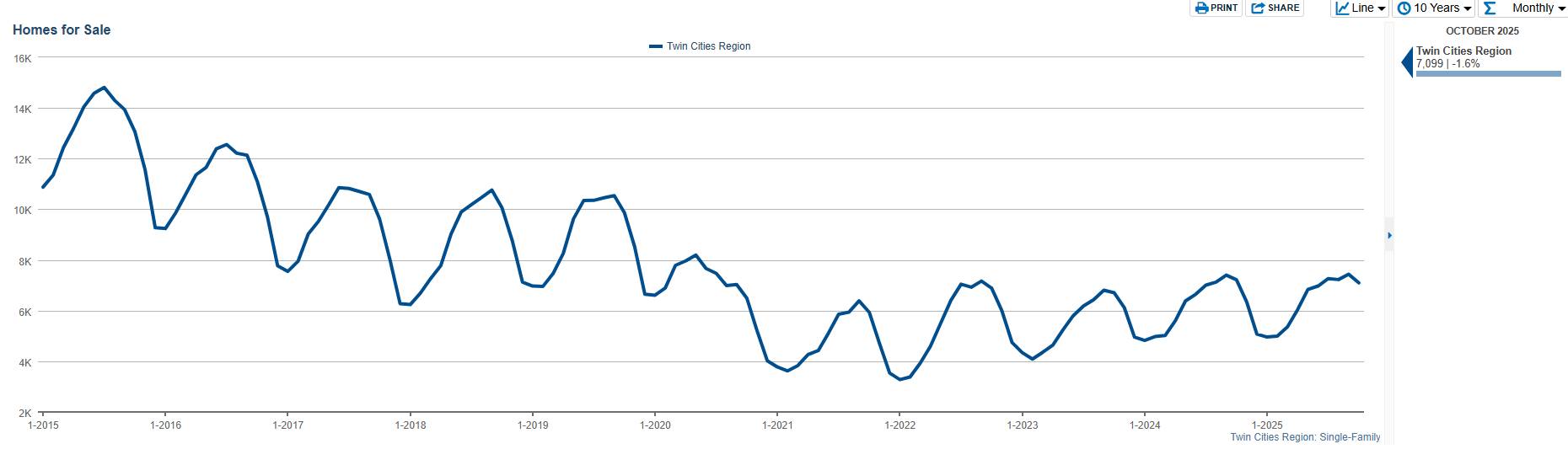
       Again I’m referencing investment units.  Whether section 8 or BNB.  Or even LTR.  I’m not referencing 100% of property owners.     Let’s ask BP investors what they would do.

      1.  Stock market is at an all time high.  P/E ratios are not obtainable.  Focused on primarily 7 companies around one industry.  Product or life cycle times have steadily sped up over the last 200 years.  In other words those 7 companies will go from shining stars to commodity companies in a decade.   Not able to repay their current high PE ratios.  “Stock” market, not the “Housing” market crashes.  Stock market has to.

       2.  You or your spouse lose your $80k to $150k salary job.  And you won’t be able to find a comparable job in that market. Or you have to sale and move. 

      3.  Renter base- Section 8 or similar housing on the low end they lose their jobs due to slowed economy.  BNB renters back off vacations.  You either have people not paying or your rental drops to 30%.

      4.  Government has to print money causing inflation.  They can’t raise the interest rate since the government has to much debt to pay higher interest.  Which while your in the above predicament and want to maintain the same lifestyle your costs are going up.

      BP investors.  Your debts are still the same.   You want to keep the same lifestyle.  But the above is your new world.  What actions will you take in order?  1.  Sale an “investment” property even if the interest rate is say 3%., 2.  RAID your 401k., 3.  Sale your extra corvette, RV, boat. take your kids out of private school or college, stop vacations and eating out., 4.  Get 3 part time jobs stocking shelves at the hardware store and flipping burgers?, 5. Move back in with your parents.  

      For the BP investors who take a liquid position, the Investors above will first sell their investment property.  Buy premium properties at a discount.  Keep funds on the side to weather the storm. 

       
      It’s your money, you’re always right even if you’re wrong.  The good thing about any forum especially BP you get different perspectives from which you can add to your thought process.  


      1. The stock market doesn't "have to crash". To USD could inflate, to meet the mark. Or a combination of step down a bit and USD inflate to meet. Gold prices is one scary indicator that the USD is inflating at a break neck pace, mitigating some of that P/E factor as not being necessarily as much "high" as it may be EARLY. 

      PLTR, that's just insane PE regardless. TSLA is on this gamble it will be "The" robot manufacturer and have literally trillions upon trillions in orders. Big gamble in my opinion. 

      2. As I said, there is more then enough motivation in the #'s for persons in such situation to replace 1 lost job with 2, if push came to shove. The alternative is doubling or tripling ones cost of shelter. 

      3. STR is a totally different thing. That's talking hospitality, a whole different beast. Comparing STR to standard housing stock is comparing Retail space too Cold/mini storage. Kinda similar, wildly different.

      4. Yes, 1,000%, Government HAS to print $, no 2 ways about it, HAVE-to. How they thread this needle with the inflation brick, is going to be interesting and is already interesting. They have the FED doing QT to MBS starting Dec 1st, at same time their doing QE to treasuries. That won't be enough alone, but it tips their hand of how they are trying to do this; they will slit the peoples throats to save Gov debt. Simultaneous QE and QT. 

      Why do you think investors would sell properties when inflation is happening? Rents up, or flat, mortgage rates up, cost of new units up. Investors will hold on tighter to what they have because of Opportunity Cost. 

      And tight housing supply will only get tighter, thus forcing rents up.      Especially for properties on lowest rung of the value ladder, like sec8 etc.. 

      Investors will sell.  Look at the 5 options I gave above.  Add any other options you think.  I’m recommending new investors hold onto their liquid cash.  Existing investors postpone their next deal.  I believe in the next 12 months  rental properties whether sec 8 or Bnb will be going on the market at a discounted price.  Irregardless of a housing shortage, lost opportunity cost, giving up a 3% loan, impending inflation, etc.  

      Pick your market.  Start watching days on market growth, price reductions, inventory for sale increase, From an investors standpoint start watching the large REITS financial stability.  

      I don't know if your seeing different things in other markets Henry, or just feeling stuff, but in my home market Henry there is no data flashing red or even yellow: 

      What i shared here is the monthly too, what many consider the "ugly" view as it shows the seasonal adjustments.

      Not only is price holding up, but both sold dollar and price per sqft is holding up. Listing inventory holds under 3mnths inventory as it has for years now, and it's trending down following normal seasonal adjustment of less inventory in winter months. 

      If anything, the Shows To Pending is showing us things are selling faster then normal for this time of year. 

      I'm no Nostradamus; yesterday’s history, tomorrow a mystery, today is a gift that's why we call it the present.    Call me a fool but I go off what I know, and I take the rest as it comes whatever it may be. 

      Dont know your market. Last time I was in Minneapolis about 3 years ago on a weekend it seemed heavy recent immigration population influx.  So is the market more homeowner driven than Section 8 or BNB driven?   
      My major point I keep
      driving is I expect investors to sell if they get stressed financially in the next 12 months especially in the BNB investment areas.  Not homeowners.  

      Pick your markets that are heavy investor or BNB markets and start tracking DOM, price reductions and inventory.  


      So you might have seen a wee-little thing we had going on here in Minneapolis some time back, where roving mob's were looting and burning down entire sections of the city. It was actually in several, not just 1. 

      The market's always been a bit of a "doughnut" in a "doughnut" market. 

      We have the "outside the loop" as in outside 494/694 loop. The stuff outside is predominantly owner occupant, really nice suburbs.  

      We have "inside the loop" which is interior suburbs. Ranges in area from "meah" too "wow". That's a good mix of OO and tenancy, and of all property types imaginable.

      Than we have "downtown". Now keep in mind, TWIN cities as in more then 1. So our "downtown" area is flipping gigantic. It's Minneapolis AND St.Paul, and yes there connected, it's all concrete jungle, very very densely populated and developed. Demographics shift of course to much higher saturation of tenancy, and sec8. But still some really exceptional OO areas, such as North Loop in DT Minneapolis or some exclusive areas of St Paul.

      I really don't like St Paul but I gotta admit, those DT nice neighborhoods have some cool stuff. There is 1 where almost every house has full underground garages under the homes. It's really cool, I'd love to have a basement under my basement that I can do doughnuts in. 

      To your point of investors mass panic selling, heres a good example to keep in mind Henry, an example from the Twin Cities. 

      For days, literally days on end there was giant mobs running the street looting and burning. No police, no fire, no nothing. I don't care what anyone may post saying "but the media..." no, I was there, I saw this with my own 2 eyes! NO PD, FD, NOTHING. The police were to busy being hunted, literally. 

      What I don't think most know that came after that when our PD and others took charge, NOT the politicians, was our city was militarized. Soldiers with machine guns all over. And crime still ran rampant. This went on forever. 

      And in many ways it continues to today. We have streets and parking lot's lined with tent cities and all kinds of craziness that happens connected to that. Crime off the charts. If call 911 they will literally tell you depending on the crime they may be out in days, a week, or maybe not at all and just file a report. Again, 1st hand experience so ignore the propaganda picture box. 

      At the same time St Paul passes THE #1 strictest most anti-landlord regulations in the USA. Minneapolis elects into city council loud and proud socialists and communists. No, not accusing them of this, they campaign on it, there proud to be communists and socialists. 

      And we don't have the mass collapse of housing your forecasting. 

      Oh, stuff happened, heck yeah. Oh yeah, people sold. And the inventory got absorbed like a desert dry sponge receiving a spring shower. 

      And many investors stayed. 

      Landlords stayed through the riots. Stayed through the weeks and months of unrest. Stayed through anti-landlord action after anti-landlord action. Stayed through homeless encampments. Stayed through socialists and communists coming into power. 

      I don't know how you can get more extreme an environment than what we went through here for investors. Many exited and relocated to the outer ring where life couldn't be more opposite. But many didn't. Many stayed, to today. And many kept entering the market, snatching up those rental units. 

      The #1 biggest thing that changed, the median age of a landlord in the central urban market. That's it. 

      No collapse. Hell prices went up, can you believe that, UP..... 

      So what your telling people, expecting a major drop in housing prices via a mass route of landlords and real estate investors.... I'm sorry, I don't see it at all, not even 1%. 

      With a city in ashes and Communists grabbing power, residential real estate held up.

      With covid mandates of no evictions and what not, residential real estate held up. 

      I think telling people to expect a 20% - 30% collapse in real estate prices is very much false hope. And those stacking devaluing dollars waiting on such, will be done a disservice. 

      Just as they were when told same in 2020, 2021, 2022, 2023 etc etc..  


       I will say it for a 4th time.  I'm referencing Investor properties and not homeowners.  My reference to your market with immigrants, was not in reference to the issues that arose, but due to the fact there was an "infusion" of "renters and homeowners into your market.  Your market looks great on the graphs you showed.  But all markets are local.  And all properties are specific to the buyer and the seller.  

      Using our market in the Midwest in the Omaha metro area.  Would not recommend people use the data for our market to make decisions across the board or for their market.  We have a great market that doesn't go up or down very much.  That's bad if you want price swings.

      I would view my opinions and thoughts the same as any other poster on BP.  As just another Data point.  Without knowing each person's assets, liabilities, risk tolerance, age, talents, family situation, investment background, job security, health, etc etc. none of our opinions mean a thing.  But a reader can take each input and add as a datapoint to their thought process.  As far as holding cash or holding off investing; believe I mentioned it is a bad decision in the long term.  For us within the next 12 months we will need to deploy our funds we are holding on the side back into hard assets, except our living expense funds.

      As far as Sellers and their mindset.    Listing/Purchase price- $600,000/$210,000; $310,000/$180,000; $500,000/$275,000; $1,200,000/$800,000; $400,000/$225,000; $267,000/$89,000.  You don't know what the Sellers situation is.  FBI investigation of their partner who needs cash, on market for 15 years, 85 years old and the dream has gone by, has 13,000 rental units and just wants to get rid of this small piece of land, don't have $200 to even begin to develop.  The above are in Normal economies and markets.  Not what we are headed into.

      Folks determine your view of the market.  Look at your personal situation.  Develop your game plan and action points.  Am I going to be right with my notes above?  NO  NO.  Magnitude, timing, location, market will all be wrong to some degree.  But I have taken action with our financials based on our background and views of the economy.  Whether they fit you or not.  "I'm not your Financial Advisor".

      It's your money, your right, even if you're wrong.  Own your situation and decisions.


      I'm not sure the disconnect or misunderstanding here Henry, maybe you only read the first half of my reply and not the 2nd half after the map where I very clearly spoke very specifically as-to investors and investment real estate. 

      For immigration, no, immigration in MN is nothing compared to many other major markets. There was different refugee waves, namely back in Vietnam era, than the Somali wave. Other then that it's very specialized to mostly engineering. MN is a major engineering center in USA. Assorted bio, agg., aerospace and DOD engineering. I wouldn't say it's anything of significance to really move the needle though. 

      I bet data would show #1 location people come to MN from is Chicago. 105 in summer and -25 in winter, mosquitos so big and numerous you gotta worry about em carrying off small children (not literally) MN isn't exactly a top-of-the-list for many to immigrate to unless there specifically being brought here by/for something. 

      So no, I'd say no effect on housing by immigration. 

      I'd say biggest impact on MN's housing is the diverse economy, having a very strong finance, engineering, tourism and logistics economies, which set's the stage for the high incomes. 

      High tax paves the way for high sec8 payments and what not. $2k+mnth from sec8 for rents is all but the standard, $3k+mnth from sec8 for rent payment is getting more and more common. 

      Sec8 rents kind of set's a floor on market rents. 

      Property revenues set's a kind of floor on property prices. 

      Who's going to sell a property for $200k when it could get $2,450 mnth from sec8? 

      And if it can get $2,450mnth from sec8, market rents go up from there not down. 

Join the conversationCreate a free account to reply, vote on answers and follow this thread.