Nobody tells you how hard it is to just find someone to do a deal with

Nobody tells you how hard it is to just find someone to do a deal with

Wholesaler · Detroit Ml · Member since 2026 · 28 posts · 21 votes

Beginner here, and this week humbled me.

I went in thinking the hard part was learning the numbers ARV, offers, all that. Turns out the hard part is way before that. It's just finding a human being on the other end who can actually do a deal.

Here's what the "find a seller" process actually looked like for me:

- Pull a list of leads

- Skip trace to get numbers... and a chunk come back DNC only, or email with no phone, or three numbers that are all disconnected

- The numbers that do the most don't answer

- The ones who answer most aren't interested, and some aren't exactly friendly about it

- The rare real conversation still a dead end, no deal and from what I'm reading on here on this forum, is that it is normal. People dial hundreds of numbers, sometimes 500+, before a single deal comes together. I believe it now.

It's wild how much work happens just to get to the start of a deal. I'm not discouraged, I'd genuinely rather understand this now than quit in a month feeling lied to. But I have a new respect for anyone consistently closing, because the volume behind one deal is no joke.

For those who've pushed through this stage: roughly how many contacts did it take you to get your first real deal? And looking back, was it more about volume, better lists, or better follow-up? Trying to set my expectations honestly.

7Reply
638 views

Most Popular Reply

G. Brian DavisPro Member
Investor · Hatboro, PA · Member since 2016 · 3k+ posts · 861 votes
3mo

I think you've learned one of the most important lessons in real estate investing: finding a deal is often harder than analyzing a deal. A lot of newer investors spend months learning underwriting, but never realize how much persistence is required just to find someone who is willing and able to sell.

From what I've seen, it's usually a combination of volume, quality lead sources, and consistent follow-up. Many deals don't come from the first conversation, they come from the fifth or sixth conversation months later.

The fact that you're adjusting your expectations instead of getting discouraged is probably a bigger advantage than you realize.

See this reply in the discussion

43 Replies

Jump to latestLatest
  • Investor · Get yourself trained before doing something inadvisable. · Member since 2024 · 3k+ posts · 1k+ votes
    3mo
    Quote from @Rampage Hillary:

    Beginner here, and this week humbled me.

    I went in thinking the hard part was learning the numbers ARV, offers, all that. Turns out the hard part is way before that. It's just finding a human being on the other end who can actually do a deal.

    Here's what the "find a seller" process actually looked like for me:

    - Pull a list of leads

    - Skip trace to get numbers... and a chunk come back DNC only, or email with no phone, or three numbers that are all disconnected

    - The numbers that do the most don't answer

    - The ones who answer most aren't interested, and some aren't exactly friendly about it

    - The rare real conversation still a dead end, no deal and from what I'm reading on here on this forum, is that it is normal. People dial hundreds of numbers, sometimes 500+, before a single deal comes together. I believe it now.

    It's wild how much work happens just to get to the start of a deal. I'm not discouraged, I'd genuinely rather understand this now than quit in a month feeling lied to. But I have a new respect for anyone consistently closing, because the volume behind one deal is no joke.

    For those who've pushed through this stage: roughly how many contacts did it take you to get your first real deal? And looking back, was it more about volume, better lists, or better follow-up? Trying to set my expectations honestly.

    Most wholesalers quit within 6 months. It's a lot harder than the "gurus" say it is.
    • Virtual Assistant · Member since 2026 · 54 posts · 20 votes
      3mo
      Quote from @Ken M.:
      Quote from @Rampage Hillary:

      Beginner here, and this week humbled me.

      I went in thinking the hard part was learning the numbers ARV, offers, all that. Turns out the hard part is way before that. It's just finding a human being on the other end who can actually do a deal.

      Here's what the "find a seller" process actually looked like for me:

      - Pull a list of leads

      - Skip trace to get numbers... and a chunk come back DNC only, or email with no phone, or three numbers that are all disconnected

      - The numbers that do the most don't answer

      - The ones who answer most aren't interested, and some aren't exactly friendly about it

      - The rare real conversation still a dead end, no deal and from what I'm reading on here on this forum, is that it is normal. People dial hundreds of numbers, sometimes 500+, before a single deal comes together. I believe it now.

      It's wild how much work happens just to get to the start of a deal. I'm not discouraged, I'd genuinely rather understand this now than quit in a month feeling lied to. But I have a new respect for anyone consistently closing, because the volume behind one deal is no joke.

      For those who've pushed through this stage: roughly how many contacts did it take you to get your first real deal? And looking back, was it more about volume, better lists, or better follow-up? Trying to set my expectations honestly.

      Most wholesalers quit within 6 months. It's a lot harder than the "gurus" say it is.

       That’s a fair point.

      Most people underestimate how much volume is required upfront, but without a system for filtering and follow-up it becomes burnout fast instead of progress.

  • G. Brian DavisPro Member
    Investor · Hatboro, PA · Member since 2016 · 3k+ posts · 861 votes
    3mo

    I think you've learned one of the most important lessons in real estate investing: finding a deal is often harder than analyzing a deal. A lot of newer investors spend months learning underwriting, but never realize how much persistence is required just to find someone who is willing and able to sell.

    From what I've seen, it's usually a combination of volume, quality lead sources, and consistent follow-up. Many deals don't come from the first conversation, they come from the fifth or sixth conversation months later.

    The fact that you're adjusting your expectations instead of getting discouraged is probably a bigger advantage than you realize.

    • Wholesaler · Detroit Ml · Member since 2026 · 28 posts · 21 votes
      3mo
      Quote from @G. Brian Davis:

      I think you've learned one of the most important lessons in real estate investing: finding a deal is often harder than analyzing a deal. A lot of newer investors spend months learning underwriting, but never realize how much persistence is required just to find someone who is willing and able to sell.

      From what I've seen, it's usually a combination of volume, quality lead sources, and consistent follow-up. Many deals don't come from the first conversation, they come from the fifth or sixth conversation months later.

      The fact that you're adjusting your expectations instead of getting discouraged is probably a bigger advantage than you realize.

      This really reframed it for me “finding a deal is harder than analyzing a deal" is exactly the lesson this week beat into me. I'd spent all my energy on the numbers side and almost none on the persistence side.
      The fifth or sixth conversation months later point is the part I'll remember. I'm the acquisitions/cold-call side. So building a real follow-up system instead of treating "not now" as dead is clearly where I need to grow. Thanks for taking the time to reply.
    • Virtual Assistant · Member since 2026 · 54 posts · 20 votes
      3mo
      Quote from @G. Brian Davis:

      I think you've learned one of the most important lessons in real estate investing: finding a deal is often harder than analyzing a deal. A lot of newer investors spend months learning underwriting, but never realize how much persistence is required just to find someone who is willing and able to sell.

      From what I've seen, it's usually a combination of volume, quality lead sources, and consistent follow-up. Many deals don't come from the first conversation, they come from the fifth or sixth conversation months later.

      The fact that you're adjusting your expectations instead of getting discouraged is probably a bigger advantage than you realize.


       Really solid breakdown — especially the point about consistency across multiple conversations.

      One thing I’ve noticed is that a lot of newer wholesalers focus heavily on “new leads” but underinvest in tracking and re-engaging older conversations, which is usually where deals quietly come from later.

      That follow-up compounding effect is what most people miss early on.

  • Real Estate Agent · Columbus | Toledo · Member since 2019 · 607 posts · 768 votes
    3mo
    Quote from @Rampage Hillary:

    Beginner here, and this week humbled me.

    I went in thinking the hard part was learning the numbers ARV, offers, all that. Turns out the hard part is way before that. It's just finding a human being on the other end who can actually do a deal.

    Here's what the "find a seller" process actually looked like for me:

    - Pull a list of leads

    - Skip trace to get numbers... and a chunk come back DNC only, or email with no phone, or three numbers that are all disconnected

    - The numbers that do the most don't answer

    - The ones who answer most aren't interested, and some aren't exactly friendly about it

    - The rare real conversation still a dead end, no deal and from what I'm reading on here on this forum, is that it is normal. People dial hundreds of numbers, sometimes 500+, before a single deal comes together. I believe it now.

    It's wild how much work happens just to get to the start of a deal. I'm not discouraged, I'd genuinely rather understand this now than quit in a month feeling lied to. But I have a new respect for anyone consistently closing, because the volume behind one deal is no joke.

    For those who've pushed through this stage: roughly how many contacts did it take you to get your first real deal? And looking back, was it more about volume, better lists, or better follow-up? Trying to set my expectations honestly.

    Burnout is real, and it is great that you are adjusting your expectations now instead of quitting later. It often takes hundreds of dials just to get a few solid conversations, and volume is what gets you started. However, better lists and relentless follow up are what actually get the deals across the finish line.

    Try to find partners to do it with or join a bigger wholesaler in your area to learn what is working right now. It is about being in the right place all the time. If you are consistent, it should take you 3 to 6 months to get some traction. Hit all the networking events, join local groups, and keep letting people know who you are and what you do. The more they see you, the more they trust you. Find the deal and the buyers will be there.
    • Wholesaler · Detroit Ml · Member since 2026 · 28 posts · 21 votes
      3mo
      Quote from @Anthony L Amos Jr:
      Quote from @Rampage Hillary:

      Beginner here, and this week humbled me.

      I went in thinking the hard part was learning the numbers ARV, offers, all that. Turns out the hard part is way before that. It's just finding a human being on the other end who can actually do a deal.

      Here's what the "find a seller" process actually looked like for me:

      - Pull a list of leads

      - Skip trace to get numbers... and a chunk come back DNC only, or email with no phone, or three numbers that are all disconnected

      - The numbers that do the most don't answer

      - The ones who answer most aren't interested, and some aren't exactly friendly about it

      - The rare real conversation still a dead end, no deal and from what I'm reading on here on this forum, is that it is normal. People dial hundreds of numbers, sometimes 500+, before a single deal comes together. I believe it now.

      It's wild how much work happens just to get to the start of a deal. I'm not discouraged, I'd genuinely rather understand this now than quit in a month feeling lied to. But I have a new respect for anyone consistently closing, because the volume behind one deal is no joke.

      For those who've pushed through this stage: roughly how many contacts did it take you to get your first real deal? And looking back, was it more about volume, better lists, or better follow-up? Trying to set my expectations honestly.

      Burnout is real, and it is great that you are adjusting your expectations now instead of quitting later. It often takes hundreds of dials just to get a few solid conversations, and volume is what gets you started. However, better lists and relentless follow up are what actually get the deals across the finish line.

      Try to find partners to do it with or join a bigger wholesaler in your area to learn what is working right now. It is about being in the right place all the time. If you are consistent, it should take you 3 to 6 months to get some traction. Hit all the networking events, join local groups, and keep letting people know who you are and what you do. The more they see you, the more they trust you. Find the deal and the buyers will be there.

       Appreciate this, Anthony, the 3 to 6 month traction window is the realistic timeline I needed to hear. 
      Given that, the "better lists + relentless follow-up" point hits hard sounds like I should put as much effort into organizing follow-up as into raw call volume. Out of curiosity, in your Columbus/Toledo markets, are you seeing absentee owners or a different lead type respond best right now?

    • Virtual Assistant · Member since 2026 · 54 posts · 20 votes
      3mo
      Quote from @Anthony L Amos Jr:
      Quote from @Rampage Hillary:

      Beginner here, and this week humbled me.

      I went in thinking the hard part was learning the numbers ARV, offers, all that. Turns out the hard part is way before that. It's just finding a human being on the other end who can actually do a deal.

      Here's what the "find a seller" process actually looked like for me:

      - Pull a list of leads

      - Skip trace to get numbers... and a chunk come back DNC only, or email with no phone, or three numbers that are all disconnected

      - The numbers that do the most don't answer

      - The ones who answer most aren't interested, and some aren't exactly friendly about it

      - The rare real conversation still a dead end, no deal and from what I'm reading on here on this forum, is that it is normal. People dial hundreds of numbers, sometimes 500+, before a single deal comes together. I believe it now.

      It's wild how much work happens just to get to the start of a deal. I'm not discouraged, I'd genuinely rather understand this now than quit in a month feeling lied to. But I have a new respect for anyone consistently closing, because the volume behind one deal is no joke.

      For those who've pushed through this stage: roughly how many contacts did it take you to get your first real deal? And looking back, was it more about volume, better lists, or better follow-up? Trying to set my expectations honestly.

      Burnout is real, and it is great that you are adjusting your expectations now instead of quitting later. It often takes hundreds of dials just to get a few solid conversations, and volume is what gets you started. However, better lists and relentless follow up are what actually get the deals across the finish line.

      Try to find partners to do it with or join a bigger wholesaler in your area to learn what is working right now. It is about being in the right place all the time. If you are consistent, it should take you 3 to 6 months to get some traction. Hit all the networking events, join local groups, and keep letting people know who you are and what you do. The more they see you, the more they trust you. Find the deal and the buyers will be there.

       That “3 to 6 month traction” timeline is actually helpful context.

      From what I’ve seen, the people who break through usually combine volume with some kind of structured follow-up system instead of relying purely on new outreach every day.

      On the networking side, are you seeing more success in your markets with people partnering up (acquisitions + dispo split roles), or still mostly solo operators?

    • Real Estate Agent · Columbus | Toledo · Member since 2019 · 607 posts · 768 votes
      3mo
      Quote from @Rampage Hillary:
      Quote from @Anthony L Amos Jr:
      Quote from @Rampage Hillary:

      Beginner here, and this week humbled me.

      I went in thinking the hard part was learning the numbers ARV, offers, all that. Turns out the hard part is way before that. It's just finding a human being on the other end who can actually do a deal.

      Here's what the "find a seller" process actually looked like for me:

      - Pull a list of leads

      - Skip trace to get numbers... and a chunk come back DNC only, or email with no phone, or three numbers that are all disconnected

      - The numbers that do the most don't answer

      - The ones who answer most aren't interested, and some aren't exactly friendly about it

      - The rare real conversation still a dead end, no deal and from what I'm reading on here on this forum, is that it is normal. People dial hundreds of numbers, sometimes 500+, before a single deal comes together. I believe it now.

      It's wild how much work happens just to get to the start of a deal. I'm not discouraged, I'd genuinely rather understand this now than quit in a month feeling lied to. But I have a new respect for anyone consistently closing, because the volume behind one deal is no joke.

      For those who've pushed through this stage: roughly how many contacts did it take you to get your first real deal? And looking back, was it more about volume, better lists, or better follow-up? Trying to set my expectations honestly.

      Burnout is real, and it is great that you are adjusting your expectations now instead of quitting later. It often takes hundreds of dials just to get a few solid conversations, and volume is what gets you started. However, better lists and relentless follow up are what actually get the deals across the finish line.

      Try to find partners to do it with or join a bigger wholesaler in your area to learn what is working right now. It is about being in the right place all the time. If you are consistent, it should take you 3 to 6 months to get some traction. Hit all the networking events, join local groups, and keep letting people know who you are and what you do. The more they see you, the more they trust you. Find the deal and the buyers will be there.

       Appreciate this, Anthony, the 3 to 6 month traction window is the realistic timeline I needed to hear. 
      Given that, the "better lists + relentless follow-up" point hits hard sounds like I should put as much effort into organizing follow-up as into raw call volume. Out of curiosity, in your Columbus/Toledo markets, are you seeing absentee owners or a different lead type respond best right now?

      Absentee owners are always a solid in Columbus and Toledo, but honestly the specific lead type matters less than your persistence. They will all respond eventually if you focus on one list and stay consistent. The biggest mistake you can make right now is switching your list too fast when you do not see immediate traction. Doing that just resets your follow up clock back to zero. Pick a solid list and work it relentlessly.


    • Real Estate Agent · Columbus | Toledo · Member since 2019 · 607 posts · 768 votes
      3mo
      Quote from @Justice Okpara:
      Quote from @Anthony L Amos Jr:
      Quote from @Rampage Hillary:

      Beginner here, and this week humbled me.

      I went in thinking the hard part was learning the numbers ARV, offers, all that. Turns out the hard part is way before that. It's just finding a human being on the other end who can actually do a deal.

      Here's what the "find a seller" process actually looked like for me:

      - Pull a list of leads

      - Skip trace to get numbers... and a chunk come back DNC only, or email with no phone, or three numbers that are all disconnected

      - The numbers that do the most don't answer

      - The ones who answer most aren't interested, and some aren't exactly friendly about it

      - The rare real conversation still a dead end, no deal and from what I'm reading on here on this forum, is that it is normal. People dial hundreds of numbers, sometimes 500+, before a single deal comes together. I believe it now.

      It's wild how much work happens just to get to the start of a deal. I'm not discouraged, I'd genuinely rather understand this now than quit in a month feeling lied to. But I have a new respect for anyone consistently closing, because the volume behind one deal is no joke.

      For those who've pushed through this stage: roughly how many contacts did it take you to get your first real deal? And looking back, was it more about volume, better lists, or better follow-up? Trying to set my expectations honestly.

      Burnout is real, and it is great that you are adjusting your expectations now instead of quitting later. It often takes hundreds of dials just to get a few solid conversations, and volume is what gets you started. However, better lists and relentless follow up are what actually get the deals across the finish line.

      Try to find partners to do it with or join a bigger wholesaler in your area to learn what is working right now. It is about being in the right place all the time. If you are consistent, it should take you 3 to 6 months to get some traction. Hit all the networking events, join local groups, and keep letting people know who you are and what you do. The more they see you, the more they trust you. Find the deal and the buyers will be there.

       That “3 to 6 month traction” timeline is actually helpful context.

      From what I’ve seen, the people who break through usually combine volume with some kind of structured follow-up system instead of relying purely on new outreach every day.

      On the networking side, are you seeing more success in your markets with people partnering up (acquisitions + dispo split roles), or still mostly solo operators?

      To be honest, real estate is so transactional that you are always better off working with others. I do not have a formal setup with split acquisitions and dispo roles myself, but I rely heavily on my relationships to keep the business going. Even for the solo operators out here, treating this like a team sport is usually the secret to not burning out.
    • Wholesaler · Detroit Ml · Member since 2026 · 28 posts · 21 votes
      3mo
      Quote from @Anthony L Amos Jr:
      Quote from @Rampage Hillary:
      Quote from @Anthony L Amos Jr:
      Quote from @Rampage Hillary:

      Beginner here, and this week humbled me.

      I went in thinking the hard part was learning the numbers ARV, offers, all that. Turns out the hard part is way before that. It's just finding a human being on the other end who can actually do a deal.

      Here's what the "find a seller" process actually looked like for me:

      - Pull a list of leads

      - Skip trace to get numbers... and a chunk come back DNC only, or email with no phone, or three numbers that are all disconnected

      - The numbers that do the most don't answer

      - The ones who answer most aren't interested, and some aren't exactly friendly about it

      - The rare real conversation still a dead end, no deal and from what I'm reading on here on this forum, is that it is normal. People dial hundreds of numbers, sometimes 500+, before a single deal comes together. I believe it now.

      It's wild how much work happens just to get to the start of a deal. I'm not discouraged, I'd genuinely rather understand this now than quit in a month feeling lied to. But I have a new respect for anyone consistently closing, because the volume behind one deal is no joke.

      For those who've pushed through this stage: roughly how many contacts did it take you to get your first real deal? And looking back, was it more about volume, better lists, or better follow-up? Trying to set my expectations honestly.

      Burnout is real, and it is great that you are adjusting your expectations now instead of quitting later. It often takes hundreds of dials just to get a few solid conversations, and volume is what gets you started. However, better lists and relentless follow up are what actually get the deals across the finish line.

      Try to find partners to do it with or join a bigger wholesaler in your area to learn what is working right now. It is about being in the right place all the time. If you are consistent, it should take you 3 to 6 months to get some traction. Hit all the networking events, join local groups, and keep letting people know who you are and what you do. The more they see you, the more they trust you. Find the deal and the buyers will be there.

       Appreciate this, Anthony, the 3 to 6 month traction window is the realistic timeline I needed to hear. 
      Given that, the "better lists + relentless follow-up" point hits hard sounds like I should put as much effort into organizing follow-up as into raw call volume. Out of curiosity, in your Columbus/Toledo markets, are you seeing absentee owners or a different lead type respond best right now?

      Absentee owners are always a solid in Columbus and Toledo, but honestly the specific lead type matters less than your persistence. They will all respond eventually if you focus on one list and stay consistent. The biggest mistake you can make right now is switching your list too fast when you do not see immediate traction. Doing that just resets your follow up clock back to zero. Pick a solid list and work it relentlessly.


      This is the reminder I needed. I've caught myself wanting to switch things up before giving anything time to work, and you're right that it just resets the follow-up clock. Picking one solid list and grinding.
  • Virtual Assistant · Member since 2026 · 54 posts · 20 votes
    3mo
    Quote from @Rampage Hillary:

    Beginner here, and this week humbled me.

    I went in thinking the hard part was learning the numbers ARV, offers, all that. Turns out the hard part is way before that. It's just finding a human being on the other end who can actually do a deal.

    Here's what the "find a seller" process actually looked like for me:

    - Pull a list of leads

    - Skip trace to get numbers... and a chunk come back DNC only, or email with no phone, or three numbers that are all disconnected

    - The numbers that do the most don't answer

    - The ones who answer most aren't interested, and some aren't exactly friendly about it

    - The rare real conversation still a dead end, no deal and from what I'm reading on here on this forum, is that it is normal. People dial hundreds of numbers, sometimes 500+, before a single deal comes together. I believe it now.

    It's wild how much work happens just to get to the start of a deal. I'm not discouraged, I'd genuinely rather understand this now than quit in a month feeling lied to. But I have a new respect for anyone consistently closing, because the volume behind one deal is no joke.

    For those who've pushed through this stage: roughly how many contacts did it take you to get your first real deal? And looking back, was it more about volume, better lists, or better follow-up? Trying to set my expectations honestly.


     You’re actually hitting one of the most important realizations in wholesaling early.

    Most people think the business is “find a deal → make money,” but in reality it’s more like building a pipeline where follow-up and timing matter more than the first conversation.

    The 500+ dials thing is real, but what’s usually missing is a structured system for turning those “no’s” into future conversations instead of dead leads.

    Out of curiosity, are you already using any kind of CRM or follow-up system, or still in the early stage of organizing that part?

    • Wholesaler · Detroit Ml · Member since 2026 · 28 posts · 21 votes
      3mo
      Quote from @Justice Okpara:
      Quote from @Rampage Hillary:

      Beginner here, and this week humbled me.

      I went in thinking the hard part was learning the numbers ARV, offers, all that. Turns out the hard part is way before that. It's just finding a human being on the other end who can actually do a deal.

      Here's what the "find a seller" process actually looked like for me:

      - Pull a list of leads

      - Skip trace to get numbers... and a chunk come back DNC only, or email with no phone, or three numbers that are all disconnected

      - The numbers that do the most don't answer

      - The ones who answer most aren't interested, and some aren't exactly friendly about it

      - The rare real conversation still a dead end, no deal and from what I'm reading on here on this forum, is that it is normal. People dial hundreds of numbers, sometimes 500+, before a single deal comes together. I believe it now.

      It's wild how much work happens just to get to the start of a deal. I'm not discouraged, I'd genuinely rather understand this now than quit in a month feeling lied to. But I have a new respect for anyone consistently closing, because the volume behind one deal is no joke.

      For those who've pushed through this stage: roughly how many contacts did it take you to get your first real deal? And looking back, was it more about volume, better lists, or better follow-up? Trying to set my expectations honestly.


       You’re actually hitting one of the most important realizations in wholesaling early.

      Most people think the business is “find a deal → make money,” but in reality it’s more like building a pipeline where follow-up and timing matter more than the first conversation.

      The 500+ dials thing is real, but what’s usually missing is a structured system for turning those “no’s” into future conversations instead of dead leads.

      Out of curiosity, are you already using any kind of CRM or follow-up system, or still in the early stage of organizing that part?

      Turning the no's into future conversations instead of dead leads is exactly what I'm trying to build. Right now I'm honest with you, still early: I'm keeping it simple with a basic tracker while I get my call volume up, no full CRM yet. Don't want to over-engineer before I've even got the reps in. What's the simplest setup you've seen actually work for someone at my stage?
    • Virtual Assistant · Member since 2026 · 54 posts · 20 votes
      3mo
      Quote from @Rampage Hillary:
      Quote from @Justice Okpara:
      Quote from @Rampage Hillary:

      Beginner here, and this week humbled me.

      I went in thinking the hard part was learning the numbers ARV, offers, all that. Turns out the hard part is way before that. It's just finding a human being on the other end who can actually do a deal.

      Here's what the "find a seller" process actually looked like for me:

      - Pull a list of leads

      - Skip trace to get numbers... and a chunk come back DNC only, or email with no phone, or three numbers that are all disconnected

      - The numbers that do the most don't answer

      - The ones who answer most aren't interested, and some aren't exactly friendly about it

      - The rare real conversation still a dead end, no deal and from what I'm reading on here on this forum, is that it is normal. People dial hundreds of numbers, sometimes 500+, before a single deal comes together. I believe it now.

      It's wild how much work happens just to get to the start of a deal. I'm not discouraged, I'd genuinely rather understand this now than quit in a month feeling lied to. But I have a new respect for anyone consistently closing, because the volume behind one deal is no joke.

      For those who've pushed through this stage: roughly how many contacts did it take you to get your first real deal? And looking back, was it more about volume, better lists, or better follow-up? Trying to set my expectations honestly.


       You’re actually hitting one of the most important realizations in wholesaling early.

      Most people think the business is “find a deal → make money,” but in reality it’s more like building a pipeline where follow-up and timing matter more than the first conversation.

      The 500+ dials thing is real, but what’s usually missing is a structured system for turning those “no’s” into future conversations instead of dead leads.

      Out of curiosity, are you already using any kind of CRM or follow-up system, or still in the early stage of organizing that part?

      Turning the no's into future conversations instead of dead leads is exactly what I'm trying to build. Right now I'm honest with you, still early: I'm keeping it simple with a basic tracker while I get my call volume up, no full CRM yet. Don't want to over-engineer before I've even got the reps in. What's the simplest setup you've seen actually work for someone at my stage?

       Honestly, I think you're taking the right approach.

      At your stage, I'd rather see someone consistently using a simple tracker than paying for a CRM they barely touch.

      The simplest setup I've seen work is just a spreadsheet with:

      - Seller Name

      - Property Address

      - Lead Source

      - Last Contact Date

      - Next Follow-Up Date

      - Motivation Level (High / Medium / Low)

      - Notes

      The key isn't the software—it's making sure every lead has a next action attached to it.

      A lot of deals don't come from the first conversation. They come from the fifth or sixth follow-up after everyone else has moved on.

      Once your call volume starts getting high enough that you're missing follow-ups, that's usually when it makes sense to think about a CRM.

      For now, I'd focus on building the habit of tracking every conversation and scheduling the next touchpoint. That alone puts you ahead of a lot of beginners.

      How many seller conversations are you averaging per week right now?

  • Wholesaler · Prophet Homes · Member since 2026 · 35 posts · 17 votes
    3mo

    As a newer disposition agent, you make great points! Today was my first day reaching out on phone, it's a touch by touch basis it seems, lol the rejection is real, the "bipolar" excitement as with anything new. Don't focus on the MONEY you'll get anxious, focus on the relationship building and eagerness to grow, that could last a lifetime. Mentorship, training, and being surrounded by success helps so much. Mindset means everything, "get settled in the mud" is what I keep telling myself. Ive learned to enjoy the process than worry about the outcome as Im sure with consistency and repetition, things will eventually fall into place! Count the small wins, for ex: "I got one solid conversation today Imagine if I get two tomorrow".

    You're not in this alone brotha! Keep going! The ones who win are the ones who stick it out. 

    • Wholesaler · Detroit Ml · Member since 2026 · 28 posts · 21 votes
      3mo
      Quote from @Jonny Lauderdale:

      As a newer disposition agent, you make great points! Today was my first day reaching out on phone, it's a touch by touch basis it seems, lol the rejection is real, the "bipolar" excitement as with anything new. Don't focus on the MONEY you'll get anxious, focus on the relationship building and eagerness to grow, that could last a lifetime. Mentorship, training, and being surrounded by success helps so much. Mindset means everything, "get settled in the mud" is what I keep telling myself. Ive learned to enjoy the process than worry about the outcome as Im sure with consistency and repetition, things will eventually fall into place! Count the small wins, for ex: "I got one solid conversation today Imagine if I get two tomorrow".

      You're not in this alone brotha! Keep going! The ones who win are the ones who stick it out. 

      "get settled in the mud" is going in my notes. It's wild how bipolar the early days feel, one good convo and you're flying, then ten no's and you question everything. Love that you're framing it as relationship building over the money. We're at the same stage so let's keep each other accountable, how many dials/touches are you trying to hit a day?
  • G. Brian DavisPro Member
    Investor · Hatboro, PA · Member since 2016 · 3k+ posts · 861 votes
    3mo

    Honestly, I think this realization is one of the most valuable lessons a new investor can learn.Many people spend months learning formulas and analyzing deals before they discover that the biggest challenge is often finding a motivated seller in the first place.

    From the investors I've talked to, success usually comes from a combination of all three: volume, quality lists, and consistent follow-up. A surprising number of deals come from conversations that didn't go anywhere initially but turned into opportunities months later.

    The fact that you're adjusting your expectations instead of getting discouraged is probably a good sign. Real estate is often a persistent business disguised as a numbers business.

  • Don KonipolBusiness Member
    Investor · The Woodlands TX / Avon, CT · Member since 2009 · 6k+ posts · 10k+ votes
    3mo
    Quote from @Rampage Hillary:

    Beginner here, and this week humbled me.

    I went in thinking the hard part was learning the numbers ARV, offers, all that. Turns out the hard part is way before that. It's just finding a human being on the other end who can actually do a deal.

    Here's what the "find a seller" process actually looked like for me:

    - Pull a list of leads

    - Skip trace to get numbers... and a chunk come back DNC only, or email with no phone, or three numbers that are all disconnected

    - The numbers that do the most don't answer

    - The ones who answer most aren't interested, and some aren't exactly friendly about it

    - The rare real conversation still a dead end, no deal and from what I'm reading on here on this forum, is that it is normal. People dial hundreds of numbers, sometimes 500+, before a single deal comes together. I believe it now.

    It's wild how much work happens just to get to the start of a deal. I'm not discouraged, I'd genuinely rather understand this now than quit in a month feeling lied to. But I have a new respect for anyone consistently closing, because the volume behind one deal is no joke.

    For those who've pushed through this stage: roughly how many contacts did it take you to get your first real deal? And looking back, was it more about volume, better lists, or better follow-up? Trying to set my expectations honestly.

    This reminds me of all the students in my investment classes 50years ago who thought they were going to be on the “deal team” at Goldman Sacks and ended up as a rookie stock broker cold calling zip codes out of the phone book at Bache and Co.

    Reality Check: “Wholesaling” real estate is NOT investing; it’s a SALES job that’s where you pay all the expenses, and receive no salary and no draw. 
    Private Mortgage Financing Partners, LLC
    • Investor · Get yourself trained before doing something inadvisable. · Member since 2024 · 3k+ posts · 1k+ votes
      3mo
      Quote from @Don Konipol:
      Quote from @Rampage Hillary:

      Beginner here, and this week humbled me.

      I went in thinking the hard part was learning the numbers ARV, offers, all that. Turns out the hard part is way before that. It's just finding a human being on the other end who can actually do a deal.

      Here's what the "find a seller" process actually looked like for me:

      - Pull a list of leads

      - Skip trace to get numbers... and a chunk come back DNC only, or email with no phone, or three numbers that are all disconnected

      - The numbers that do the most don't answer

      - The ones who answer most aren't interested, and some aren't exactly friendly about it

      - The rare real conversation still a dead end, no deal and from what I'm reading on here on this forum, is that it is normal. People dial hundreds of numbers, sometimes 500+, before a single deal comes together. I believe it now.

      It's wild how much work happens just to get to the start of a deal. I'm not discouraged, I'd genuinely rather understand this now than quit in a month feeling lied to. But I have a new respect for anyone consistently closing, because the volume behind one deal is no joke.

      For those who've pushed through this stage: roughly how many contacts did it take you to get your first real deal? And looking back, was it more about volume, better lists, or better follow-up? Trying to set my expectations honestly.

      This reminds me of all the students in my investment classes 50years ago who thought they were going to be on the “deal team” at Goldman Sacks and ended up as a rookie stock broker cold calling zip codes out of the phone book at Bache and Co.

      Reality Check: “Wholesaling” real estate is NOT investing; it’s a SALES job that’s where you pay all the expenses, and receive no salary and no draw. 

      And aren't trusted and aren't thought about after the fact and aren't and aren't  . . .  ;-)

      Few people are actually prepared for the hard work and rejection. 

    • Wholesaler · Detroit Ml · Member since 2026 · 28 posts · 21 votes
      3mo
      Quote from @Don Konipol:
      Quote from @Rampage Hillary:

      Beginner here, and this week humbled me.

      I went in thinking the hard part was learning the numbers ARV, offers, all that. Turns out the hard part is way before that. It's just finding a human being on the other end who can actually do a deal.

      Here's what the "find a seller" process actually looked like for me:

      - Pull a list of leads

      - Skip trace to get numbers... and a chunk come back DNC only, or email with no phone, or three numbers that are all disconnected

      - The numbers that do the most don't answer

      - The ones who answer most aren't interested, and some aren't exactly friendly about it

      - The rare real conversation still a dead end, no deal and from what I'm reading on here on this forum, is that it is normal. People dial hundreds of numbers, sometimes 500+, before a single deal comes together. I believe it now.

      It's wild how much work happens just to get to the start of a deal. I'm not discouraged, I'd genuinely rather understand this now than quit in a month feeling lied to. But I have a new respect for anyone consistently closing, because the volume behind one deal is no joke. 

      For those who've pushed through this stage: roughly how many contacts did it take you to get your first real deal? And looking back, was it more about volume, better lists, or better follow-up? Trying to set my expectations honestly.

      This reminds me of all the students in my investment classes 50years ago who thought they were going to be on the “deal team” at Goldman Sacks and ended up as a rookie stock broker cold calling zip codes out of the phone book at Bache and Co.

      Reality Check: “Wholesaling” real estate is NOT investing; it’s a SALES job that’s where you pay all the expenses, and receive no salary and no draw. 
      Fair and well taken Don, appreciate the straight talk. You're right that it's a sales grind, not passive investing, and that the costs and rejection are real with no salary behind you. I'm going in with eyes open on that. For someone who's seen 50 years of it, what separated the people who stuck it out and built something from the ones who washed out in year one?
  • Investor · Los Angeles, CA · Member since 2016 · 72 posts · 14 votes
    3mo

    Welcome to the reality of wholesaling. It's a long term game and the first year can be rough. 

    You're likely going to have make a lot more than 500 dials to get a deal. Depending on your market you're going to need 1000-3000 CONTACTS of real property owners to get a deal. Out of those you will also have a bunch of follow ups that if treated right can close 6-18 months later.

    • Wholesaler · Detroit Ml · Member since 2026 · 28 posts · 21 votes
      3mo
      Quote from @Jack T.:

      Welcome to the reality of wholesaling. It's a long term game and the first year can be rough. 

      You're likely going to have make a lot more than 500 dials to get a deal. Depending on your market you're going to need 1000-3000 CONTACTS of real property owners to get a deal. Out of those you will also have a bunch of follow ups that if treated right can close 6-18 months later.

      This is the realistic benchmark I was looking for.1000-3000 contacts for a deal reframes everything. I haven’t really gotten up to 500 contacts but I’ll get there soon. Makes it obvious why my first small batch was never going to produce anything; it's a volume and follow-up game, not a luck game. The 6-18 month follow-up window especially sounds like the deals are hiding in the follow-ups, not the first calls. Thanks for laying out actual numbers.
  • Member since 2026 · 231 posts · 35 votes
    3mo

    Respect for being honest about it most people quit before they get here. The volume is real. One thing that changed the math for me was switching from cold lists to distressed property records code violations, foreclosures, probate. The sellers are already motivated, you're not convincing anyone. Happy to share what that looks like if you're in Cleveland.

    • Wholesaler · Detroit Ml · Member since 2026 · 28 posts · 21 votes
      3mo
      Quote from @Josiah Garcia:

      Respect for being honest about it most people quit before they get here. The volume is real. One thing that changed the math for me was switching from cold lists to distressed property records code violations, foreclosures, probate. The sellers are already motivated, you're not convincing anyone. Happy to share what that looks like if you're in Cleveland.

      This is the upgrade I keep hearing about, going from generic cold lists to distressed records where the motivation is already there instead of trying to manufacture it. Makes total sense that you're not convincing anyone on a violations or probate lead, the situation already is the motivation. I'm starting with absentee + vacant to build my reps, but distressed records (probate, foreclosure, code violations) is clearly my next layer. When you made that switch, which of those three converted best for you?
  • Lender · Jacksonville, FL · Member since 2026 · 46 posts · 17 votes
    3mo
    Quote from @Rampage Hillary:

    Beginner here, and this week humbled me.

    I went in thinking the hard part was learning the numbers ARV, offers, all that. Turns out the hard part is way before that. It's just finding a human being on the other end who can actually do a deal.

    Here's what the "find a seller" process actually looked like for me:

    - Pull a list of leads

    - Skip trace to get numbers... and a chunk come back DNC only, or email with no phone, or three numbers that are all disconnected

    - The numbers that do the most don't answer

    - The ones who answer most aren't interested, and some aren't exactly friendly about it

    - The rare real conversation still a dead end, no deal and from what I'm reading on here on this forum, is that it is normal. People dial hundreds of numbers, sometimes 500+, before a single deal comes together. I believe it now.

    It's wild how much work happens just to get to the start of a deal. I'm not discouraged, I'd genuinely rather understand this now than quit in a month feeling lied to. But I have a new respect for anyone consistently closing, because the volume behind one deal is no joke.

    For those who've pushed through this stage: roughly how many contacts did it take you to get your first real deal? And looking back, was it more about volume, better lists, or better follow-up? Trying to set my expectations honestly.


     I've done most 'sides' of this industry and in my opinion, wholesaling is the hardest.  Those who say wholesalers aren't investors have either never tried ir or never succeeded.  I wholesaled a few years.  Personally, I would talk myself into there being X number of deals in each list but I didn't keep count.  Keeping count only fed my anxiety if I didn't hit that number, honestly. 

    You do get better at talking to potential sellers, handling objections, etc.  With time you get very comfortable adn the no's won't phase you at all.  You just keep going.  There is no other 'trick' to it.  Just keep going.

    • Wholesaler · Detroit Ml · Member since 2026 · 28 posts · 21 votes
      3mo
      Quote from @Nadean Willis:
      Quote from @Rampage Hillary:

      Beginner here, and this week humbled me.

      I went in thinking the hard part was learning the numbers ARV, offers, all that. Turns out the hard part is way before that. It's just finding a human being on the other end who can actually do a deal.

      Here's what the "find a seller" process actually looked like for me:

      - Pull a list of leads

      - Skip trace to get numbers... and a chunk come back DNC only, or email with no phone, or three numbers that are all disconnected

      - The numbers that do the most don't answer

      - The ones who answer most aren't interested, and some aren't exactly friendly about it

      - The rare real conversation still a dead end, no deal and from what I'm reading on here on this forum, is that it is normal. People dial hundreds of numbers, sometimes 500+, before a single deal comes together. I believe it now.

      It's wild how much work happens just to get to the start of a deal. I'm not discouraged, I'd genuinely rather understand this now than quit in a month feeling lied to. But I have a new respect for anyone consistently closing, because the volume behind one deal is no joke.

      For those who've pushed through this stage: roughly how many contacts did it take you to get your first real deal? And looking back, was it more about volume, better lists, or better follow-up? Trying to set my expectations honestly.


       I've done most 'sides' of this industry and in my opinion, wholesaling is the hardest.  Those who say wholesalers aren't investors have either never tried ir or never succeeded.  I wholesaled a few years.  Personally, I would talk myself into there being X number of deals in each list but I didn't keep count.  Keeping count only fed my anxiety if I didn't hit that number, honestly. 

      You do get better at talking to potential sellers, handling objections, etc.  With time you get very comfortable adn the no's won't phase you at all.  You just keep going.  There is no other 'trick' to it.  Just keep going.

      Really appreciate this, especially from someone who's worked most sides. The part about keeping count feeding your anxiety is something I needed to hear. I've been tempted to track every number and beat myself up over it. "You just keep going" might be the whole game. Thank you for keeping it real.
  • Denise SuppleeBusiness Member
    Realtor · Willow Grove, PA · Member since 2017 · 982 posts · 643 votes
    3mo

    Real estate is ultimately a people business, especially right now, finding motivated sellers can be harder than analyzing the deal itself. Consistency and follow up!!! Many deals sometimes come from conversations that didn't seem promising at first.

    Spark Rental Co-Investing Club580 Reviews
  • Real Estate Agent · Natick, MA · Member since 2025 · 11 posts · 6 votes
    3mo

    Welcome to the part nobody puts in the thumbnail.

    What you just described isn't a real estate problem — it's a sales problem, and every industry that runs on outbound prospecting looks exactly like this. Insurance, SaaS, recruiting — the ratio of dials to conversations to deals is brutal across the board. Real estate just tends to surprise people because the marketing around it undersells the grind pretty aggressively.

    The fact that you're reframing it correctly this early is genuinely a good sign. Most people hit that wall and conclude the strategy is broken. You concluded the expectations were wrong. That's the right adjustment.

    On your question — volume, better lists, or follow-up: honestly, all three matter, but follow-up is probably the most underrated of the three at your stage. A lot of beginners treat a no-answer or a not-interested as a closed door. Experienced investors treat it as a data point and a future touchpoint. Deals that didn't close on first contact months or even a year prior are a real source of business for consistent closers.

    There's no universal number for first deals — you'll hear everything from 200 dials to 2,000 — but the honest answer is that the number matters less than staying in the game long enough to let the math work in your favor.

    Here is some advice, if you aren't doing this already. Use a CRM, if not use a simple free google sheet will do. Log a call, every call. date, number, name and note. Eventually when you get the deal you are looking for, it will be the most invigorating experience you have ever had. Cause all your brain will tell you is "I just have to make another X number of calls to get my next deal" and i promise you the next X number of calls will be so much easier.

    Sometimes what you are going trough is probably the best thing that can happen to you if you can survive it. The worst that can happen to you is to get your first sale quickly, because the fall from grace after it is much harder than the one you are experiencing right now.

  • Jimmy LieuBusiness Member
    Real Estate Agent · Columbus, OH · Member since 2019 · 3k+ posts · 2k+ votes
    3mo
    Quote from @Rampage Hillary:

    Beginner here, and this week humbled me.

    I went in thinking the hard part was learning the numbers ARV, offers, all that. Turns out the hard part is way before that. It's just finding a human being on the other end who can actually do a deal.

    Here's what the "find a seller" process actually looked like for me:

    - Pull a list of leads

    - Skip trace to get numbers... and a chunk come back DNC only, or email with no phone, or three numbers that are all disconnected

    - The numbers that do the most don't answer

    - The ones who answer most aren't interested, and some aren't exactly friendly about it

    - The rare real conversation still a dead end, no deal and from what I'm reading on here on this forum, is that it is normal. People dial hundreds of numbers, sometimes 500+, before a single deal comes together. I believe it now.

    It's wild how much work happens just to get to the start of a deal. I'm not discouraged, I'd genuinely rather understand this now than quit in a month feeling lied to. But I have a new respect for anyone consistently closing, because the volume behind one deal is no joke.

    For those who've pushed through this stage: roughly how many contacts did it take you to get your first real deal? And looking back, was it more about volume, better lists, or better follow-up? Trying to set my expectations honestly.

    Hi Rampage, welcome to BP. What you're experiencing is completely normal and honestly one of the biggest shocks for most new investors. A lot of people think finding deals is about analyzing properties, but in reality it's often a marketing and sales business first. The numbers are the easy part compared to consistently finding motivated sellers who are actually ready and willing to do a deal. Looking back, my first deal took far more conversations than I expected, and most of those conversations went nowhere. The biggest lesson I learned was that follow-up mattered more than I thought. A lot of leads that say "not interested" today may have a completely different situation 3, 6, or 12 months later. Volume definitely helps, but better lists and consistent follow-up usually improve results more than just blindly making more calls. Also don't get discouraged by negative responses. Most people you contact will never become sellers, and that's okay. You're not looking for everyone, you're looking for the small percentage that actually have a problem you can solve. The fact that you've already adjusted your expectations is a good sign because a lot of beginners quit right at this stage. Keep tracking your numbers, refine your process, and focus on improving a little each week. Over time you'll start to see patterns in which lists, conversations, and follow-up strategies produce the best results. The investors who stick with it long enough to learn those patterns are usually the ones who eventually start closing deals consistently.
  • Wholesaler · Charleston WV · Member since 2026 · 243 posts · 132 votes
    3mo

    I think one of the biggest misconceptions in wholesaling is that the deal happens when you find the property.

    In reality, the deal often happens after hundreds of contacts, dozens of conversations, and months of follow-up.

    My first lesson was realizing that most people aren't ready to sell when you first reach them. That's why volume matters, but so does follow-up. I've had sellers tell me no, disappear for a year or two, and eventually come back when their situation changed.

    Better lists help. Better communication helps. But consistency is what ties it all together.

    The good news is that what you're experiencing is normal. Every "yes" is usually hiding behind a lot of unanswered calls, wrong numbers, dead leads, and conversations that don't go anywhere.

    Keep tracking your conversations, keep making offers, and keep following up. The market will teach you more through real seller interactions than any course or YouTube video ever will.

    The people who last in this business aren't always the smartest. They're usually the ones who stay in the game long enough for the reps to compound.

  • Investor · Get yourself trained before doing something inadvisable. · Member since 2024 · 3k+ posts · 1k+ votes
    3mo
    Quote from @Rampage Hillary:

    Beginner here, and this week humbled me.

    I went in thinking the hard part was learning the numbers ARV, offers, all that. Turns out the hard part is way before that. It's just finding a human being on the other end who can actually do a deal.

    Here's what the "find a seller" process actually looked like for me:

    - Pull a list of leads

    - Skip trace to get numbers... and a chunk come back DNC only, or email with no phone, or three numbers that are all disconnected

    - The numbers that do the most don't answer

    - The ones who answer most aren't interested, and some aren't exactly friendly about it

    - The rare real conversation still a dead end, no deal and from what I'm reading on here on this forum, is that it is normal. People dial hundreds of numbers, sometimes 500+, before a single deal comes together. I believe it now.

    It's wild how much work happens just to get to the start of a deal. I'm not discouraged, I'd genuinely rather understand this now than quit in a month feeling lied to. But I have a new respect for anyone consistently closing, because the volume behind one deal is no joke.

    For those who've pushed through this stage: roughly how many contacts did it take you to get your first real deal? And looking back, was it more about volume, better lists, or better follow-up? Trying to set my expectations honestly.

    You said "some aren't exactly friendly about it" that's very funny. ;-)


  • Specialist · Member since 2025 · 82 posts · 31 votes
    3mo
    Quote from @Rampage Hillary:

    Beginner here, and this week humbled me.

    I went in thinking the hard part was learning the numbers ARV, offers, all that. Turns out the hard part is way before that. It's just finding a human being on the other end who can actually do a deal.

    Here's what the "find a seller" process actually looked like for me:

    - Pull a list of leads

    - Skip trace to get numbers... and a chunk come back DNC only, or email with no phone, or three numbers that are all disconnected

    - The numbers that do the most don't answer

    - The ones who answer most aren't interested, and some aren't exactly friendly about it

    - The rare real conversation still a dead end, no deal and from what I'm reading on here on this forum, is that it is normal. People dial hundreds of numbers, sometimes 500+, before a single deal comes together. I believe it now.

    It's wild how much work happens just to get to the start of a deal. I'm not discouraged, I'd genuinely rather understand this now than quit in a month feeling lied to. But I have a new respect for anyone consistently closing, because the volume behind one deal is no joke.

    For those who've pushed through this stage: roughly how many contacts did it take you to get your first real deal? And looking back, was it more about volume, better lists, or better follow-up? Trying to set my expectations honestly.


    Honestly, I think this is one of the biggest reality checks in wholesaling.

    Most people underestimate how much of the business happens before a deal ever shows up. The list, the outreach, the follow-up, the conversations, and the consistency behind it.

    I've seen two people work similar lists and get completely different results because one treated outreach as a numbers game while the other focused on improving conversations and follow-up over time.

    Volume matters, but execution matters too. The people who stay consistent long enough usually start recognizing patterns that newer wholesalers miss.


  • Travis TimmonsPro Member
    Rental Property Investor · Ellsworth, ME · Member since 2021 · 1k+ posts · 2k+ votes
    3mo

    I know that this is a site dedicated to real estate investing, but you'll make more money putting that amount of effort into a traditional B2B or business services start up than you will wholesaling. And you can build something that has value to be sold. I spent my career starting, building, and then selling freight brokerage businesses. It's the same - cold call a junk ton of businesses, but when you get one, there is recurring/residual income and an established industry gross margin multiple to value and sell the book of business. 

    I like wholesaling to offload excess deal flow if you have an active real estate business. Wholesaling on its own, as a sole owner operator, just isn't a great business compared to the alternatives (given how much time and energy it takes) as I see it. 

    To offer up a comparison, I had an annual run rate of $1M on two occasions (revenue, not profit) within a year in my freight/transportation businesses after 50-100 cold calls per day. And that was essentially the baseline, minus 5-10% attrition, starting out the next year. I worked my a$$ off and it was hard, but the idea of working 3-6 months, making thousands of calls, and having nothing to show for it is insane. Sometimes, the wisdom is not in having grit and determination. It may be time to quit and find something else that is more lucrative.

    To me, the whole point of building a business from scratch is having the ability to sell it one day. Wholesaling does not offer that in the overwhelming majority of situations.

    • Wholesaler · Detroit Ml · Member since 2026 · 28 posts · 21 votes
      3mo
      Quote from @Travis Timmons:

      I know that this is a site dedicated to real estate investing, but you'll make more money putting that amount of effort into a traditional B2B or business services start up than you will wholesaling. And you can build something that has value to be sold. I spent my career starting, building, and then selling freight brokerage businesses. It's the same - cold call a junk ton of businesses, but when you get one, there is recurring/residual income and an established industry gross margin multiple to value and sell the book of business. 

      I like wholesaling to offload excess deal flow if you have an active real estate business. Wholesaling on its own, as a sole owner operator, just isn't a great business compared to the alternatives (given how much time and energy it takes) as I see it. 

      To offer up a comparison, I had an annual run rate of $1M on two occasions (revenue, not profit) within a year in my freight/transportation businesses after 50-100 cold calls per day. And that was essentially the baseline, minus 5-10% attrition, starting out the next year. I worked my a$$ off and it was hard, but the idea of working 3-6 months, making thousands of calls, and having nothing to show for it is insane. Sometimes, the wisdom is not in having grit and determination. It may be time to quit and find something else that is more lucrative.

      To me, the whole point of building a business from scratch is having the ability to sell it one day. Wholesaling does not offer that in the overwhelming majority of situations.

      Travis appreciate you laying this out, especially the part about the end goal being an asset you can actually sell. That reframes it for me.

      I hear the critique on solo wholesaling, and I don't think you're wrong that it's a grind with no book of business at the end. The way I'm approaching it: not as the destination, but as the cheapest way to learn deal flow, seller conversations, and buyer relationships with minimal capital then use the skills and cash to move into assets that compound. So I'm treating wholesaling as the on-ramp, not the business itself.

      The "thousands of calls with nothing to show" risk is real and noted. My answer to it is consistency plus follow-up rather than just brute-force volume, and being honest with myself about results along the way.

      Genuinely curious though, for someone using wholesaling purely as a stepping stone to rentals, would you still steer them toward a B2B services build first, or is the real estate skill-building worth the grind in your view?
  • Travis TimmonsPro Member
    Rental Property Investor · Ellsworth, ME · Member since 2021 · 1k+ posts · 2k+ votes
    3mo

    @Rampage Hillary If you want to "get in to real estate" starting a property management or co-hosting (for mid term and short term rentals) or even becoming licensed as an agent is likely more lucrative given the amount of work that you are putting in. 

    I also think that the first time solo wholesaler is a harm to both buyers and sellers. You have no idea what you are doing. It's not your fault, but you are stumbling your way through a first transaction that will likely not be the best outcome or option for a seller or buyer unless you just get lucky. It's a pure self interested endeavor. A better alternative to this would be to find one or a handful of local real estate investors, ask them exactly what they are looking for, and go be a bird dog for a $5k finders fee (or whatever number you agree is fair). Get out of the middle of a transaction where you are guessing a good number for a seller, the ARV, and spread for you to make money. You just don't know enough to accurately estimate those figures.

    On the sales/business building front, you are going to need some wins to keep you going. Otherwise, you are just going to become discouraged and quit. Whatever that may be (business services, real estate, etc.), it has to be something where you can land a first deal or customer within 1-3 months. Most ambitious people can work their way through a miserable period of time so long as there is a believable and realistic end date. An open ended, "I hope this works" time frame will break you (and you should quit).

    • Wholesaler · Detroit Ml · Member since 2026 · 28 posts · 21 votes
      3mo
      Quote from @Travis Timmons:

      @Rampage Hillary If you want to "get in to real estate" starting a property management or co-hosting (for mid term and short term rentals) or even becoming licensed as an agent is likely more lucrative given the amount of work that you are putting in. 

      I also think that the first time solo wholesaler is a harm to both buyers and sellers. You have no idea what you are doing. It's not your fault, but you are stumbling your way through a first transaction that will likely not be the best outcome or option for a seller or buyer unless you just get lucky. It's a pure self interested endeavor. A better alternative to this would be to find one or a handful of local real estate investors, ask them exactly what they are looking for, and go be a bird dog for a $5k finders fee (or whatever number you agree is fair). Get out of the middle of a transaction where you are guessing a good number for a seller, the ARV, and spread for you to make money. You just don't know enough to accurately estimate those figures.

      On the sales/business building front, you are going to need some wins to keep you going. Otherwise, you are just going to become discouraged and quit. Whatever that may be (business services, real estate, etc.), it has to be something where you can land a first deal or customer within 1-3 months. Most ambitious people can work their way through a miserable period of time so long as there is a believable and realistic end date. An open ended, "I hope this works" time frame will break you (and you should quit).

      Travis, this is some of the most grounded advice I've gotten here, thank you. The bird-dog point lands, being in the middle guessing ARV and repairs as a beginner is a risk I've been feeling. I'm going to set a hard checkpoint: a first deal (or bird-dog win) within 3 months, or I reassess honestly instead of grinding open-ended. Appreciate you taking the time.
  • Drew SygitBusiness Member
    Property Manager · Royal Oak, MI · Member since 2012 · 12k+ posts · 9k+ votes
    3mo
    Quote from @Rampage Hillary:

    Beginner here, and this week humbled me.

    I went in thinking the hard part was learning the numbers ARV, offers, all that. Turns out the hard part is way before that. It's just finding a human being on the other end who can actually do a deal.

    Here's what the "find a seller" process actually looked like for me:

    - Pull a list of leads

    - Skip trace to get numbers... and a chunk come back DNC only, or email with no phone, or three numbers that are all disconnected

    - The numbers that do the most don't answer

    - The ones who answer most aren't interested, and some aren't exactly friendly about it

    - The rare real conversation still a dead end, no deal and from what I'm reading on here on this forum, is that it is normal. People dial hundreds of numbers, sometimes 500+, before a single deal comes together. I believe it now.

    It's wild how much work happens just to get to the start of a deal. I'm not discouraged, I'd genuinely rather understand this now than quit in a month feeling lied to. But I have a new respect for anyone consistently closing, because the volume behind one deal is no joke.

    For those who've pushed through this stage: roughly how many contacts did it take you to get your first real deal? And looking back, was it more about volume, better lists, or better follow-up? Trying to set my expectations honestly.


     Let's look at what you're doing a different way.

    You're making all these calls, verifying a list of names, numbers and addresses - what can you DO with this info to make money?

    What else can you do with the skill set you're developing?

  • Investor · Houston, TX · Member since 2026 · 11 posts · 5 votes
    3mo

    Hey @Rampage Hillary want to get some live help now over the comments to go try out and possibly help you? We typically get 3 deals per 1000 cold text.

    I come from a marketing agency so i look at marketing totally different than investors.

    Wholesaling is picking properties up supercheap, in clear terms lets just say half off current value, because if you get properties that cheap its almost impossible not to make money. 

    We first ask ourselves who even would sale a house half off.

    Me I would only do it if it wasnt my house, or if I could sale and not go to jail, or for some reason it was the only choice I had. 

    In real estate terms it equates to heirship and title issues, or situations that requires a special buyer. 

    We do this so we can know what needs to be done to become "The Chad that gets his pick", in business terms thats "leverage". 

    So we then look at what people "behaviors" are that is an heir or need a specific buyer. A couple traits of an heir that would sale the house half off is maybe someone that havent spent time or money on probate for one. For the special buy case, its probably a seller that has multiple failed sale attempts. 

    When you start thinking like that you will start winning. Ill tell you know pulling big lists, shot gunning calls out is a rich mans game. Someone that has more money than time, and money to waste. 

    You have to move with intention. When someone says why you called them, you should be able to say the exact reason, not just cause they are on the list. 

    You will really get good results when your able to create lead magnets for sellers, and bait them in that way as well. Need any help tap in!

  • Melissa HaworthBusiness Member
    Real Estate Agent · The Panhandle | The Emerald Coast | Panama City Beach | Destin · Member since 2017 · 257 posts · 101 votes
    3mo

    I think what you're experiencing is actually one of the biggest realities of real estate investing that doesn't get talked about enough.

    I'm not a wholesaler, but as an investor and agent who works with vacation rental investors, I've found that real estate is ultimately a people business. The numbers matter, but first you have to find a motivated seller, a willing buyer, a lender, a contractor, or someone else willing to help move a deal forward. That part can be surprisingly difficult.

    What stood out to me in your post is that you're not discouraged—you've simply adjusted your expectations. That's a good thing. Too many beginners assume every lead is a potential deal when, in reality, most leads go nowhere. The successful investors I've worked with understand that rejection is part of the process, not a sign they're doing something wrong.

    From what I've seen, consistency tends to win over perfection. Better lists help. Better follow-up helps. Better conversations help. But none of those matter if you quit before the numbers have a chance to work in your favor.

    One thing I'd encourage you to track is not just how many people you contact, but how many times you follow up. Some of the best opportunities don't come from the first conversation—they come months later when circumstances change for the seller.

    Honestly, your post sounds less like someone struggling and more like someone who's getting their first real education in lead generation. That's valuable because now you're building expectations based on reality instead of YouTube highlight reels.

    Keep going. The fact that you're still in the game after seeing what the process actually looks like puts you ahead of a lot of people who quit when they realize one deal isn't hiding behind every phone number.

  • Adam BartomeoBusiness Member
    Real Estate Broker · Cape Coral, FL · Member since 2015 · 2k+ posts · 1k+ votes
    3mo

    Cold calling is always the same, extremely difficult, lots of calls, and very few conversions. The more that you dial the more successful you will. To increase your odds you can work with dialing systems, find more accurate data, and improve your sales skills. I cold called 300 people a day when I first started by using a triple line dialer.

  • Coral Springs, FL · Member since 2018 · 474 posts · 105 votes
    1mo

    This thread is the most honest post on this forum, Rampage. Everyone wants to talk about their first check but almost nobody talks about the 500+ dials of silence before it.

    G. Brian Davis nailed it above — finding a motivated seller is often harder than analyzing the deal itself. And Jack T.'s 1000-3000 contacts benchmark is the reality check most new wholesalers need to hear.

    But I want to build on what Josiah Garcia said about switching from cold lists to distressed property records. That's the right direction, but I think there's an even bigger upgrade hiding in plain sight at the county level.

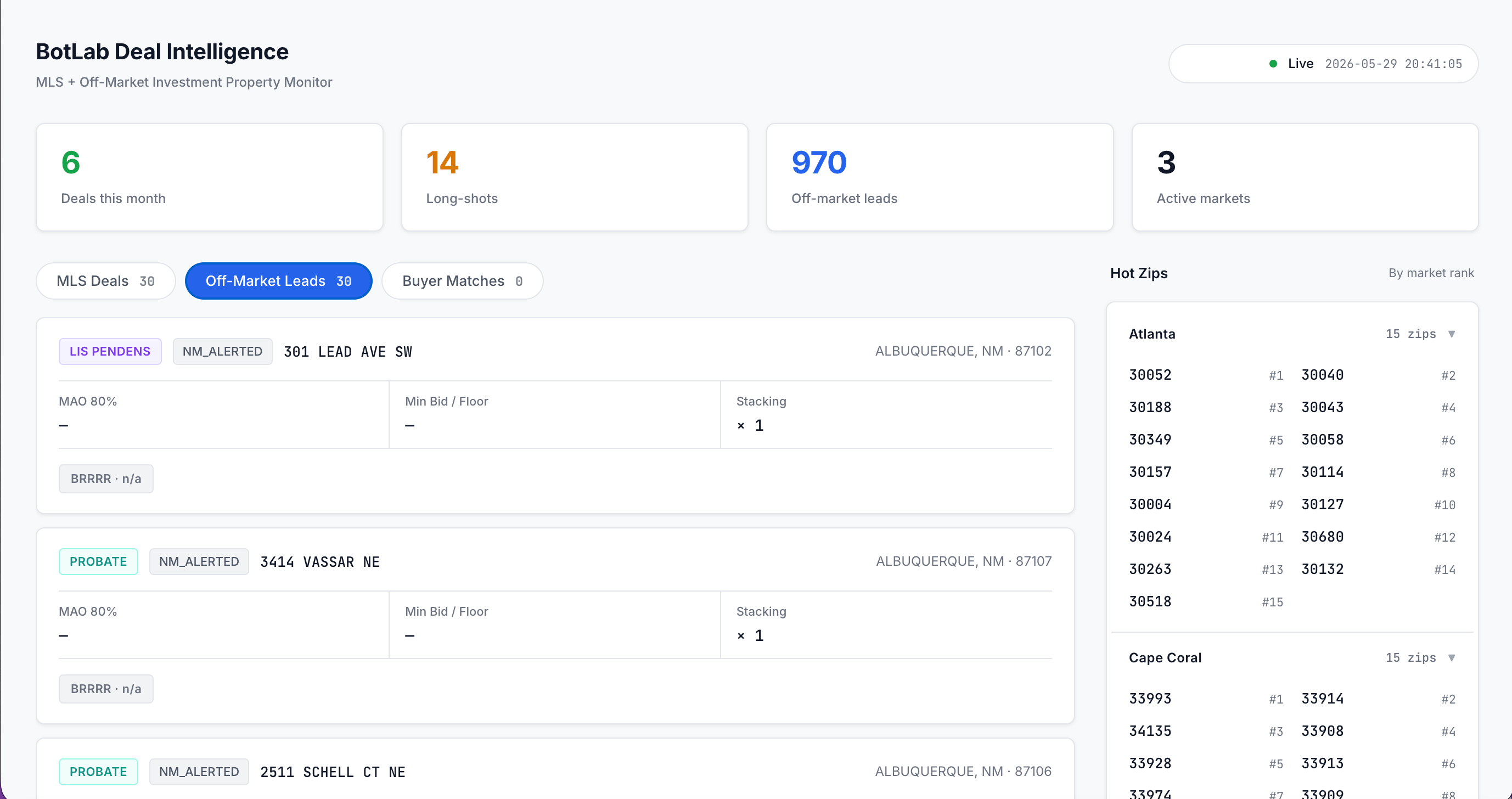
    Here's what changed my math: instead of pulling ONE distressed list (just tax delinquent, or just code violations, or just probate) and dialing 500 numbers from that single source — I started cross-referencing THREE county data sources and only calling where all three converge on the same property.

    Think about it this way:

    1. Tax Collector publishes delinquent tax lists → owner isn't paying property taxes
    2. Code Enforcement publishes violation records → property has documented maintenance issues
    3. Clerk of Court publishes probate and lien filings → ownership transition or debt situation

    When you find a property where ALL THREE point to the same address — that's not a guess. That's three independent government sources documenting the same distress. The owner isn't "maybe motivated." They're dealing with tax pressure, property violations, AND a legal situation simultaneously.

    The volume problem you're describing — the 500+ dials, the rejection — gets dramatically smaller when you're only calling people whose situation is documented in public record from multiple sources. You're not cold calling strangers. You're following up on published government information.

    For Detroit specifically, Wayne County publishes all three data types: Wayne County Treasurer (tax delinquent), Detroit Buildings Division (code violations — Detroit's open violation data is extensive), and Wayne County Clerk (probate/liens). The cross-reference is where the real deals hide.

    The reason most wholesalers burn out isn't just the volume — it's that they're calling from single-source lists where most owners aren't actually motivated. You're dialing tax delinquent owners who may have a payment plan. You're calling vacant property owners who may just be holding. One data point isn't enough context.

    But when tax delinquent AND code violations AND probate all hit the same property? Now you have context. Now the call isn't "are you interested in selling?" — it's "I noticed the situation with [specific documented issue], and I help owners in that situation find solutions." That's a fundamentally different conversation.

    Don Konipol's "it's a sales job" point is fair. But the sales job gets a lot easier when you're calling people whose motivation is documented by three independent government sources, not guessed from a single data point.

    The county data is free. The convergence approach means fewer dials with better conversations. And for someone in Detroit, Wayne County's data is some of the most comprehensive in the country because of the property tax foreclosure history there.

    You're not wrong about the grind. But the grind gets shorter when you know exactly who to call and why.

Join the conversationCreate a free account to reply, vote on answers and follow this thread.