New to Real Estate Investing — Where Should I Start?

New to Real Estate Investing — Where Should I Start?

Tucson, Pima County · Member since 2026 · 6 posts · 10 votes

New to Real Estate Investing — Looking for Advice on My First Rental Property 🏠

Hi everyone!

My name is Pricilia Mugwa, and I’m based in Tucson, Arizona. I’m currently pursuing my Master’s in Mining Engineering at the University of Arizona, and I also have a background in journalism, communications, and research.

I’m completely new to real estate investing, but I’m very interested in learning how to build long-term wealth through rental properties.

I joined BiggerPockets because I want to learn from people who have already gone through the process — especially those who started with little or no real-estate experience.

As an international student, I’m also trying to understand the legal and financial considerations of investing in U.S. real estate while maintaining my student status. My goal right now is education and preparation, not rushing into a purchase.

I’m particularly interested in learning about:

  • How to analyze my first rental property
  • Financing options for first-time investors
  • How much capital I should realistically have before buying
  • Understanding cash flow, expenses, and returns
  • Whether to start with a single-family home or multifamily property
  • Finding the right market and neighborhood
  • Working with property managers
  • Mistakes I should avoid as a beginner

I’m approaching real estate the same way I approach engineering and journalism: research first, understand the data, ask questions, and make informed decisions.

If you’re an experienced investor, especially in Arizona or Tucson, I’d really appreciate your advice.

For those of you who own rental properties: What is the ONE thing you wish you had known before buying your first property?

Looking forward to learning from this community! 🙏🏠

4Reply
379 views

Most Popular Reply

Wale LawalBusiness Member
Real Estate Broker · Houston | Dallas | Austin, TX · Member since 2018 · 5k+ posts · 2k+ votes
1mo

@Pricilia Mugwa

Welcome to BP! I would have suggest to learn to underwrite a deal conservatively, including vacancy, repairs, taxes, insurance and management before making any purchase. Being a student, I would also recommend that you see an attorney on matters relating to immigration and real estate.

Good luck!

See this reply in the discussion

8 Replies

Jump to latestLatest
  • Noah CorwickPro Member
    Realtor · Phoenix, AZ · Member since 2021 · 271 posts · 115 votes
    1mo

    Hi Pricilia, 

    I did my undergrad at UofA so bear down! 

    BP has great rental analyzer tools that I would highly recommend playing with. 

    For your first property, which I assume is your first home purchase, you only have to put 3%-3.5% down (typically it's at least 5%). You also only have to live in it for 1 year, then can rinse and repeat. 

    I would also highly recommend house hacking as well. 

  • Wale LawalBusiness Member
    Real Estate Broker · Houston | Dallas | Austin, TX · Member since 2018 · 5k+ posts · 2k+ votes
    1mo

    @Pricilia Mugwa

    Welcome to BP! I would have suggest to learn to underwrite a deal conservatively, including vacancy, repairs, taxes, insurance and management before making any purchase. Being a student, I would also recommend that you see an attorney on matters relating to immigration and real estate.

    Good luck!

  • Ashish AcharyaBusiness Member
    CPA, CFP®, PFS · FL · Member since 2017 · 5k+ posts · 3k+ votes
    1mo

    Pricilia, welcome. Since you’re still in the education stage, I’d use this time to learn how to analyze one rental really well before worrying about building a portfolio.

    I'd focus on realistic rent, property taxes, insurance, vacancy, repairs, CapEx, management, financing, and how much cash you'll still have after closing. I'd also compare single-family and small multifamily based on the actual numbers rather than assuming one is automatically better for beginners.

    I was on an F-1 visa myself, so I understand why you’re being careful about the legal and tax side before making a move. Student-visa rules can restrict unauthorized employment and off-campus work, so there can be an important distinction between passively owning an investment and actively operating a real estate business. I’d get immigration and tax guidance specific to your situation before deciding how hands-on you’ll be.

    Your U.S. tax residency matters too. Depending on how long you’ve been in F status and your facts, you may still be treated as a nonresident alien for tax purposes. If so, U.S. rental income has its own rules, including an election that can potentially allow qualifying rental income to be taxed on a net basis with related deductions.

    If you eventually buy and hold a rental, I’d also evaluate cost segregation once the property is placed in service. It can accelerate depreciation, but the real benefit depends on your tax status and whether the resulting losses are actually usable.

    The best first step is learning the numbers while getting clarity on what your student status allows before committing capital.

    Happy to connect!

    INVESTOR FRIENDLY CPA®5241 Reviews
    TaxMD® | AI-Powered Tax Planning
  • Eric FernwoodBusiness Member
    Realtor · Las Vegas, NV · Member since 2014 · 994 posts · 1k+ votes
    3w

    Great questions Pricilia!

    Most of our clients were new to real estate before investing with us so I regularly answer questions exactly like yours.

    To build long-term wealth through rental properties, the first and most important question to answer is which city to invest in.

    The City Is the Investment

    Rent and price growth aren't property features. The city drives both rent and price growth.

    Think of the city as a harbor and rents and prices as boats in that harbor. When the tide comes in (population grows and demand rises), all boats rise. When population falls, rents decline or fail to keep pace with inflation. This is why the city you choose matters more than the property you buy. No matter how good an individual property is, it can only perform within the limits of the city around it.

    Characteristics of a city that is likely to support long-term price and rent growth faster than inflation (in other words, long-term jobs and population growth):

    • Metro population above 1 million: A large metro area offers employers a deep labor pool, established transportation networks, and supporting business services.

    • Low crime rates: Public safety helps cities attract and retain employers and residents. Evaluate recent crime trends and neighborhood conditions, since citywide rankings can mask substantial local differences.

    • Pro-business environment: Predictable regulations, efficient permitting, and reliable infrastructure can support business formation and expansion. Look for sustained job creation, business investment, and employer relocations across multiple industries.

    • Low operating costs: Competitive labor, real estate, utilities, insurance, and tax costs can help attract employers. For rental properties, compare the full operating budget, including property taxes, maintenance, insurance, and management.

    • Low natural disaster risk: Major disasters can destroy both housing and employers. Businesses can't afford months or years of downtime — they relocate, and workers follow the jobs. Insurance may cover repairs, but it doesn't restore demand. Evaluate exposure to flooding, wildfire, wind, and other local hazards. Compare city and state homeowner insurance costs.

    You do not need to predict the next boomtown. You just need to identify a city already moving in the right direction.

    Has population been growing steadily? (U.S. Census data)

    Is personal income rising faster than inflation? (St Louis Fed)

    Are rents and home prices already showing long-term growth? (Zillow data)

    Let me know if you want more detail on evaluating a city for rental property investment.

    I will answer your other questions in separate responses.

    FERNWOOD Team, KW VIP Realty520 Reviews
    • Eric FernwoodBusiness Member
      Realtor · Las Vegas, NV · Member since 2014 · 994 posts · 1k+ votes
      2w

      Hello Pricilla,

      Continuing to answer your (great) questions. This post covers your question about whether to start with a single-family home or a multifamily property, and which neighborhoods to target. They are related.

      Focus on tenants, not properties

      No property ever paid rent—the tenant who occupies your property pays the rent. Your financial success depends on the tenant who occupies your property to stay for many years, pay rent on time, and care for the home. It does not depend on the property itself.

      Every tenant segment has specific housing requirements, and tenants are unlikely to rent a property that doesn’t meet them. That means when you buy a property, you’re also locking in the tenant segment it will attract—and that choice can’t be changed.

      The easiest way to identify properties that attract reliable tenants is to ask multiple experienced property managers:

      • “If your goal is to buy properties that attract tenants who stay for many years and pay rent on schedule, what properties would you buy and where?”

      So, the question is not single-family home or multifamily; the question is what property type, configuration, and location attract the segment of people most likely to stay many years and pay rent on schedule.

      Our Target Tenant Segment in Las Vegas

      In Las Vegas, families with school-age children are the only tenant segment I’m aware of that tends to stay for many years—an average of over five—and pay rent on schedule. The 600+ properties we’ve delivered to more than 170 clients maintain an average vacancy rate below 2%. We’ve also had only 8 evictions in 17 years, with a tenant population greater than 1,100.

      I started by researching which tenant segment typically stays more than 5 years and pays rent on time. Then I looked at what they rented and where. To check my findings, I interviewed property managers.

      Here is the property profile of properties that attract this reliable tenant segment in Las Vegas.

      • Type: Single-family

      • Configuration: 3+ bedrooms, 2+ baths, 2+ car garages, 1,100 to 2,400 SF, one or two stories, lot size 3,000 SF to 6,000 SF.

      • Projected rent range: $1,900/Mo to $2,300/Mo

      • Purchase price: $350,000 to $450,000

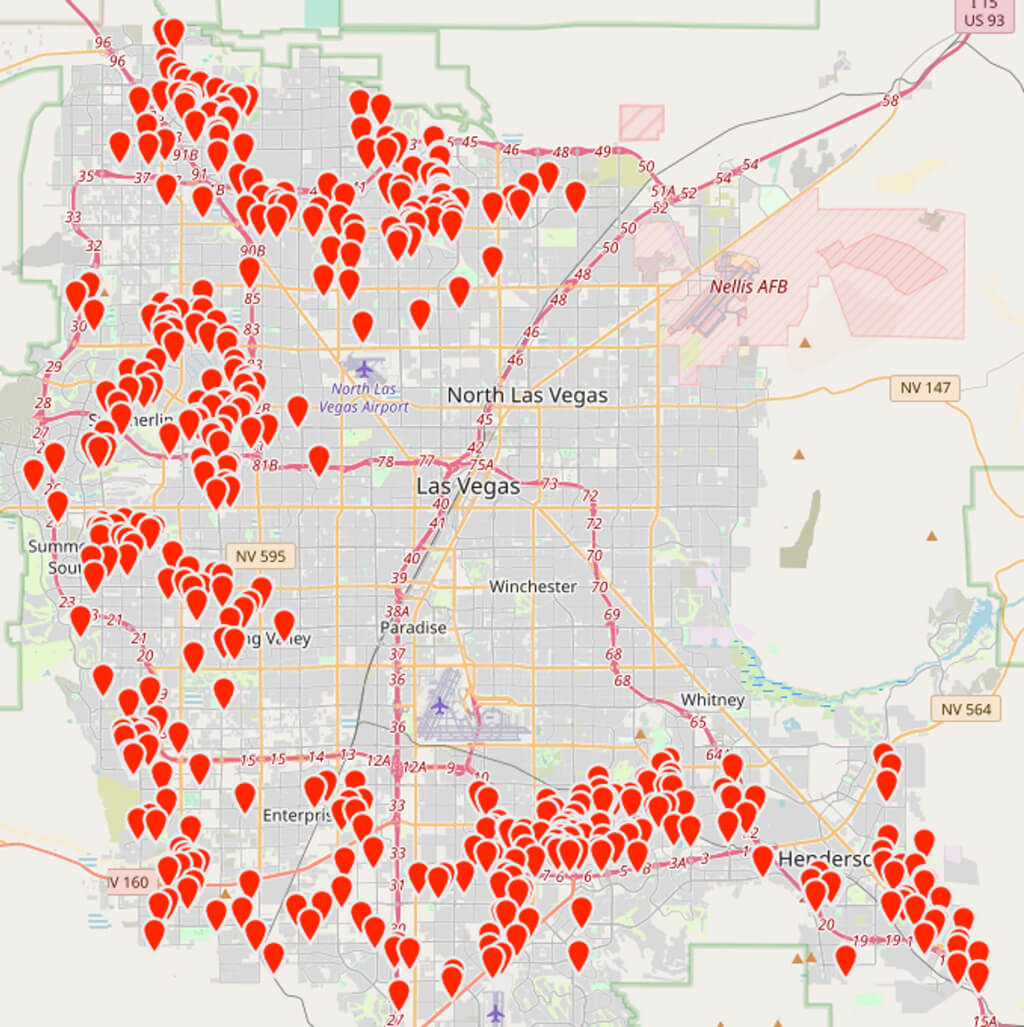
      • Location: The map below shows the locations where our clients own properties that attract this tenant segment.

      This method works because it focuses on what matters most: reliable income. The property type doesn’t matter.

      Of the 170+ clients we’ve worked with, fewer than 10 were local. The rest live in other states or countries. Remote investing can work well with an experienced local investment team. You are not limited to where you live.

      Summary

      Don’t choose a property based on someone else’s opinion and hope it works out. Start with a tenant segment that tends to stay for many years and pays rent on time. Then buy properties similar to what and where those tenants already rent.

      FERNWOOD Team, KW VIP Realty520 Reviews
  • Investor · Pacific Northwest · Member since 2026 · 538 posts · 302 votes
    3w

    Pricilia — your “research first, understand the data, ask questions, then decide” approach is probably the biggest advantage you have right now.

    The one thing I wish more first-time investors understood is that you’re not really buying a property based on one underwriting snapshot. You’re buying a moving system.

    Rent changes. Taxes change. Insurance changes. Financing changes. Repairs happen. Neighborhood conditions drift. The seller’s position changes. Your own capital position changes.

    So when we evaluate a property, we keep a rolling record of the deal and update it as those assumptions move. Then instead of rebuilding the analysis every time something changes, we can query the current state and see whether the investment thesis is getting stronger or weaker.

    For someone starting where you are, I’d spend the next phase building that decision process before worrying about finding “the deal.”

    One separate issue: because you mentioned international-student status, I’d keep the immigration/legal question completely separate from the property analysis and confirm that piece with a qualified immigration/tax professional before structuring anything.

    If you want, send me a property you’re using as a practice deal sometime. We can walk through how we’d structure the analysis and what we’d keep watching after the first underwriting.

  • Real Estate Agent · Phoenix metro, AZ (Surprise · Casa Grande · West Valley) · Member since 2024 · 13 posts · 2 votes
    2d

    Welcome — research-first is the right pace. Before city or property type, underwrite the full payment: rent, vacancy, taxes, insurance, repairs, CapEx, and management. Arizona numbers swing hard by pocket (Tucson vs Phoenix metro fringe like Surprise / Casa Grande / West Valley), so East Valley comps don't travel.

    I’m a bilingual REALTOR® in the Phoenix metro with deep time in Surprise, Casa Grande, and the West Valley. When you’re ready to practice a deal side-by-side, happy to map what the hold actually costs. card.realsanchez.com

Join the conversationCreate a free account to reply, vote on answers and follow this thread.