For Investors Using BRRRR, Which Step has been Hardest to Execute Consistently ?
For Investors Using BRRRR, Which Step has been Hardest to Execute Consistently ?
Charles WalkerBusiness Member
Real Estate Consultant · Member since 2025 · 25 posts · 1 vote

The
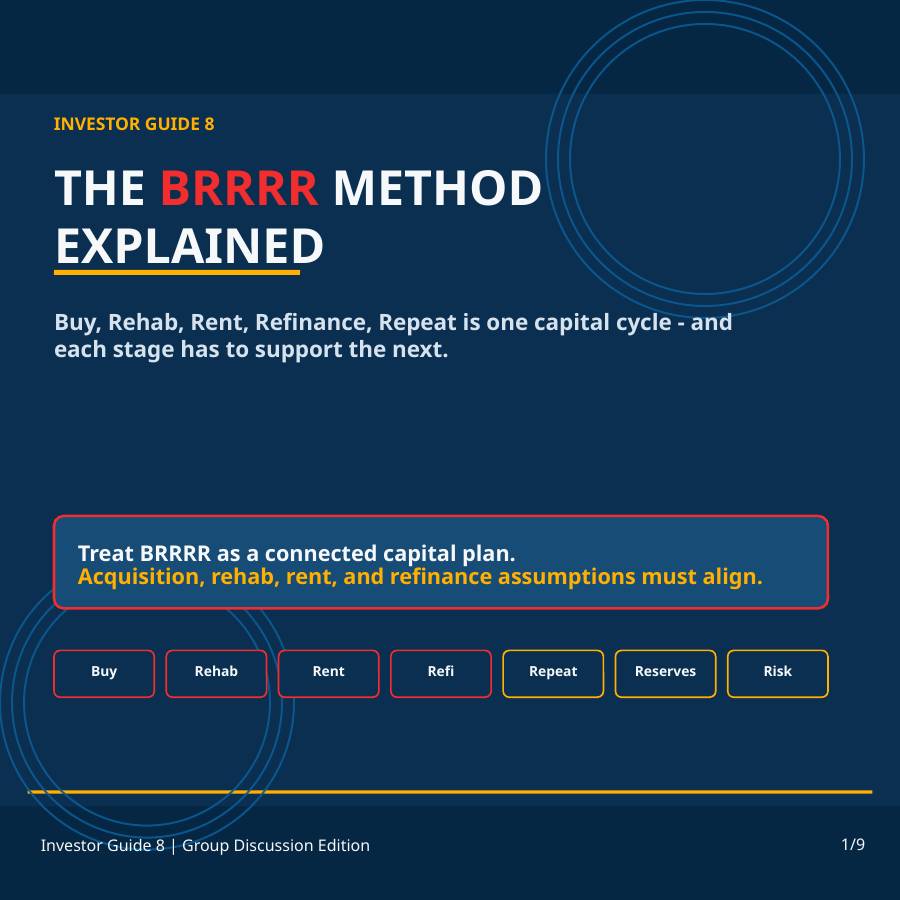
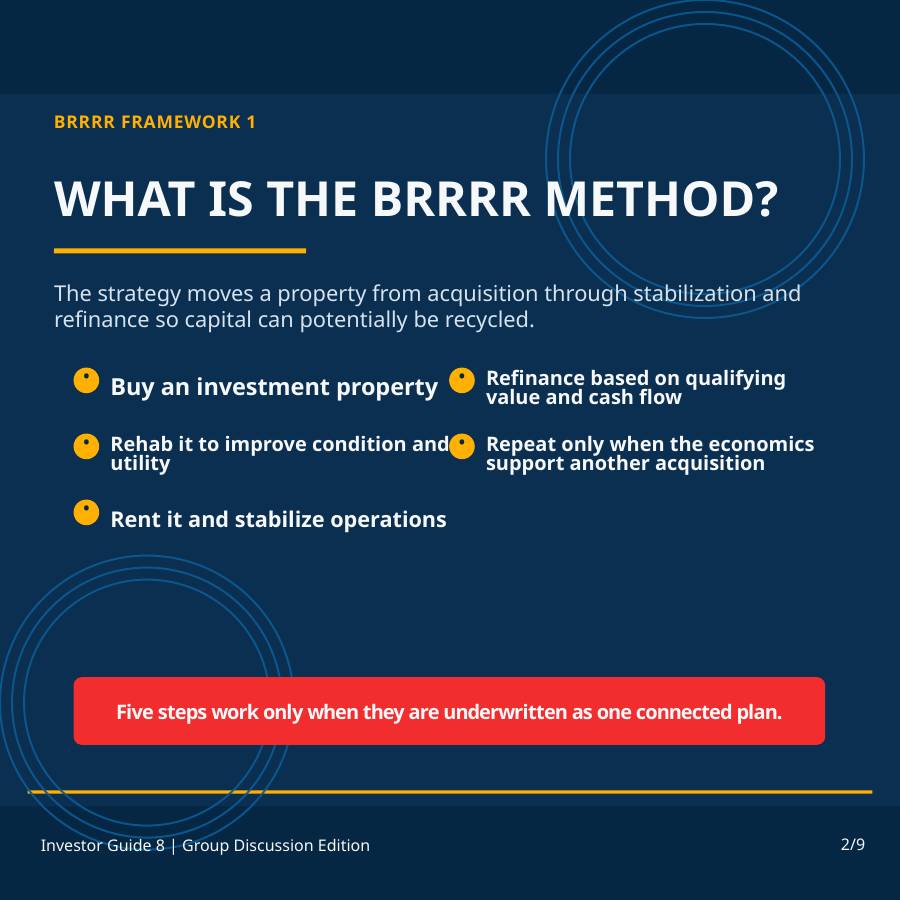
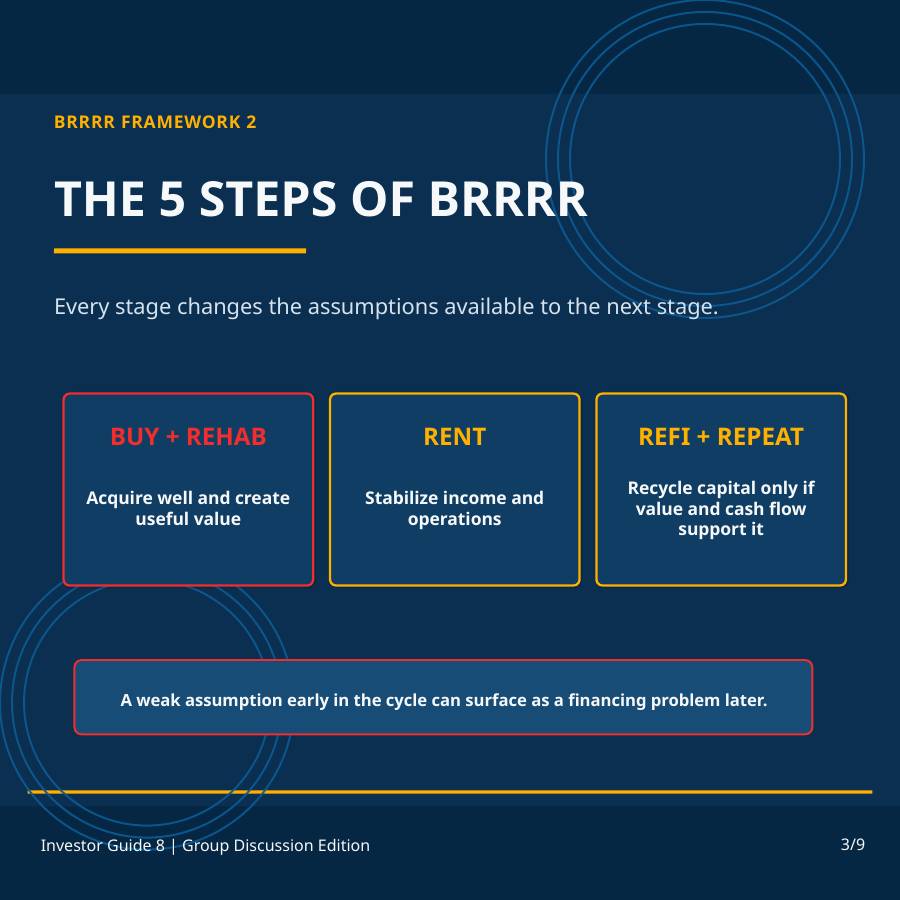
framework is easy to describe: Buy, Rehab, Rent, Refinance, Repeat. The hard
part is making all five stages work together as one transaction.

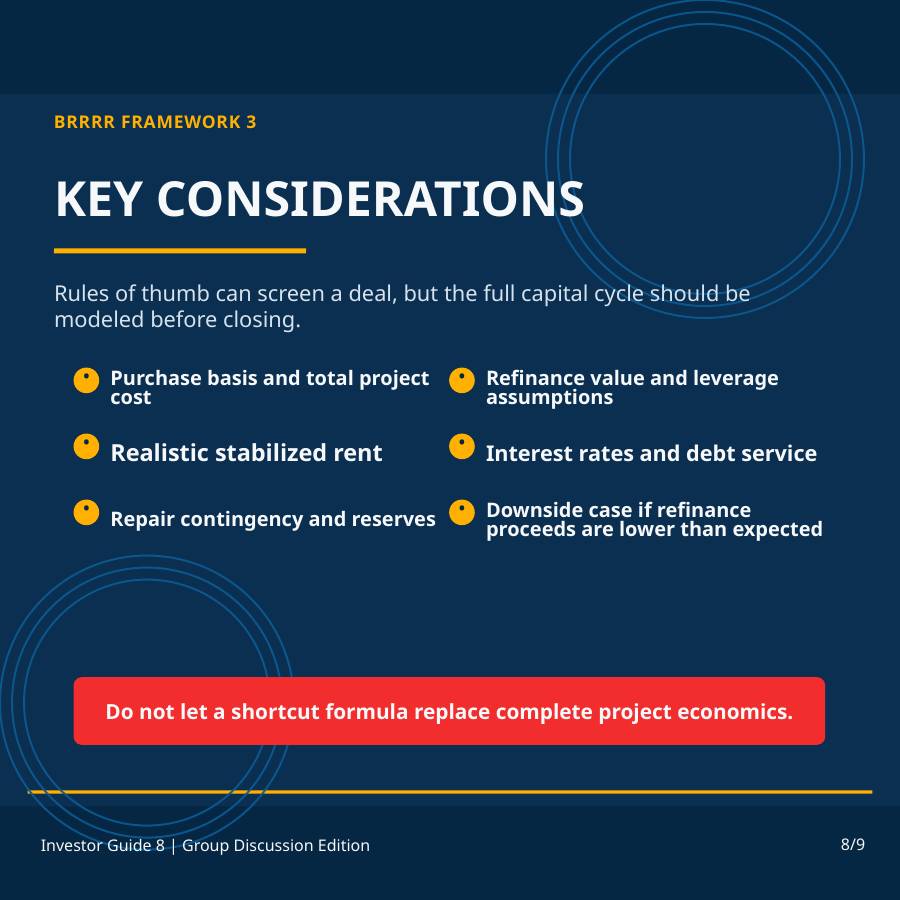
The questions I would stress-test are:

·        
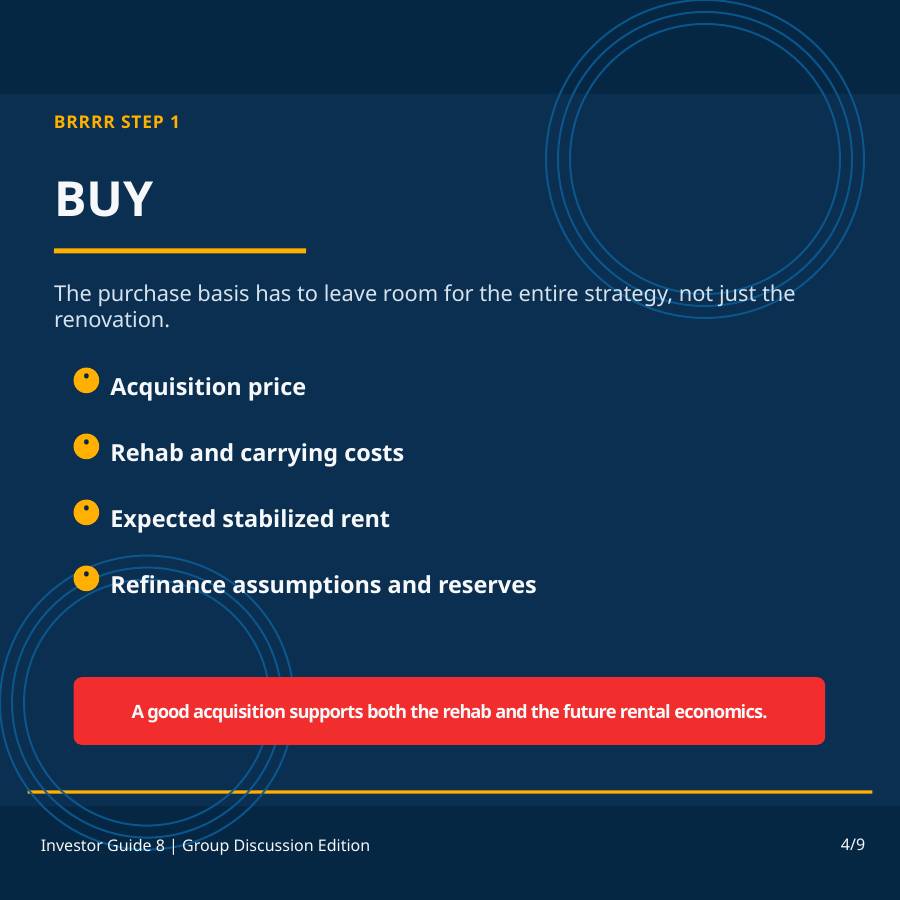
Buy - Is the acquisition basis low
enough relative to the renovation cost and realistic after-repair value?

·        
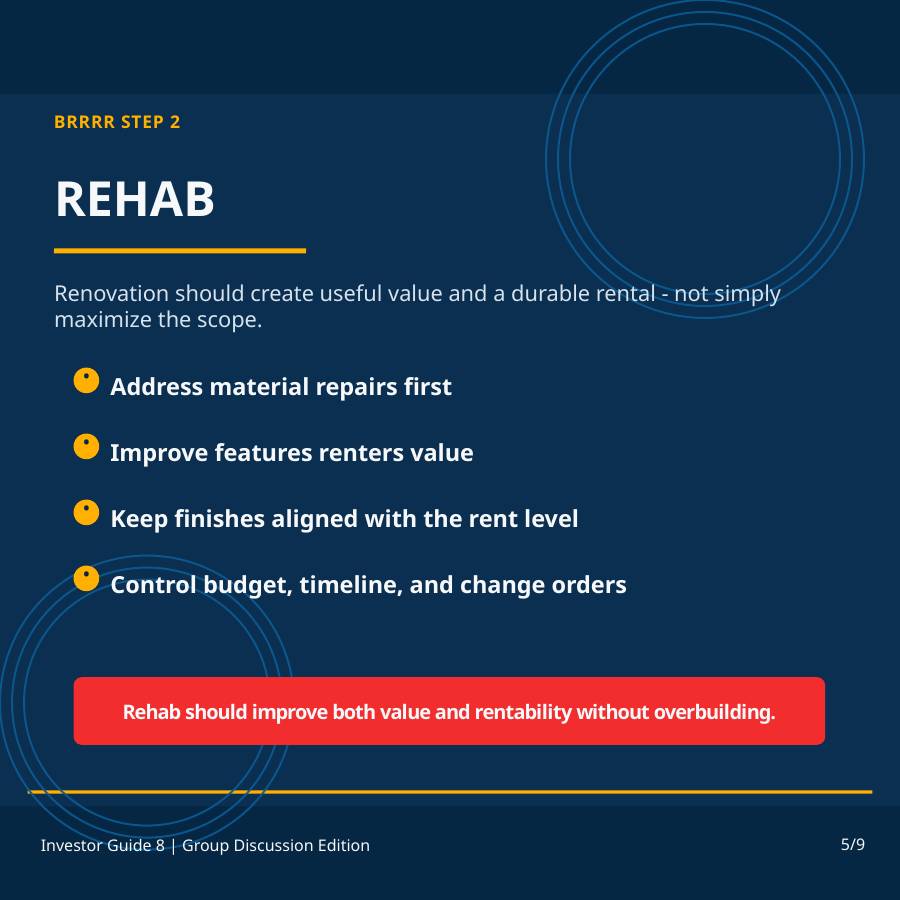
Rehab - Are the improvements focused on
value and rentability rather than unnecessary upgrades?

·        
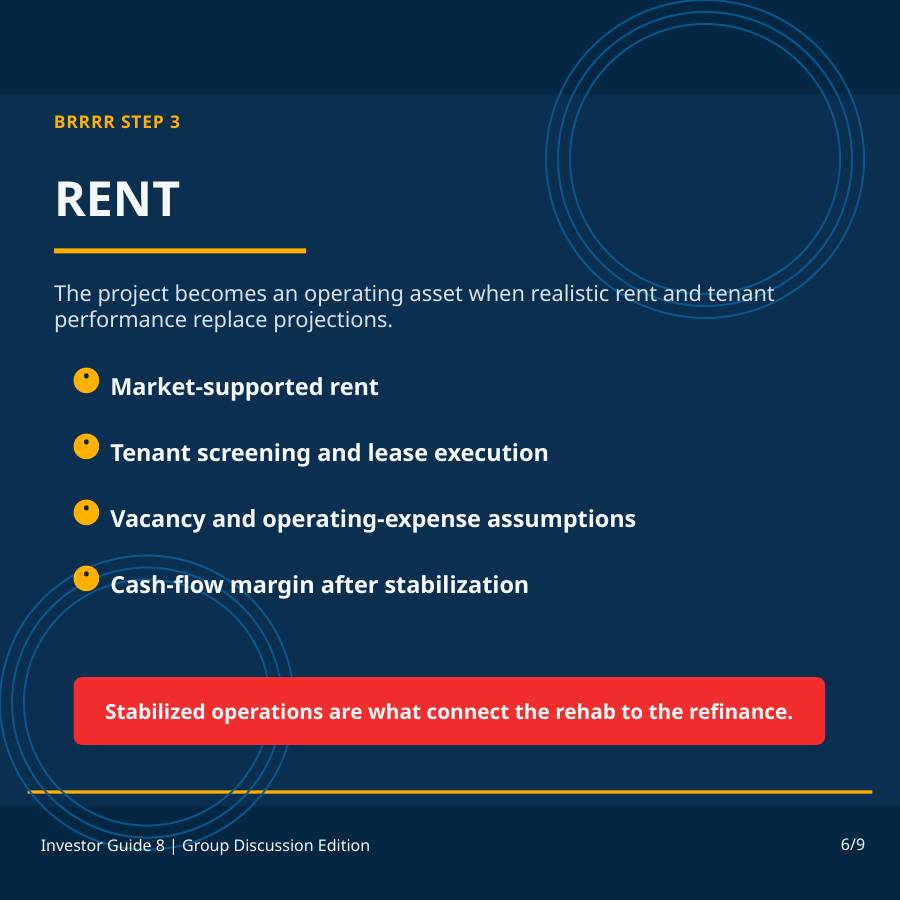
Rent - Can the property attract
qualified tenants at a rent that supports ongoing property expenses?

·        
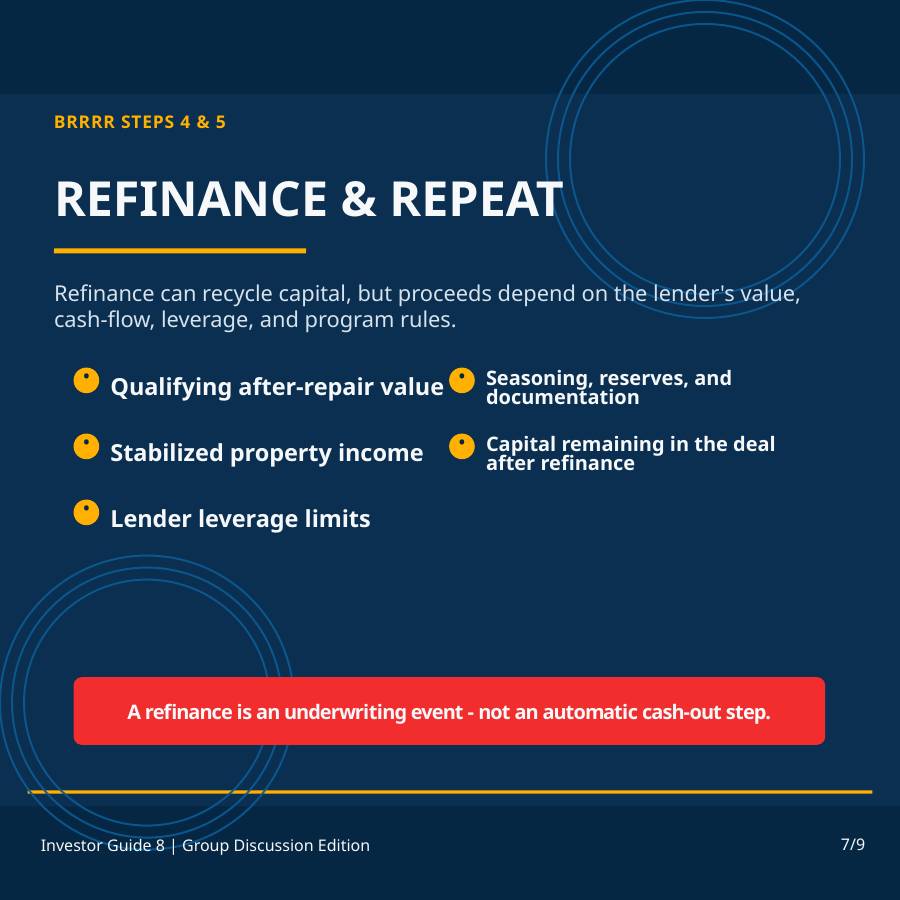
Refinance - Will the improved value,
rental performance, leverage, and borrower profile support the intended
refinance under actual lender guidelines?

·        
Repeat - If the refinance returns less
capital than expected, does the next acquisition still work?

I also view the 70% rule and 1% rule as screening tools rather than answers.
Renovation overruns, management expense, refinance costs, interest rates,
valuation changes, tenant issues, and reserves can materially change the
result.

The refinance is not really the finish line. It determines how much capital is
available to continue the cycle.

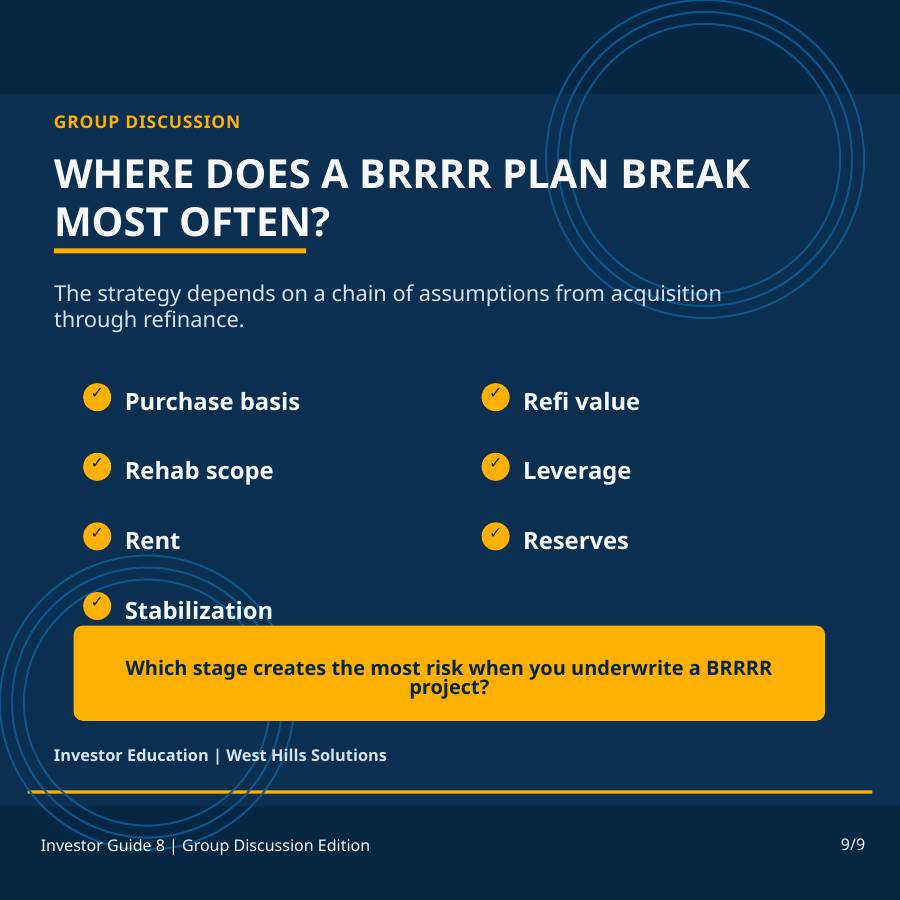
For those who have completed several BRRRRs: which part most often causes the
original plan to change - acquisition, rehab, rent-up, valuation, refinance, or
the next-deal timing?

Educational discussion only; not a recommendation to buy or finance any specific property.

0Reply
321 views

8 Replies

Jump to latestLatest
  • Matthew MorrowBusiness Member
    Investor · PA - NY - NJ · Member since 2019 · 534 posts · 186 votes
    1d

    @Charles Walker For us the plan usually bends at rehab or the refi, not the buy. It's easy to scope for "nice" instead of what actually drives rent and appraisal, and then the numbers you modeled don't show up when the lender looks. We treat rehab like a business: triage everything, skip the extras, and keep reserves after it's done, because that's when the real hold costs start. What's been the sticking point for you?

    CORE Team | Realty ONE Group Supreme547 Reviews
    • Charles WalkerBusiness Member
      OP
      Real Estate Consultant · Member since 2025 · 25 posts · 1 vote
      19h

      Mathew,

      I approach this from the financing and consulting side. The concern I focus on is whether the completed property will support the refinance the investor planned—and how much cash will remain afterward.

      Your point about scoping for “nice” is relevant. An improvement can add cost without producing enough additional rent or appraised value to justify it. Keeping reserves after the refinance also deserves attention alongside how much capital comes back.

      How do you decide which improvements earn their place in the rehab budget?

  • James JonesPro Member
    Investor · Collierville, TN 38017 · Member since 2017 · 748 posts · 552 votes
    23h

    For me it is the Buy, and it is not close. At 236 properties, deal flow is my bottleneck — not money, not contractors. If the buy is wrong, no rehab, rent, or refinance fixes it. My screen is plain: single-family under $100K, ARV $180K to $265K, rent that clears the 1% rule, with 3BR+ Section 8 rent at $1,395 to $1,950 in Memphis. The refinance is underwritten on day one too: DSCR at 70 to 80% LTV on roughly a 30-year amortization. If those numbers do not work before I buy, I pass. The other four steps are execution. The Buy is the decision.

    • Charles WalkerBusiness Member
      OP
      Real Estate Consultant · Member since 2025 · 25 posts · 1 vote
      20h

      James, underwriting the refinance on day one is the part of your process I would emphasize. You are evaluating the purchase against the entire BRRRR plan before committing capital.

      Your point about deal flow matters too. Having the funding and contractors available does not mean every property deserves a green light. A clear buy box gives you a reason to pass when the numbers fall short.

      In Memphis right now, is the bigger challenge finding properties at your acquisition price or finding ones where the rehab still leaves enough margin?

  • Simon W.Business Member
    Real Estate Consultant · Lehigh Valley PA & New York City · Member since 2013 · 1k+ posts · 673 votes
    16h

    From the accounting side, the part that goes sideways most is tracking the rehab money. Everyone has a budget going in, but by the time you get to the refi the costs are spread across a credit card, a HELOC, and a few Venmo payments to contractors, and nobody can say what the rehab actually cost.

    That matters twice. The lender wants a clean scope and cost sheet for the refi, and your CPA needs it for basis, because most of a BRRRR rehab gets capitalized and depreciated, not deducted. Even things like utilities and insurance while it's sitting under rehab usually can't be taken as normal rental expenses until the place is ready to rent.

    Easiest fix I've seen is one bank account and one card per deal from the day you buy. Then the cost sheet is basically a download at the end instead of a weekend digging through receipts.

    Accounting Properties LLC
    View Page
    CFO LLC
    View Page
    • Charles WalkerBusiness Member
      OP
      Real Estate Consultant · Member since 2025 · 25 posts · 1 vote
      16h

      Simon, the distinction between the rehab budget and the actual money spent is important. If those costs are scattered across several accounts, it becomes harder to know how much capital is truly tied up in the property.

      Keeping transactions separate by deal is a practical starting point. I would also keep invoices, receipts, and change orders tied to the cost sheet so each expense has supporting documentation.

      From my financing and consulting perspective, that gives the investor a clearer picture of what the refinance needs to accomplish. The CPA can then determine the appropriate tax treatment.

      What costs do you most often see investors leave out of their tracking?

    • Simon W.Business Member
      Real Estate Consultant · Lehigh Valley PA & New York City · Member since 2013 · 1k+ posts · 673 votes
      13h

      Good point on tying the invoices and change orders to the cost sheet. The ones I see left out most are holding costs during the rehab, like the loan interest, insurance, utilities, and taxes while it's sitting empty. People track the contractor and materials but forget the property was costing them money every month too. Closing costs on the purchase get missed a lot, and so do small stuff like permits, dumpsters, and the Home Depot runs on a personal card. And the owner's own time and mileage driving out to the property usually never makes it anywhere. It all adds up, and it's usually the difference between thinking you left $10k in the deal and actually leaving $25k.

      Accounting Properties LLC
      View Page
      CFO LLC
      View Page
Join the conversationCreate a free account to reply, vote on answers and follow this thread.