When you submit a Fix/Flip to a lender which part of the deal gets the most scrutiny
I think it is useful to view underwriting as a connected story rather than a checklist of isolated ratios.
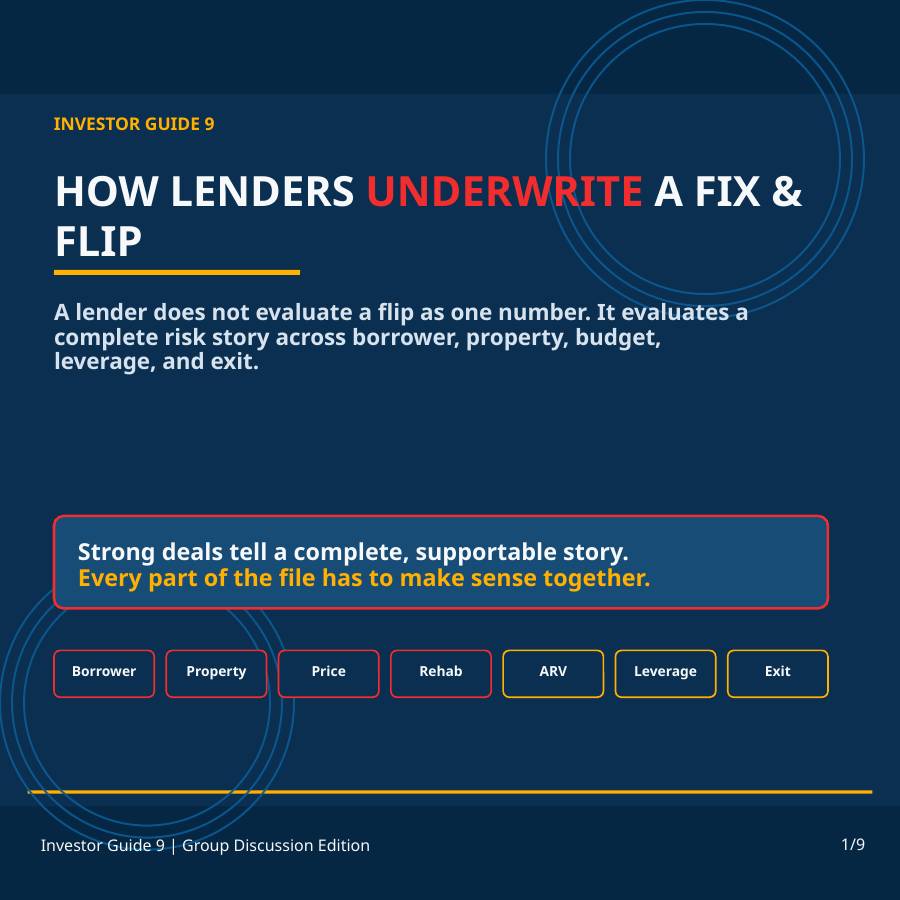
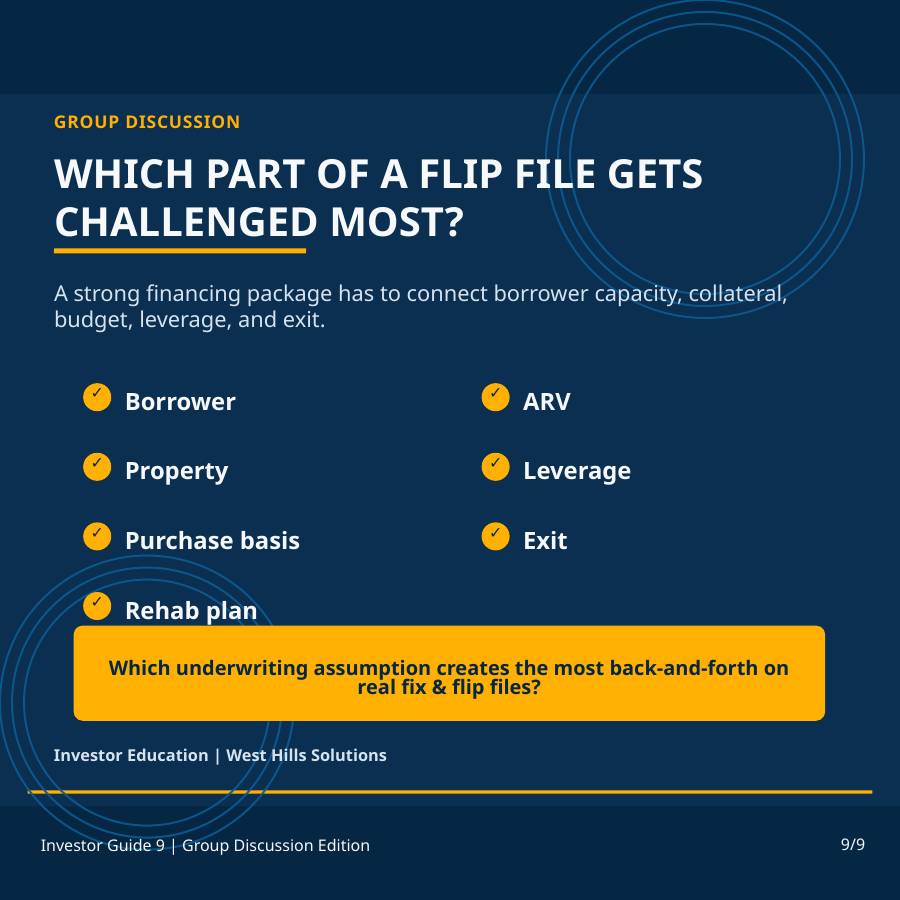
A lender may be trying to answer questions such as:
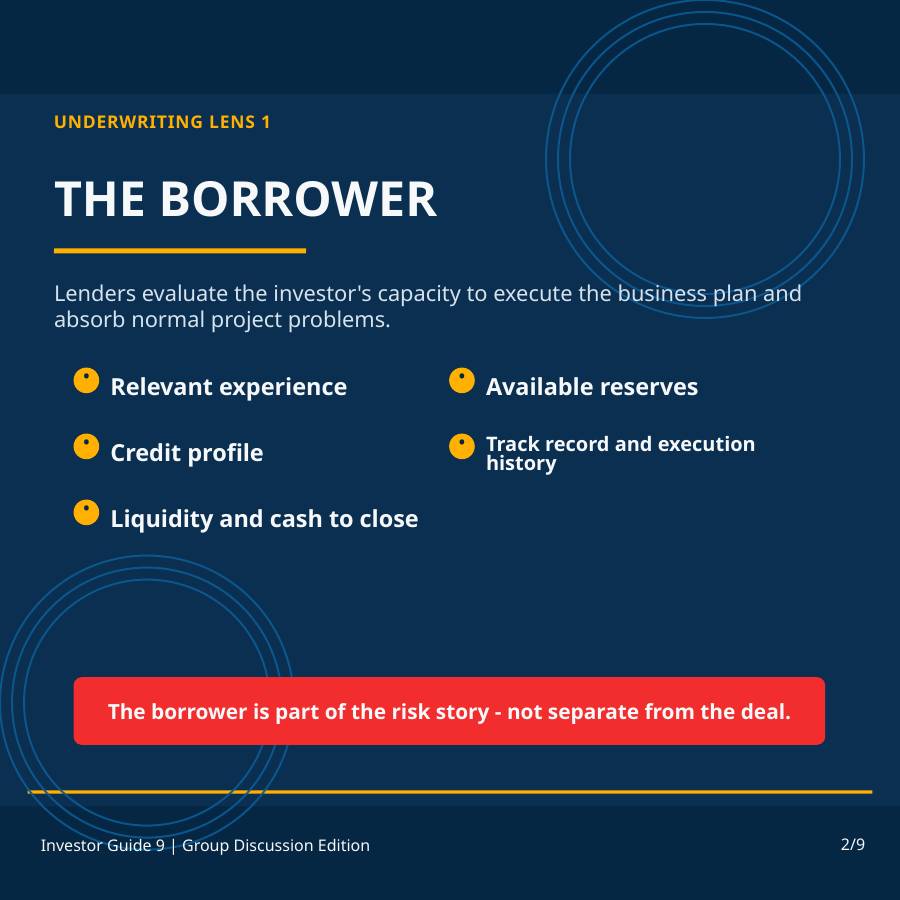
· Borrower: Does the investor have the experience, liquidity, reserves, credit profile, and execution history to complete the plan?
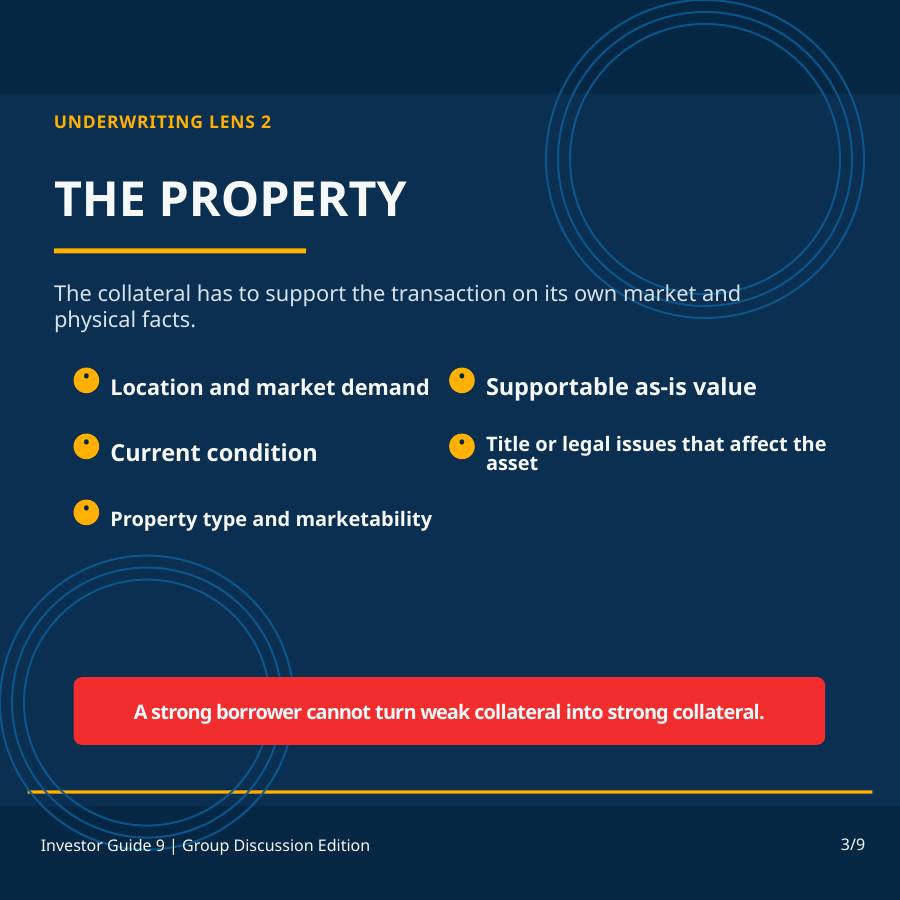
· Property: Does the location, condition, property type, marketability, and as-is value support the transaction?
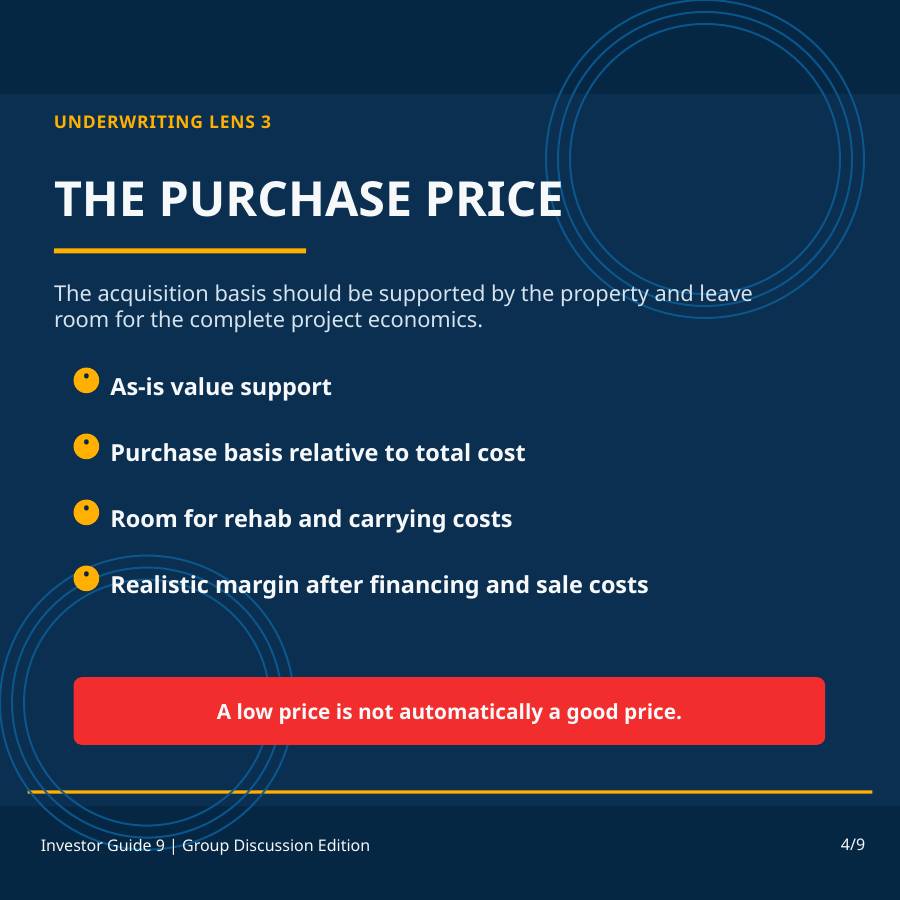
· Purchase price: Is the acquisition basis reasonable relative to the market and the planned improvements?
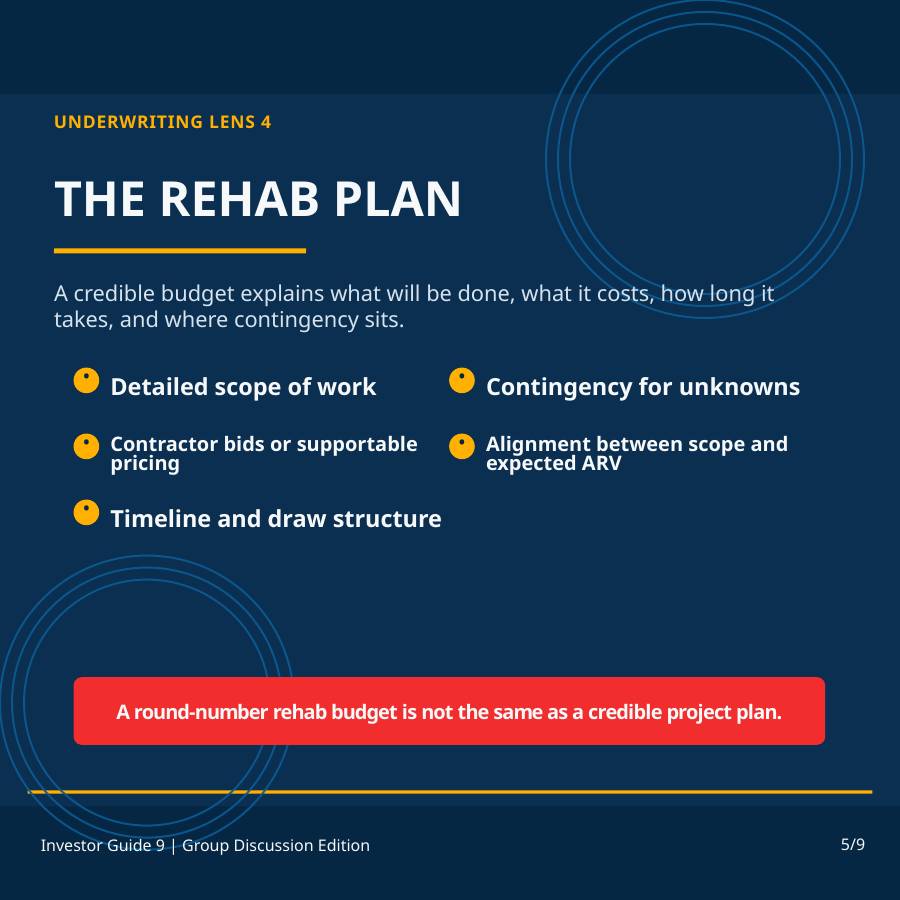
· Rehab: Is the scope complete, are contractor numbers supportable, and is there enough time and contingency?
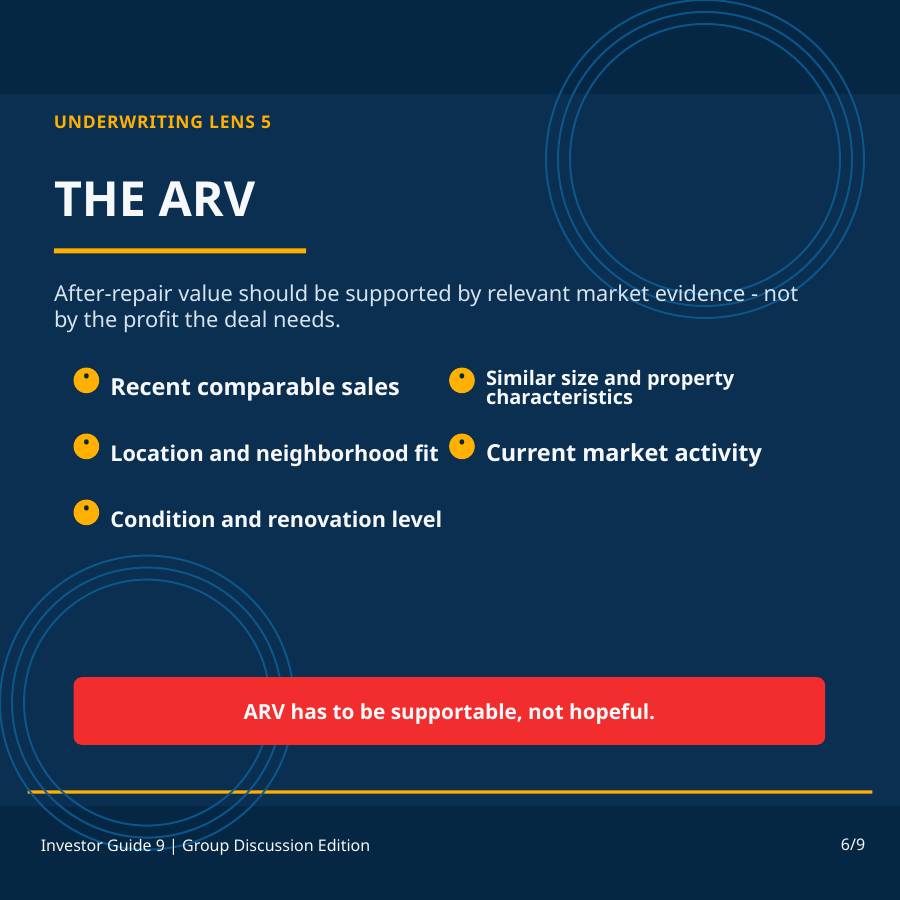
· ARV: Do relevant comparable sales support the projected finished value?
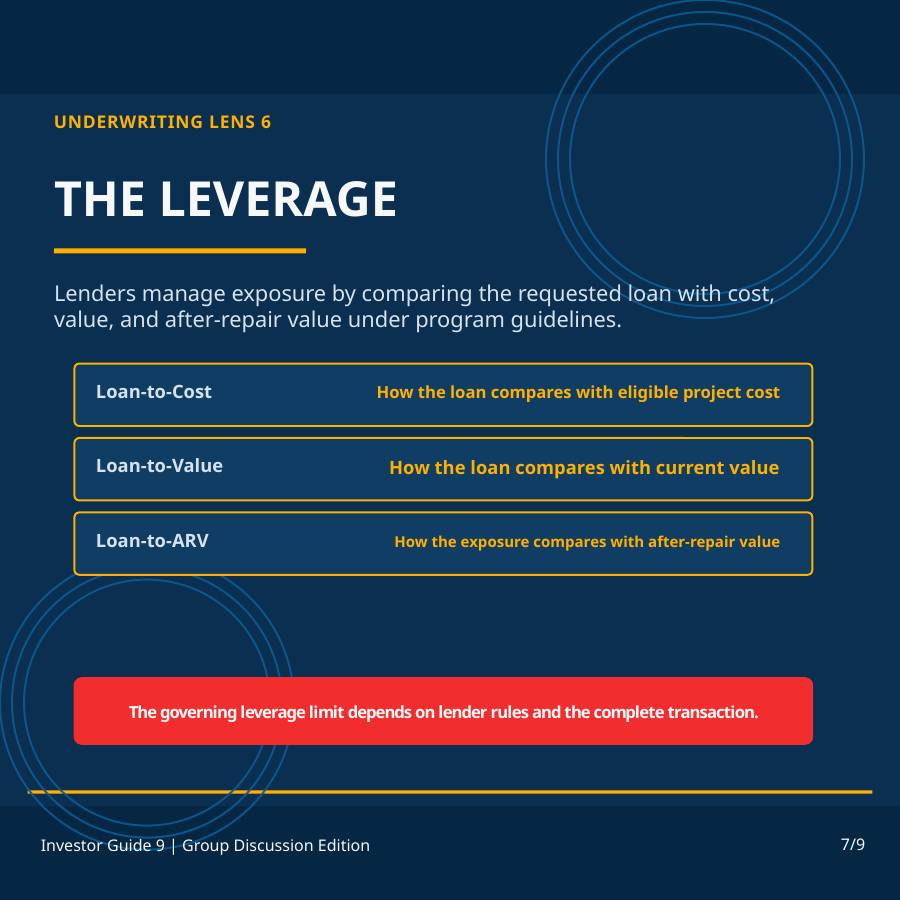
· Leverage: How much debt is being requested relative to cost and projected value? Exact LTC and LTARV calculations and limits vary by lender and program.
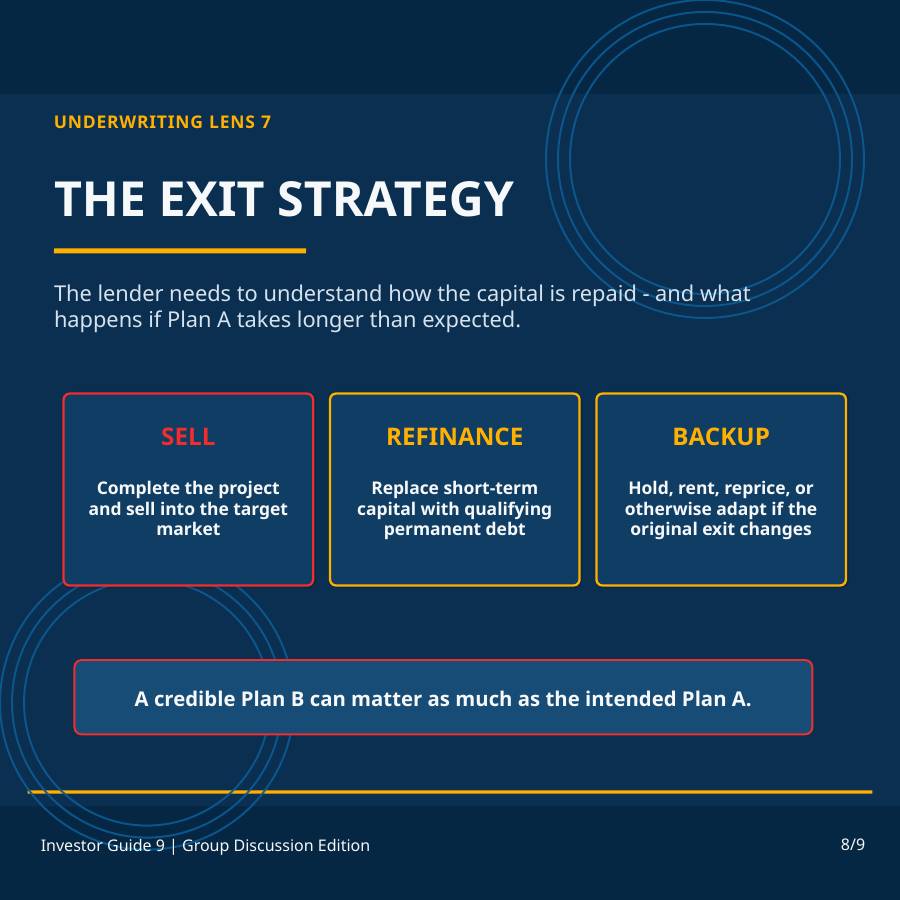
· Exit: What is the primary repayment plan, and what happens if the rehab, sale, or refinance takes longer than expected?
For the property-selection side, our earlier Investor Guide, "Choosing a Fix & Flip Property," covers location, condition, marketability, and value considerations. For the rehab side, "Proven Strategies to Maximize Fix & Flip Returns" provides a companion look at planning, contractors, budgeting, and execution.
For investors who have funded several flips: which underwriting issue most often changes the original loan structure - borrower liquidity, rehab scope, ARV, leverage, or exit strategy?

