Real Estate Consultant · Member since 2025 · 34 posts · 2 votes
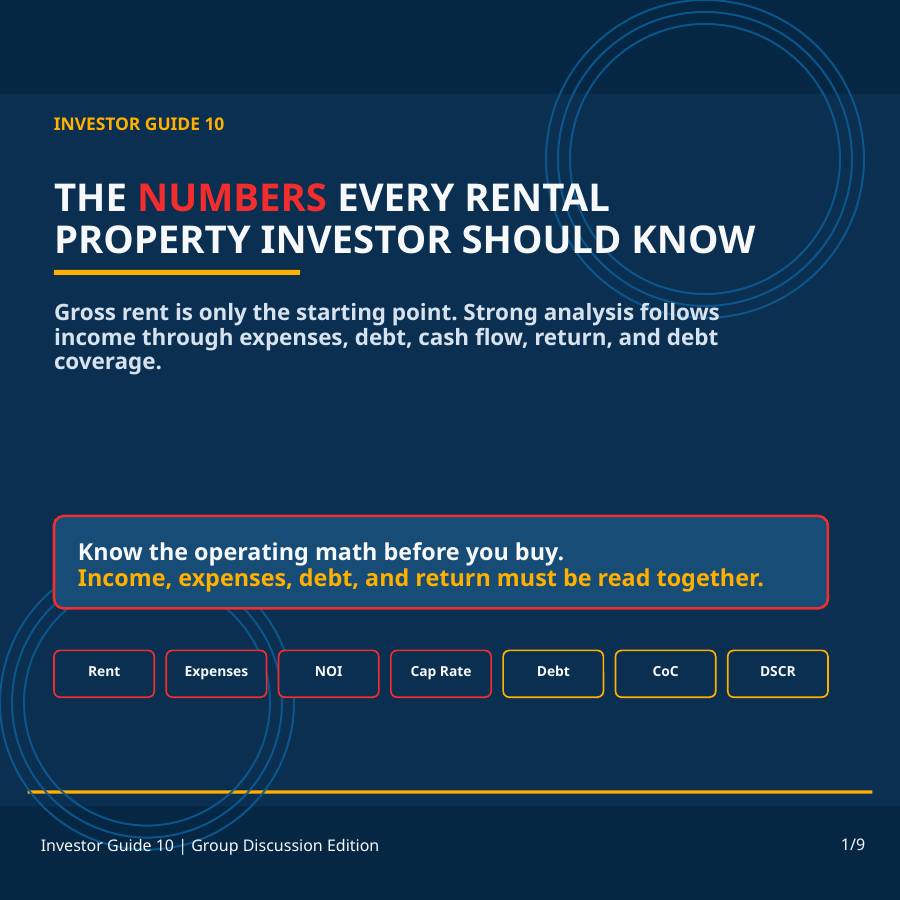
One of the easiest mistakes in rental analysis is stopping at "monthly rent" instead of following the numbers through operating performance, financing, and investor return.
A basic framework I like is: gross rent -> operating expenses -> NOI -> cap rate -> debt service -> cash flow -> cash-on-cash return -> DSCR.
For example, assume $2,400/month in rent ($28,800/year) and $8,800/year in operating expenses. That produces $20,000 of NOI. On a $250,000 property value, the cap rate is 8.0% before financing.
If debt service is $1,350/month, the property produces about $317/month in pre-tax cash flow. If the investor has $50,000 of cash invested, the illustrative cash-on-cash return is about 7.6%.
DSCR adds another perspective by comparing property income with debt service. Using NOI divided by annual debt service, the example is about 1.23, although calculation methods and minimum requirements vary by lender and program.
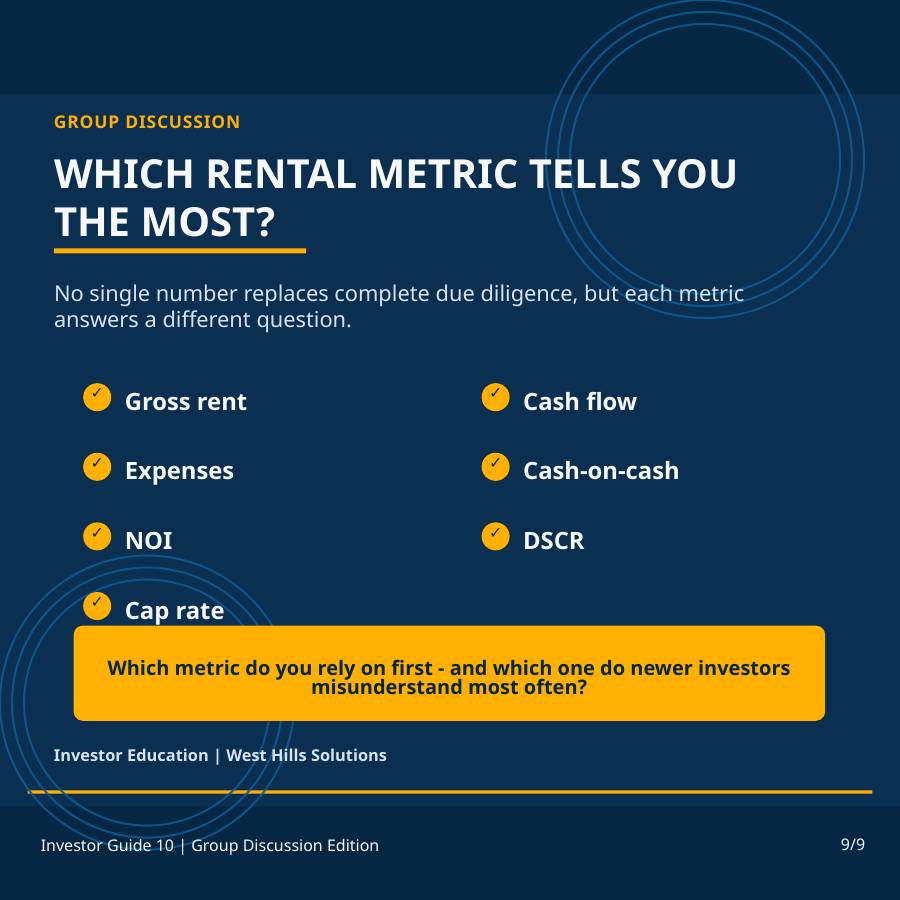
No one metric tells the whole story. Which number do you rely on most when screening rental properties - and which metric do you think newer investors misunderstand most often?
One of the easiest mistakes in rental analysis is stopping at "monthly rent" instead of following the numbers through operating performance, financing, and investor return.
A basic framework I like is: gross rent -> operating expenses -> NOI -> cap rate -> debt service -> cash flow -> cash-on-cash return -> DSCR.
For example, assume $2,400/month in rent ($28,800/year) and $8,800/year in operating expenses. That produces $20,000 of NOI. On a $250,000 property value, the cap rate is 8.0% before financing.
If debt service is $1,350/month, the property produces about $317/month in pre-tax cash flow. If the investor has $50,000 of cash invested, the illustrative cash-on-cash return is about 7.6%.
DSCR adds another perspective by comparing property income with debt service. Using NOI divided by annual debt service, the example is about 1.23, although calculation methods and minimum requirements vary by lender and program.
No one metric tells the whole story. Which number do you rely on most when screening rental properties - and which metric do you think newer investors misunderstand most often?
@Charles Walker, I'd pay close attention to cash flow after all the expenses are considered. I think newer investors sometimes focus too much on the monthly rent without looking at what they'll actually keep. I'd also want to review the existing leases, any unpaid rent, and other property issues that could affect those numbers.
I'm a real estate attorney and investor based in Maryland, and I work with clients on rental properties, contracts, and real estate transactions. I've seen how important it is to understand both the numbers and the legal details before buying. A property might look good on paper, but the documents can tell you a lot more about what you're taking on.
I appreciate you breaking this down, @Charles Walker! It's a helpful reminder that there's more to evaluating a rental property than just looking at the rent. Happy to stay connected!
Good breakdown, Charles. The number I lean on most is cash flow after an honest expense check, because everything else in that chain depends on the expense line being right.
In your example the $8,800 a year in operating expenses is doing a lot of work. On a real deal I'd want the actual tax bill, an insurance quote, and the seller's real numbers, then add vacancy, repairs, capex, and a management fee even if I plan to self manage. A small miss there moves the NOI, and the cap rate and cash on cash move with it.
I think cap rate is the one newer investors misunderstand most. It ignores financing, so two buyers can see the same 8.0% and end up with very different cash flow.
@Charles Walker that's a clean framework. The one I'd put in front of all of it is purchase price, because if you overpay there isn't much the rest of the chain can do to fix it. I'd also be honest with vacancy. One month empty can take a big bite out of a year's cash flow on a single unit, so I don't like seeing a vacancy line that's wishful. Same with capex on older houses. Every property is different, but that's how I'd approach it.
Charles, one number I'd get early is what insurance will really cost, because carriers can get picky about the age of the roof, electrical and plumbing, and that alone can change a deal. I'd call for a real quote before falling in love with the spreadsheet.
I'd stress-test that 1.23 DSCR with lower rent and higher expenses. If a modest change wipes out the cushion above 1.0, I'd want more breathing room before buying.