Is a negative cash flow property NOT an asset?

Is a negative cash flow property NOT an asset?

Buffalo, NY · Member since 2018 · 86 posts · 30 votes
Hello Bigger Pockets community! I've read enough books at this point to have a pretty basic grasp on the fundamentals of real estate. One principle that comes up time and time again is cash flow. There seems to be a consensus that a positive cash flow is what an investor should strive for, and a negative cash flow is bad. I'd like to hear your opinion on this matter. I think that this is perhaps too black and white. Take for example a duplex that cash flows 200 a month. Decent investment right? It's certainly better than one that has a negative 200 cash flow. But is the negative cash flow property BAD? I don't think it is. The only difference between the two is 400 dollars a month. 4800 a year. Sure, that's a good amount of money. But, the reason why the positive cash flow property is an asset, at least in my mind, is due to more than just the income it produces. Tax benefits, loan paydown, and potential appreciation all are factors that make this a valuable asset. These same factors also make the negative cash flow property an asset, just one that doesn't pay for itself. I don't think that's bad, so long as you have prepared for that and have other income to offset that. Essentially, I see it as paying a monthly fee for an asset that will make you far more money in the long run than what you pay for it monthly. Again, a positive cash flow property is better, but I think a negative one CAN be okay. What do you think? I'm open to being completely wrong here.
3Reply
272 views

Most Popular Reply

Joe VilleneuvePro Member
Plymouth, MI · Member since 2013 · 13k+ posts · 19k+ votes
8y

The cost of any hold property, is what comes out of your pocket...that's it.  

If you buy a property for 100k, put 20% down, and have positive cash flow, that property cost your $20k.  If that same property had a negative cash flow of $100/month (1200/y), that property cost you $21,200 after year 1, $22,400 after yr 1, $23,600 after 3, and so on...until you fix the cash flow.  Then, you have to generate positive cash flow equal to your total cost before you can make a profit.

The goal in REI is not to own, but to control RE. Another way to look at this is what comes out of your pocket is what your cost is to control a property. Once you recover your "cost to control", you are making a profit from that point forward (as long as you keep the positive CF), and now it cost you nothing to control it.

Who pays the rest of the sale price?  As long as you have positive CF...the tenant(s) do.  That's their job.

See this reply in the discussion

70 Replies

Jump to latestLatest
  • Rental Property Investor · Boise/Portland · Member since 2017 · 709 posts · 742 votes
    8y
    Originally posted by @Llewelyn A.:

    Here is the order of the most common 4 elements which will make you a profit in Real Estate listed in ORDER of which will give you the BIGGEST return.

    1) APPRECIATION

    2) Mortgage Balance Reduction

    3) Cash Flow

    4) Tax Savings

    Llewelyn, well presented.  Curious; what stragtegy do you use regarding #2?  Thanks!

  • Ian WalshBusiness Member
    Lender · Philadelphia, PA · Member since 2016 · 2k+ posts · 1k+ votes
    8y

    Negative cash flow is a death trap in this business unless you are prepared to bleed a very deep bank account for a long time.

  • Member since 2016 · 13k+ posts · 12k+ votes
    8y

    Keep in mind that the gamble of relying on appreciation and mortgage pay down is that it will vanish in a heart beat when the markets adjust/turn. At this point in time many are of the opinion that this is coming. This may definatly have a impact on your level of risk when facing negative cash flow. Recovery from a market shift is a slow process and many may be forced to sell prior to a return to break even.

    Many plan for long term hold however life will often get in the way. Health, job loss, divorce etc. Always have a back up exit strategies since holding indefinitely is rarely realistic..

  • Joe VilleneuvePro Member
    Plymouth, MI · Member since 2013 · 13k+ posts · 19k+ votes
    8y

    There's an awful lot of "favorable" assumptions mentioned, and also just as many "unfavorable" factors left out of many arguments.  Here is one big one.

    In order to compare positive cash flow with negative cash flow, we really should be comparing apples to apples...meaning, the same property, with or without positive cash flow.  You can't compare a property in CA, with very high appreciation (and initial cost), to a property in SE Michigan.  Both may have the same % of appreciation, but since their cost is significantly different, the total return from that appreciation is quite a bit different.  Not a valid comparison.

    If you want to use different markets (drastic in this case), then at least use the same starting point with dollars, and apply those same dollars in the different markets, using whichever type of investing you want. This means, the REI buying for cash flow isn't buying one property. They are buying multiple...and thus, they have the benefit of multiple positive cash flows.

    To do this right, you have to assume the same property, in the same area, geography ignored.  In other words, just the numbers.  Then apply whatever factors you want.  Keep in mind though, both houses will gain the exact same appreciation...regardless of the cash flow.

  • Real Estate Broker · Bay Area · Member since 2018 · 1k+ posts · 3k+ votes
    8y

    Unless you are buying land and look for redevelopment and big upside down the road I would not bank on appreciation.  Cash flow should be the top priority.  When a market stays flat or in a downtrend.  Do you want to continue paying that negative $300 or more because you know real estate always goes up?   Can you stomach that draw down each month?  Is that a great quality of life?  Depends on how you answer these questions.  For me, I like positive cash each month and if I were to look for an appreciation play I would certainly look to do it at the bottom of a cycle, not towards the top. 

    I know investors that have done well on just appreciation plays because they have the capital to survive the drawdowns before their exit.  It all depends on your goals and business plan.  If I were just starting off and I didn't have much to invest.  I would not want that negative money each month eating away at me.  

  • Sherman Oaks, CA · Member since 2013 · 3k+ posts · 2k+ votes
    8y

    As mentioned both cash flow and appreciation are elements of RE investments. RE hedge funds run about 60/40 favoring appreciation in returns. 

    What can happen and mostly due to location is one passes on the $4800 initial annual flow for $48k in passive annual equity gain potential or much less.  Although, after awhile this type property might start cash flowing heavily due to rent appreciation. 

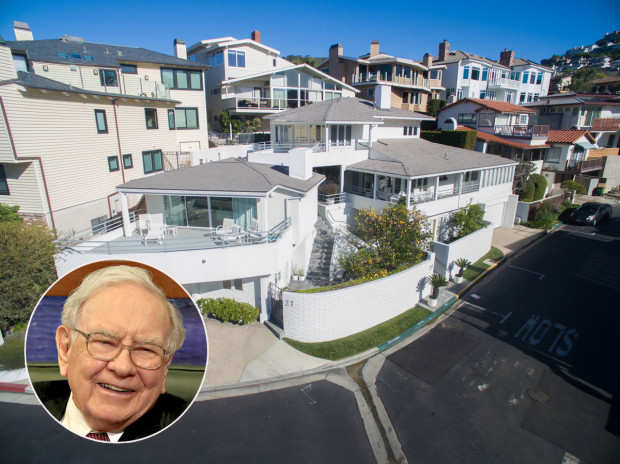
    For an extreme example, Warren Buffet bought a Cali beach house in the 70s for 150k and since his wife passed he does not use it much, so he put in on the market for 11 mil. Extreme in 8 figures appreciation yes but there are plenty of average examples that are multi 7 figure concerns. Some of this might also be ones investment life style choices in play * time, effort, ease of management, rent appreciation, worthy liabilities and then consider they do nothing extra to get those passive gains other than add hold time perhaps.

    If they do start negative, they probably have a plan to make it positive we can understand. Or in Buffets case he figured out a way to profit 6 figures annually with his family's personal beach pad. Must be sweet to have had an extra 150k in the 70s. 

    Most of this is location driven and guy who buys this house below is not expecting positive cash flow. However it might have appreciation over time in the millions. 

  • Flipper/Rehabber · Los Angeles, CA · Member since 2009 · 1k+ posts · 732 votes
    8y

    @Matt R. I did hear about that story and thought it was interesting. I always heard about his house in Omaha he's lived in forever but didn't know he owned a place in SoCal. 

    $150k in 1971 would be $937,987.59 in today's dollars according to government CPI calculator. Still a nice return. Of course if one had used a mortgage it would be more like $30k down. 

    I wonder what Buffett is going to do with all that money.. :) 

  • Sherman Oaks, CA · Member since 2013 · 3k+ posts · 2k+ votes
    8y

    @Joseph M. For sure and that is another point. If it does not appreciate your investments equity and cash flow could erode overtime due to inflation. That is the same as getting a pay cut every year for doing the same work. Of course some guys can overcome that issue with more volume/work. 

  • Flipper/Rehabber · Los Angeles, CA · Member since 2009 · 1k+ posts · 732 votes
    8y

    @Frank Wong  I think one would have to really have a long term outlook on it. If one has a solid and high income $300 month shouldn't break them.  It is a risk of course but I'd say less risky than putting $300 month towards speculative stocks  a month or something like that. If you are talking a bunch of properties like that of course it's a different story, a job loss if there is a recession could wipe them out. 

    Are there areas of the SF Bay that do cash flow at today's prices? I know it's tough anywhere in SoCal. 

  • Rental Property Investor · Oakland, CA · Member since 2014 · 730 posts · 1k+ votes
    8y
    @Joseph M. There are still plenty of cash flow markets in the Bay Area - Oakland, Richmond, Vallejo, all offer cash flow opportunities. Also Sacramento and Stockton but I don’t consider those cities part of the Bay Area
  • Sherman Oaks, CA · Member since 2013 · 3k+ posts · 2k+ votes
    8y

    @Joseph M. Turns out alot of these Buffet types have RE all over, sometimes just personal homes. Trump who claims real estate is an appreciation business, owns this house across the street from the Beverly Hills Hotel. It is my understanding Bezos has one a few houses away, but no one ever really talks about these homes as investments but overtime the math proves they turned out like capital appreciation machines. 

  • Rental Property Investor · Racine IL · Member since 2017 · 41 posts · 15 votes
    8y

    Id take negative cash flow on a 5 year mortgage.  

  • Real Estate Coach · Venice Beach, CA · Member since 2012 · 6k+ posts · 3k+ votes
    8y

    Haha... I like your "I'm open to being completely wrong here." That's funny. But no, you aren't completely wrong.

    The whole thing is, in my opinion, risk mitigation. If you think of a rental property, think of all the ways it makes money-- monthly cash flow, appreciation, tax benefits, hedge against inflation, equity build with mortgage paydown. That's 5 things, and the first two are the....not sure what word I want to use here...."in question". If either of those two things don't pan out, the other three aren't going to move mountains in terms of your profits. So if you take out cash flow as an option, now you're primarily left with appreciation as the big one. Appreciation is speculative. What if it doesn't happen? Then you literally just have the last three. They are still good, but will they offset your expenses by themselves without cash flow or appreciation? Hard to say. So by going into negative cash flow, you are eliminating one potential profit center, leaving the speculative profit center, and forcing the need for that speculative profit center to offset even more in expenses than it already would've needed to (the negative cash flow) in order to be profitable.

    So, it's a risk thing. 

    But I do think there are times when negative cash flow isn't necessarily terrible-

    https://www.biggerpockets.com/renewsblog/buying-re...

    My lingering question would be- why buy the negative cash flow property over a positive cash flow one? If you have a specific reason for wanting the negative cash flow one, then maybe. But if it's just 'because', that might not be super-wise.

    Hope that helps!

  • Sherman Oaks, CA · Member since 2013 · 3k+ posts · 2k+ votes
    8y

    @Ali Boone I get what you are saying and it makes sense except perhaps in the known historical apprecation markets many would not consider appreciation speculative when there is a 50 year history of that and no indicators that is reversing longer term. I might add that cash flow is as speculative or even more so as that requires humans to touch, manage, vacancies etc, where as in appreciation markets there is mostly the factor of time to account for vs management. 

    All markets have both investment return elements and it maybe the investors expectations of time to account for the one that fits best, so not really a right or wrong deal vs what is more profitible over long hauls.  In that regards the appreciation markets on average crush the cash flow markets and it is not really close according to Corelogic. The top 3 on average highest return markets ( cash flow + equity gains) since 2000 are in order #1 LA,  #2 SF and #3 San Diego (sfrs). There are no guarantees of course but that is the actual historical investment profit return math to consider.

  • New to Real Estate · Coldwater, OH · Member since 2018 · 105 posts · 61 votes
    8y

    great discussion so far guys, thanks. New here and, absorbing :)

  • Flipper/Rehabber · Los Angeles, CA · Member since 2009 · 1k+ posts · 732 votes
    8y

    @Matt R. yeah I did read about Trump owning property near the Beverly Hills Hotel . Supposedly he prefers to stay at the hotel instead which is kind of interesting . There is up keep of course although I guess it’s small potatoes compared to the appreciation gained by holding . It is kind of crazy to think of big mansions just sitting empty or mostly empty though . 

    Definitely not a strategy for the average investor but for a billionaire or someone worth a lot of money , it could make sense . You can use the property or let friends /family use it too unlike stock or of course rent it out long term or short term.

  • Sherman Oaks, CA · Member since 2013 · 3k+ posts · 2k+ votes
    8y

    @Joseph M. That is funny that he stays at the hotel across the street and when he owned two homes next door, now just the one home I guess,  but I think he may be up to some stuff that he does not want the help to gossip about so there is that motivation perhaps.  

  • Sherman Oaks, CA · Member since 2013 · 3k+ posts · 2k+ votes
    8y

    And remember @Llewelyn A. historical priority of RE returns and he formally taught this investment stuff for a decade or so as I recall. BTW NYC was #10 on that since 2000 total returns list as I remember it. 

    1) APPRECIATION

    2) Mortgage Balance Reduction

    3) Cash Flow

    4) Tax Savings

  • Real Estate Broker · Bay Area · Member since 2018 · 1k+ posts · 3k+ votes
    8y
    Originally posted by @Joseph M.:

    @Frank Wong  I think one would have to really have a long term outlook on it. If one has a solid and high income $300 month shouldn't break them.  It is a risk of course but I'd say less risky than putting $300 month towards speculative stocks  a month or something like that. If you are talking a bunch of properties like that of course it's a different story, a job loss if there is a recession could wipe them out. 

    Are there areas of the SF Bay that do cash flow at today's prices? I know it's tough anywhere in SoCal. 

  • Dan H.Pro Member
    Investor · Poway, CA · Member since 2015 · 7k+ posts · 8k+ votes
    8y
    Originally posted by @Maxwell Milholland:
    @Joe Villeneuve Hey Joe thanks for the reply. Suppose I get an FHA loan on a 100k property, and my total out of pocket cost to own (or control) the property is 10k. The property has a negative cash flow of 100/month. After year 1, cost to control is 11,200, year 2 12,400, year ten 22,000, and year 30 46,000. If I took out a 30 year loan, and got no appreciation at all, I'm left with a property I paid 46,000 for, but is worth 100k. Of course there are things in there like vacancy occasionally, maybe taxes go up, and a slew of other things but for proof of concept, this deal looks good to me. I made ~50k.

    In your example you made less than $2K a year average (30 years for ~$50K) and the $2K/year 30 years out likely has a value of a few hundred dollars.  That is not sufficient return for the risk and effort.

    I realize your example's intent was to show equity pay down and  equity pay down has value but the equity pay down in your example has very little value.  You need to have bigger numbers to even consider and to make the example really show what you intended.

  • Real Estate Broker · Bay Area · Member since 2018 · 1k+ posts · 3k+ votes
    8y

    @Joseph M.

    Yes, I agree.  The investors would have to be very long-term and could be longer depending on the cycle they purchase.  If they have enough to cover the drawdown and is part of their plan it would make sense. 

    I would say putting $300 towards speculative stocks a month is less risky.  You have the option to stop putting the $300 into stocks whereas the investment property which is losing cash flow each month you don't.  You also have the option to put a stop loss in a stock which can limit your risk.  Housing you don't.   Once you buy this investment you are stuck with it until your plan pays off and exit for a profit, you bleed slowly each month and finally sell it for a loss, or it gets foreclosed on.  I always like to look at all scenarios.  Hence why buying negative cash flow is hard for new investors with low capital.

    No cash flow deals in the Bay Area.  I stopped looking 2yrs ago. 

  • Buffalo, NY · Member since 2018 · 86 posts · 30 votes
    8y
    Wow thank you everybody for making this into one hell of a discussion!
  • Dan H.Pro Member
    Investor · Poway, CA · Member since 2015 · 7k+ posts · 8k+ votes
    8y
    Originally posted by @Seth Parmelee:
    Can a negative cash flow property be used to off set taxes? Would it even be worth it to that?

    I am not a tax advisor or CPA but typically negative cash for can only be used to reduce taxes only for fairly low/moderate earners.  Most RE investors earn enough that the RE losses cannot be used to reduce other tax obligations.   This means that for many RE investors, RE losses for a year can only be used to offset gains in the future. 

    I think with the depreciation, 1031, end of life re-valuation, etc. most experienced RE investors do not pay taxes on RE profits.

  • Member since 2018 · 17 posts · 3 votes
    8y

    i would say its a bad asset at best. Its an expense until you can get to all the benefits you mentioned in the books.

    As rich dad would say "how many place can you own at -200 a month?" -not very many.

    "And How many can you own at +200 a month?" - as many as i can get my hands on.

  • Joe VilleneuvePro Member
    Plymouth, MI · Member since 2013 · 13k+ posts · 19k+ votes
    8y

    OK.  Let me through a Monkey Wrench (pick your favorite rehab tool of choice) into this discussion.  Whether you favor appreciation over positive CF, many have mentioned the rehab costs over the years countering the positive CF...and they'd be correct.  Unfortunately, those same rehab costs will hit you...no matter which side you favor.

    So, over a 30 year period, how many furnaces, roofs, doors/windows, kitchens, baths, floors paint jobs, etc...happen, and add to the negative (meaning also take away from the overall gain?

    Yes, those rehab costs also happen to the everyone (I believe I already mentioned that), however, I ask both groups this question?

    Where does the money to pay for all those rehab costs (30 years worth) come from?...and ultimately, how does that impact both arguments totals?

Join the conversationCreate a free account to reply, vote on answers and follow this thread.