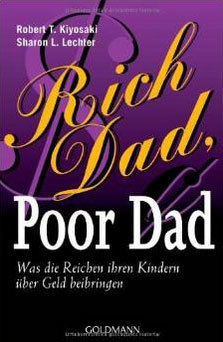
To borrow or not to borrow, debt free is the way to be etc etc etc.
The way I see this is a risk vs reward.
How do you decide though where the risk is to great or the reward to little? How do you decide to purchase a property with a mortgage? What are your safety nets? Do you have to buy x% discount? Put X amount down? What are you doing to stay safe?
I'm trying to decide how to approach this so any insight would help. I don't want to end up broke down the road because I over leveraged myself. But where is that line? How do you know what that line is? What should you consider in deciding where to draw the line?
Is anyone on here a buy and hold investor using all cash? If so why and what have you found to be the result? Was it always that way or did you start with leverage?
Also was the title catchy enough? I'm learning catchy title get read the rest sink to the bottom.
To me this whole 'debt' concept of a mortgage on rental property is utter nonsense. If you are paying 500 for a mortgage, 400 for taxes insurance water etc, and renting it for 2000, you are not in some risky position to suddenly get f-ed. Lost your job? Uhhh who cares, you aren't paying the mortgage - the tenant is! You're still clearing 1100/month. Even after operational expenses you are cash flowing. You will actually be BETTER OFF than if you did not have the income property and lost your job because guess what - then you have 1100/month coming in vs zero.
I don't even care about appreciation I care about cash flow. Oh God, what happens if I buy a house for 300k and it drops to 200k? What am I going to do? How about not even give a damn because the rents don't drop in sync with the sales prices! In fact rents continued to rise strongly through this whole recession! If you are buying and holding then price fluctuations after you buy are largely irrelevant.
Most people don't have hundreds of thousands of dollars lying around to just scoop up a few properties without financing. And even if you do, you're leaving a big chunk of profit on the table. I'll make a simple example based on a property I am considering buying.
List price 100k, 2 family, rents for 1800, expenses 1200/month including ~400 for a 30 yr fixed mortgage in the low 4s. That's 600 profit a month.
Now, to finance, you'd need 25% down. That's 25k. Plus 4k closing costs. (I don't have to escrow and can count IRA funds for the 'reserve' they want to see. If your bank doesn't give you those options, get a better bank.)
So, you'll make 600 x 12 = 7200 profit yearly. That's a 25% return on your money. And that's before we even look at the mortgage interest deduction and depreciation! Please show me a better investment!
But if you bought it with cash, it becomes 1000 profit a month (since you're no longer paying the 400 mortgage payment) so it becomes 12000 profit yearly. That's only a 12% return on your 104k of cash. LESS THAN HALF COMPARED TO USING FINANCING, FOLKS. If you want to make less than half as much profit, be my guest I suppose... And you don't get the mortgage interest deduction...
If you had 100k cash, you could buy 3 of these properties with loans (29k for DP + CC each) and still have 13k left over to stick in your rainy day / sudden repairs fund. Then you would be making 600x3 = 1800 a month profit, which is 21,600/month, from 87k cash invested, which is again 25% return annually, before we even look at the mortgage interest and depreciation factors.
So do you want to make 12% or 25% for doing the exact same amount of work...
I'm not a financial advisor, use your own best judgment.
Balance and Patience keeps me grounded...I use both strategies. Keep it Moving!!!!
In an appreciating market Kiyosaki leverage theories are usually best.
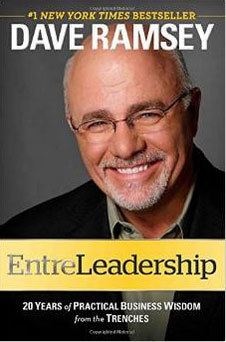
In a depreciating market Ramseys debt-free theories are usually best.
The long term problem with Kiyosaki is that without an exit strategy, in a cyclical market, you will always encounter what is traditionally called "gamblers ruin". A lot of people on this forum are going to find that out the hard way, as many did in 2008.
I believe this is the most succinct and simplified way to explore this argument.
But please, can you all stop telling us that you don't pay your mortgage, your tenant does? That's just silly. Your tenant pays you, and then you choose how you will use that money. If you want to be obligated to send some of that rent payment to a mortgage holder every month, that's fine. I, however, do not.
But my tenants ARE paying the mortgage. Under your plan I would be collecting about $1,700 more a month from the tenants and have my equity tied up. Instead I am about to collect a lump sum of $350,000 that will be paid entirely by the incremental increase in rent just over the last few years. And in just a few years I can repeat. And since I'm only borrowing up to the incremental increase in monthly rent my equity is increasing.
Wouldn't you rather have $350,000 TODAY instead of $1700 a month?
But when the mortgage is not paid, who does the bank go after? Your tenant? No its YOU. So you owe the mortgage and you pay the mortgage. The bank does not care who is the tenant or even if there is one. So @Sylvia B is absolutely correct.
But please, can you all stop telling us that you don't pay your mortgage, your tenant does? That's just silly. Your tenant pays you, and then you choose how you will use that money. If you want to be obligated to send some of that rent payment to a mortgage holder every month, that's fine. I, however, do not.
But my tenants ARE paying the mortgage. Under your plan I would be collecting about $1,700 more a month from the tenants and have my equity tied up. Instead I am about to collect a lump sum of $350,000 that will be paid entirely by the incremental increase in rent just over the last few years. And in just a few years I can repeat. And since I'm only borrowing up to the incremental increase in monthly rent my equity is increasing.
Wouldn't you rather have $350,000 TODAY instead of $1700 a month?
But when the mortgage is not paid, who does the bank go after? Your tenant? No its YOU. So you owe the mortgage and you pay the mortgage. The bank does not care who is the tenant or even if there is one. So @Sylvia B is absolutely correct.
No, the tenants money goes in my bank that gave me $350,000 in cash, Then the bank uses the tenants money to make the monthly mortgage payment, I have the cash and the bank gets the tenants payment each month. What is confusing about that?
Would rather see debt with huge cash reserves than F&C and little cash in the bank.
That is my opinion as well. A 75% paid off property doesn't do anything to my payment. I choose to leverage, stack the money in an account and choose to pay it off when and if it suits me. All or nothing, paying 10k off the note here or there just ties up cash. Cash creates options. Options can mean the difference between survival and success.
RK net worth $80M
DR net worth $55M
I love DR, but......
No, the tenants money goes in my bank that gave me $350,000 in cash, Then the bank uses the tenants money to make the monthly mortgage payment, I have the cash and the bank gets the tenants payment each month. What is confusing about that?
1. Whose name is on the mortgage, yours or your tenants'?
2. Whose name is on the bank account from which the mortgage is paid, yours or your tenants'?
do you pay money out of your pocket?
No, the tenants money goes in my bank that gave me $350,000 in cash, Then the bank uses the tenants money to make the monthly mortgage payment, I have the cash and the bank gets the tenants payment each month. What is confusing about that?
1. Whose name is on the mortgage, yours or your tenants'?
2. Whose name is on the bank account from which the mortgage is paid, yours or your tenants'?
Sylvia, this is your statement that I responded to, "But please, can you all stop telling us that you don't pay your mortgage, your tenant does? That's just silly." My tenants ARE paying the mortgage. It is my mortgage but the money to pay it comes from the tenants. I could set this up so that their rent increases went directly to the mortgage company, I can bank all my other investments and pensions etc, and NOT contribute a dime to this mortgage and it will be paid in 30 years. By the tenants.
Wow. I've read all the posts to this point! Great thread. Personally for me, I use leverage. I'm 35 and am willing to take on any risk associated with leverage. I'm a REI and assume that most of the other REIs use leverage, certainly starting out.
I do the math and am maintaining $25k reserves (which will grow proportionally with my portfolio). I have plans for financial independence by 40, and since I didn't start in my 20s, leverage is a key component. $4000/mon cash flow is my goal. I like the discussions about leverage early and cash later. That makes sense to me. If all goes to hell, I still have a 9-5 that pays well and a degree in chemical engineering.
RDPD for me helped clearly define an asset and path of money, cash-flow (poor vs wealthy), PAYING YOURSELF FIRST. I didn't walk away from that book thinking about getting leveraged to the hilt.
I can't speak to DR, but to me it seems like Finance 101. Live below your means, stay out of consumer debt. Are there a bunch of Ramsey-ites out there that are financially independent from his teachings? I'm asking.
My question to the cash-camp: where did you get the cash for your first deal and how long did that take?
Zach
Is anyone on here a buy and hold investor using all cash?
We use a combination of strategies. We prefer to go in all cash, but with interest rates still low, we are benefitting by utilizing mortgages and keeping our cash readily available. We like buying all cash and then repositioning if beneficial to do so. We maintain high credit scores so we are able to get the best loan terms. We have also purchased with the seller holding the note. We sometimes buy with conventional loans, with at least 20% down. Our most recent purchase was made with $40K of our own cash and $100K HELOC because we wanted to move quickly. Now we are talking to lenders with the plan to secure a mortgage on that property and pay back the funds to our HELOC. We maintain our HELOC as a bridge loan and use it only short term. The interest rate on it is 3.25% so it works very well for us. HELOCs work differently than other loans, so understand how they work before venturing in that direction. We also like to pay off properties early, by consolidating debt on a few properties and holding the others free an clear.
If so why and what have you found to be the result?
We have 16 residential rental units. 2 houses are free and clear, 2 duplexes are free and clear, 1 house has a conventional mortgage loan at 4.75% (30 year fixed), our 8-plex is mortgaged with two conventional mortgage loans at 4.5% (30 year fixed), 1 house will soon have a mortgage (15 year fixed). Our equity position in our mortgaged properties is 25-50%. Our equity position in our free and clear properties is 100%, except the one house and one duplex that we own in partnership family members, in which we own a third.
In the beginning my husband favored leveraging and I favored all cash. We both gave a little. We really like the peace of mind and enjoy favorable cash flow by having more equity than debt. However, we like the ability to increase our portfolio faster by using leverage.
Was it always that way or did you start with leverage?
Our first RE investment was purchasing a duplex on contract from my husband's parents. Our second & third purchase was a duplex and a house in partnership with family members with a conventional mortgage. Our fourth purchase was purchasing a house with a conventional mortgage. Then the family partnership paid off the one house and one duplex owned by that LLC entity. We cleared the debt on one duplex by transferring the contract debt to a personal loan, renegotiating the interest rate and paying some of it down. We then were well situated to purchase an 8-plex with two conventional mortgages. Then one of our family partners died unexpectedly and we reorganized our holdings and bought out some of the interest of others. The next purchase was a house - all cash. Then we refinanced the loans on the 8-plex and immediately generated an additional $1000 per month. Our most recent purchase was a house - all cash, but some of that cash was from a HELOC which we will pay off with money we'll obtain by getting a mortgage on the house.
I have always made it a point to earn more money than I spend. We pay off credit cards every month and hold no consumer debt. No vehicle loans. No student loans. We hold our primary home free and clear, with the exception of maintaining a $100K HELOC tied to it, which we use only sparingly and only for short periods of time (variable rate but has held steady at 3.25% since we opened it many years ago.) My husband and I have full time careers outside of REI. We have an emergency fund equivalent to half our annual income. We purchase with no less than 20% down, preferably 25%. Our investments are in a stable community that has not seen the volatility experienced by other parts of the country. No low house prices here. Prices and values steadily rising.
RK or DR?
A little of both. RK helped me think out of the box. Some of RK's partner authors have put out some great material as well, such as the ABCs of Real Estate Investing. I read a little of DR, but it didn't really benefit me, as what I read related to consumer debt, which we don't have. But my interest is piqued about some of DRs other books as mentioned by others.
What ever your decision, don't feel it is an either/or. Remain flexible and open to trying a variety of strategies before settling in on what works for you. But don't tip too far in the wrong direction! Do what is best for you. Also, plan your exit when you make your entrance.
The key to life is balance. I do wonder though when I use leveraging if I will know when to stop.
RK net worth $80M
DR net worth $55M
I love DR, but......
RK net worth is nothing close to $80M. By many accounts, less than 10.
Of course, $10M for being a fantasist is not bad.
No, the tenants money goes in my bank that gave me $350,000 in cash, Then the bank uses the tenants money to make the monthly mortgage payment, I have the cash and the bank gets the tenants payment each month. What is confusing about that?
1. Whose name is on the mortgage, yours or your tenants'?
2. Whose name is on the bank account from which the mortgage is paid, yours or your tenants'?
Sylvia, this is your statement that I responded to, "But please, can you all stop telling us that you don't pay your mortgage, your tenant does? That's just silly." My tenants ARE paying the mortgage. It is my mortgage but the money to pay it comes from the tenants. I could set this up so that their rent increases went directly to the mortgage company, I can bank all my other investments and pensions etc, and NOT contribute a dime to this mortgage and it will be paid in 30 years. By the tenants.
And now answer her two questions:
1. Whose name is on the mortgage, yours or your tenants'?
2. Whose name is on the bank account from which the mortgage is paid, yours or your tenants'?
@Account Closed
Let's look at it from another perspective. John has a job working for XYZ Corporation. Every month he receives a paycheck which is deposited in his bank account. John buys a car and arranges to have the payment automatically withdrawn from that same bank account.
Who is paying for that car, John or the XYZ Corporation?
@Account Closed
Let's look at it from another perspective. John has a job working for XYZ Corporation. Every month he receives a paycheck which is deposited in his bank account. John buys a car and arranges to have the payment automatically withdrawn from that same bank account.
Who is paying for that car, John or the XYZ Corporation?
If John quits his job the deposits stop. If I quit my job (actually I have) the deposits keep happening and the tenants deposits keep paying my mortgage. Yea tenants! See the difference Sylvia?
This thread is an awesome read. I am new to REI, and this is all wonderful information. I'm soaking it all up. Thank you everyone for all of your insight.
"eBay built me a house." I thought that was stupid, too.
Because that IS stupid Sylvia! Now if he'd said "eBay paid to build my house" then THAT would NOT be silly. See the difference Sylvia?
"eBay built me a house." I thought that was stupid, too.
Because that IS stupid Sylvia! Now if he'd said "eBay paid to build my house" then THAT would NOT be silly. See the difference Sylvia?
Oh Bob, thank you for starting my day with a great big belly laugh!!!
PS companies with ZERO DEBT: American Express, Apple, Citrix Systems, Amazon, Bed, Bath & Beyond, TRowe Price, Red Hat, AutoDesk, and MasterCard.
Pretty interesting that TWO major companies thats entire philosophy is marketing the use of debt as a tool are debt free (AMEX & Mastercard)...