Why are real estate agent commissions so high in the US?
Specialist · Galveston, TX · Member since 2018 · 13 posts · 14 votes
I have watched several discussions, including David Greene's video, around the recent lawsuit against NAR and RE brokerages. Learned a lot but there is one thing I just don't understand.
If we look at the numbers, there are 1.3M - 1.5M agents nationwide and there are 5M - 6M transactions each year. So that translates to 3-4 transactions per agent per year. Obviously that's an oversaturated profession. So my question is why doesn't that drive the commissions down?
I understand that RE agents provide a lot of value to their clients and they have their expenses, etc. But it looks like the plaintiff's attorney asked a legit question: Why the commissions in the US are 2 - 3 times higher than that in other countries? This is baffling to me, too. Can someone help me understand this?
@Yongming Huang for the inference of why do real estate agent's "make so much" let's follow the bouncing ball of the math to find out what "so much" actually is.
Let's talk median U.S. home price: $410,000.00
And "median" commission to list: 5.2%
First know that 5.2% get's split; 2.6 for listing broker and same for buying(selling) broker.
One needs to comprehend that in vast majority of cases there is (a) The Brokerage, such as KW, eXp, Remax etc etc. (b) Team and to that team leader (c) the actual agent.
In a majority of cases the Team is who "farmed" the lead. That cost's $. They have to build and host a marketing machine. This is website, various ad's, persons running and managing the various platforms, ad's, running of such. persons be it donestic or VA's to respond to inquiries, perform follow-up task's. All this is $$$$ going out to turn these "raw" contact's into actionable leads. Some of the best rates of conversion are "as high as" 35% conversion. That means 65% of the work goes for nothing, NOTHING, zero revenue potential, just spent capital. Than, of that 35%, the highest rate I have seen is 78% turning into signed client's. Think on that, only 3/4 of 1/3, so that whole is getting way smaller. AND those don't always end in completed business either, and revenue only comes from achievement of conclusion.
So it is safe to say, the business has to pay for 100% of it's operations, from about 7% of it's intake potential client's. 93% are JUST an expense with NO revenue produced.
So, to get that $410k listing, you spoke with 7 potential sellers, signed 1 other and worked it that expired not selling. And for that 7 you were in contact of discussing potential with 25 people, for a few hours each. And for that the team filtered through 100+ people. Which to get those had system that provided resources to 1,800+ website visitors etc..
So your listing is sold. Congrat's that's a $21,320.00 commission. But remember, split between brokers so for your side it's only $10,660.00. But your Team handed you that lead and need's there 50% split to keep the staff employed and developing lead's to hand you. So now your at $5,330.00. And your brokerage has there split bringing you too $4,530.50. BUT, it does not end there. Your a 1099, so you have to pay your own tax's, so after allocating for that what you ACTUALLY get is $3,624.40
You spent 60 hours talking to and working with potentials that resulted in 0, to land on this 1 that DID result in income, and spent another 30 hours in total on this, making for 90 hours labor investment too achieve $3,642.40. Or, $40.27 per hour.
You navigated the legal complexities, negotiated like a hero, pressed to get your sellers there best outcome, and you made almost half as much as your CPA, an Electrician, nearly 2/3 what you could be earning if you did plumbing or painting as a living.......
Reality is Real estate agent's, at median, make "as much as" $40.27 per hour.
So I ask, is $40.27 hr some huge crazy expensive price for doing all the things for most people BIGGEST financial transactions of there life. Mind you real estate attorneys generally start around $300+ per hour.
So what should they be at? $20hr, same as the person who carries your food? Is that how we value Real Estate Agent's today? On par with someone who retains what you say for 90 seconds and carries food for 40 step's? Sorry, I forgot, we champion those for skill of carrying our food and give out tip's left right and center to them, and for r.e. agent's we vilify them saying why can't they do it for 3 ramen packet's and a sugar cube.......
@Yongming Huang to your question, your not fully informed.
The truth of the fact is a person can sell there home for $0.00 in the U.S. because a person can choose to just sell it themself.
Or one could spend a few hundred and self-list on any number of platforms.
Or one could spend a few hundred too a few thousand and use a Discount Broker, be on the MLS, and all various forms of this.
OR or or, use any number of real estate agent's both REALTORS and non-realtors to list/buy and what fee is agreed upon, which range's literally all over the place from dirt cheap too arguably really expensive.
People right now, and for a great many years, in the U.S. have ALL of these options available. Nobody is forced to use any specific service.
The lawsuit had NOTHING to do with how much commissions are, it was solely about sellers feeling forced to offer buyer broker compensation. And arguing, retroactively, that they would have kept more $ on there property sale "IF" they hadn't paid that. Ignoring fact buyers would have paid LESS if buyers had to pay for buyer agent ON-TOP-OF the purchase price.
How do we know this? DATA. We see it happen over-and over-and over again in FSBO sales. We are talking decades of data. FSBO's simply get less on average. Listings where buyer's pay all fee's in addition get-less.
It's not an item for debate, it's a fact as shown and proven in the data.
The suit argued collusion in the big name brokerages and by NAR, that they were in secret agreeance to force sellers to offer such. And group think can look a lot like collusion, but it's not.
That's what's going on here, group think, long established and Brokers with hundreds of agent's under them directing them NOT to take a listing UNLESS seller does offer ___ as buyer broker compensation and guess what, they CAN do that, legally, it's the Brokers business, they can demand whatever there heart desires. They could demand new client's put there left foot in and shake it all about or "no service for you!". That's how a free economy work's.
It had nothing to do with what fee's are, was not meant to bring down fee's, it was sellers remorse, greed, saying it's all done but I don't want to pay the bill I agreed to at start.
All those sellers could have used a different listing service with NO buyers broker compensation, they choose not to. This is why NAR will fight it and NAR will win, eventually. Nobody "had to" use the service they did, they choose to.
Nobody has a "right" to use a specific product or service. Nobody has a "right" to a REALTOR.
Hi James, let's see about this. Are there alternative ways to sell a house? Yes, of course. No doubt about that. But the market shares of those alternative choices matter. Specifically, what percentage of transactions has commissions in the 5%-6% range? 90%, or maybe 95%? We are talking about the normal here, not about the outliers. Similarly, when I say the fees in the UK are around 1.5%-2%, I'm not saying there are no cheaper or more expensive options. I just want to compare apple to apple.
From the earlier discussions, I see why brokers simply cannot offer lower fees. Their expenses are high, so they have to have commissions at a certain level to make money. I understand that. I'm not against brokers or pointing fingers at anyone. I genuinely want to find the rationale behind the 5%-6% commissions.
David Greene's explanation for this is that "probably 95%-98% of the times that a Realtor helping clients, they don't get paid for...You have to compensate them enough so they make enough to support themselves for all the people that are not paying them." This brings my next question: Is the situation in other countries any different? Agents in any country can not close on every prospect, right?
Another argument I constantly hear is that we have to have buyer's agents because if not, buyer wouldn't be protected. Then how come most buyers in the UK don't hire an agent? Are they seeing more headaches and problems in their model?
I think the real question is, is our current model really the best one in the world?
It's an act of insanity trying to compare U.S. Real Estate "median" commission to other countries. I say this as a person who's done, and is currently, involved in things in other countries.
First, the most obvious; it's a different COUNTRY. The laws are different, financing and banking is different, how mortgages are made, packaged, securitized, sold, is all different. Literally every aspect is DIFFERENT.
So as capitalization changes, risks change, law's change, everything else adjusts in same vein.
You can't ignore all the other changes and pick 1 thing like commissions to compare and say look at difference and ignore all else.
Talk was on Germany before. Ok, well were you aware the "average" income tax on people in Germany is around 40%? Things are DIFFERENT.
So you will not find 1 bit of intelligent meaning, or actionable anything, saying in a vacuum "agent's in this country charge ___, agent's in that country charge ___". Look at price of daycare country to country, that's different too. You name it, things are different country to country, because it's a different country, different law's, systems etc..
And with that there is no such thing as "the best in the world" because as long as different countries have different systems, different governance systems, things will be different. China is a plutocratic communism, North Korea a Monarch Communist system, Even the UK which many like to think is so similar to US is actually radically different.
About closest one can compare to the U.S.'s Socialist Republic structure is Greece, where founder's took inspiration from in designing and forming this form of governance. And even Greece is WAYyyy different in legal system than U.S. now.
The U.S. arguably has the #1 biggest lawsuit "industry" by far of any nation on earth. That means all that legal risk carried in any business operation. That's unique factor to U.S..
Look at Divorces in U.S., they are very costly to people. Now let's look at Scandenavian countries where people are not allowed attorney's in divorce, especially with kid's, and there is no big crazyness in things. Or in Greece where Judge's can call there own witness's and defend the best interest of the kid's as matter of national/state importance.
It's different, everything around it, different.
CONTEXT..... this whole thing comparing vs other countries is taking things WILDLY out of context.
Did you know the legal age to drink alcohol in Germany is 16? How about that, what would happen vs U.S. at 21? Obviously the legal system is radically different.
And it's not complicated on agent fee's in U.S., you have well over 100k different brokers COMPETING against each other. If there was a radically cheaper way that consumer WANTED in mass, it would happen. When you have over 100k service providers fighting against each other for the same business, it drives things to the best offering potential.
You want to argue "medians" well how about this, if cheaper is so much better WHY are people in the U.S. NOT using the readily available CHEAPER alternatives in mass?
Nobody seems to be asking this, just ignoring the obvious. Why DON'T people use it in large part?
So duh, what will happen when force the services of choice, to be more like the ones people DON'T choose? Surprise-surprise, people are going to complain it suck's, that they don't like it, they want something different.......
It's stupidity-squared. It just is. Entitlement ran wild.
Did you know most things you buy in life at any store have no less than a 40% margin on them? From your bread too your auto. So how is 2.5% GROSS margin something "big" and crazy?
Again, put things in CONTEXT. 5% is NOT 5% to "a" agent, that's for BOTH sides Brokers AND underlying agent's. 2.5% per side. 1.25% per person if want to view that way. 1.25% GROSS margin that business then has to pay all expenses of operations, to HOPEFULLY net as much a 0.7%, LESS than 1% net!
No other industry in existence in U.S. operates with such a tiny margin that isn't gargantuan in it's corporate size and volume. I bet Walmart isn't even at less than 1% net, why isn't everyone flipping out that Walmart is "colluding" for higher prices on product's in it's stores. Because they are, Walmart directs what those prices will be don't they.
Your gas, more than 1% net. The food you eat WAY more than 1% net.
Why are you not comparing the price of a burger and chips vs that in Thailand? I can get a great burger and chip's in Thailand for $1.40 U.S.. Why aren't we on that comparison?
And here we go:
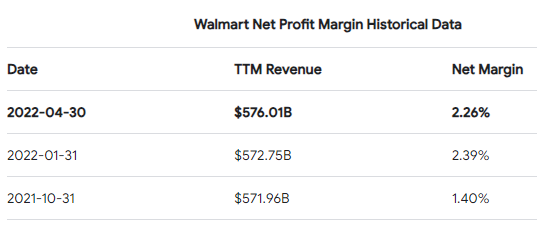
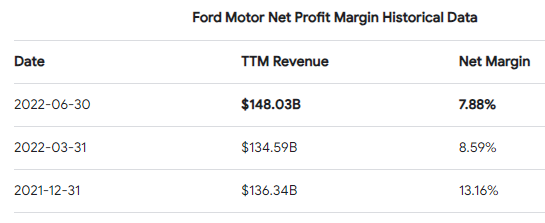
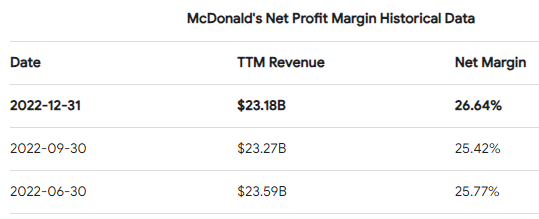
At same time 1,578,077 Realtors in 1,075 Realtor associations earning, on median $56,400 per year GROSS, before business expenses and tax's........
You tell me, who's price gouging and over-paid????
I have watched several discussions, including David Greene's video, around the recent lawsuit against NAR and RE brokerages. Learned a lot but there is one thing I just don't understand.
If we look at the numbers, there are 1.3M - 1.5M agents nationwide and there are 5M - 6M transactions each year. So that translates to 3-4 transactions per agent per year. Obviously that's an oversaturated profession. So my question is why doesn't that drive the commissions down?
I understand that RE agents provide a lot of value to their clients and they have their expenses, etc. But it looks like the plaintiff's attorney asked a legit question: Why the commissions in the US are 2 - 3 times higher than that in other countries? This is baffling to me, too. Can someone help me understand this?
Their not high, they are simply part of COGS (cost of goods and services) As a business owner my job is to cut my margins on the buy & sale of my product. My product are beat up structures with deferred maintenance (apathetic people don't maintain their structures) beautifully & efficiently renovated. If my margins come at the expense of my service providers then I've failed as a business owner. Realtor prices are known and easily calculated.
It's not a perfect system the real estate but it's a pretty good one. No system is perfect in any industry, any government, etc.
People went from industry standard words to normal now. There is no normal.
I could drive down the street and find 5 different burger brands all charging close to the same price for a cheeseburger ( one is awful, one is okay, one is amazing). They all charge similar price because costs are about in same range to operate but the QUALITY of the product and service varies.
So consumers go out and research when they want to make a choice or decisions and THEY decide what to spend their dollars and time on. They own their decision because they did the research and made the choice. Sometimes it might work out how they want, other times differently, other times not at all.
I think that's getting the heart of it Joel, people are passive-aggressively arguing (as in suit) that ALL options need to be "regulated" as "good" ones.
It's the slippery slope U.S. has been on that life can be "regulated" into being a good, only positive one for all. And all it cost's is Freedom. Submit and enjoy....... OR ELSE! lol.
"Investors " crying about realtors, contractors yada yada. Even I figured out "the problem" hes looking bavk at me in the mirror.
@Yongming Huang to your question, your not fully informed.
The truth of the fact is a person can sell there home for $0.00 in the U.S. because a person can choose to just sell it themself.
Or one could spend a few hundred and self-list on any number of platforms.
Or one could spend a few hundred too a few thousand and use a Discount Broker, be on the MLS, and all various forms of this.
OR or or, use any number of real estate agent's both REALTORS and non-realtors to list/buy and what fee is agreed upon, which range's literally all over the place from dirt cheap too arguably really expensive.
People right now, and for a great many years, in the U.S. have ALL of these options available. Nobody is forced to use any specific service.
The lawsuit had NOTHING to do with how much commissions are, it was solely about sellers feeling forced to offer buyer broker compensation. And arguing, retroactively, that they would have kept more $ on there property sale "IF" they hadn't paid that. Ignoring fact buyers would have paid LESS if buyers had to pay for buyer agent ON-TOP-OF the purchase price.
How do we know this? DATA. We see it happen over-and over-and over again in FSBO sales. We are talking decades of data. FSBO's simply get less on average. Listings where buyer's pay all fee's in addition get-less.
It's not an item for debate, it's a fact as shown and proven in the data.
The suit argued collusion in the big name brokerages and by NAR, that they were in secret agreeance to force sellers to offer such. And group think can look a lot like collusion, but it's not.
That's what's going on here, group think, long established and Brokers with hundreds of agent's under them directing them NOT to take a listing UNLESS seller does offer ___ as buyer broker compensation and guess what, they CAN do that, legally, it's the Brokers business, they can demand whatever there heart desires. They could demand new client's put there left foot in and shake it all about or "no service for you!". That's how a free economy work's.
It had nothing to do with what fee's are, was not meant to bring down fee's, it was sellers remorse, greed, saying it's all done but I don't want to pay the bill I agreed to at start.
All those sellers could have used a different listing service with NO buyers broker compensation, they choose not to. This is why NAR will fight it and NAR will win, eventually. Nobody "had to" use the service they did, they choose to.
Nobody has a "right" to use a specific product or service. Nobody has a "right" to a REALTOR.
Hi James, let's see about this. Are there alternative ways to sell a house? Yes, of course. No doubt about that. But the market shares of those alternative choices matter. Specifically, what percentage of transactions has commissions in the 5%-6% range? 90%, or maybe 95%? We are talking about the normal here, not about the outliers. Similarly, when I say the fees in the UK are around 1.5%-2%, I'm not saying there are no cheaper or more expensive options. I just want to compare apple to apple.
From the earlier discussions, I see why brokers simply cannot offer lower fees. Their expenses are high, so they have to have commissions at a certain level to make money. I understand that. I'm not against brokers or pointing fingers at anyone. I genuinely want to find the rationale behind the 5%-6% commissions.
David Greene's explanation for this is that "probably 95%-98% of the times that a Realtor helping clients, they don't get paid for...You have to compensate them enough so they make enough to support themselves for all the people that are not paying them." This brings my next question: Is the situation in other countries any different? Agents in any country can not close on every prospect, right?
Another argument I constantly hear is that we have to have buyer's agents because if not, buyer wouldn't be protected. Then how come most buyers in the UK don't hire an agent? Are they seeing more headaches and problems in their model?
I think the real question is, is our current model really the best one in the world?
It's an act of insanity trying to compare U.S. Real Estate "median" commission to other countries. I say this as a person who's done, and is currently, involved in things in other countries.
First, the most obvious; it's a different COUNTRY. The laws are different, financing and banking is different, how mortgages are made, packaged, securitized, sold, is all different. Literally every aspect is DIFFERENT.
So as capitalization changes, risks change, law's change, everything else adjusts in same vein.
You can't ignore all the other changes and pick 1 thing like commissions to compare and say look at difference and ignore all else.
Talk was on Germany before. Ok, well were you aware the "average" income tax on people in Germany is around 40%? Things are DIFFERENT.
So you will not find 1 bit of intelligent meaning, or actionable anything, saying in a vacuum "agent's in this country charge ___, agent's in that country charge ___". Look at price of daycare country to country, that's different too. You name it, things are different country to country, because it's a different country, different law's, systems etc..
And with that there is no such thing as "the best in the world" because as long as different countries have different systems, different governance systems, things will be different. China is a plutocratic communism, North Korea a Monarch Communist system, Even the UK which many like to think is so similar to US is actually radically different.
About closest one can compare to the U.S.'s Socialist Republic structure is Greece, where founder's took inspiration from in designing and forming this form of governance. And even Greece is WAYyyy different in legal system than U.S. now.
The U.S. arguably has the #1 biggest lawsuit "industry" by far of any nation on earth. That means all that legal risk carried in any business operation. That's unique factor to U.S..
Look at Divorces in U.S., they are very costly to people. Now let's look at Scandenavian countries where people are not allowed attorney's in divorce, especially with kid's, and there is no big crazyness in things. Or in Greece where Judge's can call there own witness's and defend the best interest of the kid's as matter of national/state importance.
It's different, everything around it, different.
CONTEXT..... this whole thing comparing vs other countries is taking things WILDLY out of context.
Did you know the legal age to drink alcohol in Germany is 16? How about that, what would happen vs U.S. at 21? Obviously the legal system is radically different.
And it's not complicated on agent fee's in U.S., you have well over 100k different brokers COMPETING against each other. If there was a radically cheaper way that consumer WANTED in mass, it would happen. When you have over 100k service providers fighting against each other for the same business, it drives things to the best offering potential.
You want to argue "medians" well how about this, if cheaper is so much better WHY are people in the U.S. NOT using the readily available CHEAPER alternatives in mass?
Nobody seems to be asking this, just ignoring the obvious. Why DON'T people use it in large part?
So duh, what will happen when force the services of choice, to be more like the ones people DON'T choose? Surprise-surprise, people are going to complain it suck's, that they don't like it, they want something different.......
It's stupidity-squared. It just is. Entitlement ran wild.
Did you know most things you buy in life at any store have no less than a 40% margin on them? From your bread too your auto. So how is 2.5% GROSS margin something "big" and crazy?
Again, put things in CONTEXT. 5% is NOT 5% to "a" agent, that's for BOTH sides Brokers AND underlying agent's. 2.5% per side. 1.25% per person if want to view that way. 1.25% GROSS margin that business then has to pay all expenses of operations, to HOPEFULLY net as much a 0.7%, LESS than 1% net!
No other industry in existence in U.S. operates with such a tiny margin that isn't gargantuan in it's corporate size and volume. I bet Walmart isn't even at less than 1% net, why isn't everyone flipping out that Walmart is "colluding" for higher prices on product's in it's stores. Because they are, Walmart directs what those prices will be don't they.
Your gas, more than 1% net. The food you eat WAY more than 1% net.
Why are you not comparing the price of a burger and chips vs that in Thailand? I can get a great burger and chip's in Thailand for $1.40 U.S.. Why aren't we on that comparison?
There is a lot of irrelevant information in your response (for example, how would Germany's 40% income tax have anything to do with this topic?), but I get your point - we can't just look at the superficial numbers. Agent fees are at the current level because there is no room to go lower and still provide the same quality services. Business tools, legal risks, taxes... There are so many burdens to brokers.
In the meantime, I don't think it's meaningless to compare between countries. If we keep emphasizing the differences, it would become impossible to learn anything from others. It would be very hard for us to improve. Likewise, you can say everyone's situation/character is different, thus it doesn't make sense to explore why some investors are successful while others are not.
Why don't we make this discussion more constructive? You mentioned you are involved in things in other countries, why not share some of the things you see they are doing that are really good measures and could be implemented here in America?
@Yongming Huang to your question, your not fully informed.
The truth of the fact is a person can sell there home for $0.00 in the U.S. because a person can choose to just sell it themself.
Or one could spend a few hundred and self-list on any number of platforms.
Or one could spend a few hundred too a few thousand and use a Discount Broker, be on the MLS, and all various forms of this.
OR or or, use any number of real estate agent's both REALTORS and non-realtors to list/buy and what fee is agreed upon, which range's literally all over the place from dirt cheap too arguably really expensive.
People right now, and for a great many years, in the U.S. have ALL of these options available. Nobody is forced to use any specific service.
The lawsuit had NOTHING to do with how much commissions are, it was solely about sellers feeling forced to offer buyer broker compensation. And arguing, retroactively, that they would have kept more $ on there property sale "IF" they hadn't paid that. Ignoring fact buyers would have paid LESS if buyers had to pay for buyer agent ON-TOP-OF the purchase price.
How do we know this? DATA. We see it happen over-and over-and over again in FSBO sales. We are talking decades of data. FSBO's simply get less on average. Listings where buyer's pay all fee's in addition get-less.
It's not an item for debate, it's a fact as shown and proven in the data.
The suit argued collusion in the big name brokerages and by NAR, that they were in secret agreeance to force sellers to offer such. And group think can look a lot like collusion, but it's not.
That's what's going on here, group think, long established and Brokers with hundreds of agent's under them directing them NOT to take a listing UNLESS seller does offer ___ as buyer broker compensation and guess what, they CAN do that, legally, it's the Brokers business, they can demand whatever there heart desires. They could demand new client's put there left foot in and shake it all about or "no service for you!". That's how a free economy work's.
It had nothing to do with what fee's are, was not meant to bring down fee's, it was sellers remorse, greed, saying it's all done but I don't want to pay the bill I agreed to at start.
All those sellers could have used a different listing service with NO buyers broker compensation, they choose not to. This is why NAR will fight it and NAR will win, eventually. Nobody "had to" use the service they did, they choose to.
Nobody has a "right" to use a specific product or service. Nobody has a "right" to a REALTOR.
>DATA. We see it happen over-and over-and over again in FSBO sales. We are talking decades of data. FSBO's simply get less on average. Listings where buyer's pay all fee's in addition get-less.
I do not buy the data because for the most part it is not comparing like properties.
The majority of off market properties need work and/or have risk. Unless the comparison includes permit checks, zoning check, walk through of the property prior to the sale (to see interior of unit), disclosures, plumbing and foundation inspections there is no way to compare values and having purchased mostly off market properties I can state with fact that the value is not easily discernible. determining a property has a failed sil plate or needs 100’ of new sewer run is not easily identified.
Appraisers often do not get these property values correct because they do not check permits, may not have received disclosures(especially if all parties want a high appraisal), etc.
Best wishes
@Yongming Huang to your question, your not fully informed.
The truth of the fact is a person can sell there home for $0.00 in the U.S. because a person can choose to just sell it themself.
Or one could spend a few hundred and self-list on any number of platforms.
Or one could spend a few hundred too a few thousand and use a Discount Broker, be on the MLS, and all various forms of this.
OR or or, use any number of real estate agent's both REALTORS and non-realtors to list/buy and what fee is agreed upon, which range's literally all over the place from dirt cheap too arguably really expensive.
People right now, and for a great many years, in the U.S. have ALL of these options available. Nobody is forced to use any specific service.
The lawsuit had NOTHING to do with how much commissions are, it was solely about sellers feeling forced to offer buyer broker compensation. And arguing, retroactively, that they would have kept more $ on there property sale "IF" they hadn't paid that. Ignoring fact buyers would have paid LESS if buyers had to pay for buyer agent ON-TOP-OF the purchase price.
How do we know this? DATA. We see it happen over-and over-and over again in FSBO sales. We are talking decades of data. FSBO's simply get less on average. Listings where buyer's pay all fee's in addition get-less.
It's not an item for debate, it's a fact as shown and proven in the data.
The suit argued collusion in the big name brokerages and by NAR, that they were in secret agreeance to force sellers to offer such. And group think can look a lot like collusion, but it's not.
That's what's going on here, group think, long established and Brokers with hundreds of agent's under them directing them NOT to take a listing UNLESS seller does offer ___ as buyer broker compensation and guess what, they CAN do that, legally, it's the Brokers business, they can demand whatever there heart desires. They could demand new client's put there left foot in and shake it all about or "no service for you!". That's how a free economy work's.
It had nothing to do with what fee's are, was not meant to bring down fee's, it was sellers remorse, greed, saying it's all done but I don't want to pay the bill I agreed to at start.
All those sellers could have used a different listing service with NO buyers broker compensation, they choose not to. This is why NAR will fight it and NAR will win, eventually. Nobody "had to" use the service they did, they choose to.
Nobody has a "right" to use a specific product or service. Nobody has a "right" to a REALTOR.
Hi James, let's see about this. Are there alternative ways to sell a house? Yes, of course. No doubt about that. But the market shares of those alternative choices matter. Specifically, what percentage of transactions has commissions in the 5%-6% range? 90%, or maybe 95%? We are talking about the normal here, not about the outliers. Similarly, when I say the fees in the UK are around 1.5%-2%, I'm not saying there are no cheaper or more expensive options. I just want to compare apple to apple.
From the earlier discussions, I see why brokers simply cannot offer lower fees. Their expenses are high, so they have to have commissions at a certain level to make money. I understand that. I'm not against brokers or pointing fingers at anyone. I genuinely want to find the rationale behind the 5%-6% commissions.
David Greene's explanation for this is that "probably 95%-98% of the times that a Realtor helping clients, they don't get paid for...You have to compensate them enough so they make enough to support themselves for all the people that are not paying them." This brings my next question: Is the situation in other countries any different? Agents in any country can not close on every prospect, right?
Another argument I constantly hear is that we have to have buyer's agents because if not, buyer wouldn't be protected. Then how come most buyers in the UK don't hire an agent? Are they seeing more headaches and problems in their model?
I think the real question is, is our current model really the best one in the world?
It's an act of insanity trying to compare U.S. Real Estate "median" commission to other countries. I say this as a person who's done, and is currently, involved in things in other countries.
First, the most obvious; it's a different COUNTRY. The laws are different, financing and banking is different, how mortgages are made, packaged, securitized, sold, is all different. Literally every aspect is DIFFERENT.
So as capitalization changes, risks change, law's change, everything else adjusts in same vein.
You can't ignore all the other changes and pick 1 thing like commissions to compare and say look at difference and ignore all else.
Talk was on Germany before. Ok, well were you aware the "average" income tax on people in Germany is around 40%? Things are DIFFERENT.
So you will not find 1 bit of intelligent meaning, or actionable anything, saying in a vacuum "agent's in this country charge ___, agent's in that country charge ___". Look at price of daycare country to country, that's different too. You name it, things are different country to country, because it's a different country, different law's, systems etc..
And with that there is no such thing as "the best in the world" because as long as different countries have different systems, different governance systems, things will be different. China is a plutocratic communism, North Korea a Monarch Communist system, Even the UK which many like to think is so similar to US is actually radically different.
About closest one can compare to the U.S.'s Socialist Republic structure is Greece, where founder's took inspiration from in designing and forming this form of governance. And even Greece is WAYyyy different in legal system than U.S. now.
The U.S. arguably has the #1 biggest lawsuit "industry" by far of any nation on earth. That means all that legal risk carried in any business operation. That's unique factor to U.S..
Look at Divorces in U.S., they are very costly to people. Now let's look at Scandenavian countries where people are not allowed attorney's in divorce, especially with kid's, and there is no big crazyness in things. Or in Greece where Judge's can call there own witness's and defend the best interest of the kid's as matter of national/state importance.
It's different, everything around it, different.
CONTEXT..... this whole thing comparing vs other countries is taking things WILDLY out of context.
Did you know the legal age to drink alcohol in Germany is 16? How about that, what would happen vs U.S. at 21? Obviously the legal system is radically different.
And it's not complicated on agent fee's in U.S., you have well over 100k different brokers COMPETING against each other. If there was a radically cheaper way that consumer WANTED in mass, it would happen. When you have over 100k service providers fighting against each other for the same business, it drives things to the best offering potential.
You want to argue "medians" well how about this, if cheaper is so much better WHY are people in the U.S. NOT using the readily available CHEAPER alternatives in mass?
Nobody seems to be asking this, just ignoring the obvious. Why DON'T people use it in large part?
So duh, what will happen when force the services of choice, to be more like the ones people DON'T choose? Surprise-surprise, people are going to complain it suck's, that they don't like it, they want something different.......
It's stupidity-squared. It just is. Entitlement ran wild.
Did you know most things you buy in life at any store have no less than a 40% margin on them? From your bread too your auto. So how is 2.5% GROSS margin something "big" and crazy?
Again, put things in CONTEXT. 5% is NOT 5% to "a" agent, that's for BOTH sides Brokers AND underlying agent's. 2.5% per side. 1.25% per person if want to view that way. 1.25% GROSS margin that business then has to pay all expenses of operations, to HOPEFULLY net as much a 0.7%, LESS than 1% net!
No other industry in existence in U.S. operates with such a tiny margin that isn't gargantuan in it's corporate size and volume. I bet Walmart isn't even at less than 1% net, why isn't everyone flipping out that Walmart is "colluding" for higher prices on product's in it's stores. Because they are, Walmart directs what those prices will be don't they.
Your gas, more than 1% net. The food you eat WAY more than 1% net.
Why are you not comparing the price of a burger and chips vs that in Thailand? I can get a great burger and chip's in Thailand for $1.40 U.S.. Why aren't we on that comparison?
There is a lot of irrelevant information in your response (for example, how would Germany's 40% income tax have anything to do with this topic?), but I get your point - we can't just look at the superficial numbers. Agent fees are at the current level because there is no room to go lower and still provide the same quality services. Business tools, legal risks, taxes... There are so many burdens to brokers.
In the meantime, I don't think it's meaningless to compare between countries. If we keep emphasizing the differences, it would become impossible to learn anything from others. It would be very hard for us to improve. Likewise, you can say everyone's situation/character is different, thus it doesn't make sense to explore why some investors are successful while others are not.
Why don't we make this discussion more constructive? You mentioned you are involved in things in other countries, why not share some of the things you see they are doing that are really good measures and could be implemented here in America?
Other Countries to U.S., in all the continent's and countries that I and family have experience in real estate, which is a considerable list, honestly the U.S. is by far the most professional, clear, no BS, pro-consumer country for real estate transactions. There is not 1 thing I'd "adopt" from other countries, but a whole lot I'd export.
And your still missing the point. Other countries have a LOT of foundational differences that alter the entire landscape of everything. It is not accurate to view transactional cost's from a different system and compare. Ever hear of inflation adjusted numbers? Ok, well, if want to compare the various fee's for transactions in other countries, adjust for the different fundamental's.
For example, in U.S. I can get a great beach front house, one warm waters (Gulf Coast) with pool, 3K sqft, maid's quarters, in trendy area, very new high end finishes for about $2.7m USD. Galveston, I know because I looked at these homes not long ago.
I can get same or better, bigger property in Umhlanga South Africa, on the Indian Ocean, for $700k USD. But it does not say U.S. is over priced, it's a different country, everything is different which changes the entire dynamics of everything. $700k USD in South Africa is an insane ultra wealthy amount of $ that most will never earn in their lifetime. And you will need a great generator because load shedding, and armed guards, and great security, attack dog's, at least 5 or 6, and bullet proofing on your auto is a good idea but side skirt flame throwers has always seemed a bit over-kill to me.
Different countries, makes for different everything. Your comparing billtong and jerky. There just different.
Again, put things in CONTEXT. 5% is NOT 5% to "a" agent, that's for BOTH sides Brokers AND underlying agent's. 2.5% per side. 1.25% per person if want to view that way. 1.25% GROSS margin that business then has to pay all expenses of operations, to HOPEFULLY net as much a 0.7%, LESS than 1% net!
No other industry in existence in U.S. operates with such a tiny margin that isn't gargantuan in it's corporate size and volume. I bet Walmart isn't even at less than 1% net, why isn't everyone flipping out that Walmart is "colluding" for higher prices on product's in it's stores. Because they are, Walmart directs what those prices will be don't they.
Your gas, more than 1% net. The food you eat WAY more than 1% net.
Why are you not comparing the price of a burger and chips vs that in Thailand? I can get a great burger and chip's in Thailand for $1.40 U.S.. Why aren't we on that comparison?
There is a lot of irrelevant information in your response (for example, how would Germany's 40% income tax have anything to do with this topic?), but I get your point - we can't just look at the superficial numbers. Agent fees are at the current level because there is no room to go lower and still provide the same quality services. Business tools, legal risks, taxes... There are so many burdens to brokers.
In the meantime, I don't think it's meaningless to compare between countries. If we keep emphasizing the differences, it would become impossible to learn anything from others. It would be very hard for us to improve. Likewise, you can say everyone's situation/character is different, thus it doesn't make sense to explore why some investors are successful while others are not.
Why don't we make this discussion more constructive? You mentioned you are involved in things in other countries, why not share some of the things you see they are doing that are really good measures and could be implemented here in America?
What is vastly different between US and other developed country are
a) the tendency of suing between people or enterprise, this create almost every industry has noticeable legal fee/lawyer fee when they conducted a business and punish the consumer at the end.
b) the power of private enterprise to create regulation and influencing goverment decision which at the end creates oligopoly structures which dominate how the government react to particular industry (well you can say lobbyst).
c) the dependencies to technology (without good understanding of its technology)
d) the overcomplicated tax and building code , which at the end creates more profit to big corporation only.
These are the fair point in my own thinking why commision is high , especially #2, it's just the "realtor cartel" push that agenda to public and gov ; and since gov is part of private enterprise too, they just accept it LOL
America is one big giant corporation executed by Exxon,Apple,Microsoft, Blackrock, Blackstone, Shell , Lockheed and AIG whole industrial powerhouse LOL :-) what you see in TV if they seems fighting is just a drama lol
I have watched several discussions, including David Greene's video, around the recent lawsuit against NAR and RE brokerages. Learned a lot but there is one thing I just don't understand.
If we look at the numbers, there are 1.3M - 1.5M agents nationwide and there are 5M - 6M transactions each year. So that translates to 3-4 transactions per agent per year. Obviously that's an oversaturated profession. So my question is why doesn't that drive the commissions down?
This is very good question actually but private industry makes their own number to secure their industry. It works like that until the element of goverment is trying to destroy that business model or any other guy could disturb that model. For example, Redfin and REX is trying to crush that proposition, but so far they failed. I know there's no cartel but the way it works is "technically" really like cartel. The selling agent and buying agent is actually working together for price discovery LOL rather than servicing their buyer/seller, it's just well, oh well we know it and we just accept it.
It's not really free market. It's free market that gives advantage to the broker LOL
There are lots of realtors that do 1% listings like Redfin and also individual discount agents but they are not as good so people choose not to use them.
The top 20% of agents make good money just like if you work in tech sales and are top 20% you make 100-300k average. Any good realtor can pretty easily jump to tech or various corporate sales. I have had recruiters contact me before.
Where is it cheaper than in the US?
I have seen real estate transactions in two European countries and their process can only be described as a dumspter fire!! I could not believe what I saw! And BTW commission is about the same (plus other transaction fees we don't have: about 4-6%). They massivley lack transparancy throughout the entire process, they don't have a centralizzed real estate plattform like MLS, so you have to look everywhere, the system favors dual agency which brings a whole slew of issues and favors slimeball sales tactics, contracts are basically home made by attorneys so unbelievavbly rudimentary (like 2 pages, large print) and the process is increadibly messy! The total cost of a real estate transaction is actually higher in Europe, about 10-12%. Maybe because of this, most people buy only ONE house in their lifetime.
Normally I am a fan of looking outside the US to see what works better. Health care beeing the prime example: the american for-profit health care system looks like an unbelievably rigged pyramid scheme designed to extract money from the population - this is so clear when you have the comparison to other countries. Most Americans don't know any better, os they somehow accept this. Total health care cost is a lot cheaper in most western countries and overall outcomes are much better. Sorry for the rabbit hole ;-)
Back to real estate transactions. My team is actually in the Top 1% of our market. Milwaukee's median sales price is currently $301,000. Only 1% of real estate transactions are over $1m. Most agents don't get to do high end deals without having a decade of experience. Bread & butter deals are a lot less glamorous and while you can make good money, you have to work your but off almost 7 days a week. No many succeed: 80% give up in year one, another 75% in year two.
I would have no issue with setting my own comission as a buyers agent; I would probably get more than the 2.4% standard buyer agency we have in Milwaukee. And a lot of the part time agents would probably end up makinging less, because now they have to show actual value to a buyer.
You know how many times in 20 years of doing real estate I have heard the sky is falling the fees are too high and so and so company is going to replace brokers and agents because fees are high? Hundreds of times and I have seen the discussions on here dozens of times.
The discount companies often do not care about consumers because they make it up with VOLUME.
To do volume generally acceptable standards of service have to fall. Now some can build in teams and still maintain a decent quality per transaction but much harder to do.
There is a human element to real estate that consumers crave when making one of the biggest investment decisions of their lives.
Maybe one day in 20 to 30 years AI will become so mainstream and the younger generation will embrace it as a normal way of doing things.
My research has shown talking with thousands of millionaires over the phone the last 2 decades wanting to invest in commercial real estate that technology adoptability on average varies by age.
Lots of 70 and 80 year olds have snail mail only. Not saying all but a big percentage.
50 to 60 year olds might have a cell phone and be on the computer
30 to 40 year old familiar with zoom meetings, texting, cell phone, computers
kids to 20 year olds embracing group text, videos, all emerging technology etc.
Of course this is not an absolute but in general as the age goes up the use of technology goes down.
I could retire today if I wanted to and live off of the money the rest of my life. 48 years old now.
Any industry out there has a certain golden age run up where those get in with the right timing and determination can do something magical. After that arc that industry is just like an inflated stock it gets diluted with too many people jumping in. Now the next culling of the herds and up wave if the specific industry has one can present future opportunities again to capitalize on.
What I do is instead of focusing on volume I focus on quality.
Maybe I do 15 transactions a year but each deal is six figures income. Often these buyers are investing life savings from decades at a job or their own business. They might have sold the business and now want to plan for retirement passively. They do not want the discount broker they want one of the best in their field to put odds in their favor of buying a good investment.
Since I am already wealthy I can tell them what I really think about a potential investment whereas the brokers needing that money in the moment to do a transaction struggle with paying their bills versus being completely open about what they think with an investment. Sure there are some without money the brokers and agent starting out that have integrity but odds generally better with those brokers and agents that do not need the money to survive.
I just do not see someone saving up 5 or 10 million to invest and then having a computer spitting out a formula telling them what to do. They want to talk to a real person that has decades of experience and a specialist in such a space.
Recently I had a residential agent friend and others using AI now to doctor up photos and make them look better. I strongly disagree with that today using tech to create fake worlds and personas just to try to get business on the basis of a deception.
Instead be authentic with all of yourself and put yourself out there. When people want to work with you the connection will be real and hopefully long lasting.
If you are just like all the other brokers and agents out there then expect the same results. You need a differentiator, an edge. Something that says ( Hey I am special to work with ). People then engage you on services offered and not on price.
Between being selective on clients and making my own investments my net worth grows 7 to 8 figures each year. I do not need all the clients just the right ones for my business model. When agents are first starting out they tend to have little direction and knowledge. Same thing with buyers which is why new agents and new buyers to a space often can have disastrous results without proper guidance.
I do agree barrier to entry should be much higher than what it is. Last down cycle I think 1 million agents just about left the space. Most do maybe 1 to 2 deals a year with clients and then personal investments.
Lots of them do not make the commitment to excellence which is why they never excel to their potential. Instead they swim in mediocrity which is a majority of the public at large these days. They are doing the minimum and expecting a maximum result which is why they are often disappointed wondering aimlessly through life wishing for dreams that never come to be.
There can be no plan B. If you have a plan B you have already accepted failure for plan A you are just waiting for it to happen. That makes you give minimal effort and say (see it didn't work). If instead plan A was the only option or you lose everything then you have to get real with yourself and put in maximum effort to try and be successful. Not every endeavor in life will be a massive success but not trying you will always wonder what if.
The first million I made was very hard and a lot of sacrifice. When you make the first million the hucksters come out in droves ( think of marketing people telling new businesses that have just opened what the latest and greatest thing is to spend money on ). They try to separate you from that million because they know those worth 10, 100 million won't be as easy targets and will tell them to F'off.
Keeping that million and turning it into multi-millions, tens of millions, hundreds of millions takes a different skillset.
People will still be talking years to decades from now about this topic. No matter how flat a pancake it forever has 2 sides.
you bring up good points of technology adaptability by various generation and your view as well, but that's exactly when and why the commision structure would be disturbed in the next decade, once this 20-30 years old kid is getting more power they would replace everything that's deemed as default or conservative business model in many industries. These GenZ are going to destroy/modify everything.
Our asset as baby boomers (or a gen after that) is mostly single family, while these-kid value proposition is offering crypto which is intrinsically meaningless but started to get accepted in mainstream way of doing business ,*and* since they don't have anything tangible to sell (they could only sell real estate in metaverse)...i would expect they would replace these model as well.
i kind of agree this very important topic is mostly relevant to generation.
while every top realtor here in BP would reject changes, these kids are going to change everything that we know, it's for bad or worse i dont know lol
Yep. They are being groomed for his. Look at how youth are treating the Israel conflict.
precisely that as a good example.
AI will first replace basic jobs.
Think of ordering a t-shirt etc.
Those with ultra high net worth will want to pay for service as they have no time to do it themselves.
So even fast forward 10 years from now those with lots of wealth even if they made it on youtube will most times be smart enough to know they need an expert to help them grow the money in other asset types or industries they are interested in.
So the major masses will adopt AI and the consumers on the budget will use it.
As an example someone pinching pennies will use a budget pest control service. For that service to be 20 dollars less a month they use a phone tree that requires outsourcing to other countries to answer and sending them to an information web black hole to spend endless time finding what they are looking for.
Then you have someone like me that makes up a very small percentage of the population in income and wealth. My times is worth about 3,000 an hour. So I will pay an extra 20 or 30 a month to use a local company with very high service where immediately someone in their office answers the phone and my issue or scheduling is resolved in a few minutes. Those monthly hours and frustrations I save by paying more saves me time, improves my quality of life, and makes me more money in time savings per hour.
The masses living by credit cards want service so cheap those companies have to use AI and automation to make the numbers work.
Millionaires today in U.S. about 14 million so still small compared to overall population.
I think residential will automate more over coming decades versus commercial. Commercial on a transaction you can have thousands of pages to review. If you talk to engineers and AI companies that also build robots they say the very complex tasks are many. many decades away from semi-automation. There will be more data drive AI collecting data and putting in formats but humans still using it and interpreting it to make final decisions. They are using AI as grunts but still have to check the data.
Purchase and ordering, restaurants, self-check out that kind of stuff is more main stream and growing.
Great discussion. Let me clarify one thing: My question "Why real estate agent commissions are high" does not necessarily equal "Why real estate agents are making so much money". As many have pointed out, agents are actually not making much on average.
Then what are consumers paying for if most of the money does not end up in agents' bank accounts? Essentially, at least from what I see in the posts, it's for cyber security, advertising & marketing, legal protection, all kinds of software, insurance and taxes, etc.
No matter from a broker's perspective or from a consumer's perspective, isn't this crazy? I do believe technology will one day simplify the process.
True, tech companies have tried many times and failed. But timing could be an important factor.
I see many brokerages have already told their agents that NAR membership is no longer required. If the lawsuits diminish NAR, then who will rise?
If my memory serves me right, since 2021, Zillow no longer syncs rental listings from MLS. But because it's such an important platform, landlords "forced" property managers to post listings on Zillow.
Could the same thing happen to for-sale listings one day?
AI will first replace basic jobs.
Think of ordering a t-shirt etc.
AI is already changed jobs. Folks in tech industry is already got wiped out in this aspect lol in 2023 lol
But one thing that would replace agent very fast is AI research from company like Docusign , when they could generate and automatically write a negotiation template in 5 minutes where my grandma can use it, there's almost no need for realtor especially if the house condition/inspection is clean enough. Negotiation can be done/executed in second if all inspection/title comes up clean.
In the future, if ALL 30 private disclosure documents from disclosure.io can be opened by public, then there's almost no need for realtor.
At this time, especially for experienced buyer, I only need access to disclosure before I even enter the house for manual DD.
Alternatively in future it's also possible to use remote-only realtor where they check all docs for manual validity and advising client (more like advisor).
We would still need agent for more complicated deals like rehabs house or house with deed/title/probate issue or CRE or NNN ; but for most "clean" residential house, it would just follow auction/market bid model.
Great discussion. Let me clarify one thing: My question "Why real estate agent commissions are high" does not necessarily equal "Why real estate agents are making so much money". As many have pointed out, agents are actually not making much on average.
Then what are consumers paying for if most of the money does not end up in agents' bank accounts? Essentially, at least from what I see in the posts, it's for cyber security, advertising & marketing, legal protection, all kinds of software, insurance and taxes, etc.
No matter from a broker's perspective or from a consumer's perspective, isn't this crazy? I do believe technology will one day simplify the process.
True, tech companies have tried many times and failed. But timing could be an important factor.
I see many brokerages have already told their agents that NAR membership is no longer required. If the lawsuits diminish NAR, then who will rise?
If my memory serves me right, since 2021, Zillow no longer syncs rental listings from MLS. But because it's such an important platform, landlords "forced" property managers to post listings on Zillow.
Could the same thing happen to for-sale listings one day?
Your point is correct: TIMING.
Remember dotcom business only succesful only after second attempt. Amazon is rising only after the first dotcom bankruptcy.
Now why the Redfin models, REX models , Roofstock model , flat brokerage model is not yet mainstream maybe because of the timing.
Your question:
Could the same thing happen to for-sale listings one day? --> rex business model and/or Roofstock model, doesn't follow MLS route.
Both REX and Roofstock model doesn't have buyer agent structure, but behind the screen, lot of REX listing as far as I know, is not introduced by the buyer agent to the buyer because it's not part of the ecosystem and they dont receive commision.
You are thinking from an INVESTOR standpoint buying multiple properties a year or every other year based on NUMBERS.
HOME BUYERS unless get job transferred sell or buy a house maybe every 5 to 10 years. So often there is a big gap in changes since they lost sold or bought with forms and how the market is. For that they want a local specialist and not a computer because it's an emotional decision for them. Different worlds. That is why companies have been trying to cut out the broker and agent on the residential side for decades and it has not worked. You get a small percentage of the FSBO and others that try it but not mass adoption. That's the flaw in trying to automate everything that involves emotional thinking and decisions especially home buyers.
Not sure why so many keep missing this "Human Factor" to things.
Humans are Emotion Machines who happen to use logic at times. This is why attempt's to put things into purely logic based enviroment's, well they don't tend to do so great.
Buying a toaster, printer ink, not much emption to it, hence Amazon dominance. A new auto, well, we see how online only attempt's keep going bankrupt while dealerships working in human interaction keep thriving.
Home remodeling can EASILY be made fully online, and every attempt has gone bust. Because it's a lot of $, a lot of emotion, and the sales person is not just an order taker, there a sherpa to the process, decision point's, and human feel good when having another human help guide through it all.
Colleges have "advisors", remodeling has "consultant's", real estate has "agent's", wedding's have "planners". All these positions are "sales who sherpa".
Until ai can fulfill that emotional aspect, people will need other people. Humans are a pack-animal, eon's of a village wise-man, and that's what these positions fulfill today.
If humans were capable of working in perfect logic, sales pitches would just be sending a spec sheet, war's would not exist as they hold 0 logic, and a whole host of other things that as we see life is very much the opposite.
Roofstock does what it does because it's an emotionally neutered environment, where actions are logic based and removed of emotion. Buying and selling a primary residence, completely different.
Perfectly said. Not everyone NEEDS an agent, but most prefer to work with one. If you're an investor with a lot of transactions under your belt, you are probably totally comfortable with the process and don't need one. But the vast majority of the public does not fit that category.
Correct, currently there's a SFR fund liquidating thousand homes and they used 1% commission agent only. Yes most people still needs realtor and most investor prefer very low commission realtor structure because it would reduce expense.
If someone an investor is listing thousands of properties and they want a volume brokerage then those types tend to do lots of deals to try and eek out a living.
That's exactly the reason I do not take 100 million dollar commercial listings etc. They want a crap ton of marketing spent and pay little commissions. You have to take a long time to sell and a big time suck.
I can make way more with individual investors in the 5 to 10 million and up range that will sign an exclusive. The funds, REIT's, insurance companies often could give a crap about the relationship. They are churn and burn with selling and buying and looking for lowest cost to do so. Those are not my ideal clients.
Between working with individual high net worth investors buying STNL and MTNL and my own investments I can be selective and make 7 to 8 figures a year in commercial. Instead of brokers and agent just taking whatever the market gives you and trying to make it work they should develop a clear business model with the life they want to live and then build a marketing and service strategy to locate more of those ideal clients to work with. Create that inner circle and bring on a couple new clients or more a year.
I know commercial brokers that work like dogs 80hr weeks to make 300k a year due to their split structure. I won't get out of bed for those low fees. They need the money to survive. I could retire and not do a transaction again. I love working with people and my business but on my terms. I can send them off to other people to help if we are not a match etc.
