How much are investors interested in "Subject to" properties?
Most Popular Reply
Investor · Get yourself trained before doing something inadvisable. · Member since 2024 · 3k+ posts · 1k+ votes
8moQuote from @B. F. Zia:
I'm a realtor and recently started working with attorneys that stop foreclosures.
I am able to get great deals on Subject to's. An investor can take ownership this way for cheap and get low interest rates as well.
All with clean and clear title.
Just wanted to gauge investors interest in subject to properties?
Since the loan stays in the borrower's name, they can come back later and create havoc.
33 Replies
- 8moGreg ScottPro MemberRental Property Investor · SE Michigan · Member since 2014 · 4k+ posts · 6k+ votes
Sub To was a very hot topic on BP about 18 months ago when BP brought Pace Morby on. For about 2 months this forum was flooded with Sub To chatter. I think most people found that finding the deals can be a lot of work, and that chatter has died back down to its typically low level.
Still, there are several experienced investors in these forums that comment on Sub To, and I believe they actually do deals, unlike the people 18 months ago.- Member since 2024 · 18 posts · 8 votes8mo
Quote from @Greg Scott:
Sub To was a very hot topic on BP about 18 months ago when BP brought Pace Morby on. For about 2 months this forum was flooded with Sub To chatter. I think most people found that finding the deals can be a lot of work, and that chatter has died back down to its typically low level.
Still, there are several experienced investors in these forums that comment on Sub To, and I believe they actually do deals, unlike the people 18 months ago.I see, I'm actually a digital marketing strategist. That's my full time job. Being a realtor is part time. The law firm that I'm working with has been in business for decades.
- 8moBo SmithPro MemberHinton, WV · Member since 2026 · 1k+ posts · 373 votes
Subject to can work if you track the original loan payments religiously and have a backup plan if the seller gets cold feet. Are you helping investors set up automatic payment systems?
- Member since 2024 · 18 posts · 8 votes8mo
Quote from @Bo Smith:
Subject to can work if you track the original loan payments religiously and have a backup plan if the seller gets cold feet. Are you helping investors set up automatic payment systems?
Great question. I am going to be observing the properties right now. My primary job is of a digital marketing strategist. Got the real estate license on the back burner. I've been with this law firm for about 6 months.
- Member since 2024 · 18 posts · 8 votes8mo
Quote from @Bo Smith:
Subject to can work if you track the original loan payments religiously and have a backup plan if the seller gets cold feet. Are you helping investors set up automatic payment systems?
Right now, I'm just shadowing more experienced people. But they are up there in age and not on this platform. It is certainly a great question and one that I need to pay attention to when they are discussing with the end buyer/investor.
- 8moBo SmithPro MemberHinton, WV · Member since 2026 · 1k+ posts · 373 votesYeah that's the make-or-break part. Want me to DM you a simple tracking system for subject to deals that keeps everything organized?
Quote from @B. F. Zia:
Quote from @Bo Smith:
Subject to can work if you track the original loan payments religiously and have a backup plan if the seller gets cold feet. Are you helping investors set up automatic payment systems?
Great question. I am going to be observing the properties right now. My primary job is of a digital marketing strategist. Got the real estate license on the back burner. I've been with this law firm for about 6 months.
- Member since 2024 · 18 posts · 8 votes8mo
Quote from @Bo Smith:
Yeah that's the make-or-break part. Want me to DM you a simple tracking system for subject to deals that keeps everything organized?Quote from @B. F. Zia:
Quote from @Bo Smith:
Subject to can work if you track the original loan payments religiously and have a backup plan if the seller gets cold feet. Are you helping investors set up automatic payment systems?
Great question. I am going to be observing the properties right now. My primary job is of a digital marketing strategist. Got the real estate license on the back burner. I've been with this law firm for about 6 months.
Yes, Please.
- 8moBo SmithPro MemberHinton, WV · Member since 2026 · 1k+ posts · 373 votes
Quote from @B. F. Zia:
- Investor · Get yourself trained before doing something inadvisable. · Member since 2024 · 3k+ posts · 1k+ votes8moJust from personal experience of 30 years, Subject To's and foreclosures are a dangerous combination.
Quote from @B. F. Zia:
I'm a realtor and recently started working with attorneys that stop foreclosures.
I am able to get great deals on Subject to's. An investor can take ownership this way for cheap and get low interest rates as well.
All with clean and clear title.
Just wanted to gauge investors interest in subject to properties?
Since the loan stays in the borrower's name, they can come back later and create havoc.- Investor · Get yourself trained before doing something inadvisable. · Member since 2024 · 3k+ posts · 1k+ votes8mo
Quote from @Ken M.:
Just from personal experience of 30 years, Subject To's and foreclosures are a dangerous combination.Quote from @B. F. Zia:
I'm a realtor and recently started working with attorneys that stop foreclosures.
I am able to get great deals on Subject to's. An investor can take ownership this way for cheap and get low interest rates as well.
All with clean and clear title.
Just wanted to gauge investors interest in subject to properties?
Since the loan stays in the borrower's name, they can come back later and create havoc.In a video Pace Morby states he had 10 Due On Sales called between Jan 2025 and Mar 2025 when he made the video. He doesn't mention that in his training, but I looked them up and have the addresses. This was only Arizona. He borrowed $3,000,000 to pay off the loans.
Most were not Foreclosures,
If you can borrow more than enough to pay off the loan, before you get into trouble, you'll probably be okay. But it defeats the whole purpose of doing a Subject To.
He didn't mention how many DOS calls he had in other states.
When I train on Subject To, we have to address the Due On Sale. If an investor doesn't have a backup plan, it's a very dangerous route to take.
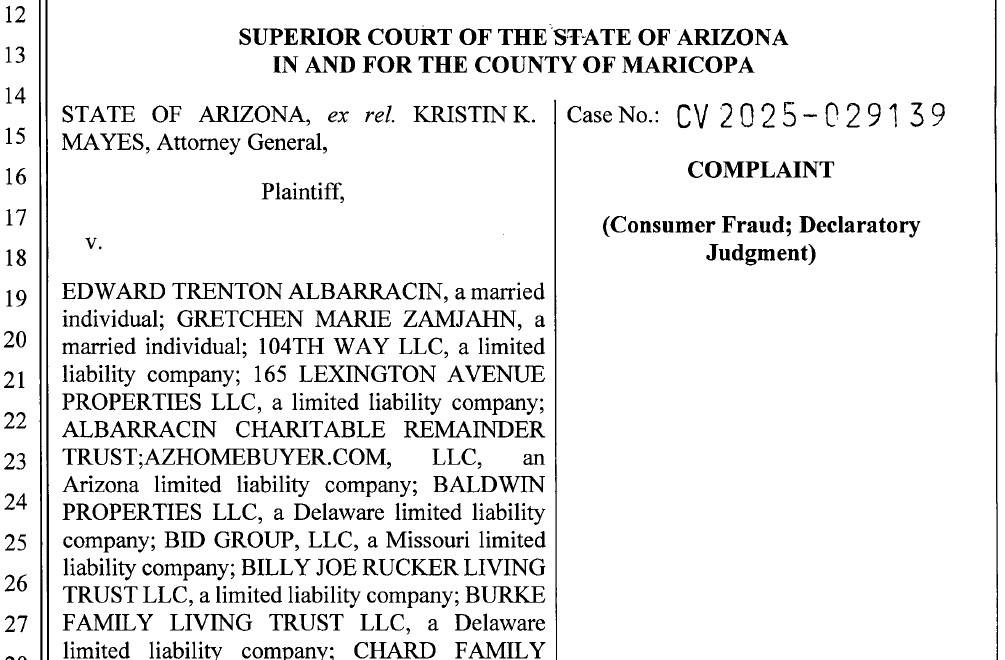
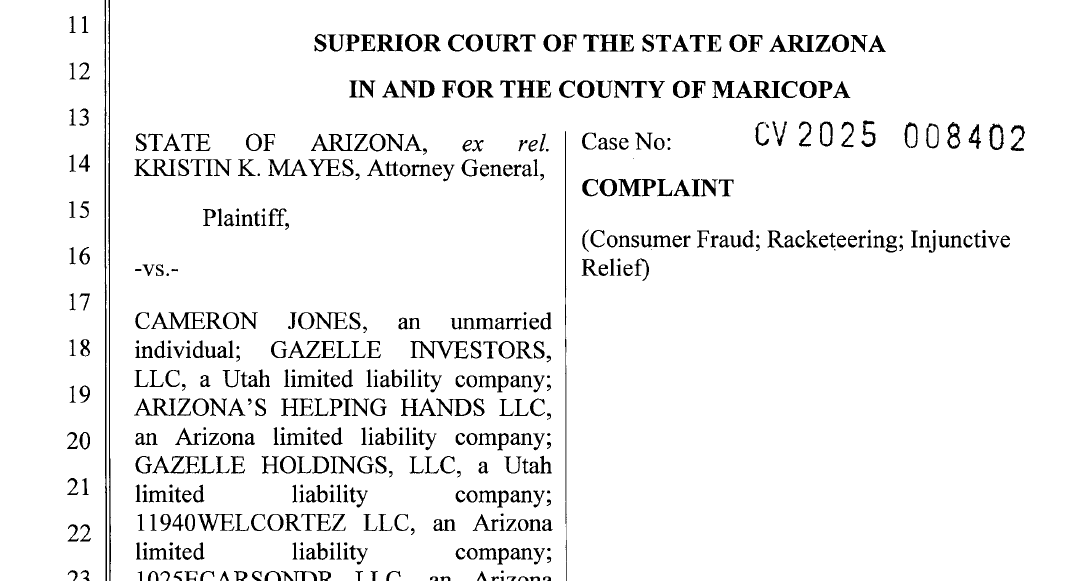
These lawsuits are instructive for any one interested: These don't include Morby.
It's just how the state is treating things now
You will notice how many people are indicted
.
.

- 8moPeter MckernanBusiness MemberResidential Real Estate Agent · Irvine, CA · Member since 2013 · 2k+ posts · 1k+ votes
I second what Greg said, they are a lot of work. Not saying they cannot be done or if they can be done to build a business.. Pace has done it for sure on a large scale, and been successful at it.
I get a ton of calls from investors looking for this to work since it sounds so good! A couple of challenges with this that I have experienced.
1. The buyer typically wants little to no skin in the game (5% down or less). The seller wants more money down, which the buyer usually does not have, or does not want to put down. This becomes a challenge for both parties, since it is nicer for the seller to get some sort of money when they close escrow and the payments start rolling in. And they know the buyer won't just walk away from the deal when they have 20% in or more.
2. The marketing for this is significant. I equate it to a wholesaler getting up and running. Wholesaling sounds great, "you mean I can do 15K-50K, or $100K deals without even possibly getting a license as a realtor?" Yes, but the marketing engine, or time spent with skill building includes a lot of money/time and resources. The wholesalers that I know that are successful are putting at least 5K a month into marketing if not more like $10K++. Same as Pace and these other seller financing outfits.
3. The seller financing on the MLS, 95% of people that put their house on the MLS either want to get out and buy another one, sell and be done with it while taking all their money with them without strings attached, or will not work on the complexities to get the deal done on the seller financing (the small percentage that can do it want 20% down or more).
4. The last thing, the agent, or person that is doing the deal for seller financing Pace, or anyone else are doing it for a fee. This is built into price. For example, I had a buddy show me a deal from a person doing seller financing and the seller financing (kind of like a wholesaler) is putting a fee on the sale of 6% to close the deal.
All great things need a little more work to make them great, and seller financing is one of them! Just beware of how you are looking for deals and doing deals because you want to make sure you are doing it right and are covered if the deal goes south.
 The McKernan Group4.957 Reviews
- Member since 2024 · 18 posts · 8 votes8mo
Quote from @Peter Mckernan:
I second what Greg said, they are a lot of work. Not saying they cannot be done or if they can be done to build a business.. Pace has done it for sure on a large scale, and been successful at it.
I get a ton of calls from investors looking for this to work since it sounds so good! A couple of challenges with this that I have experienced.
1. The buyer typically wants little to no skin in the game (5% down or less). The seller wants more money down, which the buyer usually does not have, or does not want to put down. This becomes a challenge for both parties, since it is nicer for the seller to get some sort of money when they close escrow and the payments start rolling in. And they know the buyer won't just walk away from the deal when they have 20% in or more.
2. The marketing for this is significant. I equate it to a wholesaler getting up and running. Wholesaling sounds great, "you mean I can do 15K-50K, or $100K deals without even possibly getting a license as a realtor?" Yes, but the marketing engine, or time spent with skill building includes a lot of money/time and resources. The wholesalers that I know that are successful are putting at least 5K a month into marketing if not more like $10K++. Same as Pace and these other seller financing outfits.
3. The seller financing on the MLS, 95% of people that put their house on the MLS either want to get out and buy another one, sell and be done with it while taking all their money with them without strings attached, or will not work on the complexities to get the deal done on the seller financing (the small percentage that can do it want 20% down or more).
4. The last thing, the agent, or person that is doing the deal for seller financing Pace, or anyone else are doing it for a fee. This is built into price. For example, I had a buddy show me a deal from a person doing seller financing and the seller financing (kind of like a wholesaler) is putting a fee on the sale of 6% to close the deal.
All great things need a little more work to make them great, and seller financing is one of them! Just beware of how you are looking for deals and doing deals because you want to make sure you are doing it right and are covered if the deal goes south.
Greatly appreciate your in-depth insights.
Let's say if the property is worth 200k and they've paid of 100k, the tenants/former owners are behind 20k and the lawyers want to make 20k on the deal as well.
The buyer will end up with a 200k property for 40k cash and a remaining mortgage of 100k.
This is at least my understanding of the situation.
- Investor · Get yourself trained before doing something inadvisable. · Member since 2024 · 3k+ posts · 1k+ votes8mo
Quote from @Peter Mckernan:
I second what Greg said, they are a lot of work. Not saying they cannot be done or if they can be done to build a business.. Pace has done it for sure on a large scale, and been successful at it.
I get a ton of calls from investors looking for this to work since it sounds so good! A couple of challenges with this that I have experienced.
1. The buyer typically wants little to no skin in the game (5% down or less). The seller wants more money down, which the buyer usually does not have, or does not want to put down. This becomes a challenge for both parties, since it is nicer for the seller to get some sort of money when they close escrow and the payments start rolling in. And they know the buyer won't just walk away from the deal when they have 20% in or more.
2. The marketing for this is significant. I equate it to a wholesaler getting up and running. Wholesaling sounds great, "you mean I can do 15K-50K, or $100K deals without even possibly getting a license as a realtor?" Yes, but the marketing engine, or time spent with skill building includes a lot of money/time and resources. The wholesalers that I know that are successful are putting at least 5K a month into marketing if not more like $10K++. Same as Pace and these other seller financing outfits.
3. The seller financing on the MLS, 95% of people that put their house on the MLS either want to get out and buy another one, sell and be done with it while taking all their money with them without strings attached, or will not work on the complexities to get the deal done on the seller financing (the small percentage that can do it want 20% down or more).
4. The last thing, the agent, or person that is doing the deal for seller financing Pace, or anyone else are doing it for a fee. This is built into price. For example, I had a buddy show me a deal from a person doing seller financing and the seller financing (kind of like a wholesaler) is putting a fee on the sale of 6% to close the deal.
All great things need a little more work to make them great, and seller financing is one of them! Just beware of how you are looking for deals and doing deals because you want to make sure you are doing it right and are covered if the deal goes south.
Your comment "Pace has done it for sure on a large scale, and been successful at it."
Take a look and reconsider?Meanwhile, In One Part of Florida - 32 foreclosure lawsuits linked To SubTo Community
https://www.news4jax.com/news/local/2026/01/29/mortgage-gamb...
- 8moWendy PattonBusiness MemberReal Estate Consultant · Clarkston, MI · Member since 2009 · 864 posts · 350 votes
I agree with above. Also, as a licensed agent and working for clients to have them sell on sub to...could be a disaster waiting to happen. I am a broker and do sub tos but not for a client or from a client. I never mix those two. If you have deals in MI, I would be interested, or know of others who might be. I have written a book on the topic and know a lot about these if you ever want any insight (and Pace Morby endorsed my book)
 Michigan Real Estate Investors535 Reviews
- Member since 2024 · 18 posts · 8 votes8mo
Quote from @Wendy Patton:
I agree with above. Also, as a licensed agent and working for clients to have them sell on sub to...could be a disaster waiting to happen. I am a broker and do sub tos but not for a client or from a client. I never mix those two. If you have deals in MI, I would be interested, or know of others who might be. I have written a book on the topic and know a lot about these if you ever want any insight (and Pace Morby endorsed my book)
In a nutshell. This is it.
If the buyer or me as a realtor does not do their due diligence this is a disaster waiting to happen. For me it is just bizarre that people will assume another persons loan and not simply refinance but at the same time I understand that interest rates are super high and securing a 3% loan in someone else's name is quite attractive.
- Member since 2018 · 1k+ posts · 1k+ votes8moBy definition you do not get clean and clear title. The mortgagee has a claim on the title that he can exercise by foreclosure on the mortgage.
Quote from @B. F. Zia:
I'm a realtor and recently started working with attorneys that stop foreclosures.
I am able to get great deals on Subject to's. An investor can take ownership this way for cheap and get low interest rates as well.
All with clean and clear title.
Just wanted to gauge investors interest in subject to properties?
You also get the yahoos who tell you not to record your title deed also.
So what do investors think about subject-to? Not much. - 8moDon KonipolBusiness MemberInvestor · The Woodlands TX / Avon, CT · Member since 2009 · 6k+ posts · 10k+ votes
Quote from @B. F. Zia:
I'm a realtor and recently started working with attorneys that stop foreclosures.
I am able to get great deals on Subject to's. An investor can take ownership this way for cheap and get low interest rates as well.
All with clean and clear title.
Just wanted to gauge investors interest in subject to properties?This can of worms is a lot like consumer high interest liar loans during 2008 - 2010 which resulted in Dodd Frank. On a state level the various consumer protection agencies are going after people/companies that do sub to acquisitions and flip the property to an end investor; or do sub to and keep them on a continual basis. My take is that the investor doing one or two sub to acquisitions with some safe guards in place is pretty safe - assuming FULL DISCLOSURE to the seller. So having the seller sign acknowledgement that the loan remains in his name, that he may not be able to obtain financing for a new home purchase, that he will owe money secure by a property he no longer owns, and that the note can be accelerated, should be sufficient to cut off any private lawsuit by the seller and any state initiated action. But, please check with a knowledgable, local attorney.
The investor wanting to do a sub to can avoid this by dealing only in commercial real estate or à residential property owned not as a personal residence. However, these will be harder to locate.
If the seller has significant equity in the property they’d likely only want or be willing to sell sub to if they can obtain a higher price by offering a low interest mortgage, non qualifying financing, wrap around low down payment terms. Otherwise, the only possible advantage to the seller is a quicker sale and saving a few bucks in closing costs.
Here’s how I would deal with a residential subto transaction as a buyer with a homeowner seller: First, full disclosure as mentioned above, additionally I’d do a wrap around mortgage even if the wrap is at the same amount as the underlying mortgage but at a 1/2 % higher interest rate. This shows that the seller was an active participant looking to earn a profit on the interest rate differential rather than an “innocent” consumer duped by a “shark”. Unless of course the seller has no understanding of what a subto entails; then I’d just walk away.- Member since 2024 · 18 posts · 8 votes8mo
Quote from @Don Konipol:
Quote from @B. F. Zia:
I'm a realtor and recently started working with attorneys that stop foreclosures.
I am able to get great deals on Subject to's. An investor can take ownership this way for cheap and get low interest rates as well.
All with clean and clear title.
Just wanted to gauge investors interest in subject to properties?This can of worms is a lot like consumer high interest liar loans during 2008 - 2010 which resulted in Dodd Frank. On a state level the various consumer protection agencies are going after people/companies that do sub to acquisitions and flip the property to an end investor; or do sub to and keep them on a continual basis. My take is that the investor doing one or two sub to acquisitions with some safe guards in place is pretty safe - assuming FULL DISCLOSURE to the seller. So having the seller sign acknowledgement that the loan remains in his name, that he may not be able to obtain financing for a new home purchase, that he will owe money secure by a property he no longer owns, and that the note can be accelerated, should be sufficient to cut off any private lawsuit by the seller and any state initiated action. But, please check with a knowledgable, local attorney.
The investor wanting to do a sub to can avoid this by dealing only in commercial real estate or à residential property owned not as a personal residence. However, these will be harder to locate.
If the seller has significant equity in the property they’d likely only want or be willing to sell sub to if they can obtain a higher price by offering a low interest mortgage, non qualifying financing, wrap around low down payment terms. Otherwise, the only possible advantage to the seller is a quicker sale and saving a few bucks in closing costs.
Here’s how I would deal with a residential subto transaction as a buyer with a homeowner seller: First, full disclosure as mentioned above, additionally I’d do a wrap around mortgage even if the wrap is at the same amount as the underlying mortgage but at a 1/2 % higher interest rate. This shows that the seller was an active participant looking to earn a profit on the interest rate differential rather than an “innocent” consumer duped by a “shark”. Unless of course the seller has no understanding of what a subto entails; then I’d just walk away.This is a little above my skill level, but in simple terms if I was the one buying I'd just refinance the mortgage after a couple of months or when the repairs are half way through. That way I have the title...
- Real Estate Broker · Hyde Park Tampa, FL · Member since 2019 · 2k+ posts · 3k+ votes8mo
Investor interest in 'subject to' is long over...simply wasn't worth the drama. I'm not interested for myself or my clients.
- Member since 2024 · 18 posts · 8 votes8mo
Quote from @Patricia Steiner:
Investor interest in 'subject to' is long over...simply wasn't worth the drama. I'm not interested for myself or my clients.
So what type of deals do you share with your clients?
- 8moAvrom W. SmithPro MemberReal Estate Consultant · Marietta, GA · Member since 2016 · 122 posts · 20 votes
@B. F. Zia As you've heard from many experts here in this chat regarding "subject to" @Ken M.@Bo Smith @Peter Mckernan , to name a few. I've always been intrigued by the whole "subject to" process, but I committed a long time ago to just "staying in my lane" because if you don't know what you're doing, you'll pay dearly for it. Perhaps things may change down the road, but for now, I'm happy reading about it. Nonetheless, good luck and wish you the best!
- Member since 2024 · 18 posts · 8 votes8mo
Quote from @Avrom W. Smith:
@B. F. Zia As you've heard from many experts here in this chat regarding "subject to" @Ken M.@Bo Smith @Peter Mckernan , to name a few. I've always been intrigued by the whole "subject to" process, but I committed a long time ago to just "staying in my lane" because if you don't know what you're doing, you'll pay dearly for it. Perhaps things may change down the road, but for now, I'm happy reading about it. Nonetheless, good luck and wish you the best!
I'm working a deal right now with another experienced realtor and attorney. Just as a shadow. I'll be sure to share my experience here.
- Realtor · Boulder, CO · Member since 2016 · 3k+ posts · 5k+ votes8mo
As an investor, creative strategies are nice to have in your back pocket in order to have as many options as possible to put a deal together.
As a licensed professional, you have to check with your broker first as not many managing brokers will want their agents to be involved in any legally risky transactions.
As a Realtor myself, I'm going after luxury listings. Foreclosures are definitely not my cup of tea although I understand specialists go after this market segment and do well with it. Just not for me. Sub2, I would not want any part of as an agent, and it's a moot point as my brokerage definitely doesn't want that legal liability. Foreclosure combined with Sub2? Why torture yourself?
- Member since 2024 · 18 posts · 8 votes8mo
Quote from @Steve K.:
As an investor, creative strategies are nice to have in your back pocket in order to have as many options as possible to put a deal together.
As a licensed professional, you have to check with your broker first as not many managing brokers will want their agents to be involved in any legally risky transactions.
As a Realtor myself, I'm going after luxury listings. Foreclosures are definitely not my cup of tea although I understand specialists go after this market segment and do well with it. Just not for me. Sub2, I would not want any part of as an agent, and it's a moot point as my brokerage definitely doesn't want that legal liability. Foreclosure combined with Sub2? Why torture yourself?
Yes, unfortunately at the moment I don't have the bandwidth to commit to pampering clients. I want to work with more numbers oriented investors.
- Real Estate Broker · Hyde Park Tampa, FL · Member since 2019 · 2k+ posts · 3k+ votes8mo
My firm is a private client investment firm; those details are reserved for clients. Having said that, I will offer that there are a lot of sellers who want to sell without drama and complexity - and buyers who are ready to buy quickly as long as it can be done without drama and complexity. Drama and complexity costs time and money and the former is even more costly than the later. Transactions get 'weird' when people make it harder than it really is/needs to be. Rethink the last few deals you've presented and how they could have been done without all the hurdles that in the end were not really meaningful. There's a lot of what is 'subject to' that could have been eliminated/remedied prior to contract.
- 8moBo SmithPro MemberHinton, WV · Member since 2026 · 1k+ posts · 373 votes
Subject to deals are solid but most investors mess up the follow-up with homeowners. Regular check-ins and payment confirmations matter more than the initial structure. Are you helping investors set up those ongoing systems or just the deal part?
- 8moDon KonipolBusiness MemberInvestor · The Woodlands TX / Avon, CT · Member since 2009 · 6k+ posts · 10k+ votes
This thread is really about the broker/agent/advisor in subject to - and by extension other “creative” transactions.
I’ve seen and dealt with investment or commercial brokers/agents who were very successful dealing in only straight forward type transactions. And knew some successful doing both.
There are probably no more than 200 practitioners left that ONLY broker/facilitate CREATIVE deals. Back in the late 1970s - early 1980s there were thousands of- maybe 10s of thousands. I was one of them. Mortgage rates of 17% will FORCE creative transactions.
The “bigger brother” of sub to transactions is the sale with a “wrap around” mortgage.
Here’s my bottom line take on investment broker - agents who don’t do creative transactions (including sub to) and those that do
The former are SALES PERSONS who happen to be selling real estate ; the latter are REAL ESTATE people, who happen to be selling, advising, and facilitating. The only problem is when sales people claim to be “advisors”. If they don’t deal in the full scope of strategies and tactics, how could they “advise”?
Calling me with a new listing that's available to the public is worthless, too much information is available to everyone. Calling me to tell me that the seller will consider my purchasing their property subject to their existing 2.75% loan when that information isn't public is VERY valuable to me. Calling me to tell me that a seller just dropped their price 20% as shown on MLS or CoStar is worthless - calling to tell me that the seller hasn't yet dropped their price but is considering it is VERY valuable information.
A few years ago I paid $100,000 to a broker that did NOT have the listing (the seller wouldn’t list or pay a broker fee) just for INFORMATION after I successfully purchase a package of 2 properties for $1.75 million (we subsequently sold one for $1.5 million and are still collecting rent on the other).
- Real Estate Agent · San Antonio, TX · Member since 2020 · 75 posts · 88 votes8mo
I know folks that buy Sub to and dont regret it. Yes there is risk. There are a LOT of variables but Subject to can work and can be useful in certain situations. Its a niche strategy for a specific seller need and buyer need. You mentioned these were foreclosures. Subject to is 1 possible strategy so they dont end up with a foreclosure.
Is it the best option? No probably not. but is it better if there are no alternatives? maybe!In short, There are certainly buyers that would love a good subject to deal and sellers that could benefit from it.
- Investor · Get yourself trained before doing something inadvisable. · Member since 2024 · 3k+ posts · 1k+ votes8mo
Quote from @Sherylyn Holden:
I know folks that buy Sub to and dont regret it. Yes there is risk. There are a LOT of variables but Subject to can work and can be useful in certain situations. Its a niche strategy for a specific seller need and buyer need. You mentioned these were foreclosures. Subject to is 1 possible strategy so they dont end up with a foreclosure.
Is it the best option? No probably not. but is it better if there are no alternatives? maybe!In short, There are certainly buyers that would love a good subject to deal and sellers that could benefit from it.
Interesting.
Foreclosures and lawsuits reveal the risks behind ‘subject-to’ home sales
The ITEAM found at least 32 foreclosure SubTo lawsuits
https://www.news4jax.com/news/local/2026/01/29/mortgage-gamb... - 7moDon KonipolBusiness MemberInvestor · The Woodlands TX / Avon, CT · Member since 2009 · 6k+ posts · 10k+ votesThere’s a big difference for the seller as to exactly WHO he’s selling to when doing a sub to or wrap. Buyers with no money, no experience? Newbie disciples of Pace and his ilk? Scammers pulling the collect rent don’t pay mortgage scam? “Investors” believing they will walk away at the first problem month? Likely to turn out bad. Selling to a professional real estate investor with significant holding, liquid capital, and a long track record of success? Like a night and day difference. Should end up beneficial to both parties.
Quote from @Ken M.:
Quote from @Sherylyn Holden:
I know folks that buy Sub to and dont regret it. Yes there is risk. There are a LOT of variables but Subject to can work and can be useful in certain situations. Its a niche strategy for a specific seller need and buyer need. You mentioned these were foreclosures. Subject to is 1 possible strategy so they dont end up with a foreclosure.
Is it the best option? No probably not. but is it better if there are no alternatives? maybe!In short, There are certainly buyers that would love a good subject to deal and sellers that could benefit from it.
Interesting.
Foreclosures and lawsuits reveal the risks behind ‘subject-to’ home sales
The ITEAM found at least 32 foreclosure SubTo lawsuits
https://www.news4jax.com/news/local/2026/01/29/mortgage-gamb... - Investor · Get yourself trained before doing something inadvisable. · Member since 2024 · 3k+ posts · 1k+ votes7moAgreed.
Quote from @Don Konipol:
There’s a big difference for the seller as to exactly WHO he’s selling to when doing a sub to or wrap. Buyers with no money, no experience? Newbie disciples of Pace and his ilk? Scammers pulling the collect rent don’t pay mortgage scam? “Investors” believing they will walk away at the first problem month? Likely to turn out bad. Selling to a professional real estate investor with significant holding, liquid capital, and a long track record of success? Like a night and day difference. Should end up beneficial to both parties.Quote from @Ken M.:
Quote from @Sherylyn Holden:
I know folks that buy Sub to and dont regret it. Yes there is risk. There are a LOT of variables but Subject to can work and can be useful in certain situations. Its a niche strategy for a specific seller need and buyer need. You mentioned these were foreclosures. Subject to is 1 possible strategy so they dont end up with a foreclosure.
Is it the best option? No probably not. but is it better if there are no alternatives? maybe!In short, There are certainly buyers that would love a good subject to deal and sellers that could benefit from it.
Interesting.
Foreclosures and lawsuits reveal the risks behind ‘subject-to’ home sales
The ITEAM found at least 32 foreclosure SubTo lawsuits
https://www.news4jax.com/news/local/2026/01/29/mortgage-gamb...
- 8moBrian MillerPro MemberReal Estate Agent · St. Louis, MO · Member since 2019 · 58 posts · 45 votes
As an agent who lists a lot of investment properties, I get so many inquiries from buyers wanting to do seller financing deals. Most of the "deals" that are proposed, are more advantageous for the buyer rather then the seller. They offer 5% down, low monthly payments to the owner, and are offering 20-30 year terms. Sometimes without any balloon payment. Oh, and my commission comes out of the upfront down payment.
I've worked a few SF deals, and they are extremely time consuming, and in some cases do not pan out. I put "no seller financing" on my MLS listings, but still get people calling and asking if the seller would accept SF...

Join the conversationCreate a free account to reply, vote on answers and follow this thread.