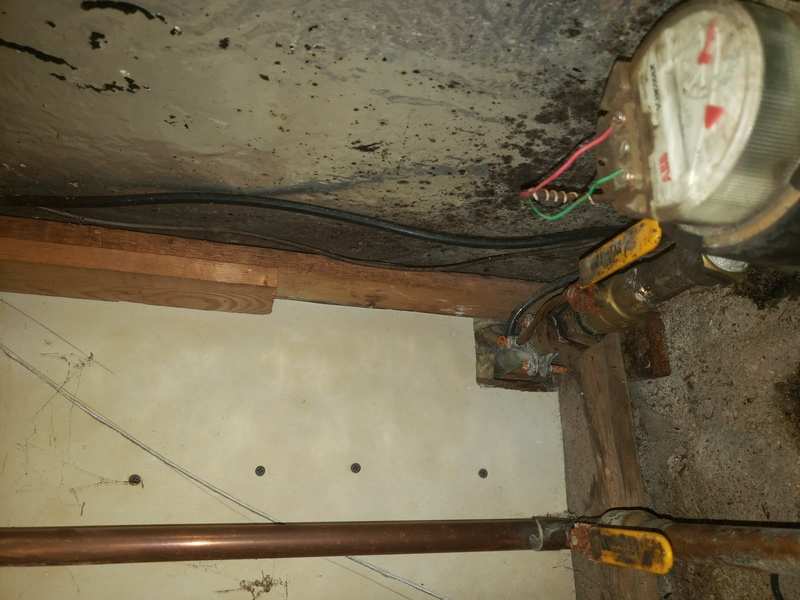
Sump pump getting louder? PIC attached

Sump pump getting louder? PIC attached

Rental Property Investor · Northern NJ · Member since 2019 · 672 posts · 677 votes

Hello BP,

I've noticed my sump pump is getting louder lately. I'm unfamiliar with maintenance on these as I didn't have them where I lived. I've never seen a set up like mine, it has what appears to be a pump then it runs to where I can't see anything. Any advice on how to access the area (not sure its even behind this wall) and how to quiet it or conduct maintenance. Thanks!

1Reply
187 views

Most Popular Reply

Professional · Milwaukee, WI · Member since 2015 · 35 posts · 27 votes
5y

Unless I'm missing something what your showing in your pictures isn't a sump pump.  It's a water meter. 

See this reply in the discussion

29 Replies

Jump to latestLatest
  • Rental Property Investor · Northern NJ · Member since 2019 · 672 posts · 677 votes
    5y

    Another picture, looks like that piece could be removed. I assume that's where the pit is, behind the drywall,

    but im not sure. 

  • Professional · Milwaukee, WI · Member since 2015 · 35 posts · 27 votes
    5y

    Unless I'm missing something what your showing in your pictures isn't a sump pump.  It's a water meter. 

  • Rental Property Investor · Northern NJ · Member since 2019 · 672 posts · 677 votes
    5y
    Originally posted by @Christpher Schuebel:

    Unless I'm missing something what your showing in your pictures isn't a sump pump.  It's a water meter. 

    Anddddd I feel dumb. Yes, thats probably the water meter. It seems to be making more noise than usual. Should I contact the water company? 

  • Investor · West Chester , PA · Member since 2011 · 620 posts · 138 votes
    5y

    Yes, ASAP and worry about black mold on concrete slab

  • Rental Property Investor · Boston, MA · Member since 2019 · 124 posts · 121 votes
    5y

    That is the water meter / main water line for the whole house. The main water pipe comes in off the street, through the foundation, and goes into the meter, which then calculates how much water you use. Call water company and or town ASAP (some towns have specific water meters they sell/provide) and a plumber and also address the what looks like black mold at the same time 

  • Rental Property Investor · Northern NJ · Member since 2019 · 672 posts · 677 votes
    5y

    Thanks so much guys. The black mold was on some sort of reflective material so it was very easy to clean (I looked up how to clean it on google). I'll call the town then the water commission and see what both have to say. I appreciate it!!! I feel like I know some but you learn every day. I wonder if I have to pay for this thing to be replaced. And I'm still trying to find my sump pump. My basement is finished out so I figured that's why its not so easy to find. I'll update this thread.

  • Investor · Northeast, NE · Member since 2015 · 258 posts · 83 votes
    5y

    Chances are it’s owned by water dept.  I always heard meters NEVER run fast, only run slower with age.  If they replace it , it may result in higher water bill.  If it isn’t leaking I would let it be.  If it is clicking slightly it means you have a water leak.  Most generally the stool flapper or fill valve running over the overflow.  About every month you should take your finger and rub around flapper and where it sets/ seals. A leak test would be to turn water off to stool and not use for several hours, leave tank lid off and see if water level stays same on the tube after many hours.  If it does not the stool is silent stealing your water.  Does not take much to add to big bucks.

  • Rental Property Investor · Northern NJ · Member since 2019 · 672 posts · 677 votes
    5y
    Originally posted by @Don Meinke:

    Chances are it’s owned by water dept.  I always heard meters NEVER run fast, only run slower with age.  If they replace it , it may result in higher water bill.  If it isn’t leaking I would let it be.  If it is clicking slightly it means you have a water leak.  Most generally the stool flapper or fill valve running over the overflow.  About every month you should take your finger and rub around flapper and where it sets/ seals. A leak test would be to turn water off to stool and not use for several hours, leave tank lid off and see if water level stays same on the tube after many hours.  If it does not the stool is silent stealing your water.  Does not take much to add to big bucks.

    Thanks for that info. It does seem to make a clicking noise but it could be its normal sound. I haven't lived here but 10 months and its the same sound but louder. Honestly I think it may be leaking, it is super old and I can see mold around it. I think it'll be best to just call the city and replace it. I found a tag which has so much black crap I can't read much other than saying CITY OF where I live. Ill call them tomorrow. 

  • Investor · West Chester , PA · Member since 2011 · 620 posts · 138 votes
    5y

    May be there is no sump pump. If you cannot find it. What makes you think there is Pump ?

  • Rental Property Investor · Northern NJ · Member since 2019 · 672 posts · 677 votes
    5y
    Originally posted by @Sai T.:

    May be there is no sump pump. If you cannot find it. What makes you think there is Pump ?

    I just figured I did for a house in the NE. Obviously I could be wrong.  

  • Investor · West Chester , PA · Member since 2011 · 620 posts · 138 votes
    5y

    Sump pump can’t hidden or buried under the ground. If there is a Pump then look at the corners of the basement or cabinets or closets.

  • Rental Property Investor · Northern NJ · Member since 2019 · 672 posts · 677 votes
    5y
    Originally posted by @Sai T.:

    Sump pump can’t hidden or buried under the ground. If there is a Pump then look at the corners of the basement or cabinets or closets.

    I definitely cannot find one. Is the alternative just a direct connection to the sewer line? 

  • Rental Property Investor · Amityville, NY · Member since 2018 · 351 posts · 441 votes
    5y
    Originally posted by @Mark F.:
    Originally posted by @Sai T.:

    May be there is no sump pump. If you cannot find it. What makes you think there is Pump ?

    I just figured I did for a house in the NE. Obviously I could be wrong.  

    Dont freak out about mold, just get rid of the moisture. Put a piece of Tupperware under the water meter for now in case its leaking. And def get water company in there to replace

    Most homes dont have sump pumps unless near coastal areas or areas with underground streams or a high water table. The discharge for the pump would either  go to the main waste line or exit outside somewhere.

    please do not take offense by this but you should really  try to learn the basics of how a home is constructed and what makes them function. Having knowledge of the basics will be very valuable to any one especially investors.

    Maybe watch some this old house episodes or ask a local contractor or handyman for an hour or 2 of their time (paid of course) for a quick lesson.

  • Investor · West Chester , PA · Member since 2011 · 620 posts · 138 votes
    5y

    I maybe wrong but TMK sump pump can’t hookup to sewer line. If can find  look in the backyard.

  • Rental Property Investor · Northern NJ · Member since 2019 · 672 posts · 677 votes
    5y
    Originally posted by @Erik B.:
    Originally posted by @Mark F.:
    Originally posted by @Sai T.:

    May be there is no sump pump. If you cannot find it. What makes you think there is Pump ?

    I just figured I did for a house in the NE. Obviously I could be wrong.  

    Dont freak out about mold, just get rid of the moisture. Put a piece of Tupperware under the water meter for now in case its leaking. And def get water company in there to replace

    Most homes dont have sump pumps unless near coastal areas or areas with underground streams or a high water table. The discharge for the pump would either  go to the main waste line or exit outside somewhere.

    please do not take offense by this but you should really  try to learn the basics of how a home is constructed and what makes them function. Having knowledge of the basics will be very valuable to any one especially investors.

    Maybe watch some this old house episodes or ask a local contractor or handyman for an hour or 2 of their time (paid of course) for a quick lesson.

    Yeah I'm thinking replacing the meter and cleaning that area will solve it. The reason why I thought there would be a sump pump as just about every house I've looked at in my area has one. I moved to an area that has things I've never dealt with, basements. So a lot of this stuff is new to me and its been a learning curve for sure. 

    No offense taken, where I grew up there were no sump pumps or gas fired appliances/boilers etc so I've been learning a ton from my realtor who's my mentor and RE investor himself. Funny you mention that as I started watching this old house and ask this old house and learned a lot so far. I know I still have a long ways to go but im learning quite a bit and I do have an okay foundation of knowledge. 

    The last 15 years I only dealt with water heater and Central air units. No heating units, sump pumps or basements to contend with. 

  • Member since 2018 · 3 posts · 1 vote
    5y

    @Christpher Schuebel yep

  • Rental Property Investor · Amityville, NY · Member since 2018 · 351 posts · 441 votes
    5y
    Originally posted by @Sai T.:

    I maybe wrong but TMK sump pump can’t hookup to sewer line. If can find  look in the backyard.

     Yes legally in most places connection to sewer line is not allowed. But it is commonly done that way and if looking for it I would check there.

  • Rental Property Investor · Amityville, NY · Member since 2018 · 351 posts · 441 votes
    5y
    Originally posted by @Mark F.:
    Originally posted by @Erik B.:
    Originally posted by @Mark F.:
    Originally posted by @Sai T.:

    May be there is no sump pump. If you cannot find it. What makes you think there is Pump ?

    I just figured I did for a house in the NE. Obviously I could be wrong.  

    Dont freak out about mold, just get rid of the moisture. Put a piece of Tupperware under the water meter for now in case its leaking. And def get water company in there to replace

    Most homes dont have sump pumps unless near coastal areas or areas with underground streams or a high water table. The discharge for the pump would either  go to the main waste line or exit outside somewhere.

    please do not take offense by this but you should really  try to learn the basics of how a home is constructed and what makes them function. Having knowledge of the basics will be very valuable to any one especially investors.

    Maybe watch some this old house episodes or ask a local contractor or handyman for an hour or 2 of their time (paid of course) for a quick lesson.

    Yeah I'm thinking replacing the meter and cleaning that area will solve it. The reason why I thought there would be a sump pump as just about every house I've looked at in my area has one. I moved to an area that has things I've never dealt with, basements. So a lot of this stuff is new to me and its been a learning curve for sure. 

    No offense taken, where I grew up there were no sump pumps or gas fired appliances/boilers etc so I've been learning a ton from my realtor who's my mentor and RE investor himself. Funny you mention that as I started watching this old house and ask this old house and learned a lot so far. I know I still have a long ways to go but im learning quite a bit and I do have an okay foundation of knowledge. 

    The last 15 years I only dealt with water heater and Central air units. No heating units, sump pumps or basements to contend with. 

    If the area Homes have sump pumps then it is possible you may have one and its hidden. People do crazy things and close stuff up behind walls. After heavy rainfalls you should be able to hear it run if you pay close attention. Also compare the age of your house against the ones with sump pumps. They might be building newer homes with sumps where as the older ones they didnt.

    Honestly it doesnt seem like you have water issues. Just a little moisture from a potentially faulty meter.

    Basements add a whole other level of complexity to a home and most issues usually have to do with moisture especially in the older ones. Newer basements tend to be much dryer.

    Basements gives you extra SF, place for laundry, furnace etc and access to plumbing and electric .

  • Real Estate Agent · Southington, CT · Member since 2008 · 5k+ posts · 3k+ votes
    5y

    That is a water meter, not a sump pump. Call the municipality ASAP so they have on record that you reported it being potentially damaged. Some will charge you to install a new one if they think you were at fault. 

  • JD MartinBusiness Member
    Moderator
    Rock Star Extraordinaire · Northeast, TN · Member since 2015 · 10k+ posts · 16k+ votes
    5y
    Originally posted by @Don Meinke:

    Chances are it’s owned by water dept.  I always heard meters NEVER run fast, only run slower with age.  If they replace it , it may result in higher water bill.  If it isn’t leaking I would let it be.  If it is clicking slightly it means you have a water leak.  Most generally the stool flapper or fill valve running over the overflow.  About every month you should take your finger and rub around flapper and where it sets/ seals. A leak test would be to turn water off to stool and not use for several hours, leave tank lid off and see if water level stays same on the tube after many hours.  If it does not the stool is silent stealing your water.  Does not take much to add to big bucks.

     This is exactly right regarding water meters. The nutating disc or cup turns a gear magnetically every time it spins, which is what turns your odometer on the meter. As the meter ages the cup/disc will hang up or not spin with low-flow uses, which reduces the accuracy of the meter (to your benefit). 

    Skyline Properties
    View Page
  • Blue Springs, MO · Member since 2015 · 481 posts · 313 votes
    5y

    Like everybody said, that's your water meter.  For far more than you wanted to know about all of that stuff, read on.

    The pipe coming through the wall with drywall on it is the connection to the city water main.  There are two wires clamped to it.  The big black insulated one will go to your circuit breaker panel or fuse box; it's there so the electrical service can use the (metal) pipe under your yard as a ground.  The bare copper one goes to another clamp on the other side of the meter; it's there so the plumbing in the house is still grounded, even if the meter is gone, or replaced by one with a plastic body.

    The yellow handle is a valve.  With the handle in line with the pipe, like it is now, it's open.  If you turn the handle so it's 90 degrees to the pipe, it's closed.  It's a ball valve, so it only takes one quarter turn to get from fully closed to fully open.  If you close this valve, it will turn off all the water to the entire house.

    The next thing is the water meter, as has been mentioned.  A lot of them will normally make a clicking noise if you have something using water; if it clicks when you think there should be no water running, that means you have a leak.  Also, that little red triangle you can see through the clear top of the meter will spin, even when a very small amount of water is flowing - to see it, turn the kitchen sink cold water full on, go look at the meter for a minute, then turn the kitchen sink down to a trickle, and go look at the meter again.  If you can catch the triangle moving when you think everything should be shut off - you have a leak.  I'm not sure what the red sweep needle does.  There *may* also be a set of number wheels visible through the clear top of the meter; that number should resemble the ones on your water bill.

    The skinny red and green wires connected to the meter, that go into a cable, are for the remote-reading device on the meter; if you follow that cable far enough, it will go to a plastic box or puck on the outside of the house somewhere.  The older ones had a connector in the plastic box - the meter reader had to plug a hand-held device into the connector to get the reading.  The newer ones are contactless - the meter reader just holds their hand-held device up against the puck for a couple of seconds to get the reading.  (Before these existed, somebody from the water utility had to come into your house to read the meter.  Sometimes they'd send you a postcard and ask you to fill in the reading and mail it back. )

    The next thing is the clamp for the other end of the bare copper wire that keeps the house plumbing grounded.

    The next thing with the yellow handle is another valve.  Same as the first valve - the handle the way it is now is open, at 90 degrees to the pipe it will be closed.  Closing this valve will *also* turn off all the water to the whole house.

    You only technically need one of these valves, and a lot of houses will only have one, usually on the city side of the water meter (the first valve I talked about, in your picture).  Having two is only really useful when replacing the water meter - closing the second valve means that the plumber doesn't have to deal with all the water in the house pipes running out when they remove the meter.

    The last thing is the cold water pipe running up the wall.  It will branch off to the "cold" side of all the sinks and tubs, all the toilets, and all the outdoor hose bibbs.  It will also go to the inlet side of the water heater.

    Like I said, probably way more than you wanted to know about it.

  • Joe SplitrockPro Member
    Moderator
    Rental Property Investor · Sioux Falls, SD · Member since 2015 · 9k+ posts · 18k+ votes
    5y

    I understand not knowing what a sump pump looks like, but don't water meters look the same pretty much everywhere? It is also worth noting that copper pipes, shut off valves and smaller size pipe are all clues that this is water supply line. 

    The white residue on the side of the meter is a sure sign that it is leaking. It is mineral residue and it would only look that way if water had run down the side. Almost guaranteed the city owns the meter and will replace for free. After they replace it, spray some bleach on the mold and you are good.

  • New to Real Estate · Madison, WI · Member since 2020 · 68 posts · 16 votes
    5y

    @Mark F. Weird, never saw a setup like that

  • JD MartinBusiness Member
    Moderator
    Rock Star Extraordinaire · Northeast, TN · Member since 2015 · 10k+ posts · 16k+ votes
    5y
    Originally posted by @Matt R.:

    Like everybody said, that's your water meter.  For far more than you wanted to know about all of that stuff, read on.

    The pipe coming through the wall with drywall on it is the connection to the city water main.  There are two wires clamped to it.  The big black insulated one will go to your circuit breaker panel or fuse box; it's there so the electrical service can use the (metal) pipe under your yard as a ground.  The bare copper one goes to another clamp on the other side of the meter; it's there so the plumbing in the house is still grounded, even if the meter is gone, or replaced by one with a plastic body.

    The yellow handle is a valve.  With the handle in line with the pipe, like it is now, it's open.  If you turn the handle so it's 90 degrees to the pipe, it's closed.  It's a ball valve, so it only takes one quarter turn to get from fully closed to fully open.  If you close this valve, it will turn off all the water to the entire house.

    The next thing is the water meter, as has been mentioned.  A lot of them will normally make a clicking noise if you have something using water; if it clicks when you think there should be no water running, that means you have a leak.  Also, that little red triangle you can see through the clear top of the meter will spin, even when a very small amount of water is flowing - to see it, turn the kitchen sink cold water full on, go look at the meter for a minute, then turn the kitchen sink down to a trickle, and go look at the meter again.  If you can catch the triangle moving when you think everything should be shut off - you have a leak.  I'm not sure what the red sweep needle does.  There *may* also be a set of number wheels visible through the clear top of the meter; that number should resemble the ones on your water bill.

    The skinny red and green wires connected to the meter, that go into a cable, are for the remote-reading device on the meter; if you follow that cable far enough, it will go to a plastic box or puck on the outside of the house somewhere.  The older ones had a connector in the plastic box - the meter reader had to plug a hand-held device into the connector to get the reading.  The newer ones are contactless - the meter reader just holds their hand-held device up against the puck for a couple of seconds to get the reading.  (Before these existed, somebody from the water utility had to come into your house to read the meter.  Sometimes they'd send you a postcard and ask you to fill in the reading and mail it back. )

    The next thing is the clamp for the other end of the bare copper wire that keeps the house plumbing grounded.

    The next thing with the yellow handle is another valve.  Same as the first valve - the handle the way it is now is open, at 90 degrees to the pipe it will be closed.  Closing this valve will *also* turn off all the water to the whole house.

    You only technically need one of these valves, and a lot of houses will only have one, usually on the city side of the water meter (the first valve I talked about, in your picture).  Having two is only really useful when replacing the water meter - closing the second valve means that the plumber doesn't have to deal with all the water in the house pipes running out when they remove the meter.

    The last thing is the cold water pipe running up the wall.  It will branch off to the "cold" side of all the sinks and tubs, all the toilets, and all the outdoor hose bibbs.  It will also go to the inlet side of the water heater.

    Like I said, probably way more than you wanted to know about it.
     The red sweep handle is like the 10ths digit on your car odometer. If it's a 5/8 or 3/4 gallon meter one 360 degree sweep is 10 gallons of water. If it's a cubic foot meter (same sizes) one 360 degree sweep is 7.48 gallons. If you look at the odometer the last digit is often fixed and usually black - that's individual gallons - the next digit to the left (usually also black) will turn every time the sweep hand swings one full rotation. On a gallon meter you'll usually see 3 black digits at the end and 4 white digits, on a cubic foot meter you'll usually see 2 black digits at the end and 4 white digits. Utilities usually read in thousand gallon increments, though some will read the hundreds and (rarely) will read the tens. So on a gallon meter every time that sweep hand goes round once, you'll see the tens digit on the meter change. Once it's gone around 10 times you'll see the hundreds digit change.

    If your meter is digital, then you usually have an electronic number with a decimal point. The numbers after the decimal are like the fixed numbers on an analog meter.

    Also, regarding the efflorescence on the meter: that came from somewhere else. Either a washer on the meter ends spraying or just general water dampness from somewhere else. Water can't run down the meter from the register because the body of the meter is completely sealed up top (a magnet turns the register gears). On the bottom of the meter there are usually bolts and a gasket that are used to access the measuring cup/nutating disc in the meter body. On some of the newer meters the bottoms are plastic; they used to always be brass and then later steel.

    Skyline Properties
    View Page
  • Investor · Northeast, NE · Member since 2015 · 258 posts · 83 votes
    5y

    While we are at it.  The ‘bottom’ also acts as a freeze plug.  Say you went on a 3 week vacation and temps were zero every day.  The bottom is designed to crack and relieve pressure from frozen pipes.  You would still have broken split pipes.  But the meter bottom would be replaced by the city and accompanied by a bill.  It does happen.  End of meter 101!

Join the conversationCreate a free account to reply, vote on answers and follow this thread.