Building Two Homes at the Same Time in Western Kentucky—Our Experience So Far

Building Two Homes at the Same Time in Western Kentucky—Our Experience So Far

Investor · Hopkinsville, Christian County · Member since 2024 · 5 posts · 3 votes

I want to start being more active on BiggerPockets and openly sharing what we’re building, what’s working, and what we’re learning along the way.

My name is Reginald Calloway, founder of ASC Real Estate Solutions in Hopkinsville, Kentucky. My real-estate journey began through our childcare business. Starting in 2015, we acquired three commercial properties through land contracts and eventually refinanced them into conventional commercial loans.

I moved into residential investing in 2024, completing flips and building a rental portfolio. I’m also a member of Henry Washington’s real-estate investing mastermind, which has helped me sharpen my approach to buying, financing, and executing deals.

This year, ASC took another major step by breaking ground on our first two new-construction homes at the same time.

Both homes are approximately 1,066 square feet with three bedrooms, two bathrooms, and open-concept floor plans. We purchased the infill lots for approximately $5,000 and $1,700. Our construction cost is approximately $140,000 per house, and we’re bringing each property to market at $210,000.

We broke ground on June 17 and set a goal of completing both homes within approximately 60–90 business days. They are now nearing completion.

Building two houses simultaneously has taught us a lot about:

• Managing construction draws and protecting the final payment
• Coordinating utility taps and inspections early
• Separating allowances from true turnkey pricing
• Building strong contractor relationships while still verifying everything
• Controlling changes that can quietly damage the budget
• Always maintaining more than one exit strategy

We’re now preparing for additional single-family construction and exploring a fourplex development. Our long-term goal is to create quality housing in affordable markets while developing a repeatable construction system that can grow beyond one or two properties.

I’ll also be attending BPCON 2026 in Orlando with my daughter, Amaryia. Part of this trip is about learning and building relationships, but it’s also about exposing the next generation of our family to professional real-estate investing.

If you’re attending BPCON and involved in land development, infill construction, affordable housing, or small multifamily projects, I’d love to connect and exchange experiences.

I’ll share some foundation-to-finish pictures below. What has been your biggest lesson when scaling from one new build to multiple simultaneous projects?
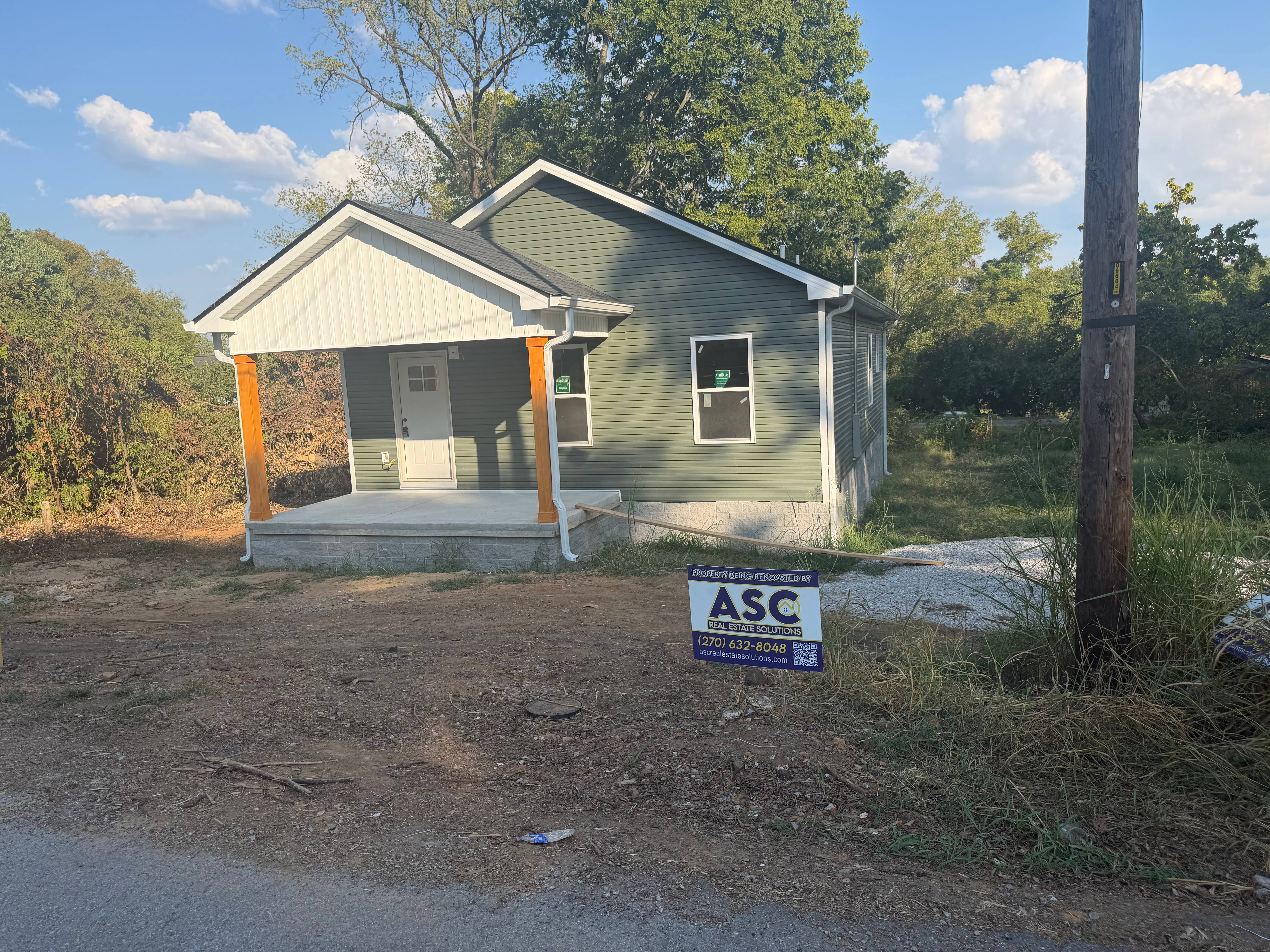
3Reply
114 views

6 Replies

Jump to latestLatest
  • Jorge RuizPro Member
    Los Angeles, CA · Member since 2025 · 20 posts · 4 votes
    12h

    @Reginald Calloway

    Is Hopkinsville, Kentucky the only market you are looking for when it comes to land? What makes Hopkinsville attractive to you- is it proximity only? Would appreciate your insight into this market.

    Looking forward to your response.

    All the best,

    Jorge

    • Reginald CallowayPro Member
      OP
      Investor · Hopkinsville, Christian County · Member since 2024 · 5 posts · 3 votes
      12h

      Hi Jorge, great question. Hopkinsville is my primary market, although I also consider opportunities in Oak Grove and other select areas around Fort Campbell.

      The biggest attraction is Fort Campbell, which supports the third-largest military population in the Army. A large percentage of its soldiers and families live off post, creating consistent demand for quality, affordable housing.

      Hopkinsville also has a strong manufacturing, distribution, and agricultural presence, providing a diversified employment base with steady, decent-paying jobs. That combination helps make the local housing market resilient and less dependent on any single industry.

      I also live and operate businesses here, so I understand the neighborhoods, pricing, utilities, permitting, contractors, and buyer demand. From a land perspective, Hopkinsville still offers affordable infill lots where we can build entry-level homes at a price local buyers can afford.

      Our current model is approximately 1,066 square feet with three bedrooms and two bathrooms. We’re targeting roughly $140,000 in total cost and an approximately $210,000 sale price.

      So proximity is part of it, but the larger opportunity is the combination of military demand, diverse local employment, affordable land, and my existing relationships and knowledge of the market.

      What types of land or development opportunities are you currently focused on?

  • 🎉 Director of Events at BiggerPockets · Denver, CO · Member since 2016 · 424 posts · 436 votes
    9h

    Looking forward to seeing you in Orlando next week at BPCON!

    BiggerPockets
  • Divin KanyamaBusiness Member
    Accountant · Seattle, WA · Member since 2025 · 168 posts · 46 votes
    8h

    Congratulations, @Reginald Calloway —taking two infill homes from groundbreaking to near completion at the same time is a meaningful step, especially while developing a repeatable system. One of the biggest lessons in scaling is that the owner can no longer be the system. Clear scopes, written change-order procedures, draw controls, inspection checkpoints, and a reliable weekly reporting rhythm become just as important as finding the next deal. I would also track estimated versus actual cost and timing by construction phase so each project improves the underwriting for the next one. Bringing your daughter to BPCON is a great way to make the journey bigger than the individual deals. Wishing you continued success as you move toward additional homes and the fourplex.

  • Ashish AcharyaBusiness Member
    CPA, CFP®, PFS · FL · Member since 2017 · 5k+ posts · 3k+ votes
    7h

    Reginald, one of the biggest lessons when going from one build to multiple projects at the same time is that small coordination mistakes start multiplying fast.

    What worked informally on one project usually needs to become a system once two or three houses are moving at the same time. Draw schedules, utility coordination, inspections, change orders, material deliveries, contractor sequencing, and contingency tracking all need to be visible in one place or the projects start competing with each other for attention and cash.

    I also like that you mentioned separating allowances from true turnkey pricing. That distinction matters because allowances can quietly make the budget look more predictable than it really is. I’d want every change order tied back to the original scope so you can see whether the overage came from owner changes, contractor misses, or genuine surprises.

    From the tax side, since you’re building homes for resale, I’d keep every project’s land, construction, financing, carrying, and selling costs tracked separately. New construction held for sale is generally part of an active business rather than a passive rental activity, so the accounting treatment is very different from a buy-and-hold property.

    And because flips/development are part of your business, I’d also evaluate whether an S-Corp makes sense once the activity becomes consistently profitable, based on profit level, payroll, reasonable compensation, and the overall structure.

    If you continue building rentals alongside homes for sale, there can also be a strong planning opportunity when the rental losses are actually usable. Depending on participation, depreciation, and entity structure, those losses may sometimes offset active real estate income. In the right fact pattern, taxable income can potentially be reduced very significantly, even to zero, but it has to be planned correctly.

    Feel free to DM me, I’d be happy to send over a few resources that might help with development accounting, S-Corp planning, and scaling multiple projects without losing visibility.

    INVESTOR FRIENDLY CPA®5241 Reviews
    TaxMD™ | AI-Powered Tax Planning
  • J CastroBusiness Member
    Lender · Florida · Member since 2025 · 665 posts · 239 votes
    2h

    Reginald, congratulations on getting both projects so close to completion. Building two homes simultaneously is a significant step, especially when you’re developing a repeatable system rather than simply completing individual projects.

    One point that really stood out to me was your emphasis on maintaining multiple exit strategies. That becomes especially important as investors move from single projects into multiple simultaneous developments. Construction timelines, draw management, changing costs, and market conditions can all impact the original business plan.

    At JCREIG Capital Funding, we work with real estate investors on construction and other investor-focused financing, and we’ve seen how important it is to structure the financing around the entire project—not just the initial acquisition and construction budget.

    Your experience with utility coordination, inspections, allowances, contractor management, and protecting the final draw are all valuable lessons for investors considering their first ground-up project.

    The transition from two homes to a fourplex should be an interesting next step. I’d be particularly interested in hearing how you approach the financing structure and exit strategy as the project size increases.

    Congratulations again, and I hope to connect with you at BPCON 2026 in Orlando. Best of luck with the final stages of both builds!

    JCREIG Capital Funding
Join the conversationCreate a free account to reply, vote on answers and follow this thread.