Investor · The Woodlands TX / Avon, CT · Member since 2009 · 6k+ posts · 10k+ votes
How to Make REAL Money in Real Estate
We all (well many of us) know, or at least suspect that CREATIVITY is the key to real estate wealth, but WHAT does that mean?
To me, it means being able to RECOGNIZE an opportunity to earn a substantial profit, understand the level of associated risk, and have the knowledge of how to execute the transaction/purchase, the operations and the transaction/sale.
Here are some actual examples
Borrower came to us for a loan, but his retail/service center couldn’t carry 13% interest loan. So instead my partner and I put up $200k (about 20% ownership value) and refinanced using our credit at 4% fixed 20 year no balloon mortgage, for which we received 60% ownership. The property cash flowed $100,000+ annual for three years and we sold out for a $700,000 + profit
Borrow came to us for a loan on their land smack in the middle of a near downtown development they’ve been the developer of for the last 12 years. But foreclosure is difficult in that state and borrower had legal issues. We purchased the existing note from the note holder with borrower paying us $350,000 UPFRONT and signing over a deed in lieu of foreclosure with an option for the borrower/seller to buy back the property over 2 years at a price giving us a 20% minimum annual return. In addition $150,000 of the borrower’s $350,000 option money did NOT apply to the purchase base price so was a non refundable option fee.
Commercial real estate broker brought us a deal for a purchase lease back of 2 auto collision shops for $3.8 million. Since we believed the property was worth less than that we declined. The broker called the lender, and told us we could purchase the note at a discount. We purchased the existing $3.3 million outstanding balance note for $1.9 million, and restructured the note with the borrower. Unfortunately, after a year the borrower defaulted. We foreclosed on the properties, sold one for $2.3 million, and are leasing the other one for $10,000 per month 3N while we await a good offer.
Anyone else have examples of how they used creativity to structure a profitable transaction?
Investor · VA · Member since 2015 · 21k+ posts · 19k+ votes
22h
I'm curious how many people buying Class D rentals in places like Detroit, Gary, Baltimore, Cleveland, Chicago, and Philadelphia are actually making "real" money. Especially if they're just buying them off of the MLS. Can you make money? Of course, and there are people that do, but many of the people I see buying well-priced properties end up losing money and not making money.
I share this because you, as well as Jay, have great and interesting deals. Those deals come from the experience you have creating deals and knowing how to make money - which is not something a weekend guru can teach you quickly
Real Estate Consultant · Summerlin, NV · Member since 2014 · 45k+ posts · 66k+ votes
23h
Mine are not quite as complicated as yours.. However I have done some participation loans.. probably 10 or so with small builders/developers.. were we take a first position at an agreed interest rate then a % of profit or sometimes refi proceeds if they buy us out.. These can spin the return wheel pretty significantly when they work as you intend.
Investor · VA · Member since 2015 · 21k+ posts · 19k+ votes
22h
I'm curious how many people buying Class D rentals in places like Detroit, Gary, Baltimore, Cleveland, Chicago, and Philadelphia are actually making "real" money. Especially if they're just buying them off of the MLS. Can you make money? Of course, and there are people that do, but many of the people I see buying well-priced properties end up losing money and not making money.
I share this because you, as well as Jay, have great and interesting deals. Those deals come from the experience you have creating deals and knowing how to make money - which is not something a weekend guru can teach you quickly
Investor · The Woodlands TX / Avon, CT · Member since 2009 · 6k+ posts · 10k+ votes
19h
Exactly right. A guru “mentorship” can not possibly provide the knowledge needed to be able to analyze, strategize, and execute as needed to “make the deal” happen.
As I continually preach, it starts with the BASICS - a working knowledge and understanding of real estate principles, real estate law, and real estate finance. No “guru” courses on these, because without the promise of easy roaches no one is gonna pay $40,000 for what they can get from reading a few text books (and understanding and practicing those principles). Further, it’s WORK, Without the “tribe”, “mentor”, “bs stories”, false promises, statistical lies, major hype, and slick marketing.
Real Estate Investor · Memphis, TN · Member since 2016 · 417 posts · 139 votes
13h
Quote from @Chris Seveney:
I'm curious how many people buying Class D rentals in places like Detroit, Gary, Baltimore, Cleveland, Chicago, and Philadelphia are actually making "real" money. Especially if they're just buying them off of the MLS. Can you make money? Of course, and there are people that do, but many of the people I see buying well-priced properties end up losing money and not making money.
I share this because you, as well as Jay, have great and interesting deals. Those deals come from the experience you have creating deals and knowing how to make money - which is not something a weekend guru can teach you quickly
I would throw Memphis in the mix also. Memphis is starting to have 1% rentals again, however when looking at the prospect of renting a property without Section 8, Some offers simply don't show well. I have come to realize, maybe some people dont "Need" as much of a return or Simply plan to do most of the work themselves.
I would be curious are properties selling at 80% or 75% LTV to satisfy DSCR Requirements.
Developer · Member since 2020 · 4k+ posts · 4k+ votes
18h
OP. Our deals are more on the physical or market side versus the financial side. But there are still strategic financial components that make these hits. I'll explain the following at a level for non-investors.
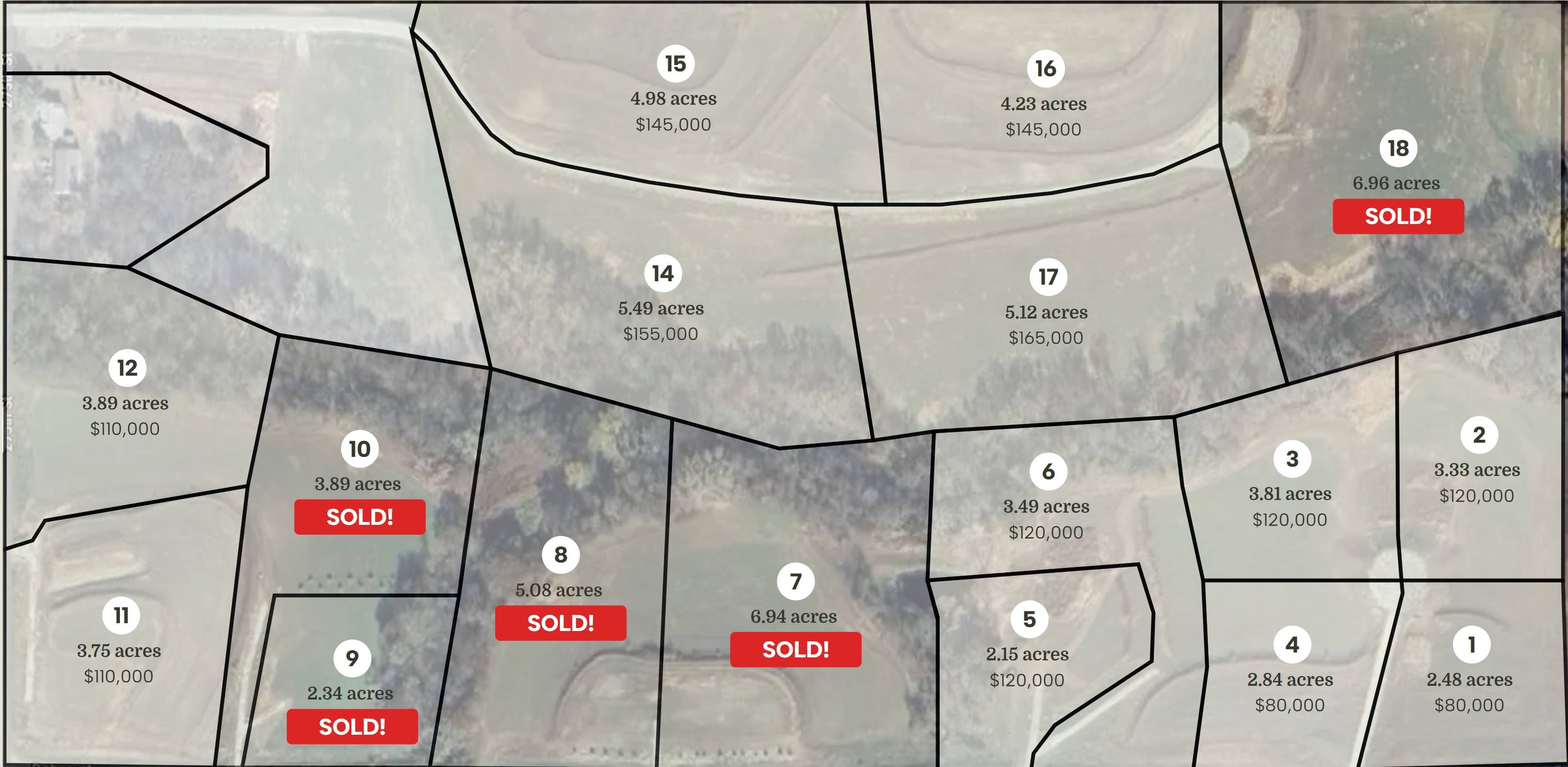
Example 1 above is our second Country Subdivision we have done. This is an example of what I call a Nasty property. Actually, clean farm ground, but:
75 acres- almost no homeowners can buy this large.
75 acres, but only 50 is farmable. There are ditches and streams with tall trees running thru the middle. Also, there are 4 entrances to get to all of the fields. Farmers hate moving equipment for small field sections. The farmers who would be interested in this "Small" of a farm are very limited and local. So not a lot of strong interest to Bid this property up. Was sold at an auction.
Traditional developers can't really bite into this. Farther from a high dollar market. 2 acre or larger sizes due to Water well/Sewer distances required. These are too large of lots for traditional concrete/Asphalt roads to be feasible, and the lot prices are not high enough to justify.
Folks- don't do this. We did cash financing. Right now, to me is one of the worst times to do a Subdivision; but we are comfortable with our Market mix. We need 18 buyers from a 1.3mm metro area to want to move here.
Size- you can do this on a 2 or 3 lot sized property. Size is irrelevant.
Time span- our first subdivision only took 11 months to sale out (Great Location). This one will take about 5 years.
Return- we would never do a deal like this unless over 100% return. This one will come in around 125%, but over the 5 years. Low risk. Projected return will increase when we sale over 50% of lots. Then we raise the Price. FOMO- fear of missing out kicks in.
Example 2:
Self Storage. We were building in a Town and then 2 of the existing locations ask if we wanted to buy. Ended up paying about 20% higher than I wanted to, based on each deals analysis. One of them we paid about 70% and the rest, noninterest loan to be paid in 5 years. The reason I was willing to pay more than the deal analyzed at. Self-storage is a weird deal. We were able to control about 60% of the market for that town. The other 40% was already 100% full. This allowed us to control the rental prices. Next town was 20 miles away. Self-Storage and majority of Commercial is valued based on CAP rates and NOI- net operating income. CAP rate is normally close to your Loan interest rate, even though they don't have anything to do with each other directly. Let's say 6%. NOI let's use a $10 per month or $120 price increase across say 250 units. 250 units x $120= $30,000. Using the full rate increase of $10, since there is no cost other than mailing notices and phone calls. $30,000 at a CAP rate of 6%= $500,000 valuation increase. So, we overpaid about $60,000 on both locations. But we took Risk out that renters would leave for another storage location, thus our $10 price increase would be firm. Two years later, another $10 per unit increase. "But" they will drive to the next town 20 miles away???? We are there already. This is our spider web approach. If you're near a large Metro area, then use our Wagon Wheel approach.
Time Span- Most Commercial loans require a 25% downpayment. Being able to generate another $500,000 valuation on day 1 and then say 2 years later.
Return- When we "develop" a new Self Storage location, we expect a 300 to 400% return COC on day one.
Risk management- "Will they Come?". As long as you know how to do your market study and understand zoning for current and any future competition the investment risk is very low.
Example 3:
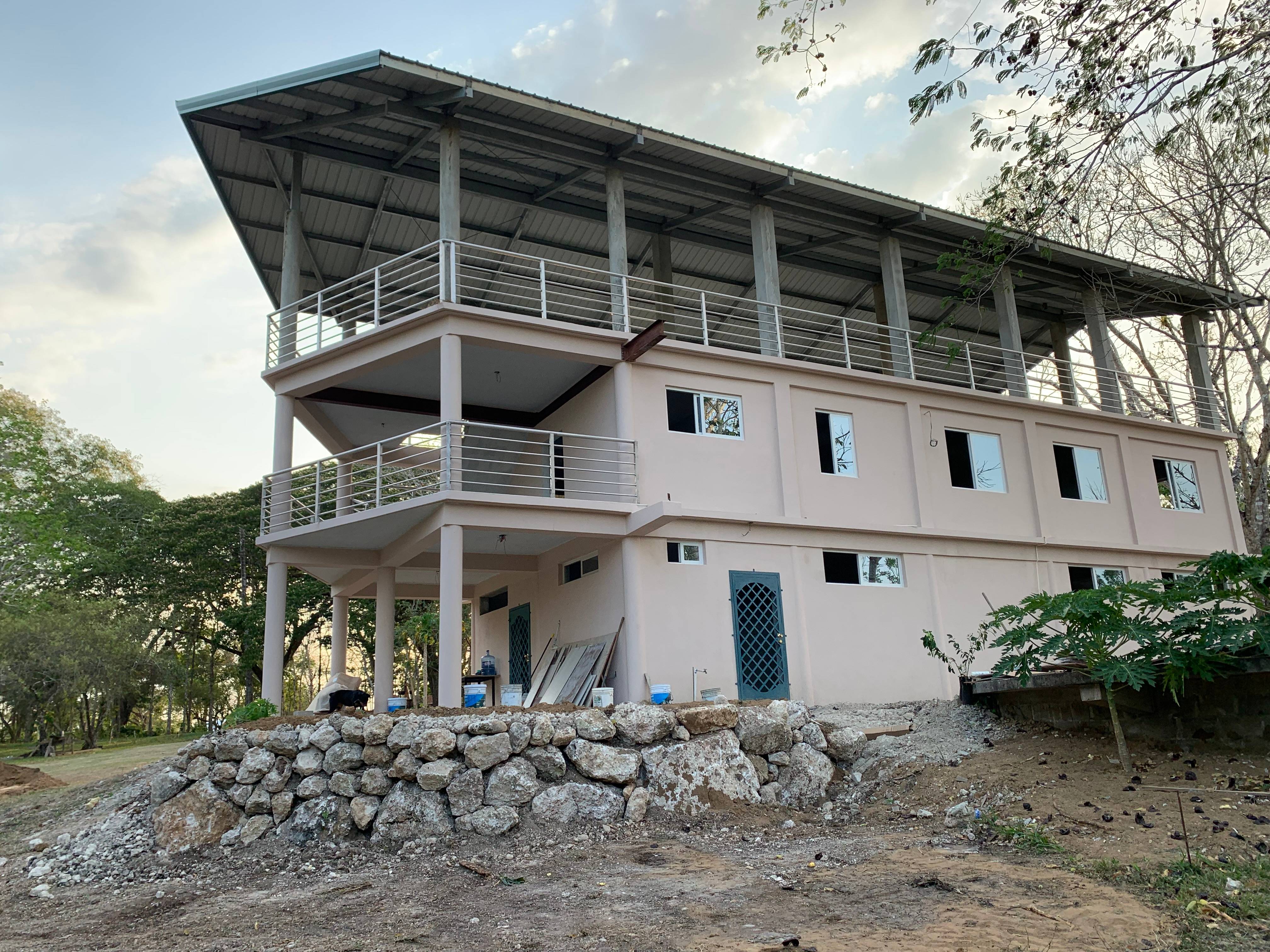
Belize Teak Plantations- this is really not a REI strategy. We are in Iowa and wanted a warmer place. Once I got down there, I can't turn my Deal brain off. Grew up in a national forest in Louisiana. Locked on to Teak. You can read my detailed Belize Teak postings. This is a poor undeveloped economy. You can still buy beautiful river, stream, mountain, hilltop views cheap. The land ownership there is strange. These are long term 15 to 30 year investments. No cash coming out.
Example 4:
Walk away. Offer your Walk Away price, give 3 day offer, 30 day DD, 30 Day financing and then Walk Away. This is not really a Real Estate type of investment. It is a strategy. All of our successions are having Great deals on 1 thru 3 only worked using this Offer approach.
Find your niche and your strength. There is an approach for everyone in every market.
The above are for more financially capable investors.
If you have ZERO downpayment, ZERO experience, ZERO risk tolerance or assessment, ZERO for everything related to REI.
Seek out USDA loans.
Or join the US Military or Coast Guard. Or go overseas with a US Civil Service position. You will be a Millionaire in 20 years doing just basic investing.
OP's title- How to Make Real Money in Real Estate. Plus, I'm not charging you $1mm, which I would if I helped you. Don't call me, it's all in posts for free on BP.,
Real Estate Consultant · Summerlin, NV · Member since 2014 · 45k+ posts · 66k+ votes
13h
Henry.. on your country subdivisions what is the zoning. Can you bust those up by Right or do you need zone change or any other government approvals beside just the obvious survey roads perc test wells . how is power handled is it brought in overhead or underground.. And can it be extended as you build out. How about storm drainage how do you handle the water ??
Accountant · Seattle, WA · Member since 2025 · 391 posts · 153 votes
15h
@Don Konipol These are great examples of creativity being more than simply finding an unusual financing structure. In each case, the opportunity came from understanding the borrower’s problem, the property’s value, and the available paths to protect the downside while still creating a meaningful return.
That last part is easy to overlook. Creative deals can produce impressive results, but they often involve more moving pieces—title, priority of liens, borrower incentives, foreclosure timelines, environmental exposure, operating risk, and a realistic exit if the original plan fails. The structure only works when the economics remain acceptable under a less favorable outcome.
The strongest form of creativity may be finding several ways to win without depending on everything going perfectly. That takes experience, careful underwriting, the right legal and tax guidance, and enough patience to walk away when the margin is not there. It would be interesting to hear more examples where the original strategy changed but the structure still protected the investment.
Investor · The Woodlands TX / Avon, CT · Member since 2009 · 6k+ posts · 10k+ votes
4h
Here’s one from many years ago, when I was more aggressive about building wealth…..
Through a number of transactions, I found myself owning a vacant city lot zoned for commercial/retail use, appraised at about $250k. There was no financing available for this property, and as a result would be impossible to sell at anything close to appraised value.
I purchased a 4 unit residential property that had been on the market forever. I paid $225,000 with $32,500 down and seller finance for the balance, about $200,000 (cover closing costs). The note was at 0% interest, amortized over 20 years ($833 per month) and assumable as well as having a “substitution of collateral” clause.
After closing I "substituted" the city lot for the 4unit as collateral, thereby freeing up the 4 unit to either mortgage or sell. After about 6 months of ownership I sold the 4 unit for $230,000 cash to me. The result was (so far) that I was out $32,500 + $833 per month for 6 months or about $37500. However I collected about $8500 net cash flow after operating expenses on the 4 unit , so net cash out $29,000. This is subtracted from the $230,000 I received from selling the 4 unit, so I put about $201,000 "in my pocket. However, I owed $195,000 remaining balance on the city lot. Net result was I was able to "finance" the city lot at about 80% LTV at 0 % interest!
BUT, I wasn’t through yet. I spend about $7 or 8 k to put a pre fab type building (office) on the lot and another $5k putting a low cable like fence. A friend of mine was in the used car business and wanted a second location for his son. I leased the location to him with a $5k deposit, no rent for 3 months, and thereafter rent of $1,000 per month. In addition I earned about 40% interest when I financed the purchase of some vehicles for him. While this rental broke even cash flow wise, my debt on the property was being reduced by $10k per year. Over the years I had about three or four different car lot tenants with maybe a total of 6 or 7 months where I didn’t receive rent. I owned the property 14+ years, paid the loan balance down to about $50k, and sold the lot for $370,000 to a developer as part of an accumulation package.
To give credit where due, I need to reveal that the idea for this transaction, as well as specific guidance, was provided to me by Jimmy Napier. I told Jimmy that I had a lot I didn’t know what to do with, and his creativity and conceptual ability can be observed from this transaction.
Real Estate Investor · Memphis, TN · Member since 2016 · 417 posts · 139 votes
14h
Quote from @Don Konipol:
How to Make REAL Money in Real Estate
We all (well many of us) know, or at least suspect that CREATIVITY is the key to real estate wealth, but WHAT does that mean?
To me, it means being able to RECOGNIZE an opportunity to earn a substantial profit, understand the level of associated risk, and have the knowledge of how to execute the transaction/purchase, the operations and the transaction/sale.
Here are some actual examples
Borrower came to us for a loan, but his retail/service center couldn’t carry 13% interest loan. So instead my partner and I put up $200k (about 20% ownership value) and refinanced using our credit at 4% fixed 20 year no balloon mortgage, for which we received 60% ownership. The property cash flowed $100,000+ annual for three years and we sold out for a $700,000 + profit
Borrow came to us for a loan on their land smack in the middle of a near downtown development they’ve been the developer of for the last 12 years. But foreclosure is difficult in that state and borrower had legal issues. We purchased the existing note from the note holder with borrower paying us $350,000 UPFRONT and signing over a deed in lieu of foreclosure with an option for the borrower/seller to buy back the property over 2 years at a price giving us a 20% minimum annual return. In addition $150,000 of the borrower’s $350,000 option money did NOT apply to the purchase base price so was a non refundable option fee.
Commercial real estate broker brought us a deal for a purchase lease back of 2 auto collision shops for $3.8 million. Since we believed the property was worth less than that we declined. The broker called the lender, and told us we could purchase the note at a discount. We purchased the existing $3.3 million outstanding balance note for $1.9 million, and restructured the note with the borrower. Unfortunately, after a year the borrower defaulted. We foreclosed on the properties, sold one for $2.3 million, and are leasing the other one for $10,000 per month 3N while we await a good offer.
Anyone else have examples of how they used creativity to structure a profitable transaction?
Deals like these are not created within the "system" that Guru's offer. These deals are created on the need of on party and the ability of another party to realize the most mutually beneficial structure.
How do you approach negotiations to end up in the driver seat in such a way?
Real Estate Consultant · Summerlin, NV · Member since 2014 · 45k+ posts · 66k+ votes
13h
not answering for Don.. however for me these deals are just a process. IE getting my RE license at 18 and my brokers at 20 being in the game. You meet all sorts of folks.. once chance meeting is all it can take sometimes.. Then for lending I got into HML in my early 30s.. and development along the way.. Then Post the GFC I became an accidental home builder/developer IE builders i made loans to failed and I had to take the projects over
Investor · The Woodlands TX / Avon, CT · Member since 2009 · 6k+ posts · 10k+ votes
13h
First, I look at a LOT of deals - probably about 500 + per year.
Second, I have a good real estate education - college courses in real estate principles, real estate finance and real estate law; studied for brokers licenses in 3 states; successful completion of CCIM commercial courses; read about 100 real estate books
Third, 50 years experience as real estate investor, lender, broker, syndicator and fund manager.
Comes from a lifetime of learning and doing. Plus, I’m a natural “deal maker”; I’m happiest putting deals together, especially creative deals.
Investor · VA · Member since 2015 · 21k+ posts · 19k+ votes
12h
Recently bought a deal where the lender foreclosed and did not want to have to deal with the eviction because of a problem tenant, so they sold the property to us for a 25% discount, which was approximately $100,000 discount. The property actually consisted of over 7 acres. After buying it, we subdivided the property from one lot into four lots and are now selling each one of those lots for $50,000 to $70,000 apiece. The cost of the subdivision was about $7,500. I would consider that a nice ROI.
I bought a house at the tax sale last Tuesday that is worth north of $550,000 and I only paid $66,000 for it. Not very creative but it might turn out to be very profitable. Time will tell....