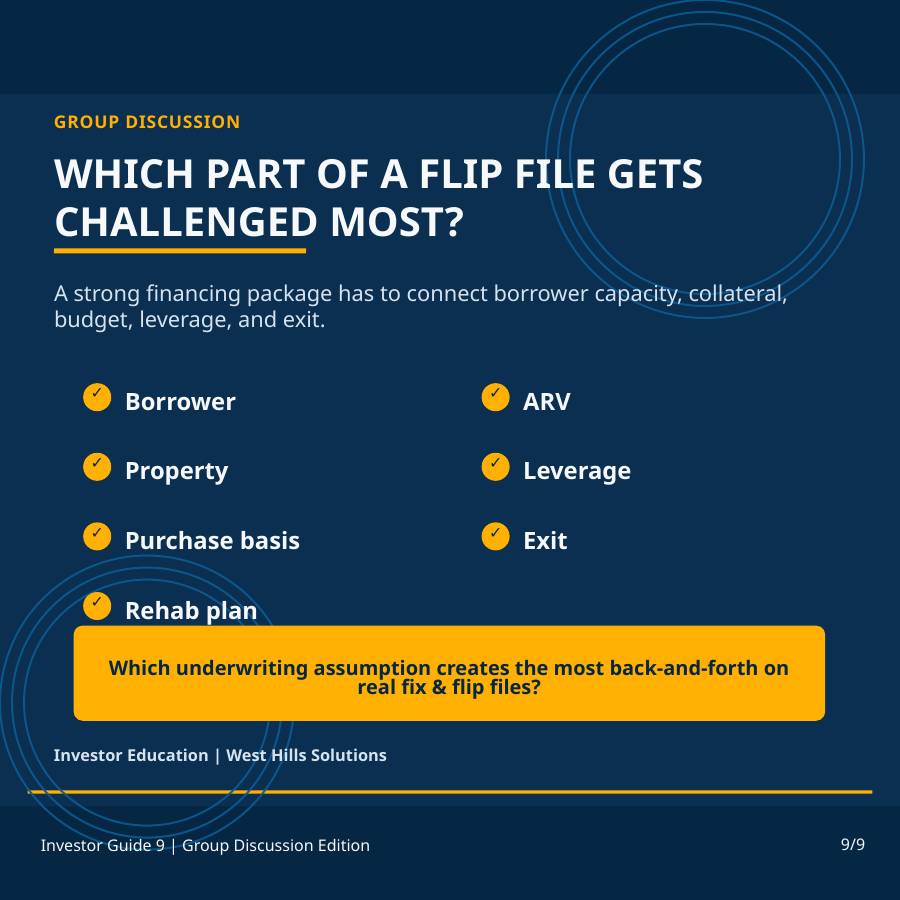
When you submit a Fix/Flip to a lender which part of the deal gets the most scrutiny

When you submit a Fix/Flip to a lender which part of the deal gets the most scrutiny

Charles WalkerBusiness Member
Real Estate Consultant · Member since 2025 · 52 posts · 2 votes

I think it is useful to view underwriting as a connected story rather than a checklist of isolated ratios.
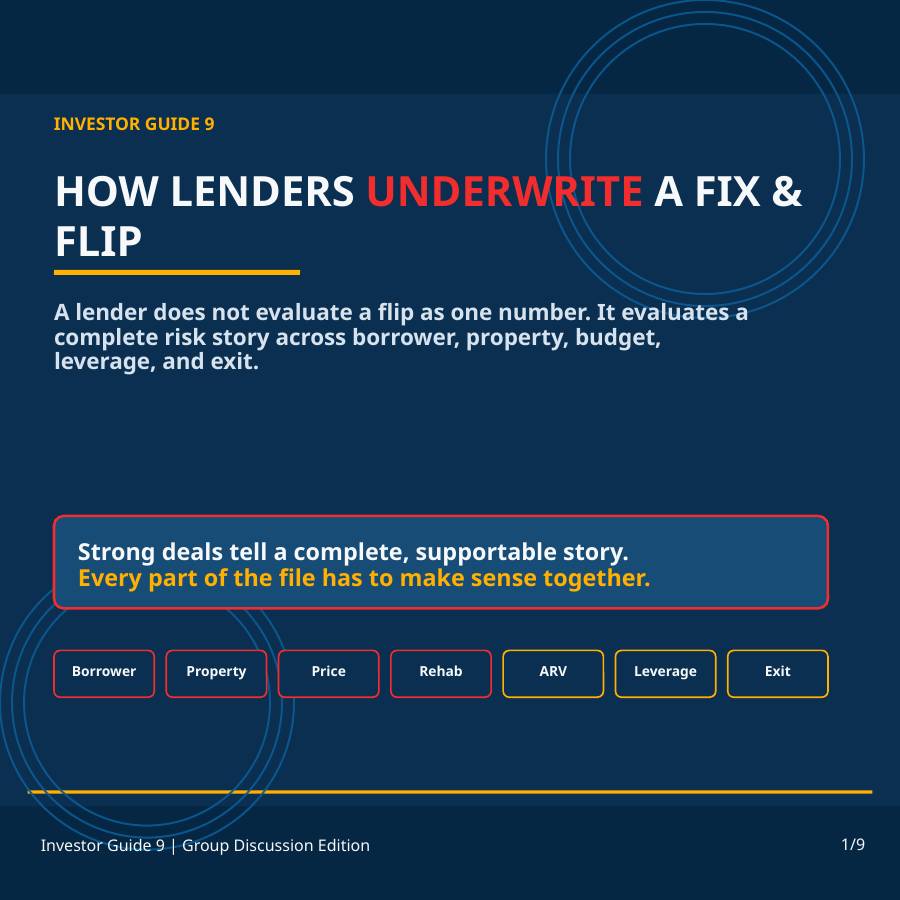
A lender may be trying to answer questions such as:

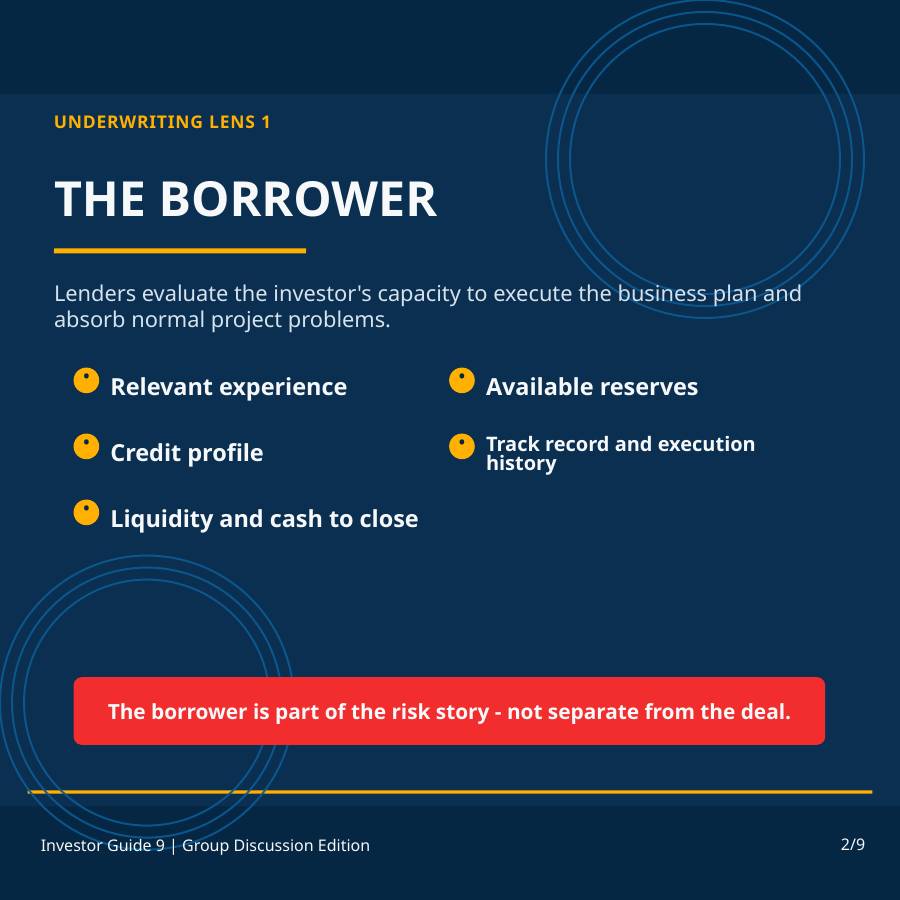
·         Borrower: Does the investor have the experience, liquidity, reserves, credit profile, and execution history to complete the plan?

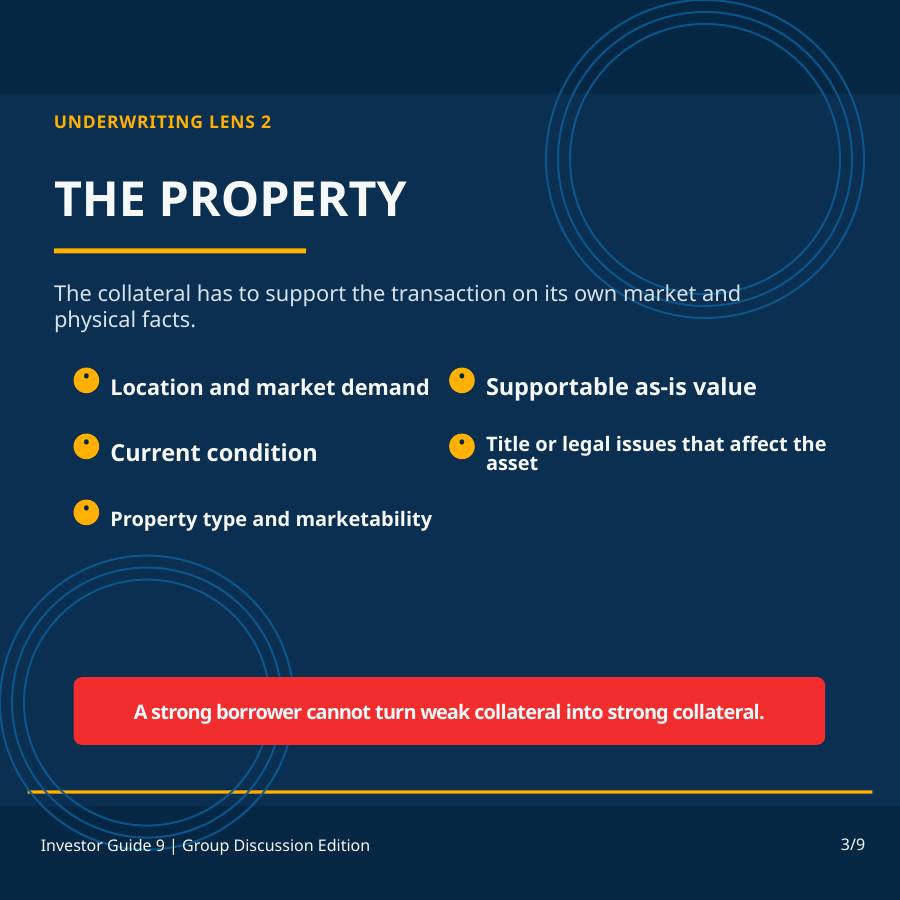
·         Property: Does the location, condition, property type, marketability, and as-is value support the transaction?

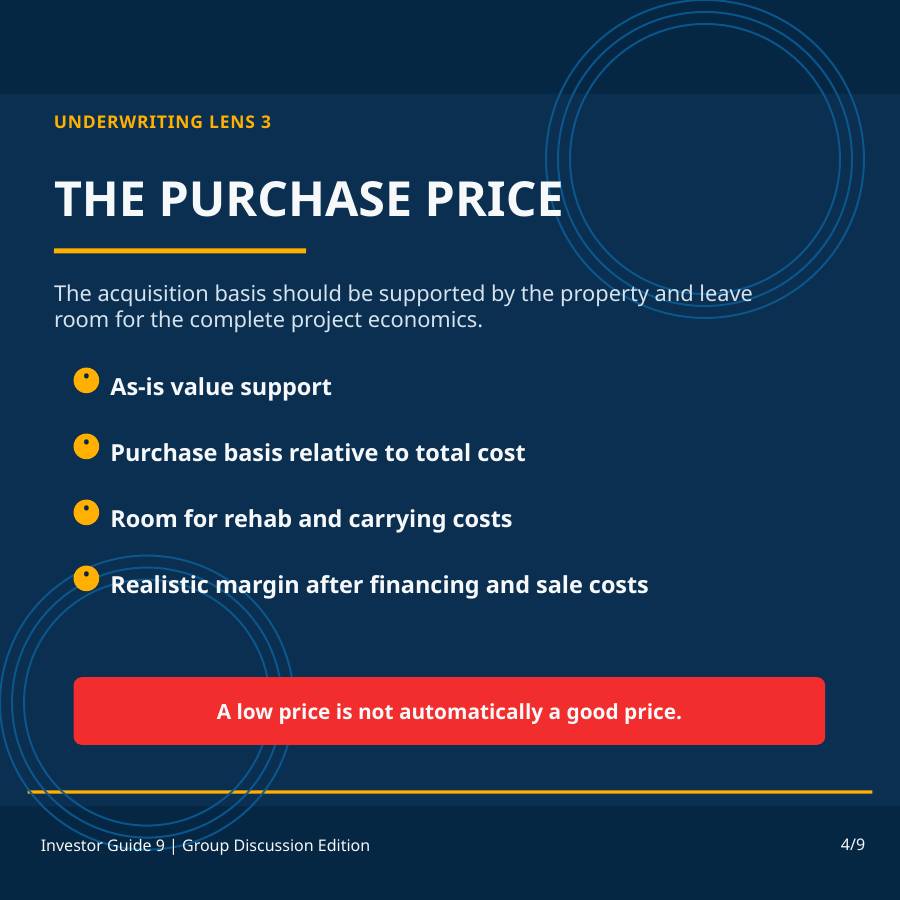
·         Purchase price: Is the acquisition basis reasonable relative to the market and the planned improvements?

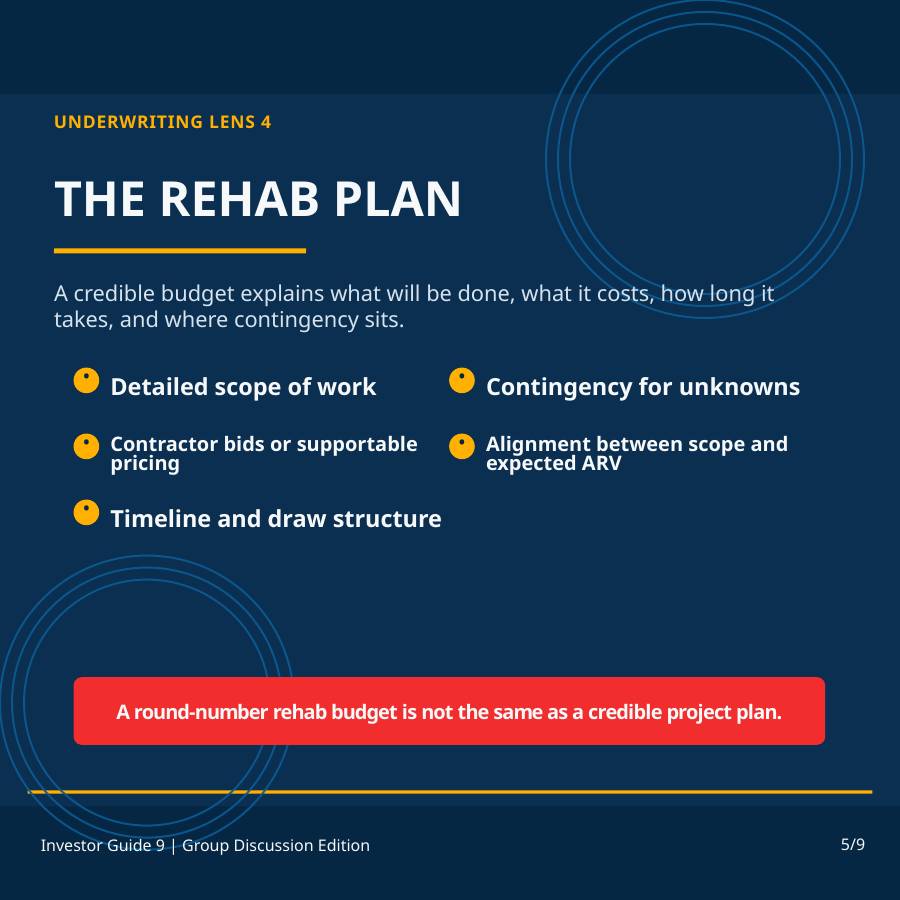
·         Rehab: Is the scope complete, are contractor numbers supportable, and is there enough time and contingency?

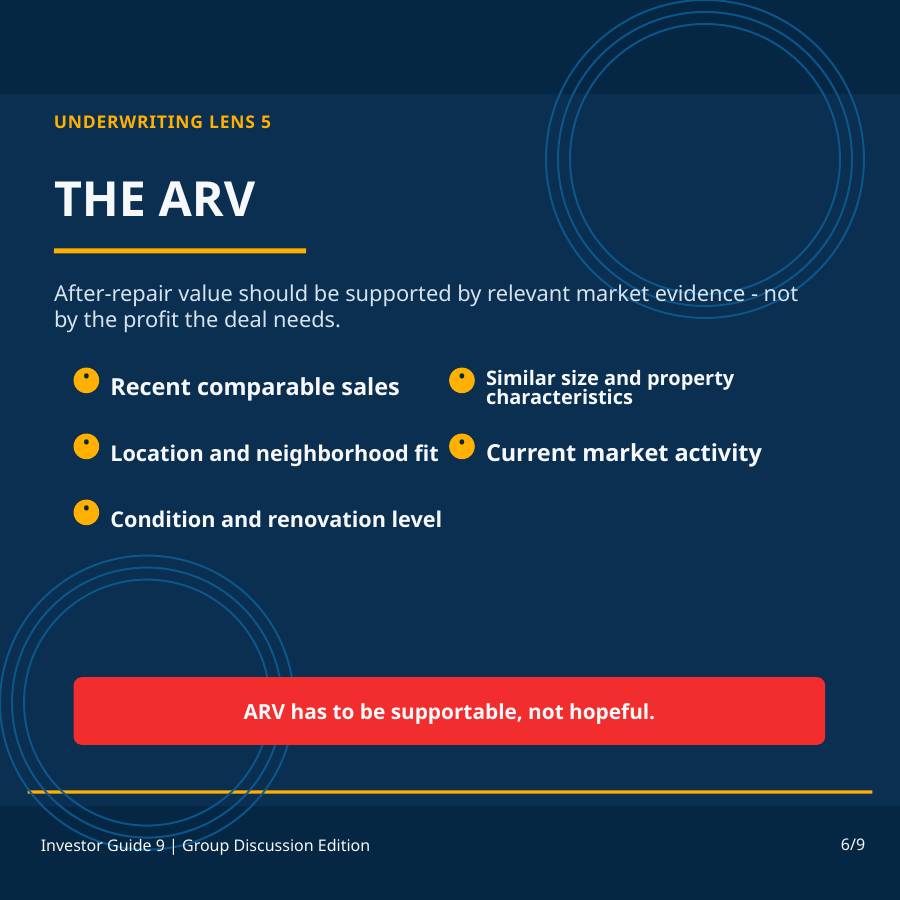
· ARV: Do relevant comparable sales support the projected finished value?

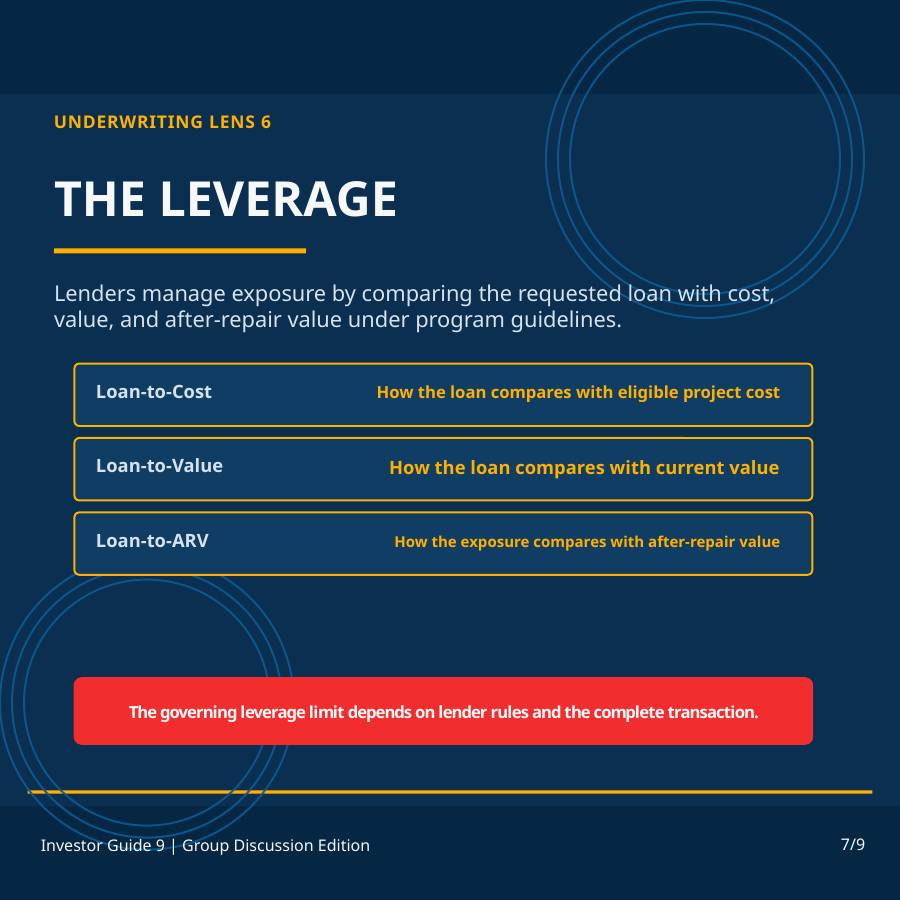
·         Leverage: How much debt is being requested relative to cost and projected value? Exact LTC and LTARV calculations and limits vary by lender and program.

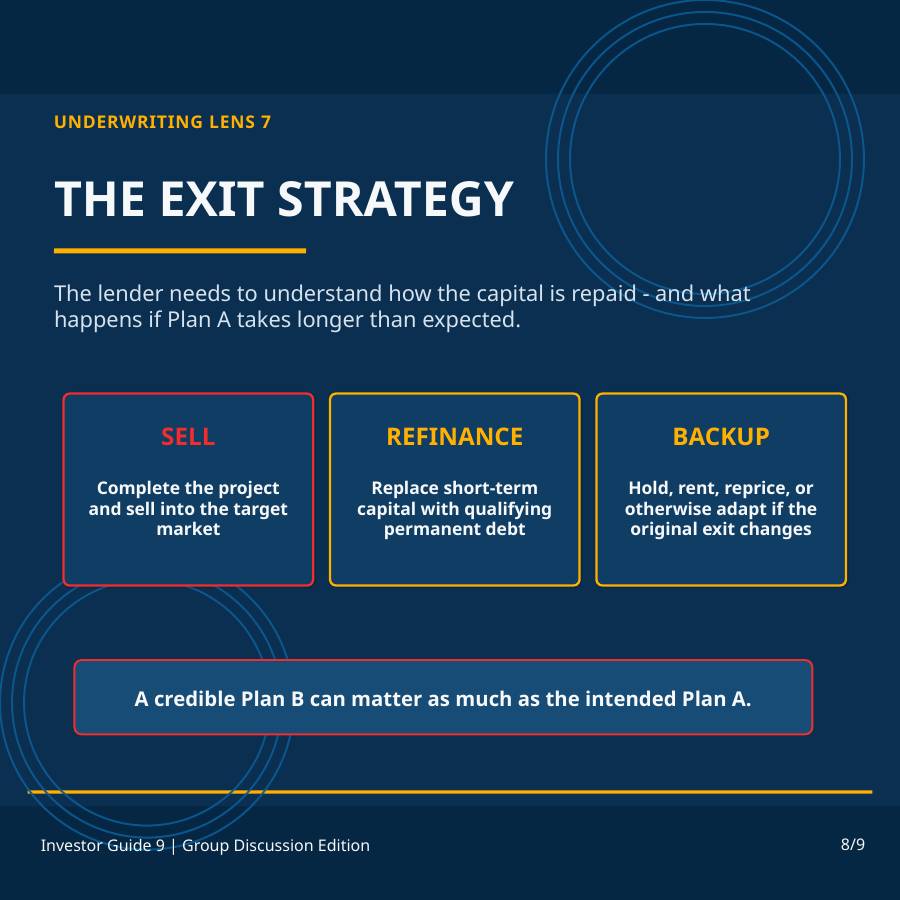
·         Exit: What is the primary repayment plan, and what happens if the rehab, sale, or refinance takes longer than expected?

For the property-selection side, our earlier Investor Guide, "Choosing a Fix & Flip Property," covers location, condition, marketability, and value considerations. For the rehab side, "Proven Strategies to Maximize Fix & Flip Returns" provides a companion look at planning, contractors, budgeting, and execution.

For investors who have funded several flips: which underwriting issue most often changes the original loan structure - borrower liquidity, rehab scope, ARV, leverage, or exit strategy?

1Reply
888 views

14 Replies

Jump to latestLatest
  • Matthew MorrowBusiness Member
    Investor · PA - NY - NJ · Member since 2019 · 976 posts · 357 votes
    4w

    @Charles Walker from the investor side, the ARV is where I've seen the most pushback lately. Appraisals are coming in light across the board right now, so a lender has every reason to lean on the comps behind the number. Behind that, a rehab scope that's detailed and realistic tends to answer a lot of the other questions before they get asked. Interested to hear what the lenders here say.

    CORE Team | Realty ONE Group Supreme549 Reviews
    • Lender · Miami, FL · Member since 2026 · 44 posts · 15 votes
      3w

      Yes, as a lender a big part is the ARV. Which is different in every market. As a lender, I'm targeting luxury or expensive zip codes

  • Charles WalkerBusiness Member
    OP
    Real Estate Consultant · Member since 2025 · 52 posts · 2 votes
    4w

    Matthew, the comps behind the ARV deserve close attention. I would be careful about applying "across the board" to every market, but your point raises a useful question: does the projected value reflect recent comparable sales and the condition the renovation will actually deliver?

    The scope and ARV also need to support each other. If the valuation assumes an updated kitchen, another bathroom, or added living space, the budget and timeline need to account for that work.

    I’d welcome lenders’ perspectives on where they are seeing the largest gaps between submitted ARVs and supported values.

  • Matthew MorrowBusiness Member
    Investor · PA - NY - NJ · Member since 2019 · 976 posts · 357 votes
    4w

    @Charles Walker fair point. I'm speaking to what we're seeing in our part of PA, not every market in the country. Agree the scope and the ARV have to tell the same story. If the comps are fully renovated and the scope is paint and carpet, that gap is exactly where a lender is going to push. Interested to hear what the lenders say.

    CORE Team | Realty ONE Group Supreme549 Reviews
  • James JonesPro Member
    Investor · Collierville, TN 38017 · Member since 2017 · 1k+ posts · 774 votes
    4w

    Charles, in my experience it is the ARV, and it is not close. The borrower and the purchase price are facts. The ARV is the one number in the file that is an opinion, so it is the one that gets picked apart. I BRRRR single-family in Memphis — buy under $100K, ARV $180K to $265K — and I comp off sold prices only: same ZIP, similar beds, baths and square footage, last six months when I can get it. When my ARV is built that way, the leverage conversation gets easy, because a DSCR refi at 70 to 80 percent LTV against a real number is boring. Deals get re-cut when the ARV needs list prices to work.

  • Divin KanyamaBusiness Member
    Accountant · Seattle, WA · Member since 2025 · 704 posts · 302 votes
    4w

    @Charles Walker I agree that underwriting is a connected story. In my experience, the greatest scrutiny usually falls on the assumptions that determine whether the lender gets repaid: ARV, rehab scope, borrower liquidity, and exit.

    ARV and scope often change the structure first because they drive leverage and required cash. If the comps are weak, the budget is thin, or contingency is inadequate, proceeds usually come down. Liquidity becomes equally important when the borrower must fund overruns, carry costs, or delayed draws.

    The strongest file is internally consistent: the purchase basis leaves room for the work, the scope supports the ARV, the timeline matches the project, and the borrower can survive a slower or more expensive execution. A credible backup exit matters too—especially when the primary plan depends on a quick sale or aggressive refinance.

  • Nicholas FloydBusiness Member
    NY · Member since 2026 · 387 posts · 117 votes
    3w

    Charles, great breakdown. From a funding perspective, I’d say borrower liquidity and available reserves are two of the biggest challenges, especially for investors trying to take on multiple projects at once.

    A deal can have a solid ARV, realistic rehab budget, and a good exit strategy, but if the investor doesn't have enough accessible capital to handle unexpected expenses or delays, that can create problems.

    That's one reason I help real estate investors explore alternative business funding options, including 0% APR business credit cards, business lines of credit, business loans, and revenue-based funding. Depending on eligibility, these can provide additional working capital for permitted project expenses without relying entirely on property-backed financing.

    I’m curious, Charles, when you’re reviewing fix-and-flip deals, do you find that borrower liquidity causes more issues than the actual numbers on the property?

    • Charles WalkerBusiness Member
      OP
      Real Estate Consultant · Member since 2025 · 52 posts · 2 votes
      2w

      Nicholas, I would not rank liquidity above the property numbers across the board. I look at both: whether the deal works and whether the borrower has enough accessible capital to carry it through delays or overruns.

      Multiple projects make that second question especially important. The same cash cannot serve as the contingency reserve for three different rehabs.

      Additional financing deserves its own analysis, too. I would want to understand the payments, fees, repayment timing, and effect on the borrower’s overall obligations. Borrowed working capital can help cover a need, but it also creates another obligation the project or business must support.

  • Developer · Riga, Latvia | Switzerland | Florida · Member since 2026 · 195 posts · 41 votes
    3w

    Hi Charles, thanks for laying it out as one connected story, that's a really helpful way to look at it!

    From the renovation side, the rehab line is where a deal story most often falls apart, because it's usually the least documented part: a contractor lump sum plus a contingency percentage. What made our budgets easy for clients to check was pricing scope as quantity x unit rate from photos of the current condition, so anyone reviewing it can see what's being replaced and why it costs that. The same photos later become the baseline for draw inspections.

    Curious to hear from the lenders here: does a line-item scope with photos actually speed up underwriting, or do you re-scope everything with your own inspector anyway? Have a great weekend, everyone!

    • Charles WalkerBusiness Member
      OP
      Real Estate Consultant · Member since 2025 · 52 posts · 2 votes
      2w

      Vladimirs, quantity × unit rate makes the budget easier to examine because the reviewer can see the assumptions behind each cost. Tying those items to current-condition photos also helps connect the proposed work to the property.

      I would still want allowances identified for work that photos cannot establish, such as concealed damage or repairs requiring further inspection.

      From my brokering perspective, that documentation helps me present a clearer funding request. Whether it speeds underwriting or requires an independent scope review is something I would confirm with the particular lender. I’d welcome lenders’ input on how they use it.

    • Developer · Riga, Latvia | Switzerland | Florida · Member since 2026 · 195 posts · 41 votes
      22h

      @Charles Walker , sorry for the late reply, no notification came through and I missed your post. Thank you. Agreed on allowances: what photos cannot show gets its own line with a range, so the lender sees it before the walls open, not after.

  • Lender · Irvine, CA · Member since 2026 · 38 posts · 16 votes
    3w

    From the lender side, the thing that changes a loan's structure most often is the rehab budget measured against the ARV, not the borrower. A thin budget on a heavy scope tells me either the investor doesn't know the cost or the ARV is stretched, and either way the loan gets resized.

    Second is liquidity. Plenty of first-timers qualify on experience exceptions, but not if they'd be out of cash after closing with no cushion for overruns.

    The fastest approvals I see come with a line-item scope, contractor bids, and 3 sold comps that actually match the finished product.

    Full disclosure, I'm a hard money lender, so this is my day job.

  • Lender · Fort Lauderdale, FL · Member since 2020 · 58 posts · 19 votes
    3w

    From my experience on the lending side, the part that gets picked apart the most is usually the ARV.

    Not because lenders want to be difficult, but because ARV drives so many other parts of the deal. If the value comes in lower than expected, leverage changes, cash-to-close changes, and sometimes the entire profit margin looks different.

    When I review a deal, I'm asking:

    • Are the comps realistic?

    • Are they recent and truly comparable?

    • Does the renovation plan support the projected value?

    • If the appraisal comes in lower, does the deal still work?

    Right behind that is the rehab budget.

    A detailed scope builds confidence. A borrower who can clearly explain where the money is going tends to get a much smoother review than someone who just says, "We're putting $50k into it."

    Honestly, what gets the least scrutiny is often the deal itself and the most scrutiny is whether the numbers tell a consistent story.

    If you're saying:

    • Purchase price: $200k

    • Rehab: $60k

    • ARV: $375k

    I'm going to want to understand exactly how you arrived at those figures.

    The strongest submissions I've seen are usually pretty boring. The borrower has realistic comps, a detailed rehab scope, enough liquidity to handle surprises, and an exit strategy that still works if things don't go perfectly.

    Those are the files that tend to move the fastest because there are fewer questions to answer along the way.

  • Charles WalkerBusiness Member
    OP
    Real Estate Consultant · Member since 2025 · 52 posts · 2 votes
    2w

    Juan,

    Your point about the numbers telling a consistent story gets to the heart of it. The comps need to support the finished property described in the rehab scope, and the budget needs to support delivering that property.

    I would add that getting a loan approved and having a profitable project are two separate hurdles. If a lower ARV requires more borrower cash, that additional cash doesn't restore the lost resale value. The investor still needs to reassess the margin after financing, holding, and selling costs.

    “Boring” is a good description of a well-prepared submission. Clear assumptions and documented numbers give everyone something solid to evaluate.

Join the conversationCreate a free account to reply, vote on answers and follow this thread.