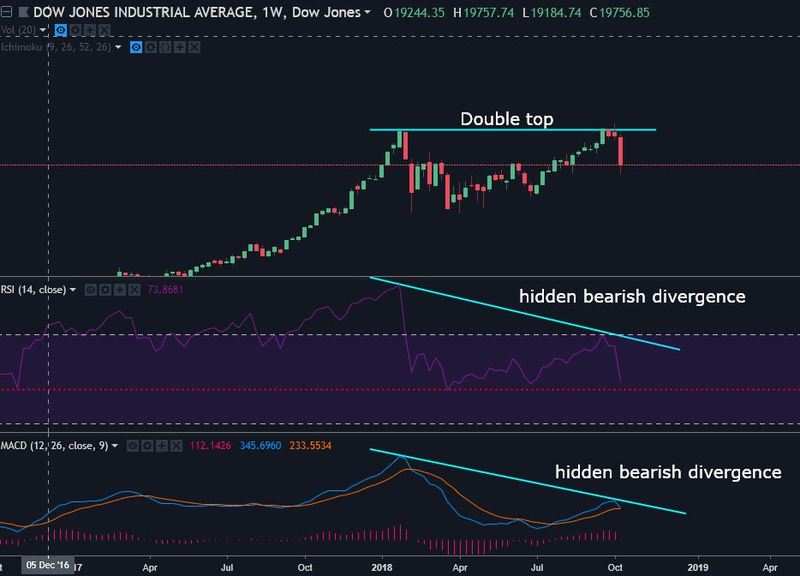
I am so glad I paid the tax and liquidated my Slave job TSP (government version of 401K with a happy name). I am so happy I walked off my W-2 Star bucks drinking cubicle back stabbing job. If I had not I would be so depressed right now. I would have to decide between "retiring" (ramen noodle style) being pushed up to mid 70's, or taking the purple pill and calling it a good game.
Now I am prepared for this move. Was warned 2 weeks ago, and even now am buying the fear. Come on Snake Eyes! show me the clearance rack.
I'm not going to give away all of my secrets, but VTASX is my favorite.
isn't it a total stock market? It should return approximately the same as sp 500, or I am missing something?
It more closely aligns with the Wiltshire 5000. Since Nov 2000 it’s price went from $30.56 to $69.34 which is not even a 5% annual growth. As I indicated, the first decade of this century was not good for stock return so the return is not bad versus its comparable index (the Wiltshire 5000) but it is far worse than the 15% growth that Marcus alluded to. It is also far worse than the life of S&P return (basically 10% annual).
@Dan H. not sure why somebody would only invest in the S&P 500 and only earn 10% because my index funds through Vanguard have average 15% for the past 18 years.
The S&P 10% is lifetime return (since 1928) and includes the Great Depression and was used just as a reference. Certain indexes have done better. Some money managers have done better. However there are indexes and money managers who have done worse.
If you have done 15% for the last 18 years you have done great as the first decade of this century was not a good decade for the S&P and most other indexes.
I was not advocating for the S&P. I was using it as a reference. I could have used the Dow or Wilshire or any other index as a reference. I chose the S&P because it has way more stocks than the Dow and greater name recognition than the Wilshire and serves the point as being passive and for RE investing to make sense to me the RE must return significantly greater return than a passive option.
Just remember this, it's very difficult for me to wake up, check my Vanguard account to know that my dollar cost averaging just put more money into my index funds and then close the lid on my computer and go to work. I could have spent my income on fancy items from Amazon, but I chose to spend it on investments. A lot of effort and time went into my Roth IRA's, Yawn!!!! And without my interaction my dividends are reinvested without a breath. Roth IRA's are so tiring. LOL
RE, is the complete opposite. You can background check all you want, but once you add the human element, there are so many variables. The background check I have doesn't include hidden personality traits that are hard to detect that can cause time and money to deal with. Most RE investors don't include their time and pay themselves for this expense. It drastically cuts into the profits margins. No one calls me when the markets drops. I check my vm last night and nothing, weird.
If you are claiming investing in a mutual fund is more passive than investing in RE than that is one item we agree on. However I would not invest in RE unless it projected short-term return of at least 4x the return of your VTASX fund annual return for this century and fortunately all of my current RE investments easily outperformed my forecast.
RE investing is less passive than investing in a mutual fund but the potential returns are much greater. About half my RE purchases are infinite ROI.
You're obviously doing amazing, so I don't want to change your mind. Keep doing what your doing and I'll just keep rolling with my 401k's, roth ira's and RE. I'm not going to try to convince you, when that is apparent it isn't possible.
As a realtor I just dwell on real estate. Have you seen the prices of Z and Rdfn? Wall Street did not feel flipping homes is the business. Not sure how much cash other company has left to burn? They surely put a lot of billboards along major freeways advertise for almost free listing and will pay for repair and staging at discount prices. So discounted real estate company will survive and be profitable to its share holders?
Here in Silicon Valley, it is RSU options most techies use to buy first home. I never had luck if one does not have 25% cash. Now, the local stocks tanked 10% in two days. I think it will make first time home buying very difficult.... Two months ago I saw most homes were sold first weekend in San Mateo, CA similar ones is still on the market. The asking price is fair....
Comment on technology stocks. This is an extended Dot.com craze. Many companies really do not have a product thinking sending messages and photos will thrive. Is another online company going to get investors to put more money into?
I'm not going to give away all of my secrets, but VTASX is my favorite.
isn't it a total stock market? It should return approximately the same as sp 500, or I am missing something?
It more closely aligns with the Wiltshire 5000. Since Nov 2000 it’s price went from $30.56 to $69.34 which is not even a 5% annual growth. As I indicated, the first decade of this century was not good for stock return so the return is not bad versus its comparable index (the Wiltshire 5000) but it is far worse than the 15% growth that Marcus alluded to. It is also far worse than the life of S&P return (basically 10% annual).
Dan has no clue what he is talking about and I can prove it by posting my performance %. It’s a sad day for re I vestors such as dan.
Hey, any of you folks that did a lot of BRRRR and are sitting on a few mortgages, is there something that you've done to protect yourselves if the housing market takes a downturn following the stock market? I've done the buy, rehab and rent. Thinking of starting the refinance and repeat but it also seems nice to have a few paid-for houses. I understand the concept of the velocity of money, but I also understand that increased debt means increased risk. I like talking with people that think about mitigation to risk and have limits in place to protect themselves. Anybody have a rule they use?
I've never been more excited to lose money in the Stock Market.
Just means I can buy stocks at discounted prices. The S&P always bounces back, and historically has returned about 8%-10%. Don't think I'm advocating for stocks, but I invest in both stock and RE. Now to wait for the housing crash :)
Wait, what? The stock market absolutely does do that for people, in the form of dividends. Many companies even increase dividends in a downturn to keep investors from selling. All you have to do is hold, ignore the rise and fall of the stock price, and collect dividends (just like shrinking equity doesn't phase you as long as the $500 rent check clears). It's no different in stocks or RE. Hold, collect rent/dividends, and you're fine. For example LMT, WFC, WMT, WU, XOM, AAPL, BLK, CA all actually increased their dividend yield during the last crash. Those invested in solid companies with plenty of cash to weather the storm collect dividends and buy more stocks at a discount. Just like RE investors holding solid properties still collect rent (although rents may go down) and if they're brave, go discount shopping. That is if they aren't suffering evictions, foreclosures, vacancies, ARM's, loans being called, the one mill in town closing, etc.
Not too mention all the short sellers who made a fortune playing the swings this week...
RE is awesome but let's not be ignorant about how the stock market works and spread bad information just because we like RE.
(Sorry for the double post, my comment got lumped in with the quote, maybe a mod can clean this up for me?) @Mindy Jensen
@Mark Nickoson. If the strategy is buy and hold then fluctuations in RE values are less impactful. If you have commercial ARM loans you need to consider interest rate risk when the payment resets. Locking in for as long as possible mitigates that risk. In general rents don’t fluctuate as much as RE values. If your property is well maintained and in a decent area rents and vacancy shouldn’t be impacted drastically in a downturn. So a lot of the risk is addressed when you determine your strategy and purchase.
Disclaimer: While I’m an attorney licensed to practice in PA, I’m not your attorney. What I wrote above does not create an attorney/client relationship between us. I wrote the above for informational purposes. Do not rely on it for legal advice. Always consult with your attorney before you rely on the above information.