Is Dave Ramsey correct? Anyone still around after 10 years?
Member since 2020 · 22 posts · 82 votes
I've been on the Dave Ramsey bandwagon for the last several years. His advice definitely worked to get us out of debt and allow us to save a pile of cash. But as I look to get more into real estate investing, there's basically 2 schools of thought; use debt and finance everything or pay cash. While I feel I'd be fairly comfortable financing (assuming the numbers work), one thing from Ramsey is still ringing in my head. He says there are no real estate investors that borrow money to do so that are still around 10 years after they begin their journey. My plan is to do this for at least the next 10 years, so the main question is this: is dave ramsey correct? How many investors on here would disagree with his assumption and if so, why? Open to all views. Thanks in advance for your input.
See the agents BiggerPockets members work with in Ramsey, MN.
See agentsThat's a completely untrue statement. I know plenty of investors that have been in this business several decades, and the vast majority use debt. I've been investing since 2005 and always use a mortgage. The ability to obtain very attractive financing is one of the main benefits of real estate investing. If you are leveraged to the hilt and have no cash reserves, that's another story.
There is a 3rd school of thought...modest/prudent leverage. Most investors are not max debt or no debt...they fall somewhere in between.
This is the answer imo. Billionaire Howard Marks says there are bold investors and there are old investors, but there are no old-bold investors.
Not being overly levered, having proper reserves and stress testing are critical.
I like Ramsey as a person, but his main audience is people who shouldn’t ever have a credit card because they aren’t responsible enough to manage it and not get buried in debt they can’t ever repay. That’s the crowd he caters to.
@Wade Kulesa I think the reason Ramsey feels this way about debt is because he lost $4M worth of real estate in 1988 when a large bank bought the small bank he had all his loans with, and called all his loans simultaneously, causing him to file bankruptcy. While it’s not impossible for an investor to find themselves in a similar predicament today, that doesn’t mean all debt is bad, and it would be unlikely as a lot of things have changed since 1988. Lenders and appraisers are more careful about valuations, lending criteria, loan to value ratios, banks have more regulation, etc. Also interest rates are so low now it’s hard to justify not using financing in my opinion. It’s not 1988 anymore when rates were 18% even for owner-occupied. Now you can borrow at 2-5% and free up a lot more capital that can be put to work. As long as you’re making greater than 2-5% with that extra capital, it’s better than having it sitting as dead equity in a property. For me, using leverage and having tenants pay down that debt is the main reason to invest in real estate over other investment vehicles, followed closely be being able to actively manage the asset and add value through improvements. It is important to not make the same mistake Ramsey made and over-leverage yourself on assets that are worth less than you owe on them, or have all your loans with one bank, and go bankrupt because of it, but that’s really a worst case scenario and not the way things usually go in my experience. I’m surprised by the comment about not knowing anyone who’s been in the game for 10 years or more who uses leverage, that’s just extreme hyperbole and kind of a ridiculous statement. Of course there are a lot of investors who have been using leverage successfully for over ten years. It seems like Dave just had a bad experience that shaped his opinion. I probably would feel the same way if I had to give up all my properties and file bankruptcy. But his experience is more of the exception than the rule. As others have said, his audience is mostly people who have had trouble with debt already. So he may be skewing things in order to speak directly to the type of investor who tends to not use leverage as wisely as they should. I wouldn’t recommend using max leverage on everything and racking up credit card debt to cover cap ex expenses of course, but prudent leverage is much different than irresponsible debt.
Using leverage is similar to the message a dad tells his 16yr old about getting the car. It's a responsibility, it creates freedom, but if used incorrectly can have bad consequences. That doesn't mean the kid shouldn't get the car, just needs to be responsible.
Simply run IRR numbers with and without financing and it becomes blatantly obvious that gaining 100% appreciation on a property that you technically only own X percent of, is a tremendous tool to increase your net worth.
@Gary L Wallman
Comparing it to a bank account is not a fair comparison at all. As Dave Ramsey will point out himself, cash real estate purchases usually return less than the stock market. He leaves out the part about leverage and tax advantages being the key to higher returns.
Take your 200k. And I'm going to use 10% cap rate for easier math.
You bought two for cash. That's 20k/yr return at a 10% cap rate.
At 20% down that's 1 million dollars of real estate. At 10% cap rate that's 100k of i Rounding the payment up to 5k/month that's 40k/yr return. Just on cashflow.
Now tax advantages. You'll pay taxes on 13k of that.
The leveraged investor will pay taxes on 4k. (In both examples I depreciated the entire investment for simple math ignoring land value.) So you'll pay 3 times the taxes on half the income.
Then there's the equity gains. Assuming 0 appreciation you are gaining now value. And neither are they. At 1% your gaining 2k they're gaining 10k. Plus the loan is being paid down. So the leveraged investor is gaining $1000 of equity in the first month. You're gaining none. The principle payment increases every month. By the end of 30 years the leveraged investor is gaining equity at a rate of 4k a month. You're still gaining none.
There's just no way for cash investments to compete with a leverage investment.
@Arsen Atanasovski vey motivational speech! Definitely helped to get the daily drive in me.
@Wade Kulesa
Completely untrue. I’ve been a 100% leveraged investor since 2007 and continue to grow. I do pay off mortgages along the way but I’ve always carried red on the balance sheets. It’s what I needed to do to make my strategy work and yes, I do still cash flow very well.
I believe Dave Ramsey's 10 year number is derived from the common real estate cycle, as 10 years is the time to complete a real estate cycle. When a downturn happens, if leveraged too much, then mortgage is higher than the value of the property. For example, in 2008-2010 was the bottom of the recession. Now, 2020, would be about the peak.
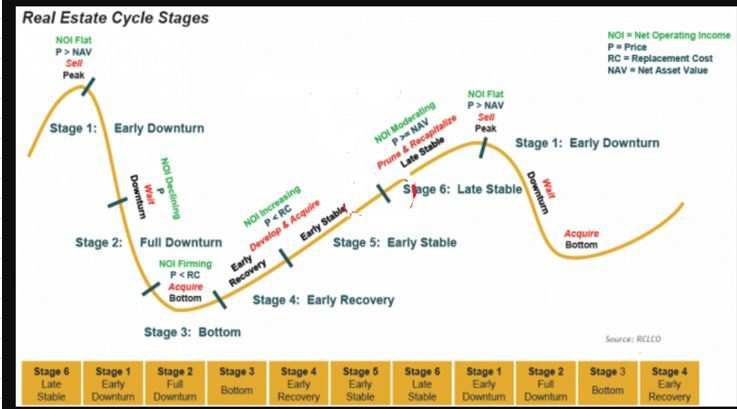
@Nicholas Preston
Your next 401k you build at a job you can roll to a self directed solo 401k and buy real estate inside the tax advantaged account.
You may want to consider that for next time if you get your job.
I’ll look into that, could I use the whole thing to buy real estate without paying taxes, deferring them for awhile? I have around 80k now with my current employer and they match. I wouldn’t be able to do that until I leave the company, is that correct?
Returns are so low on cash purchases of RE they really aren't worth it. To make decent returns you need to use financing, but be careful about being stretched too thin and not be able to survive a downturn.
Eric,
Not sure how returns are going to be higher on leveraged properties unless you are banking on unknown appreciation. Something we don't do in the Midwest. Cash purchases typically save you tons of money in interest, closing costs and , of course, the ability to negotiate for a far better purchase price going in.
When my bank pays $16 bucks a month interest on 200k in a money market account and 2 100k rentals net 18k in cash flow ( a return of 9% cash on cash) I'm not sure how you can say it's not worth it.
Respectfully,
Gary
There is truly something to be said for earning a tax-friendly 9% with very little risk...and I totally get what you are doing. But just for the sake of continuing the discussion at hand, why would you assume putting any additional freed up cash into a money market fund? That's not an apples to apples comparison. The whole point of financing is to create opportunities to buy additional properties (or even your first property). In your case, since your two properties blow the 1% measurement out of the water, your COC would be well into double-digits if you implemented some well-executed delayed financing and find additional deals with those return parameters....especially when you consider how low mortgage rates are right now.
Heck, even here in a city that's not known for its cash flow (Los Angeles) I am able to get well over 9% COC by financing my purchases.
Tony,
Mainly because I have 90 SFR's free and clear. I bought 7 more so far this year free and clear. While my free cash flow could be described as substantial, I have money market accounts to hold reserves for unexpected expenses and events like the one we are currently experiencing.
Respectfully,
Gary
@Gary L Wallman
Comparing it to a bank account is not a fair comparison at all. As Dave Ramsey will point out himself, cash real estate purchases usually return less than the stock market. He leaves out the part about leverage and tax advantages being the key to higher returns.
Take your 200k. And I'm going to use 10% cap rate for easier math.
You bought two for cash. That's 20k/yr return at a 10% cap rate.
At 20% down that's 1 million dollars of real estate. At 10% cap rate that's 100k of i Rounding the payment up to 5k/month that's 40k/yr return. Just on cashflow.
Now tax advantages. You'll pay taxes on 13k of that.
The leveraged investor will pay taxes on 4k. (In both examples I depreciated the entire investment for simple math ignoring land value.) So you'll pay 3 times the taxes on half the income.
Then there's the equity gains. Assuming 0 appreciation you are gaining now value. And neither are they. At 1% your gaining 2k they're gaining 10k. Plus the loan is being paid down. So the leveraged investor is gaining $1000 of equity in the first month. You're gaining none. The principle payment increases every month. By the end of 30 years the leveraged investor is gaining equity at a rate of 4k a month. You're still gaining none.
There's just no way for cash investments to compete with a leverage investment.
Shane,
Their is a miles long debate on this issue.
In your analogy, I will pay more tax, but I won't have the expense of interest. I will also not have to deal with capex on five houses, just two. Further, where I live appreciation is not a sure thing, so we don't count on it.
I'm not saying if I were a young guy (I am not) I wouldn't leverage myself a bit. I would absolutely. Just not to the degree the BRRRR method suggests. I would try to have one free and clear property to every two I have leveraged. My past experience tells me this is the proper proportion of leverage for my comfort level.
BTW, I do use a little leverage in the stock market.
Respectfully,
Gary
@Gary L Wallman
I'm not saying anyone should max out leverage either. 0 down is scary. Unless you had the money and chose not to use it. It's easy to get killed when you have 0 reserve. As for interest I view it as being of no consequence in the model. It's included in the payment. You're getting a smaller return but able to get multiple times those smaller returns. I suppose if you have the cash and don't need to leverage that's great, but I guess I'm just lazy. If I had the money to pay cash for all the real estate I want, I wouldn't want any real estate. 🤷🏼♂️ I don't love it so much that I'd buy it if I didn't need it. I view my real estate as a means to an end. Dave Ramsey just seems to store his wealth there. That seems like a lot of headache for nothing.
If the options are (1) do nothing or (2) follow Dave Ramsey, then following Dave Ramsey is a good option. However, in real estate the same principals don't necessarily apply. Leverage is key for growth and experience for so many investors
My wife and I were Dave Ramsey fans for years, and we worked our way all of the way through the baby steps in about 5 years. What an amazing feeling it was to complete that final step after being riddled with debt for decades.
I will share that I believe almost everything he says right up to the point of investing in properties only in cash. I think it's very important to get all of your debt paid off before starting to invest in real estate, but I don't agree you shouldn't leverage debt to finance real estate. While you could save up and pay cash for cheap properties in some markets, you lose some of the biggest benefits of real estate that come with leverage. I think Dave Ramsey has to promote real estate investing with cash as it could be used against him if he didn't.
I'll always be a huge fan of Dave Ramsey as he taught us to live like no one else so now we can LIVE LIKE NO ONE ELSE. The key is to be smart with your debt and don't over leverage just because you can. Also, be sure to have nice reserves, and make sure not to rely on appreciation. You have to have cash flow in each deal in order to weather the storms that will always be on the horizon.
Build a real estate investing strategy that fits your needs, lifestyle, and long term goals, and leverage the advice/suggestions by the best that are out there. Dave is one of the best at teaching people how to get out of debt, and there are many great, long term investors that can teach you how to build wealth beyond your wildest dreams.
I think this is untrue as well. I have been purchasing properties for over 30 years and have flipped over 60. Ken Roger has a song "YOU got to know when to hold'em, know when to fold'em.
When the economy crashed everyone laughed at me and second guessed my strategy. Guess what my rental income increase by over 15 percent because no one was able to secure a loan and needed to rent. Plus, I purchased 4 more during that time which I still have to date. Those properties are now over 300K in equity which I leverage to BRRR or flip more properties. I love this country....
@Wade Kulesa
It is not black or white for me. I have enjoyed listening to Dave Ramsey and others in the field for many years. He helps many people understand how to avoid/get free of the financial traps that are everywhere. What he teaches is great advice but I’m not a cookie cutter type of guy. I believe I became debt free in large part due to listening to Dave Ramsey and Clark Howard. Once I became debt free, I started investing in Realestate and made the informed decision to use debt as leverage. Everyone must make a decision as to how much debt they are comfortable with. Debt allows faster growth but in exchange for an amount of risk. I personally, am not comfortable with having much debt. 25% of my portfolios value is about all I’ll leverage and then only short term. Seven years is the max loan length I’ve taken on so far. I realize that that decision slows my role but I am okay with that. I know that, come what may, I will always be able to handle that amount of debt.
More accurate question is do you know any successful Real Estate Investors who were operating off solely their saved cash, zero financing what so ever. Or better yet, have saved enough to make there 1st buy in less than 10 years????? "Hey honey, remember how I said I was gonna be a RE Investor, well guess what, only 10 years of eating ramen every day and working 3 jobs and now we get to buy our 1st property, yeehaw, and the deals only cost 2x what we could have bought them for back when if we used a mortgage, happy-days....".
I don't know 1 successful investor who didn't use leveraged funds, of any age of success, be it 1yr or 45yrs in the game.
Gurus have to go to extremes, create some controversy, so people like us keep them relevant.
Dave Ramsey in this case is a perfect example. You remembered that one line, and now everyone is telling you it’s bunny stew...cause it is.
I’ve yet to meet someone who was able to stick with their financed properties for 10+ yrs and had the finances to whether a downturn, regret it.
One thing I’ve usually noticed is that: Those who own additional properties often tend to become more successful in the long run and take on more overall risks, maybe because they have those investments to “fall back” on as a safety.
Wins compound over time.
@Gary L Wallman
I'm not saying anyone should max out leverage either. 0 down is scary. Unless you had the money and chose not to use it. It's easy to get killed when you have 0 reserve. As for interest I view it as being of no consequence in the model. It's included in the payment. You're getting a smaller return but able to get multiple times those smaller returns. I suppose if you have the cash and don't need to leverage that's great, but I guess I'm just lazy. If I had the money to pay cash for all the real estate I want, I wouldn't want any real estate. 🤷🏼♂️ I don't love it so much that I'd buy it if I didn't need it. I view my real estate as a means to an end. Dave Ramsey just seems to store his wealth there. That seems like a lot of headache for nothing.
Shane,
I hear you but disagree with you on one point. Having money and not getting a decent return on it sucks. Not much point to having it unless you just want to spend it away. I want to spend it too, but not until it's gone. Having a decent return means I can still spend and not touch the principal. Where does one find good, safe and stable returns. One place and one place only: Real Estate.
As to interest being "in the payment", why have the bank as a partner in your hard work. No thanks. I'll take my 100k a month cash flow and not share it with any bank.
Respectfully,
Gary
@Gary L Wallman
I'm not saying anyone should max out leverage either. 0 down is scary. Unless you had the money and chose not to use it. It's easy to get killed when you have 0 reserve. As for interest I view it as being of no consequence in the model. It's included in the payment. You're getting a smaller return but able to get multiple times those smaller returns. I suppose if you have the cash and don't need to leverage that's great, but I guess I'm just lazy. If I had the money to pay cash for all the real estate I want, I wouldn't want any real estate. 🤷🏼♂️ I don't love it so much that I'd buy it if I didn't need it. I view my real estate as a means to an end. Dave Ramsey just seems to store his wealth there. That seems like a lot of headache for nothing.
Shane,
I hear you but disagree with you on one point. Having money and not getting a decent return on it sucks. Not much point to having it unless you just want to spend it away. I want to spend it too, but not until it's gone. Having a decent return means I can still spend and not touch the principal. Where does one find good, safe and stable returns. One place and one place only: Real Estate.
As to interest being "in the payment", why have the bank as a partner in your hard work. No thanks. I'll take my 100k a month cash flow and not share it with any bank.
Respectfully,
Gary
Thats bravado about partnering with the bank. Back to the numbers. 1 million of real estate with 10% cap vs. 200k of real estate with 10% cap. The cap rate doesn't change because you financed. In one scenario You bring in 20k. in the other you bring in 100k and give the bank 40% of that in the first year. Talk about cutting off your nose to spite your face... You'd rather give up an extra 40 k of your own profits to make sure you don't share the same with a partner? A partner who is going to take less and less of those profits every year no less...
Buying in cash will work, I never denied it. It's certainly more secure than taking on a highly leveraged position, but no one has ever been able to show me numbers to prove it's more profitable. Numbers do not lie. And in these scenarios we arent even taking into account the starting point. We are assuming you have 200k laying around. Someone starting out could start in a tenth of the time buy buying with the first 20k. Assuming they can save 20k a year from their job that means they start 10 years earlier!
@Gary L Wallman
I'm not saying anyone should max out leverage either. 0 down is scary. Unless you had the money and chose not to use it. It's easy to get killed when you have 0 reserve. As for interest I view it as being of no consequence in the model. It's included in the payment. You're getting a smaller return but able to get multiple times those smaller returns. I suppose if you have the cash and don't need to leverage that's great, but I guess I'm just lazy. If I had the money to pay cash for all the real estate I want, I wouldn't want any real estate. 🤷🏼♂️ I don't love it so much that I'd buy it if I didn't need it. I view my real estate as a means to an end. Dave Ramsey just seems to store his wealth there. That seems like a lot of headache for nothing.
Shane,
I hear you but disagree with you on one point. Having money and not getting a decent return on it sucks. Not much point to having it unless you just want to spend it away. I want to spend it too, but not until it's gone. Having a decent return means I can still spend and not touch the principal. Where does one find good, safe and stable returns. One place and one place only: Real Estate.
As to interest being "in the payment", why have the bank as a partner in your hard work. No thanks. I'll take my 100k a month cash flow and not share it with any bank.
Respectfully,
Gary
Thats bravado about partnering with the bank. Back to the numbers. 1 million of real estate with 10% cap vs. 200k of real estate with 10% cap. The cap rate doesn't change because you financed. In one scenario You bring in 20k. in the other you bring in 100k and give the bank 40% of that in the first year. Talk about cutting off your nose to spite your face... You'd rather give up an extra 40 k of your own profits to make sure you don't share the same with a partner? A partner who is going to take less and less of those profits every year no less...
Buying in cash will work, I never denied it. It's certainly more secure than taking on a highly leveraged position, but no one has ever been able to show me numbers to prove it's more profitable. Numbers do not lie. And in these scenarios we arent even taking into account the starting point. We are assuming you have 200k laying around. Someone starting out could start in a tenth of the time buy buying with the first 20k. Assuming they can save 20k a year from their job that means they start 10 years earlier!
Shane,
Tell that to all bankrupt landlords who were leveraged in 2008. My you have a short memory.
Respectfully,
Gary
Debt is an arsenal in the toolbox. Needs to be used with caution, regardless of your investment philosophy.
