Rental Property Investor · Alpharetta, GA · Member since 2014 · 14 posts · 0 votes
This is a great topic, I think we can all benefit from creative ideas. Multi family comes to mind. In a economic downturn people down size. They move from there homes to apartments to cut cost. I would say make sure you have a great terms such as great interest rate because rents can get stagnate. With great terms such as low interest rates or non recourse loans you will always keep your head above water.
There are 3 commercial real estate niches I focus on and the reason is downside protection. That is becoming more of a topic on the world economic stage with escalating trade wars and concerns over a slowing economy. Hands down the 3 niches are:
B class assets tend to fair the best during recessions. Economic upheavals usually effect to top and bottoms of the market - Class A becomes too expensive to justify when people are tightening their belts and Class C residents are often those effected the most by layoffs, wage stagnation and are less likely to be able to weather hard economic times.
That being said during the GFC rents across the board stagnated or even declined up to 6%. There was some disruption across the market, though. By the end of 2009 and into 2010, however, rent growth returned. In reality vacancies on average across the US only rose 1% during the GFC, and that period of vacancy increase only lasted a year (Q1 2009 - Q3 2010).
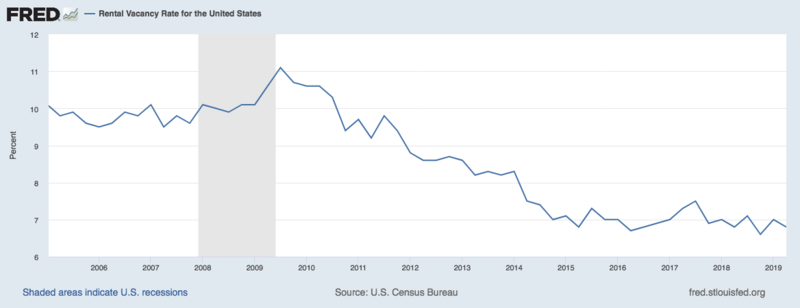
Like you said @Hugh Little if you have good debt terms such as a fixed rate, interest only, non recourse and long enough of a term debt you should fair better than not. It's also important to run sensitivity analysis on deals to make sure they can survive lower occupancy and stagnant or negative rent growth.
There are 3 commercial real estate niches I focus on and the reason is downside protection. That is becoming more of a topic on the world economic stage with escalating trade wars and concerns over a slowing economy. Hands down the 3 niches are:
That is a great point @Spencer Gray. B class properties make a lot of sense, they keep you right beyond the threshold. What are your thoughts on seller financing?
I totally agree with you @David Thompson, I am currently working on a few self storage facilities my self. I really like them because of the liability factor. I have noticed mobile home parks have been getting a bad rap because of the property taxes and the property appreciation.They have high caps and long serving tenants.
Here's another vote for self storage! I would also add that purchasing existing has a bit less exposure than does development when a recession is on the horizon. Shorter ramp up and stabilization timelines as well as quicker "lowering" of LTV help increase stability in my eyes!
You bring a great point as well @Michael Wagner. I have be researching seller financing. This is a great technique to leverage my out of pocket expense.
I think it's important to clarify that having non-recourse loans doesn't help you "keep your head above water"....it simply keeps your personal head off the chopping block if/when the SHTF. ;-)
Class B assets are always good, whether commercial or residential. There are people who want a good place to live and are prepared to pay a decent amount for it.
Class C isn't bad either. "Clean, safe, functional" works for us. The nice thing is if a Class C tenant does lose a job, there's usually a comparable one just down the road. And to brige the gap, there are rent assistance agencies that can cover most or all of the bill. Not usually true for $2000/month rental. Btw to clarify terms, in my market the typical "Class C" renter is get between $12 - $20 /hour household income. Rent is between $500 - $700. YMMV.
I started buying in 2005. Great timing, I know! I quickly learned Class C doesn't appreciate much in my medium size city Mid-Western market (pop. 162,000), but neither did the values ever crash. Rather, rents stagnated for awhile, then in 2011 they started inching back up. Today, they're 30% above where I started and growing 5%+ every year.
One thing I don't like about apartments; you can't just sell them fast or cover the cash flow from a W-2 job or by tapping retirement savings. They're so big if the cash flow starts leaking they sink fast; there's no propping them up. And there aren't many folks who can bankroll 50+ unit complexes, and those who can won't be in a rush as the economy and your assets are sinking in value. So yes, non-recourse loan is a must to keep the sharks from totally devouring you.
More important than asset Class or Type is investing in an area with a diverse, robust economy and a reasonably mild climate. There are always certain things people need or strongly desire, and money will flow there even if luxuries and "wants" get cut.
@Erik W. all good points. Apartments aren't invincible. Any business can have a poor business plan or be over leveraged. If we're looking for any problems in the sector at-large, too many portfolios may be overleveraged compared to where they need to be to weather a moderate recession. Everyone says their underwriting is conservative, but few can truly prove it.
@Hugh Little, I agree 1000%. Some other commercial vehicles that produce will against unseen economic forces are Mobile Home Parks and Self Storage Facilities. Office, Retail and Industrial tend not to fare out so well in a downturn
That was very well put @Erik Whiting. I think non recourse loan are especially good with seller financing. I would prefer to acquire B class property, but C class would be fine. I have has assisted in helping clients find properties and creative financing.
Regardless of whether there is a recession coming or not, I would disagree with the title of this post, and argue that commercial multifamily is relatively much more exposed to many of the probable risks that investors will face over the coming decades than those risks small multifamily (2-4 units) and single family investors face. Here are several reasons I believe this:
3) Interest Rate Risk: 90% of single-family rentals are owned by investors with 10 or fewer properties. Much of this is purchased with 30-year fixed rate fannie backed loans. With the non-recourse loans in commercial multifamily come variable interest rates, balloon payments, etc, in much higher percentages than what you are likely to find in the single family and (extrapolation) the small multifamily markets (1-4 units).
When and if market conditions change - when and if interest rates rise. When and if a recession comes, I suspect that the multifamily commercial investors will get hit relatively much harder than their small multifamily and single family rental counterparts.
I believe this, and I put my money where my mouth is. Most of my wealth is invested in small multifamily real estate.
Whenever market conditions change, I'll bet that it will be a great time to be a renter in a luxury new build apartment. I'm already spoiled for choice were I to look for a luxury apartment to rent here in Denver. I'll bet that if interest rates rise, the pressure will continually mount for many of the owners of multifamily assets. I'll bet that there will be a new class of buyers of commercial multifamily and a fantastic buyer's market for the same. I'll bet that it will be a great time to buy condos at a deep discount.
I'll also bet that the conditions that cause this market will be much less painful for the single-family and multifamily investors (if they are felt much at all).
Of course, all this is hypothetical. Could be 10 years before any of this happens. Could be next year. Could be never. that's why I DO invest partially in commercial multifamily. Just with a significantly smaller fraction of my wealth than I put into small multifamily.
This is a great post. I did not know more people would rather a single family home. Now that I think about I would rather a single family home over apartments.
When it comes to being rescission proof, I would always pick apartment over single family homes. I also have researched mobile home parks. I am always looking for ways to find my clients great assets that they can past down threw generations. My goal is to create a lot passive wealth threw multi family and Self storage.
@Hugh Little A good topic indeed. I came to the same conclusion. I invest 80% of my portfolio in value-add multifamily syndications. In a good uptrending economy I recieve cash flow + equity and in a recession, I recieve cash flow. Since I am cash flow focused, this strategy works for me. Best of luck!
I have been working with self storage unit facility. They are also a great source for cash flow. I also have investors that reach out to me to get information and to syndicate deals as well.