What rental-property assumption do you stress-test first?
I like to evaluate rental deals by asking what happens when one of the key assumptions is wrong. Positive cash flow in the base case is useful, but the downside case often tells you more about the property's resilience.
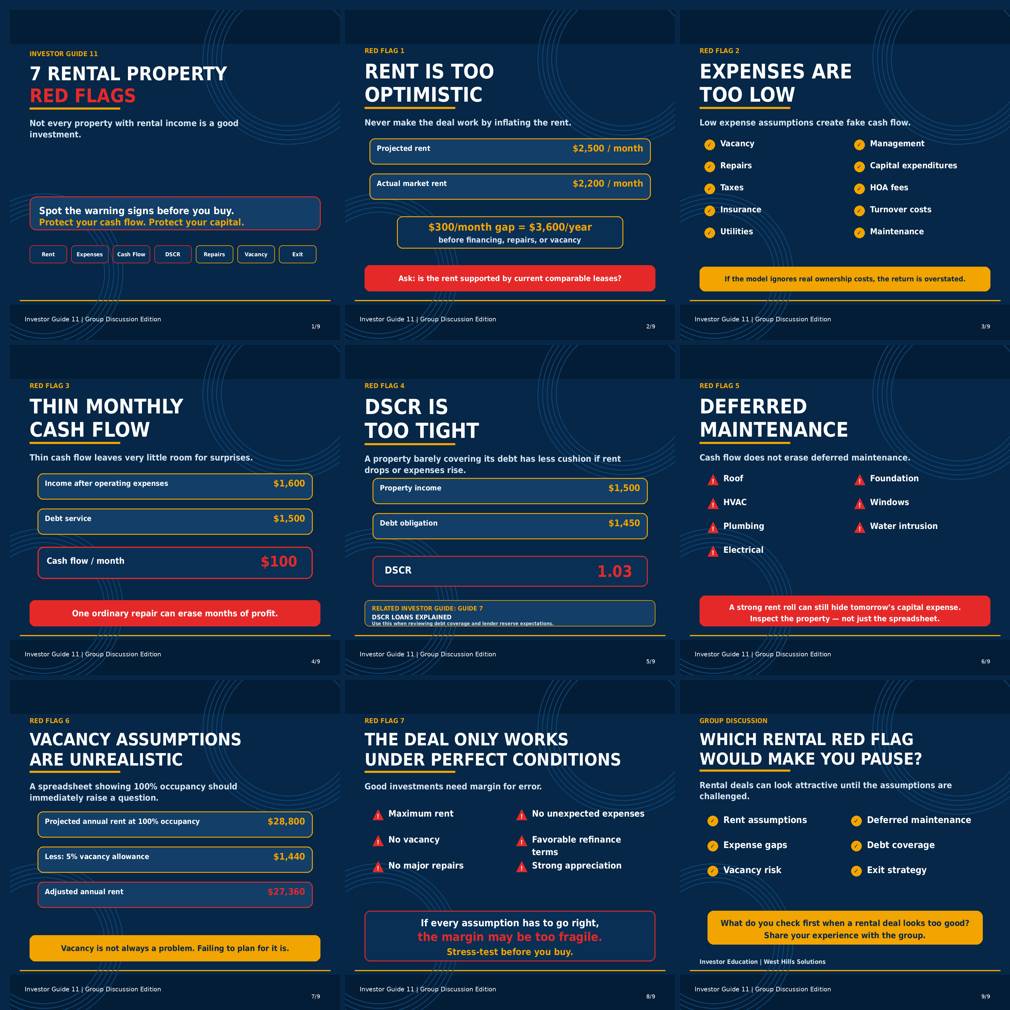
Seven warning signs I think are worth testing:
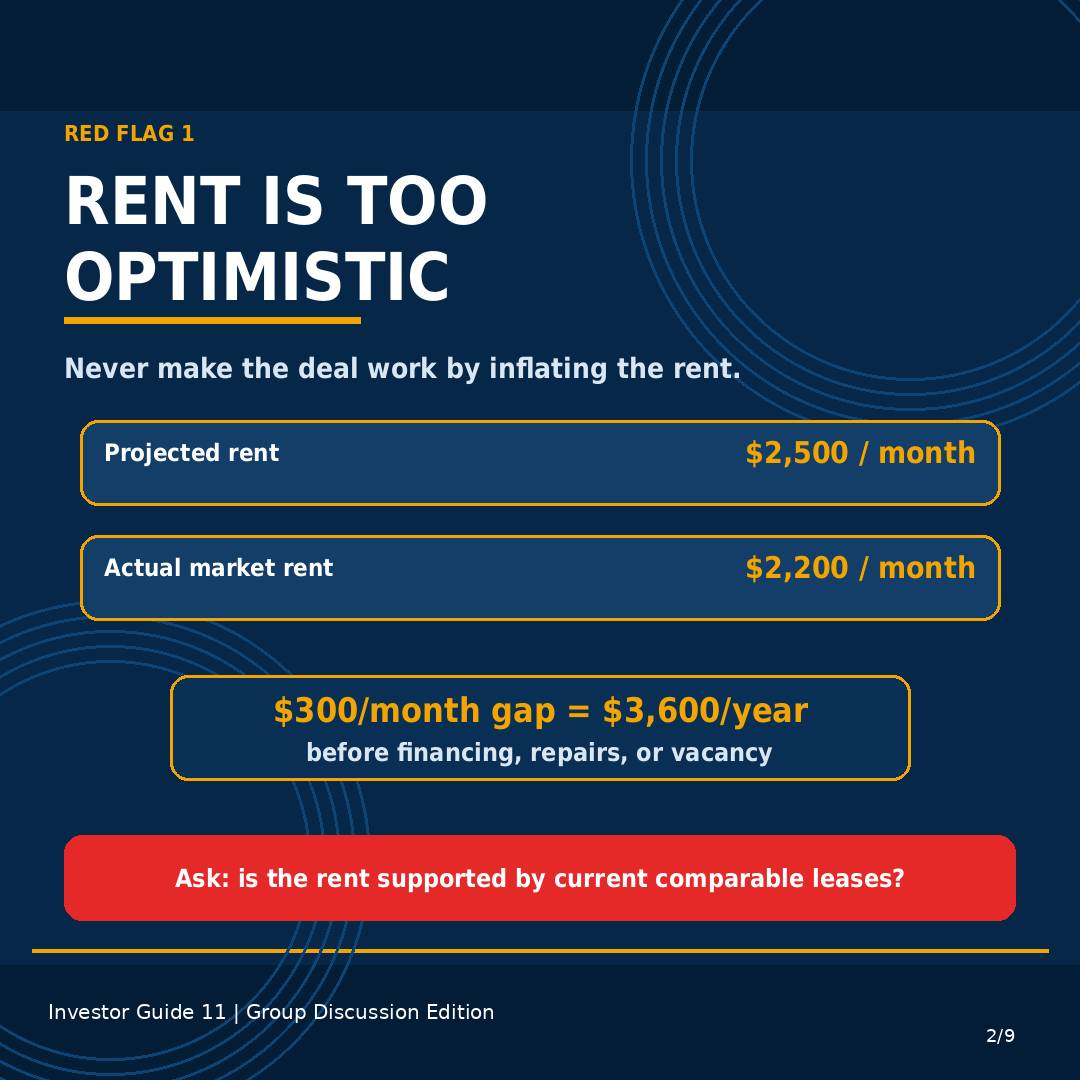
· Rent is above what current market evidence can support.
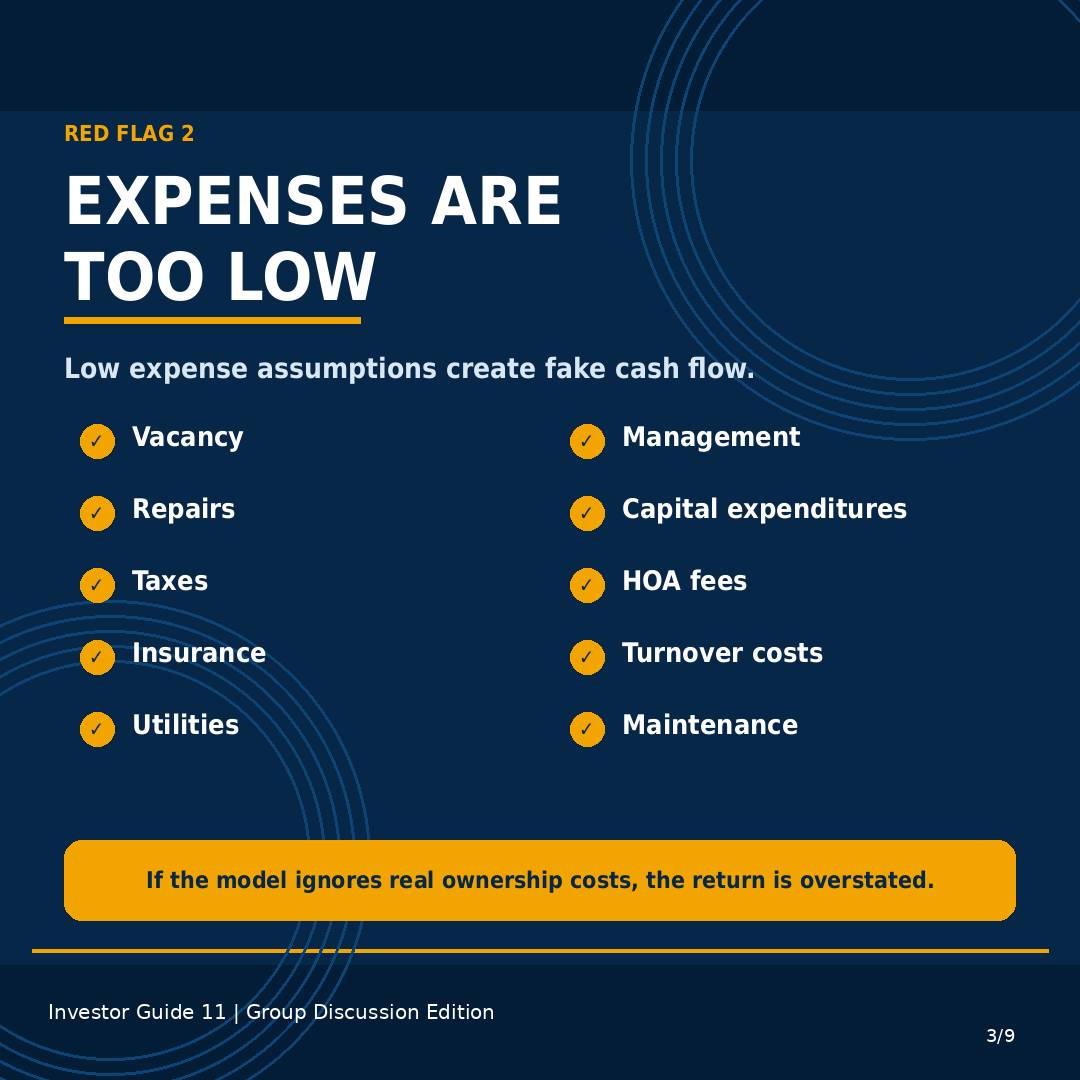
· Operating expenses are missing recurring or periodic costs.
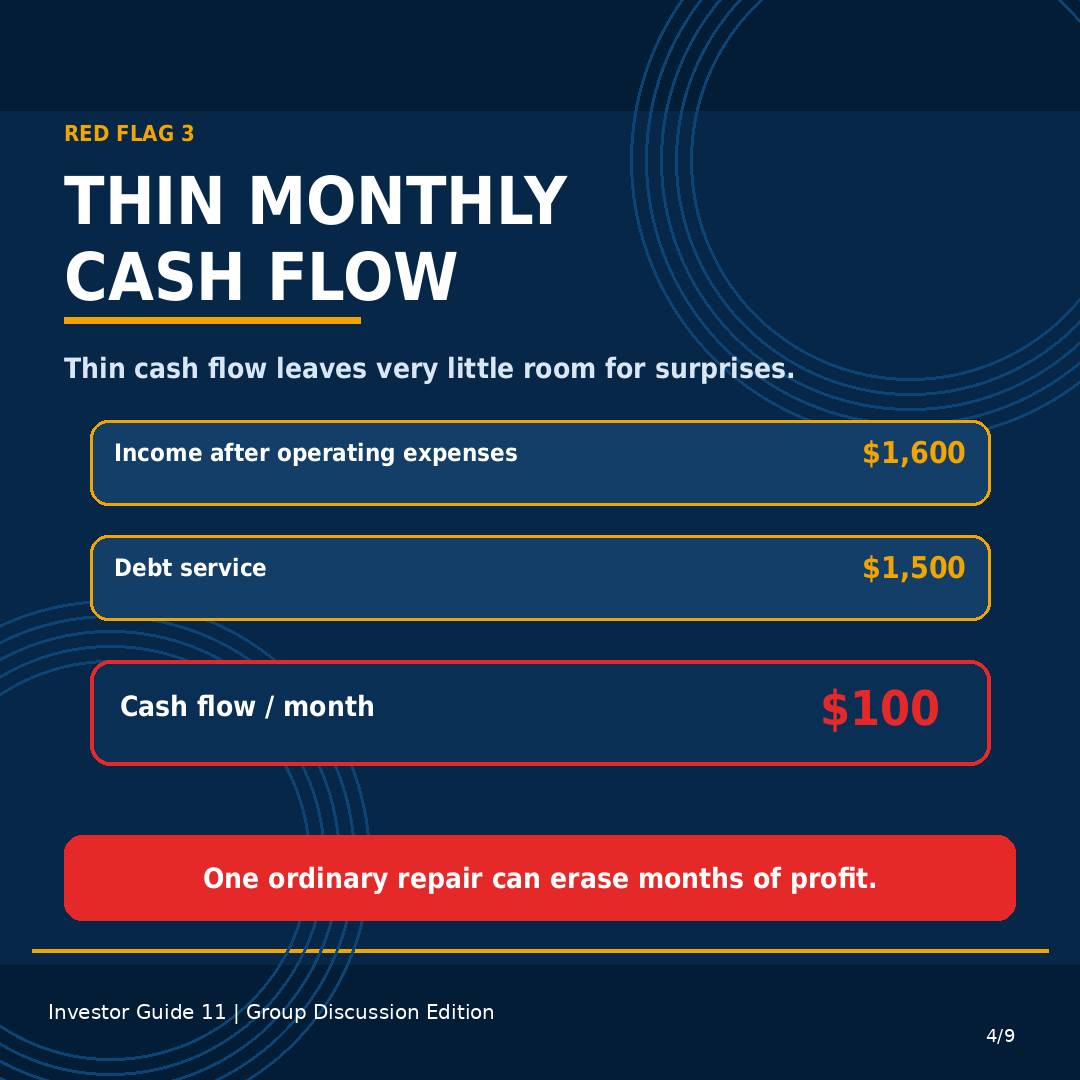
· Cash flow is positive but too thin to absorb an ordinary repair.
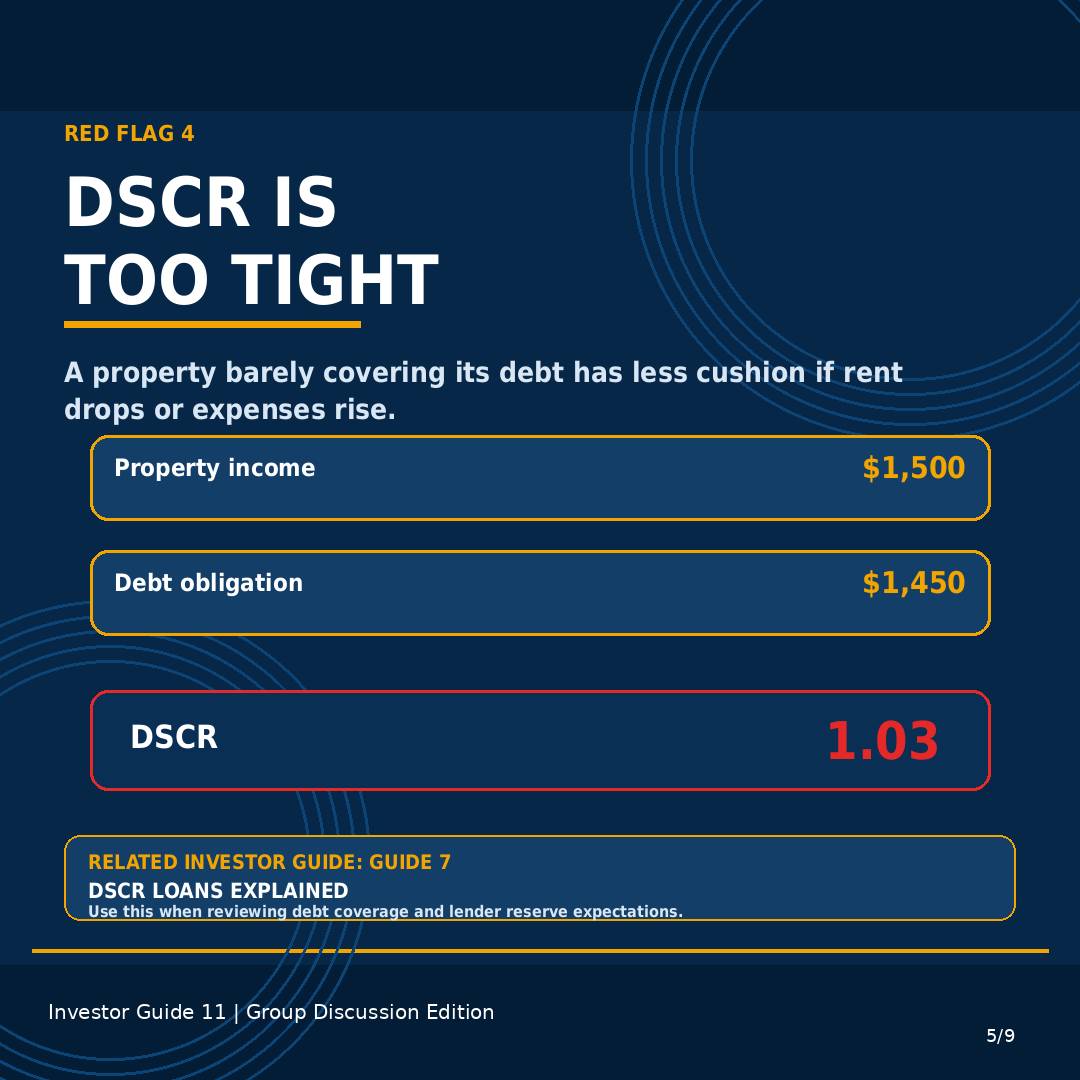
· Debt coverage is tight. DSCR definitions and minimums vary by lender and program, so I treat it as one part of the overall financing picture rather than a universal pass/fail number.
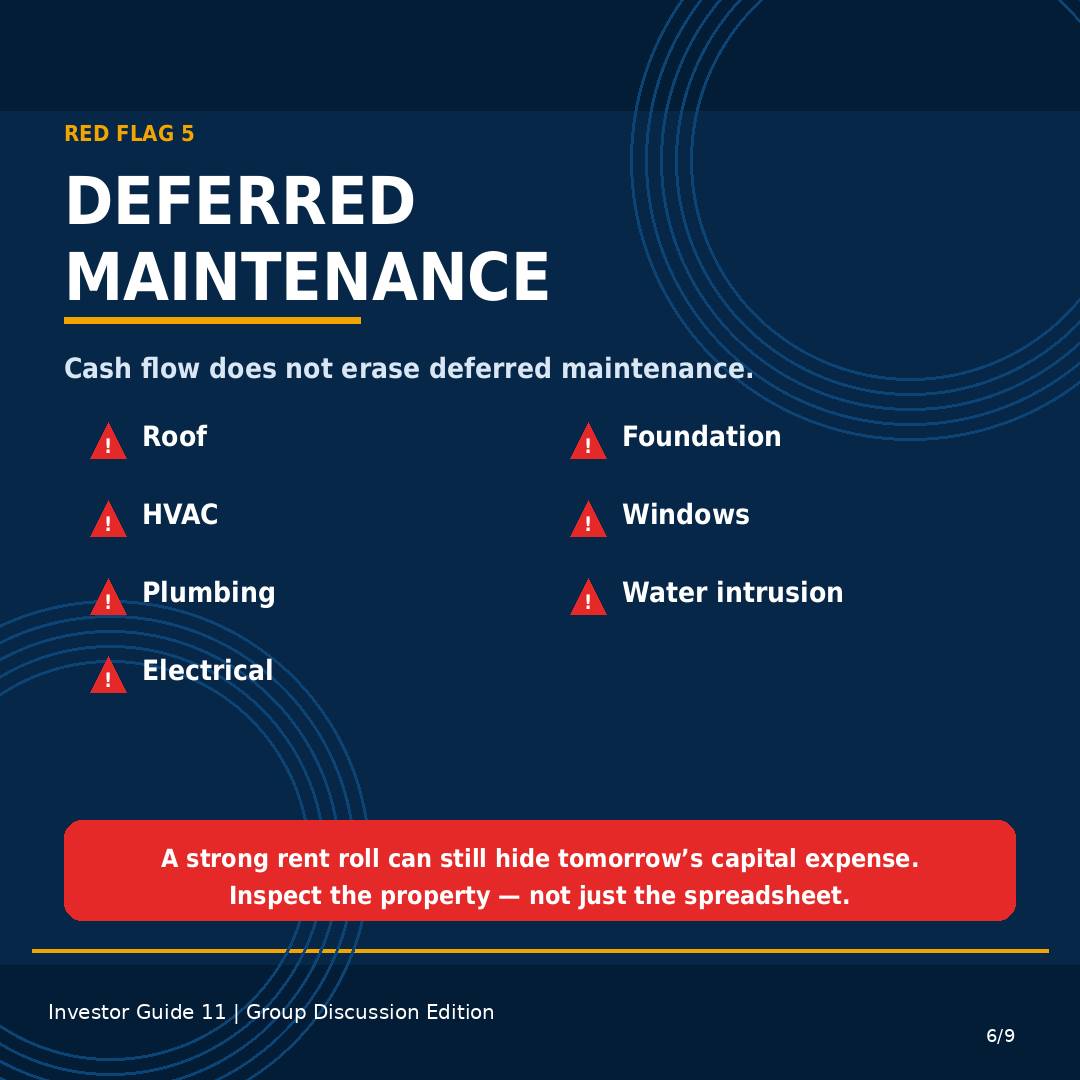
· Deferred maintenance creates near-term capital risk.
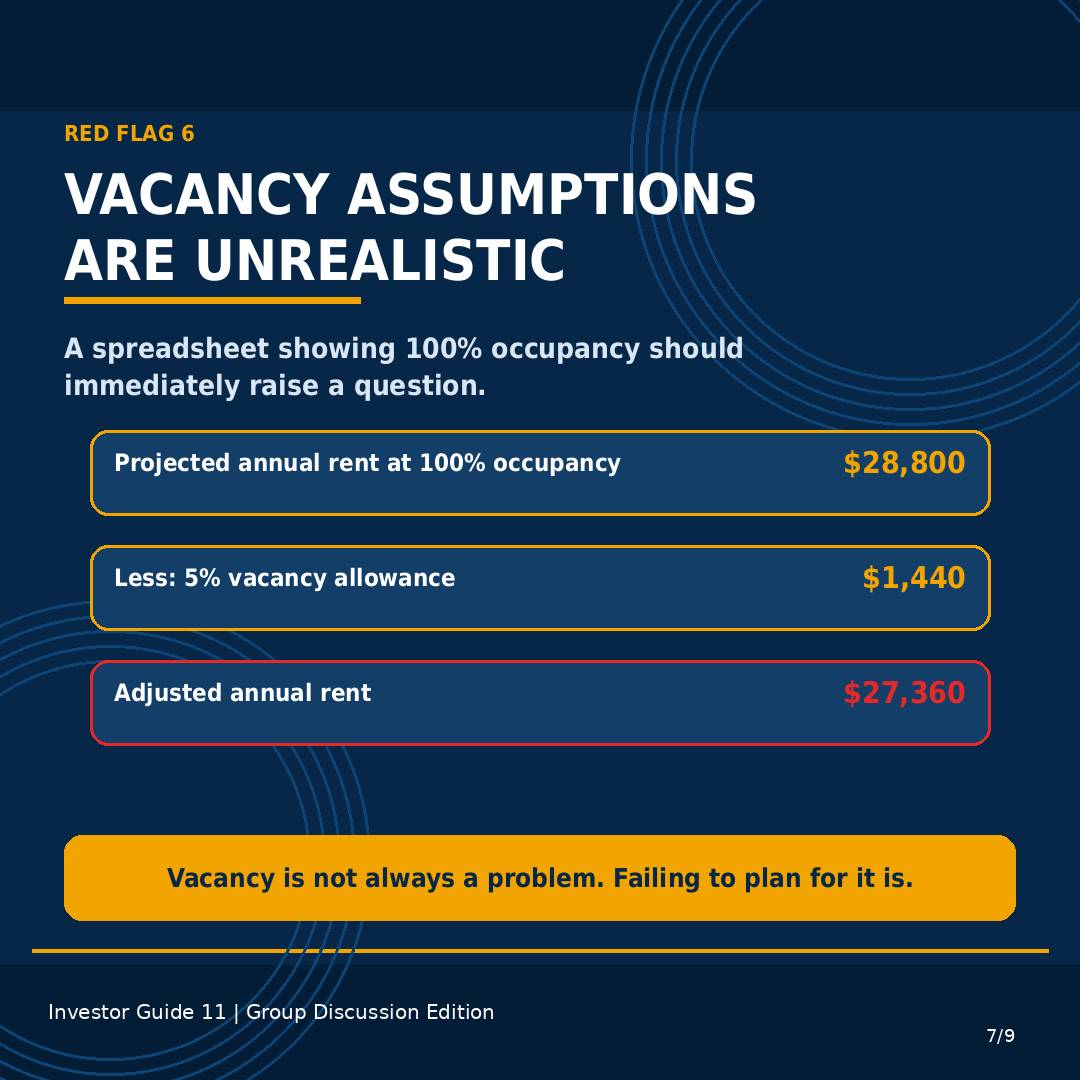
· Vacancy assumptions are effectively zero or unrealistically low.
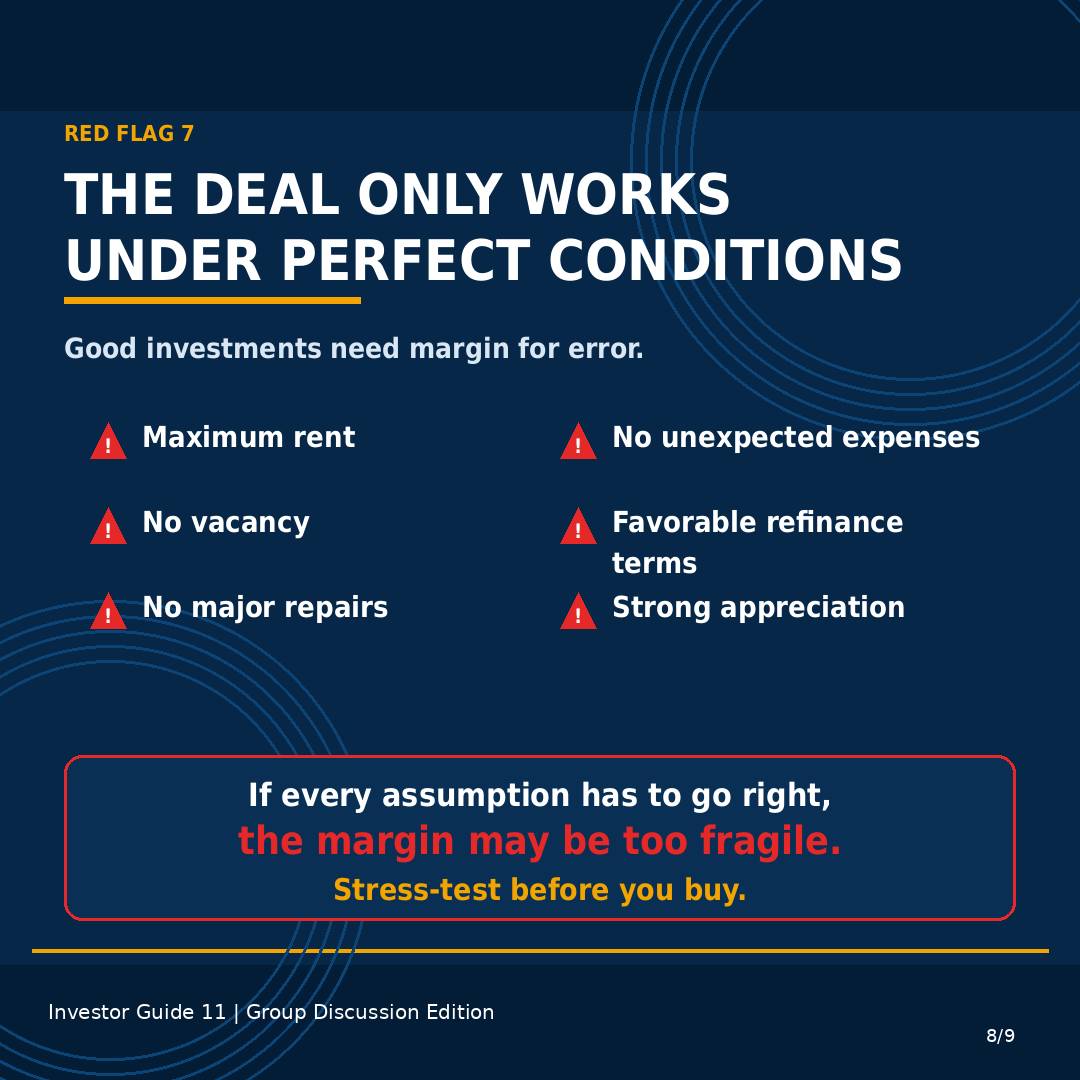
· The investment only works if rent, repairs, appreciation, vacancy, and refinancing all cooperate.
One simple stress test is to lower rent, add vacancy, increase repairs or maintenance, and then rerun cash flow and debt coverage. The point is not to predict the exact future. It is to see how much margin the deal has when the future is less favorable than the spreadsheet.
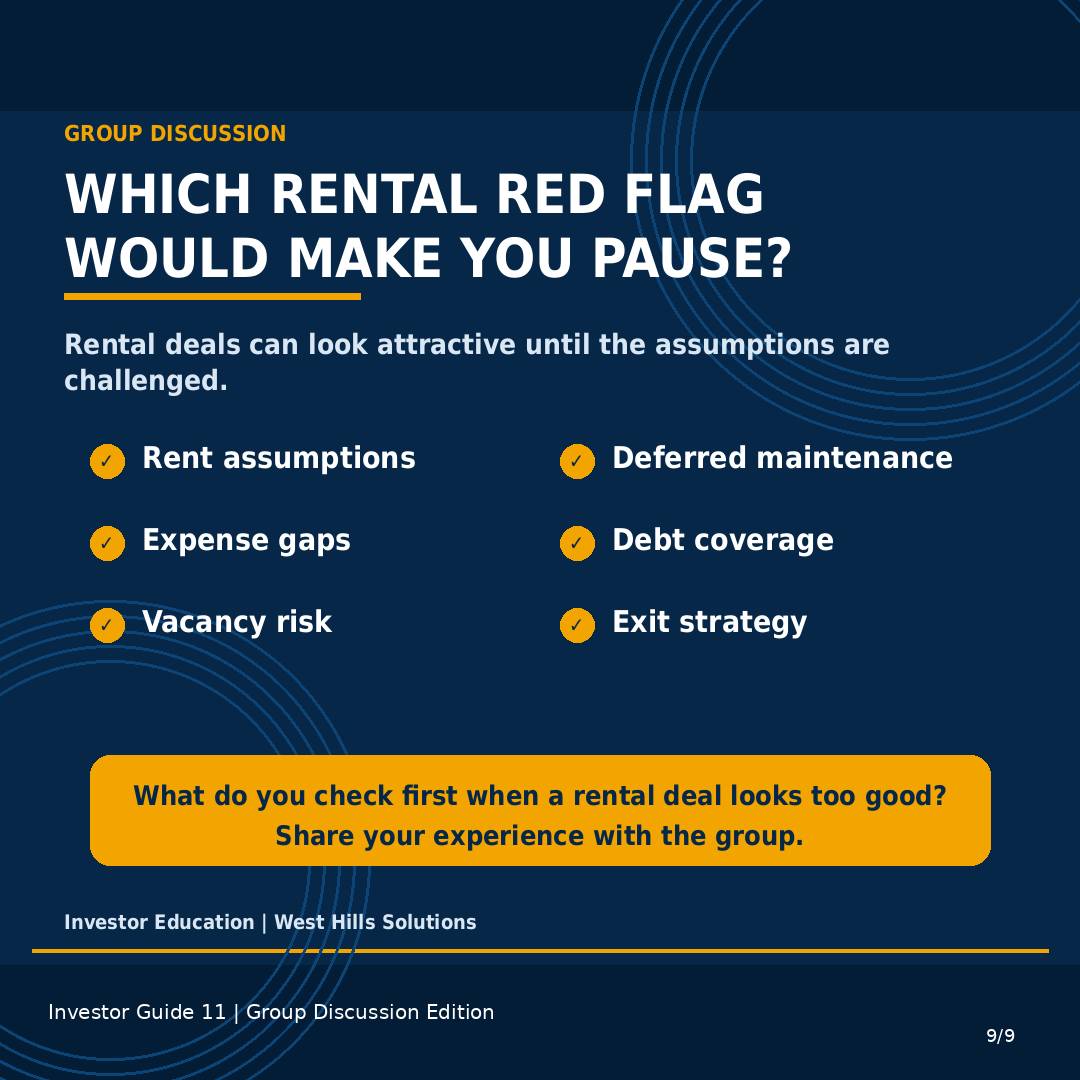
Which variable do you usually stress-test first - rent, vacancy, repairs, financing, or something else?
Educational discussion only; not a recommendation to buy or finance any specific property.


