Investor · Charlotte, NC · Member since 2020 · 43 posts · 10 votes
Hello all,
I will appreciate any advice on this out of state investment deal that has gone bad due to higher than anticipated property tax. This was my very first investment in real estate. I had entered real estate investing with goal of long term buy & hold.
I bought a new built SFH for $293,000 (4bedroom,2.5bath, 1800 sq ft) from a turn key company. Based on their proforma, property tax was estimated $3500. Actual property tax bill is now $10,000. I bought this property using a traditional 30 year mortgage with 25% DP and 6.125% interest rate. This investment deal was breaking even accounting for all expenses (PM, insurance, property tax etc.) prior to this high property tax bill.
Now with higher property tax, it’s negative cash flow of $1000/month.
What is the best financial move with this property? Sell it at a loss?, Do a 1031 exchange for another investment property with positive cash flow?, refinance to a lower mortgage rate?. Other options?
I will really appreciate any advice your can offer.
P.S. I missed deadline to appeal property tax with county. Based on another property in same subdivision that is similar to mine, their property tax was less by ~$800 less so appealing property tax may certainly help some but it is not going to transform this deal into a break even or positive cash flow deal.
@Pratik Patel I’m not following the numbers here. There appears to be more at odds with the original assumptions than solely the property taxes. If the property was breaking even under the initial estimate of $3,500 per year in taxes, it should not suddenly be $1,000 per month negative simply because the actual tax bill is $6,500 per year more, or roughly $540 per month. While the tax assumption miss is significant, that difference alone does not account for such a large swing. Where else were the underwriting assumptions off?
From there, you have to ask whether there is any reason to believe this property will achieve meaningful appreciation or rent increases in the near term. That question has to be balanced against the cost of exiting the investment so quickly. Once you account for transactional expenses such as brokerage commissions, transfer taxes, and other closing costs, the decision becomes more complicated. You also need to consider potential inspection-related repair addendums (these turn keys tend to have a lot of issues on re-inspection), as well as whether the property, if leased, will be marketable to the highest-paying buyer. In some cases, maximizing the sale price may require vacating the unit and turning it over before listing. This will be market and neighborhood specific. All of those factors should be weighed against the possibility that holding for a few years could produce a better outcome
Ouch, that's a brutal first deal. Quick check - did the turnkey company put those tax estimates in writing? Some have clauses if they're way off by that much. Also call the assessor anyway, sometimes they'll do informal reviews even after deadline. You thinking cut losses or fight it?
Was this a response to me? I just replied to the thread that it also happened to us on our first purchase 😅 I also said we had room for it because of when we bought. “Since you’re smarter than me” … are you alright? Why are you so aggressive in these threads?
Elyse L Rasmussen, The McCormick Group RE517 Reviews
Was this a response to me? I just replied to the thread that it also happened to us on our first purchase 😅 I also said we had room for it because of when we bought. “Since you’re smarter than me” … are you alright? Why are you so aggressive in these threads?
Not sure who you are responding to on this, but I don't read anywhere in the thread that there is a response to you. I think you did a great job with your first purchase. Having that low entry price point, a fantastic interest rate, and growth in value shows that, even with the unexpected, your investment was solid on the basics. Good luck as you keep going!
As for the aggressive tone, I don't think Dan and Drew are being aggressive towards each other (assuming that is the post you're referencing). Sometimes in a 2-dimensional setting, it's hard to gauge tone, but these two guys have both been giving great advice here for years. I respect both of their approaches because neither wants to blow smoke at posters or post things on here to attract dreamers who are only going to get hurt. They both try to give real, actionable advice, in my opinion, and each has enough experience to post with authority. Sometimes, that can come across as aggressive, especially when posting in response.
Hopefully, you jump in on threads where you can share and stay active. Best of luck to you
The detail I am having trouble with is where in the country is a tax rate this high? Perhaps someone can help me with that data if @Pratik Patel hasn't shared the city. At a $7,200 annual tax, that is a 2.44% effective tax rate, and I thought Illinois was the highest in the country at roughly 1.96% (meaning just under $6,000 tax on a $300,000 property). That tax rate is super high, and I am wondering if it is correct and what city the property is located in.
I just think there is missing info. on the post. I would assume the poster isn't sharing the company's name because, contractually, he can't, or because if he does and the company is well-known, he doesn't want the backlash from fans. It could also be that the company is actively working with him.
That would be my advice.
Ask whoever you purchased the property from to make up the first-year escrow balance as a show of good faith. Perhaps they did not know that the taxes would go up. Whether it was an intentional slight or not, covering that expense should be a small concession and may be the quickest way to stabilize the investment in its first year while he figures out the next steps. I would not hesitate to ask them to make up the second-year tax difference as well. The worst they can say is no, but if they are interested in assisting and being a high-quality company, they will step up and help due to an error. That is different from admitting fault, so I would push for some relief.
I agree what you post is a high tax rate but OP says tax is $11k on $293k purchase. I calculated it out to be 3.5% (rounded to the tenth) so significantly higher than 2.44%.
I have seen rates at 3%, for non OO, but I do not remember seeing a rate as high as 3.5%. I have an educated guess to the state, but will wait to see if the OP provides the location.
I agree about drew usually providing realist posts and doing so even though he is in the business. Posting realistic post rather than Pollyanna posts may not be optimal for his business, but is providing a truthful accessment (not stating all posters who are posting Pollyanna posts are not being truthful, but I suspect many are not). However, on the post I responded to I did not hold this belief as the cash flow is far worse than Drew indicated. that could lead OP to a different direction. My criticism of his numbers led to his slightly harsh response but all is good. I was critical of the numbers because it is rare for me to see a purchase that less works as a rental and I wanted this clear to the OP.
OP monthly rent ratio is 2180/293000=0.00744. This ratio is common, but in most markets even with “normal” property tax is like cash flow negative. At his very high property tax rate, it not only is very negative but is likely to stay negative forever. 3.5%/0.744%=4.704. The property tax consumes 4.7 months rent (significantly more than a third of rent goes to pay the property tax). It is likely the property tax is not fixed and that it will always consume close to that many months of rent. It would take either a change to the property tax rate or something freakish for this property to EVER have positive cash flow.
This property screams owner occupied. I suspect OO pay a lower property tax rate and the jurisdiction does not desire RE investors. I hope the OP recognizes the challenges of this property and I wanted the challenges to be clear which is why I was harsh to Drew's post (I agree with a very large percentage of his posts and did not mean it to bean attack of Drew).
The detail I am having trouble with is where in the country is a tax rate this high? Perhaps someone can help me with that data if @Pratik Patel hasn't shared the city. At a $7,200 annual tax, that is a 2.44% effective tax rate, and I thought Illinois was the highest in the country at roughly 1.96% (meaning just under $6,000 tax on a $300,000 property). That tax rate is super high, and I am wondering if it is correct and what city the property is located in.
I just think there is missing info. on the post. I would assume the poster isn't sharing the company's name because, contractually, he can't, or because if he does and the company is well-known, he doesn't want the backlash from fans. It could also be that the company is actively working with him.
That would be my advice.
Ask whoever you purchased the property from to make up the first-year escrow balance as a show of good faith. Perhaps they did not know that the taxes would go up. Whether it was an intentional slight or not, covering that expense should be a small concession and may be the quickest way to stabilize the investment in its first year while he figures out the next steps. I would not hesitate to ask them to make up the second-year tax difference as well. The worst they can say is no, but if they are interested in assisting and being a high-quality company, they will step up and help due to an error. That is different from admitting fault, so I would push for some relief.
I agree what you post is a high tax rate but OP says tax is $11k on $293k purchase. I calculated it out to be 3.5% (rounded to the tenth) so significantly higher than 2.44%.
I have seen rates at 3%, for non OO, but I do not remember seeing a rate as high as 3.5%. I have an educated guess to the state, but will wait to see if the OP provides the location.
I agree about drew usually providing realist posts and doing so even though he is the business. However, on the post I responded to I did not hold this belief as the cash flow is far worse than Drew indicated that could lead to a different direction. My criticism of his numbers led to his slightly harsh response but all is good. I was critical of the numbers because it is rare for me to see a purchase that less works as a rental and I wanted this clear to the OP.
OP monthly rent ratio is 2180/293000=0.00744. 3.5%/0.744%=4.704. The property tax consumes 4.7 months rent (significantly more than a third or rent goes to pay the property tax). It is likely the property tax is not fixed and that it will always consume close to that many months of rent. It would take either a change to the property tax rate or something freakish for this property to EVER have positive cash flow.
This property screams owner occupied. I suspect OO pay a lower property tax rate and the jurisdiction does not desire RE investors.
Best wishes
I thought I read where the $11,000 is due to a low escrow. I might be mistaken, but I thought I read where the taxes are actually $600 a month once the escrow is fully funded. That is where I came up with the $7,200. The $11,000 would coincide with bringing this year's taxes in line and having a fully funded escrow for next year. Again, lots of numbers and posts are going all over the place. I still believe his best bet is to ask whoever he spoke with when buying this property to help him, though they likely have disclosures stating he is responsible for running all his own numbers.
The updated property tax is $11k/year + $630/month escrow shortage makeup.
from Op:
“New property tax annually: $11,000 (that’s actual amount not $10,000…sorry)
Insurance annually: $1000
…
Monthly mortgage payment AFTER rise in property tax…this payment starts in March: $2970 (Principal & Interest $1335 + Escrow has tax and insurance: $1005 + Escrow shortage due to higher property tax: $630.”
Note $1005 * 12 = $12,060 which is very close to the $11k prop tax + $1k insurance. I suspect OP rounded the insurance.
This equates to 3.5% property tax rate. I consider this punitive on investors at this price point. Note 3.5% on $60k property is different as is $11k property tax on multimillion dollar properties (I have properties I pay more than $11k in property tax). I see no scenario where that property tax rate will allow this property to be a decent non OO investment property.
It is unfortunate for the OP. I think it is likely turnkey provider intentionally misled the investor for the operator's financial gain. You and REI nation have a solid reputation, but there are too many turnkey providers that provide underwriting that is misleading. I saw one quite a few years ago that had been in business for something like 5 years that was using their actuals for maintenance/cap ex. Of course all their rehabs were between 0 and 5 years old so virtually zero high cost items should have hit end of life. I called them out and the operator really responded fairly well stating they realize that they are under representing maintenance/cap ex but then he indicated his customers were educated enough that they would see that. I called bs to that. My view is they intentionally and knowingly deceived their customers.
Buyer’s too often do not do their own underwriting. Sometimes no underwriting is performed. If they come to bigger pockets I want them to know the importance of thorough and conservative underwriting, the actual cost or residential RE, that residential RE is not passive and has risks, and the importance of tenant class (Drew access at this). In summary that in this market there are a lot of challenges to residential RE investing.
The detail I am having trouble with is where in the country is a tax rate this high? Perhaps someone can help me with that data if @Pratik Patel hasn't shared the city. At a $7,200 annual tax, that is a 2.44% effective tax rate, and I thought Illinois was the highest in the country at roughly 1.96% (meaning just under $6,000 tax on a $300,000 property). That tax rate is super high, and I am wondering if it is correct and what city the property is located in.
I just think there is missing info. on the post. I would assume the poster isn't sharing the company's name because, contractually, he can't, or because if he does and the company is well-known, he doesn't want the backlash from fans. It could also be that the company is actively working with him.
That would be my advice.
Ask whoever you purchased the property from to make up the first-year escrow balance as a show of good faith. Perhaps they did not know that the taxes would go up. Whether it was an intentional slight or not, covering that expense should be a small concession and may be the quickest way to stabilize the investment in its first year while he figures out the next steps. I would not hesitate to ask them to make up the second-year tax difference as well. The worst they can say is no, but if they are interested in assisting and being a high-quality company, they will step up and help due to an error. That is different from admitting fault, so I would push for some relief.
I was wondering the same thing. $11k property tax on a $293k house? Wow.
Could be a special assesment?
We have very high property taxes in Milwaukee and on a 300k property it would be about 5k.
Must be something like that. A $300k property here would be around $1,500/yr. in taxes. $11k/ yr. would be ~$2M property.
Steve....come to New Jersey...we can easily get you a 3% tax rate on your home!
Brutal. 0.05% here.
Still wondering where the subject property is, and surprised that with a tax rate that high there, it would come as a surprise to anyone. Seems like something that the turnkey provider, the lender and the buyer all should have seen coming...
The detail I am having trouble with is where in the country is a tax rate this high? Perhaps someone can help me with that data if @Pratik Patel hasn't shared the city. At a $7,200 annual tax, that is a 2.44% effective tax rate, and I thought Illinois was the highest in the country at roughly 1.96% (meaning just under $6,000 tax on a $300,000 property). That tax rate is super high, and I am wondering if it is correct and what city the property is located in.
I just think there is missing info. on the post. I would assume the poster isn't sharing the company's name because, contractually, he can't, or because if he does and the company is well-known, he doesn't want the backlash from fans. It could also be that the company is actively working with him.
That would be my advice.
Ask whoever you purchased the property from to make up the first-year escrow balance as a show of good faith. Perhaps they did not know that the taxes would go up. Whether it was an intentional slight or not, covering that expense should be a small concession and may be the quickest way to stabilize the investment in its first year while he figures out the next steps. I would not hesitate to ask them to make up the second-year tax difference as well. The worst they can say is no, but if they are interested in assisting and being a high-quality company, they will step up and help due to an error. That is different from admitting fault, so I would push for some relief.
Thank you Chris for your reply. I posted name of turnkey company earlier.
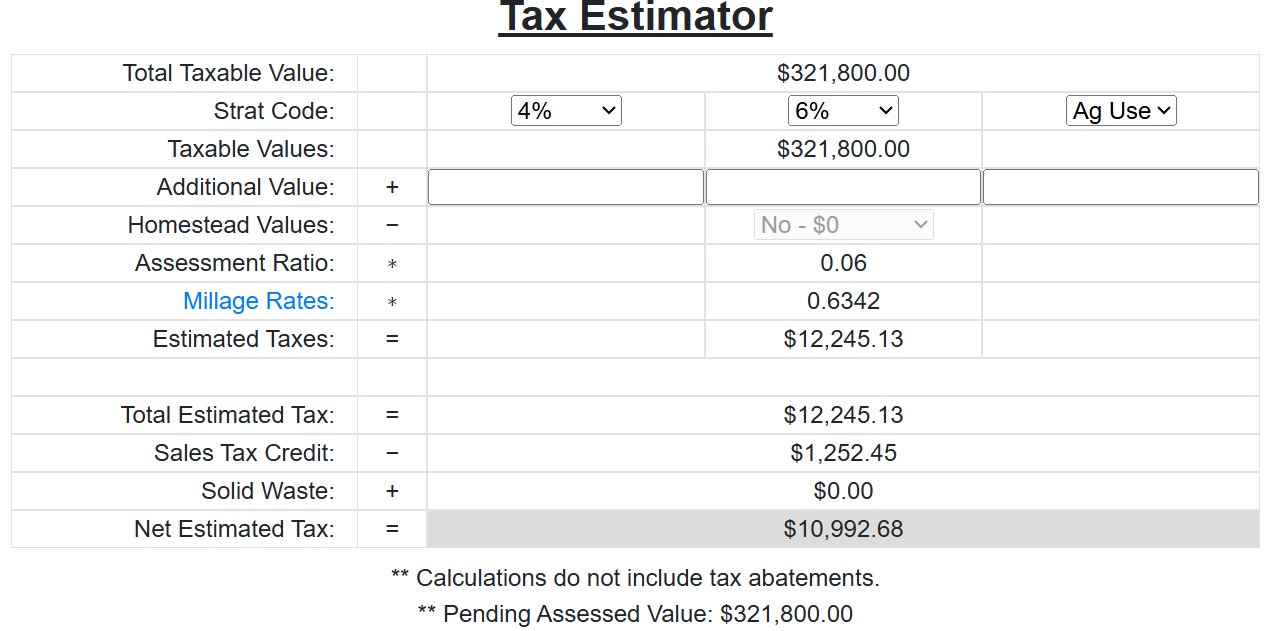
Property is located in Elgin, South Carolina. I have posted snapshot directly from county tax assessor website about how they calculated property tax for my property.
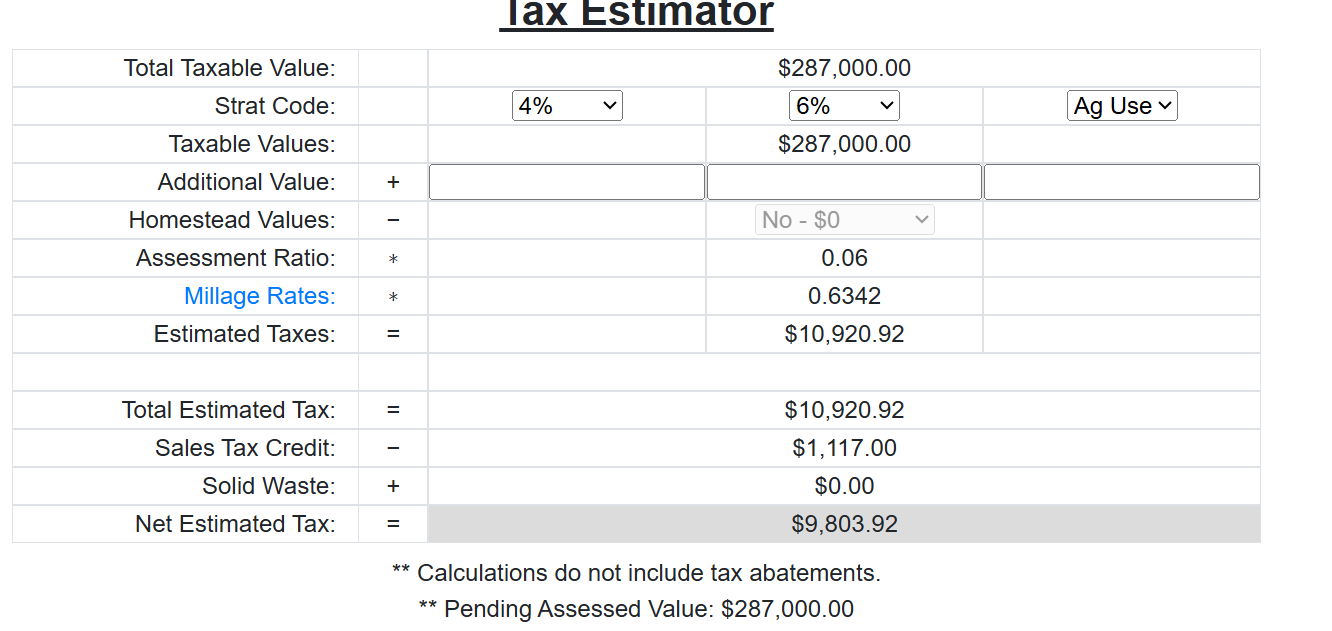
Here is snapshot of another nearby property with same exact build as mine. Its property tax is only about $1000 less so tax reassessment will not transform this deal into a good investment since tax burden is still high.
Wow, that is a massive tax rate. I would take two steps if I were in your shoes at this point. There is no sense in placing blame. At this point, you are where you are, and in the future, you will look back and have learned a few pointers on assessing properties far from home. However, I would take these two steps and find a CPA.
1. Reach out and ask for assistance for the next two years. They run a business and want you to be successful, so lay out the details and ask for help. If they can come up with something, it helps your situation over the next year or two.
2. Reach out to a local RE agent and ask for current sales projections. There may be challenges, but you need to have an idea of exactly where you stand on value. If you can sell the property without a loss, fantastic. I have sold houses in the past, soon after buying them, and taken a loss. I was able to offset that loss with gains from other passive investments and use it to reduce my tax. This is not tax advice. Do you have a CPA with experience filing for real estate investors? If not, I can share one, or you can likely find one here on BP. Connect with one and discuss options for selling the property quickly, how you can make the most of it, and what a loss would look like on your taxes.
It is not perfect, but it is looking for the edge in every situation.
I give you a lot of credit for taking action in getting started as an investor. You are ahead of most who want to invest in real estate. Don't beat yourself up on this deal either. Many of us have made early mistakes; I know I did. The key is not to make the mistakes twice. You have to learn from this and take positive action. I tell investors that if you're looking at a loss, usually your first loss is your best loss. Meaning, if the property is not going to work and you can solve your issues quickly but lose money, moving quickly is better than waiting for a better option. While you wait, you continue to lose.
So, take the two steps I outlined above. Find a CPA. Get all of your information together and use that info. to take action. Don't look back or blame. Just make a plan and move forward. Best of luck -
That property tax jump is brutal, feel you on that one. Always verify tax records yourself - turnkey companies lowball those estimates. I'd run numbers on refinancing first since rates dropped, then maybe talk to an attorney about options if it's still bleeding cash. What rate would you need to break even with the real tax bill?
Thank you everyone for your insightful comments. I just returned from an overseas trip with limited internet access so my apologies for late reply.
Turnkey company’s name is Rent to Retirement. Their suggestions to resolve this issue were as following.
1) contact tax assessor to reassess property tax value. I already did this. I missed the deadline but it will not change property tax amount substantially. Another investment property close to mine with same exact build had property tax amount of only $800 less. So reassessing property tax will not transform this investment into a good deal.
2) Talk to my CPA to discuss my options.
3) Sell my property in a few years.
Ugh, less than helpful. I'm sorry this happened. Consider chiming in on the rah-rah posts from people who have just settled on a new build to rent deal to share your story.
Hi @Pratik Patel, That’s a painful lesson, but before deciding, run the full numbers. Depreciation may be creating a larger tax loss that softens the $1k/month hit, so look at after-tax cash flow, not just raw cash flow. A 1031 only makes sense if you are moving into a materially stronger market with better rent-to-price fundamentals, otherwise you are just relocating the problem. Refinancing likely won’t fix a tax-driven gap unless the rate drops significantly. Model hold vs. sell vs. exchange side by side, the 5-year projections usually make the decision clear.
Ouch. I hate seeing these turnkey tax shock stories. The proformas they sell you on are almost always based on unimproved land taxes, and then BAM, the county catches up and you're left holding the bag. Honestly, a $1k/month bleed is brutal.
You've basically got two options: bleed out hoping for crazy appreciation (which isn't guaranteed) or cut your losses. Since you missed the appeal deadline, you're stuck with that tax bill for now. A 1031 exchange only makes sense if you actually have gains to defer, but it sounds like you might be selling at a loss anyway after realtor fees and closing costs. I'd probably dump it, lick my wounds, and consider it a very expensive tuition payment for your real estate education. Next time, always underwrite using the full purchase price for taxes.