We purchased 60% ownership interest in a retail/service center just after Covid hit for essentially nothing except (1) the ability to refinance the existing 12% loan past due for a 15 year loan at 4% fixed rate interest, and putting up $200,000 of working capital to carry the property while most rent was not being collected. As it so happens all our tenants except the largest moved out or went belly up - leaving 80% vacancy.
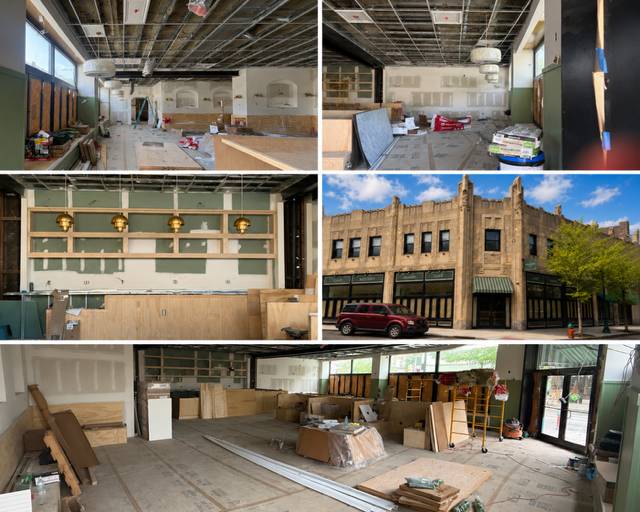
Our 40% partner who was managing the property had an idea - he asked and we allowed him to use $70,000 of the working capital to start businesses to fill the vacancies. He started, got approvals for, and built the necessary buildouts for a daycare center, a smoothie shop, and a religious bookstore. He was able to sell these businesses within a year of startup, and at a $45,000 profit. We okayed him keeping the profit for himself to partially comp him for the effort. After a year of stabilized occupancy we sold the center for a rather good size profit.
I love it. Great example of adapting to the realities of the market. Many lenders materially reduced exposure to tenant fit-outs, creating friction between tenant requirements and the rental economics landlords require to justify incurring substantial improvement costs. The disconnect is particularly pronounced in the hospitality sector where it is rarely economical for landlords to fund significant tenant improvements and provide concessions, when relying solely upon traditional rental income. Same holds true for smaller retail tenants who similarly struggle to obtain funding.
I learned this lesson the hard way trying to lease a vacant restaurant space. After running the numbers, I concluded it made more sense to build out the space turnkey at cost and acquire a liquor license and partner with an experienced operator. I could collect fair market rent plus a revenue share for less than it would cost for me to fund tenant requested improvements, incur their requested concessions, brokerage fees, and other incentives which are almost always required under a traditional lease in this market. This is a direct result of the tenant becoming increasingly reliant on the building owner to play the role or financier as well as landlord.
I expect to see far more creativity in the small retail and hospitality sectors moving forward and I don't see that changing anytime soon.
Nice Don! Have you bought or sold any other businesses or was that your first?
@Don Konipol very cool! What was the coolest or most fun business you have been a part of?
Do you tend to look for any specific business/industry right now or just whatever makes sense If you believe you can make money/scale it and place an operator?
@Don Konipol very cool! What was the coolest or most fun business you have been a part of?
Do you tend to look for any specific business/industry right now or just whatever makes sense If you believe you can make money/scale it and place an operator?
The only business I've been in that I enjoy(ed) is (was) real estate - brokerage (commercial), investing, lending (private commercial mortgage) and syndication/fund management. The auto aftermarket, international trade, wholesale industrial parts, and auto salvage yard businesses I've owned either outright or in partnership consumed too much time, required too much capital, were too labor and hence people management intensive, and the ROI was too unpredictable and subject to market disruptions, increased competition, government intervention, and the whim of financing institutions providing financing subject to being terminated with 90 day notice. Those were only "fun" the day I sold them!
But hey, I’m a REAL ESTATE GUY!
Great post, I like the creativity to find a solution. These are the types of posts I enjoy reading here.
@Don Konipol Interesting.. Always fun to talk businesses and ideas. At the end of the day it's a great way to help accelerate RE investing as well!
Is there a sector you have been focusing on right now in the commercial space or tend to love the most? Have you entered in or bought into the hype of the senior housing market needs in the next 10 years? I'm a listener/follower of rod khleif locally here in Sarasota and he's been focusing hardcore on that market talking about the needs and return potential.
I love it. Great example of adapting to the realities of the market. Many lenders materially reduced exposure to tenant fit-outs, creating friction between tenant requirements and the rental economics landlords require to justify incurring substantial improvement costs. The disconnect is particularly pronounced in the hospitality sector where it is rarely economical for landlords to fund significant tenant improvements and provide concessions, when relying solely upon traditional rental income. Same holds true for smaller retail tenants who similarly struggle to obtain funding.
I learned this lesson the hard way trying to lease a vacant restaurant space. After running the numbers, I concluded it made more sense to build out the space turnkey at cost and acquire a liquor license and partner with an experienced operator. I could collect fair market rent plus a revenue share for less than it would cost for me to fund tenant requested improvements, incur their requested concessions, brokerage fees, and other incentives which are almost always required under a traditional lease in this market. This is a direct result of the tenant becoming increasingly reliant on the building owner to play the role or financier as well as landlord.
I expect to see far more creativity in the small retail and hospitality sectors moving forward and I don't see that changing anytime soon.

I love it. Great example of adapting to the realities of the market. Many lenders materially reduced exposure to tenant fit-outs, creating friction between tenant requirements and the rental economics landlords require to justify incurring substantial improvement costs. The disconnect is particularly pronounced in the hospitality sector where it is rarely economical for landlords to fund significant tenant improvements and provide concessions, when relying solely upon traditional rental income. Same holds true for smaller retail tenants who similarly struggle to obtain funding.
I learned this lesson the hard way trying to lease a vacant restaurant space. After running the numbers, I concluded it made more sense to build out the space turnkey at cost and acquire a liquor license and partner with an experienced operator. I could collect fair market rent plus a revenue share for less than it would cost for me to fund tenant requested improvements, incur their requested concessions, brokerage fees, and other incentives which are almost always required under a traditional lease in this market. This is a direct result of the tenant becoming increasingly reliant on the building owner to play the role or financier as well as landlord.
I expect to see far more creativity in the small retail and hospitality sectors moving forward and I don't see that changing anytime soon.

Cool share!
@Don Konipol, great story, and Stuart's point about lenders pulling back on tenant-improvement funding is spot on, that gap is basically what forced your partner into becoming the tenant himself.
From a tax side, a few things worth flagging on the back end. That $45,000 your partner kept needs to be properly characterized, guaranteed payment, special allocation, or compensation, since each is taxed differently and should be documented in the partnership agreement, not just agreed to verbally. The refinance likely shifted basis across your 60/40 split too, and if any of that past-due debt got forgiven rather than just refinanced, that's cancellation of debt income separate from your sale gain. Also, with 80% vacancy for a stretch, there are probably suspended passive losses from those years sitting unused, worth someone pulling the old K-1s to confirm those get applied against the sale gain. Nice turnaround overall. Happy to connect!
To keep the thread active, I’ll share another somewhat similar past experience. This goes back over 25 years, so prices need to be mentally adjusted, economic situation has changed, etc. But I think the basic concept holds true.
Acquaintance of mine owned an auto repair facility, land, building, equipment and business. Unfortunately, thru management neglect, nefarious operating methods and health issues the business went belly up leaving the owner with $900,000 in liabilities. He filed BK, and suggested I might be interested in contacting the BK trustee. I did, and informed trustee that the property had an environmental issue - the owner had been dumping motor oil and transmission fluid in the back lot! (Part of the $900k in liabilities were fines for this activity).
Long story shortened, I was able to purchase the property, equipment, etc for $115,000 out of BK “AS IS”. The environmental cleanup had been estimated at $55,000; It actually cost me less than $3500! I scraped the substandard auto lifts and other equipment, and had the equipment with some life left refurbished. I purchased the company name for a nominal sum from the former owner (didn’t want to have to decommission $15,000 worth of signage) and purchased refurbished and discounted lifts and other equipment to make the auto repair business “turn key”. All in I was at about $147,000.
I sold the business to an investor/operator for $75,000 with a 5 year lease at $3,000 per month gross. So my net monthly is $2200, or 26,400 annual, on an invested capital amount of $147,000 less the $75,000 business sell price or $72,000, for an annual ROI of 37%. And here's where I made my big mistake, I agreed to give the tenant/business buyer an option to purchase the real estate for $335,000 never thinking he's be able to get financing. He did, and so although I profited greatly, I had to find another property to reinvest in.
This is such a great example of why commercial real estate is so much more than simply buying a building and collecting rent.
Going from 80% vacancy to actually creating businesses to occupy the space, selling those businesses, stabilizing the center and then selling the property is incredibly creative.
What stands out to me is that you didn’t just wait for the market to solve the vacancy problem you created a solution that ultimately improved the underlying asset.
I’m curious: when you eventually sold the center, how much of the increase in value would you attribute to the stabilized occupancy versus general market appreciation?
Really interesting deal and strategy.
This is such a great example of why commercial real estate is so much more than simply buying a building and collecting rent.
Going from 80% vacancy to actually creating businesses to occupy the space, selling those businesses, stabilizing the center and then selling the property is incredibly creative.
What stands out to me is that you didn’t just wait for the market to solve the vacancy problem you created a solution that ultimately improved the underlying asset.
I’m curious: when you eventually sold the center, how much of the increase in value would you attribute to the stabilized occupancy versus general market appreciation?
Really interesting deal and strategy.
We purchased 60% ownership interest in a retail/service center just after Covid hit for essentially nothing except (1) the ability to refinance the existing 12% loan past due for a 15 year loan at 4% fixed rate interest, and putting up $200,000 of working capital to carry the property while most rent was not being collected. As it so happens all our tenants except the largest moved out or went belly up - leaving 80% vacancy.
Our 40% partner who was managing the property had an idea - he asked and we allowed him to use $70,000 of the working capital to start businesses to fill the vacancies. He started, got approvals for, and built the necessary buildouts for a daycare center, a smoothie shop, and a religious bookstore. He was able to sell these businesses within a year of startup, and at a $45,000 profit. We okayed him keeping the profit for himself to partially comp him for the effort. After a year of stabilized occupancy we sold the center for a rather good size profit.
Don,
I wouldn't read this as a story about filling vacancies. I'd read it as a story about refusing to accept the problem exactly as it was handed to you.
You had an 80% vacancy problem.
Most owners would treat that as a leasing problem — find tenants, offer concessions, lower the rent, call the brokers, and wait by the phone like it's 1987.
Your partner apparently looked at the identical property and asked a considerably more useful question: what if we stop searching for the business and simply create it ourselves?
That's strategic thinking, not leasing activity — and the distinction matters more than people give it credit for.
Alexander the Great didn't defeat armies by politely accepting whatever battlefield the enemy happened to offer him.
He looked for the seam where the existing arrangement could be broken open.
Different century, entirely different problem, but the principle travels remarkably well: don't fight your opponent where he's strongest if you can simply change the geometry of the engagement.
That's exactly what happened here.
You had vacant space, available capital, an ownership structure loose enough to permit experimentation, and a property whose value was slowly being strangled by the absence of any income at all.
So instead of asking the market to hand you tenants, you manufactured operating businesses that could occupy the space, become viable in their own right, and eventually be sold.
That's the part I find genuinely fascinating.
You didn't just fill vacancies. You manufactured occupancy from nothing.
Then, the businesses themselves became monetizable assets in their own right, independent of the real estate that housed them.
The $70,000 wasn't simply "working capital" sitting on a balance sheet. It became seed capital for three separate experiments.
Two of them could have failed outright. All three could have collapsed. But the downside was bounded, while the upside extended well past whatever rent those businesses would ever have paid as mere tenants.
That's a fundamentally different way of thinking about capital than most owners ever attempt.
Aristotle would probably have dragged the conversation back to first principles and demanded to know, precisely, what was actually creating the value.
The walls certainly weren't — the walls were already standing there, doing nothing, collecting dust and property tax.
The value arrived the moment productive activity moved inside them.
There's a broader lesson here for anyone who owns commercial real estate and treats vacancy as a fixed condition rather than a solvable one:
When you have a vacancy problem, don't assume your only three options are lease it, discount it, or sell it — that's the menu everyone else is working from, which is exactly why it's crowded.
Ask instead: what economic activity could exist here that doesn't exist today? That's the actual question.
Sometimes the answer is another tenant. Sometimes it's a different use entirely. Sometimes it's an operating company you build yourself. And sometimes the strangest-looking idea on the whiteboard is the one that quietly works while everyone else is still calling brokers.
What I particularly admire about your story, though, is that nobody pretended any of this was passive. Someone had to secure the approvals. Someone had to build out the spaces. Someone had to actually operate the businesses, day after unglamorous day.
Someone had to absorb the risk that the market simply wouldn't cooperate. And somebody had to recognize that the person doing all of that work deserved to participate meaningfully in the upside, rather than being handed a management fee and a thank-you note.
That, to me, is Business Beyond Reproach (<--- Thats my tag line; no one is allowed to use it, Haha) not just doing everything legally, which is a rather low bar, but structuring the relationship so the people actually creating the value have a genuine reason to keep creating it.
The $45,000 wasn't the interesting part of this story. The incentive underneath it was. He created value. You let him keep a meaningful share of it. The property stabilized. The ownership made money.
Everybody left the table better off than they arrived — which is a rarer outcome in this business than anyone likes to admit.
That's good business.
And, I'd be curious about one thing, if you're still watching this thread: which of the three businesses taught you the most about the property itself? Because I'd wager the answer isn't necessarily the one that made the most money.
Sometimes the best return on a distressed asset isn't the first dollar it produces. It's what the asset ultimately teaches you about what it was actually capable of becoming all along.
-DC Dobbs
Gulf Coast Emerald, LLC
Don,
I wouldn't read this as a story about filling vacancies. I'd read it as a story about refusing to accept the problem exactly as it was handed to you.
You had an 80% vacancy problem.
Most owners would treat that as a leasing problem — find tenants, offer concessions, lower the rent, call the brokers, and wait by the phone like it's 1987.
Your partner apparently looked at the identical property and asked a considerably more useful question: what if we stop searching for the business and simply create it ourselves?
That's strategic thinking, not leasing activity — and the distinction matters more than people give it credit for.
Alexander the Great didn't defeat armies by politely accepting whatever battlefield the enemy happened to offer him.
He looked for the seam where the existing arrangement could be broken open.
Different century, entirely different problem, but the principle travels remarkably well: don't fight your opponent where he's strongest if you can simply change the geometry of the engagement.
That's exactly what happened here.
You had vacant space, available capital, an ownership structure loose enough to permit experimentation, and a property whose value was slowly being strangled by the absence of any income at all.
So instead of asking the market to hand you tenants, you manufactured operating businesses that could occupy the space, become viable in their own right, and eventually be sold.
That's the part I find genuinely fascinating.
You didn't just fill vacancies. You manufactured occupancy from nothing.
Then, the businesses themselves became monetizable assets in their own right, independent of the real estate that housed them.
The $70,000 wasn't simply "working capital" sitting on a balance sheet. It became seed capital for three separate experiments.
Two of them could have failed outright. All three could have collapsed. But the downside was bounded, while the upside extended well past whatever rent those businesses would ever have paid as mere tenants.
That's a fundamentally different way of thinking about capital than most owners ever attempt.
Aristotle would probably have dragged the conversation back to first principles and demanded to know, precisely, what was actually creating the value.
The walls certainly weren't — the walls were already standing there, doing nothing, collecting dust and property tax.
The value arrived the moment productive activity moved inside them.
There's a broader lesson here for anyone who owns commercial real estate and treats vacancy as a fixed condition rather than a solvable one:
When you have a vacancy problem, don't assume your only three options are lease it, discount it, or sell it — that's the menu everyone else is working from, which is exactly why it's crowded.
Ask instead: what economic activity could exist here that doesn't exist today? That's the actual question.
Sometimes the answer is another tenant. Sometimes it's a different use entirely. Sometimes it's an operating company you build yourself. And sometimes the strangest-looking idea on the whiteboard is the one that quietly works while everyone else is still calling brokers.
What I particularly admire about your story, though, is that nobody pretended any of this was passive. Someone had to secure the approvals. Someone had to build out the spaces. Someone had to actually operate the businesses, day after unglamorous day.
Someone had to absorb the risk that the market simply wouldn't cooperate. And somebody had to recognize that the person doing all of that work deserved to participate meaningfully in the upside, rather than being handed a management fee and a thank-you note.
That, to me, is Business Beyond Reproach (<--- Thats my tag line; no one is allowed to use it, Haha) not just doing everything legally, which is a rather low bar, but structuring the relationship so the people actually creating the value have a genuine reason to keep creating it.
The $45,000 wasn't the interesting part of this story. The incentive underneath it was. He created value. You let him keep a meaningful share of it. The property stabilized. The ownership made money.
Everybody left the table better off than they arrived — which is a rarer outcome in this business than anyone likes to admit.
That's good business.
And, I'd be curious about one thing, if you're still watching this thread: which of the three businesses taught you the most about the property itself? Because I'd wager the answer isn't necessarily the one that made the most money.
Sometimes the best return on a distressed asset isn't the first dollar it produces. It's what the asset ultimately teaches you about what it was actually capable of becoming all along.
-DC Dobbs
Gulf Coast Emerald, LLC
Don, this is exactly the kind of post I wish we saw more often on platforms, instead of the seventeenth "just closed on my first deal!" announcement of the week.
Not because of the $45,000 profit, and not even because of the eventual sale. It's because you just exposed a way of thinking that almost nobody gets taught, and fewer still bother teaching once they've stumbled onto it themselves.
There are strip centers scattered across this entire country sitting at 50%, 80%, sometimes a full 100% vacant for years at a stretch — quietly rotting in plain sight. The owner keeps faithfully paying taxes, insurance, maintenance, and debt service while a broker slaps a listing on the market and everyone stands around waiting for someone else to solve a problem they've collectively decided isn't theirs to solve creatively.
And I've always wondered at what precise point we stop asking "who can I find to lease this space?" and start asking the considerably more interesting question: "what business could I create that actually belongs in this space?"
That isn't a novel idea, incidentally. Ray Kroc understood it decades ago. Ask him what business he was in, and hamburgers would have been the wrong answer — a rounding error, really. He understood the leverage sitting underneath the business itself: the real estate, and the locations that business allowed him to quietly acquire and control while everyone else was still admiring the milkshake machine.
Your 40% partner grasped the same fundamental principle in your deal, whether or not he'd ever heard of Kroc. He didn't simply go find tenants like everyone else on that block. He looked at an 80% vacancy and manufactured operating businesses that converted the vacancy itself into an asset — which is a fundamentally different act of imagination than "leasing," however similar the paperwork might look.
What strikes me most, though, is that you actually shared it.
Because here's where I think the real problem lives — not a shortage of intelligence, which this industry has plenty of, but a persistent failure to pass along what we learn. Someone figures out a genuinely better way to think about a problem, makes it work, makes money doing it, and then quietly moves on to the next deal without ever teaching the next person what they just discovered. Institutional memory in this business has the shelf life of a mayfly.
Then five years later, there are still empty strip centers everywhere, and the next generation gets to rediscover the same insight from scratch, at full cost, with no one having warned them it was available.
So I genuinely appreciate you putting this story out here, Don. You're not merely narrating a deal you made — you're handing somebody else permission to question the premise they've been quietly operating under without ever examining it.
Sometimes the problem isn't the real estate at all. Sometimes it's the way we've been trained to think about what real estate is even for — and, if I may stretch the point slightly further than you did, about what any of this is actually for in the first place.
I genuinely tip my cap to you.
-DC Dobbs
Gulf Coast Emerald, LLC