Help I Have Analysis Paralysis

Help I Have Analysis Paralysis

New to Real Estate · Member since 2025 · 2 posts · 8 votes

Hello, I currently live in California and have decided to invest out-of-state since California seems way too unaffordable. I am inclined to buy multi-family properties, but I'm also open to single-family properties, and I am primarily looking for cash flow.

I have been looking at Cleveland, Ohio—specifically the Garfield Heights, Maple Heights, and Euclid areas—to buy a duplex or multi-family of some sort. However, I am feeling a bit stuck in analysis paralysis because I am worried about whether I am actually making the correct choice, or if I should be choosing Cincinnati or Columbus instead of Cleveland.

I am a little bit stuck and have been hesitant about investing in Cleveland now. Am I looking into the wrong market? Should I be looking somewhere else? Please help, thank you in advance.

7Reply
724 views

Most Popular Reply

Specialist · I give advice - [email protected] - I focus on states where investing is profitable, reasonably safe & secure · Member since 2026 · 196 posts · 67 votes
2d
Quote from @Alejandro N Lopez:

Hello, I currently live in California and have decided to invest out-of-state since California seems way too unaffordable. I am inclined to buy multi-family properties, but I'm also open to single-family properties, and I am primarily looking for cash flow.

I have been looking at Cleveland, Ohio—specifically the Garfield Heights, Maple Heights, and Euclid areas—to buy a duplex or multi-family of some sort. However, I am feeling a bit stuck in analysis paralysis because I am worried about whether I am actually making the correct choice, or if I should be choosing Cincinnati or Columbus instead of Cleveland.

I am a little bit stuck and have been hesitant about investing in Cleveland now. Am I looking into the wrong market? Should I be looking somewhere else? Please help, thank you in advance.

Do you understand the differences between buying multifamily for financing, maintenance, landlording, taxes, and so on vs the same for single family? Do you know the challenges of buying 2,300 hundred miles away in a different timezone vs 300 hundred miles away. Do you understand the legal and cultural difference? The list continues. Unless you have lived in Cleveland or have family in Cleveland or have a trusted guide in Cleveland, you do well to have analysis paralysis. Buying properties is not like taking a vacation and visiting the area. You can't just leave a bad situation. It's very expensive to sell a property after making a bad decision.

I would rather your very first experience be successful and pain free and be a lot closer and manageable, then to try to navigate all of those obstacles on the first attempt. We encourage our southern California client to try the Phoenix metro or the Las Vegas metro first, get some experience, learn what works and doesn't work first. then make longer term decisions. There are deals to be had everywhere, it's just a question of how much time you want to spend learning up front so you aren't taking up all your time later trying to resolve problems.

See this reply in the discussion

24 Replies

Jump to latestLatest
  • Jimmy LieuBusiness Member
    Real Estate Agent · Columbus, OH · Member since 2019 · 3k+ posts · 2k+ votes
    3d

    Hi Alejandro, welcome to BiggerPockets. Analysis paralysis is really common when you're picking a market from out of state. It helps to compare markets on the same few things: price-to-rent, property taxes, the age and condition of the housing stock, and how easy it is to find a solid manager. Cleveland's east side suburbs like Garfield Heights, Maple Heights and Euclid can look strong on rent-to-price, but the housing is older, so budget real money for repairs and capex, and factor in Cuyahoga County property taxes and tenant turnover. Run every deal with actual tax bills and repair estimates.

    Since cash flow is your priority, Columbus deserves a close look next to Cleveland. A lot of the deals I see there hit the 1% rule and still cash flow after every expense, and most come with $20K-$30K of built-in equity on day one. Single families mostly run $120K-$180K, and multifamily starts around $200K. It's also landlord-friendly, with evictions that wrap in about 30 days when uncontested.

    Happy to connect, and once you narrow it down I can introduce you to investor-friendly lenders, property managers and contractors here.

  • James JonesPro Member
    Investor · Collierville, TN 38017 · Member since 2017 · 1k+ posts · 710 votes
    3d

    Alejandro, the cure for analysis paralysis is to pick one market and learn it cold. I buy in 9 Memphis ZIPs and I do not buy outside them, because I know those streets, those rents, and those rehabs. Pick one market, not three, and run every deal through the same numbers: purchase price, rehab from your own actuals, ARV from sold comps, and rent. For me that is single-family under $100,000, ARV $180,000 to $265,000, 3 bedrooms or more, Section 8 rent $1,395 to $1,950, and the 1% rule on the all-in.

    Underwrite 10 deals in that one market. You will learn more from 10 real underwrites than from another month of comparing cities. If the numbers work, move. If they do not, pass fast. What is the one market you know best right now?

  • Realtor · Memphis, Shelby County · Member since 2026 · 349 posts · 124 votes
    2d

    Alejandro, you're not stuck because you lack information — you're stuck because you're trying to pick the perfect market before you've underwritten a single deal in any of them, and that's a trap a lot of first-time out-of-state investors fall into. I'd echo James here: pick one market, even if it's just for the next 30 days, and underwrite ten real deals there with honest numbers for taxes, insurance, repairs, vacancy, and management. Talk to a property manager in that market before you buy, not after — they'll tell you quickly which streets lease well and which ones turn over constantly. Cleveland, Columbus, and Cincinnati can all work; the difference is usually the team on the ground and whether the numbers hold up after every expense. Give yourself a decision date, and let the underwriting decide.

  • Specialist · I give advice - [email protected] - I focus on states where investing is profitable, reasonably safe & secure · Member since 2026 · 196 posts · 67 votes
    2d
    Quote from @Alejandro N Lopez:

    Hello, I currently live in California and have decided to invest out-of-state since California seems way too unaffordable. I am inclined to buy multi-family properties, but I'm also open to single-family properties, and I am primarily looking for cash flow.

    I have been looking at Cleveland, Ohio—specifically the Garfield Heights, Maple Heights, and Euclid areas—to buy a duplex or multi-family of some sort. However, I am feeling a bit stuck in analysis paralysis because I am worried about whether I am actually making the correct choice, or if I should be choosing Cincinnati or Columbus instead of Cleveland.

    I am a little bit stuck and have been hesitant about investing in Cleveland now. Am I looking into the wrong market? Should I be looking somewhere else? Please help, thank you in advance.

    Do you understand the differences between buying multifamily for financing, maintenance, landlording, taxes, and so on vs the same for single family? Do you know the challenges of buying 2,300 hundred miles away in a different timezone vs 300 hundred miles away. Do you understand the legal and cultural difference? The list continues. Unless you have lived in Cleveland or have family in Cleveland or have a trusted guide in Cleveland, you do well to have analysis paralysis. Buying properties is not like taking a vacation and visiting the area. You can't just leave a bad situation. It's very expensive to sell a property after making a bad decision.

    I would rather your very first experience be successful and pain free and be a lot closer and manageable, then to try to navigate all of those obstacles on the first attempt. We encourage our southern California client to try the Phoenix metro or the Las Vegas metro first, get some experience, learn what works and doesn't work first. then make longer term decisions. There are deals to be had everywhere, it's just a question of how much time you want to spend learning up front so you aren't taking up all your time later trying to resolve problems.

  • Henry ClarkPro Member
    Developer · Member since 2020 · 4k+ posts · 4k+ votes
    2d

    OP.

    1. I always believe in using an Unfair Advantage. May be wrong, but if you're of Spanish descent and can speak Spanish I would go for that sub market.

    2. Analysis Paralysis- I'm going to add to your paralysis. I would wait till the 2nd and 3rd quarter of next year to purchase. Interest rates will be higher, my perspective; but I think investors like yourself, Airbnb, etc will be selling more properties should the stock market and the economy turn worse. Also, what is your personal situation? Do you have equity in your home? Sell and take the married 2 of 5-year Capital gain $500k tax advantage and do all over again in a better property for yourself. You control the Tenant-you, no turnover costs, no management fee, California is a high market- but you would be selling and buying in the same market. Plus, if you pick the correct property, you can do an ADU, BRRRR, down payment will be lower, interest rate will be lower, etc. I would rather invest in a high-priced capital appreciation market than a low appreciation/low return market.

    3. As the poster above stated, recommend you go closer to home. Phoenix and Las Vegas would be great. Plus, you might find Spanish submarkets.

  • Realtor · Columbus, Franklin County · Member since 2026 · 144 posts · 56 votes
    2d

    Alejandro — analysis paralysis usually means you are comparing cities instead of underwriting deals. I invest in Columbus and work with investor buyers on value-add 1-4s here, so I will not pretend Cleveland, Cincinnati, and Columbus are interchangeable, and I will not tell you one metro is "the" right answer from California. What I would do: pick one market for the next 30 days and run the same checklist on real listings. For every property I want the actual tax bill (not a rule of thumb), a real insurance quote, leased rent comps for that unit type (not asking rents), a repair/capex estimate that matches the age of the house, vacancy and turnover, and a full property-management fee even if you hope to self-manage later. Older Northeast Ohio housing can look cheap on a rent-to-price screen and still lose the year if the roof, plumbing, electric, or a vacant winter sit unpriced. Talk to a local manager before you buy, not after — ask how they screen, their repair-approval limit, leasing and renewal fees, and how they handle vacant-unit winter checks. Distance matters too: a first out-of-state duplex is a team decision as much as a market decision. If you want a Columbus-specific read, I am happy to walk through how I would underwrite one address side by side with a Cleveland listing using the same assumptions.

  • Sheldon DavidBusiness Member
    Technology · Rockville MD · Member since 2026 · 18 posts · 3 votes
    2d

    Alejandro, we own two rentals and are actively looking for more, and I can relate to wanting to feel certain before making the next purchase.

    One thing that helps is separating “Which market is best?” from “What would make a deal work for me?” Start with a short buy box: your budget, property type, cash flow target, and how much rehab you’re comfortable taking on. Then use the same assumptions to compare a few properties in each market.

    For an out-of-state purchase, I’d also interview local property managers before committing. Ask about realistic rents, vacancy, maintenance, management fees, and the specific neighborhoods they’re willing to manage. Build those costs into your numbers along with taxes, insurance, and reserves for major repairs.

    I wouldn’t rule Cleveland in or out based on the city alone. The neighborhood, property condition, purchase price, and people you have locally will matter a lot. You don’t need to prove it’s the best market in Ohio—you need a property that meets your criteria and holds up when things cost more or take longer than expected.

    Property IQ
    View Page
  • Dan H.Pro Member
    Investor · Poway, CA · Member since 2015 · 7k+ posts · 8k+ votes
    2d

    I am not a fan of Cleveland RE investing (I can provide interesting numbers if you DM me such as the population has declined every decade since the 1950s) or newbies starting where they cannot easily drive round trip in a day.

    However, virtually every market can work. There are many RE investors succeeding in Cleveland. You have hurdles to overcome in virtually every market. In addition, most markets have submarkets with substantially different conditions than the broader market. In most California markets there is the price of entry, poor (typically negative at high LTV) cash flow, and tenant friendly rules. Recognizing virtually all (I actually believe all, but used virtually all in case there is a perfect market somewhere) markets have hurdles means you cannot eliminate a market just because it has some hurdles.

    How do you overcome the hurdles? Preparation/education/planning and a good team is high on the list.

    Thoroughly research your candidate markets. Cash flow is high on your list but I suspect you mean cash flow over the hold and not necessarily the initial cash flow (good initial cash flow markets have historically had poor long term cash flow). How do you project long term cash flow? Economic and development indicators. Is population increasing? Is economy diverse? Are wages growing? How hard/costly is it to add new housing supply? Even historical data if conditions have not substantially changed.

    My belief is RE investing is challenging today. Two recent studies both concluded that the rent to residential RE price ratio has never been worse. Combine this with interest rates that are near the high point for this century. This implies finding RE to purchase that provides the return that justifies the risk and effort of residential RE is not easy. Your analysis paralysis is likely protecting you from substandard RE investments.

    Good luck

  • Remington LymanBusiness Member
    Real Estate Agent · Columbus, OH · Member since 2017 · 6k+ posts · 7k+ votes
    2d
    Quote from @Alejandro N Lopez:

    Hello, I currently live in California and have decided to invest out-of-state since California seems way too unaffordable. I am inclined to buy multi-family properties, but I'm also open to single-family properties, and I am primarily looking for cash flow.

    I have been looking at Cleveland, Ohio—specifically the Garfield Heights, Maple Heights, and Euclid areas—to buy a duplex or multi-family of some sort. However, I am feeling a bit stuck in analysis paralysis because I am worried about whether I am actually making the correct choice, or if I should be choosing Cincinnati or Columbus instead of Cleveland.

    I am a little bit stuck and have been hesitant about investing in Cleveland now. Am I looking into the wrong market? Should I be looking somewhere else? Please help, thank you in advance.

    I would start by building out a team in each of those 3 markets and see which team you feel more comfortable with and which team brings you better deals.

  • Investor · Milwaukee - Mequon, WI · Member since 2010 · 5k+ posts · 7k+ votes
    2d

    Have you ever been to Ohio? How much time have you spent there? You are hesitant for a good reason, you are trying to pick the "perfect market" but on a gut level you understand the problems that come with investing 2000 miles away. You have a disadvantage to every local investor and that gap comes from market knowledge and market access. Both create friction and a disadvantage to the tune of 20% locals don't have. But you can narrow the gap by picking a market that is closer and one you know more about. Like Henry Clark said, find your unfair advantage. And as Dan pointed out cashflow, especially in year 1, is a very poor metric and goal, as these deals tend to be long term losers.

    You want to underwrite deals with a 10 year perspective. Go to the BP calculator section and put in a 1 million property and 10k monthly rent (let's think of this as a 4 family in a nice town) and then see what happens after year 10, 20 and 30 - specifically where your profit is coming from. Hint: cash flow is not #1

  • Member since 2026 · 62 posts · 25 votes
    2d

    Those three suburbs make a fair comparison set, and the stuck feeling usually eases once the question shifts from which market to which streets. For the city of Cleveland itself (not Garfield Heights, Maple Heights or Euclid) we gather recent residential permit filings and board up notices from official records, one time, not a subscription, which shows where renovation is starting and where houses are sitting vacant. Is the city proper on your shortlist, or are you staying with the suburbs?

  • Lender · Boynton Beach, FL · Member since 2026 · 240 posts · 110 votes
    2d

    Alejandro, I get it. That feeling is normal.

    I see a lot of guys from California in the same spot. California is expensive, so they look at Ohio, then they start looking at Cleveland, Cincinnati, Columbus, then they look at 50 deals and never make an offer. It is not that they are lazy, it is that they have too many options.

    From what I see on my side, the guys who actually get unstuck usually do one thing first. They stop trying to pick the perfect market, and they pick one market and one property type for the next 90 days.

    You said you are looking for cash flow and you are open to duplex, multi, or single family. That is a lot to compare at once. A duplex in Garfield Heights and a single family in Euclid are two totally different deals, even if they are both in Cleveland.

    What helped a lot of people I have talked to is to run it backwards. Figure out what payment you can actually cover, then figure out what rent you need in that area to cover it. If the rent in that neighborhood does not cover it, it does not matter if it is Cleveland or Columbus, the numbers will not work.

    And for out of state, the team matters more than the city. Do you have someone on the ground there who will actually tell you the truth about a street? Garfield, Maple, Euclid, they can change block by block. A good property manager there will save you more money than picking the perfect city.

    Quick question for you, out of Cleveland, Cincinnati, and Columbus, which one do you already have even one contact in? A realtor, a manager, a contractor, anyone? That is usually the best place to start, because you are not starting from zero.

    Do not try to get it perfect. Try to get one deal underwritten right, then you will know a lot more than you do from looking at 50 listings.

  • Lender · Cartersville, GA · Member since 2026 · 19 posts · 5 votes
    2d

    Alejandro, a first duplex is our bread and butter. We fund the purchase or a refinance later. I'm actually building one right now myself.

    I also work with several investors buying in the Cleveland area from out of state. Wherever you land, run the deal on rent, not just price. On a DSCR loan the lender qualifies the property on what it rents for instead of your W-2, which helps a lot when you live in California.

    When you get one under contract, I'm happy to look at it with you.

  • Jordan FioreBusiness Member
    Real Estate Agent · Cincinnati, OH · Member since 2020 · 204 posts · 151 votes
    1d

    Hi Alejandro — you're asking the right question, and I'll add the Cincinnati side since that's my market. Cleveland's east-side suburbs will usually win on rent-to-price, and Columbus will usually win on growth, but Cincinnati tends to sit in the middle: real cash flow on small multifamily, a more diversified job base, and a deeper buyer pool when you eventually sell. That middle ground matters more on the exit than people think, especially for a first out-of-state deal.

    The advice in this thread to pick one market and underwrite ten real deals is the right cure for the paralysis. Whichever city you pick, run the same numbers on each one: actual tax bill, a real insurance quote, leased comps (not asking rents) within a half-mile, and a PM's rent and turn timeline for that specific street. On older Ohio multifamily, those items will tell you more than any city comparison.

    If Cincinnati makes your shortlist, happy to walk through how the numbers compare for the same kind of duplex or small multifamily you're looking at in Garfield Heights or Euclid — same assumptions, side by side.

    Jordan Fiore, Realtor - eXp Realty568 Reviews
  • Min ZhangBusiness Member
    Real Estate Agent · Member since 2022 · 1k+ posts · 1k+ votes
    1d

    Hey Alejandro! Cleveland can be worth looking into if cash flow is your main goal, but I wouldn’t rush into choosing a city just yet. I’d compare actual deals in Cleveland, Columbus, and Cincinnati, looking at rental income, property taxes, insurance, and repair costs. I’d also pay close attention to the specific neighborhoods since each market can vary quite a bit. Sometimes finding the right deal matters more than choosing the most popular city. Have you started analyzing any specific properties yet?

  • Real Estate Broker · Cleveland, OH · Member since 2023 · 254 posts · 85 votes
    1d

    I've known many investors who suffered from analysis paralysis.

    Analysis paralysis is a condition that investors suffer from when they're afraid of making a mistake.

    Because if you had substantial investment experience, then you already know what works and what doesn't.

    The cure for analysis paralysis is experience. And you're in luck. Experience is for sale.

    You can pay for experience upfront, or pay for mistakes later. Either way, you’re going to pay.

  • Arman AhmedPro Member
    Real Estate Agent · Columbus Cleveland Dayton, OH · Member since 2024 · 2k+ posts · 972 votes
    1d
    Quote from @Alejandro N Lopez:

    Hello, I currently live in California and have decided to invest out-of-state since California seems way too unaffordable. I am inclined to buy multi-family properties, but I'm also open to single-family properties, and I am primarily looking for cash flow.

    I have been looking at Cleveland, Ohio—specifically the Garfield Heights, Maple Heights, and Euclid areas—to buy a duplex or multi-family of some sort. However, I am feeling a bit stuck in analysis paralysis because I am worried about whether I am actually making the correct choice, or if I should be choosing Cincinnati or Columbus instead of Cleveland.

    I am a little bit stuck and have been hesitant about investing in Cleveland now. Am I looking into the wrong market? Should I be looking somewhere else? Please help, thank you in advance.

    Hey Alejandro, I wouldn’t get too caught up trying to pick the perfect market. If cash flow is your main goal, the Midwest is definitely worth exploring. You can still find good opportunities in duplexes and small multifamily, especially off-market deals that aren't widely advertised. Investing out of state is very doable when you have the right local lenders, property managers, and contractors in place. I’d focus on finding a solid deal with numbers that work rather than spending too much time comparing markets.

  • Jake AndronicoBusiness Member
    Realtor · Reno, NV · Member since 2019 · 1k+ posts · 938 votes
    1d

    Highly recommend house hacking starting out. Being near (or in) your rentals will help you learn so much nuance. I house hacked at 22 and it's completely changed my life.

    Here's what I learned, and what I regret:

    https://www.biggerpockets.com/forums/922/topics/1133476-house-hacking-at-22-what-i-regret

  • Marco FioreBusiness Member
    Real Estate Agent · Cincinnati, OH · Member since 2022 · 87 posts · 73 votes
    21h

    Hey Alejandro — the paralysis usually isn't a market problem, it's a criteria problem. Cleveland, Cincinnati, and Columbus can all work, but they work differently, and comparing them in the abstract will keep you stuck. Pick one market for 30 days and underwrite 10 real deals there — actual listings, actual rents, actual taxes and insurance — and see which ones pencil. A couple of practical notes from working with out-of-state buyers in Cincinnati: the price point lets your capital go further than Columbus on a 2-4 unit, and neighborhood matters more than the city average, so block-level rents and tenant quality vary a lot. Garfield Heights, Maple Heights, and Euclid have the same dynamic — cheap entry, but you have to know which streets hold up. Once you have three deals underwritten in one market, the decision usually makes itself.

    eXp Realty - Marco Fiore Real Estate520 Reviews
  • Tyler MizeresPro Member
    Inspector · Cleveland, OH · Member since 2019 · 2 posts · 0 votes
    17h

    Hi Alejandro,

    While I am no numbers expert, I am an expert on housing in Cleveland. I’ve been a home inspector here for 10 years, and may have some useful advice—

    Multi-families, such as duplexes and triplexes, are extremely popular here for out of state investors, and my team inspects around 500 of them each year. The problem with duplexes in Cleveland is that the vast majority of them were built in the early 1900’s, and since the multi family markets that cash flow well around here aren’t exactly high grade neighborhoods, such multi family properties tend to be poorly maintained (not all, of course, but many). With old age and delayed maintenance comes hidden repair costs.

    In my experience, the best housing stock that Cleveland has to offer lies in the mid century single family markets. Single families built between 1940 and 1965 tend to be very structurally sound and low maintenance (in most cases). Garfield Heights, as you mentioned, would be a good area to find this type of housing. You might not cash flow as well as you would with a duplex, but in the long run, I’d expect you’d have less headaches and less maintenance costs.

    Feel free to reach out with any specific questions regarding the Cleveland market

  • Eric FernwoodBusiness Member
    Realtor · Las Vegas, NV · Member since 2014 · 1k+ posts · 1k+ votes
    16h

    Hello Alejandro,

    There are too many decisions to make without a proven process. The process I used is illustrated below.
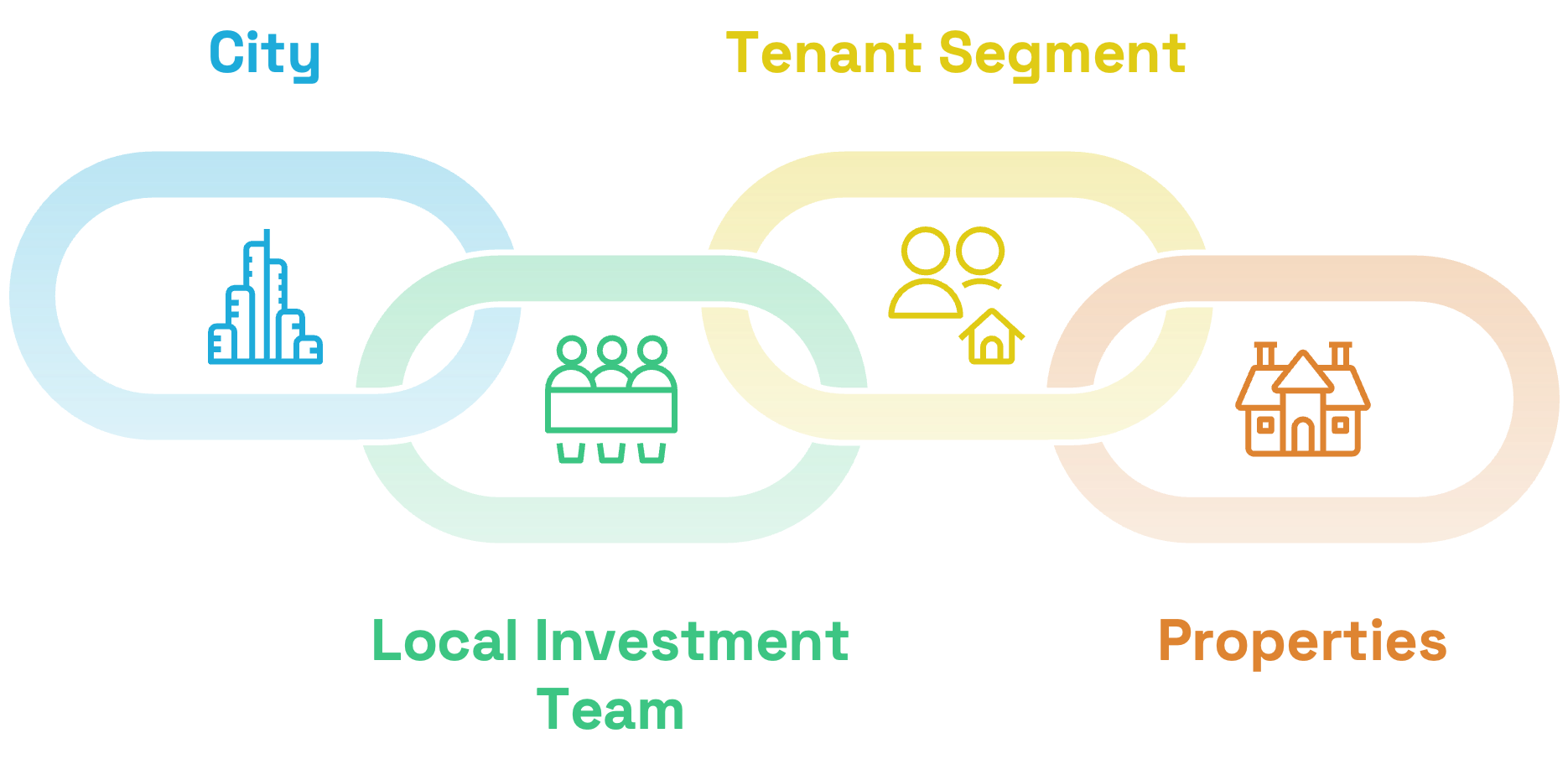
    More details on the four process steps:

    1. City

    If you want a monthly rental paycheck that lasts 20 to 40 years and increases faster than inflation, the city is the investment, not the property. It's the most important decision you'll make because the local market determines how fast rents and property values can rise.

    Think of the investment city as a harbor and rents as the boats in it. When the tide comes in (population increases, increasing demand), every boat rises. When population falls, rents usually fall. No matter how good a property is, it can only perform within the bounds of the city where it is located.

    Say you need $2,500 a month in rent to keep up with inflation. If similar properties are available for $2,000 a month, you'll probably have a hard time finding a tenant willing to pay $2,500.

    City selection criteria:

    2. Local Investment Team

    Books, seminars, podcasts, and websites teach you the basics. When it's time to buy, you need to know the neighborhood, the property, and the local rules. An experienced local team knows the market and can help you find a good property, validate the numbers, arrange an inspection, handle repairs, and rent it out. You also get a master class on real world investing. All at the same cost as any other realtor.

    3. Tenant Segment

    Properties don’t pay rent. Tenants do. How long they stay, how reliably they pay, and what rent they can afford all tend to vary by segment. Choose the segment with the behaviors you want and then buy properties similar to what they currently rent.

    Every city has multiple tenant segments. Each segment has its own housing requirements and renting habits. Most rentals fit one segment's needs. Properties that fit none tend to have more vacancies and more tenant problems.

    The table below compares the three major tenant segments in Las Vegas.
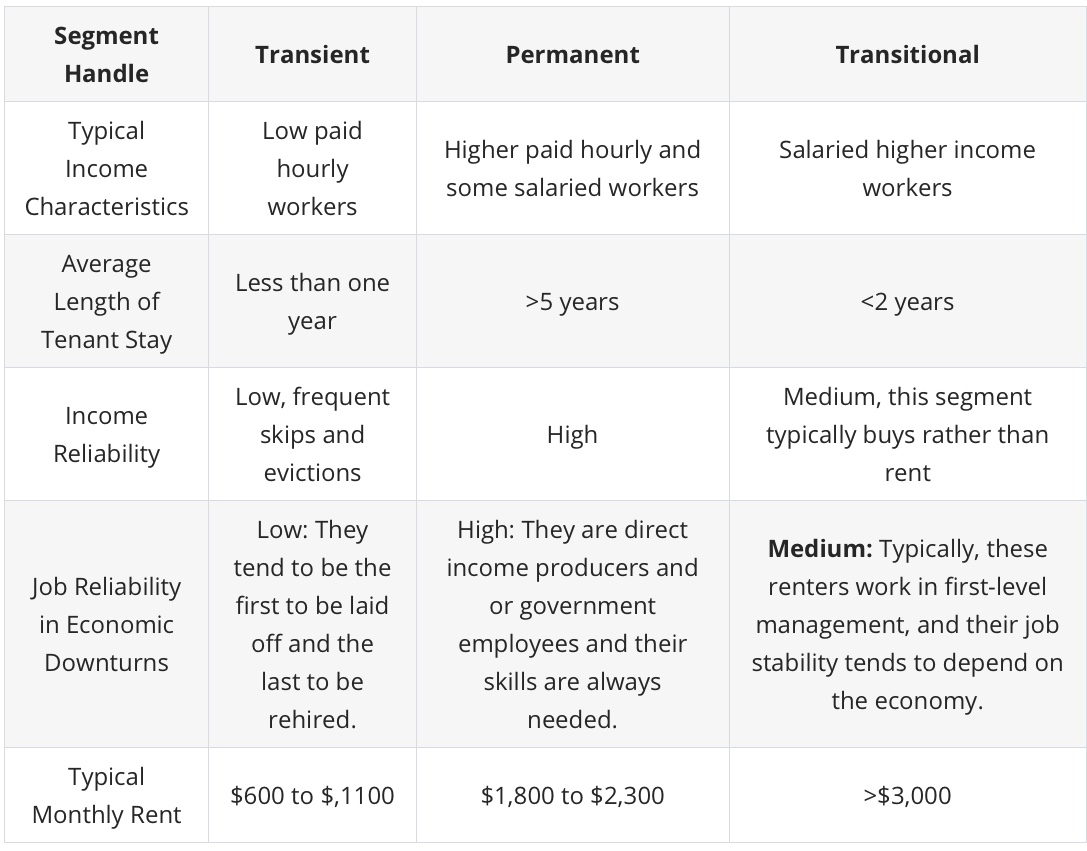
    A property that meets the needs of Transient renters is unlikely to appeal to Permanent renters. The property you buy determines which tenant segment you're most likely to attract.p,,you' it

    To learn which properties reliable tenants rent, ask several experienced local property managers one question: "If you wanted tenants who stay for years, pay on time, and take care of the property, what would you buy, and where?" Look for the answers that repeat.

    Once you know which properties attract reliable tenants, build a property profile based on what they currently rent. A property profile includes at least four factors:

    • Property type: Single family, multifamily, townhouse, condo, and so on.

    • Configuration: Stories, garage, size, and bedrooms, yard size, etc.

    • Location: The areas where your target segment already rents.

    • Rent range: From your interview with property managers, you know the rent range of the properties they recommended. Then find out what homes similar to those rented in that range are selling for.

    4. Property Selection

    You've chosen a tenant segment for its income reliability, and you know what that segment currently rents; buy similar properties.

    Have your realtor find conforming properties. This greatly reduces your time and effort.

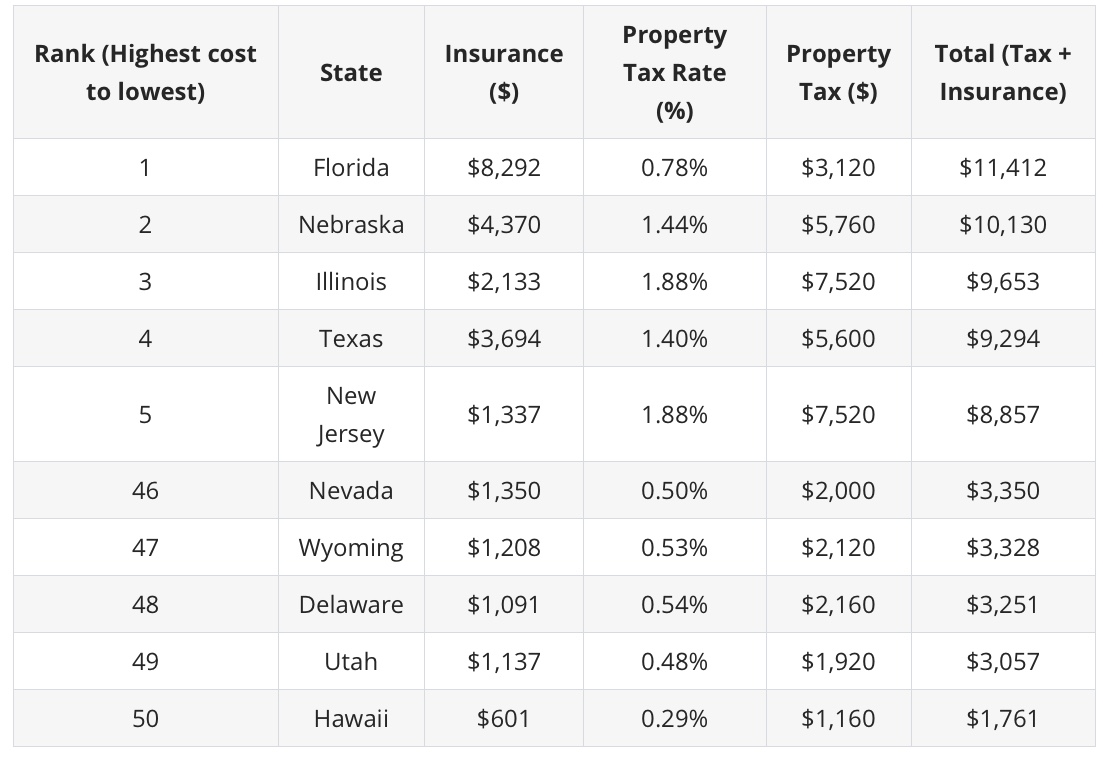
    Operating Cost Comparison

    Property taxes and insurance come straight out of cash flow. The table below compares the five states with the highest and lowest combined costs on a $400,000 property.

    Top 5 and bottom 5 costs by state:
    Sources:

    Summary

    There is a straightforward process to buy rental properties likely to generate monthly income that grows faster than inflation over 20 to 40 years.
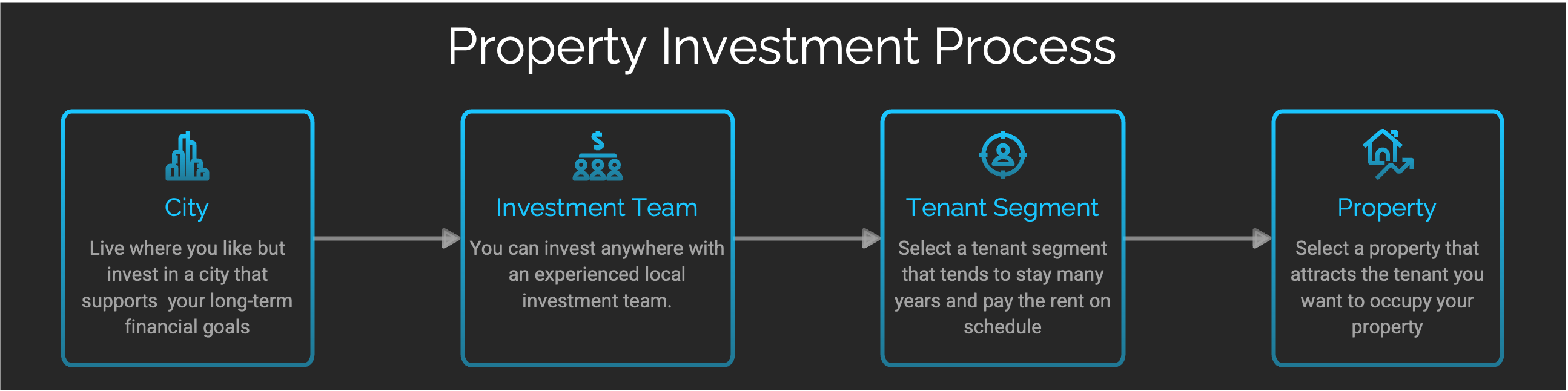
    The investment city and the tenant segment define everything:

    • The city defines all long-term performance, including rent growth and appreciation.

    • The reliability of your rental income depends on who rents your property. Buy properties that attract tenants who tend to stay for years and pay rent on time.

    FERNWOOD Team, KW VIP Realty520 Reviews
  • Divin KanyamaBusiness Member
    Accountant · Seattle, WA · Member since 2025 · 700 posts · 292 votes
    12h

    @Alejandro N Lopez I can't speak to Cleveland specifically, but analysis paralysis is common with out-of-state investing. There usually isn't one right market, and Cleveland, Cincinnati and Columbus can all work. The bigger risk is never buying.

    Rather than asking which city is best, pick the one you can execute in, narrow to a few neighborhoods, and compare them on real numbers like taxes, insurance, repairs, vacancy and management fees. Since you won't be there, a strong property manager, agent and inspector matter more than the city. Set a deadline, pick one market, and underwrite a few real deals.

  • New to Real Estate · CA · Member since 2026 · 7 posts · 1 vote
    5h

    One thing I've been focusing on in my research is how much the numbers change once you factor in property taxes, insurance, maintenance costs, and vacancy rates. Some properties may look affordable at first glance, but the actual cash flow can look very different once you account for all those expenses.

    California real estate is definitely expensive! 😅 I'm also curious about how challenging it is to manage rental properties from out of state, especially when it comes to finding reliable local property managers.

    I don't think you need to rush into finding the "perfect" market right away. It might be worth comparing specific properties in a few different cities before making a decision.

    I'm still figuring things out myself, too. Best of luck with your research!

  • Rental Property Investor · Orlando, FL · Member since 2018 · 1 post · 0 votes
    2h

    Alejandro, I’ve been looking in Cleveland as well and the cash flow seems strong—I’m experiencing hesitation too as it’s a first out of state investment and I’m overthinking it as well.

Join the conversationCreate a free account to reply, vote on answers and follow this thread.