How are people scaling so fast?
Investor · Houston TX · Member since 2023 · 9 posts · 33 votes
I have listened to some podcasts, and have heard people saying they got their first 7 properties in 11 months. Some even crazier. I have 5 properties, but I have used all my money to purchase these properties at 25% down and now I am renting them out. I would like to have 30 rentals (that is my goal) and I have the deals. I just don't have the capital to move all at once. I know there is private money lending that can fund some of these new construction deals, but I don't want to sell them for profit after. I want to keep them as rentals. Are there lenders that would let me pay them like a traditional mortgage? (over that long period of time)? What do you guys think I can do to get 3 properties a month?
Great question... but the simple answer is you can't believe most of what you hear on podcasts.
There are some really valuable podcast conversations out there. Unfortunately most people aren't telling the whole story though.
A lot of these podcast guests fall into one of these buckets:
-Started with a bunch of money
-Made most of their money selling education before buying deals
-Don't actually do nearly as many deals as they claim to
-They own a tiny piece of a bigger deal (LP)
I still listen to podcasts a lot but you can't let the guests "successes" demotivate you. Just try to extract what value you can, then focus on scaling your own business based on your own personal circumstances... one deal at a time.
It really comes down to entrepreneurship.
I invest in real estate. I'm not in the business of real estate (flipping, remodeling, sourcing off-market deals, putting together creative deals, etc.).
Others are in the business of real estate.
It's totally fine to not be in "the business" and just buy a property when your personal financial position is ready, to own it in your name, with conventional financing you qualify for, and buy periodically.
It's what I do.
And, frankly, I wonder if some of these folks who get a bunch of property seemingly overnight don't have paranoia, fear, anxiety, and live with the very real possibility of bankruptcy if things outside of their control happen in the market or a couple of pieces of bad luck strike.
Yes Scott we live with all of these things. However, you really can't get the adrenaline rush anywhere else without risking your life.
In all seriousness, I try to tell everyone I meet to be a conservative investor and grow low. Most people are going to BRRR there way into being a multi millionaire and quit their day job.
I like to take on one big project at at time so I am always taking the next step in advancing my investing career. It comes with a lack of sleep, paranoia, fear, and anxiety, but so does all high risk investments.
The real problem for new investors trying to scale quickly is the amount of unknown unknowns they have. You normally don't find out how little you know until you are fully vested in a massive construction project, your contractor turns out to be a crook, your cash is dwindling, and your asset is illiquid.

@Grant Stuard
I've got 24 SFR and it took me 8 years. It was slow the first 5 or 6 years since I could only afford to buy 2 houses a year. But I found ways by getting creative with finances like doing five 401k loans to acquire houses. I've used 0% for a year credit cards to buy houses several times (just did one last month-lol). I used a HELOC to snag 2 houses (my first 2 rentals). And I've bought 12 houses with zero out of pocket $ by doing cash out refis on houses that had some equity I wanted to tap into. I've paid myself back every penny I've ever put into real estate so it's infinite cash flow from here on out. But I've found ways to get the cash for down payments then have harvested equity to scale up.
How has your cash flow changed after your cash out refi? I think that’s what stops some. They are happy with their cash flow per door. If you follow someone like Dion and Chad Carson or Valkeres you’ll see it’s less about numbers of doors and more about total CF in order to get to your freedom number. I’m just hesitant to add units that have lower CF for the sake of numbers of doors. More CF (per door) adds a cushion because things will happen (unexpected costs). All said, I have 11 units (sold 2) over the last 15 years. I’ll add more this year but only under the right conditions.
@Grant Stuard
I've got 24 SFR and it took me 8 years. It was slow the first 5 or 6 years since I could only afford to buy 2 houses a year. But I found ways by getting creative with finances like doing five 401k loans to acquire houses. I've used 0% for a year credit cards to buy houses several times (just did one last month-lol). I used a HELOC to snag 2 houses (my first 2 rentals). And I've bought 12 houses with zero out of pocket $ by doing cash out refis on houses that had some equity I wanted to tap into. I've paid myself back every penny I've ever put into real estate so it's infinite cash flow from here on out. But I've found ways to get the cash for down payments then have harvested equity to scale up.
How has your cash flow changed after your cash out refi? I think that’s what stops some. They are happy with their cash flow per door. If you follow someone like Dion and Chad Carson or Valkeres you’ll see it’s less about numbers of doors and more about total CF in order to get to your freedom number. I’m just hesitant to add units that have lower CF for the sake of numbers of doors. More CF (per door) adds a cushion because things will happen (unexpected costs). All said, I have 11 units (sold 2) over the last 15 years. I’ll add more this year but only under the right conditions.
It is all about "value add". You buy a property fix it up to make it more valuable, refinance to pull all of your money back out (and some times even more than that, just be sure you still cash flow) and then do it again. You "hold" with the "bank's money" only, as the refinance pulled your original capital back out.
That's how people grow fast. Nothing wrong with your way, other than it takes longer to grow, but you'll still get there.
things you can do to get 3 properties per month:
- buy with creative financing (sub-to / seller financing) with low or no money down
- buy a house hack with a USDA loan, 203k loan, or VA loan if you're a vet
- find access to ~100k and start BRRRing, adding a little but more to your capital bucket with each cash-out refinance, so that eventually you can start doing more than one at a time. check out @thehashs.invest on IG, they did this and have a massive portfolio they built with 80k of their own startup capital
- find a capital partner to do bigger deals with. they bring the money, you do the work
- find ways to make more cash that align with your interests and skills, to build up down payments faster. can you flip short term to get the down payments for future buy and hold properties?
@Grant Stuard opm other people's money
Your portfolio now stands at five properties, which is great, and reaching 30 rentals is an ambitious objective. You may need to use innovative tactics and investigate other funding sources in order to attain such quick development. To assist you achieve your objective of buying three houses every month, consider the following suggestions:
1. Private Money Lending with Extended Terms
2. Seller Financing
3. Joint Ventures and Partnerships
4. Creative Financing Strategies
5. Commercial Loans
6. Refinance Existing Properties
7. Thorough Due Diligence
Keep in mind to modify your approach according to the state of the market, the accessibility of finance, and your total financial circumstances. Build a sustainable development strategy and take your time; rapid expansion calls for thorough preparation and execution. It is always advisable to speak with specialists, such as financial or real estate experts, to get advice that is particular to your needs.

#1 I agree with others, don't compare your progress with social media posts. Comparison is the thief of joy. Rather, just do better vs yourself yesterday. (you know this already given your other career...)
#2 It depends on your personal big why. What is the outcome you're shooting for via real estate investing? Funding a pet project or hobby like James Cameron and his submarines? Generational wealth to leave for your kids? Disrupting the industry and offering low income housing to alleviate the nation's housing crisis? Work backwards and see how much scale you need to accomplish your big why.
My personal strategy to scale quickly has always come down to solving the problem of finding investor partners that vibe very well with my vision to work with.
I always knew I wanted to be in the business of real estate and have been gearing my investing since the jump towards the moment when I transition to offering syndications as a GP. My big why is to become a serial entrepreneur to enjoy learning the ins and outs of many different kinds of businesses. Syndication is a great way to build massive wealth to fund my hopeful future endeavors and I also think its one of the best "curriculums" to learn all about business basics that underpin success in every industry.
I'm very close to my next milestone now and my company is heavily pursuing marketing opportunities and our network to find potential partners for a ~$10M purchase in Kansas City for a ~7 year exit plan deal shooting for 16-18% IRR and 8-9% CoC returns. Hmu if you'd like to learn more about the KC MSA!
I always love having deep big why discussions and brainstorming ways to achieve them so hmu if that's something you want to do together :)
I have listened to some podcasts, and have heard people saying they got their first 7 properties in 11 months. Some even crazier. I have 5 properties, but I have used all my money to purchase these properties at 25% down and now I am renting them out. I would like to have 30 rentals (that is my goal) and I have the deals. I just don't have the capital to move all at once. I know there is private money lending that can fund some of these new construction deals, but I don't want to sell them for profit after. I want to keep them as rentals. Are there lenders that would let me pay them like a traditional mortgage? (over that long period of time)? What do you guys think I can do to get 3 properties a month?
There are three ways to accomplish acquiring real estate faster than most people. 1. Start off with a lot of money. or 2. Buy fractional shares (invest in syndications like an apartment building that has say 100 units and now, viola' they have "100 doors" whereas that actually menas they own just own a hinge on each door but you get what I mean or 3. Using creative finance like Seller financing, Subject To, Lease Options, Land Contracts which is how I teach it and how I did it. Most of the properties I was into totally for under $15,000 didn't need a bank or credit check and no down payment. But, I did need some knowledge.
If someone is dumb enough to send your money to one of these syndicators not only do you not have any doors you also don't have any brains. Seller finance deals rarely close and are generally a waste of time.
If you're at your limit you're at your limit. Real estate is the business of time and sometimes you have to let some go by in order to replenish your reserves.
Everyone we know with lots of units, including us, made money at something else and real estate was our second act where through some crazy grace we made even more money. I've never met someone with more than 50 units who was working a W2 job buying a property every year ot so. Never met someone with a lot of units who began house hacking. That doesn't mean real estate isn't a good investment for those people it's just that water always finds its level.
I have listened to some podcasts, and have heard people saying they got their first 7 properties in 11 months. Some even crazier. I have 5 properties, but I have used all my money to purchase these properties at 25% down and now I am renting them out. I would like to have 30 rentals (that is my goal) and I have the deals. I just don't have the capital to move all at once. I know there is private money lending that can fund some of these new construction deals, but I don't want to sell them for profit after. I want to keep them as rentals. Are there lenders that would let me pay them like a traditional mortgage? (over that long period of time)? What do you guys think I can do to get 3 properties a month?
There are three ways to accomplish acquiring real estate faster than most people. 1. Start off with a lot of money. or 2. Buy fractional shares (invest in syndications like an apartment building that has say 100 units and now, viola' they have "100 doors" whereas that actually menas they own just own a hinge on each door but you get what I mean or 3. Using creative finance like Seller financing, Subject To, Lease Options, Land Contracts which is how I teach it and how I did it. Most of the properties I was into totally for under $15,000 didn't need a bank or credit check and no down payment. But, I did need some knowledge.
If someone is dumb enough to send your money to one of these syndicators not only do you not have any doors you also don't have any brains. Seller finance deals rarely close and are generally a waste of time.
If you're at your limit you're at your limit. Real estate is the business of time and sometimes you have to let some go by in order to replenish your reserves.
Everyone we know with lots of units, including us, made money at something else and real estate was our second act where through some crazy grace we made even more money. I've never met someone with more than 50 units who was working a W2 job buying a property every year ot so. Never met someone with a lot of units who began house hacking. That doesn't mean real estate isn't a good investment for those people it's just that water always finds its level.
Melanie while I dont totally disagree with you on your thought process. And I agree the vast majority of larger investors started with a nice amount of cash or very robust professional type salary. There are many that boot strapped it and it takes decades but after those decades they do have 100s of doors especially in the mid west smaller towns. there is always some guy / gal that has been doing it forever and will own a big amount.. I have done many deals with my clients buying from these sorts of folks.. And to be fair i think it works in the low value asset world as these properties basically were trading at the values of automobiles.. So kind of like they used car bizz .. and once they get going the local small bank will start to fund them.
However I agree with you when you get folks coming on BP and say they have 200 or 500 or 1000 doors and they really are just Limited partners in syndication.. And same with the syndicators themselves for sure they have an interest in all those doors but they only have an interest in them not full ownership. The only one I have seen that appears to own all his units is @codyl in Houston from what he has written on BP. Companies like Majestic out of Southern CA. those are the for real deal no partners all assets owned by the company and the owner. And i am sure there are hundreds more through the different asset class''s like them.
And its not dumb to invest with some syndication companies you may know and like and trust.. Like a Praxis or Bam that are two that are on BP a lot.. And have a very strong consistent track record. But like you I have seen syndication deals turtle up.. I worked as a Broker for one in the 80s doing acquisitions for subdivisions in CA. And tax reform in those days just hammered them and then N. CA went through a deep dive after the loma Preita earthquake and the first War in the mid east and things got really bad.. they had 250 different properties student housing senior MHP ( land development that I ran) and of course apartments galore and they could not sustain and it all got liquidated and I found myself out of a job.. I was front and center through that and I swore after that I would never take on the roll of syndication the stress of failure was to great.. so I just stuck to HML and doing my own deals personally and building. So anyway my point is you cant paint all syndicators or larger rental property owners with the same brush.
It can be done with larger MF. The key difference is that you can massivly increase the asset value, but increasing NOI. This principle does not exist in the 1-4 world.
Here is how that works (simplified):
1.) Buy a 100 unit for $5,000,000 at a market cap rate
2.) Reposition - facy word for renovate, increase rent and fill vacancies
3.) Double NOI
4.) Sell property for $10,000,000, 1031 a couple millions into next project
5.) Repeat
You can't do this with residential real estate, because value (and equity) hinges on market comps you have no control over. You may need 15 years to do that. What's the catch? This is easy in principle, but difficult to pull off. Frankly, I have tried and was not able to get a deal under contract that met my minimum criteria in quality - and I did not want to go into the hood. So I stick to what I know best and keep growing my residential portfolio slow and steady.
It can be done with larger MF. The key difference is that you can massivly increase the asset value, but increasing NOI. This principle does not exist in the 1-4 world.
Here is how that works (simplified):
1.) Buy a 100 unit for $5,000,000 at a market cap rate
2.) Reposition - facy word for renovate, increase rent and fill vacancies
3.) Double NOI
4.) Sell property for $10,000,000, 1031 a couple millions into next project
5.) Repeat
You can't do this with residential real estate, because value (and equity) hinges on market comps you have no control over. You may need 15 years to do that. What's the catch? This is easy in principle, but difficult to pull off. Frankly, I have tried and was not able to get a deal under contract that met my minimum criteria in quality - and I did not want to go into the hood. So I stick to what I know best and keep growing my residential portfolio slow and steady.
We're just going to skip over the fact that @Grant Stuard is an NFL linebacker...Congrats on the success sir, we should be learning from you. Forget scaling quickly...keep your day job!
But to answer your question I think most folks who scale very quickly were able to do so by assuming a massive amount of risk or own a little bit of a lot.
It can be done with larger MF. The key difference is that you can massivly increase the asset value, but increasing NOI. This principle does not exist in the 1-4 world.
Here is how that works (simplified):
1.) Buy a 100 unit for $5,000,000 at a market cap rate
2.) Reposition - facy word for renovate, increase rent and fill vacancies
3.) Double NOI
4.) Sell property for $10,000,000, 1031 a couple millions into next project
5.) Repeat
You can't do this with residential real estate, because value (and equity) hinges on market comps you have no control over. You may need 15 years to do that. What's the catch? This is easy in principle, but difficult to pull off. Frankly, I have tried and was not able to get a deal under contract that met my minimum criteria in quality - and I did not want to go into the hood. So I stick to what I know best and keep growing my residential portfolio slow and steady.
First, doubling NOI is not an easy task unless the property you bought was VERY distressed or you're going to hold it for 15 years.
Second, this idea ignores the fact that cap rates fluctuate. Using your example you might spend $5M at a 5% cap rate, but when it comes time to sell interest rates have gone up, rents are declining and the same building is now only finding buyers at an 8% cap rate or $6.25M for double the revenues.
It can be done with larger MF. The key difference is that you can massivly increase the asset value, but increasing NOI. This principle does not exist in the 1-4 world.
Here is how that works (simplified):
1.) Buy a 100 unit for $5,000,000 at a market cap rate
2.) Reposition - facy word for renovate, increase rent and fill vacancies
3.) Double NOI
4.) Sell property for $10,000,000, 1031 a couple millions into next project
5.) Repeat
You can't do this with residential real estate, because value (and equity) hinges on market comps you have no control over. You may need 15 years to do that. What's the catch? This is easy in principle, but difficult to pull off. Frankly, I have tried and was not able to get a deal under contract that met my minimum criteria in quality - and I did not want to go into the hood. So I stick to what I know best and keep growing my residential portfolio slow and steady.
First, doubling NOI is not an easy task unless the property you bought was VERY distressed or you're going to hold it for 15 years.
Second, this idea ignores the fact that cap rates fluctuate. Using your example you might spend $5M at a 5% cap rate, but when it comes time to sell interest rates have gone up, rents are declining and the same building is now only finding buyers at an 8% cap rate or $6.25M for double the revenues.
This is just "first principle thinking" on how scaling works - basically the concept, in very few words. Books have been written on the topic and actually pulling it off is like you said anything but easy!
Cap rates are not static, they are a function of building and neighborhood quality. If a property is run down you may buy it at an 8 cap and if its fully updated and stabilized you might sell it at a 6 cap.
So even if cap rates go down in a city, the fact that you have doubled your NOI will also warant a better cap rate.
About your concerns on rents: you'll be hard pressed to find an example in modern history where rents declined in a meaningful way, not even 2008. Especially over a 5 year period. Inflation makes sure that rents always go up.
It can be done with larger MF. The key difference is that you can massivly increase the asset value, but increasing NOI. This principle does not exist in the 1-4 world.
Here is how that works (simplified):
1.) Buy a 100 unit for $5,000,000 at a market cap rate
2.) Reposition - facy word for renovate, increase rent and fill vacancies
3.) Double NOI
4.) Sell property for $10,000,000, 1031 a couple millions into next project
5.) Repeat
You can't do this with residential real estate, because value (and equity) hinges on market comps you have no control over. You may need 15 years to do that. What's the catch? This is easy in principle, but difficult to pull off. Frankly, I have tried and was not able to get a deal under contract that met my minimum criteria in quality - and I did not want to go into the hood. So I stick to what I know best and keep growing my residential portfolio slow and steady.
First, doubling NOI is not an easy task unless the property you bought was VERY distressed or you're going to hold it for 15 years.
Second, this idea ignores the fact that cap rates fluctuate. Using your example you might spend $5M at a 5% cap rate, but when it comes time to sell interest rates have gone up, rents are declining and the same building is now only finding buyers at an 8% cap rate or $6.25M for double the revenues.
This is just "first principle thinking" on how scaling works - basically the concept, in very few words. Books have been written on the topic and actually pulling it off is like you said anything but easy!
Cap rates are not static, they are a function of building and neighborhood quality. If a property is run down you may buy it at an 8 cap and if its fully updated and stabilized you might sell it at a 6 cap.
So even if cap rates go down in a city, the fact that you have doubled your NOI will also warant a better cap rate.
About your concerns on rents: you'll be hard pressed to find an example in modern history where rents declined in a meaningful way, not even 2008. Especially over a 5 year period. Inflation makes sure that rents always go up.
The amount of NOI should not affect the cap rate. For example two identical buildings on opposite corners of the same intersection sold in the same month should trade at similar cap rates. The purchase price for either building will depend largely on the NOI.
Rents go up and rents go down. Take NYC Office. CoStar shows average quoted rent for all buildings in Q2 2017 as $59.93. Q4 2023 average is $51.48.
It's also important to remember that cap rates reflect more than just the quality of a neighborhood or particular building. They reflect the overall economy including how expensive it is for investors to raise money and whether they can obtain similar yield from other investments. The possibility of rent growth and cheap capital will lower cap rates while high interest rates and stagnating or declining rents will raise them.
It's important investors consider the factors that impact cap rates so they can make an honest assessment of what their holdings are worth at any given time. Particularly when relaying results to unsophisticated investors.
It can be done with larger MF. The key difference is that you can massivly increase the asset value, but increasing NOI. This principle does not exist in the 1-4 world.
Here is how that works (simplified):
1.) Buy a 100 unit for $5,000,000 at a market cap rate
2.) Reposition - facy word for renovate, increase rent and fill vacancies
3.) Double NOI
4.) Sell property for $10,000,000, 1031 a couple millions into next project
5.) Repeat
You can't do this with residential real estate, because value (and equity) hinges on market comps you have no control over. You may need 15 years to do that. What's the catch? This is easy in principle, but difficult to pull off. Frankly, I have tried and was not able to get a deal under contract that met my minimum criteria in quality - and I did not want to go into the hood. So I stick to what I know best and keep growing my residential portfolio slow and steady.
First, doubling NOI is not an easy task unless the property you bought was VERY distressed or you're going to hold it for 15 years.
Second, this idea ignores the fact that cap rates fluctuate. Using your example you might spend $5M at a 5% cap rate, but when it comes time to sell interest rates have gone up, rents are declining and the same building is now only finding buyers at an 8% cap rate or $6.25M for double the revenues.
This is just "first principle thinking" on how scaling works - basically the concept, in very few words. Books have been written on the topic and actually pulling it off is like you said anything but easy!
Cap rates are not static, they are a function of building and neighborhood quality. If a property is run down you may buy it at an 8 cap and if its fully updated and stabilized you might sell it at a 6 cap.
So even if cap rates go down in a city, the fact that you have doubled your NOI will also warant a better cap rate.
About your concerns on rents: you'll be hard pressed to find an example in modern history where rents declined in a meaningful way, not even 2008. Especially over a 5 year period. Inflation makes sure that rents always go up.
The amount of NOI should not affect the cap rate. For example two identical buildings on opposite corners of the same intersection sold in the same month should trade at similar cap rates. The purchase price for either building will depend largely on the NOI.
Rents go up and rents go down. Take NYC Office. CoStar shows average quoted rent for all buildings in Q2 2017 as $59.93. Q4 2023 average is $51.48.
It's also important to remember that cap rates reflect more than just the quality of a neighborhood or particular building. They reflect the overall economy including how expensive it is for investors to raise money and whether they can obtain similar yield from other investments. The possibility of rent growth and cheap capital will lower cap rates while high interest rates and stagnating or declining rents will raise them.
It's important investors consider the factors that impact cap rates so they can make an honest assessment of what their holdings are worth at any given time. Particularly when relaying results to unsophisticated investors.
Alright, I'll counter two of your points.
Two identical buildings on the same corner will have the same NOI. In order to shift NOI you have to reposition the building. This typically includes and exterior and interior makeover and re-leasisng to whole new set of tenants at much higher rents. At this point the buildings represent a very different quality of investment, which commands a different cap rate.
Residential rents generally go up. Office space in NYC is a very particular sample.
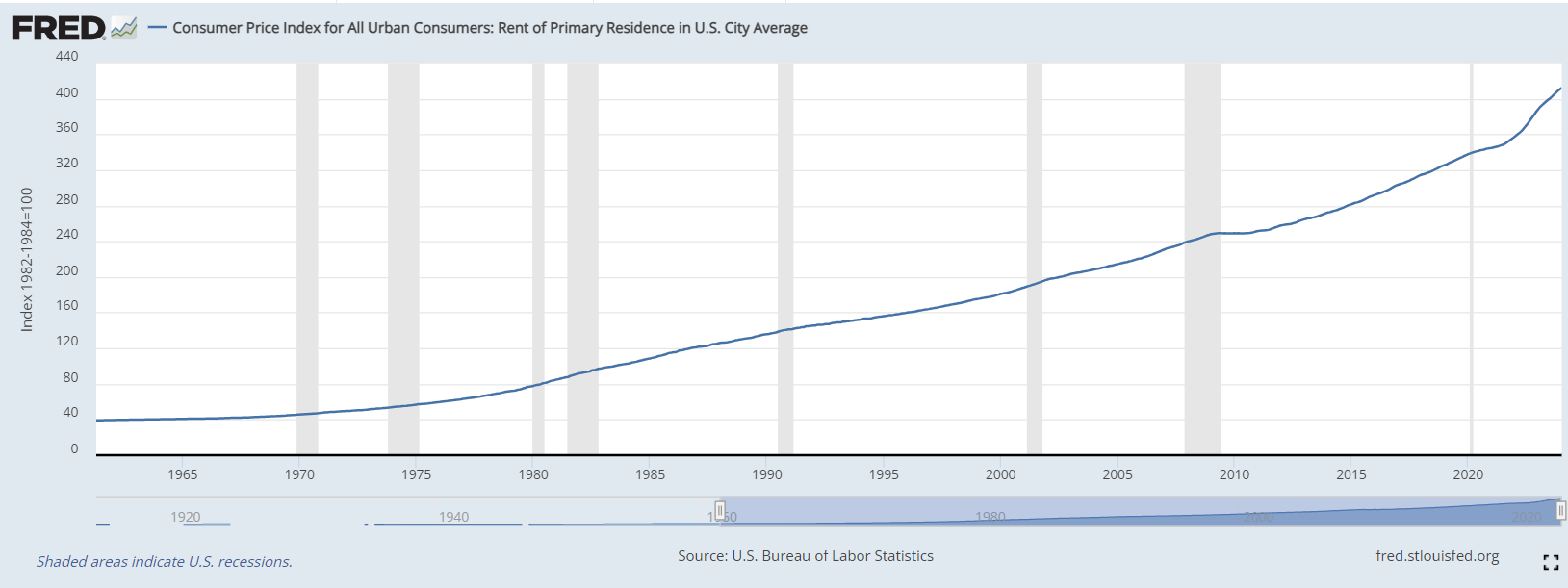
I would also argue that unsophisticated investors would typically not have the means to engage in repositioning an apartment complex. The question of this post was: how do people scale so quickly, which is what I tried to answer on a conceptual level. Syndication a good way for an unexperienced and or passive investor to invest captital in RE, but not a way to scale.
It can be done with larger MF. The key difference is that you can massivly increase the asset value, but increasing NOI. This principle does not exist in the 1-4 world.
Here is how that works (simplified):
1.) Buy a 100 unit for $5,000,000 at a market cap rate
2.) Reposition - facy word for renovate, increase rent and fill vacancies
3.) Double NOI
4.) Sell property for $10,000,000, 1031 a couple millions into next project
5.) Repeat
You can't do this with residential real estate, because value (and equity) hinges on market comps you have no control over. You may need 15 years to do that. What's the catch? This is easy in principle, but difficult to pull off. Frankly, I have tried and was not able to get a deal under contract that met my minimum criteria in quality - and I did not want to go into the hood. So I stick to what I know best and keep growing my residential portfolio slow and steady.
First, doubling NOI is not an easy task unless the property you bought was VERY distressed or you're going to hold it for 15 years.
Second, this idea ignores the fact that cap rates fluctuate. Using your example you might spend $5M at a 5% cap rate, but when it comes time to sell interest rates have gone up, rents are declining and the same building is now only finding buyers at an 8% cap rate or $6.25M for double the revenues.
This is just "first principle thinking" on how scaling works - basically the concept, in very few words. Books have been written on the topic and actually pulling it off is like you said anything but easy!
Cap rates are not static, they are a function of building and neighborhood quality. If a property is run down you may buy it at an 8 cap and if its fully updated and stabilized you might sell it at a 6 cap.
So even if cap rates go down in a city, the fact that you have doubled your NOI will also warant a better cap rate.
About your concerns on rents: you'll be hard pressed to find an example in modern history where rents declined in a meaningful way, not even 2008. Especially over a 5 year period. Inflation makes sure that rents always go up.
The amount of NOI should not affect the cap rate. For example two identical buildings on opposite corners of the same intersection sold in the same month should trade at similar cap rates. The purchase price for either building will depend largely on the NOI.
Rents go up and rents go down. Take NYC Office. CoStar shows average quoted rent for all buildings in Q2 2017 as $59.93. Q4 2023 average is $51.48.
It's also important to remember that cap rates reflect more than just the quality of a neighborhood or particular building. They reflect the overall economy including how expensive it is for investors to raise money and whether they can obtain similar yield from other investments. The possibility of rent growth and cheap capital will lower cap rates while high interest rates and stagnating or declining rents will raise them.
It's important investors consider the factors that impact cap rates so they can make an honest assessment of what their holdings are worth at any given time. Particularly when relaying results to unsophisticated investors.
@Justin Brickman this is my strategy yet I have to occupy the house for 12 months not 6. It is definitely getting harder the more I scale because lenders are making me jump through a million hurdles. Where are you finding lenders that only allow you to occupy a home for 6 months. How many have you purchased doing this and have you found that it gets harder the more you purchase?
There is a way to get around all of that. If you buy "off market" and use creative finance, there are none of those limitations. Click to enlarge

Here's one for instance
So, I bought "off market" paid the seller $5,000 and I paid closing costs. No bank involved, no seasoning, no limit to number of properties
@Account Closed I have actually never done a creatively financed deal to date and have been in RE for several years. Just curious (as I think there may be an opportunity for us to do this in the next month or so with something we are looking at), was the seller already aware of "seller financing" in this example or did you have to educate them on advantages etc.?
I do have a contact in my Associate program who I started working with in 2020 and he has something called The Midwest Monster program. If you have a 700 FICO score and are OK with properties being primarily in the midwest (they have opened the Carolinas and Georgia recently) they will help you get up to rental properties.
They source. Fund the purchase. Fund the down. Give you money at close. I have 5 people in his program now and another 10 or so joining it.
So if you are wanting rental properties this may work.

BRRR I have completed two of them and working on my third. It's not that fast a process though as takes 1 year seasoning of loan to cash out unless doing DSCI loans but rates on those are very high right now. So don't always believe those podcast, many of them are lying trying to sell courses or have fractional shares in projects and act like they own it all.
An info graphic about private money lending that may be useful.

@Justin Brickman this is my strategy yet I have to occupy the house for 12 months not 6. It is definitely getting harder the more I scale because lenders are making me jump through a million hurdles. Where are you finding lenders that only allow you to occupy a home for 6 months. How many have you purchased doing this and have you found that it gets harder the more you purchase?
There is a way to get around all of that. If you buy "off market" and use creative finance, there are none of those limitations. Click to enlarge
Here's one for instance
So, I bought "off market" paid the seller $5,000 and I paid closing costs. No bank involved, no seasoning, no limit to number of properties

@Account Closed Hi. Thanks for sharing this. Does this only work for “off market” deals? Does this work if the seller still has a mortgage on the property? I wanted to explore seller financing but have no idea where to start or even how to approach the owner about it.
