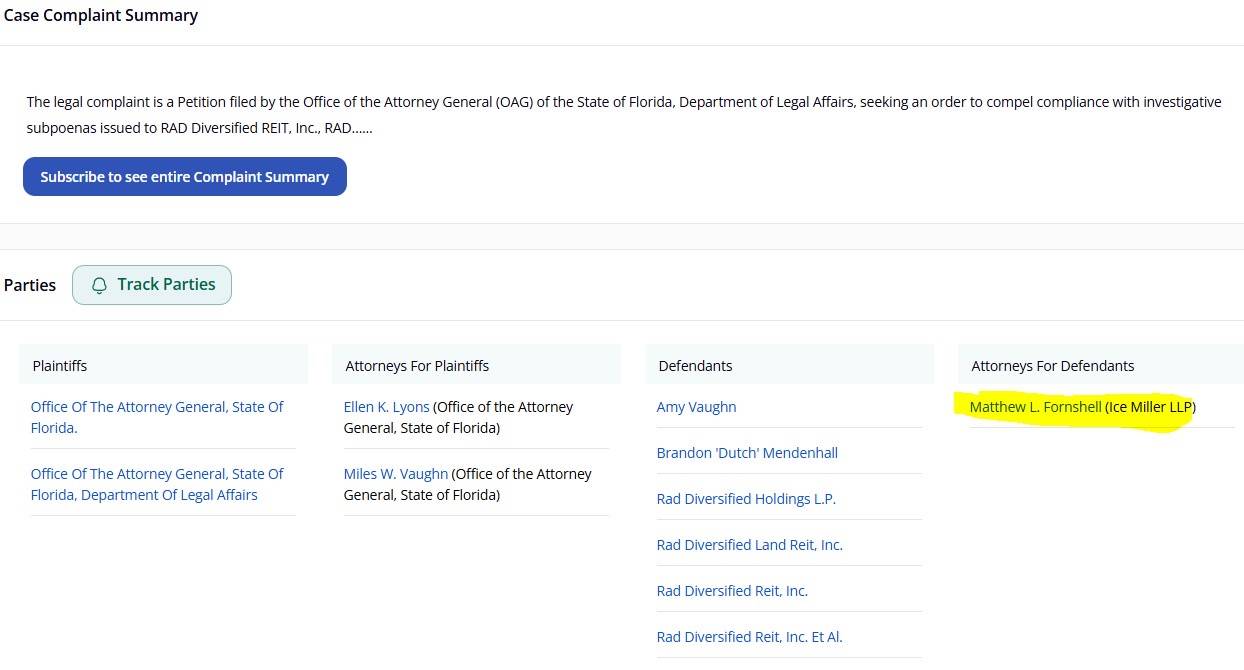
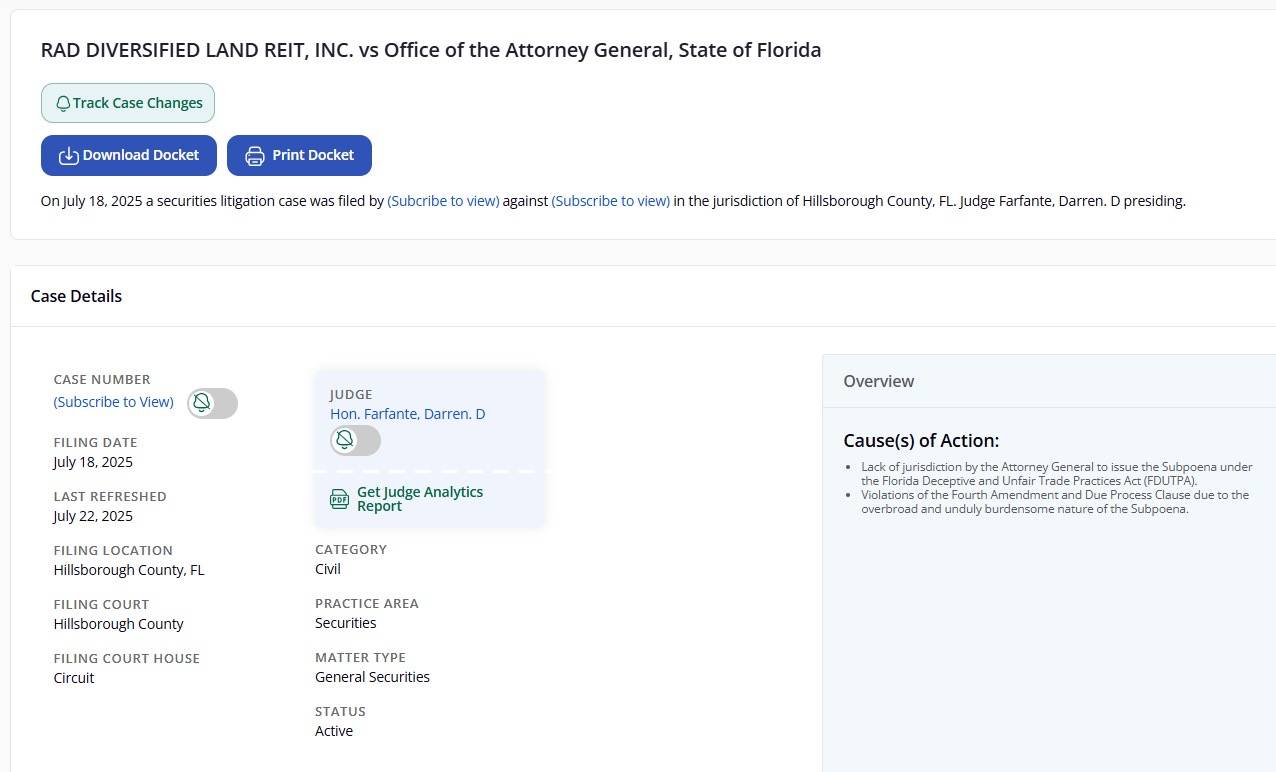
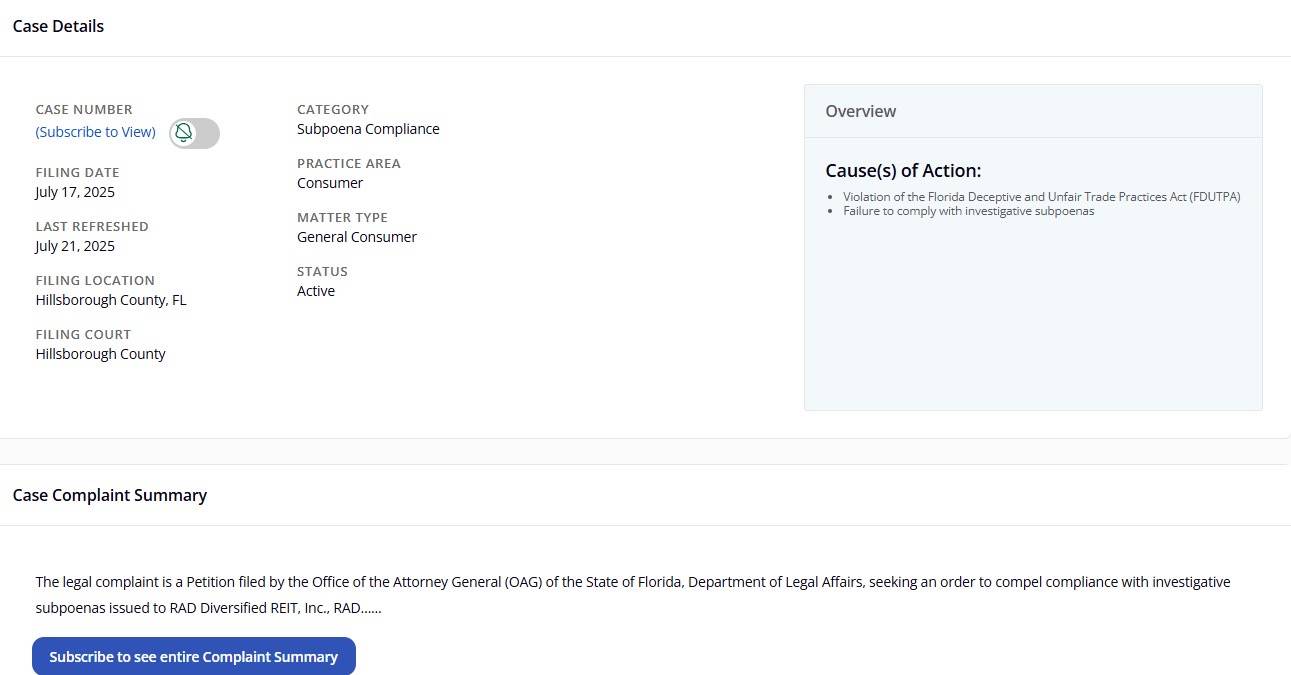
dutch mendenhall and amy vaughn radd diversifed
Elon Musk’s X says it wants to shake up financial media with a reality TV showthat forms a key plank of its original programming initiative. The series,GoingPublic, introduces promising start-ups that viewers can invest in while theyhttps://www.barrons.com/articles/elon-musk-x-going-public-sh... 1/146/12/25, 12:49 PM Elon Musk's X Has New ‘Going Public' Show. Two Stars Are Under Investigation. - Barron'swatch. The final episode, which airs live on Friday, will feature a "Click-to-Invest"button.Going Public"embodies our commitment to giving smaller investors a voice, aswell as the chance to own a piece of the future," Brett Weitz, then X's contentchief, said as the social-media platform announced its "landmark partnership"with the show earlier this year.Viewers will need to do their own vetting. The founders of one featured start-up—Dutch Mendenhall and Amy Vaughn—have been under investigation by state andfederal regulators,Barron'shas learned. Some investors in their previousventure, RAD Diversified REIT, say the business cost them their life savings.Mendenhall and Vaughn didn't reply to a list of questions fromBarron's.Spotlighting start-ups could invite new scrutiny for X, which has dealt withallegations of misinformation on its platform and has seen a string of missteps inits push to build a viable original-content business."There's a big difference between building financial literacy and turning fund-raising into reality TV," says social-media consultant Matt Navarra.Going Publicis part of a new programming lineup at X that also includes a KhloéKardashian talk show and a business program hosted by prominent cryptoinvestor Anthony Pompliano. Darren Marble, co-creator ofGoing Public, hasdescribed his show as "Shark TankmeetsApprentice, where there is a real-timeinvesting component.""F*ck CNBC. Forget Bloomberg. Ignore FOX,"Going Public's producers wrote ina June 3 promotional email sent to the show's mailing list. "They missed the mark—we're rewriting the rules. Elon Musk's X Has New ‘Going Public' Show. Two Stars Are Under Investigation. - Barron's
Dutch Mendenhall and Amy Vaughn, the founders of a start-up featured on X’s new original program, “Going Public.”PHOTO: SCREENGRAB FROM THE GOING PUBLIC WEBSITEOver the course of four prerecorded episodes, company founders performadrenaline-fueled stunts—blasting junked cars with guns, dangling from asupertall skyscraper—to prove their entrepreneurial grit. They sit for interviews ina hangared jet while wired to “theGoing Publicpolygraph.” They engage withdance music impresario Steve Aoki, poker champ Phil Hellmuth, and a venturecapitalist, Cyan Banister, who appear as backers and mentors.Baseball Hall of Famer CC Sabathia is presented on the show as a potentialinvestor in Mendenhall and Vaughn’s new venture, a turnaround firm forstruggling golf courses called OmniCo Golf.“CC committed to a show appearance,” a spokesperson for Sabathia tellsBarron’s. “After the pitch was made, he had his team do due diligence and passedon the investment opportunity.” This season’s other featured start-ups are a cashew-based beverage company co-founded by celebrity videogamer Tyler “Ninja” Blevins and a business-softwaremaker.During the season’s livestreamed finale on Friday, viewers will be able to buyshares in the start-ups through crowdfunding provisions enabled by the 2012legislation known as the Jobs Act.“No velvet rope. No closed doors,” theGoing Publicwebsite promises. “This isyour insider access to the deals and insights defining tomorrow.”This report is based on interviews with former employees of RAD DiversifiedREIT, all of whom asked not to be identified, and with past RAD investors.Barron’salso reviewed internal company communications, including recordingsof closed-door teleconferences with top investors, as well as hundreds of pages oflegal filings, regulatory disclosures, and property records.Going Publicreceives financial compensation for promoting the start-ups thatappear on the show. An entity controlled by Mendenhall paid $500,000 topublicize the offering of OmniCo securities, according to a disclaimer page on theGoing Publicwebsite. Mendenhall also invested $500,000 in the show’sproduction company, according to the disclaimers.Going Public’s pay-to-play arrangement expands on the social-media adcampaigns touting market-beating returns that Mendenhall and Vaughn used torecruit investors for their Tampa, Fla.-based RAD real estate fund.In an April videoconference with top investors, Mendenhall said RAD’s real estateportfolio was worth as much as $180 million. The company has over 7,000investors, Vaughn said in aFacebook Barron's
Former employees tellBarron’sthat the sky-high returns touted in RAD’s adswere based on valuations set by RAD executives, not outside appraisers. RADinvestors who have filed lawsuits against the company alleging breach of contracthave obtained judgments against the company, which offered no response to theclaims.Some investors and former employees say they’ve been interviewed by Securitiesand Exchange Commission investigators about the company’s practices. Florida’sOffice of Financial Regulation is also investigating RAD, according to a messagesent to investors soliciting testimony.An SEC spokesperson said the agency doesn’t comment on the existence ornonexistence of a possible investigation. The Florida regulator didn’t respond to aphone message.In episode two ofGoing Public, Mendenhall, whose uses his given name Brandonon some RAD disclosures, is attached to the polygraph machine and asked if he’sever had investors accuse him of stealing their money.“Yes,” Mendenhall says, before explaining that the claims were due to clericaldelays during a former chief financial officer’s illness.The scene ends without the polygraph operator providing any results.During the April videoconference, Mendenhall portrayed RAD as under siegefrom “haters” and theGoing Publiccreators as allies. When two unhappy RADinvestors contactedGoing Publicto share their complaints about RAD,Mendenhall said, the show advised them to “file a lawsuit.”“I’m not going to sayGoing Publictold them to piss off,” Mendenhall told theconference participants. “ButGoing Publictold them to be adults.
Marble and hisGoing Publicco-creator Todd Goldberg didn’t respond toquestions about Mendenhall’s recollection, the show’s financial arrangements, ortheir due diligence surrounding RAD. X also didn’t respond to messages seekingcomment.Goldberg had spent time in medical-device marketing and Marble was a specialistin crowdfunding investments when they formed their production company forGoing Public in 2020.After streaming two seasons of the show on legacy media websites, Goldberg andMarble secured a brief introduction with X CEO Linda Yaccarino at a hotel bar inDallas in August 2024.
“Within two minutes, she’s like ‘I love it, let’s do it,’” Marble recounted in a recentpodcast interview. “She said, ‘We move quick, we use simple agreements.’ Andsure enough, two months later, the deal was signed.”X’s licensing and distribution arrangement forGoing Publicrepresents “a pivotalmoment in media and investment landscapes, directly challenging traditionalfinancial media platforms,” X said when announcing the deal.X’s past efforts with video have yielded mixed results, but its setbacks haveattracted the most attention. Paris Hilton dropped a content deal after raisingconcerns about antisemitic material on the platform. Tucker Carlson abandonedX to launch his own site. And Don Lemon’s program was canceled following atense interview with Musk.After Muskacquired Twitter in October 2022, he pushed away major advertisersby firing safety and ad-sales teams, reversing bans on controversial accounts, andimposing erratic moderation policies. In 2023, Musk said the social-media sitehad seen a50% drop in ad revenue.Original programming could attract new audiences and win back advertisers.“Where there’s an investment in original programming, there will be anaudience,” says Brian Wieser, head of media consultancy Madison & Wall.At the CES tech showcase in January, Yaccarino citedGoing Publicas an exampleof how creators can “find their people” on X.“We have a new show calledGoing Public,” she said, “where you, the audience,can actually get involved, watch, and actually invest in companies.”This season ofGoing Public, its third, marks a new push for a mainstreamaudience by its creators. The first season of the show ran on Entrepreneur.com.The episodes no longer appear on the site.
Season two ofGoing Publicran as part of an advertising campaign hosted onMarketWatch.com. That content ran in a walled-off part of MarketWatch’s siteand was labeled as custom content—a designation for paid promotional material.(MarketWatch andBarron’sare both owned by Dow Jones, a unit of News Corp.)A Dow Jones spokesperson said theGoing Publicseason was a one-timecampaign under a routine sponsorship agreement. Dow Jones had no role in thecontent, she said. An Entrepreneur.com spokesperson didn’t respond to messagesabout the show.X includes the Going Public content on itsnew X Originals feed, withoutdisclaimers.“The legacy media has standards for the type of content they’re going to sharewith their audiences,” says Michelle Amazeen, a Boston Universitycommunications professor. “Social-media platforms have much less stringentstandards, if any.”On aGoing Publicepisode released last month—in advance of this week’s fundingepisode—Mendenhall shares his populist vision with World Series champSabathia for a golf course empire where people from all walks of life are invited tobecome fractional-stake club owners.“My thing is, more Americans will own golf courses because of us, I believe, in thenext 12 months than has existed in the entire history of America,” Mendenhallsays.While touring OmniCo’s first project, the Wentworth Golf Club near Tampa,Mendenhall tells Sabathia about the property’s rundown state when he andVaughn acquired it. “But that’s what I’ve always invested in: the broken and thedamaged,” Mendenhall says.
CC Sabathia and Dutch Mendenhall toured the Wentworth Golf Club in a recent episode of“Going Public.”
Mendenhall’s previous business, RAD, was organized as a real estate investmenttrust, a type of company that owns or finances property and—in return for payingmost of its profits to investors as dividends—receives special tax advantages.Most REITs are publicly traded, which means that their stock is bought and soldon public exchanges, with their share prices fluctuating according to investordemand.RAD is part of a relatively small class of real estate companies known asnontraded REITs, which raise money by selling shares directly to investorsthrough brokerages and financial advisors, rather than on open markets.Since nontraded REITs aren’t listed on a stock exchange, the companiesthemselves determine their share prices. They typically do this by totaling theappraised value of their real estate and other assets, subtracting liabilities,
dividing the result by the number of shares outstanding. Higher asset values,therefore, mean higher share prices.RAD REIT shares rose 150% between October 2019 and July 2023, advancingeven during the worst of the coronavirus pandemic, according to data on thecompany's website.
RAD’s disclosed values didn’t always reflect reality. In 2022, an article by thisreporterin the Philadelphia Inquirershowed that some of the houses that RADlisted in disclosures as having soared in value over their purchase prices hadbadly deteriorated since RAD bought them. One apparently vacant row housewith boarded windows in a depressed Philadelphia neighborhood was listed byRAD as generating $14,400 a year in rent.RAD told the Inquirer that it works to “comply with all securities, licensing,landlord-tenant, and other applicable laws and regulations.”In recent interviews withBarron’s, former employees said property values wereinflated to fuel share price increases. RAD generated those valuation estimatesitself, according to former employees, rather than hiring outside appraisers to setthe value of individual properties, as is common among many nontraded REITs.In 2022, after the SEC began probing RAD, the company’s managers set up anow-defunct firm called Asset Evaluator and put RAD’s recently retired loan-department chief in charge to rubber-stamp the inflated valuations, formeremployees say. Corporate filings and the LinkedIn profile of the retired executive,who has since died, corroborate the role change.In February 2024, the SEC effectively blocked RAD from raising money fromunaccredited investors, the firm’s securities filings show. Former employees sayRAD had failed to obtain a CPA-approved audit and other required financials.
The development seems to have had an immediate impact on RAD’s operations:That same day, RAD filed a public notice informing investors that it wastemporarily freezing their ability to exchange their shares for cash—a suspensionthat was later extended indefinitely.The turmoil that followed the share-redemption halt was the latest wave of chaosin a long-disorderly workplace where raising money from investors consistentlytook precedence over managing it, former employees say.The company never upgraded its primitive bookkeeping system, which relied inpart on Google Sheets, even as online ad campaigns began pulling inexponentially more money and the business grew increasingly complex, theemployees say.Investors were routinely misled about how their money was being used. Forexample, funds accepted from individual participants in property-flippingventures to renovate specific homes were often diverted to unrelated expenses,such as covering loan payments on other properties on the brink of foreclosure,according to multiple employees who worked in financial roles at the company.Multiple former employees interviewed byBarron’ssay they’re owed back payand severance months after being let go. Some say they discovered RAD hadn’tremitted health and unemployment insurance premiums that it had withheldfrom their final paychecks.As of last month, nearly 200 properties owned by RAD or an affiliate acrossPennsylvania, New Jersey, Texas, Idaho, and Florida were in some stage offoreclosure, according to data provided by Attom. That accounts for about a thirdof its property holdings, according toBarron’scalculations based on the Attomdata.On June 3, RAD’s landlord at its Tampa headquarters secured an order for lawenforcement to evict the company over nonpayment of rent since November,
For many investors, buying into the REIT after clicking on a social-media ad wasmerely a first step toward ever-deepening involvement with the company.Investors were soon also invited to join RAD's "Inner Circle," a "training-and-coaching" program that cost enrollees up to $50,000.Inner Circle membership qualified investors to participate in "joint ventures,"marketed as partial direct ownership in individual property flips. Inner Circlemembers were also approached to extend "hard money loans" to RAD, for whichthey were promised interest rates as high as 20%, with repayment beginningwithin months.One investor alleged in a lawsuit, uncontested by RAD, that she purchased apartial stake in a property that the company later sold without informing her orproviding her any proceeds. The investor also alleged that RAD made nopayments on a hard money loan she extended to the company, an experienceechoed by investors interviewed byBarron'swho made such loans.David Ernst, a custodian at a public middle school in southeasternMassachusetts, says he was drawn to RAD by the soaring REIT stock price itboasted in its Facebook ads.He made a $30,000 investment in the REIT using funds that he transferred fromhis T. Rowe Price individual retirement account to a "self-directed" IRA, at RAD'sinstruction.With the value of the REIT shares in the new account climbing, Ernst wasemboldened to invest more. He took out a $100,000 home-equity loan, whichpaid for an Inner Circle membership and a $50,000 joint venture stake in a Tampa-area fix-and-flip project that he was told would bring him a big returnwithin a year.Three years later, the property still has not been sold. RAD Diversified owes morethan $12,000 for the house in property taxes, for which it is two years delinquent,county records show."I've come to a conclusion that I'm not going to see any of this money," Ernstsays.Ernst says he was interviewed by an investigator with the SEC earlier this year.Another investor, Kevin Mantell, a sales consultant for a home-improvementcompany in New Jersey, also says he's spoken with SEC investigators and isfrustrated with the agency's apparent inaction.The SEC had been aware of issues at RAD since at least 2021, when the agencyreceived a whistle-blower complaint alleging that it was lying to investors aboutthe value of its property holdings, according to the Inquirer. The complaint wassubmitted by Barry Minkow, a convicted fraudster turned self-styled whistle-blower, who gathered material for the report by pretending to be a potentialinvestor."It's clear to me that the SEC has dropped the ball," says Mantell, who tallies hislosses from RAD loans and investments at $200,000.Mendenhall addressed the SEC probe in his April videoconference with topinvestors—a stalwart bunch known as the "One Percenters" for the 1% ownershipthat members were marketed in RAD Management, a Mendenhall-led firm thatearns fees for running the REIT.He asked each participant to contribute $20,000 toward a multifaceted legaleffort that would include a billion-dollar class-action lawsuit against the SEC for"what they did to us as an organization."Mendenhall also assured participants on the call that a payout was on the way,when OmniCo Golf—the venture being promoted onGoing Public—takes fullcontrol of the Wentworth course."You'll be able to make choices with what you want to do with that cash,"Mendenhall said.One option: "Move forward into what I think is going to be a golf course fund thatbuys lots and lots of golf courses, which is pretty cool."