Warning! RE will keep you poor and the passive income myth

Warning! RE will keep you poor and the passive income myth

Member since 2021 · 401 posts · 254 votes

This is a PSA for the majority of new members on here who just read a Rich Dad Poor Dad book or similar and looking for advice on how to build wealth by buying rental properties most likely in C class neighborhoods with the intention of BRRR in 2025 and who have a 9-5 job which is most likely the majority of new members.

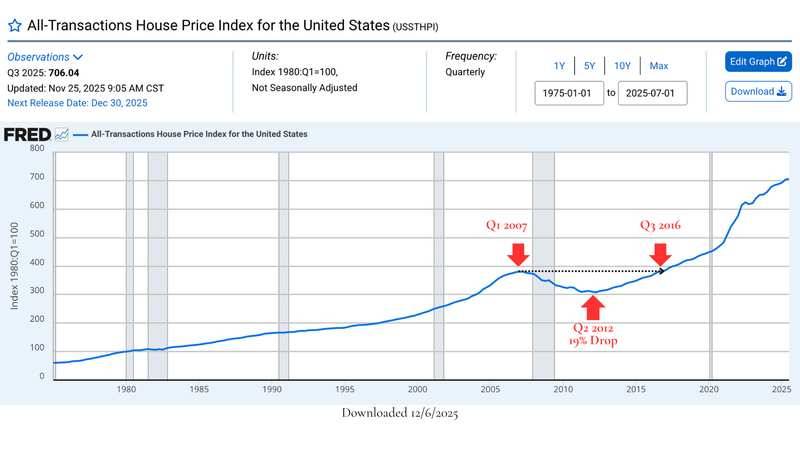
During my time in the mid to late 2000s, we had the 1% rule which I followed. I purchased a 100k house in cash in Texas which rented for $1k/month and it tripled to 300k by the time I sold it at the peak in 2023 before the current price drops. I believe this aligns with the national average.

That is 200k in equity divided over 17 years and you get an average rate of appreciation of 10%/year not including the rental income which I will get into. But lets look at that 10% and look at the real rate after selling costs (I didn't want to 1031 exchange into another problem). After, taxes at the federal income rate (65k), recapture of depreciation (17k), agent fees (20k) and what nobody here or book will tell you, is renovation fees. After 17 years of renting a 1984 home, you'll spend $25-50k to renovate it enough to receive full market value and that is if you're lucky enough for your insurance to cover a new roof because a lot of buyers will want a concession for that if it's aging. Otherwise, the new home owner will have issues insuring it. 

All said and done, the appreciation drops to 4.3% on average over 17 years (around 75k from 200k), which follows the national average rate of appreciation according to Case Shiller and other sources I believe. But we still have rental income since I did purchase it in cash. That should make up the difference, right?

Here's one statement as an example and was a particularly good year with little expenses.
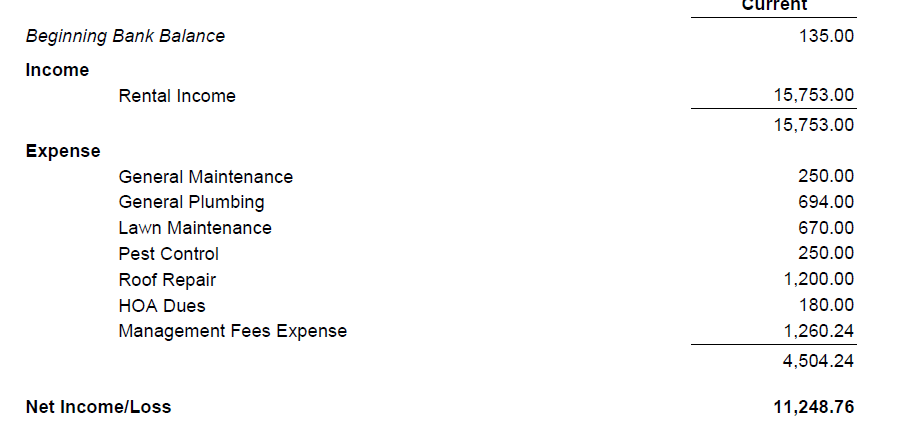
Subtract $4500 in property taxes and $2500 in insurance.

= $4,250 actual income divided by the purchase price of 100k

= 4% cash return on investment.

Take appreciation and cash on cash return and you get

Around 9% total return every year for 17 years or $9000/year I think which = 150,000 total cash return after sale.

Don't get confused with compounding like a stock. The S&P 500 has averaged over 10% I think over the same period.

From the S&P 500 history calculator.

Real Estate = $150k

S&P 500 = $540k

But what about leverage you ask? I would need 4 properties ($600k) to beat the S&P 500. No problem, I'll just put 25% down and buy 4 units.

But I would have a mortgage at 6% for the first 13 years until rates were low enough to refinance. 25% down would be break even so no cashflow. Now you have to reduce each unit by $75,000 (the $350/month for 17 years). So cut the 600k in half and you'll need 7 units to match the S&P 500. Again, after federal taxes, recapture fees, renovations, agent and misc selling fees and rental expenses. 

The rental income is eaten up by capital expenses and the fees I displayed. Every increase in rent was eaten up by the state reassessing home values ever year plus growing maintenance on 50-year-old home.

Some arguments against myself is that I could have been more efficient than 50% (income to expense ratio) but 50% is average for an older home in this location as stated by books I have read and my own experience. I could have also renovated earlier and increased rents to market rate but the rental market rate didn't really pop until the last few years and my payback would be 5 years. Another argument is that I could have rolled over the $350/month in cashflow into the S&P 500 and gained an additional 250k over 17 years. This means that I could purchase two properties with 50% down and maybe matched the S&P 500. Remember no passive income with a mortgage at 25% down. I also could have 1031 exchanged but I don't want to exchange it for another low return, high risk burden.

Even with leverage which all the influencers will be quick to mention, just can't beat the S&P 500 without tons of risk and work. Who wants 2-7 units when you can simply put the same amount of money into the S&P 500 and walk away. You just purchased yourself a job.

||||||||||||||||||||||

Here's another myth keeping you poor. Passive Income!

If you're working 9-5. You don't need passive income. What is $100/month or $1000/month to you now when you don't need it? 

I realized that passive income is only good when you retire. Nobody needs passive income when you're working. If you have a home mortgage, make sure it's paid off when you retire otherwise the extra income is better off in the market building wealth at a faster rate than your passive income and the capital used to generate it.

Also, it's not passive if you're putting time into it, spending days doing taxes finding all the websites you need to login to and pay all the misc rental taxes, prop taxes, HOAs etc. It's like a dozen. I probably spend a week every year just doing taxes. Then the stress of getting sued, answering emails, storms that blow your tree over and almost murder the tenants, it's not a lot of time but it's enough for me to put a value on my time vs no time nor risk in an index fund.

I purchased a condo for 150k in San Diego in 2012 returning $1000/month. Awesome right?

Again, lets go back to investing that 150k into the S&P 500. That's 150k in cashflow over 13 years and 100k in appreciation = 250k.

But again:

S&P 500 = $1,000,000 (some calculators show 700,000 probably adjusting for inflation)
Real Estate = $250,000 

1000/month vs 1M? You could literally just pay yourself out with the million or if you like the psychological idea of passive income, then you can achieve the same result with a dividend fund and receive a check every month but with way less work and less risk. Real Estate just gives you a check that you don't need and its principal grows more slowly.

This is why I'm so bitter with real estate. Leveraged or not, I could have been retired by now had I simply put my money into the market instead of buying real estate. The same money invested 10-17 years ago would have net me well over 10 million dollars by now had I just put it all into the S&P 500, 401k matching with Roth and maybe a couple tech stocks, bonds or dividends for diversification. Of course I have all these things but my portfolio was heavily into RE maybe 90/10. Now I'm shifting into 20% real estate (for diversification and to live in) and 80% market.

In summary, Real Estate is a soul crushing scam that keeps you poor and makes others rich by selling books, videos, seminars and of course forums like this used for advertising and podcasts.  It's a billion dollar industry that needs to convince new members that they can build wealth by buying homes that are made for families thus turning real estate into a stock like product which continues to make housing unaffordable for the common family.

25Reply
5,865 views

Most Popular Reply

Dan H.Pro Member
Investor · Poway, CA · Member since 2015 · 7k+ posts · 8k+ votes
10mo

Your math is very incorrect when it comes to the leverage as you used the unleveraged appreciation rate. If you purchased the $100k property at 80% LTV, if the property appreciated to $300k, your return from appreciation is 1000%/17 years. Not only would you not need 4 properties, but one property would far exceed the 10%/year S&P that you used which would result in $101k of growth ver 17 years (just over half of what you would have achieved via the property implying that 0.5 property would be virtually equivalent). Active asset managers likely would have refinanced the property multiple times over that 17 years and achieved far better return than the 1000% return over the 17 years.

The flaw in the leverage calculation is just the biggest flaw.

You chose not to value add until selling.   You chose not to use leverage.  You chose to sell and pay the gains versus never paying the tax on the gains.  You did not discuss the tax advantages of RE with OBBB now allowing 100% bonus appreciation.

It also sounds like your initial underwriting may not have been accurate as to actual expenses.  It is important to have accurate underwriting to have an accurate estimate of the cash flow.   The cash flow should not be a surprise over a 17 year period.

I agree without leverage, it may be challenging to exceed the S&P.   The unleveraged property investment would get whooped by Magnificent 7 or Fab 5.  

You purchased a $150k property in San Diego in 2012 and it is only worth $250k?  I find this shocking.  In 2012, I purchased a property in Escondido for $302k that is worth ~$1.1m today   In 2013 I purchase a property for $490k that is worth ~1.3m and another for $390k that is worth ~1.1m today.  Neighborhoodscout shows San Diego average appreciation in last 10 years is 115%, but in 13 years you have only achieved 66% appreciation.

https://www.neighborhoodscout.com/ca/san-diego/real-estate

Here is the reality on my active RE investments.   My worse appreciating property has gained $2700/month of appreciation.  I have 2 properties that have appreciated the over $10k/month over their hold.   I have never purchased a property that at stabilization did not depict positive cash flow, but would not be adverse to buying a property with stabilized negative cash flow if the total return was high enough.  My underwriting had never been significantly too optimistic.

by the way I have never sold books, course, anything.  I have had a very successful protege (8 digit net worth and recently made ~$500k on a property repurpose) and a moderately successful protege and various protégés that are still working to find their way (no charge to any of them).

Now for what I agree with your post: 1) the RE market today may be the most challenging ever. Two recent studies show that renting has never been more favorable versus home ownership in large US cities. 2) active residential investing is not passive. If you want passive RE, be a LP, go NNN, or invest in a REIT. Because active residential RE is not passive, its return should far exceed passive options to compensate for the effort 3) without leverage and/or value add, there likely are many passive options that can match or exceed the return that will be achieved via active residential RE.

good luck

See this reply in the discussion

276 Replies

Jump to latestLatest
  • Dan H.Pro Member
    Investor · Poway, CA · Member since 2015 · 7k+ posts · 8k+ votes
    10mo

    Your math is very incorrect when it comes to the leverage as you used the unleveraged appreciation rate. If you purchased the $100k property at 80% LTV, if the property appreciated to $300k, your return from appreciation is 1000%/17 years. Not only would you not need 4 properties, but one property would far exceed the 10%/year S&P that you used which would result in $101k of growth ver 17 years (just over half of what you would have achieved via the property implying that 0.5 property would be virtually equivalent). Active asset managers likely would have refinanced the property multiple times over that 17 years and achieved far better return than the 1000% return over the 17 years.

    The flaw in the leverage calculation is just the biggest flaw.

    You chose not to value add until selling.   You chose not to use leverage.  You chose to sell and pay the gains versus never paying the tax on the gains.  You did not discuss the tax advantages of RE with OBBB now allowing 100% bonus appreciation.

    It also sounds like your initial underwriting may not have been accurate as to actual expenses.  It is important to have accurate underwriting to have an accurate estimate of the cash flow.   The cash flow should not be a surprise over a 17 year period.

    I agree without leverage, it may be challenging to exceed the S&P.   The unleveraged property investment would get whooped by Magnificent 7 or Fab 5.  

    You purchased a $150k property in San Diego in 2012 and it is only worth $250k?  I find this shocking.  In 2012, I purchased a property in Escondido for $302k that is worth ~$1.1m today   In 2013 I purchase a property for $490k that is worth ~1.3m and another for $390k that is worth ~1.1m today.  Neighborhoodscout shows San Diego average appreciation in last 10 years is 115%, but in 13 years you have only achieved 66% appreciation.

    https://www.neighborhoodscout.com/ca/san-diego/real-estate

    Here is the reality on my active RE investments.   My worse appreciating property has gained $2700/month of appreciation.  I have 2 properties that have appreciated the over $10k/month over their hold.   I have never purchased a property that at stabilization did not depict positive cash flow, but would not be adverse to buying a property with stabilized negative cash flow if the total return was high enough.  My underwriting had never been significantly too optimistic.

    by the way I have never sold books, course, anything.  I have had a very successful protege (8 digit net worth and recently made ~$500k on a property repurpose) and a moderately successful protege and various protégés that are still working to find their way (no charge to any of them).

    Now for what I agree with your post: 1) the RE market today may be the most challenging ever. Two recent studies show that renting has never been more favorable versus home ownership in large US cities. 2) active residential investing is not passive. If you want passive RE, be a LP, go NNN, or invest in a REIT. Because active residential RE is not passive, its return should far exceed passive options to compensate for the effort 3) without leverage and/or value add, there likely are many passive options that can match or exceed the return that will be achieved via active residential RE.

    good luck

    • Member since 2021 · 401 posts · 254 votes
      10mo
      Quote from @Dan H.:

      Your math is very incorrect when it comes to the leverage as you used the unleveraged appreciation rate. If you purchased the $100k property at 80% LTV, if the property appreciated to $300k, your return from appreciation is 1000%/17 years. Not only would you not need 4 properties, but one property would far exceed the 10%/year S&P that you used which would result in $101k of growth ver 17 years (just over half of what you would have achieved via the property implying that 0.5 property would be virtually equivalent). Active asset managers likely would have refinanced the property multiple times over that 17 years and achieved far better return than the 1000% return over the 17 years.

      The flaw in the leverage calculation is just the biggest flaw.

      You chose not to value add until selling.   You chose not to use leverage.  You chose to sell and pay the gains versus never paying the tax on the gains.  You did not discuss the tax advantages of RE with OBBB now allowing 100% bonus appreciation.

      It also sounds like your initial underwriting may not have been accurate as to actual expenses.  It is important to have accurate underwriting to have an accurate estimate of the cash flow.   The cash flow should not be a surprise over a 17 year period.

      I agree without leverage, it may be challenging to exceed the S&P.   The unleveraged property investment would get whooped by Magnificent 7 or Fab 5.  

      You purchased a $150k property in San Diego in 2012 and it is only worth $250k?  I find this shocking.  In 2012, I purchased a property in Escondido for $302k that is worth ~$1.1m today   In 2013 I purchase a property for $490k that is worth ~1.3m and another for $390k that is worth ~1.1m today.  Neighborhoodscout shows San Diego average appreciation in last 10 years is 115%, but in 13 years you have only achieved 66% appreciation.

      https://www.neighborhoodscout.com/ca/san-diego/real-estate

      Here is the reality on my active RE investments.   My worse appreciating property has gained $2700/month of appreciation.  I have 2 properties that have appreciated the over $10k/month over their hold.   I have never purchased a property that at stabilization did not depict positive cash flow, but would not be adverse to buying a property with stabilized negative cash flow if the total return was high enough.  My underwriting had never been significantly too optimistic.

      by the way I have never sold books, course, anything.  I have had a very successful protege (8 digit net worth and recently made ~$500k on a property repurpose) and a moderately successful protege and various protégés that are still working to find their way (no charge to any of them).

      Now for what I agree with your post: 1) the RE market today may be the most challenging ever. Two recent studies show that renting has never been more favorable versus home ownership in large US cities. 2) active residential investing is not passive. If you want passive RE, be a LP, go NNN, or invest in a REIT. Because active residential RE is not passive, its return should far exceed passive options to compensate for the effort 3) without leverage and/or value add, there likely are many passive options that can match or exceed the return that will be achieved via active residential RE.

      good luck


      Quote from @Dan H.:
      Your math is very incorrect, your return from appreciation is 1000%/17 years.

      1000% returns or even infinate returns doesn't mean much as it could mean $1/month which is why I gave my actual cash figures. I understand leverage but I proved that with this unit, had I a morgage at 80% LTV, I would still need 4-7 of these units to beat the S&P 500 using my actual 1099s and sell price as an example. All a mortgage would do is wipe out my cashflow in exchange for multiplying my appreciation which drops from 10% gross to 4% actual. Accounting wasn't that difficult I mean you can see my 1099.

      Quote from @Dan H.:
      You chose not to value add until selling. You chose not to use leverage. You chose to sell and pay the gains versus never paying the tax on the gains.

      I could have renovated and kept the property but payback was 5 years and I would be in the same risk position with a house not generating more than the S&P 500 which is opportunity cost. The market was peak so I sold just after renovation in 2023. it was best to get out and snatch the profits generated from the renovation instead of waiting 5 years for 0 appreciation. I don't see where your value add comes from by holding?

      Of course I chose to wait to value add, rents didn't pop until recently just a few years prior and the tenants kept renewing their lease making it difficult. It's not like I lost much in opportunity cost if that's what you're saying.

      Yes I didn't want to 1031 exchange a house that met the 1% rule 17 years ago for one at a higher price and higher interest rate generating half the income to value ratio (.5% now). To be honest, I took the hit and put it into Tesla and more than made up for it. But going back to the S&P 500 again, had I put it into the S&P 500 as an example, I still would have blew away the $1800/month gross rent ($900 in pocket) and 4% appreciation that I would be receiving from the unit. The S&P has crushed that alone.

      Quote from @Dan H.:

      It also sounds like your initial underwriting may not have been accurate as to actual expenses.

      I showed you one of my 1099s. It is inaccurate. I had more expenses off record. I'm simplifying the numbers and rounding things for ease.


    • Member since 2021 · 401 posts · 254 votes
      10mo

      Well it cost 140k and is valued at 275k but yes this was an anomaly but I traded cashflow for appreciation such is usually the case. It generates over 10% in cashflow so it already paid for itself. Rents were low during the recession so 10% was high. It's not like you or I knew which properties were going to 2x vs 4x. It's dumb luck, admit it. But I personally like this property since it operates like an airbnb and I use it every year at no cost to me. The savings over the last 12 years by avoiding $300/night hotel stays is 6000/year alone or 70k. I'm closer to 2.5x on that unit.

    • Member since 2021 · 401 posts · 254 votes
      10mo
      Quote from @Dan H.:

      You purchased a $150k property in San Diego in 2012 and it is only worth $250k?  I find this shocking.  In 2012, I purchased a property in Escondido for $302k that is worth ~$1.1m today 

      I knew someone was going to make the 2012 argument. I have properties that did better from 2012 as well but my public service announcement was for new members looking to build wealth in today's market using prior examples from 2012 as if it was an indicator of future success. I just got back from a network meetup event in San Diego and let me tell you they all but disappeared. One person showed up and he was doing the BRRR in another state, does his own general contracting and renovation and doing ok yet still looking for capital. My two business partners flipping units years ago claimed bankruptcy and fled the country due to fraud. Just saying the PSA is necessary for new members that don't even have the capital to invest such as this guy the other day in this very forum as he's desperately trying to get out of multiple properties. He was duped by the very people on this forum and we see more of this than success stories.  
      I think I'm done. Landlording is not for me
    • Dan H.Pro Member
      Investor · Poway, CA · Member since 2015 · 7k+ posts · 8k+ votes
      10mo
      Quote from @K S.:
      Quote from @Dan H.:

      Your math is very incorrect when it comes to the leverage as you used the unleveraged appreciation rate. If you purchased the $100k property at 80% LTV, if the property appreciated to $300k, your return from appreciation is 1000%/17 years. Not only would you not need 4 properties, but one property would far exceed the 10%/year S&P that you used which would result in $101k of growth ver 17 years (just over half of what you would have achieved via the property implying that 0.5 property would be virtually equivalent). Active asset managers likely would have refinanced the property multiple times over that 17 years and achieved far better return than the 1000% return over the 17 years.

      The flaw in the leverage calculation is just the biggest flaw.

      You chose not to value add until selling.   You chose not to use leverage.  You chose to sell and pay the gains versus never paying the tax on the gains.  You did not discuss the tax advantages of RE with OBBB now allowing 100% bonus appreciation.

      It also sounds like your initial underwriting may not have been accurate as to actual expenses.  It is important to have accurate underwriting to have an accurate estimate of the cash flow.   The cash flow should not be a surprise over a 17 year period.

      I agree without leverage, it may be challenging to exceed the S&P.   The unleveraged property investment would get whooped by Magnificent 7 or Fab 5.  

      You purchased a $150k property in San Diego in 2012 and it is only worth $250k?  I find this shocking.  In 2012, I purchased a property in Escondido for $302k that is worth ~$1.1m today   In 2013 I purchase a property for $490k that is worth ~1.3m and another for $390k that is worth ~1.1m today.  Neighborhoodscout shows San Diego average appreciation in last 10 years is 115%, but in 13 years you have only achieved 66% appreciation.

      https://www.neighborhoodscout.com/ca/san-diego/real-estate

      Here is the reality on my active RE investments.   My worse appreciating property has gained $2700/month of appreciation.  I have 2 properties that have appreciated the over $10k/month over their hold.   I have never purchased a property that at stabilization did not depict positive cash flow, but would not be adverse to buying a property with stabilized negative cash flow if the total return was high enough.  My underwriting had never been significantly too optimistic.

      by the way I have never sold books, course, anything.  I have had a very successful protege (8 digit net worth and recently made ~$500k on a property repurpose) and a moderately successful protege and various protégés that are still working to find their way (no charge to any of them).

      Now for what I agree with your post: 1) the RE market today may be the most challenging ever. Two recent studies show that renting has never been more favorable versus home ownership in large US cities. 2) active residential investing is not passive. If you want passive RE, be a LP, go NNN, or invest in a REIT. Because active residential RE is not passive, its return should far exceed passive options to compensate for the effort 3) without leverage and/or value add, there likely are many passive options that can match or exceed the return that will be achieved via active residential RE.

      good luck


      Quote from @Dan H.:
      Your math is very incorrect, your return from appreciation is 1000%/17 years.

      1000% returns or even infiwnate returns doesn't mean much as it could mean $1/month which is why I gave my actual cash figures. I understand leverage but I proved that with this unit, had I a morgage at 80% LTV, I would still need 4-7 of these units to beat the S&P 500 using my actual 1099s and sell price as an example. All a mortgage would do is wipe out my cashflow in exchange for multiplying my appreciation which drops from 10% gross to 4% actual. Accounting wasn't that difficult I mean you can see my 1099.

      Quote from @Dan H.:
      You chose not to value add until selling. You chose not to use leverage. You chose to sell and pay the gains versus never paying the tax on the gains.

      I could have renovated and kept the property but payback was 5 years and I would be in the same risk position with a house not generating more than the S&P 500 which is opportunity cost. The market was peak so I sold just after renovation in 2023. it was best to get out and snatch the profits generated from the renovation instead of waiting 5 years for 0 appreciation. I don't see where your value add comes from by holding?

      Of course I chose to wait to value add, rents didn't pop until recently just a few years prior and the tenants kept renewing their lease making it difficult. It's not like I lost much in opportunity cost if that's what you're saying.

      Yes I didn't want to 1031 exchange a house that met the 1% rule 17 years ago for one at a higher price and higher interest rate generating half the income to value ratio (.5% now). To be honest, I took the hit and put it into Tesla and more than made up for it. But going back to the S&P 500 again, had I put it into the S&P 500 as an example, I still would have blew away the $1800/month gross rent ($900 in pocket) and 4% appreciation that I would be receiving from the unit. The S&P has crushed that alone.

      Quote from @Dan H.:

      It also sounds like your initial underwriting may not have been accurate as to actual expenses.

      I showed you one of my 1099s. It is inaccurate. I had more expenses off record. I'm simplifying the numbers and rounding things for ease.


       >1000% returns or even infiwnate returns doesn't mean much as it could mean $1/month

      That 1000% return in this case was on 20% purchase price.   Why indicate it could be $1/month when we know in this case it was was $200k over 17 years or $980/month.   I will point out this is particularly poor appreciation for San Diego but 17 years ago was 2008 which is one of the worse years to have purchased RE in San Diego history.   My worst San Diego appreciating property appreciated $2700/month and also was owned through the GFC.  Virtually all San Diego RE purchases should exceed my worst of $2700/month, but your example is one of the few that do not (it was purchased at an all time worst time and was a lower cost property at purchase).

      >I gave my actual cash figures. I understand leverage but I proved that with this unit, had I a morgage at 80% LTV, I would still need 4-7 of these units to beat the S&P 500 using my actual 1099s and sell price as an example

      You either do not understand leverage or math as I showed where your logic went awry. Everything after that mistake is tainted from that mistake. Read my reply and look at the appreciation calculation and logic related to leverage. I hope you can see the issue with your math/logic. It appears at least 8 BP users were able to follow the logic. My math shows that $100k purchased RE leveraged at 80% using your numbers for appreciation on the property would have required $40k in S&P using your numbers to achieved the same $200k of appreciation as $20k (at 80% LTV) invested in your sample property. So you need 0.5 of your sample property to match the performance of the S&P. This realizes the power of leverage.


      >I could have renovated and kept the property but payback was 5 years and I would be in the same risk position with a house not generating more than the S&P 500 which is opportunity cost. The market was peak so I sold just after renovation in 2023.

      The renovation ideally adds more value than cost immediately.  This is why they are called value adds. You get the return from the value add and you get the increased  rent. Your cash flow payback also seems long.


      >it was best to get out and snatch the profits generated from the renovation instead of waiting 5 years for 0 appreciation. I don't see where your value add comes from by holding?  

      Personally I believe without leverage the correct move would have been to never have purchased this property or to have used maximum leverage from the start.

      >Yes this was an anomaly but I traded cashflow for appreciation such is usually the case. It generated over 10% in cashflow which even then was advertised as crazy as rents were low during the recession. It's not like you or I knew which properties were going to 2x vs 4x. It's dumb luck, admit it.

      Emphasizing any one area of return without including the other forms of return is unlikely to produce optimal returns which you experienced first hand.  In the short term I agree that a lot can happen.  For the long term you can do research and have some idea of areas that are likely to outperform.   If you search my posts for “west Chula Vista” you will see I predicted about a decade ago the area would outperform the general San Diego market.   It did not require a crystal ball.  The bayside development had already been funded.   I have same belief currently about the area around brown field.   In the long term, I suspect San Diego RE will continue to out perform most other areas.   It is not dumb luck.  It is understanding supply/demand, the value of diverse economy, the value of outstanding climate.  You can do research or rely on dumb luck.   I prefer not to rely on dumb luck.

      Your properties would have produced a good ROI if you had used RE's number 1 advantage which is leverage. It would have done better if you actively managed the asset to maintain a high level of leverage such that your LTV never got anywhere close to 30% that it would have been lower than if purchased at 80% LTV and never refinanced.

      Your example of 401k versus RE was unleveraged.   You chose to go unleveraged.   Most RE uis purchased with leverage.  You do not state what amount is being invested for your numbers of the level of matching (109%, 50%, 25%).   However, I agree with maximizing your match.   That is instant return which is tough to bear.   I will point out that if you could maintain 80% leverage (not really possible), the return from RE would be 5x what you depicted and virtually equal to your matched 401k example.   I would still choose the matched 401k due to its passivity.   It is hard to beat free money.

      >I knew someone was going to make the 2012 argument

      I referenced 2012 because it was one of the 2 examples you chose.   I recognize it was a different RE environment than today for many reasons.   

      >Who said I failed in RE? Are you cash flowing over 10% on your property

      My view is you did in the above statement where you are evaluating the return based on one return criteria.   If I achieve less than 20% annual return on an RE, I consider it a failure because it is not passive and there are other investment opportunities that can achieve 10% passively  

      >technically, I do meet your return requirements so I guess if I'm a failure, then you're a failure, "in my eyes

      Joe was stating his cash flow in every case was 10%. He was not stating this is an acceptable level of return and i know he would not consider 10% ROI as meeting his return requirements. Those that know Joe's posts know he is full leverage advocate. He made at least 10% cash flow plus the other sources of return that due to leverage he likely did quite well with his return from appreciation. Tenants are also paying down his debt.


      >Just saying the PSA is necessary for new members that don't even have the capital to invest. 

      I agree with this.  Do not invest in RE without sufficient reserves.   It is very risky and the current projected RE investments does not warrant the risk.

      Residential RE is not passive.   If you want to achieve best return, then perform the asset manager role.  I see indication of no or poor underwriting prior to purchase (decent underwriting would scream leverage) and no effort exerted as the asset manager (asset manager would have assured higher leverage and realized the value of value adds).

      Your post should be the lessons learned post that you desire, but the lessons learned should not be what you intended them to be.

      I think you are finished as an RE investor which is fine.  There are many other investment opportunities. However, if you look at my replies and understand the replies, you should do better than you achieved previously.   Do not expect residential RE to be passive.   Recognize there are more RE challenges today than when you purchased in 2012.


      good luck

    • Member since 2021 · 401 posts · 254 votes
      10mo
      Quote from @Dan H.:
      Quote from @K S.:
      Quote from @Dan H.:

      Your math is very incorrect when it comes to the leverage as you used the unleveraged appreciation rate. If you purchased the $100k property at 80% LTV, if the property appreciated to $300k, your return from appreciation is 1000%/17 years. Not only would you not need 4 properties, but one property would far exceed the 10%/year S&P that you used which would result in $101k of growth ver 17 years (just over half of what you would have achieved via the property implying that 0.5 property would be virtually equivalent). Active asset managers likely would have refinanced the property multiple times over that 17 years and achieved far better return than the 1000% return over the 17 years.

      The flaw in the leverage calculation is just the biggest flaw.

      You chose not to value add until selling.   You chose not to use leverage.  You chose to sell and pay the gains versus never paying the tax on the gains.  You did not discuss the tax advantages of RE with OBBB now allowing 100% bonus appreciation.

      It also sounds like your initial underwriting may not have been accurate as to actual expenses.  It is important to have accurate underwriting to have an accurate estimate of the cash flow.   The cash flow should not be a surprise over a 17 year period.

      I agree without leverage, it may be challenging to exceed the S&P.   The unleveraged property investment would get whooped by Magnificent 7 or Fab 5.  

      You purchased a $150k property in San Diego in 2012 and it is only worth $250k?  I find this shocking.  In 2012, I purchased a property in Escondido for $302k that is worth ~$1.1m today   In 2013 I purchase a property for $490k that is worth ~1.3m and another for $390k that is worth ~1.1m today.  Neighborhoodscout shows San Diego average appreciation in last 10 years is 115%, but in 13 years you have only achieved 66% appreciation.

      https://www.neighborhoodscout.com/ca/san-diego/real-estate

      Here is the reality on my active RE investments.   My worse appreciating property has gained $2700/month of appreciation.  I have 2 properties that have appreciated the over $10k/month over their hold.   I have never purchased a property that at stabilization did not depict positive cash flow, but would not be adverse to buying a property with stabilized negative cash flow if the total return was high enough.  My underwriting had never been significantly too optimistic.

      by the way I have never sold books, course, anything.  I have had a very successful protege (8 digit net worth and recently made ~$500k on a property repurpose) and a moderately successful protege and various protégés that are still working to find their way (no charge to any of them).

      Now for what I agree with your post: 1) the RE market today may be the most challenging ever. Two recent studies show that renting has never been more favorable versus home ownership in large US cities. 2) active residential investing is not passive. If you want passive RE, be a LP, go NNN, or invest in a REIT. Because active residential RE is not passive, its return should far exceed passive options to compensate for the effort 3) without leverage and/or value add, there likely are many passive options that can match or exceed the return that will be achieved via active residential RE.

      good luck


      Quote from @Dan H.:
      Your math is very incorrect, your return from appreciation is 1000%/17 years.

      1000% returns or even infiwnate returns doesn't mean much as it could mean $1/month which is why I gave my actual cash figures. I understand leverage but I proved that with this unit, had I a morgage at 80% LTV, I would still need 4-7 of these units to beat the S&P 500 using my actual 1099s and sell price as an example. All a mortgage would do is wipe out my cashflow in exchange for multiplying my appreciation which drops from 10% gross to 4% actual. Accounting wasn't that difficult I mean you can see my 1099.

      Quote from @Dan H.:
      You chose not to value add until selling. You chose not to use leverage. You chose to sell and pay the gains versus never paying the tax on the gains.

      I could have renovated and kept the property but payback was 5 years and I would be in the same risk position with a house not generating more than the S&P 500 which is opportunity cost. The market was peak so I sold just after renovation in 2023. it was best to get out and snatch the profits generated from the renovation instead of waiting 5 years for 0 appreciation. I don't see where your value add comes from by holding?

      Of course I chose to wait to value add, rents didn't pop until recently just a few years prior and the tenants kept renewing their lease making it difficult. It's not like I lost much in opportunity cost if that's what you're saying.

      Yes I didn't want to 1031 exchange a house that met the 1% rule 17 years ago for one at a higher price and higher interest rate generating half the income to value ratio (.5% now). To be honest, I took the hit and put it into Tesla and more than made up for it. But going back to the S&P 500 again, had I put it into the S&P 500 as an example, I still would have blew away the $1800/month gross rent ($900 in pocket) and 4% appreciation that I would be receiving from the unit. The S&P has crushed that alone.

      Quote from @Dan H.:

      It also sounds like your initial underwriting may not have been accurate as to actual expenses.

      I showed you one of my 1099s. It is inaccurate. I had more expenses off record. I'm simplifying the numbers and rounding things for ease.


       >1000% returns or even infiwnate returns doesn't mean much as it could mean $1/month

      That 1000% return in this case was on 20% purchase price.   Why indicate it could be $1/month when we know in this case it was was $200k over 17 years or $980/month.   I will point out this is particularly poor appreciation for San Diego but 17 years ago was 2008 which is one of the worse years to have purchased RE in San Diego history.   My worst San Diego appreciating property appreciated $2700/month and also was owned through the GFC.  Virtually all San Diego RE purchases should exceed my worst of $2700/month, but your example is one of the few that do not (it was purchased at an all time worst time and was a lower cost property at purchase).

      >I gave my actual cash figures. I understand leverage but I proved that with this unit, had I a morgage at 80% LTV, I would still need 4-7 of these units to beat the S&P 500 using my actual 1099s and sell price as an example

      You either do not understand leverage or math as I showed where your logic went awry. Everything after that mistake is tainted from that mistake. Read my reply and look at the appreciation calculation and logic related to leverage. I hope you can see the issue with your math/logic. It appears at least 8 BP users were able to follow the logic. My math shows that $100k purchased RE leveraged at 80% using your numbers for appreciation on the property would have required $40k in S&P using your numbers to achieved the same $200k of appreciation as $20k (at 80% LTV) invested in your sample property. So you need 0.5 of your sample property to match the performance of the S&P. This realizes the power of leverage.


      >I could have renovated and kept the property but payback was 5 years and I would be in the same risk position with a house not generating more than the S&P 500 which is opportunity cost. The market was peak so I sold just after renovation in 2023.

      The renovation ideally adds more value than cost immediately.  This is why they are called value adds. You get the return from the value add and you get the increased  rent. Your cash flow payback also seems long.


      >it was best to get out and snatch the profits generated from the renovation instead of waiting 5 years for 0 appreciation. I don't see where your value add comes from by holding?  

      Personally I believe without leverage the correct move would have been to never have purchased this property or to have used maximum leverage from the start.

      >Yes this was an anomaly but I traded cashflow for appreciation such is usually the case. It generated over 10% in cashflow which even then was advertised as crazy as rents were low during the recession. It's not like you or I knew which properties were going to 2x vs 4x. It's dumb luck, admit it.

      Emphasizing any one area of return without including the other forms of return is unlikely to produce optimal returns which you experienced first hand.  In the short term I agree that a lot can happen.  For the long term you can do research and have some idea of areas that are likely to outperform.   If you search my posts for “west Chula Vista” you will see I predicted about a decade ago the area would outperform the general San Diego market.   It did not require a crystal ball.  The bayside development had already been funded.   I have same belief currently about the area around brown field.   In the long term, I suspect San Diego RE will continue to out perform most other areas.   It is not dumb luck.  It is understanding supply/demand, the value of diverse economy, the value of outstanding climate.  You can do research or rely on dumb luck.   I prefer not to rely on dumb luck.

      Your properties would have produced a good ROI if you had used RE's number 1 advantage which is leverage. It would have done better if you actively managed the asset to maintain a high level of leverage such that your LTV never got anywhere close to 30% that it would have been lower than if purchased at 80% LTV and never refinanced.

      Residential RE is not passive.   If you want to achieve best return, then perform the asset manager role.  I see indication of no or poor underwriting prior to purchase (decent underwriting would scream leverage) and no effort exerted as the asset manager (asset manager would have assured higher leverage and realized the value of value adds).

      Your post should be the lessons learned post that you desire, but the lessons learned should not be what you intended them to be.

      I think you are finished as an RE investor which is fine.  There are many other investment opportunities. However, if you look at my replies and understand the replies, you should do better than you achieved previously.   Do not expect residential RE to be passive.   Recognize there are more RE challenges today than when you purchased in 2012.


      good luck

      Maybe I don't understand what you're saying because it's not laid out in an easily understable way but let me simplify the math.

      I bought the house for 100k and it's valued at 300k. So we know it made 200k in 17 years vs 550k for the same amount in the S&P 500.

      Instead, I buy 4 at 25% down and assume I made 800k right?. But you didn't because you had to renovate each one before sale, pay commissions, federal taxes, recapture fees etc. The total amount is still less than the S&P unless you 1031 but even then it's not enough more to convince me that the extra headache and risk is better than doing nothing for nearly the same results. Where am I going wrong here?

    • Member since 2021 · 401 posts · 254 votes
      10mo

      I'm not totally out, just getting rid of most of them and deleting all my Redfin alerts. I'm building a cabin for fun and keeping a few properties because of the high cashflow and low property taxes.

      I find spending extra time doing taxes, maintenance and the whole process just utterly boring. I'm in a high level tech job and need to worry about those skill sets and these extra properties like this one in Texas is utterly f-ing boring to own and just in the way. I also don't find it exciting to research deals, zip codes, everyone's opinion on where to buy, this forum, new words and strategies like syndication, NNN, BRRR, Rules (there's a new one every week) it's an endless distraction to my professional career. And when I found out that I could have made 4 times the profits by doing nothing this whole time, that pisses me off. That's why I'm warning others whom are starting at 0 properties to RUN! run away now unless you truly love boringness, tenants, trees crashing down on tenants, lawsuits, endless California laws favoring tenants like the right to squat, generating wealth for your children that you won't experience, poorness and possibly death. This should be on the warning label like any other medication.

    • Dan H.Pro Member
      Investor · Poway, CA · Member since 2015 · 7k+ posts · 8k+ votes
      10mo
      Quote from @K S.:
      Quote from @Dan H.:
      Quote from @K S.:
      Quote from @Dan H.:

      Your math is very incorrect when it comes to the leverage as you used the unleveraged appreciation rate. If you purchased the $100k property at 80% LTV, if the property appreciated to $300k, your return from appreciation is 1000%/17 years. Not only would you not need 4 properties, but one property would far exceed the 10%/year S&P that you used which would result in $101k of growth ver 17 years (just over half of what you would have achieved via the property implying that 0.5 property would be virtually equivalent). Active asset managers likely would have refinanced the property multiple times over that 17 years and achieved far better return than the 1000% return over the 17 years.

      The flaw in the leverage calculation is just the biggest flaw.

      You chose not to value add until selling.   You chose not to use leverage.  You chose to sell and pay the gains versus never paying the tax on the gains.  You did not discuss the tax advantages of RE with OBBB now allowing 100% bonus appreciation.

      It also sounds like your initial underwriting may not have been accurate as to actual expenses.  It is important to have accurate underwriting to have an accurate estimate of the cash flow.   The cash flow should not be a surprise over a 17 year period.

      I agree without leverage, it may be challenging to exceed the S&P.   The unleveraged property investment would get whooped by Magnificent 7 or Fab 5.  

      You purchased a $150k property in San Diego in 2012 and it is only worth $250k?  I find this shocking.  In 2012, I purchased a property in Escondido for $302k that is worth ~$1.1m today   In 2013 I purchase a property for $490k that is worth ~1.3m and another for $390k that is worth ~1.1m today.  Neighborhoodscout shows San Diego average appreciation in last 10 years is 115%, but in 13 years you have only achieved 66% appreciation.

      https://www.neighborhoodscout.com/ca/san-diego/real-estate

      Here is the reality on my active RE investments.   My worse appreciating property has gained $2700/month of appreciation.  I have 2 properties that have appreciated the over $10k/month over their hold.   I have never purchased a property that at stabilization did not depict positive cash flow, but would not be adverse to buying a property with stabilized negative cash flow if the total return was high enough.  My underwriting had never been significantly too optimistic.

      by the way I have never sold books, course, anything.  I have had a very successful protege (8 digit net worth and recently made ~$500k on a property repurpose) and a moderately successful protege and various protégés that are still working to find their way (no charge to any of them).

      Now for what I agree with your post: 1) the RE market today may be the most challenging ever. Two recent studies show that renting has never been more favorable versus home ownership in large US cities. 2) active residential investing is not passive. If you want passive RE, be a LP, go NNN, or invest in a REIT. Because active residential RE is not passive, its return should far exceed passive options to compensate for the effort 3) without leverage and/or value add, there likely are many passive options that can match or exceed the return that will be achieved via active residential RE.

      good luck


      Quote from @Dan H.:
      Your math is very incorrect, your return from appreciation is 1000%/17 years.

      1000% returns or even infiwnate returns doesn't mean much as it could mean $1/month which is why I gave my actual cash figures. I understand leverage but I proved that with this unit, had I a morgage at 80% LTV, I would still need 4-7 of these units to beat the S&P 500 using my actual 1099s and sell price as an example. All a mortgage would do is wipe out my cashflow in exchange for multiplying my appreciation which drops from 10% gross to 4% actual. Accounting wasn't that difficult I mean you can see my 1099.

      Quote from @Dan H.:
      You chose not to value add until selling. You chose not to use leverage. You chose to sell and pay the gains versus never paying the tax on the gains.

      I could have renovated and kept the property but payback was 5 years and I would be in the same risk position with a house not generating more than the S&P 500 which is opportunity cost. The market was peak so I sold just after renovation in 2023. it was best to get out and snatch the profits generated from the renovation instead of waiting 5 years for 0 appreciation. I don't see where your value add comes from by holding?

      Of course I chose to wait to value add, rents didn't pop until recently just a few years prior and the tenants kept renewing their lease making it difficult. It's not like I lost much in opportunity cost if that's what you're saying.

      Yes I didn't want to 1031 exchange a house that met the 1% rule 17 years ago for one at a higher price and higher interest rate generating half the income to value ratio (.5% now). To be honest, I took the hit and put it into Tesla and more than made up for it. But going back to the S&P 500 again, had I put it into the S&P 500 as an example, I still would have blew away the $1800/month gross rent ($900 in pocket) and 4% appreciation that I would be receiving from the unit. The S&P has crushed that alone.

      Quote from @Dan H.:

      It also sounds like your initial underwriting may not have been accurate as to actual expenses.

      I showed you one of my 1099s. It is inaccurate. I had more expenses off record. I'm simplifying the numbers and rounding things for ease.


       >1000% returns or even infiwnate returns doesn't mean much as it could mean $1/month

      That 1000% return in this case was on 20% purchase price.   Why indicate it could be $1/month when we know in this case it was was $200k over 17 years or $980/month.   I will point out this is particularly poor appreciation for San Diego but 17 years ago was 2008 which is one of the worse years to have purchased RE in San Diego history.   My worst San Diego appreciating property appreciated $2700/month and also was owned through the GFC.  Virtually all San Diego RE purchases should exceed my worst of $2700/month, but your example is one of the few that do not (it was purchased at an all time worst time and was a lower cost property at purchase).

      >I gave my actual cash figures. I understand leverage but I proved that with this unit, had I a morgage at 80% LTV, I would still need 4-7 of these units to beat the S&P 500 using my actual 1099s and sell price as an example

      You either do not understand leverage or math as I showed where your logic went awry. Everything after that mistake is tainted from that mistake. Read my reply and look at the appreciation calculation and logic related to leverage. I hope you can see the issue with your math/logic. It appears at least 8 BP users were able to follow the logic. My math shows that $100k purchased RE leveraged at 80% using your numbers for appreciation on the property would have required $40k in S&P using your numbers to achieved the same $200k of appreciation as $20k (at 80% LTV) invested in your sample property. So you need 0.5 of your sample property to match the performance of the S&P. This realizes the power of leverage.


      >I could have renovated and kept the property but payback was 5 years and I would be in the same risk position with a house not generating more than the S&P 500 which is opportunity cost. The market was peak so I sold just after renovation in 2023.

      The renovation ideally adds more value than cost immediately.  This is why they are called value adds. You get the return from the value add and you get the increased  rent. Your cash flow payback also seems long.


      >it was best to get out and snatch the profits generated from the renovation instead of waiting 5 years for 0 appreciation. I don't see where your value add comes from by holding?  

      Personally I believe without leverage the correct move would have been to never have purchased this property or to have used maximum leverage from the start.

      >Yes this was an anomaly but I traded cashflow for appreciation such is usually the case. It generated over 10% in cashflow which even then was advertised as crazy as rents were low during the recession. It's not like you or I knew which properties were going to 2x vs 4x. It's dumb luck, admit it.

      Emphasizing any one area of return without including the other forms of return is unlikely to produce optimal returns which you experienced first hand.  In the short term I agree that a lot can happen.  For the long term you can do research and have some idea of areas that are likely to outperform.   If you search my posts for “west Chula Vista” you will see I predicted about a decade ago the area would outperform the general San Diego market.   It did not require a crystal ball.  The bayside development had already been funded.   I have same belief currently about the area around brown field.   In the long term, I suspect San Diego RE will continue to out perform most other areas.   It is not dumb luck.  It is understanding supply/demand, the value of diverse economy, the value of outstanding climate.  You can do research or rely on dumb luck.   I prefer not to rely on dumb luck.

      Your properties would have produced a good ROI if you had used RE's number 1 advantage which is leverage. It would have done better if you actively managed the asset to maintain a high level of leverage such that your LTV never got anywhere close to 30% that it would have been lower than if purchased at 80% LTV and never refinanced.

      Residential RE is not passive.   If you want to achieve best return, then perform the asset manager role.  I see indication of no or poor underwriting prior to purchase (decent underwriting would scream leverage) and no effort exerted as the asset manager (asset manager would have assured higher leverage and realized the value of value adds).

      Your post should be the lessons learned post that you desire, but the lessons learned should not be what you intended them to be.

      I think you are finished as an RE investor which is fine.  There are many other investment opportunities. However, if you look at my replies and understand the replies, you should do better than you achieved previously.   Do not expect residential RE to be passive.   Recognize there are more RE challenges today than when you purchased in 2012.


      good luck

      Maybe I don't understand what you're saying because it's not laid out in an easily understable way but let me simplify the math.

      I bought the house for 100k and it's valued at 300k. So we know it made 200k in 17 years vs 550k for the same amount in the S&P 500.

      Instead, I buy 4 at 25% down and assume I made 800k right?. But you didn't because you had to renovate each one before sale, pay commissions, federal taxes, recapture fees etc. The total amount is still less than the S&P unless you 1031 but even then it's not enough more to convince me that the extra headache and risk is better than doing nothing for nearly the same results. Where am I going wrong here?


       I will try to make this simple.   Your numbers are via an unleveraged RE purchase   When you tried to apply the leverage, you had some major flaws in math and/or logic.

      - if you purchased the same house at 80% LTV, you would have put $20k into the property for $200k of appreciation which is 10x return over the 17 years.

      - versus your numbers for the S&P you invest $100k for $550k for a 5.5x return over the 17 years.

      As I indicated, a competent asset manager would have refinanced long before the LTV was anywhere close to 30% it would be below at year 17 and would have achieved far better than the 10x return from the appreciation.

      Hopefully you can understand these numbers.

      Without leverage or a value add, RE will be challenged to out produce the S&P.  This is why you underwrite scenarios up front.   So you know the best options for you.

      Best wishes. 

    • Joe S.Pro Member
      Investor · San Antonio · Member since 2020 · 3k+ posts · 3k+ votes
      10mo
      Quote from @K S.:

      I'm not totally out, just getting rid of most of them and deleting all my Redfin alerts. I'm building a cabin for fun and keeping a few properties because of the high cashflow and low property taxes.

      I find spending extra time doing taxes, maintenance and the whole process just utterly boring. I'm in a high level tech job and need to worry about those skill sets and these extra properties like this one in Texas is utterly f-ing boring to own and just in the way. I also don't find it exciting to research deals, zip codes, everyone's opinion on where to buy, this forum, new words and strategies like syndication, NNN, BRRR, Rules (there's a new one every week) it's an endless distraction to my professional career. And when I found out that I could have made 4 times the profits by doing nothing this whole time, that pisses me off. That's why I'm warning others whom are starting at 0 properties to RUN! run away now unless you truly love boringness, tenants, trees crashing down on tenants, lawsuits, endless California laws favoring tenants like the right to squat, generating wealth for your children that you won't experience, poorness and possibly death. This should be on the warning label like any other medication.

       I'm in a high level tech job and need to worry about those skill sets

      I respect your decision and courage to come out and tell your story. Real estate is not for everyone. And ( Most)  of the ones coming out to contradict your post are the minority that actually done good at real estate. 

      Real estate, not for everyone. I think there is less stressful endeavors especially for high wage earners. On the flipside you mentioned you are in a high-level tech job. The chances of the average person making a go with real estate if they really have the determination is probably a higher likelihood than a person doing well at a high-level tech job. IMO 

    • Member since 2021 · 401 posts · 254 votes
      10mo

      Thanks Dan, I understand what you're saying now and yes I knew this since my 20s but had bad credit. I used a cash out strategy later but that was at a higher "investor" rate so I never persued it again probably at my perile, but anyways.

      To clarify, the 200k after sale, renovation, closing etc was actually 80-100k remember? So technically it's 5x in your leveraged example just matching the S&P like you mentioned but It's true that if I didn't sell the property and just renovated, then I would be at 8.5x thus beating the S&P. The selling costs really killed it but pulling money out of stocks is at a capital gains rate and not the federal rate so like-vs-like, I think the S&P would be a little closer but you still win overall, but for a much larger responsibility when multiplying this method over multiple properties. I tried to do this but credit was difficult to fix at the time. I tried for multi units to consolidate the management and everything else but I was denied again, which is why I have a lot of 100k properties paid in cash. After my credit got fixed, prices really started climbing fast post 2012.

      Two important things though.

      1) You need 25% down to break even on rents as SFH's are typically lower efficiency and being remote doesn't help as you must use a PM. 20% wouldn't cut it.

      2) Again, we're talking late 2000s when prices were cheap.

      I sold that home for 325k with $1800/m rent. Could you still put 20% down, break even and expect the same results in the next 15 years. If the answer is NO!, then I rest my case. Do the math on this unit and tell me if you see value in it now. Someone bought it and rented it out and I don't think time will be as good to him as it was to me.

    • Dan H.Pro Member
      Investor · Poway, CA · Member since 2015 · 7k+ posts · 8k+ votes
      10mo
      Quote from @K S.:

      Thanks Dan, I understand what you're saying now and yes I knew this since my 20s but had bad credit. I used a cash out strategy later but that was at a higher "investor" rate so I never persued it again probably at my perile, but anyways.

      To clarify, the 200k after sale, renovation, closing etc was actually 80-100k remember? So technically it's 5x in your leveraged example just matching the S&P like you mentioned but It's true that if I didn't sell the property and just renovated, then I would be at 8.5x thus beating the S&P. The selling costs really killed it but pulling money out of stocks is at a capital gains rate and not the federal rate so like-vs-like, I think the S&P would be a little closer but you still win overall, but for a much larger responsibility when multiplying this method over multiple properties. I tried to do this but credit was difficult to fix at the time. I tried for multi units to consolidate the management and everything else but I was denied again, which is why I have a lot of 100k properties paid in cash. After my credit got fixed, prices really started climbing fast post 2012.

      Two important things though.

      1) You need 25% down to break even on rents as SFH's are typically lower efficiency and being remote doesn't help as you must use a PM. 20% wouldn't cut it.

      2) Again, we're talking late 2000s when prices were cheap.

      I sold that home for 325k with $1800/m rent. Could you still put 20% down, break even and expect the same results in the next 15 years. If the answer is NO!, then I rest my case. Do the math on this unit and tell me if you see value in it now. Someone bought it and rented it out and I don't think time will be as good to him as it was to me.


       >1) You need 25% down to break even on rents as SFH's are typically lower efficiency and being remote doesn't help as you must use a PM. 20% wouldn't cut it.

      This number is very market specific.  

      In San Diego, with my underwriting, the average SFH purchased off the mls at market rate financing would require more than 25% down to have positive cash flow. These mostly are bought by OO buyers (on occasion investors that do not have a great understanding of the numbers). Most experience investors do not touch these unless they have at least one of a killer value add, below rate financing, or below market value purchase price. However, the average monthly rent ratio on these SFH is ~0.5%. 0.7% ratio is good, but still negative at current rates at 80% LTV with my underwriting. Note it has been over 10 years since my last San Diego MLS purchase. I buy off market value add at below market price.

      However in Cleveland, the ratio has to be over 1.0% to be pretty good (and likely still negative cash flow with my underwriting). A duplex maybe with a 1.2% rent ratio probably has cash flow at 80% LTV. Note I am not recommending the newbie California investor purchase a 1.2% ratio property in Ohio; I am just using it as an example.

      My background was also tech.  When I retired in 2021 at a fairly young age my total compensation was ~$300k/year which is very good for San Diego (San Diego salaries are far lower than San Francisco area where $300k could be just fairly good).  When I retired, 5 of the previous 6 years I made more in RE than my w2 for much less effort.  Since I retired, my net worth has continued to grow.   A lot of that net worth growth has been from RE.  The two properties I acquired at the end of 2021 one is up ~$1m above cost including value add cost and the other is up ~$700k above cost including value add costs. ~$1.7m mostly via forced appreciation (they also benefited from below value acquisition and market appreciation). I am hopeful our 2026 property revenue breaks $1m (leveraged so cash flow is significantly less).

      It is possible to make a lot of money in RE, but unleveraged no value add purchases off the mls is unlikely to be an optimal path.  The most likely to succeed requires leverage and value adds.  Bonus if below market financing and below value acquisition.

      Good luck

    • Member since 2021 · 401 posts · 254 votes
      10mo
      Quote from @Dan H.:
      Quote from @K S.:

      Thanks Dan, I understand what you're saying now and yes I knew this since my 20s but had bad credit. I used a cash out strategy later but that was at a higher "investor" rate so I never persued it again probably at my perile, but anyways.

      To clarify, the 200k after sale, renovation, closing etc was actually 80-100k remember? So technically it's 5x in your leveraged example just matching the S&P like you mentioned but It's true that if I didn't sell the property and just renovated, then I would be at 8.5x thus beating the S&P. The selling costs really killed it but pulling money out of stocks is at a capital gains rate and not the federal rate so like-vs-like, I think the S&P would be a little closer but you still win overall, but for a much larger responsibility when multiplying this method over multiple properties. I tried to do this but credit was difficult to fix at the time. I tried for multi units to consolidate the management and everything else but I was denied again, which is why I have a lot of 100k properties paid in cash. After my credit got fixed, prices really started climbing fast post 2012.

      Two important things though.

      1) You need 25% down to break even on rents as SFH's are typically lower efficiency and being remote doesn't help as you must use a PM. 20% wouldn't cut it.

      2) Again, we're talking late 2000s when prices were cheap.

      I sold that home for 325k with $1800/m rent. Could you still put 20% down, break even and expect the same results in the next 15 years. If the answer is NO!, then I rest my case. Do the math on this unit and tell me if you see value in it now. Someone bought it and rented it out and I don't think time will be as good to him as it was to me.


       >1) You need 25% down to break even on rents as SFH's are typically lower efficiency and being remote doesn't help as you must use a PM. 20% wouldn't cut it.

      This number is very market specific.  

      In San Diego, with my underwriting, the average SFH purchased off the mls at market rate financing would require more than 25% down to have positive cash flow. These mostly are bought by OO buyers (on occasion investors that do not have a great understanding of the numbers). Most experience investors do not touch these unless they have at least one of a killer value add, below rate financing, or below market value purchase price. However, the average monthly rent ratio on these SFH is ~0.5%. 0.7% ratio is good, but still negative at current rates at 80% LTV with my underwriting. Note it has been over 10 years since my last San Diego MLS purchase. I buy off market value add at below market price.

      However in Cleveland, the ratio has to be over 1.0% to be pretty good (and likely still negative cash flow with my underwriting). A duplex maybe with a 1.2% rent ratio probably has cash flow at 80% LTV. Note I am not recommending the newbie California investor purchase a 1.2% ratio property in Ohio; I am just using it as an example.

      My background was also tech.  When I retired in 2021 at a fairly young age my total compensation was ~$300k/year which is very good for San Diego (San Diego salaries are far lower than San Francisco area where $300k could be just fairly good).  When I retired, 5 of the previous 6 years I made more in RE than my w2 for much less effort.  Since I retired, my net worth has continued to grow.   A lot of that net worth growth has been from RE.  The two properties I acquired at the end of 2021 one is up ~$1m above cost including value add cost and the other is up ~$700k above cost including value add costs. ~$1.7m mostly via forced appreciation (they also benefited from below value acquisition and market appreciation). I am hopeful our 2026 property revenue breaks $1m (leveraged so cash flow is significantly less).

      It is possible to make a lot of money in RE, but unleveraged no value add purchases off the mls is unlikely to be an optimal path.  The most likely to succeed requires leverage and value adds.  Bonus if below market financing and below value acquisition.

      Good luck


      Ya, I estimated 50% down in San Diego to break even using a calculator.

      If you gained 1M in a few years then I'm going to assume you purchased a commercial property and renovated it yourself. That's nice, but honestly I'd be happy with the $6,000,000 the S&P would have netted me over 17 years had I put in just 60k/year. It would take 30 properties in our example at 8x to match this. That's as simple as I can make this. 

      I want just enough money to retire comfortably, nothing more. I don't like fast cars or anything else and empire building bores me. I'm glad you found your niche but I'm still going with the S&P. It would take me 30 properties to match $6,000,000 using your multiplication factor of 8x via 25% down and to me that's not worth it in comparison to the ease at which I can do the same thing for a little bit more invested but with zero effort. It's more depressing the more you help me put the numbers into perspective as I realize I could have 6M from the market that would have taken 30 properties to achieve. Arrrg! At least I know the way forward now. Sell another condo at the hard rock San Diego and dump it into the market. Unless you have advice on that but I don't see myself cashing out at a high interest rate (investor rate) and finding a property that works. I was in my multi-phase a couple years ago but they're all under 5% ROI and I have no time to renovate or care to learn.

    • Dan H.Pro Member
      Investor · Poway, CA · Member since 2015 · 7k+ posts · 8k+ votes
      10mo
      Quote from @K S.:
      Quote from @Dan H.:
      Quote from @K S.:

      Thanks Dan, I understand what you're saying now and yes I knew this since my 20s but had bad credit. I used a cash out strategy later but that was at a higher "investor" rate so I never persued it again probably at my perile, but anyways.

      To clarify, the 200k after sale, renovation, closing etc was actually 80-100k remember? So technically it's 5x in your leveraged example just matching the S&P like you mentioned but It's true that if I didn't sell the property and just renovated, then I would be at 8.5x thus beating the S&P. The selling costs really killed it but pulling money out of stocks is at a capital gains rate and not the federal rate so like-vs-like, I think the S&P would be a little closer but you still win overall, but for a much larger responsibility when multiplying this method over multiple properties. I tried to do this but credit was difficult to fix at the time. I tried for multi units to consolidate the management and everything else but I was denied again, which is why I have a lot of 100k properties paid in cash. After my credit got fixed, prices really started climbing fast post 2012.

      Two important things though.

      1) You need 25% down to break even on rents as SFH's are typically lower efficiency and being remote doesn't help as you must use a PM. 20% wouldn't cut it.

      2) Again, we're talking late 2000s when prices were cheap.

      I sold that home for 325k with $1800/m rent. Could you still put 20% down, break even and expect the same results in the next 15 years. If the answer is NO!, then I rest my case. Do the math on this unit and tell me if you see value in it now. Someone bought it and rented it out and I don't think time will be as good to him as it was to me.


       >1) You need 25% down to break even on rents as SFH's are typically lower efficiency and being remote doesn't help as you must use a PM. 20% wouldn't cut it.

      This number is very market specific.  

      In San Diego, with my underwriting, the average SFH purchased off the mls at market rate financing would require more than 25% down to have positive cash flow. These mostly are bought by OO buyers (on occasion investors that do not have a great understanding of the numbers). Most experience investors do not touch these unless they have at least one of a killer value add, below rate financing, or below market value purchase price. However, the average monthly rent ratio on these SFH is ~0.5%. 0.7% ratio is good, but still negative at current rates at 80% LTV with my underwriting. Note it has been over 10 years since my last San Diego MLS purchase. I buy off market value add at below market price.

      However in Cleveland, the ratio has to be over 1.0% to be pretty good (and likely still negative cash flow with my underwriting). A duplex maybe with a 1.2% rent ratio probably has cash flow at 80% LTV. Note I am not recommending the newbie California investor purchase a 1.2% ratio property in Ohio; I am just using it as an example.

      My background was also tech.  When I retired in 2021 at a fairly young age my total compensation was ~$300k/year which is very good for San Diego (San Diego salaries are far lower than San Francisco area where $300k could be just fairly good).  When I retired, 5 of the previous 6 years I made more in RE than my w2 for much less effort.  Since I retired, my net worth has continued to grow.   A lot of that net worth growth has been from RE.  The two properties I acquired at the end of 2021 one is up ~$1m above cost including value add cost and the other is up ~$700k above cost including value add costs. ~$1.7m mostly via forced appreciation (they also benefited from below value acquisition and market appreciation). I am hopeful our 2026 property revenue breaks $1m (leveraged so cash flow is significantly less).

      It is possible to make a lot of money in RE, but unleveraged no value add purchases off the mls is unlikely to be an optimal path.  The most likely to succeed requires leverage and value adds.  Bonus if below market financing and below value acquisition.

      Good luck

      If you gained 1M in a few years then I'm going to assume you purchased a commercial property and renovated it yourself. That's nice, but honestly I'd be happy with the $6,000,000 the S&P would have netted me over 17 years had I put in just 60k/year. It would take 30 properties in our example at 8x to match this. That's as simple as I can make this. 

      I want just enough money to retire comfortably, nothing more. I don't like fast cars or anything else so empire building bores me. I'm glad you found your niche but I'm still going with the S&P. It would take me 30 properties to match $6,000,000 using your multiplication factor of 8x aka 25% down and to me that's not worth the ease at which I can do the same thing for a little bit more invested but for no effort. 


       >If you gained 1M in a few years then I'm going to assume you purchased a commercial property and renovated it yourself.

      Neither of those 2 examples were a commercial property.   You are from San Diego.  You are aware of what some properties can go for in San Diego.   I do not know what you mean by renovated myself but if you mean did more than manage it I will say I tried not to do the actual repair work myself.   One had a tight timeline so I did tasks as required to maintain the timeline.   The other I virtually only managed the effort.  


      >It would take me 30 properties to match $6,000,000 using your multiplication factor of 8x aka 25% down


      I am not sure how you calculated the 30 properties but remember I used one of your examples for the numbers to show how leverage would have significantly increased the return. The benefit of leverage in that property was the only thing I was trying to show you with that example.  I think we both agree that was a particularly bad property with appreciation over $1700/month worse than my worst appreciating San Diego property.   It was purchased at a horrendous time in an area that appreciated far worse than my San Diego market.   You could achieve this dollar return with a high property count or a low property count.   In either case, if you maximized leverage you would have invested less in RE to achieve the same dollar return (going back in time, no one knows how either will perform in he future).

      If your employer matches 401k contributions, contribute to achieve the maximum matching (my last employer provided 4% if I contributed 8% - it was not a 50% match but a sliding scale with 4% maximum employer contribution). This is free money with 50% return (in my case, in some cases 100%) instantly. Use the Roth option if your need for the money is more than 10 years in the future. If you invest in RE, Do thorough underwriting including leveraged vs unleveraged acquisition. In general, purchasing cash flow by lowering LTV is a poor strategy. Realize residential RE is not passive. Realize there are large exit costs so short holds without a value add seldom produce a decent return. Realize best return is typically achieved via value adds; realize value adds are work. Realize with price to rent ratios being all time worse (per 2 recent studies) and interest rates being near the high for this century, that RE is more challenging than much of the recent history. Anyone who makes it seem passive, zero risk, and likely to produce great near term return likely has something to sell you In this k.s. and I are largely in agreement. The rest not so much.


      good luck

    • New to Real Estate · Boston, MA · Member since 2025 · 8 posts · 3 votes
      10mo
      Quote from @Dan H.:

      Your math is very incorrect when it comes to the leverage as you used the unleveraged appreciation rate. If you purchased the $100k property at 80% LTV, if the property appreciated to $300k, your return from appreciation is 1000%/17 years. Not only would you not need 4 properties, but one property would far exceed the 10%/year S&P that you used which would result in $101k of growth ver 17 years (just over half of what you would have achieved via the property implying that 0.5 property would be virtually equivalent). Active asset managers likely would have refinanced the property multiple times over that 17 years and achieved far better return than the 1000% return over the 17 years.

      The flaw in the leverage calculation is just the biggest flaw.

      You chose not to value add until selling.   You chose not to use leverage.  You chose to sell and pay the gains versus never paying the tax on the gains.  You did not discuss the tax advantages of RE with OBBB now allowing 100% bonus appreciation.

      It also sounds like your initial underwriting may not have been accurate as to actual expenses.  It is important to have accurate underwriting to have an accurate estimate of the cash flow.   The cash flow should not be a surprise over a 17 year period.

      I agree without leverage, it may be challenging to exceed the S&P.   The unleveraged property investment would get whooped by Magnificent 7 or Fab 5.  

      You purchased a $150k property in San Diego in 2012 and it is only worth $250k?  I find this shocking.  In 2012, I purchased a property in Escondido for $302k that is worth ~$1.1m today   In 2013 I purchase a property for $490k that is worth ~1.3m and another for $390k that is worth ~1.1m today.  Neighborhoodscout shows San Diego average appreciation in last 10 years is 115%, but in 13 years you have only achieved 66% appreciation.

      https://www.neighborhoodscout.com/ca/san-diego/real-estate

      Here is the reality on my active RE investments.   My worse appreciating property has gained $2700/month of appreciation.  I have 2 properties that have appreciated the over $10k/month over their hold.   I have never purchased a property that at stabilization did not depict positive cash flow, but would not be adverse to buying a property with stabilized negative cash flow if the total return was high enough.  My underwriting had never been significantly too optimistic.

      by the way I have never sold books, course, anything.  I have had a very successful protege (8 digit net worth and recently made ~$500k on a property repurpose) and a moderately successful protege and various protégés that are still working to find their way (no charge to any of them).

      Now for what I agree with your post: 1) the RE market today may be the most challenging ever. Two recent studies show that renting has never been more favorable versus home ownership in large US cities. 2) active residential investing is not passive. If you want passive RE, be a LP, go NNN, or invest in a REIT. Because active residential RE is not passive, its return should far exceed passive options to compensate for the effort 3) without leverage and/or value add, there likely are many passive options that can match or exceed the return that will be achieved via active residential RE.

      good luck


      I've just started learning about REI, and it's soon become apparent to me that

      1). REI is probably the best way to build wealth for the vast majority of people, due to access to safe leverage.

      2). My generation (I'm in my 20s) probably has the most difficult time breaking into the market- and not just in traditional HCOL areas- out of any generation due to how high asset prices are and- related to this- how low (as a percentage of asset value) rental revenues are nowadays in many places. 

      (2) is not to say that there aren't still steals one can find from time to time, even if it's in out-of-state markets, but overall it seems much more difficult than it was pre-2020 to get started.

    • Member since 2021 · 401 posts · 254 votes
      10mo
      Quote from @Hanbo Lin:
      Quote from @Dan H.:

      Your math is very incorrect when it comes to the leverage as you used the unleveraged appreciation rate. If you purchased the $100k property at 80% LTV, if the property appreciated to $300k, your return from appreciation is 1000%/17 years. Not only would you not need 4 properties, but one property would far exceed the 10%/year S&P that you used which would result in $101k of growth ver 17 years (just over half of what you would have achieved via the property implying that 0.5 property would be virtually equivalent). Active asset managers likely would have refinanced the property multiple times over that 17 years and achieved far better return than the 1000% return over the 17 years.

      The flaw in the leverage calculation is just the biggest flaw.

      You chose not to value add until selling.   You chose not to use leverage.  You chose to sell and pay the gains versus never paying the tax on the gains.  You did not discuss the tax advantages of RE with OBBB now allowing 100% bonus appreciation.

      It also sounds like your initial underwriting may not have been accurate as to actual expenses.  It is important to have accurate underwriting to have an accurate estimate of the cash flow.   The cash flow should not be a surprise over a 17 year period.

      I agree without leverage, it may be challenging to exceed the S&P.   The unleveraged property investment would get whooped by Magnificent 7 or Fab 5.  

      You purchased a $150k property in San Diego in 2012 and it is only worth $250k?  I find this shocking.  In 2012, I purchased a property in Escondido for $302k that is worth ~$1.1m today   In 2013 I purchase a property for $490k that is worth ~1.3m and another for $390k that is worth ~1.1m today.  Neighborhoodscout shows San Diego average appreciation in last 10 years is 115%, but in 13 years you have only achieved 66% appreciation.

      https://www.neighborhoodscout.com/ca/san-diego/real-estate

      Here is the reality on my active RE investments.   My worse appreciating property has gained $2700/month of appreciation.  I have 2 properties that have appreciated the over $10k/month over their hold.   I have never purchased a property that at stabilization did not depict positive cash flow, but would not be adverse to buying a property with stabilized negative cash flow if the total return was high enough.  My underwriting had never been significantly too optimistic.

      by the way I have never sold books, course, anything.  I have had a very successful protege (8 digit net worth and recently made ~$500k on a property repurpose) and a moderately successful protege and various protégés that are still working to find their way (no charge to any of them).

      Now for what I agree with your post: 1) the RE market today may be the most challenging ever. Two recent studies show that renting has never been more favorable versus home ownership in large US cities. 2) active residential investing is not passive. If you want passive RE, be a LP, go NNN, or invest in a REIT. Because active residential RE is not passive, its return should far exceed passive options to compensate for the effort 3) without leverage and/or value add, there likely are many passive options that can match or exceed the return that will be achieved via active residential RE.

      good luck

      I've just started learning about REI, and it's soon become apparent to me that

      1). REI is probably the best way to build wealth for the vast majority of people, due to access to safe leverage.

      Ok let's sit down and have a talk. You're in my thread that I started and you made a post that completely contradicts my message after 5 pages with a response that what you learned is that RE is the best way to build wealth for the vast majority of people?

      I literally made this thread for you and this is how you repay me. You sir, are the person I'm reaching out to in order to counter hidden agents of BlackRock or people still living high off their 2012 purchase giving you these talking points.

      Additionaly you said it was due to "access to safe leverage". 

      There's nothing safe about buying properties that you just BRRR'ed with essential $0 in and high LTV when 50% of homes in the US are slashing prices. I'm not sure if that's safe leverage but I know a couple people that are currently doing well with this strategy at the moment with lots of hard work and no capital to speak of and needs hard money and I know a once big time flipper that went bankrupt and moved back into his parents house at 50 years old.

      Just for reference, the last decade in the market earned around 13%. It doesn't sound fancy but that's around 5-6x your contributions. There's an inflection point that starts to really snowball you into early retirement based on your contributions and time in.
      These are my favorite guys for investing advice anywhere from dividend stocks to VTI/VOO index funds to Gold etc. A lot of people are selling their RE off including Stephan. You should really look at both sides. 

      Andrei Jikh
      Graham Stephan

  • Real Estate Investor · NJ · Member since 2011 · 32 posts · 2 votes
    10mo

    Wrong thread

  • Don KonipolBusiness Member
    Investor · The Woodlands TX / Avon, CT · Member since 2009 · 6k+ posts · 10k+ votes
    10mo

    We can pick any time line, and one investment type will beat another.  Here are the main advantage points of investing in real estate

    1. As part of your portfolio it acts as a diversification away from stocks, bonds, cash

    2. If you are an ACTIVE investor, and develop an expertise in some aspect of real estate investing, you can do VERY WELL, i.e., BECOME WEALTHY. I personally started with $50k, of which $35k was borrowerd in 1979.  Low 8 figures (about $10 million) today.  AND that’s AFTER taking out living expenses for 46 years. 

    3. In real estate investing, using INSIDER INFORMATION is NOT illegal.

    4. Real estate is NOT an efficient priced market (for commercial property, some residential are efficiently priced), so there are absolute “steals” in certain markets, at certain times.

    5. Use of leverage possible; sometimes it's almost a built in part of the equation, interest expense covered by subject property income.. Potential for magnified ROI.

    6. Tax benefits through (1) depreciation, (2) cost segmentation (3) capital gains tax rates (4) 1031 exchange 

    7. Having a mortgage and paying on time actually INCREASES your credit score and (sometimes) borrowing capacity.

    8. Partnering to make up for areas of expertise or experience lacking is not only possible it’s an almost expected aspect of real estate investing 

    9. Possible to establish income in a real estate service industry which can provide access to better investment deals - real estate broker, mortgage broker, PM, lender, etc.

    10. It’s a lot of fun!

    Private Mortgage Financing Partners, LLC
    • Member since 2021 · 401 posts · 254 votes
      10mo
      Quote from @Don Konipol:

      We can pick any time line, and one investment type will beat another. 

      But I'm not talking about any time. I'm talking about this time. 

      These are just talking points that don't take anything away from my message which is that with higher inflation, interest, HOA, insurance and labor, It's not worth it for first time investors to buy a home for investment or otherwise unless you're an all in professional and do this for a living.

    • New to Real Estate · Boston, MA · Member since 2025 · 8 posts · 3 votes
      10mo
      Quote from @Don Konipol:

      We can pick any time line, and one investment type will beat another.  Here are the main advantage points of investing in real estate

      1. As part of your portfolio it acts as a diversification away from stocks, bonds, cash

      2. If you are an ACTIVE investor, and develop an expertise in some aspect of real estate investing, you can do VERY WELL, i.e., BECOME WEALTHY. I personally started with $50k, of which $35k was borrowerd in 1979.  Low 8 figures (about $10 million) today.  AND that’s AFTER taking out living expenses for 46 years. 

      3. In real estate investing, using INSIDER INFORMATION is NOT illegal.

      4. Real estate is NOT an efficient priced market (for commercial property, some residential are efficiently priced), so there are absolute “steals” in certain markets, at certain times.

      5. Use of leverage possible; sometimes it's almost a built in part of the equation, interest expense covered by subject property income.. Potential for magnified ROI.

      6. Tax benefits through (1) depreciation, (2) cost segmentation (3) capital gains tax rates (4) 1031 exchange 

      7. Having a mortgage and paying on time actually INCREASES your credit score and (sometimes) borrowing capacity.

      8. Partnering to make up for areas of expertise or experience lacking is not only possible it’s an almost expected aspect of real estate investing 

      9. Possible to establish income in a real estate service industry which can provide access to better investment deals - real estate broker, mortgage broker, PM, lender, etc.

      10. It’s a lot of fun!


      These are all excellent points. I think the closest comparison on the equities side is with the value investing school, and even then it seems to me that for the same amount of effort, luck, and talent, REI seems like the better play for building wealth.

      For example, on the value investing analogue of (2), even with all the advantages of being a retail investor, it's hard to imagine beating the market (either the SP500 or the FTSE Global All Cap) by more than (especially after tax) 5 percentage points per annum over the long run (20+ years), perhaps because the equities investor cannot make use of (3), (6), (7), and (9) at all, and with very likely diminished capacity with regards to (4) and (5).

      Furthermore, value stocks can trail the market for many years at a time, and the psychological stress of this can (admittedly more subjectively) make it harder to stick with the plan than it is with buying up a below market-price property and BRRRing it into success.  

  • John MorganPro Member
    Rental Property Investor · Grand Prairie, TX · Member since 2018 · 2k+ posts · 2k+ votes
    10mo

    Just curious, what city was that Texas property in? I've been investing in SFR mostly Texas for the last 10 years and my profits are now 24k/month not including maintenance, cap ex or vacancies. So probably an average profit of around 20k/month give or take after things breaking or whatever. I've barely used any of my own money. Maybe I've used 100k of my own money this whole time, but I've paid myself back with the rental income. So it's all infinite cash flow. I've always used OPM like Rich Dad suggests. My equity now is 3 million and I've got a lot of mortgages which my tenants are paying down for me which is a bonus. 7k/month is the principal my tenants are paying down on my mortgages each month. Reading Rich Dad, Poor Dad 10 years ago was a game changer for me. I'm 50/50 with real estate and the stock market. I like to be diversified in case the stock market ever crashes when I retire. The power of leverage in real estate putting only 20% down and getting 100% of the appreciation over time, and recycling equity in my properties to buy more and more rentals (for free basically-no out of pocket money on 14 of my purchases) has generated generational wealth for me in less than 10 years. And this is all tax free mailbox money with the write offs. Maybe you didn't buy right? But real estate is working for some people that work full time with a W2 like me. I self manage my 31 SFR and it's not time consuming at all. Maybe 1 or 2 hours a month at the most? I'm a fan of the stock market, but I also like the stability and high cash flow of real estate.

  • James JonesPro Member
    Investor · Collierville, TN 38017 · Member since 2017 · 716 posts · 529 votes
    10mo

    I get where you’re coming from. A lot of your story reflects what I see with tired landlords who bought older properties, self-managed, and held without a value-add plan. Your numbers make sense for that model. But that model isn’t how most investors build wealth through real estate in 2025.

    Here’s what changes the outcome:

    1. Cash-flow markets change the entire math.

    Your example uses a 100k house in Texas where taxes and insurance alone were 7k per year.

    In markets like Memphis, Birmingham, parts of the Midwest, etc., that same 100k house has:

    • Taxes ~1k to 1.5k

    • Insurance ~600 to 900

    • Rents $1,100–$1,300 (and higher with voucher programs)

    That alone doubles or triples your cash-on-cash return before we even talk about leverage or rehab strategy.

    Not all markets behave the same.

    2. Section 8 removes the biggest variable: rent volatility.

    You can’t compare a market-rate rental with a voucher tenant.

    • Rent is guaranteed.

    • Vacancy is near zero.

    • Tenants stay 5–8+ years.

    • Annual rent increases are built into the program.

    When your average tenancy is five years instead of 18 months, your numbers and stress level look nothing like the scenario you described.

    Section 8 is not passive, but it is extremely predictable.

    3. The returns explode when you buy right and rehab right.

    You bought turnkey and let deferred maintenance pile up for 17 years.

    Our model is different:

    • Buy distressed.

    • Rehab to a standardized scope.

    • Increase rent and reduce expenses.

    • Stabilize with long-term tenants.

    • Refinance tax-free.

    A full rehab resets your CapEx clock and prevents the costly issues you experienced (roof, plumbing, 50-year-old components).

    Your expense ratio was 50 percent because the property was old and under-maintained.

    Our expense ratios are closer to 20–25 percent because everything inside is new.

    Different strategy, different outcome.

    4. Appreciation is the bonus, not the plan.

    You’re absolutely right that relying on appreciation alone is a mistake.

    But we don’t.

    Our wealth comes from:

    • Cash flow

    • Debt paydown

    • Tax-free refinances

    • Depreciation

    • Inflation eroding the loan balance

    • Repeating the process every 12–18 months

    The S&P can outperform appreciation, sure.

    But it doesn’t let tenants pay down your debt for 30 years.

    It doesn’t give you tax-free cash-out refis.

    It doesn’t allow controlled leverage with an asset you can improve.

    If someone buys one rental and holds it for 17 years with no systems, no upgrades, and no strategy, then yes, the market will likely beat that.

    But that’s not how most of us are investing today.

    5. Real estate isn’t passive, but it is scalable.

    You’re correct: rentals aren’t passive.

    That’s why we run our operation like a portfolio company:

    • Buildium for front-end

    • QuickBooks for back-end accounting

    • Monday for workflow

    • Standardized rehabs

    • Standardized scopes

    • Long-term voucher tenants

    When you treat rentals like a business instead of a side hobby, the time investment shrinks and the returns increase.

    Your experience wasn’t “real estate is bad.”

    It was “DIY landlording is bad.”

    There’s a huge difference.

    6. Some people genuinely should choose index funds.

    If someone wants zero interaction, zero headache, and zero operational control, the S&P is perfect.

    But if someone wants:

    • Control

    • Predictable cash flow

    • Forced appreciation

    • Tax advantages

    • Assets that pay themselves off

    Real estate is unmatched.

    Not better. Not worse. Just different.

    Your story is valuable because it highlights what happens when properties age, expenses rise, and there’s no standardized system behind them.

    But investors buying today with the BRRRR + Section 8 + standardized rehab approach aren't playing the same game you were.

    Different rules. Different returns.

    If real estate didn’t meet your goals, then shifting to the market makes sense.

    But for many of us actually running this like a business, not a side project, it’s been the fastest path to financial freedom.

  • Chris SeveneyBusiness Member
    Moderator
    Investor · VA · Member since 2015 · 21k+ posts · 19k+ votes
    10mo
    Quote from @K S.:

    This is a PSA for the majority of new members on here who just read a Rich Dad Poor Dad book or similar and looking for advice on how to build wealth by buying rental properties most likely in C class neighborhoods with the intention of BRRR in 2025 and who have a 9-5 job which is most likely the majority of new members.

    During my time in the mid to late 2000s, we had the 1% rule which I followed. I purchased a 100k house in cash in Texas which rented for $1k/month and it tripled to 300k by the time I sold it at the peak in 2023 before the current price drops. I believe this aligns with the national average.

    That is 200k in equity divided over 17 years and you get an average rate of appreciation of 10%/year not including the rental income which I will get into. But lets look at that 10% and look at the real rate after selling costs (I didn't want to 1031 exchange into another problem). After, taxes at the federal income rate (65k), recapture of depreciation (17k), agent fees (20k) and what nobody here or book will tell you, is renovation fees. After 17 years of renting a 1984 home, you'll spend $25-50k to renovate it enough to receive full market value and that is if you're lucky enough for your insurance to cover a new roof because a lot of buyers will want a concession for that if it's aging. Otherwise, the new home owner will have issues insuring it. 

    All said and done, the appreciation drops to 4.3% on average over 17 years (around 75k from 200k), which follows the national average rate of appreciation according to Case Shiller and other sources I believe. But we still have rental income since I did purchase it in cash. That should make up the difference, right?

    Here's one statement as an example and was a particularly good year with little expenses.

    Subtract $4500 in property taxes and $2500 in insurance.

    = $4,250 actual income divided by the purchase price of 100k

    = 4% cash return on investment.

    Take appreciation and cash on cash return and you get

    Around 9% total return every year for 17 years or $9000/year I think which = 150,000 total cash return after sale.

    Don't get confused with compounding like a stock. The S&P 500 has averaged over 10% I think over the same period.

    From the S&P 500 history calculator.

    Real Estate = $150k

    S&P 500 = $540k

    But what about leverage you ask? I would need 4 properties ($600k) to beat the S&P 500. No problem, I'll just put 25% down and buy 4 units.

    But I would have a mortgage at 6% for the first 13 years until rates were low enough to refinance. 25% down would be break even so no cashflow. Now you have to reduce each unit by $75,000 (the $350/month for 17 years). So cut the 600k in half and you'll need 7 units to match the S&P 500. Again, after federal taxes, recapture fees, renovations, agent and misc selling fees and rental expenses. 

    The rental income is eaten up by capital expenses and the fees I displayed. Every increase in rent was eaten up by the state reassessing home values ever year plus growing maintenance on 50-year-old home.

    Some arguments against myself is that I could have been more efficient than 50% (income to expense ratio) but 50% is average for an older home in this location as stated by books I have read and my own experience. I could have also renovated earlier and increased rents to market rate but the rental market rate didn't really pop until the last few years and my payback would be 5 years. Another argument is that I could have rolled over the $350/month in cashflow into the S&P 500 and gained an additional 250k over 17 years. This means that I could purchase two properties with 50% down and maybe matched the S&P 500. Remember no passive income with a mortgage at 25% down. I also could have 1031 exchanged but I don't want to exchange it for another low return, high risk burden.

    Even with leverage which all the influencers will be quick to mention, just can't beat the S&P 500 without tons of risk and work. Who wants 2-7 units when you can simply put the same amount of money into the S&P 500 and walk away. You just purchased yourself a job.

    ||||||||||||||||||||||

    Here's another myth keeping you poor. Passive Income!

    If you're working 9-5. You don't need passive income. What is $100/month or $1000/month to you now when you don't need it? 

    I realized that passive income is only good when you retire. Nobody needs passive income when you're working. If you have a home mortgage, make sure it's paid off when you retire otherwise the extra income is better off in the market building wealth at a faster rate than your passive income and the capital used to generate it.

    Also, it's not passive if you're putting time into it, spending days doing taxes finding all the websites you need to login to and pay all the misc rental taxes, prop taxes, HOAs etc. It's like a dozen. I probably spend a week every year just doing taxes. Then the stress of getting sued, answering emails, storms that blow your tree over and almost murder the tenants, it's not a lot of time but it's enough for me to put a value on my time vs no time nor risk in an index fund.

    I purchased a condo for 150k in San Diego in 2012 returning $1000/month. Awesome right?

    Again, lets go back to investing that 150k into the S&P 500. That's 150k in cashflow over 13 years and 100k in appreciation = 250k.

    But again:

    S&P 500 = $1,000,000 (some calculators show 700,000 probably adjusting for inflation)
    Real Estate = $250,000 

    1000/month vs 1M? You could literally just pay yourself out with the million or if you like the psychological idea of passive income, then you can achieve the same result with a dividend fund and receive a check every month but with way less work and less risk. Real Estate just gives you a check that you don't need and its principal grows more slowly.

    This is why I'm so bitter with real estate. Leveraged or not, I could have been retired by now had I simply put my money into the market instead of buying real estate. The same money invested 10-17 years ago would have net me well over 10 million dollars by now had I just put it all into the S&P 500, 401k matching with Roth and maybe a couple tech stocks, bonds or dividends for diversification. Of course I have all these things but my portfolio was heavily into RE maybe 90/10. Now I'm shifting into 20% real estate (for diversification and to live in) and 80% market.

    In summary, Real Estate is a soul crushing scam that keeps you poor and makes others rich by selling books, videos, seminars and of course forums like this used for advertising and podcasts.  It's a billion dollar industry that needs to convince new members that they can build wealth by buying homes that are made for families thus turning real estate into a stock like product which continues to make housing unaffordable for the common family.


     There was a CEO video the other day where the CEO told people if you do not have $1M forget about passive income, use your money for active income. I get it. 

    Without going point by point with your post, real estate and stocks over time have historically provided similar returns with stocks being much more passive than real estate. Like stocks, if you are good at picking winners you will do better, I find it easier to do better in real estate because I know the business and its my business compared to stocks where I am investing in someone elses business - but again one is passive one is active.

    The one point I will elude to is people thinking they are going to retire at 35 or 40 from real estate and passive income is far fetched. 

    7e investments53 Reviews
    • Member since 2021 · 401 posts · 254 votes
      10mo
      Quote from @Chris Seveney:
      Quote from @K S.:

      This is a PSA for the majority of new members on here who just read a Rich Dad Poor Dad book or similar and looking for advice on how to build wealth by buying rental properties most likely in C class neighborhoods with the intention of BRRR in 2025 and who have a 9-5 job which is most likely the majority of new members.

      During my time in the mid to late 2000s, we had the 1% rule which I followed. I purchased a 100k house in cash in Texas which rented for $1k/month and it tripled to 300k by the time I sold it at the peak in 2023 before the current price drops. I believe this aligns with the national average.

      That is 200k in equity divided over 17 years and you get an average rate of appreciation of 10%/year not including the rental income which I will get into. But lets look at that 10% and look at the real rate after selling costs (I didn't want to 1031 exchange into another problem). After, taxes at the federal income rate (65k), recapture of depreciation (17k), agent fees (20k) and what nobody here or book will tell you, is renovation fees. After 17 years of renting a 1984 home, you'll spend $25-50k to renovate it enough to receive full market value and that is if you're lucky enough for your insurance to cover a new roof because a lot of buyers will want a concession for that if it's aging. Otherwise, the new home owner will have issues insuring it. 

      All said and done, the appreciation drops to 4.3% on average over 17 years (around 75k from 200k), which follows the national average rate of appreciation according to Case Shiller and other sources I believe. But we still have rental income since I did purchase it in cash. That should make up the difference, right?

      Here's one statement as an example and was a particularly good year with little expenses.

      Subtract $4500 in property taxes and $2500 in insurance.

      = $4,250 actual income divided by the purchase price of 100k

      = 4% cash return on investment.

      Take appreciation and cash on cash return and you get

      Around 9% total return every year for 17 years or $9000/year I think which = 150,000 total cash return after sale.

      Don't get confused with compounding like a stock. The S&P 500 has averaged over 10% I think over the same period.

      From the S&P 500 history calculator.

      Real Estate = $150k

      S&P 500 = $540k

      But what about leverage you ask? I would need 4 properties ($600k) to beat the S&P 500. No problem, I'll just put 25% down and buy 4 units.

      But I would have a mortgage at 6% for the first 13 years until rates were low enough to refinance. 25% down would be break even so no cashflow. Now you have to reduce each unit by $75,000 (the $350/month for 17 years). So cut the 600k in half and you'll need 7 units to match the S&P 500. Again, after federal taxes, recapture fees, renovations, agent and misc selling fees and rental expenses. 

      The rental income is eaten up by capital expenses and the fees I displayed. Every increase in rent was eaten up by the state reassessing home values ever year plus growing maintenance on 50-year-old home.

      Some arguments against myself is that I could have been more efficient than 50% (income to expense ratio) but 50% is average for an older home in this location as stated by books I have read and my own experience. I could have also renovated earlier and increased rents to market rate but the rental market rate didn't really pop until the last few years and my payback would be 5 years. Another argument is that I could have rolled over the $350/month in cashflow into the S&P 500 and gained an additional 250k over 17 years. This means that I could purchase two properties with 50% down and maybe matched the S&P 500. Remember no passive income with a mortgage at 25% down. I also could have 1031 exchanged but I don't want to exchange it for another low return, high risk burden.

      Even with leverage which all the influencers will be quick to mention, just can't beat the S&P 500 without tons of risk and work. Who wants 2-7 units when you can simply put the same amount of money into the S&P 500 and walk away. You just purchased yourself a job.

      ||||||||||||||||||||||

      Here's another myth keeping you poor. Passive Income!

      If you're working 9-5. You don't need passive income. What is $100/month or $1000/month to you now when you don't need it? 

      I realized that passive income is only good when you retire. Nobody needs passive income when you're working. If you have a home mortgage, make sure it's paid off when you retire otherwise the extra income is better off in the market building wealth at a faster rate than your passive income and the capital used to generate it.

      Also, it's not passive if you're putting time into it, spending days doing taxes finding all the websites you need to login to and pay all the misc rental taxes, prop taxes, HOAs etc. It's like a dozen. I probably spend a week every year just doing taxes. Then the stress of getting sued, answering emails, storms that blow your tree over and almost murder the tenants, it's not a lot of time but it's enough for me to put a value on my time vs no time nor risk in an index fund.

      I purchased a condo for 150k in San Diego in 2012 returning $1000/month. Awesome right?

      Again, lets go back to investing that 150k into the S&P 500. That's 150k in cashflow over 13 years and 100k in appreciation = 250k.

      But again:

      S&P 500 = $1,000,000 (some calculators show 700,000 probably adjusting for inflation)
      Real Estate = $250,000 

      1000/month vs 1M? You could literally just pay yourself out with the million or if you like the psychological idea of passive income, then you can achieve the same result with a dividend fund and receive a check every month but with way less work and less risk. Real Estate just gives you a check that you don't need and its principal grows more slowly.

      This is why I'm so bitter with real estate. Leveraged or not, I could have been retired by now had I simply put my money into the market instead of buying real estate. The same money invested 10-17 years ago would have net me well over 10 million dollars by now had I just put it all into the S&P 500, 401k matching with Roth and maybe a couple tech stocks, bonds or dividends for diversification. Of course I have all these things but my portfolio was heavily into RE maybe 90/10. Now I'm shifting into 20% real estate (for diversification and to live in) and 80% market.

      In summary, Real Estate is a soul crushing scam that keeps you poor and makes others rich by selling books, videos, seminars and of course forums like this used for advertising and podcasts.  It's a billion dollar industry that needs to convince new members that they can build wealth by buying homes that are made for families thus turning real estate into a stock like product which continues to make housing unaffordable for the common family.


      Like stocks, if you are good at picking winners you will do better, 

      You literally don't need to pick a winner with an index fund like the S&P 500. There's a difference between individual stocks and index funds. Picking real estate is equivalent to picking stocks but not index funds or dividend funds or your 401k for example. It's the same for everybody unlike buying a house which is like a box of chocolates. 

    • Rental Property Investor · St. Paul, MN · Member since 2016 · 3k+ posts · 3k+ votes
      10mo
      Quote from @K S.:
      Quote from @Chris Seveney:
      Quote from @K S.:

      This is a PSA for the majority of new members on here who just read a Rich Dad Poor Dad book or similar and looking for advice on how to build wealth by buying rental properties most likely in C class neighborhoods with the intention of BRRR in 2025 and who have a 9-5 job which is most likely the majority of new members.

      During my time in the mid to late 2000s, we had the 1% rule which I followed. I purchased a 100k house in cash in Texas which rented for $1k/month and it tripled to 300k by the time I sold it at the peak in 2023 before the current price drops. I believe this aligns with the national average.

      That is 200k in equity divided over 17 years and you get an average rate of appreciation of 10%/year not including the rental income which I will get into. But lets look at that 10% and look at the real rate after selling costs (I didn't want to 1031 exchange into another problem). After, taxes at the federal income rate (65k), recapture of depreciation (17k), agent fees (20k) and what nobody here or book will tell you, is renovation fees. After 17 years of renting a 1984 home, you'll spend $25-50k to renovate it enough to receive full market value and that is if you're lucky enough for your insurance to cover a new roof because a lot of buyers will want a concession for that if it's aging. Otherwise, the new home owner will have issues insuring it. 

      All said and done, the appreciation drops to 4.3% on average over 17 years (around 75k from 200k), which follows the national average rate of appreciation according to Case Shiller and other sources I believe. But we still have rental income since I did purchase it in cash. That should make up the difference, right?

      Here's one statement as an example and was a particularly good year with little expenses.

      Subtract $4500 in property taxes and $2500 in insurance.

      = $4,250 actual income divided by the purchase price of 100k

      = 4% cash return on investment.

      Take appreciation and cash on cash return and you get

      Around 9% total return every year for 17 years or $9000/year I think which = 150,000 total cash return after sale.

      Don't get confused with compounding like a stock. The S&P 500 has averaged over 10% I think over the same period.

      From the S&P 500 history calculator.

      Real Estate = $150k

      S&P 500 = $540k

      But what about leverage you ask? I would need 4 properties ($600k) to beat the S&P 500. No problem, I'll just put 25% down and buy 4 units.

      But I would have a mortgage at 6% for the first 13 years until rates were low enough to refinance. 25% down would be break even so no cashflow. Now you have to reduce each unit by $75,000 (the $350/month for 17 years). So cut the 600k in half and you'll need 7 units to match the S&P 500. Again, after federal taxes, recapture fees, renovations, agent and misc selling fees and rental expenses. 

      The rental income is eaten up by capital expenses and the fees I displayed. Every increase in rent was eaten up by the state reassessing home values ever year plus growing maintenance on 50-year-old home.

      Some arguments against myself is that I could have been more efficient than 50% (income to expense ratio) but 50% is average for an older home in this location as stated by books I have read and my own experience. I could have also renovated earlier and increased rents to market rate but the rental market rate didn't really pop until the last few years and my payback would be 5 years. Another argument is that I could have rolled over the $350/month in cashflow into the S&P 500 and gained an additional 250k over 17 years. This means that I could purchase two properties with 50% down and maybe matched the S&P 500. Remember no passive income with a mortgage at 25% down. I also could have 1031 exchanged but I don't want to exchange it for another low return, high risk burden.

      Even with leverage which all the influencers will be quick to mention, just can't beat the S&P 500 without tons of risk and work. Who wants 2-7 units when you can simply put the same amount of money into the S&P 500 and walk away. You just purchased yourself a job.

      ||||||||||||||||||||||

      Here's another myth keeping you poor. Passive Income!

      If you're working 9-5. You don't need passive income. What is $100/month or $1000/month to you now when you don't need it? 

      I realized that passive income is only good when you retire. Nobody needs passive income when you're working. If you have a home mortgage, make sure it's paid off when you retire otherwise the extra income is better off in the market building wealth at a faster rate than your passive income and the capital used to generate it.

      Also, it's not passive if you're putting time into it, spending days doing taxes finding all the websites you need to login to and pay all the misc rental taxes, prop taxes, HOAs etc. It's like a dozen. I probably spend a week every year just doing taxes. Then the stress of getting sued, answering emails, storms that blow your tree over and almost murder the tenants, it's not a lot of time but it's enough for me to put a value on my time vs no time nor risk in an index fund.

      I purchased a condo for 150k in San Diego in 2012 returning $1000/month. Awesome right?

      Again, lets go back to investing that 150k into the S&P 500. That's 150k in cashflow over 13 years and 100k in appreciation = 250k.

      But again:

      S&P 500 = $1,000,000 (some calculators show 700,000 probably adjusting for inflation)
      Real Estate = $250,000 

      1000/month vs 1M? You could literally just pay yourself out with the million or if you like the psychological idea of passive income, then you can achieve the same result with a dividend fund and receive a check every month but with way less work and less risk. Real Estate just gives you a check that you don't need and its principal grows more slowly.

      This is why I'm so bitter with real estate. Leveraged or not, I could have been retired by now had I simply put my money into the market instead of buying real estate. The same money invested 10-17 years ago would have net me well over 10 million dollars by now had I just put it all into the S&P 500, 401k matching with Roth and maybe a couple tech stocks, bonds or dividends for diversification. Of course I have all these things but my portfolio was heavily into RE maybe 90/10. Now I'm shifting into 20% real estate (for diversification and to live in) and 80% market.

      In summary, Real Estate is a soul crushing scam that keeps you poor and makes others rich by selling books, videos, seminars and of course forums like this used for advertising and podcasts.  It's a billion dollar industry that needs to convince new members that they can build wealth by buying homes that are made for families thus turning real estate into a stock like product which continues to make housing unaffordable for the common family.


      Like stocks, if you are good at picking winners you will do better, 

      You literally don't need to pick a winner with an index fund like the S&P 500. There's a difference between individual stocks and index funds. Picking real estate is equivalent to picking stocks but not index funds or dividend funds or your 401k for example. It's the same for everybody unlike buying a house which is like a box of chocolates. 


       An index fund is never going to be a winner. Could it create nice 12-18% returns? Sure, but picking a RE investment, adding value, and executing on it can create a winner with returns that far exceed an index fund. Want the same thing with stocks? Pick an individual stock at just the right time. 

  • Jason CoryPro Member
    Real Estate Broker · Birmingham, AL · Member since 2018 · 264 posts · 381 votes
    10mo

    I'm not sure about your angle but a couple of things are glaringly obvious by your post

    1) You didn't buy correctly when you purchased. You bought just to buy because you just read Rich Dad, Poor Dad - Mistake #1

    2) You employed the property manager that put you in the death cycle of patching repairs instead of repairing correctly, which in turn, causes regular tenant turnover - Mistake #2

    3) You are looking to blame others instead of accepting responsibility for your own poor decisions - Mistake #3

    4) You are lazy, it appears. You prefer set it & forget it without actually investing your time to learn & ensure successful investments. You expect money to fall from the Heavens - Mistake #4

    There are more mistakes you made that are obvious from your post but instead of learning from them, you remain bitter.

    In summary, Real Estate is not for you, sir.

    • Member since 2021 · 401 posts · 254 votes
      10mo
      Quote from @Jason Cory:

      I'm not sure about your angle but a couple of things are glaringly obvious by your post

      1) You didn't buy correctly when you purchased. You bought just to buy because you just read Rich Dad, Poor Dad - Mistake #1

      2) You employed the property manager that put you in the death cycle of patching repairs instead of repairing correctly, which in turn, causes regular tenant turnover - Mistake #2

      3) You are looking to blame others instead of accepting responsibility for your own poor decisions - Mistake #3

      4) You are lazy, it appears. You prefer set it & forget it without actually investing your time to learn & ensure successful investments. You expect money to fall from the Heavens - Mistake #4

      There are more mistakes you made that are obvious from your post but instead of learning from them, you remain bitter.

      In summary, Real Estate is not for you, sir.

      My biggest mistake was NOT hiring a property manager. I got a PM and never looked back. I'm remote and travel a lot. I don't have time to deal with tenants at 2am in the morning. And if you're saying that being the PM is the only way to be successful in real estate, then #1 you're wrong and #2 If true, then that furthers my case against RE over the market. 

      When did I blame someone else? I simply stated that the S&P 500 is a better investment vehicle to maximize growth without requiring to become a RE professional such as the case in our current times due to the price rise, inflation, labor costs, insurance, HOA doubling etc. Who did I blame besides the facts of life?

      What did I say that makes you think I wanted money to fall from the heavens? This makes no sense.

      In case you didn't read, I'm still a successful real estate investor simply because my real estate provided me with hundreds of thousands of dollars in cash flow over 17 years and I can sell each one for a profit and currently doing so. I'm simply stating that had I put that same amount of equity that I spent in real estate, into the S&P 500 or 401k with matching, that my net worth would have probably trippled or more in my case. I wouldn't match the S&P 500 unless I was a career professional in the field already. I'm just bringing awareness that in todays climage, this is the bar for beating the market. 
    • Joe VilleneuvePro Member
      Plymouth, MI · Member since 2013 · 13k+ posts · 19k+ votes
      10mo
      Quote from @Jason Cory:

      I'm not sure about your angle but a couple of things are glaringly obvious by your post

      1) You didn't buy correctly when you purchased. You bought just to buy because you just read Rich Dad, Poor Dad - Mistake #1

      2) You employed the property manager that put you in the death cycle of patching repairs instead of repairing correctly, which in turn, causes regular tenant turnover - Mistake #2

      3) You are looking to blame others instead of accepting responsibility for your own poor decisions - Mistake #3

      4) You are lazy, it appears. You prefer set it & forget it without actually investing your time to learn & ensure successful investments. You expect money to fall from the Heavens - Mistake #4

      There are more mistakes you made that are obvious from your post but instead of learning from them, you remain bitter.

      In summary, Real Estate is not for you, sir.

      This is the best comment on this discussion yet.

      It amazes me how many times I see people (not just failed REI) do it wrong and say it can't be done.  Ridiculous.  In this case, there are too many REI that have successfully done what you say can't be done to prove you long post highly inaccurate at best.

      My summary would be something I learnt a long time ago in high school.

      "All squares are rectangles, but no all rectangles are squares"
    • Jason CoryPro Member
      Real Estate Broker · Birmingham, AL · Member since 2018 · 264 posts · 381 votes
      10mo
      Quote from @K S.:
      Quote from @Jason Cory:

      I'm not sure about your angle but a couple of things are glaringly obvious by your post

      1) You didn't buy correctly when you purchased. You bought just to buy because you just read Rich Dad, Poor Dad - Mistake #1

      2) You employed the property manager that put you in the death cycle of patching repairs instead of repairing correctly, which in turn, causes regular tenant turnover - Mistake #2

      3) You are looking to blame others instead of accepting responsibility for your own poor decisions - Mistake #3

      4) You are lazy, it appears. You prefer set it & forget it without actually investing your time to learn & ensure successful investments. You expect money to fall from the Heavens - Mistake #4

      There are more mistakes you made that are obvious from your post but instead of learning from them, you remain bitter.

      In summary, Real Estate is not for you, sir.

      My biggest mistake was NOT hiring a property manager. I got a PM and never looked back. I'm remote and travel a lot. I don't have time to deal with tenants at 2am in the morning. And if you're saying that being the PM is the only way to be successful in real estate, then #1 you're wrong and #2 If true, then that furthers my case against RE over the market. 

      When did I blame someone else? I simply stated that the S&P 500 is a better investment vehicle to maximize growth without requiring to become a RE professional such as the case in our current times due to the price rise, inflation, labor costs, insurance, HOA doubling etc. Who did I blame besides the facts of life?

      What did I say that makes you think I wanted money to fall from the heavens? This makes no sense.

      In case you didn't read, I'm still a successful real estate investor simply because my real estate provided me with hundreds of thousands of dollars in cash flow over 17 years and I can sell each one for a profit and currently doing so. I'm simply stating that had I put that same amount of equity that I spent in real estate, into the S&P 500 or 401k with matching, that my net worth would have probably trippled or more in my case. I wouldn't match the S&P 500 unless I was a career professional in the field already. I'm just bringing awareness that in todays climage, this is the bar for beating the market. 

       You didn't read what I wrote. You read what you wanted it to say. You proved my points. Best of luck to you in the future 

    • Member since 2021 · 401 posts · 254 votes
      10mo
      Quote from @Joe Villeneuve:
      Quote from @Jason Cory:

      I'm not sure about your angle but a couple of things are glaringly obvious by your post

      1) You didn't buy correctly when you purchased. You bought just to buy because you just read Rich Dad, Poor Dad - Mistake #1

      2) You employed the property manager that put you in the death cycle of patching repairs instead of repairing correctly, which in turn, causes regular tenant turnover - Mistake #2

      3) You are looking to blame others instead of accepting responsibility for your own poor decisions - Mistake #3

      4) You are lazy, it appears. You prefer set it & forget it without actually investing your time to learn & ensure successful investments. You expect money to fall from the Heavens - Mistake #4

      There are more mistakes you made that are obvious from your post but instead of learning from them, you remain bitter.

      In summary, Real Estate is not for you, sir.

      This is the best comment on this discussion yet.

      It amazes me how many times I see people (not just failed REI) do it wrong and say it can't be done.  Ridiculous.  In this case, there are too many REI that have successfully done what you say can't be done to prove you long post highly inaccurate at best.

      My summary would be something I learnt a long time ago in high school.

      "All squares are rectangles, but no all rectangles are squares"
      Who said I failed in RE? Are you cash flowing over 10% on your property? Did I not profit on my sales? I'm just warning others that the bar is high if you want to beat the S&P 500. Just look at the numbers I ran in my original post that you didn't read.
    • Joe VilleneuvePro Member
      Plymouth, MI · Member since 2013 · 13k+ posts · 19k+ votes
      10mo
      Quote from @K S.:
      Quote from @Joe Villeneuve:
      Quote from @Jason Cory:

      I'm not sure about your angle but a couple of things are glaringly obvious by your post

      1) You didn't buy correctly when you purchased. You bought just to buy because you just read Rich Dad, Poor Dad - Mistake #1

      2) You employed the property manager that put you in the death cycle of patching repairs instead of repairing correctly, which in turn, causes regular tenant turnover - Mistake #2

      3) You are looking to blame others instead of accepting responsibility for your own poor decisions - Mistake #3

      4) You are lazy, it appears. You prefer set it & forget it without actually investing your time to learn & ensure successful investments. You expect money to fall from the Heavens - Mistake #4

      There are more mistakes you made that are obvious from your post but instead of learning from them, you remain bitter.

      In summary, Real Estate is not for you, sir.

      This is the best comment on this discussion yet.

      It amazes me how many times I see people (not just failed REI) do it wrong and say it can't be done.  Ridiculous.  In this case, there are too many REI that have successfully done what you say can't be done to prove you long post highly inaccurate at best.

      My summary would be something I learnt a long time ago in high school.

      "All squares are rectangles, but no all rectangles are squares"
      Who said I failed in RE? Are you cash flowing over 10% on your property? Did I not profit on my sales? I'm just warning others that the bar is high if you want to beat the S&P 500. Just look at the numbers I ran in my original post that you didn't read.
      I read it.  If your returns made money, but not to your satisfaction, that IS a form of failure...in your eyes.
      ...and yes, my CF has always been at least 10% return.
    • Member since 2021 · 401 posts · 254 votes
      10mo
      Quote from @Joe Villeneuve:
      Quote from @K S.:
      Quote from @Joe Villeneuve:
      Quote from @Jason Cory:

      I'm not sure about your angle but a couple of things are glaringly obvious by your post

      1) You didn't buy correctly when you purchased. You bought just to buy because you just read Rich Dad, Poor Dad - Mistake #1

      2) You employed the property manager that put you in the death cycle of patching repairs instead of repairing correctly, which in turn, causes regular tenant turnover - Mistake #2

      3) You are looking to blame others instead of accepting responsibility for your own poor decisions - Mistake #3

      4) You are lazy, it appears. You prefer set it & forget it without actually investing your time to learn & ensure successful investments. You expect money to fall from the Heavens - Mistake #4

      There are more mistakes you made that are obvious from your post but instead of learning from them, you remain bitter.

      In summary, Real Estate is not for you, sir.

      This is the best comment on this discussion yet.

      It amazes me how many times I see people (not just failed REI) do it wrong and say it can't be done.  Ridiculous.  In this case, there are too many REI that have successfully done what you say can't be done to prove you long post highly inaccurate at best.

      My summary would be something I learnt a long time ago in high school.

      "All squares are rectangles, but no all rectangles are squares"
      Who said I failed in RE? Are you cash flowing over 10% on your property? Did I not profit on my sales? I'm just warning others that the bar is high if you want to beat the S&P 500. Just look at the numbers I ran in my original post that you didn't read.
      I read it.  If your returns made money, but not to your satisfaction, that IS a form of failure...in your eyes.
      ...and yes, my CF has always been at least 10% return.

      Nice, spin it to sound like I called myself a failure. 
      But technically, I do meet your return requirements so I guess if I'm a failure, then you're a failure, "in my eyes" 

    • Joe VilleneuvePro Member
      Plymouth, MI · Member since 2013 · 13k+ posts · 19k+ votes
      10mo
      Quote from @K S.:
      Quote from @Joe Villeneuve:
      Quote from @K S.:
      Quote from @Joe Villeneuve:
      Quote from @Jason Cory:

      I'm not sure about your angle but a couple of things are glaringly obvious by your post

      1) You didn't buy correctly when you purchased. You bought just to buy because you just read Rich Dad, Poor Dad - Mistake #1

      2) You employed the property manager that put you in the death cycle of patching repairs instead of repairing correctly, which in turn, causes regular tenant turnover - Mistake #2

      3) You are looking to blame others instead of accepting responsibility for your own poor decisions - Mistake #3

      4) You are lazy, it appears. You prefer set it & forget it without actually investing your time to learn & ensure successful investments. You expect money to fall from the Heavens - Mistake #4

      There are more mistakes you made that are obvious from your post but instead of learning from them, you remain bitter.

      In summary, Real Estate is not for you, sir.

      This is the best comment on this discussion yet.

      It amazes me how many times I see people (not just failed REI) do it wrong and say it can't be done.  Ridiculous.  In this case, there are too many REI that have successfully done what you say can't be done to prove you long post highly inaccurate at best.

      My summary would be something I learnt a long time ago in high school.

      "All squares are rectangles, but no all rectangles are squares"
      Who said I failed in RE? Are you cash flowing over 10% on your property? Did I not profit on my sales? I'm just warning others that the bar is high if you want to beat the S&P 500. Just look at the numbers I ran in my original post that you didn't read.
      I read it.  If your returns made money, but not to your satisfaction, that IS a form of failure...in your eyes.
      ...and yes, my CF has always been at least 10% return.

      Nice, spin it to sound like I called myself a failure. 
      But technically, I do meet your return requirements so I guess if I'm a failure, then you're a failure, "in my eyes" 

      You were the one that Said "Warning! RE will keep you poor and the passive income myth".  To me, that means your comments are trying to prove that heading correct.  If your heading is correct, in your eyes, your examples must have been written to prove it.  IT your examples, in your eyes do prove it, then....


    • Member since 2021 · 401 posts · 254 votes
      10mo
      Quote from @Joe Villeneuve:
      Quote from @K S.:
      Quote from @Joe Villeneuve:
      Quote from @K S.:
      Quote from @Joe Villeneuve:
      Quote from @Jason Cory:

      I'm not sure about your angle but a couple of things are glaringly obvious by your post

      1) You didn't buy correctly when you purchased. You bought just to buy because you just read Rich Dad, Poor Dad - Mistake #1

      2) You employed the property manager that put you in the death cycle of patching repairs instead of repairing correctly, which in turn, causes regular tenant turnover - Mistake #2

      3) You are looking to blame others instead of accepting responsibility for your own poor decisions - Mistake #3

      4) You are lazy, it appears. You prefer set it & forget it without actually investing your time to learn & ensure successful investments. You expect money to fall from the Heavens - Mistake #4

      There are more mistakes you made that are obvious from your post but instead of learning from them, you remain bitter.

      In summary, Real Estate is not for you, sir.

      This is the best comment on this discussion yet.

      It amazes me how many times I see people (not just failed REI) do it wrong and say it can't be done.  Ridiculous.  In this case, there are too many REI that have successfully done what you say can't be done to prove you long post highly inaccurate at best.

      My summary would be something I learnt a long time ago in high school.

      "All squares are rectangles, but no all rectangles are squares"
      Who said I failed in RE? Are you cash flowing over 10% on your property? Did I not profit on my sales? I'm just warning others that the bar is high if you want to beat the S&P 500. Just look at the numbers I ran in my original post that you didn't read.
      I read it.  If your returns made money, but not to your satisfaction, that IS a form of failure...in your eyes.
      ...and yes, my CF has always been at least 10% return.

      Nice, spin it to sound like I called myself a failure. 
      But technically, I do meet your return requirements so I guess if I'm a failure, then you're a failure, "in my eyes" 

      You were the one that Said "Warning! RE will keep you poor and the passive income myth".  To me, that means your comments are trying to prove that heading correct.  If your heading is correct, in your eyes, your examples must have been written to prove it.  IT your examples, in your eyes do prove it, then....


      I'd prefer to close the thread to prevent going in circles but we already worked out the uphill battle in todays market. People want to use the 2012 day examples without admitting the RV is <.5% as Dan stated. 

      Fun fact, using my 8x example, 20 SFH homes would cost 500k. I could achieve the same goal with 770k lump sum in the S&P 500. This includes the difference for the principal paydown as well.

      I'd rather just put up the extra 270k into the S&P to make up for the difference and not have to deal with 20 properties for 17 years.

      Dan,
      You're not flipping after your "permitted" value add? I'm guessing your construction crew is just adding square footage? This is exactly what my business partners were doing in 2017. I was just an independent private lender with a promissory note. They had a dozen homes rotating in and out but ended up short selling most of them and then committing fraud before going bankrupt and turning me away from the business.

    • Member since 2025 · 6 posts · 6 votes
      9mo
      Quote from @K S.:
      Quote from @Joe Villeneuve:
      Quote from @Jason Cory:

      I'm not sure about your angle but a couple of things are glaringly obvious by your post

      1) You didn't buy correctly when you purchased. You bought just to buy because you just read Rich Dad, Poor Dad - Mistake #1

      2) You employed the property manager that put you in the death cycle of patching repairs instead of repairing correctly, which in turn, causes regular tenant turnover - Mistake #2

      3) You are looking to blame others instead of accepting responsibility for your own poor decisions - Mistake #3

      4) You are lazy, it appears. You prefer set it & forget it without actually investing your time to learn & ensure successful investments. You expect money to fall from the Heavens - Mistake #4

      There are more mistakes you made that are obvious from your post but instead of learning from them, you remain bitter.

      In summary, Real Estate is not for you, sir.

      This is the best comment on this discussion yet.

      It amazes me how many times I see people (not just failed REI) do it wrong and say it can't be done.  Ridiculous.  In this case, there are too many REI that have successfully done what you say can't be done to prove you long post highly inaccurate at best.

      My summary would be something I learnt a long time ago in high school.

      "All squares are rectangles, but no all rectangles are squares"
      Who said I failed in RE? Are you cash flowing over 10% on your property? Did I not profit on my sales? I'm just warning others that the bar is high if you want to beat the S&P 500. Just look at the numbers I ran in my original post that you didn't read.

       We really appreciate your honesty. Super helpful! All these other folks are real estate investors, so they are going to be biased.

    • Rental Property Investor · New Braunfels, TX · Member since 2021 · 289 posts · 256 votes
      9mo
      Quote from @Haset A.:
      Quote from @K S.:
      Quote from @Joe Villeneuve:
      Quote from @Jason Cory:

      I'm not sure about your angle but a couple of things are glaringly obvious by your post

      1) You didn't buy correctly when you purchased. You bought just to buy because you just read Rich Dad, Poor Dad - Mistake #1

      2) You employed the property manager that put you in the death cycle of patching repairs instead of repairing correctly, which in turn, causes regular tenant turnover - Mistake #2

      3) You are looking to blame others instead of accepting responsibility for your own poor decisions - Mistake #3

      4) You are lazy, it appears. You prefer set it & forget it without actually investing your time to learn & ensure successful investments. You expect money to fall from the Heavens - Mistake #4

      There are more mistakes you made that are obvious from your post but instead of learning from them, you remain bitter.

      In summary, Real Estate is not for you, sir.

      This is the best comment on this discussion yet.

      It amazes me how many times I see people (not just failed REI) do it wrong and say it can't be done.  Ridiculous.  In this case, there are too many REI that have successfully done what you say can't be done to prove you long post highly inaccurate at best.

      My summary would be something I learnt a long time ago in high school.

      "All squares are rectangles, but no all rectangles are squares"
      Who said I failed in RE? Are you cash flowing over 10% on your property? Did I not profit on my sales? I'm just warning others that the bar is high if you want to beat the S&P 500. Just look at the numbers I ran in my original post that you didn't read.

       We really appreciate your honesty. Super helpful! All these other folks are real estate investors, so they are going to be biased.


      Haha, Haset A. is an alias for K.S. These kind of threads are seriously the only reason I stay on Bigger Pockets…. Humor at it's best.  

  • Member since 2021 · 401 posts · 254 votes
    10mo

    Here's some interesting math to put things into perspective. Both these investment vehicles cost the same over 30 years. I did not include property taxes and insurance on the house.

    401k (22k/y) with matching over 30 years = 4.5M

    SFH (22k/y) living in it for 30 years = 940k

    Reduce the 401k by 600k since you're renting and it's still 4x the house.

    Now rent out your house for $1800/m (22k/year) and the home value does not increase but the gross income increases to 600k = 1.6M

    You would need 3 of these rented out with 0% down to match a 401k.

    Anyone just starting out should know what they are up against here.

  • Henry ClarkPro Member
    Developer · Member since 2020 · 4k+ posts · 4k+ votes
    10mo

    OP

    Read thru but didn’t see.

    1.  Leverage at 25% or $25,000 for 1.  $125,000 for 5.   Versus $600,000 for your stock investment.  
    2.  Principal pay down by renters.  It’s not $300k less $100k.  For taxes but not returns.

    3.  17 years.  For new investors.  For your house 2 out of 5 years.  Zero tax in $250k gain or $500k gain with spouse. 
    4.  17 years for new investors.  The year 1 100% writeoff is for asset portions with 15 year life or less.   Would be not depreciation recapture.  You had a free loan from the Federal government.

    5.  For new investors after year 5 with the appreciation, principal pay down.  You can cross collateralize and buy more units with ZERO cash input.  You just hit the tipping point and S&P 500 can’t keep up after that.

    6. Unfair advantage. In REI you as the investor have an unfair advantage versus stock investors, on your investments.
    7.  Value add.  In REI you the investor have an unfair advantage versus stock investors.  

    Once you get past the initial investments, S&P investment can’t come close.  Plus you control.  

    All you military folks E5 and over.   The federal government gives you Base Housing Allowance for “Free”.  Say $25,000 per year depending on location and rank.  Buy a trailer with lot for $80,000.   Sell it after 3 years for $60,000.   You gained $55,000 tax free.  If your not worth $2mm by the time your say 42.  You messed up.  Retire.   Join Civil Service over seas and get BAH tax free.  And keep growing.  Your BAH will be even bigger then.  

    With this cash snowball, repeat or as life occurs (family) move up in housing.  Or leave behind and rent out.  

    The U.S. Federal government intentionally gave home owners and investors unfair advantages.  Use them.  

    As far as headaches buy your way out.  Scope the sewer lines.  Pump the septic tank.  Plan the roof and HVAC replacement.  

    • Member since 2021 · 401 posts · 254 votes
      10mo
      Quote from @Henry Clark:

      OP

      Read thru but didn’t see.

      1.  Leverage at 25% or $25,000 for 1.  $125,000 for 5.   Versus $600,000 for your stock investment.  
      2.  Principal pay down by renters.  It’s not $300k less $100k.  For taxes but not returns.

      3.  17 years.  For new investors.  For your house 2 out of 5 years.  Zero tax in $250k gain or $500k gain with spouse. 
      4.  17 years for new investors.  The year 1 100% writeoff is for asset portions with 15 year life or less.   Would be not depreciation recapture.  You had a free loan from the Federal government.

      5.  For new investors after year 5 with the appreciation, principal pay down.  You can cross collateralize and buy more units with ZERO cash input.  You just hit the tipping point and S&P 500 can’t keep up after that.

      6. Unfair advantage. In REI you as the investor have an unfair advantage versus stock investors, on your investments.
      7.  Value add.  In REI you the investor have an unfair advantage versus stock investors.  

      Once you get past the initial investments, S&P investment can’t come close.  Plus you control.  

      All you military folks E5 and over.   The federal government gives you Base Housing Allowance for “Free”.  Say $25,000 per year depending on location and rank.  Buy a trailer with lot for $80,000.   Sell it after 3 years for $60,000.   You gained $55,000 tax free.  If your not worth $2mm by the time your say 42.  You messed up.  Retire.   Join Civil Service over seas and get BAH tax free.  And keep growing.  Your BAH will be even bigger then.  

      With this cash snowball, repeat or as life occurs (family) move up in housing.  Or leave behind and rent out.  

      The U.S. Federal government intentionally gave home owners and investors unfair advantages.  Use them.  

      As far as headaches buy your way out.  Scope the sewer lines.  Pump the septic tank.  Plan the roof and HVAC replacement.  

      I don't understand your tipping point?. I had 4 properties paid off. I couldn't find any reason to cash out in order to leverage myself in today's market being an IT career professional that has to travel a lot. Nothing turnkey anyways that would beat the market. 50% down is required to break even in any major city.

      My 401k this year alone has risen 22% and my Tesla stock doubled. Looking to sell one more for the load off my shoulders and peace of mind that I won't get sued. I could buy another condo with the doubling of my tesla stock alone yet here I was locking up hundreds of thousands of dollars for a pathetic $1.5k/month and 7% appreciation. Couldn't be happier to offload. 

      What would you have suggested I do instead Henry? I'm still open to suggestions.
  • Russell BrazilBusiness Member
    Moderator
    Real Estate Agent · Washington, D.C. · Member since 2012 · 17k+ posts · 30k+ votes
    10mo

    Ive averaged 10% return in the S&P 500.

    I've averaged 21% return in real estate

    • Member since 2021 · 401 posts · 254 votes
      10mo
      Quote from @Russell Brazil:

      Ive averaged 10% return in the S&P 500.

      I've averaged 21% return in real estate

      Correct me if I'm wrong but isn't your 21% less than 10% compounding? Take a CAP for example, 1000/month is 10% on 100k. That never changes but 10% compounding is 10% on 100k on year 1 and 10% on 110k on year 2 and so on. Cashflow doesn't compound. Just wondering if you're comparing apples to apples. or factoring in other things?

    • Russell BrazilBusiness Member
      Moderator
      Real Estate Agent · Washington, D.C. · Member since 2012 · 17k+ posts · 30k+ votes
      10mo
      Quote from @K S.:
      Quote from @Russell Brazil:

      Ive averaged 10% return in the S&P 500.

      I've averaged 21% return in real estate

      Correct me if I'm wrong but isn't your 21% less than 10% compounding? Take a CAP for example, 1000/month is 10% on 100k. That never changes but 10% compounding is 10% on 100k on year 1 and 10% on 110k on year 2 and so on. Cashflow doesn't compound. Just wondering if you're comparing apples to apples. or factoring in other things?


      IRR, Internal Rate of Return allows for the comparison across different types of assets

  • Don KonipolBusiness Member
    Investor · The Woodlands TX / Avon, CT · Member since 2009 · 6k+ posts · 10k+ votes
    10mo

    I will say that real estate investing is not for everyone.  Maybe not for most people.  Besides experience, knowledge and analytical/negotiating skills you still can use some LUCK.  And I will agree that many new investors are misled by the books, gurus and media portrayal of success in real estate.  The numbers often don’t make sense.  BUT, real estate investing is still the BEST way for and individual without the skills to be an NFL quarterback, or the talent to be a top recording artist, or the political/business skill to be a Fortune 500 CEO to obtain wealth. 

    Private Mortgage Financing Partners, LLC
    • Joe S.Pro Member
      Investor · San Antonio · Member since 2020 · 3k+ posts · 3k+ votes
      10mo
      Quote from @Don Konipol:

      I will say that real estate investing is not for everyone.  Maybe not for most people.  Besides experience, knowledge and analytical/negotiating skills you still can use some LUCK.  And I will agree that many new investors are misled by the books, gurus and media portrayal of success in real estate.  The numbers often don’t make sense.  BUT, real estate investing is still the BEST way for and individual without the skills to be an NFL quarterback, or the talent to be a top recording artist, or the political/business skill to be a Fortune 500 CEO to obtain wealth. 

      I will say that real estate investing is not for everyone. Maybe not for most people.

      Over the years, I’m starting to lean more in that direction as well. I used to talk to a lot of people about real estate investing like I had the golden key to open the door to their future. I basically was wasting my breath and in some cases actually aggravating the other people.

       People that take their real estate investing seriously and stay in the game long-term can make decent money, but they are in the minority….

  • Henry ClarkPro Member
    Developer · Member since 2020 · 4k+ posts · 4k+ votes
    10mo

    OP.  Let me take the spotlight away from you, so you see this from a purely financial standpoint and not personal.

    Failure- We bought 48 acres in 1991 for $575 per acre with cash. In 2021 when we sold it, it was worth around $7,000 per acre. We failed. We failed paying all cash and not leveraging. We failed not using the appreciation during that time period to buy more REI.

    Failure-  you rented and had your tenants pay down your principal.   I did not rent out our land. I failed.  Your return was higher because your tenants paid down your basis.

    Success, not really-  First this growth was due to me being born in the USA market.  Home of the fiat currency.  Dumb luck.  Anyone who bought during this time frame in RE or the stock market won.  Again dumb luck.  Buying property after the inflation period of the early 80’s which had depressed land prices.  Again dumb luck.  

    Success- learned REI. We didn't sell the above at $7,000 per acre. We sold lots at $50,000 per acre basis. Now in a 2 year development period we took $7,000 and made $50,000. Far better than Tesla. A little more work but not much.

    What did we do with that money? Bought more REI. Enjoying some of it.

  • Member since 2021 · 401 posts · 254 votes
    10mo

    I don't doubt that you have wins under your belt being born during WWII and all. but fact is a lot of people on here could have put all that money into the market over the decades and still be a decamillionaire by now which would equal or surpass the efforts most people make in Real Estate. Everyone I know at work who retired at 65 including my Father, all from the market investments or 401k over the decades. They never fly economy. All without ever having to pick a stock or manage their portfolio as it's on autopilot.

  • Rental Property Investor · Member since 2018 · 826 posts · 810 votes
    10mo

    Hindsight is 20/20, but I suspect you would be bitter about buying equities if you invested in index funds back then as well.

    I agree with your premise that most will fail “investing” in RE since most are not investing, but rather working… and also chasing unrealistic dreams.

    But I also agree with others that you did it wrong. Yes you made money, but your opportunity cost was significant by not leveraging and making better decisions. We all make mistakes and all learn, but your very sour sentiment is not representative of normal stories, hence the backlash when you post over the years.

    Reality is that real estate is one of the most common ways people have built wealth over the centuries. Doesn’t mean that you won’t get burned, but it’s a proven method that will continue to help many - especially in our hyper-inflationary environment.

    just don't buy $40k houses in OH! If that's your approach, and you're not ready to put in a lot of sweat equity, I agree that VOO is a better path. 

  • Henry ClarkPro Member
    Developer · Member since 2020 · 4k+ posts · 4k+ votes
    10mo

    OP.  After much consideration.  Several glasses anyway.

    Your referencing new Investors.  New Investors:

    Start small and Make Your Big Mistakes Early.

    This is the greatest time to be in REI. Get your learning done in a tough market. Don't wait to learn in a good market. I actually believe we are in a buyers market. But at the deal level.

    For our second course.   Actually our 3rd.   Forgot a shot of the Gnocchi.  

    New investors other than deal experience and repetition, you hands down have double quadruple the tools and potential for success than a seasoned investor.  Plus you have Bigger Pockets.   I know myself, I had never heard of Bigger Pockets.   Thus not the resources or experience available.  
     

    Side note.   Wow.  I must have hit a button.  This post was writing what I was saying.   Didn’t realize there was a microphone feature.

    Do your deal analysis and post. Don't worry about being correct. Don't worry about not cash flowing and having a good deal. @Don Konopil did a post yesterday that was a bad deal and he turned it into a diamond. There are so many angles in REI. You don't get those angles in the stock market.

    It will take you 5 to 10 years to get your REI MOJO. Take your time.

     Start small and make your Big Mistakes Early.  Truly forget the gurus.  Do 5 deal analysis and post on here for input.  

    Time for dessert.

  • Henry ClarkPro Member
    Developer · Member since 2020 · 4k+ posts · 4k+ votes
    10mo

    New investors.

    1.  You pick the next Tesla stock??  You can’t do it repetitively.

    2.  You invest in the stock market and get the same returns as the last say 40 years?  It actually “cannot” happen in the next 40 years.  

    3. Our REI strategies can be repeated in any state, on any given day. Unfair advantage.

    My brother and his wife hosting Xmas gathering for kids at military base in Italy. I helped him take $350,000 in downpayment and make $850,000 profit before taxes in 19 months. Not counting monthly income. Learn your REI approach, develop your processes, build your team, it's cookie cutter after that.

    Retired now. But Controller/ CFO working 50/60/70 hours per week plus doing REI. Don't leave your day job till your wore out on Sunday and have reached critical mass.

    Enjoy the journey.  

    • Member since 2021 · 401 posts · 254 votes
      10mo
      Quote from @Henry Clark:

      New investors.

      1.  You pick the next Tesla stock??  You can’t do it repetitively.

      2.  You invest in the stock market and get the same returns as the last say 40 years?  It actually “cannot” happen in the next 40 years.  

      3. Our REI strategies can be repeated in any state, on any given day. Unfair advantage.

      My brother and his wife hosting Xmas gathering for kids at military base in Italy. I helped him take $350,000 in downpayment and make $850,000 profit before taxes in 19 months. Not counting monthly income. Learn your REI approach, develop your processes, build your team, it's cookie cutter after that.

      Retired now. But Controller/ CFO working 50/60/70 hours per week plus doing REI. Don't leave your day job till your wore out on Sunday and have reached critical mass.

      Enjoy the journey.  

      I'm not sure why the tsla stock argument. I'm talking about the S&P index fund. This is not a stock and the returns are the same for EVERYONE!. Real Esate is like a stock. Pick the wrong house or the neighborhood turns into a slump or investments leave, or the entire neighborhood has a shifty foundation or the HOA's double, or California drops your insurance due to fires or makes laws that encourages squatting, then you're screwed.

  • Adam BartomeoBusiness Member
    Real Estate Broker · Cape Coral, FL · Member since 2015 · 2k+ posts · 1k+ votes
    10mo

    Sounds like a jaded investor... investing in real estate is not for everyone. Glad you were able to find an investment that worked for you. For me, real estate has done more than I could have ever dreamed of.

  • Member since 2021 · 401 posts · 254 votes
    10mo

    Dan, 

    4 units at 8x or 800k over 17 years beats the S&P at 550k over the same time period. But despite that, it would take around 30 properties to net over $6,000,000 over 17 years. I do not want 30 nightmare properties. I could achieve the same goal in the S&P over the same time period investing 60k/year for 17 years. Which sounds easier? 

    That same house is 325k now and rents for only $1800. You'll need 50% down just to break even on rents. 

  • Investor · Milwaukee - Mequon, WI · Member since 2010 · 5k+ posts · 7k+ votes
    10mo

    Whether you think you can or you can't, you are right. I have never seen a person with a stock market mindset succeed in real estate. The ones who have the bug and a deep passion for brick and mortar are the ones who succeed and sale. 

    But I generally agree with the "warning label" for new investors. 

    Most have rose colored glasses. I have worked with and coached probably several hundret investors and seen a lot of people try REI and most ended up with a hand full of properties. Almost everyone did okay basically along the lines you describe, but very, very few really took off in terms of getting wealthy.

    Scale is the difference. A hand full of single family homes don't allow you to build systems. Or gain synergies. Your results will be quite average.

    Real estate is more building a business than really passive investing. One of the biggest success stories I know personally scaled from 0 to 4,500 units in about 15 years. I believe he will break the billion dollar mark in the next five years. That is not the norm.

    To really succeed you have to take REI to a "business scale". And you need to have a passion for brick and mortar. Love the game. For everyone just investing a fixed amount monthly into a low fee EFT is probably a better option.

    • Member since 2021 · 401 posts · 254 votes
      10mo
      Quote from @Marcus Auerbach:

      Whether you think you can or you can't, you are right. I have never seen a person with a stock market mindset succeed in real estate. The ones who have the bug and a deep passion for brick and mortar are the ones who succeed and sale. 

      But I generally agree with the "warning label" for new investors. 

      Most have rose colored glasses. I have worked with and coached probably several hundret investors and seen a lot of people try REI and most ended up with a hand full of properties. Almost everyone did okay basically along the lines you describe, but very, very few really took off in terms of getting wealthy.

      Scale is the difference. A hand full of single family homes don't allow you to build systems. Or gain synergies. Your results will be quite average.

      Real estate is more building a business than really passive investing. One of the biggest success stories I know personally scaled from 0 to 4,500 units in about 15 years. I believe he will break the billion dollar mark in the next five years. That is not the norm.

      To really succeed you have to take REI to a "business scale". And you need to have a passion for brick and mortar. Love the game. For everyone just investing a fixed amount monthly into a low fee EFT is probably a better option.

      I just edited my post but should repeat that it takes 770k in the S&P to achieve what 500k over 20 properties can do in the same time period 17 years ago. Both versions end with $4,500,000. That's the power of compounding. I wish I had this perspective 17 years ago but that was then, and today would look worse at <.5 RV. 

      Yeah you hear more about giant empires so the industry can sell more books but all the folks with a just a handfull of properties aren't doing well from my experience and were better off in the market at a steady 10% compounding interest.

    • Investor · Milwaukee - Mequon, WI · Member since 2010 · 5k+ posts · 7k+ votes
      10mo
      Quote from @K S.:
      Quote from @Marcus Auerbach:

      Whether you think you can or you can't, you are right. I have never seen a person with a stock market mindset succeed in real estate. The ones who have the bug and a deep passion for brick and mortar are the ones who succeed and sale. 

      But I generally agree with the "warning label" for new investors. 

      Most have rose colored glasses. I have worked with and coached probably several hundret investors and seen a lot of people try REI and most ended up with a hand full of properties. Almost everyone did okay basically along the lines you describe, but very, very few really took off in terms of getting wealthy.

      Scale is the difference. A hand full of single family homes don't allow you to build systems. Or gain synergies. Your results will be quite average.

      Real estate is more building a business than really passive investing. One of the biggest success stories I know personally scaled from 0 to 4,500 units in about 15 years. I believe he will break the billion dollar mark in the next five years. That is not the norm.

      To really succeed you have to take REI to a "business scale". And you need to have a passion for brick and mortar. Love the game. For everyone just investing a fixed amount monthly into a low fee EFT is probably a better option.

      I just edited my post but should repeat that it takes 770k in the S&P to achieve what 500k over 20 properties can do in the same time period.

      Both versions end with $4,500,000. That's the power of compounding. I'll take that hit any day over managing 20 properties with 20 liabilities and headaches etc.

      Today's market is even more difficult than 17 years ago.


      Yes for sure, because you don't love it. You are looking at the bottom line and you want to do it as passive as possible. And that produces average results. That's why I support your point.

      Real estate done right is not compounding, it's literally creating wealth out of thin air.

  • Property Manager · Southfield Mi · Member since 2018 · 185 posts · 173 votes
    10mo

    it really boils down to this, if you know the future ahead of time you will always do extremely well.  Real Estate vs Bitcoin with foreknowledge I would go with Bitcoin, Real Estate vs S&P with foreknowledge I would invest in S&P.  But Crypto and S&P does not give you the security of knowing that if all else fails you have a physical property, something tangible that will hold value as long as the land itself has value.  The other vehicles cannot assure you of that.  

    Anyone can get rich if they can reverse the arrown of time and invest from the future into the past. 

    • Member since 2021 · 401 posts · 254 votes
      10mo
      Quote from @Leroy K. Williams:

      it really boils down to this, if you know the future ahead of time you will always do extremely well.  Real Estate vs Bitcoin with foreknowledge I would go with Bitcoin, Real Estate vs S&P with foreknowledge I would invest in S&P.  But Crypto and S&P does not give you the security of knowing that if all else fails you have a physical property, something tangible that will hold value as long as the land itself has value.  The other vehicles cannot assure you of that.  

      Anyone can get rich if they can reverse the arrown of time and invest from the future into the past. 

      I agree that you'll always have something to live in, but after your first property, it's diminishing returns as far as safety nets go. The RE market lost 50% during the great recession so even when the stock market crashes, your real estate can crash too and if you're leveraged with no cashflow then I don't see how that tangible asset is much better. I love having a small condo paid off with the ability to move in for free if I lose my job and the economy crashes, but after that, I would imagine dividend checks has you beat as they kept paying out during the recession. I googled it up and the payouts dropped 20-25% for a couple years then bounced back immediately. Those checks kinda feel tangible to me. I think homes not cashflowing during a recession Is more of a liability depending on your personal situation. Lots of people on here admited that they never go below 80% LTV. Ouch.
    • Dan H.Pro Member
      Investor · Poway, CA · Member since 2015 · 7k+ posts · 8k+ votes
      10mo
      Quote from @K S.:
      Quote from @Leroy K. Williams:

      it really boils down to this, if you know the future ahead of time you will always do extremely well.  Real Estate vs Bitcoin with foreknowledge I would go with Bitcoin, Real Estate vs S&P with foreknowledge I would invest in S&P.  But Crypto and S&P does not give you the security of knowing that if all else fails you have a physical property, something tangible that will hold value as long as the land itself has value.  The other vehicles cannot assure you of that.  

      Anyone can get rich if they can reverse the arrown of time and invest from the future into the past. 

      I agree that you'll always have something to live in, but after your first property, it's diminishing returns as far as safety nets go. The RE market lost 50% during the great recession so even when the stock market crashes, your real estate can crash too and if you're leveraged with no cashflow then I don't see how that tangible asset is much better. I love having a small condo paid off with the ability to move in for free if I lose my job and the economy crashes, but after that, I would imagine dividend checks has you beat as they kept paying out during the recession. I googled it up and the payouts dropped 20-25% for a couple years then bounced back immediately. Those checks kinda feel tangible to me. I think homes not cashflowing during a recession Is more of a liability depending on your personal situation. Lots of people on here admited that they never go below 80% LTV. Ouch.

      >The RE market lost 50% during the great recession

      d you just make those crud up?   The value lost nationally was 19%.   You do know people can look this up?

       >People want to use the 2012 day examples without admitting the RV is <.5% as Dan stated.

      This is so out of context that I believe it to be intentional. I did say 0.5% ratio on SFH (not Les than 0.5%) was my estimate in our perhaps worse rent ratio market anywhere but indicated these are not purchased by competent RE investors and are purchased as OO. I know no San Diego investor who has purchased expecting that rent ratio stabilized. Not one, ever! I also indicated that I suspected a 1.2% ratio was possible in Cleveland. Do not try to apply one areas ratio nationally; the ratios vary significantly. The last offer I made had a 2% ratio and sold for a projected 2% ratio.

      >You're not flipping after your "permitted" value add? I'm guessing your construction crew is just adding square footage?  

      I am not adding square footage.   I would not use the word “just” on an effort that was adding square footage.   My favorite is sophisticated value adds, but mostly I have done obvious rehabs.  If the board of supervisors approves AB1033, I suspect my net worth will go up at least one million over night and another tool will be added in the sophisticated value adds toolbox.   It is hard to fathom an easier way to gain $1m of net worth.   Zero risk to me.  Zero new investment required.   Simply overnight the value of many of my properties increase.

      Know the tools available.   Just over a year ago one of my protégés repurposed a property for a valuation ~$500k over current valuation.   The city has removed that repurpose option, but there are others including potentially ab1033.

      Good luck

    • Member since 2021 · 401 posts · 254 votes
      10mo
      Quote from @Dan H.:
      Quote from @K S.:
      Quote from @Leroy K. Williams:

      it really boils down to this, if you know the future ahead of time you will always do extremely well.  Real Estate vs Bitcoin with foreknowledge I would go with Bitcoin, Real Estate vs S&P with foreknowledge I would invest in S&P.  But Crypto and S&P does not give you the security of knowing that if all else fails you have a physical property, something tangible that will hold value as long as the land itself has value.  The other vehicles cannot assure you of that.  

      Anyone can get rich if they can reverse the arrown of time and invest from the future into the past. 

      I agree that you'll always have something to live in, but after your first property, it's diminishing returns as far as safety nets go. The RE market lost 50% during the great recession so even when the stock market crashes, your real estate can crash too and if you're leveraged with no cashflow then I don't see how that tangible asset is much better. I love having a small condo paid off with the ability to move in for free if I lose my job and the economy crashes, but after that, I would imagine dividend checks has you beat as they kept paying out during the recession. I googled it up and the payouts dropped 20-25% for a couple years then bounced back immediately. Those checks kinda feel tangible to me. I think homes not cashflowing during a recession Is more of a liability depending on your personal situation. Lots of people on here admited that they never go below 80% LTV. Ouch.

      >The RE market lost 50% during the great recession

      d you just make those crud up?   The value lost nationally was 19%.   You do know people can look this up?

       >People want to use the 2012 day examples without admitting the RV is <.5% as Dan stated.

      This is so out of context that I believe it to be intentional. I did say 0.5% ratio on SFH (not Les than 0.5%) was my estimate in our perhaps worse rent ratio market anywhere but indicated these are not purchased by competent RE investors and are purchased as OO. I know no San Diego investor who has purchased expecting that rent ratio stabilized. Not one, ever! I also indicated that I suspected a 1.2% ratio was possible in Cleveland. Do not try to apply one areas ratio nationally; the ratios vary significantly. The last offer I made had a 2% ratio and sold for a projected 2% ratio.

      >You're not flipping after your "permitted" value add? I'm guessing your construction crew is just adding square footage?  

      I am not adding square footage.   I would not use the word “just” on an effort that was adding square footage.   My favorite is sophisticated value adds, but mostly I have done obvious rehabs.  If the board of supervisors approves AB1033, I suspect my net worth will go up at least one million over night and another tool will be added in the sophisticated value adds toolbox.   It is hard to fathom an easier way to gain $1m of net worth.   Zero risk to me.  Zero new investment required.   Simply overnight the value of many of my properties increase.

      Know the tools available.   Just over a year ago one of my protégés repurposed a property for a valuation ~$500k over current valuation.   The city has removed that repurpose option, but there are others including potentially ab1033.

      Good luck

      The market in the major cities lost way more than 19%. You changed the goal post to "national" but even then I don't think you're correct and major cities like downtown Austin and downtown San Diego saw 50% price drops at least those were my markets. Some homes didn't recover until just a few years ago.

      Nobody knows what you do Dan so claiming that you made a million dollars last night doing nothing is not only vague but not really an argument against the power of compound interest if that's your argument. So I'm guessing you own a construction company that renovates properties. I'm happy for you but I still believe the snowball effect of compound interest once you hit a certain point trumps landlording dozens or hundreds of properties.
    • Dan H.Pro Member
      Investor · Poway, CA · Member since 2015 · 7k+ posts · 8k+ votes
      10mo
      Quote from @K S.:
      Quote from @Dan H.:
      Quote from @K S.:
      Quote from @Leroy K. Williams:

      it really boils down to this, if you know the future ahead of time you will always do extremely well.  Real Estate vs Bitcoin with foreknowledge I would go with Bitcoin, Real Estate vs S&P with foreknowledge I would invest in S&P.  But Crypto and S&P does not give you the security of knowing that if all else fails you have a physical property, something tangible that will hold value as long as the land itself has value.  The other vehicles cannot assure you of that.  

      Anyone can get rich if they can reverse the arrown of time and invest from the future into the past. 

      I agree that you'll always have something to live in, but after your first property, it's diminishing returns as far as safety nets go. The RE market lost 50% during the great recession so even when the stock market crashes, your real estate can crash too and if you're leveraged with no cashflow then I don't see how that tangible asset is much better. I love having a small condo paid off with the ability to move in for free if I lose my job and the economy crashes, but after that, I would imagine dividend checks has you beat as they kept paying out during the recession. I googled it up and the payouts dropped 20-25% for a couple years then bounced back immediately. Those checks kinda feel tangible to me. I think homes not cashflowing during a recession Is more of a liability depending on your personal situation. Lots of people on here admited that they never go below 80% LTV. Ouch.

      >The RE market lost 50% during the great recession

      d you just make those crud up?   The value lost nationally was 19%.   You do know people can look this up?

       >People want to use the 2012 day examples without admitting the RV is <.5% as Dan stated.

      This is so out of context that I believe it to be intentional. I did say 0.5% ratio on SFH (not Les than 0.5%) was my estimate in our perhaps worse rent ratio market anywhere but indicated these are not purchased by competent RE investors and are purchased as OO. I know no San Diego investor who has purchased expecting that rent ratio stabilized. Not one, ever! I also indicated that I suspected a 1.2% ratio was possible in Cleveland. Do not try to apply one areas ratio nationally; the ratios vary significantly. The last offer I made had a 2% ratio and sold for a projected 2% ratio.

      >You're not flipping after your "permitted" value add? I'm guessing your construction crew is just adding square footage?  

      I am not adding square footage.   I would not use the word “just” on an effort that was adding square footage.   My favorite is sophisticated value adds, but mostly I have done obvious rehabs.  If the board of supervisors approves AB1033, I suspect my net worth will go up at least one million over night and another tool will be added in the sophisticated value adds toolbox.   It is hard to fathom an easier way to gain $1m of net worth.   Zero risk to me.  Zero new investment required.   Simply overnight the value of many of my properties increase.

      Know the tools available.   Just over a year ago one of my protégés repurposed a property for a valuation ~$500k over current valuation.   The city has removed that repurpose option, but there are others including potentially ab1033.

      Good luck

      The market in the major cities lost way more than 19%. You changed the goal post to "national" but even then I don't think you're correct and major cities like downtown Austin and downtown San Diego saw 50% price drops at least those were my markets. Some homes didn't recover until just a few years ago.

      Nobody knows what you do Dan so claiming that you made a million dollars last night doing nothing is not only vague but not really an argument against the power of compound interest if that's your argument. So I'm guessing you own a construction company that renovates properties. I'm happy for you but I still believe the snowball effect of compound interest once you hit a certain point trumps landlording dozens or hundreds of properties.
      >The market in the major cities lost way more than 19%. You changed the goal post to "national" but even then I don't think you're correct and major cities like downtown Austin and downtown San Diego saw 50% price drops at least those were my markets.

       Your post is not in a San Diego specific thread.  So your numbers should be national.   The nationally Residential RE lost 19% value per Fred due to GFC.   Some places were above this and some below this.   The estimates I saw for San Diego were 40%, but I suspect some areas were higher and some areas lower.

      >Dan so claiming that you made a million dollars last night doing nothing is not only vague but not really an argument against the power of compound interest if that's your argument.

      it has not happened yet (it is being considered) but if you internet search for AB1033 and San Diego county board of supervisors, you can easily find what I am referring to (even though my net worth will increase significantly, I have mixed feelings about it). It does not take rocket scientist to see how this could instantly increase the value of a portfolio of small unit count MF with no work required other than owning the asset. Also if you know it is being considered, maybe you look to purchase a property with a detached ADU that can easily be sold as two (or attached ADUs for a smaller profit from ab1033).

      Do you realize that the RE appreciation also compounds?  It seems like you may not even though I feel it is obvious.

      I do rules like AB1033 is relevant even if it only applies to some areas RE.   It is because ab1033 is not the only law that affects RE values.   Laws and rule changes impact valuations everywhere.   Some of these rule changes result in significant value increase to some properties resulting in increased return.

      In late 2020 I purchased a property that due to a rule change appreciated ~50%.   I knew the rule change was coming.  I should have purchased as many as I could, but I can typically only handle up to 2 acquisitions at a time. 

      As indicated rule changes that affect property values occur everywhere.   Purchasing sophisticated value adds is akin to picking the optimal index fund.  Will mag 7 continue to out perform or is it time to cash out?   Is large cap Likely to continue its dominance (mostly carried by the mag 7) or is there a better option?   Last I looked (about one month ago)  international growth was outperforming large cap for t12.

      There are a lot of ways to make money.   RE is a good choice for some and not a good choice for others.   You are not wrong in warning people about the challenges of RE (I do that in what seems like every other post).   Where you are definitely wrong is that RE cannot generate great returns (“will keep you poor”).   This site is full of examples of RE investors who have made a lot of money via RE.   Leveraged RE in many markets has out performed the stock market and can continue to do so.   

      It appears that RE is not for you which is fine but my posts in this thread could provide a suggestion on an easy sophisticated value add strategy.   Let the board of supervisors add the value for you.   Does not get much easier than that.


      good luck

    • Member since 2021 · 401 posts · 254 votes
      10mo
      Quote from @Dan H.:


      good luck

      Ok well I don't have a board of supervisors whatever that means but yes I know about ab1033 condotizing and the newest 10 unit reg that came out and currently trying to build one in big bear. But that also takes a lot of parking (2 per unit) so I couldn't even fit more than 2 ADUs. That doesn't mean that's going to work out as construction costs in BB are expensive. It cost me 100k for design and permits like gas and stuff and I haven't even broke ground. I don't have the volume or the team to really benefit from ADUs. I did the math. unless I can build 10 micro units to maximize profits with builder grade materials, then I don't think I can profit. Again, another lame duck but I'm having fun with it since I'm going to actually live in it. 
  • Member since 2024 · 65 posts · 63 votes
    10mo

    Why not invest in the market AND invest in real estate?

    • Member since 2021 · 401 posts · 254 votes
      10mo
      Quote from @Stetson Oates:

      Why not invest in the market AND invest in real estate?

      Yes Stet I agree. Buy your own house and live in it. I just think it should be a much smaller portion of your portfolio is all. I'll be down to only a few with at least one that is paid off because that is ultimate security.

  • Huntsville, AL · Member since 2018 · 578 posts · 864 votes
    10mo

    @K S. - as you clearly are aware, this is a real estate investing site and message board.  

    You would get the same type of feedback if you went to a stock market investing platform and told them how much better real estate investing is.  

    Did you honestly expect people on here to validate your claims and agree with you, when many of the long term folks on here have made 7 to 8 figures of net worth in real estate over their investing lifetime?  

    • Member since 2021 · 401 posts · 254 votes
      10mo
      Quote from @Michael S.:

      @K S. - as you clearly are aware, this is a real estate investing site and message board.  

      You would get the same type of feedback if you went to a stock market investing platform and told them how much better real estate investing is.  

      Did you honestly expect people on here to validate your claims and agree with you, when many of the long term folks on here have made 7 to 8 figures of net worth in real estate over their investing lifetime?  

      They actually do agree with me if you've been reading the responses and most aren't actually successful, only the ones that respond because people like to brag. And most people on here also have stocks. 

      I gave an example how a 500k investment in RE (20 properties) with 25% down over 17 years is equivalent to 770k invested in the S&P over the same time period. Did all the math using my actual house which met the national average I believe, and I find myself wishing I just made the lump sum investment into the S&P 500 and never dealt with real estate besides my own properties that I use myself. Perhaps multis would have been better to reduce the spread of SFHs or simply purchase a few expensive A neighborhood homes but that ship has sailed with the current prices and rates. Anything but dozens of SFH it just feels so unnatural as an investment vehicle.

  • Nicholas L.Pro Member
    Flipper/Rehabber · Pittsburgh · Member since 2018 · 6k+ posts · 5k+ votes
    10mo

    @K S.

    i think i mostly agree with you and i appreciate your transparency.  i think the strongest returns in RE are in value add / more creative, rather than just putting 20-30% down on something that's listed on the market.

    @Marcus Auerbach

    i liked your posts in this thread, and I wanted to emphasize (as I think you'll agree) that there are a huge spectrum of investing options.  one thing you've said in other posts is, buy in a great area and wait a really long time.  but, a lot of new investors are too impatient to do that, so they choose: throw a dart at the midwest for "immediate cash flow."  then a crushing by deferred maintenance ensues.

    i don't think stock investors or real estate investors are going to get the increase in asset prices over the next 10-15 years that we saw over the last 10-15. but my issue is, I still can't BRRRR stocks or bonds or bitcoin.

    • Member since 2021 · 401 posts · 254 votes
      10mo
      Quote from @Nicholas L.:

      @K S.

      i think i mostly agree with you and i appreciate your transparency.  i think the strongest returns in RE are in value add / more creative, rather than just putting 20-30% down on something that's listed on the market.

      but my issue is, I still can't BRRRR stocks or bonds or bitcoin.

      I think it's more important to know if you're RE is beating the market over whether or not you can BRRR.

      Something I realized is that for people without high income or stores of cash can get into RE easier than the stock market. People were getting in with 0 down or borrowing cash to buy and pulling it out on close or something like this. DRIP-ing or dollar cost averaging is not nearly as effective as a large lump sum. With compounding, 1-2 Million is fast but 2-4 Million is even faster. 

      I just used the S&P calculator and if you had 2.5M in the S&P, you would have gained 1M in just two years. Compounding is more powerful in the later years than leverage and vice versa. 

    • V.G JasonPro Member
      Investor · Member since 2022 · 3k+ posts · 3k+ votes
      10mo
      Quote from @K S.:
      Quote from @Nicholas L.:

      @K S.

      i think i mostly agree with you and i appreciate your transparency.  i think the strongest returns in RE are in value add / more creative, rather than just putting 20-30% down on something that's listed on the market.

      but my issue is, I still can't BRRRR stocks or bonds or bitcoin.

      I think it's more important to know if you're RE is beating the market over whether or not you can BRRR.

      Something I realized is that for people without high income or stores of cash can get into RE easier than the stock market. People were getting in with 0 down or borrowing cash to buy and pulling it out on close or something like this. DRIP-ing or dollar cost averaging is not nearly as effective as a large lump sum. With compounding, 1-2 Million is fast but 2-4 Million is even faster. 

      I just used the S&P calculator and if you had 2.5M in the S&P, you would have gained 1M in just two years. Compounding is more powerful in the later years than leverage and vice versa. 

       You're not necessarily wrong, but not everything you're saying is true or correct.

      You're talking to someone who "retired" early from the markets to invest in a variety things, and in the last 3 years real estate in particular. Real estate's value is pitting it against the dollar, and extracting extrinsic value by fixing it up and/or location. This time requires time-- 7 years at minimum, ideally 10 or 12, coupled with deep reserves-- and specific knowledge of locations & value adds. There are tax specific advantages too, which are a great help but not the intention of investing so I omitted that. It's not buying SPY & resting, it's actually by being active.

      I would compare RE and the equity market more akin to a batter and slugger. The slugger is what you need to be in RE. Capital concentration in the right properties, at the right price, and then patience against a 30 yr FRM. If it's not that, it's cash against it. People say that's a poor use of capital; I say the capital of defense will beat any yield than "staying" invested just be invested. Live through deep bear markets and you'll change your tune on "always" being fully invested.

      When you go non-levered and kind of behave like a batter where you're just trying to get on base and have an allocation of RE--this will be a miserable experience. I do not think you did it right. In my 3, going into year 4, of doing this I have for sure made mistakes. I intend to tap out of those and re-allocate, you live & learn, but I don't think RE deserves the wall of shame.

      You are 100% right that passive income is a myth. This is a factual and financial freedom or independence is a farce. People need to stop buying into that. FWIW, 95% of posters on this forum are not suited to invest in RE. 

  • Nicholas L.Pro Member
    Flipper/Rehabber · Pittsburgh · Member since 2018 · 6k+ posts · 5k+ votes
    10mo

    @K S.

    the "return" question is certainly fair, but my issue is that no one ever gave me $1M, or even $100K, and said "pick stocks or real estate with this, and then calculate your return." when I BRRRR, i do it with almost all borrowed money - so i can't just put it in the market, since it's not mine.

    and i do also invest into the market.  but both types of investing have been very opportunistic.  others might have steadier income but mine has ebbed and flowed throughout my career, family situations, etc. 

    • Member since 2021 · 401 posts · 254 votes
      10mo
      Quote from @Nicholas L.:

      @K S.

      the "return" question is certainly fair, but my issue is that no one ever gave me $1M, or even $100K, and said "pick stocks or real estate with this, and then calculate your return." when I BRRRR, i do it with almost all borrowed money - so i can't just put it in the market, since it's not mine.

      and i do also invest into the market.  but both types of investing have been very opportunistic.  others might have steadier income but mine has ebbed and flowed throughout my career, family situations, etc. 

      You don't have to pick a stock as you put it. The S&P or VOO is the gold standard index fund for which other investments are compared to. You don't have to manage it or pick stocks within it. It averaged something like 13% in the last decade. 

      Agree, most people don't have 100k or 1M to drop but I was making a lot at my 9-5 and had that opportunity so in my situation, compounding would have made me a lot more starting with that amount. The thought of landlording 30 properties was exhausting. My goal 15 years ago was 10 in cash making 120k/y passive but that ship has sailed. What's funny is this exact strategy was mentioned in this book that recently came out called "The Small and Mighty Real Estate Investor". It's an achievable goal.  My colleague had 30 properties but got out and couldn't be happier. 

  • Investor · Greenville, SC · Member since 2016 · 5k+ posts · 13k+ votes
    10mo

    IRR for active real estate needs to be 15+% to justify the added work relative to passively investing in the stock market at 8-10%.

    Only ~5% of adults invest in real estate.  The ones that achieve the hurdle rate above are buying in the path of progress or in higher appreciation markets and/or adding value. (i.e., true real estate "investing" vs real estate buying).

    • Member since 2021 · 401 posts · 254 votes
      10mo
      Quote from @Mike Dymski:

      IRR for active real estate needs to be 15+% to justify the added work relative to passively investing in the stock market at 8-10%.

      Only ~5% of adults invest in real estate.  The ones that achieve the hurdle rate above are buying in the path of progress or in higher appreciation markets and/or adding value. (i.e., true real estate "investing" vs real estate buying).

      The S&P averaged over 13% the last decade so you should bump up your IRR numbers haha. But yes on average the S&P over a longer period has averaged 8% I think.

      I guess those achieving the hurdle rate above aren't going to be happy because over 50% of the homes on the market have slashed their prices so if their path to progress is buying in higher appreciation markets then we might see a further softening in prices as they sell of their holdings. 

    • Investor · Greenville, SC · Member since 2016 · 5k+ posts · 13k+ votes
      10mo
      Quote from @K S.:
      Quote from @Mike Dymski:

      IRR for active real estate needs to be 15+% to justify the added work relative to passively investing in the stock market at 8-10%.

      Only ~5% of adults invest in real estate.  The ones that achieve the hurdle rate above are buying in the path of progress or in higher appreciation markets and/or adding value. (i.e., true real estate "investing" vs real estate buying).

      The S&P averaged over 13% the last decade so you should bump up your IRR numbers haha. But yes on average the S&P over a longer period has averaged 8% I think.

      I guess those achieving the hurdle rate above aren't going to be happy because over 50% of the homes on the market have slashed their prices so if their path to progress is buying in higher appreciation markets then we might see a further softening in prices as they sell of their holdings. 

       They/we are not "buying the market" and subject to "slashed pricing"...that's the point.  We are buying specific properties (after extensive searches and diligence) with little risk of long-term value loss or vacancy.  That's part of our purchase criteria.  That's "investing" in real estate vs "buying" real estate (using some % rule).

      Most of us invest in both the stock market and real estate and we have no reason to buy real estate unless it generates returns that far outpace the stock market.  I mentioned 15+% above for real estate to be conservative.  Many of us are generating returns in a year or two by adding value (raising rent, cutting expenses, reno) that would take 10-15 years of stock market gains (or real estate cash flow).

      Gain on sale of investment real estate is not taxed as ordinary income.  It is capital gains just like stock if held longer than one year.  You have to recapture depreciation but it already offset ordinary income throughout the life of the property or at sale.  And some of us have done live in flips with no tax on sale.  I've done two and that seeded my investing capital, experience, and network. 

    • Member since 2021 · 401 posts · 254 votes
      10mo

      Quote from @Mike Dymski:

      Many of us are generating returns in a year or two by adding value (raising rent, cutting expenses, reno) that would take 10-15 years of stock market gains (or real estate cash flow).

      Gain on sale of investment real estate is not taxed as ordinary income.  It is capital gains just like stock if held longer than one year. 

      You have to do these things already just to maintain market rents. These value adds should already be factored into the valuation before you buy. A real value add imo is adding a bedroom or square footage aka something that wasn't there before. Normal maintenance and raising rents is an expected expense to maintain your cashflow, not add to it as if it wasn't there before. In other words, it's just more time and expense that we all have to do to maintain market rents, as they don't go higher than the market rate just because you did your job and maintained the property. Adding a bedroom or square footage was not there before and is a true value add but not everyone can do that.

      So you're going to live in each one of your properties across the US for 2 out of 5 years just so you can sell it and avoid taxes? It would take you over a decade just to offload 5 properties.

    • Member since 2021 · 401 posts · 254 votes
      10mo
      Quote from @Mike Dymski:
      Quote from @K S.:
      Quote from @Mike Dymski:

      IRR for active real estate needs to be 15+% to justify the added work relative to passively investing in the stock market at 8-10%.

      Only ~5% of adults invest in real estate.  The ones that achieve the hurdle rate above are buying in the path of progress or in higher appreciation markets and/or adding value. (i.e., true real estate "investing" vs real estate buying).

      The S&P averaged over 13% the last decade so you should bump up your IRR numbers haha. But yes on average the S&P over a longer period has averaged 8% I think.

      I guess those achieving the hurdle rate above aren't going to be happy because over 50% of the homes on the market have slashed their prices so if their path to progress is buying in higher appreciation markets then we might see a further softening in prices as they sell of their holdings. 

       They/we are not "buying the market" and subject to "slashed pricing"...that's the point.  We are buying specific properties (after extensive searches and diligence) with little risk of long-term value loss or vacancy.  That's part of our purchase criteria.  That's "investing" in real estate vs "buying" real estate (using some % rule).

      Most of us invest in both the stock market and real estate and we have no reason to buy real estate unless it generates returns that far outpace the stock market.  I mentioned 15+% above for real estate to be conservative.  Many of us are generating returns in a year or two by adding value (raising rent, cutting expenses, reno) that would take 10-15 years of stock market gains (or real estate cash flow).

      Gain on sale of investment real estate is not taxed as ordinary income.  It is capital gains just like stock if held longer than one year.  You have to recapture depreciation but it already offset ordinary income throughout the life of the property or at sale.  And some of us have done live in flips with no tax on sale.  I've done two and that seeded my investing capital, experience, and network. 

      You have to do these things already (maintenance, renovations etc) just to maintain market rents. These value adds should already be factored into the valuation before you buy. A real value add imo is adding a bedroom or square footage aka something that wasn't there before. Normal maintenance and raising rents is an expected expense to maintain your cashflow, not add to it as if it wasn't there before. In other words, it's just more time and expense that we all have to do to maintain market rents, as they don't go higher than the market rate just because you did your job and maintained the property. Adding a bedroom or square footage was not there before and is a true value add but not everyone can do that.

      So you're going to live in each one of your properties across the US for 2 out of 5 years just so you can sell it and avoid taxes? It would take you over a decade just to offload 5 properties.

    • Investor · Greenville, SC · Member since 2016 · 5k+ posts · 13k+ votes
      10mo
      Quote from @K S.:
      Quote from @Mike Dymski:
      Quote from @K S.:
      Quote from @Mike Dymski:

      IRR for active real estate needs to be 15+% to justify the added work relative to passively investing in the stock market at 8-10%.

      Only ~5% of adults invest in real estate.  The ones that achieve the hurdle rate above are buying in the path of progress or in higher appreciation markets and/or adding value. (i.e., true real estate "investing" vs real estate buying).

      The S&P averaged over 13% the last decade so you should bump up your IRR numbers haha. But yes on average the S&P over a longer period has averaged 8% I think.

      I guess those achieving the hurdle rate above aren't going to be happy because over 50% of the homes on the market have slashed their prices so if their path to progress is buying in higher appreciation markets then we might see a further softening in prices as they sell of their holdings. 

       They/we are not "buying the market" and subject to "slashed pricing"...that's the point.  We are buying specific properties (after extensive searches and diligence) with little risk of long-term value loss or vacancy.  That's part of our purchase criteria.  That's "investing" in real estate vs "buying" real estate (using some % rule).

      Most of us invest in both the stock market and real estate and we have no reason to buy real estate unless it generates returns that far outpace the stock market.  I mentioned 15+% above for real estate to be conservative.  Many of us are generating returns in a year or two by adding value (raising rent, cutting expenses, reno) that would take 10-15 years of stock market gains (or real estate cash flow).

      Gain on sale of investment real estate is not taxed as ordinary income.  It is capital gains just like stock if held longer than one year.  You have to recapture depreciation but it already offset ordinary income throughout the life of the property or at sale.  And some of us have done live in flips with no tax on sale.  I've done two and that seeded my investing capital, experience, and network. 

      You have to do these things already (maintenance, renovations etc) just to maintain market rents. These value adds should already be factored into the valuation before you buy. A real value add imo is adding a bedroom or square footage aka something that wasn't there before. Normal maintenance and raising rents is an expected expense to maintain your cashflow, not add to it as if it wasn't there before. In other words, it's just more time and expense that we all have to do to maintain market rents, as they don't go higher than the market rate just because you did your job and maintained the property. Adding a bedroom or square footage was not there before and is a true value add but not everyone can do that.

      So you're going to live in each one of your properties across the US for 2 out of 5 years just so you can sell it and avoid taxes? It would take you over a decade just to offload 5 properties.

      Among other REI, I bought two live in flips, a four plex, and a 30 unit apartment community and did rehabs (mostly cosmetic) and the values of each more than doubled and rents increased 50+%. All small down payments (0-25%) with very large increases in value over total cost. No added square footage and not maintenance of existing cash flow...your lens, strategy, and pipeline are very narrow. Incidentally, I agree with your thesis for that strategy...1%ers in linear markets require precise execution and some luck and I could not make sufficient return on them.

      Yes, I would buy a live in flip (or value add property) to achieve a return in 1 year that took another property 17 years to achieve (and compound that return into additional investments).

    • Member since 2021 · 401 posts · 254 votes
      10mo
      Quote from @Mike Dymski:
      Quote from @K S.:
      Quote from @Mike Dymski:
      Quote from @K S.:
      Quote from @Mike Dymski:

      IRR for active real estate needs to be 15+% to justify the added work relative to passively investing in the stock market at 8-10%.

      Only ~5% of adults invest in real estate.  The ones that achieve the hurdle rate above are buying in the path of progress or in higher appreciation markets and/or adding value. (i.e., true real estate "investing" vs real estate buying).

      The S&P averaged over 13% the last decade so you should bump up your IRR numbers haha. But yes on average the S&P over a longer period has averaged 8% I think.

      I guess those achieving the hurdle rate above aren't going to be happy because over 50% of the homes on the market have slashed their prices so if their path to progress is buying in higher appreciation markets then we might see a further softening in prices as they sell of their holdings. 

       They/we are not "buying the market" and subject to "slashed pricing"...that's the point.  We are buying specific properties (after extensive searches and diligence) with little risk of long-term value loss or vacancy.  That's part of our purchase criteria.  That's "investing" in real estate vs "buying" real estate (using some % rule).

      Most of us invest in both the stock market and real estate and we have no reason to buy real estate unless it generates returns that far outpace the stock market.  I mentioned 15+% above for real estate to be conservative.  Many of us are generating returns in a year or two by adding value (raising rent, cutting expenses, reno) that would take 10-15 years of stock market gains (or real estate cash flow).

      Gain on sale of investment real estate is not taxed as ordinary income.  It is capital gains just like stock if held longer than one year.  You have to recapture depreciation but it already offset ordinary income throughout the life of the property or at sale.  And some of us have done live in flips with no tax on sale.  I've done two and that seeded my investing capital, experience, and network. 

      You have to do these things already (maintenance, renovations etc) just to maintain market rents. These value adds should already be factored into the valuation before you buy. A real value add imo is adding a bedroom or square footage aka something that wasn't there before. Normal maintenance and raising rents is an expected expense to maintain your cashflow, not add to it as if it wasn't there before. In other words, it's just more time and expense that we all have to do to maintain market rents, as they don't go higher than the market rate just because you did your job and maintained the property. Adding a bedroom or square footage was not there before and is a true value add but not everyone can do that.

      So you're going to live in each one of your properties across the US for 2 out of 5 years just so you can sell it and avoid taxes? It would take you over a decade just to offload 5 properties.

      Among other REI, I bought two live in flips, a four plex, and a 30 unit apartment community and did rehabs (mostly cosmetic) and the values of each more than doubled and rents increased 50+%. All small down payments (0-25%) with very large increases in value over total cost. No added square footage and not maintenance of existing cash flow...your lens, strategy, and pipeline are very narrow. Incidentally, I agree with your thesis for that strategy...1%ers in linear markets require precise execution and some luck and I could not make sufficient return on them.

      Yes, I would buy a live in flip (or value add property) to achieve a return in 1 year that took another property 17 years to achieve (and compound that return into additional investments).

      If I had to do it over again in 2007, I would absolutely buy multi-units but I had bad credit in my mid 20s. Easier to get the door count, taxes are easier as everything is consolidated, management is easier etc. I don't like the 4 plex neighborhoods which was my only problem at the time, besides credit. But owning dozens of individual SFH is ridiculous. Anyone trying to replicate Blackrock is just a used car salesman competing with Carvana. 
    • Joe VilleneuvePro Member
      Plymouth, MI · Member since 2013 · 13k+ posts · 19k+ votes
      10mo
      Quote from @Mike Dymski:
      Quote from @K S.:
      Quote from @Mike Dymski:

      IRR for active real estate needs to be 15+% to justify the added work relative to passively investing in the stock market at 8-10%.

      Only ~5% of adults invest in real estate.  The ones that achieve the hurdle rate above are buying in the path of progress or in higher appreciation markets and/or adding value. (i.e., true real estate "investing" vs real estate buying).

      The S&P averaged over 13% the last decade so you should bump up your IRR numbers haha. But yes on average the S&P over a longer period has averaged 8% I think.

      I guess those achieving the hurdle rate above aren't going to be happy because over 50% of the homes on the market have slashed their prices so if their path to progress is buying in higher appreciation markets then we might see a further softening in prices as they sell of their holdings. 

       They/we are not "buying the market" and subject to "slashed pricing"...that's the point.  We are buying specific properties (after extensive searches and diligence) with little risk of long-term value loss or vacancy.  That's part of our purchase criteria.  That's "investing" in real estate vs "buying" real estate (using some % rule).

      Most of us invest in both the stock market and real estate and we have no reason to buy real estate unless it generates returns that far outpace the stock market.  I mentioned 15+% above for real estate to be conservative.  Many of us are generating returns in a year or two by adding value (raising rent, cutting expenses, reno) that would take 10-15 years of stock market gains (or real estate cash flow).

      Gain on sale of investment real estate is not taxed as ordinary income.  It is capital gains just like stock if held longer than one year.  You have to recapture depreciation but it already offset ordinary income throughout the life of the property or at sale.  And some of us have done live in flips with no tax on sale.  I've done two and that seeded my investing capital, experience, and network. 

      Market Analysis is the most important aspect of REI.
Join the conversationCreate a free account to reply, vote on answers and follow this thread.