Honestly, I thought I would go ahead and start with Columbus market and based on some of the data that I have seen it made sense. Now I am just not sure. I guess for few reasons;
1) fear of out of state investing - yes I have read all the posts about how some oos investors made it, podcasts sharing their stories and etc. My issue is finding it hard to believe someone's be it realtor or PM word oh how they can help and etc. 2) Realtors - I mean based on my few interactions, they all seem to be enthusiastic and stuff but when you jump on call it's like YES and NO answers and pretty much.
For those who started with out of state investing I would love to hear some of your advice that you can give to me.
Who would have ever thought that the midwest would be such a "hot market". How times have changed.
@Sino U., don't worry about others enthusiasm, only about your own. Realtors work for you. Have a plan and leverage them towards your goal. They're not going to do it for you, no one will. You have to apply pressure when necessary to keep the ball rolling. There's LOTS of wanna be investors who start down the road, make a lot calls and take no action. If you want it to happen, YOU have to make it happen.
It's possible to start off successfully with out-of-state real estate investing, but you must go cautiously and do your research. Investors thinking about making an out-of-state investment might consider the following advice and tips:
1. Market Research: Evaluate prospective markets in-depth. Indicators of a healthy and expanding real estate market include employment growth, population expansion, and strong economic foundations. Look for these regions.
2. Surround Yourself with Local Experts: Assemble a trustworthy local group comprising a contractor, property manager, real estate agent, and other experts. Connecting with seasoned investors in the target market through forums, local real estate events, and forum membership is essential for effective networking.
3. Recognize Local rules: Become knowledgeable about landlord-tenant legislation, local rules, and any particular requirements pertaining to real estate transactions in the desired market. Make sure that investment from out of state complies with all applicable laws.
4. Due Diligence: Extensive diligence Make sure you've done your research on every property. This include examinations, searches for titles, and a thorough evaluation of the property's finances. Check the information that merchants and local experts have given.
Keep in mind that effective out-of-state investment calls for constant dedication, flexibility, and an openness to new ideas. You may overcome the difficulties involved with remote investing by carefully choosing your target market, assembling a trustworthy team, and maintaining your knowledge.
Rental Property Investor · Ellsworth, ME · Member since 2021 · 1k+ posts · 2k+ votes
2y
10 minutes at a local bar, restaurant, or coffee shop asking questions to locals will be more valuable than 100 hours of internet research. Get on a plane (or drive) and go to the market(s) of interest.
Honestly, I thought I would go ahead and start with Columbus market and based on some of the data that I have seen it made sense. Now I am just not sure. I guess for few reasons;
1) fear of out of state investing - yes I have read all the posts about how some oos investors made it, podcasts sharing their stories and etc. My issue is finding it hard to believe someone's be it realtor or PM word oh how they can help and etc. 2) Realtors - I mean based on my few interactions, they all seem to be enthusiastic and stuff but when you jump on call it's like YES and NO answers and pretty much.
For those who started with out of state investing I would love to hear some of your advice that you can give to me.
Cheers.
In 30 minutes I can change your mind about columbus I'm not selling existing inventory and not putting you on a drip. most of our strategies are new construction and land and planning and working with investors on their goals one on one. I'm a general contractor and builder and we do this for people all over the United States here in columbus / Central Ohio I'll send you a PM
Hello Robert. Would you mind sending me your info as well. I'm considering Columbus and Canton.
Investor · Cincinnati/Fort Thomas, KY · Member since 2015 · 206 posts · 183 votes
2y
@Sino U.
As others have said househacking is incredible (have 3 generations of house hackers in the family)z
Columbus and Cincinnati have the most active chapters of the national real estate investors association and do all of their meetings online. It is maybe $25month and great for education, networking and realtor/contractor recommendations. Ohio also has a 4 day inexpensive conference in November with 1000 attendees. These local REIAs is how I got started in 2015 and I get reenergized very time I interact with the group still to this day. I co-host the online women’s group. It is normal to have periods of low motivation. Just get around like-minded people and you get all of the juices flowing again! Good luck and DM if you have any questions. I love to help new investors and give back, investor to investor.
I specialize in local investments, but you can search for real estate agents, property managers, contractors, appraisers, and inspection companies in your target area to find potential collaborators who can be your representatives in the target market.
Rental Property Investor · Northern NJ · Member since 2019 · 672 posts · 677 votes
2y
Like Shawn, I invest in Northern NJ and do very well even though Ive only house hacked for a few years. Already getting ready to buy more with 20% down. It's a higher learning curve due to high price points and tenant friendly laws but far from impossible. Go look up Shawn's YouTube and Jonathan Greenese YouTube.
If you're still apprehensive, go invest in PA like some people suggested. Lower price point, landlord friendly and within a few hours drive. But don't sleep on NJ. I've talked about this ad nauseam on BP but we have high appreciation, low vacancy rates and high rents.
@Sino U. I’ve been essentially house hacking for almost 30 years now. First with 2 B&Bs and now in a duplex.
Unless your family is just huge or you have an unusually large house I wouldn’t just necessarily recommend ruling out a house hack. Sometimes to get at the end goal sacrifices have to be made.
Maybe you should buy a large duplex like I have, one side is a 3/1 and my side is a 3/3, and rent out your current primary residence. If that’s just not an option then I’d look for the largest duplex you can buy an hour or two away from you in a cheaper market thats landlord friendly and get started.
You may end up finding that you just hate being a landlord and REI isn't for you. Some people just don't like it.
With a property that’s only an hour or two away you can still manage it yourself if you want to but you will need to build up a team of a handyman, a plumber, possibly even an electrician. You can likely retain the people who do the snow removal and lawn care if the tenants aren’t doing that when you buy the property and then call around and get some quotes from other companies later on if the costs seem high.
Any way you slice it the only way you will ever make progress is to pick a strategy and get started.
Lender · Springfield, MO · Member since 2020 · 351 posts · 504 votes
2y
Starting out it will feel overwhelming - so don’t feel alone in that. Many feel like they are drinking from a fire hose! What you do have going for you is it sounds like you have a market picked out AND you know the type of investing you want to do. That’s two very big rocks to have moved in the process. You are taking steps to get there. If you are solid on investing in residential real estate in that market have you thought about looking for a mentor or coach? Have you attended any local events and met other investors in that market? Some of the best referrals to agents can be found from other investors. They could also help you find a lender that has worked well with other investors. Just take it one step at a time. Analyze deals by practicing what is for sale in your target market, learn what rents are, insurance ranges and how property taxes are calculated and reassessed. There’s lots you can learn while looking for a realtor! I hope this helps - just put one foot in front of the other.
Honestly, I thought I would go ahead and start with Columbus market and based on some of the data that I have seen it made sense. Now I am just not sure. I guess for few reasons;
1) fear of out of state investing - yes I have read all the posts about how some oos investors made it, podcasts sharing their stories and etc. My issue is finding it hard to believe someone's be it realtor or PM word oh how they can help and etc. 2) Realtors - I mean based on my few interactions, they all seem to be enthusiastic and stuff but when you jump on call it's like YES and NO answers and pretty much.
For those who started with out of state investing I would love to hear some of your advice that you can give to me.
Cheers.
I’m afraid I DON’T have encouraging words for you…. Active real estate investing is an ENTREPRENEURAL activity, if you’re like MOST people and more toward the groupthink side than you probably should consider PASSIVE real estate investing which is more investment than business. Real estate industry has room for a large variety of skills, interests and risks; not everyone has to be the DEAL MAKER. There’s plenty of $ to be made financing the deal maker, or investing along side the deal maker on an equity basis.
so, to clarify. Deal maker/Sponsor/Syndicator/General Partner/Managing Partner are the ACTIVE part of the equation - they find the deal, negotiate the purchase or sale, and find a way to finance the purchase. Later they’ll manage the investment, and utilize strategy and tactics to (hopefully) better position the property for greater value.
All this takes capital. If the deal is small enough, and or the deal maker liquid enough, he may choose to finance the deal out of pocket (pay cash). If his credit capacity is sufficient, and his experience sufficient, he may be able to obtain a loan from institutional sources to compliment whatever capital he’s personally able and willing to contribute. So far nothing here for the passive investor.
For larger deals, or situations where the deal makers business is syndication, or transactions that would be too high risk for conventional financing, or a million other reasons, the deal maker will seek PRIVATE CAPITAL. This may be in the form of debt (private loans), or equity (limited partnership or non managing LLC units. This can range from the small operator seeking a money partner for a SFR flip, to a small apartment house rehab, alway up to $100 million office building to apartment conversions. It here that the passive real estate investor can obtain projected returns of 12% - 25% annualized.
For investors who aren’t quite so ambitious and just want some rental property in their portfolio, residential property in popular suburban neighborhoods purchased at a slight discount to fair market value, financed at no more than 70% at the LOWEST available interest rates, fixed rates long term, and with the owner having a sufficient capital reserve, and all major repairs already completed, offer a great long term capital appreciation potential, low risk, and a 6% annual cash flow.
Cincinnati, OH · Member since 2020 · 4k+ posts · 3k+ votes
2y
@Sino U., I honestly think your cold feet are warranted. As you note, yes, there are people that have had success in OOS investing. For me, I cannot relinquish control like that. Thankfully I live in Cincinnati, which is pretty affordable.
I have worked with my fair share of realtors, many of whom are fine, but they want you to buy. So it is really on you to know the market and have your criteria nailed down to keep them focused.
Property managers are always a challenge, in my experience. I went through 4 and self manage, if that tells you how my experience with PMs has been.
At the end of the day, I was discussing this on another thread just this week: OOS investing is only trading one set of risks for another. As was pointed out to me on that thread: if you plan on being hands off in your local market and don't know your market well, then the OOS risk is the same. But most people know the area they live in better than some random city that have never been to, so I believe the risks of buying in your own area, even if higher cost, are generally less than a market you don't know. And, the cost to gain the knowledge needed to invest in another market tends to mitigate most of the actual return premium you can get in a cheaper market anyways.
Who would have ever thought that the midwest would be such a "hot market". How times have changed.
@Sino U., don't worry about others enthusiasm, only about your own. Realtors work for you. Have a plan and leverage them towards your goal. They're not going to do it for you, no one will. You have to apply pressure when necessary to keep the ball rolling. There's LOTS of wanna be investors who start down the road, make a lot calls and take no action. If you want it to happen, YOU have to make it happen.
Good luck with your journey.
Cheres,
I totally agree with your sentiment. I guess my issue so far has been like the knowledge of a realtor, they just seem to be rolling with what I said vs giving a detailed explanation of the neighborhood. Maybe I am the one who is asking the wrong question :)
In terms of the neighborhood, you can learn alot from demographic data(this tells you what it's like right now), sales trend data(this tells you how it's projecting - are you seeing an increase in property values) and new listings..are now homes being built, are other rehabbers in the area, are there LOTS of rentals or only a few. These data will direct you to neighborhoods that meet your investment criteria. Then contact a realtor and let them know that you're looking for homes in those areas.
I find that most realtors aren't really interested in "working with investors", they're only interested in closing a deal. Once you start getting some volume under your belt, they'll be reaching out to you with deals. But that takes time to build that trust.
In the mean time, it'll be up to you to trudge through the deep snow to make a path. The first one is always the hardest.
Hi John. Do you have any websites you can recommend for finding this data?
Demographics data is widely available, just google it. Market data can be found on sites like Redfin, who has an exception data science team that delivers high quality reports, for free. https://www.redfin.com/news/data-center/
I like to look for areas that have been traditionally out of favor but now are seeing strong demand. Due to covid, there's lots of these areas now.
Of course, current market data is available on any MLS website. Just look for areas that meet your investment criteria for demographics and then look for deals in those areas.
Real Estate Agent · Parsippany, NJ · Member since 2013 · 186 posts · 71 votes
2y
Hi Sino, NJ can be a bad state to consider if you are somone that watches the news! I have been selling investment properties to my clients in Northern NJ for over 22 years now. What you need to figure out is what strategy you want to implement. Do you want to be a landlord, are you looking for a fix and flip, do you want to partner with someone else? There are opportunities around if you can dial in on what it is that you want to tackle.
Prices have definitley increased, so positive cashflow may not be possible right away, yet with rents being off the charts, that will help narrow your out of pocket expenses.
Decide what you want to do, then reach out to one of us to help you. I bought a house last year which was a steal! You just need to know what you want to do!
I'm also a new investor from Los Angeles, looking to start in Columbus as well. There's nothing in the $200k-$300k range, 2-3 hours distance for me. I have a couple of friends that do out of state in Columbus and KCMO and suggested I do the same. They've been able to manage properties successfully out of state.
Any advice for someone in CA, that cannot invest as viably 2-3 hours locally?
I thought about house hacking a $600k property in the San Bernardino County area, but it seems very difficult to cash flow. I would have to rely entirely on market appreciation it seems.
The home I live in currently was inherited, so I do not have a mortgage. But I do have experience rehabilitating my own property and have worked with contractors.
I have 3 kids. If I were to house hack a local property, would it be possible to rent out the rooms, and leave one of them "vacant" or occupied? I would rather not move out of the house I live in currently.
Real Estate Broker · Kansas City Metro · Member since 2015 · 2k+ posts · 1k+ votes
2y
@Brian Taw Of course I suggest the KCMO investment. Hardest part is building trust with a team here in KC. A lot of people don't do what they say they will do and a lot of buyers also don't do what they say they will do. Establish a team, build trust, vet your team and keep going. That is what I preach to investors here anyway.
I'm also a new investor from Los Angeles, looking to start in Columbus as well. There's nothing in the $200k-$300k range, 2-3 hours distance for me. I have a couple of friends that do out of state in Columbus and KCMO and suggested I do the same. They've been able to manage properties successfully out of state.
Any advice for someone in CA, that cannot invest as viably 2-3 hours locally?
I thought about house hacking a $600k property in the San Bernardino County area, but it seems very difficult to cash flow. I would have to rely entirely on market appreciation it seems.
The home I live in currently was inherited, so I do not have a mortgage. But I do have experience rehabilitating my own property and have worked with contractors.
I have 3 kids. If I were to house hack a local property, would it be possible to rent out the rooms, and leave one of them "vacant" or occupied? I would rather not move out of the house I live in currently.
Thanks in advance for anyone with advice.
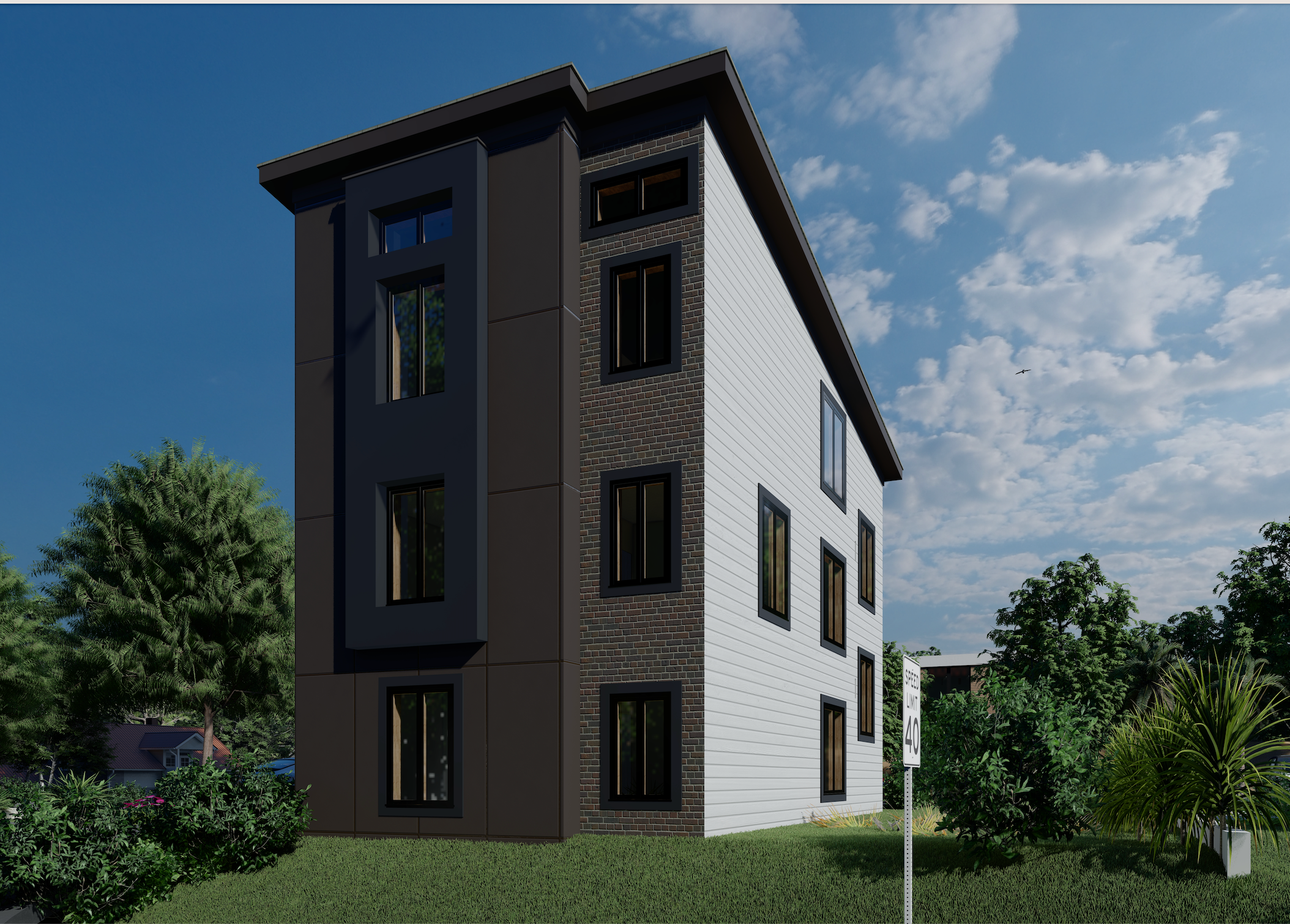
I'd look at land and zoning use variance process in your city and build what you want with a stacked triplex. the one we do in columbus infill is attached we are breaking ground on the first one soon. you can build the same anywhere in the country this building is a stacked 2 bed 1 bath per unit 700 sq ft (as small as possible I used to live in this floorplan) and I think it reduces construction cost and maximizes return for just rental as well as appreciation and price per unit. smaller homes sell for more per sq ft.