Memphis. Market Analysis. Pros and Cons
Registered Nurse (ICU) · San Jose, CA · Member since 2014 · 496 posts · 332 votes
I have a ton of respect for these two gentleman from what I read form them here on BP. I am an experienced investor and I still learn from reading their posts. A few great points from both @Account Closed and @Jay Hinrichs on what to truly expect from a midwest market and a bit of a reality check mixed with some hyperbole. I think the assumption is made - and in this case there is really no problem with assuming - that most sellers of properties in midwest cities are not going to tell prospective investors, new or experienced, about the fallacy of buying 10 - $50,000 properties in a city like Memphis or any other Midwest city and quitting a job to make $4,000 of income in a month. Can it actually happen? Yes. It does every year with plenty of investors, but the odds are greatly stacked against you and IT WILL NOT HAPPEN year over year. The biggest mistake that investors make regardless of how or where they buy is having poorly set expectations.
Much of the success in these markets will depend on who you are working with in that city, what price points and parts of the city they work and unfortunately, much of your success depends on how good they are at doing their job. All of the points that Bob and Jay make are valid. You are hiring a staff to work for you and your success depends on them. If they do not set the proper expectations on the front end, the investor will not be prepared for lean years when those properties return a fraction of what was expected. Again, move-outs are real, vandalism and theft are real, extended vacancies are real and out of ten years an investor can expect to have a year, and in some cases more, where the return is zero. One more point to what Bob said, there are properties here in Memphis where an investor can purchase a property for less than what it originally sold for in the 1970s. Same holds for hundreds of neighborhoods in hundreds of cities across the country. Rents may have doubled in some areas, but it took 15 years.
So proper expectations are a must.
As for the comment about investing for profit and cash flow is not profit. You are correct, but Im puzzled by what else you said. If an investor takes a set time period (month, quarter, year or many years) and they have higher income than expenses on their bottom line, they have netted a profit. Now, some people may call a revenue number profit or call a cash flow calculation profit or even fail to properly account expenses. So, in all of those instances they would be wrong. As you stated, that is not profit. Sometimes they are doing the right calculations and just using the wrong terminology. However, you stated that you made $400,000 on a Honolulu property in appreciation. Surely you are not counting that number as profit are you? That would be a rookie mistake and you are not a rookie. You cannot do anything with appreciation (certainly nothing that can be called profit) unless you sell the property and then you will experience a majority of that as profit after the expense of selling (minimal). If you leverage that equity, then you are borrowing. Again, not profiting. If you add it to your balance sheet to improve your net worth then, again, that is not profit. Both of those things absolutely are beneficial in generating more profit, but they are not profit themselves.
I also believe 100% in what I think is Bob's theory of how to invest. The problem is that maybe (i think the number would actually be smaller if it was tracked) 1% of the actual investing population would be able to invest the way Bob suggests in the cities that Bob suggests. I know he was joking, but to suggest that someone should invest in San Fransisco or in Honolulu instead of looking to the midwest is just fallacy. So few are able to actually do it on the budgets they have available. Can they build and have a plan to invest in those locations? Absolutely. But many cannot start off there - some can - most can't.
I have read most of the posts that Bob has made here on the site and it appears that Bob has been the beneficiary of riding an incredible wave of appreciation on the west coast and in Hawaii. I'm not sure Bob has ever said the year he got started or the prices he paid for his first properties, but based on 40 years of investing, I would say he has been at it a while and bought at prices that would make newer investors' eyes pop out and drool from the corner of their mouths. Condos do not sell on Diamond Head for $35,000 anymore! I looked today and one site showed minimum list price of $639,000 and maximum sell price of $2.8 million.
It would be absolutely wrong to say Bob was lucky because he was smart enough to make the original investment and hold on to them (that is an assumption - he may have sold and re-bought and sold and re-bought - he can clear that up if he wants). However, a $100,000 purchase in the 1980's in California that sells for $2 million today or a $35,000 condo purchase that wold cost $639,000 today - neither example is an applicable experience for an investor starting out today to try and model.
Just buying a home to occupy in San Fransisco swallows up 77% of a buyers income!! Forget investing, just living is almost impossible. The median home price hit $1,000,000 in June of 2014. This is a quote from the SFGate - "It's really hard to buy if you don't have cash or 50 percent down and make an offer that is non-contingent," says Doricko. She's had buyers who made the highest offer lose out because the seller asked cash buyers to come up to that price. "And they do," she says.
In Los Angeles, home ownership is expected to take 59.6% of a buyers income. Those are the two least affordable cities in the U.S. with the median rent in San Fransisco being over $4,200. Roughly 65% of the housing stock in San Fransisco is rental housingand 72% of that rental stock is under rent control.
I'm not saying that an investor should not try to invest locally - absolutely they should! But not everyone can. Not everyone is currently an early retiree nor do they have experience in the real estate field. Most investors are passive with regular day jobs and do not have the time nor the desire to learn to DIY. More than anything, they do not have the dollars it takes to invest locally so they are absolutely looking for alternatives that are more inline with their budgets. It is our responsibility as experienced investors and commentators here on BP to help make sure we at least give them the real story and help - if they will listen - to understand how to invest wisely and safely. They may not be able to duplicate our success, but we can help them understand the risks and rewards of whatever they are considering.
There is no one size fits all for any and every investor. None of the warnings that Bob and Jay give are incorrect. Investors have to take on the responsibility themselves of investing smartly and with their eyes WIDE OPEN.
So back to the original question.....anyone else got any more data good or bad for the poster on Memphis? (-:
@Tou V. you may want to add back depreciation and that tax write off it makes your cash flow positive probably... since BAy ARea assets are big ticket items..
Most likely if I added "depreciation + interest paid + taxes + ins + other costs" it would be positive (not by much, because I'll have $72k of rental income) since there's around $80k of itemized costs to deduct between those items each year. Still unless I wanted to rehab, flip, or continuously buy and sell, it's very hard to get decent cash flow when using this example of buy and hold in the SF / Bay area. Unless someone can show me how an investor could purchase $800k worth of RE in SF with 20-25% down and combined rents of $6000 monthly and still make a good monthly cash flow, while waiting for properties to appreciate. I'm here to learn and have gotten some wonderful insights from each of you. Please keep it up.
@Tou V. I have been reading the conversation and wanted to point to you that you are using 10% for vacancy in SF and that is very high rate for the area. I think 3% is the commom but I would go for 5% to be safe. Also you have 10% for repairs which is good but most turnkey property proforma's I have looked at use 5%.
I think you may have missed one important point that @Account Closed I know the conversation got a little off track but good luck with your investments. I am conservative by nature so based on that I would say is slow down a little before you expand to so many different markets so quickly. Based on your profile you have been doing this for less than one year and this the 3rd out of state market you are considering. As many of the experience folks have said the returns may not be the same over a long term so may want to see how your current rentals do.
@Tou V. I have been reading the conversation and wanted to point to you that you are using 10% for vacancy in SF and that is very high rate for the area. I think 3% is the commom but I would go for 5% to be safe. Also you have 10% for repairs which is good but most turnkey property proforma's I have looked at use 5%.
I think you may have missed one important point that @Account Closed I know the conversation got a little off track but good luck with your investments. I am conservative by nature so based on that I would say is slow down a little before you expand to so many different markets so quickly. Based on your profile you have been doing this for less than one year and this the 3rd out of state market you are considering. As many of the experience folks have said the returns may not be the same over a long term so may want to see how your current rentals do.
@Radhika M
Thanks for pointing that out. You're right about the SF area. Vacancies are lower and since this is only a duplex (one physical home), repairs should only be a fraction of what 10 separate homes would cost. I understood what Minh was trying to say about rental increases and appreciation. It's just hard to justify putting $200k down and not getting much in return, until much later when appreciation and inflation kicks in. Kind of like a 401k or Roth IRA. lol..... My dilemma is should I put $200k down on 16 - Midwest units which (hypothetically) may return $4000 ($250 x 16 - which is reasonable using 50% rule and real returns from users on BP) monthly cash flow immediately and hopefully continues to perform. Even if it only performed half as good $2000 monthly income, I'd even be able to accept that as the $200k is costing me $1100 month to borrow. Or, use that $200k on a SF / Bay property and get 0 or minimal monthly income, but know what the property will appreciate and in a few years and when rents go up, should return some monthly cash flow. The SF property definitely not going to return around $4000 a month anytime soon. What are your thoughts? I really appreciate what everyone has said.
Be an investor and not a speculator-- for safety reasons. Don't count on appreciation until you have locked it in.
Be an investor and not a speculator-- for safety reasons. Don't count on appreciation until you have locked it in.
I have a ton of respect for these two gentleman from what I read form them here on BP. I am an experienced investor and I still learn from reading their posts. A few great points from both @Account Closed and @Jay Hinrichs on what to truly expect from a midwest market and a bit of a reality check mixed with some hyperbole. I think the assumption is made - and in this case there is really no problem with assuming - that most sellers of properties in midwest cities are not going to tell prospective investors, new or experienced, about the fallacy of buying 10 - $50,000 properties in a city like Memphis or any other Midwest city and quitting a job to make $4,000 of income in a month. Can it actually happen? Yes. It does every year with plenty of investors, but the odds are greatly stacked against you and IT WILL NOT HAPPEN year over year. The biggest mistake that investors make regardless of how or where they buy is having poorly set expectations.
Much of the success in these markets will depend on who you are working with in that city, what price points and parts of the city they work and unfortunately, much of your success depends on how good they are at doing their job. All of the points that Bob and Jay make are valid. You are hiring a staff to work for you and your success depends on them. If they do not set the proper expectations on the front end, the investor will not be prepared for lean years when those properties return a fraction of what was expected. Again, move-outs are real, vandalism and theft are real, extended vacancies are real and out of ten years an investor can expect to have a year, and in some cases more, where the return is zero. One more point to what Bob said, there are properties here in Memphis where an investor can purchase a property for less than what it originally sold for in the 1970s. Same holds for hundreds of neighborhoods in hundreds of cities across the country. Rents may have doubled in some areas, but it took 15 years.
So proper expectations are a must.
As for the comment about investing for profit and cash flow is not profit. You are correct, but Im puzzled by what else you said. If an investor takes a set time period (month, quarter, year or many years) and they have higher income than expenses on their bottom line, they have netted a profit. Now, some people may call a revenue number profit or call a cash flow calculation profit or even fail to properly account expenses. So, in all of those instances they would be wrong. As you stated, that is not profit. Sometimes they are doing the right calculations and just using the wrong terminology. However, you stated that you made $400,000 on a Honolulu property in appreciation. Surely you are not counting that number as profit are you? That would be a rookie mistake and you are not a rookie. You cannot do anything with appreciation (certainly nothing that can be called profit) unless you sell the property and then you will experience a majority of that as profit after the expense of selling (minimal). If you leverage that equity, then you are borrowing. Again, not profiting. If you add it to your balance sheet to improve your net worth then, again, that is not profit. Both of those things absolutely are beneficial in generating more profit, but they are not profit themselves.
I also believe 100% in what I think is Bob's theory of how to invest. The problem is that maybe (i think the number would actually be smaller if it was tracked) 1% of the actual investing population would be able to invest the way Bob suggests in the cities that Bob suggests. I know he was joking, but to suggest that someone should invest in San Fransisco or in Honolulu instead of looking to the midwest is just fallacy. So few are able to actually do it on the budgets they have available. Can they build and have a plan to invest in those locations? Absolutely. But many cannot start off there - some can - most can't.
I have read most of the posts that Bob has made here on the site and it appears that Bob has been the beneficiary of riding an incredible wave of appreciation on the west coast and in Hawaii. I'm not sure Bob has ever said the year he got started or the prices he paid for his first properties, but based on 40 years of investing, I would say he has been at it a while and bought at prices that would make newer investors' eyes pop out and drool from the corner of their mouths. Condos do not sell on Diamond Head for $35,000 anymore! I looked today and one site showed minimum list price of $639,000 and maximum sell price of $2.8 million.
It would be absolutely wrong to say Bob was lucky because he was smart enough to make the original investment and hold on to them (that is an assumption - he may have sold and re-bought and sold and re-bought - he can clear that up if he wants). However, a $100,000 purchase in the 1980's in California that sells for $2 million today or a $35,000 condo purchase that wold cost $639,000 today - neither example is an applicable experience for an investor starting out today to try and model.
Just buying a home to occupy in San Fransisco swallows up 77% of a buyers income!! Forget investing, just living is almost impossible. The median home price hit $1,000,000 in June of 2014. This is a quote from the SFGate - "It's really hard to buy if you don't have cash or 50 percent down and make an offer that is non-contingent," says Doricko. She's had buyers who made the highest offer lose out because the seller asked cash buyers to come up to that price. "And they do," she says.
In Los Angeles, home ownership is expected to take 59.6% of a buyers income. Those are the two least affordable cities in the U.S. with the median rent in San Fransisco being over $4,200. Roughly 65% of the housing stock in San Fransisco is rental housingand 72% of that rental stock is under rent control.
I'm not saying that an investor should not try to invest locally - absolutely they should! But not everyone can. Not everyone is currently an early retiree nor do they have experience in the real estate field. Most investors are passive with regular day jobs and do not have the time nor the desire to learn to DIY. More than anything, they do not have the dollars it takes to invest locally so they are absolutely looking for alternatives that are more inline with their budgets. It is our responsibility as experienced investors and commentators here on BP to help make sure we at least give them the real story and help - if they will listen - to understand how to invest wisely and safely. They may not be able to duplicate our success, but we can help them understand the risks and rewards of whatever they are considering.
There is no one size fits all for any and every investor. None of the warnings that Bob and Jay give are incorrect. Investors have to take on the responsibility themselves of investing smartly and with their eyes WIDE OPEN.
So back to the original question.....anyone else got any more data good or bad for the poster on Memphis? (-:
I've been remiss in responding to this post so I'll try to make up for it now.
I want to point out how two BP members have shown their class and integrity recently. These are both members that have recently been questioned on what they do and their response has been stellar and should be emulated by anyone looking to network and offer their skills and experience here.
The first was @Phillip Grove in this post,
https://www.biggerpockets.com/forums/79/topics/203...
and @Chris Clothier in this thread. I've locked horns with a couple of posters here selling their stuff and they have been so combative and evasive that people email me that they are shocked that someone trying to convince them that they are legitimate would behave so badly publicly.
Both of these people when questioned have clearly answered questions and stated what they provide and offer any clarification if needed. I would be happy to sit down with either of these people to discuss business and know that if there wasn't a deal to be made this day that the door would be open for the next deal. Not that you need it but both would have my endorsement but my point here is to point out to the newbies here is this is how responsible business people act.
As far as my "profit" statement, I do look to invest in profitable properties and I look for rent growth and appreciation. The rent growth creates income streams that can help access appreciation gains.
I need to keep track of who might owe me dinner or a cruise. Mai Tai's on me!
Check the appreciation and rent growth.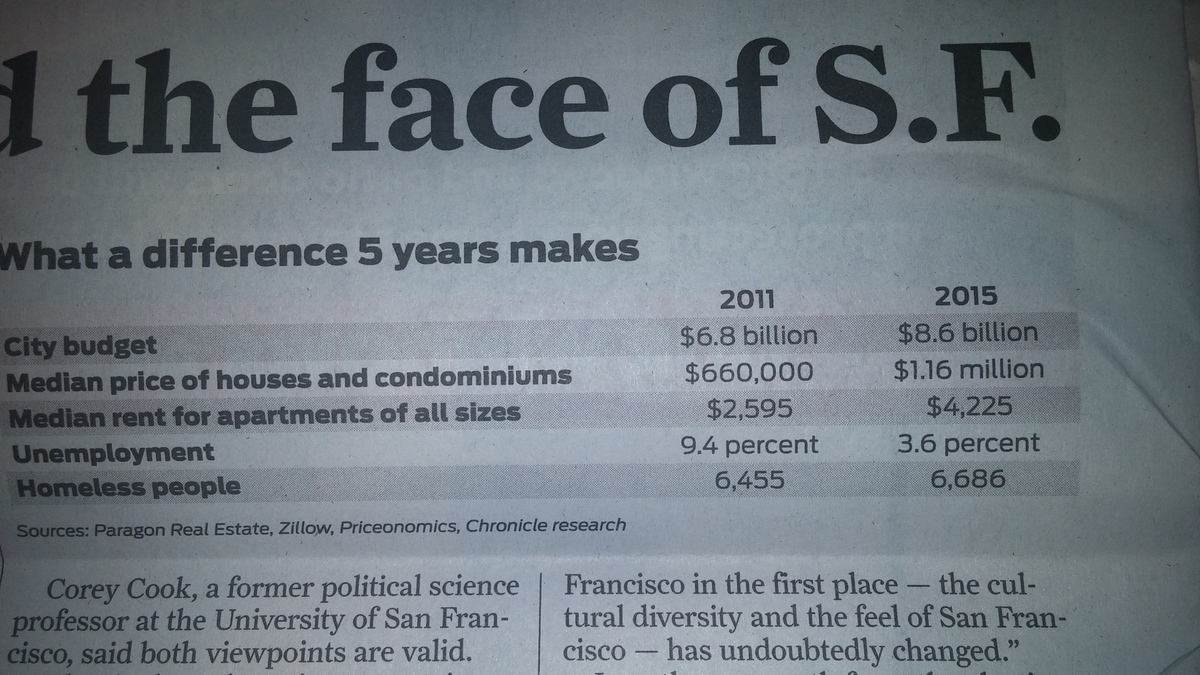
I need to keep track of who might owe me dinner or a cruise. Mai Tai's on me!
Check the appreciation and rent growth.
These numbers are mind blowing. I read where 60 some-odd % of single families in SF area are over $1million in value. And, I've read that San Jose and east bay areas are experiencing the same massive price growth. Seriously, how much higher can they go? With as many west coast investors out there looking for opportunity, someone needs to figure out a TK business model focusing on the bay area and offering a fund model (i know there is a proper word for this, but my mind is simply not working right now). 10 equal shares in one property?
Here's some East Bay sales. Fremont is about 30 miles from the City and 2R to San Jose. Notice the 1990's sale prices. These are 1000
ish sf homes!
@Chris Clothier we already did this in the late 80's in one of the first real run ups.
homeowner who had great income on credit ( millions of those in the bay area) and investors with Cash ( millions of those in the Bay Area)
Investor would put up cash homeowner would get mortgage and pay all payments and write offs..
they would hold 5 years and homeowner would either refi investor out and their profits or they would sell... I knew many investors who had 10 to 20 of these working at any one time.. Len Rhode retired 49er and Burger King operator for one.
I haven't read through all the post, but I will give you my pros and cons. I own 15 homes and I continue to add to my portfolio. I wouldn't be doing that if we were not successful at it. Some people will give Memphis a bad rap, but we have a very large client portfolio that is successful. Out of 350 properties, we have 4 vacant homes.
Pros: Low vacancy rate, easy to rent houses with good management and marketing. Good cash flow. Landlord friendly. Low property taxes. Good middle class jobs, alot of good tenants. Great suburbs where the #'s work at the $100 to 150k price point.
Cons: Need to be experienced to be successful and understand the market. Zip code shopping is dangerous and should be avoided. A lot of bad tenants, must be good at screening. #'s on sub $60,000 look good, but must be cautious, very cautions. Personally I think those are best owned by locals.
@Tou V. I have been reading the conversation and wanted to point to you that you are using 10% for vacancy in SF and that is very high rate for the area. I think 3% is the commom but I would go for 5% to be safe. Also you have 10% for repairs which is good but most turnkey property proforma's I have looked at use 5%.
I think you may have missed one important point that @Account Closed I know the conversation got a little off track but good luck with your investments. I am conservative by nature so based on that I would say is slow down a little before you expand to so many different markets so quickly. Based on your profile you have been doing this for less than one year and this the 3rd out of state market you are considering. As many of the experience folks have said the returns may not be the same over a long term so may want to see how your current rentals do.
@Radhika M
Thanks for pointing that out. You're right about the SF area. Vacancies are lower and since this is only a duplex (one physical home), repairs should only be a fraction of what 10 separate homes would cost. I understood what Minh was trying to say about rental increases and appreciation. It's just hard to justify putting $200k down and not getting much in return, until much later when appreciation and inflation kicks in. Kind of like a 401k or Roth IRA. lol..... My dilemma is should I put $200k down on 16 - Midwest units which (hypothetically) may return $4000 ($250 x 16 - which is reasonable using 50% rule and real returns from users on BP) monthly cash flow immediately and hopefully continues to perform. Even if it only performed half as good $2000 monthly income, I'd even be able to accept that as the $200k is costing me $1100 month to borrow. Or, use that $200k on a SF / Bay property and get 0 or minimal monthly income, but know what the property will appreciate and in a few years and when rents go up, should return some monthly cash flow. The SF property definitely not going to return around $4000 a month anytime soon. What are your thoughts? I really appreciate what everyone has said.
Sorry, I didn't go through the entire thread, but just curious if you're factoring in the fact that SF is under rent control. Unless you're buying something with no occupancy at the beginning, not sure if you'd be able to count on getting $3k/unit/month guaranteed. If appreciation is what you're hoping for, I'm curious about how that is achieved if you're stuck with tenants whose rents are typically locked. Oakland, just across the Bay Bridge, also under rent control, seems to have a lot of occupied multi-units available, but the rents are typically 40%-50% below market rate, and justifying rent increases based on repairs does not seem to add much. Unless you're willing to put a lot down to lower your monthly mortgage to match the existing cash flow, I'm not convinced this is the best way to go for the beginning investor (me).
There are plenty of rentals not under rent control in SF. See my post above that shows median rents increased over the last 5 years from $2595 to $4225.
Also rent controlled buildings are sold based on the current restricted rents and property taxes are based on that lower purchase price.
There are plenty of rentals not under rent control in SF. See my post above that shows median rents increased over the last 5 years from $2595 to $4225.
Also rent controlled buildings are sold based on the current restricted rents and property taxes are based on that lower purchase price.
I'm well aware of the rent increases. I don't believe it is as easy to say that because the median went up, that it's because the building was not under rent control. People move out and landlords are able to slap on a coat of paint and bring it up to market rate. I moved my family out of SF in 2009 from a 700+ sf studio that my wife had been renting for less than $950 for several years; it was fixed up and rented out for about $2k after we left. We moved to my condo in Fremont which I bought in 1995 for $163K; we sold it in 2013 for $446K.
Dreams of getting good cash flow in SF, requires big $$$ down + any rehab costs + no existing tenants to worry about. I can only guess that the $800K duplex that the person spoke of, is the one offered in the Bayview district; it needs a lot of work.
There are plenty of rentals not under rent control in SF. See my post above that shows median rents increased over the last 5 years from $2595 to $4225.
Also rent controlled buildings are sold based on the current restricted rents and property taxes are based on that lower purchase price.
I'm well aware of the rent increases. I don't believe it is as easy to say that because the median went up, that it's because the building was not under rent control. People move out and landlords are able to slap on a coat of paint and bring it up to market rate. I moved my family out of SF in 2009 from a 700+ sf studio that my wife had been renting for less than $950 for several years; it was fixed up and rented out for about $2k after we left. We moved to my condo in Fremont which I bought in 1995 for $163K; we sold it in 2013 for $446K.
Dreams of getting good cash flow in SF, requires big $$$ down + any rehab costs + no existing tenants to worry about. I can only guess that the $800K duplex that the person spoke of, is the one offered in the Bayview district; it needs a lot of work.
Or in Portola!
http://www.realtor.com/realestateandhomes-detail/2...
I don't follow your thinking on the rent control. If they are using rent controlled rents then the median market rents are actually skewed low. They don't say but I would think they are not using rents from controlled units as it would make the median number useless.
There are plenty of rentals not under rent control in SF. See my post above that shows median rents increased over the last 5 years from $2595 to $4225.
Also rent controlled buildings are sold based on the current restricted rents and property taxes are based on that lower purchase price.
I'm well aware of the rent increases. I don't believe it is as easy to say that because the median went up, that it's because the building was not under rent control. People move out and landlords are able to slap on a coat of paint and bring it up to market rate. I moved my family out of SF in 2009 from a 700+ sf studio that my wife had been renting for less than $950 for several years; it was fixed up and rented out for about $2k after we left. We moved to my condo in Fremont which I bought in 1995 for $163K; we sold it in 2013 for $446K.
Dreams of getting good cash flow in SF, requires big $$$ down + any rehab costs + no existing tenants to worry about. I can only guess that the $800K duplex that the person spoke of, is the one offered in the Bayview district; it needs a lot of work.
Or in Portola!
http://www.realtor.com/realestateandhomes-detail/2...
I don't follow your thinking on the rent control. If they are using rent controlled rents then the median market rents are actually skewed low. They don't say but I would think they are not using rents from controlled units as it would make the median number useless.
My response regarding rent control, had nothing to do with how the median was determined; I was just asking the poster that wanted to assume $3K/unit/month rental income if they had factored rent control into their assumption. With that Portola duplex, existing rent is $1440. My point was even though the median may be high, it will not be easy to get it to market rate with existing tenants.
$1440 is the rent for 1 unit.
FYI. Savvy SF landlords (i.e. Moi) know when, where, why and how to buy out low rent tenants. Done right = chaa-ching!
Though admittedly much harder these days due to all the LL-tenant tensions in the city. I swear, in the mission district it's one step away from riots. Anti development, anti property owners, anti tech, anti Google buses* protests left and right. Sh*t is getting crazy round here!
* my personal favorite. They made a huge Google bus piñata and started bashing it during a protest. Highly entertaining :)
I invested in Memphis in 2009 ( to be exact Cordova). Bought a place for $87k needs about $25k remodeling. House was valued at $125k. Originally was going to get a loan that would cover house and remodeling with no money down. But the bank issue killed that for me, so I had to put about $12k down. And loan was for about $110k. Rent was about $1,200. Almost fits the 1% rule. Now it is 2015, rent was just increased to $1,250.
Mortgage, tax and insurance was $1,000 a month. Property management about $100 per mont. Earned about $100 per month. Did not count repairs or vacancies. I thought that was decent, but when you add in quarterly inspections, you lose $65 per quarter. Yearly lease signing another $300 per year. The profits get smaller and smaller. Even though we did what I thought was a big repair, it seems every few months a small repair is needed. By the way property management takes adds another 10% to the price. This year roof issues, skylight, a tree falling over and water issue caused to to spend another $17k. This fix wiped out any "profit" I had.
So I tried to sell before repairing, best price I could get $97k. $10k less than on loan. I decided to pay off debt and fix place up. Spent about $124k to do that. Tried to seek after fix up, estimate was $115k. Once realtors get their cut, I'm still losing.
Bought a condo last year in Fremont for $315k. Put int $35k to redo kitchen 2 baths, repaint and flooring. Earned enough to break even on condo for monthly payments. Had to replace Windows this year for $5k. However renting for $2,400 now. Condo I think I can sell in the $450k. Originally was managing myself now, with property manager taking 5%.
So, if you can get a good deal in the Bay Area, makes much more money than in Memphis. In Memphis, no appreciation. Rent hardly goes up.
So brings me to morale of story, managing a team far away is hard. You are counting on them relying the truth to you about the property. In general they did, but they did not account for vacancies and maintenance. I think managing something more local is better. Even if it was a few hours away at least you could see it rather than just from google maps. Best to invest in areas you know. There are always deals, you just have to wait for next down turn in Bay Area market. Just make sure you have enough cash on hand.:)

