Investor · Member since 2021 · 54 posts · 15 votes
I am evaluating a couple of potential development opportunities, and one thing that has become clear is the importance of building the right team from the beginning.
I'd be interested to hear from experienced developers and owners: what tends to fall through the cracks during development and construction that owners don't discover until it's too late?
Areas I'm thinking about include:
• Capital raising and investor relations
• Loan readiness and lender requirements
• Permitting and utility coordination
• Contractor vetting and oversight
• Project monitoring and schedule management
• Municipal approvals and inspections
Coming from a lending and risk management background, I can see strengths in capital raising and loan readiness. What concerns me more are the permits, utilities, contractor oversight, and dealing with municipalities, since those seem to have a significant impact on timelines and project execution.
For those who have been through the process, where have you seen the biggest surprises, delays, or costly mistakes occur?
@Henry Clark Really appreciate the detailed response. The engineering side stood out the most for me. Things like soil conditions, utility access, and road access keep coming up in most conversations. Also, the point about the unfair competitive advantage. It is easy to focus on whether a project can be financed, but we lose sight of why the project will actually succeed until it is too late. Thanks again for sharing your perspective. A lot to consider.
financing is way down the line if its a true farmer field your going to develop can take years to get it all approved and many hundreds of thousands of dollars before a lender will even look at it.
Developer · Member since 2020 · 4k+ posts · 4k+ votes
3mo
OP any "small" miss can set you back on time and dollars.
1. Have an Engineering firm pull together. Many Many issues can come up, that they should identify. Soil compaction, setbacks, zoning, utility access, road access, etc etc. The color of your Fire Hydrant nearest you. Is it private or public? Do you need to spend $100,000 to bring Water or sewer lines to your property? Are you talking a Putt Putt golf course or a 5-story condominium next to a river, etc. More details help.
2. Right now, financing is your biggest wild card. Development- zoning, engineering, drawings, construction team, mother nature, financing, etc cause for a lengthy window before you get to your final financing. You might start at Interest Only during construction of say 7%, then by the time you're done it could be 9% and the deal doesn't work.
3. Zoning- is this project automatically allowed? Or do you have to go thru Variance or Special Use permit that takes 2 readings, and maybe 5 months to get thru approval. You should vet this with the Planning Zoning department.
4. Experience- without knowing your development background, going to make an assumption. You would not be asking these questions if you had already done development. With that said, almost zero bankers or investors will invest with you. You will need a General Partner who brings that story to the table. Commercial and Industrial, you can't get financing or investors without a track record. Unless it is a small project and you have the assets to sign a personal guarantee.
5. Market Study- How good are you or one of your General Partners?
6. Unfair advantage- all projects are tight right now. Does your project have an Unfair advantage from a Marketing standpoint?
7. Risk Analysis- looks like this is your wheelhouse. Once you have your baseline Deal Analysis done, do a Capex overspend, Interest rate hike, Occupancy failure by x%. Do each Stress test independently of each other. Take each one till it hits your Breakeven, which covers both Expenses, but also P/I. Understand what it takes to fail. Then come back and try to address each one. For Example if your doing Apartments. And your break even occupancy is 70%. Be able to address how you overcome a short fall. Your product might be in a different subset. Gated, Covered parking, or could be a high end location. So your competition is high end, but if you had to, your could lower rents to fill in another 20%. Whereas if your base level apartments and rent for 1 month free, $1,200. Existing buildings. You could lower your monthly rate, but taking it down to say $800 might not cover additional capex and turnover.
If this is a commercial loan and you start at 7.5% interest rate with a 5 year balloon. What does your cashflow look like at 9% when it re-ups?
If an LLC or a Syndication, do you have the Investors Locked in for the term of your Deal timeline. Is this a 3/5/10 year payout? Make sure your financing matches your payout timeline.
8. Storm pond and set backs- how much eats into your Rentable or profit generating square footage?
Million other questions. The more detailed the scenario, the better the response. Each project is different. Risks are different.
Developer · Member since 2020 · 4k+ posts · 4k+ votes
3mo
OP any "small" miss can set you back on time and dollars.
1. Have an Engineering firm pull together. Many Many issues can come up, that they should identify. Soil compaction, setbacks, zoning, utility access, road access, etc etc. The color of your Fire Hydrant nearest you. Is it private or public? Do you need to spend $100,000 to bring Water or sewer lines to your property? Are you talking a Putt Putt golf course or a 5-story condominium next to a river, etc. More details help.
2. Right now, financing is your biggest wild card. Development- zoning, engineering, drawings, construction team, mother nature, financing, etc cause for a lengthy window before you get to your final financing. You might start at Interest Only during construction of say 7%, then by the time you're done it could be 9% and the deal doesn't work.
3. Zoning- is this project automatically allowed? Or do you have to go thru Variance or Special Use permit that takes 2 readings, and maybe 5 months to get thru approval. You should vet this with the Planning Zoning department.
4. Experience- without knowing your development background, going to make an assumption. You would not be asking these questions if you had already done development. With that said, almost zero bankers or investors will invest with you. You will need a General Partner who brings that story to the table. Commercial and Industrial, you can't get financing or investors without a track record. Unless it is a small project and you have the assets to sign a personal guarantee.
5. Market Study- How good are you or one of your General Partners?
6. Unfair advantage- all projects are tight right now. Does your project have an Unfair advantage from a Marketing standpoint?
7. Risk Analysis- looks like this is your wheelhouse. Once you have your baseline Deal Analysis done, do a Capex overspend, Interest rate hike, Occupancy failure by x%. Do each Stress test independently of each other. Take each one till it hits your Breakeven, which covers both Expenses, but also P/I. Understand what it takes to fail. Then come back and try to address each one. For Example if your doing Apartments. And your break even occupancy is 70%. Be able to address how you overcome a short fall. Your product might be in a different subset. Gated, Covered parking, or could be a high end location. So your competition is high end, but if you had to, your could lower rents to fill in another 20%. Whereas if your base level apartments and rent for 1 month free, $1,200. Existing buildings. You could lower your monthly rate, but taking it down to say $800 might not cover additional capex and turnover.
If this is a commercial loan and you start at 7.5% interest rate with a 5 year balloon. What does your cashflow look like at 9% when it re-ups?
If an LLC or a Syndication, do you have the Investors Locked in for the term of your Deal timeline. Is this a 3/5/10 year payout? Make sure your financing matches your payout timeline.
8. Storm pond and set backs- how much eats into your Rentable or profit generating square footage?
Million other questions. The more detailed the scenario, the better the response. Each project is different. Risks are different.
Contractor · Nashville, TN · Member since 2014 · 1k+ posts · 1k+ votes
3mo
Well probably the #1 thing that gets owners is build costs creeping up, sometimes very quickly. Many reasons for this, but I'd say the main three are 1) builder undershot the bid and really should have known better 2) owner adds stuff and isn't connecting the dots that all these little things add up 3) Scope changes come up for regulatory reasons (didn't know they would need a firewall in a townhome, etc)
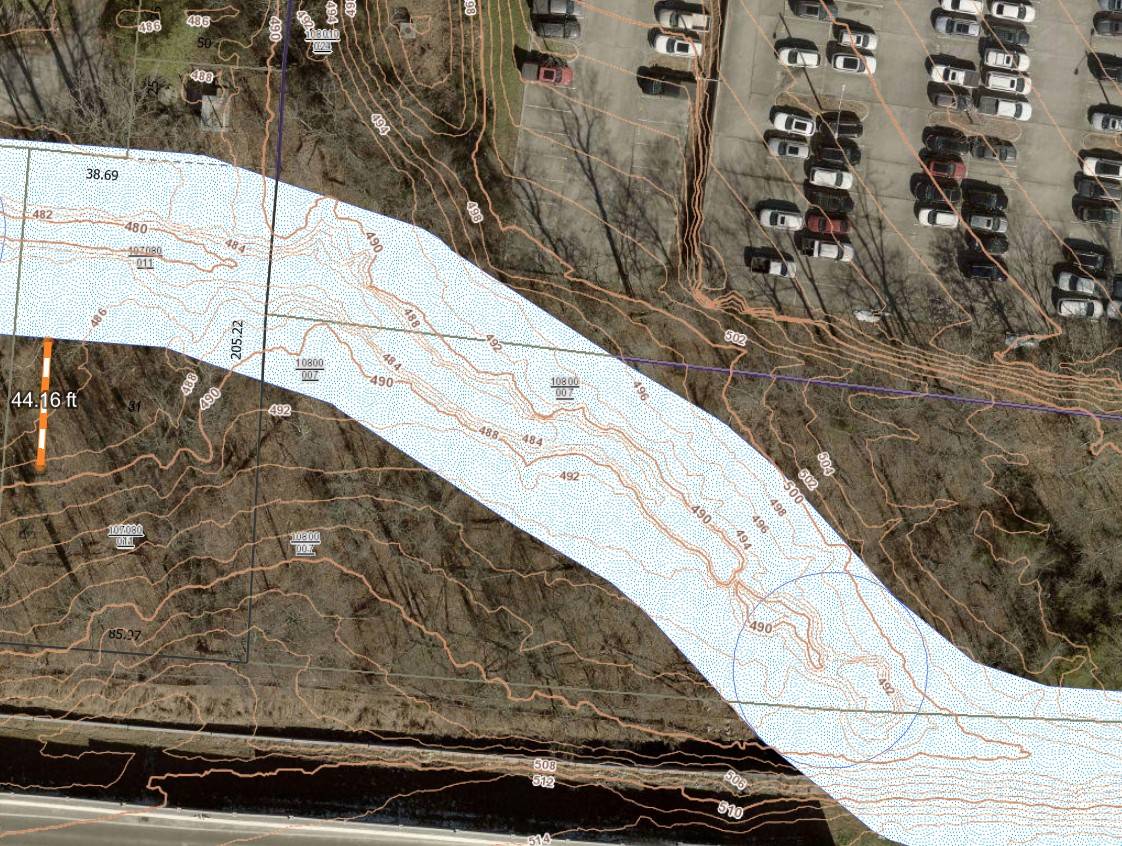
#2 thing is for sure regulation/ordinance costs and delays. This got me good on a few developments. In most cities, there's a lot of rules to follow and some of them you get to find out about later! =D Below is an example piece of land that would be buildable if it wasn't for a 50' wide stream buffer.
Well probably the #1 thing that gets owners is build costs creeping up, sometimes very quickly. Many reasons for this, but I'd say the main three are 1) builder undershot the bid and really should have known better 2) owner adds stuff and isn't connecting the dots that all these little things add up 3) Scope changes come up for regulatory reasons (didn't know they would need a firewall in a townhome, etc)
#2 thing is for sure regulation/ordinance costs and delays. This got me good on a few developments. In most cities, there's a lot of rules to follow and some of them you get to find out about later! =D Below is an example piece of land that would be buildable if it wasn't for a 50' wide stream buffer.
Wow @Allan Smith your comments regarding ordinances, buffers, and regulations are spot on. A few more complaints I'm hearing are that the process with the cities is often so complex that even the cities need time to figure out a solution, leaving the developer on hold. Some will move the project based on when it was submitted, like being grandfathered in, but not all get to be lucky. I am curious, did you find a workaround, or did it become economically unfeasible? I would love to learn more about it. Would you say local relationships with cities/municipalities would help the developer stay ahead of upcoming changes? Thanks for sharing your story and perspective.
Well probably the #1 thing that gets owners is build costs creeping up, sometimes very quickly. Many reasons for this, but I'd say the main three are 1) builder undershot the bid and really should have known better 2) owner adds stuff and isn't connecting the dots that all these little things add up 3) Scope changes come up for regulatory reasons (didn't know they would need a firewall in a townhome, etc)
#2 thing is for sure regulation/ordinance costs and delays. This got me good on a few developments. In most cities, there's a lot of rules to follow and some of them you get to find out about later! =D Below is an example piece of land that would be buildable if it wasn't for a 50' wide stream buffer.
Wow @Allan Smith your comments regarding ordinances, buffers, and regulations are spot on. A few more complaints I'm hearing are that the process with the cities is often so complex that even the cities need time to figure out a solution, leaving the developer on hold. Some will move the project based on when it was submitted, like being grandfathered in, but not all get to be lucky. I am curious, did you find a workaround, or did it become economically unfeasible? I would love to learn more about it. Would you say local relationships with cities/municipalities would help the developer stay ahead of upcoming changes? Thanks for sharing your story and perspective.
All you can really do is keep risk low with a few basic strategies, like putting a long contract on the land instead of buying it before you have building permits. Some cities take forever to approve your plan and that's just the way it is. You can move on to other projects or if the ROI is good enough, stay with the current one.
Specialist · Greeley, CO · Member since 2026 · 36 posts · 18 votes
3mo
Coming at this from the underwriting side rather than as a developer, so I'll leave the permit and contractor stories to the GCs — but the financial version of your question is usually the thing people find too late:
The risks you listed (permits, utilities, municipal) rarely show up as a cost line. They show up as time. And time is what quietly sinks development budgets — delay burns the interest reserve faster than modeled, racks up extension fees, and moves your takeout date into a different rate environment. The building looks on track while the returns don't.
Biggest misses I see: interest reserve sized to the best-case schedule, contingency that's too thin for ground-up, cost escalation between underwriting and locking the GMP, and going "out of balance" — which forces fresh equity before the next draw and catches first-timers off guard.
Your lending background is the right instinct, honestly. Those execution risks aren't separate from loan readiness — they're the inputs that blow up the loan budget. Worth building the model so a schedule change re-runs the carry and the takeout automatically, instead of finding out at the next draw.
What asset type and timeline? That changes where the numbers tend to break.
Coming at this from the underwriting side rather than as a developer, so I'll leave the permit and contractor stories to the GCs — but the financial version of your question is usually the thing people find too late:
The risks you listed (permits, utilities, municipal) rarely show up as a cost line. They show up as time. And time is what quietly sinks development budgets — delay burns the interest reserve faster than modeled, racks up extension fees, and moves your takeout date into a different rate environment. The building looks on track while the returns don't.
Biggest misses I see: interest reserve sized to the best-case schedule, contingency that's too thin for ground-up, cost escalation between underwriting and locking the GMP, and going "out of balance" — which forces fresh equity before the next draw and catches first-timers off guard.
Your lending background is the right instinct, honestly. Those execution risks aren't separate from loan readiness — they're the inputs that blow up the loan budget. Worth building the model so a schedule change re-runs the carry and the takeout automatically, instead of finding out at the next draw.
What asset type and timeline? That changes where the numbers tend to break.
Eric, all good points. I'm probably way too familiar with those issues at this point, but I appreciate the sanity check. One thing that's been interesting in this discussion is realizing that many of the issues you mentioned are often downstream consequences of events that occur much earlier in the process, such as engineering, site conditions, utilities, and road access. I appreciate you weighing in. It's been helpful seeing both sides of the equation.
Investor · Member since 2021 · 54 posts · 15 votes
3mo
@Henry Clark Really appreciate the detailed response. The engineering side stood out the most for me. Things like soil conditions, utility access, and road access keep coming up in most conversations. Also, the point about the unfair competitive advantage. It is easy to focus on whether a project can be financed, but we lose sight of why the project will actually succeed until it is too late. Thanks again for sharing your perspective. A lot to consider.
@Henry Clark Really appreciate the detailed response. The engineering side stood out the most for me. Things like soil conditions, utility access, and road access keep coming up in most conversations. Also, the point about the unfair competitive advantage. It is easy to focus on whether a project can be financed, but we lose sight of why the project will actually succeed until it is too late. Thanks again for sharing your perspective. A lot to consider.
financing is way down the line if its a true farmer field your going to develop can take years to get it all approved and many hundreds of thousands of dollars before a lender will even look at it.
Developer · Member since 2020 · 4k+ posts · 4k+ votes
3mo
OP. I'll give a personal example. Very easy, but, but. We do self storage.
Already own the land to expand on.
Zoning, utilities, entrances, etc already taken care of.
I already know the market.
With the preexisting units and our high occupancy level, even if we are off on our projections for the addition on either Occupancy or rent rates, we will still be fine.
Contractors/Lenders are already vetted and long time relationships.
Our Sole issue is SPEED.
Currently we can get 6.5%, 5year and maybe 7 year balloon period on our commercial loans. This is actually tied to an SBA loan and we could get 25 year fixed on the SBA Portion, 10 year balloon on the local bank portion and we would put in 10% versus the normal 25% downpayment.
Construction Loan- would ask for 10% down and interest only.
BUT. It could take 4 months to get our quotes done. Another 4 months for Engineering and City Planning approval. Then its winter. Then another 9 months before the project is built into next year.
Rent up phase- 18 months or 50% occupancy Interest only.
Final Loan- Possibly 2.5 years from now, we would go for our Fixed loan. What happens if interest rates are 9.5%???? I won't do a deal at 9% or above, but now I'm trapped. I did my deal analysis at 6.5% or 7%.
For us, even with things locked down, Speed is our one variable we can't mitigate.
My point on the above is that we have done development many times on a single asset type. Have all the big issues locked down. But even one issue can throw our Business Model out of sync. Make sure you have a team around you, or as I say:
Start small and Make Your Big Mistakes First.
Figure out what Failure looks like for you. Then decide to move forward if you can handle it. The experience will be worth it, as long as Failure doesn't take you out of the game. Example: If our occupancy was based on 90%, but we ended at 80% on our very first deal and we "Failed". I would still do it. Plus, our breakeven is normally around 65% on Phase 1 projects.
2% point gap on a $3.5mm deal is a lot of money. Look at the issues on your Timeline.
EVOQUE Development · Dallas - Fortworth, TX · Member since 2024 · 22 posts · 11 votes
3mo
Great question. As someone currently leading the predevelopment of a planned 20-unit boutique condominium community in Kaufman County, Texas, one thing I’ve learned is that utility coordination, permitting timelines, and entitlement-related requirements can have a much bigger impact than initially anticipated.
Another area that seems critical is making sure the project is truly lender-ready before seeking construction financing. In my experience, having the right civil, architectural, structural, and MEP team in place early has been extremely important because delays in any one discipline can affect the entire approval process.
I’m still early in my first development project, so I’m learning as I go, but I appreciate you starting this discussion. I’m interested to see what more experienced developers have encountered that isn’t always obvious at the beginning.
Attorney · Philadelphia · Member since 2018 · 2k+ posts · 3k+ votes
3mo
In my opinion, contract management is the backbone of real estate development and is often overlooked. Virtually everything else flows from it. Well drafted contracts controls scopes of work, payment terms, change order procedures, schedules and milestones, insurance requirements, indemnification and risk transfer provisions, lien waiver requirements, warranties, dispute resolution procedures, default remedies, and closeout obligations. Most development problems ultimately trace back to a contract that was poorly drafted, poorly negotiated, or poorly administered.
The second piece many developers underestimate is ongoing contract administration. It's not enough to have a good contract in place. Someone has to verify that work is being performed in accordance with the scope, monitor schedule compliance, review pay applications against actual progress, track change orders, collect certificates of insurance and endorsements, obtain lien waivers, and ensure warranties and closeout documents are received before final payment.
When projects go sideways, it is rarely because of a single catastrophic event. More often it is the accumulation of dozens of small issues that were not properly documented, tracked, or enforced under the contract structure established at the beginning of the project.
In my opinion, contract management is the backbone of real estate development and is often overlooked. Virtually everything else flows from it. Well drafted contracts controls scopes of work, payment terms, change order procedures, schedules and milestones, insurance requirements, indemnification and risk transfer provisions, lien waiver requirements, warranties, dispute resolution procedures, default remedies, and closeout obligations. Most development problems ultimately trace back to a contract that was poorly drafted, poorly negotiated, or poorly administered.
The second piece many developers underestimate is ongoing contract administration. It's not enough to have a good contract in place. Someone has to verify that work is being performed in accordance with the scope, monitor schedule compliance, review pay applications against actual progress, track change orders, collect certificates of insurance and endorsements, obtain lien waivers, and ensure warranties and closeout documents are received before final payment.
When projects go sideways, it is rarely because of a single catastrophic event. More often it is the accumulation of dozens of small issues that were not properly documented, tracked, or enforced under the contract structure established at the beginning of the project.
its all in the details.. One thing I liked about Oregon was you could sign up at the CCB put in your subs name and you got auto alert if there licensed lapsed .. shocking how many of these folks it happens to during the course of working with them over the years and these are grade A subs not johnny lunch bucket guys.
Attorney · Philadelphia · Member since 2018 · 2k+ posts · 3k+ votes
3mo
@Jay Hinrichs Yep! I learned this lesson the hard way early in my development career. After working exclusively in the legal profession and overseeing contract management for a hospitality REIT, I took contract management for granted when I started hiring third party GCs for my personal real estate projects. Those earlier assumptions proved costly.
On one project, despite paying the GC in full, the GC failed to pay a roofing subcontractor. The GC's contract management was so abysmal, the subcontractor then filed a mechanics lien against my neighbor's property instead of mine. I ended up paying a few thousand dollars to get the lien removed from the neighbor's property. Because Pennsylvania mechanics lien laws are so strict procedurally, the subcontractor could not refile against the correct property. While I escaped the lien issue, the roofing workmanship was poor, there was no warranty despite paying the GC in full, and now, only five years later, I am preparing for a partial roof replacement.
This is one of many times early in my development career where I was reminded contract management is not just a legal exercise. It is a critical operational function. Since then, I have moved toward self-performing much of my development work, which gives me greater control over contracts, vendor selection, payment processes, and accountability. On the few occasions I use outside GC's the GC's are judged by their contract management processed above all else.
On my self-performed projects, I do not chase the cheapest sub bids. Instead, I hire more reputable subs and still build cost effectively in my market because the contract management eliminates waste.
@Jay Hinrichs Yep! I learned this lesson the hard way early in my development career. After working exclusively in the legal profession and overseeing contract management for a hospitality REIT, I took contract management for granted when I started hiring third party GCs for my personal real estate projects. Those earlier assumptions proved costly.
On one project, despite paying the GC in full, the GC failed to pay a roofing subcontractor. The GC's contract management was so abysmal, the subcontractor then filed a mechanics lien against my neighbor's property instead of mine. I ended up paying a few thousand dollars to get the lien removed from the neighbor's property. Because Pennsylvania mechanics lien laws are so strict procedurally, the subcontractor could not refile against the correct property. While I escaped the lien issue, the roofing workmanship was poor, there was no warranty despite paying the GC in full, and now, only five years later, I am preparing for a partial roof replacement.
This is one of many times early in my development career where I was reminded contract management is not just a legal exercise. It is a critical operational function. Since then, I have moved toward self-performing much of my development work, which gives me greater control over contracts, vendor selection, payment processes, and accountability. On the few occasions I use outside GC's the GC's are judged by their contract management processed above all else.
On my self-performed projects, I do not chase the cheapest sub bids. Instead, I hire more reputable subs and still build cost effectively in my market because the contract management eliminates waste.
I also learned the Hardway I went in with a GC on 14 new builds were we used my bank and he was on the loan but so was I and my PG.. this was 2009 just as things were crashing.. The GC did not pay subs.. he controlled the money I was new at building so was not really clued in. bottom line sub filed liens and in Oregon sub liens correctly filed are super leins they jump in front of everything other than prop tax's.. So to keep my banking relationship I ended up having to cover those to the tune of a few hundred grand.. all the while the economy crashing.
then I had a underground contractor not pay his rock bill for 200k plus and we got it settled but had we not been on it that could have trickled down to me.
So on my last 90 homes project I just hired the GC for a set fee and we controlled the draws we paid all the subs.. we got all the lien releases and no GC mark up on subs which is huge. etc etc. So NOT ONE issue in 90 homes. Its the only way I will do bigger projects now.. I will risk it on one offs but not something were i am the PG and we are running 1 mil a month through our books to pay subs.
@Jay Hinrichs Yep! I learned this lesson the hard way early in my development career. After working exclusively in the legal profession and overseeing contract management for a hospitality REIT, I took contract management for granted when I started hiring third party GCs for my personal real estate projects. Those earlier assumptions proved costly.
On one project, despite paying the GC in full, the GC failed to pay a roofing subcontractor. The GC's contract management was so abysmal, the subcontractor then filed a mechanics lien against my neighbor's property instead of mine. I ended up paying a few thousand dollars to get the lien removed from the neighbor's property. Because Pennsylvania mechanics lien laws are so strict procedurally, the subcontractor could not refile against the correct property. While I escaped the lien issue, the roofing workmanship was poor, there was no warranty despite paying the GC in full, and now, only five years later, I am preparing for a partial roof replacement.
This is one of many times early in my development career where I was reminded contract management is not just a legal exercise. It is a critical operational function. Since then, I have moved toward self-performing much of my development work, which gives me greater control over contracts, vendor selection, payment processes, and accountability. On the few occasions I use outside GC's the GC's are judged by their contract management processed above all else.
On my self-performed projects, I do not chase the cheapest sub bids. Instead, I hire more reputable subs and still build cost effectively in my market because the contract management eliminates waste.
@Stuart Udis I really like your point of view. One thing that stood out to me is your point that contract management is an ongoing operational function, not just a legal exercise. One issue I’ve noticed is that developers sometimes move forward with contractors without fully vetting them. When we ask for basic due diligence materials, such as financial statements, bonding capacity, or a documented work history, they often can’t provide them. That lack of vetting seems like a much stronger indicator of potential project risk than the contract language itself.
Your example about the roofing subcontractor was a great illustration of how small gaps in oversight can turn into very expensive problems.
One thing I'm taking away from the comments is that a lot of the issues seem less about one or two mistakes and more about having the right processes in place and a team that's actively following through rather than reacting to problems after they've already surfaced.
@Jay Hinrichs Yep! I learned this lesson the hard way early in my development career. After working exclusively in the legal profession and overseeing contract management for a hospitality REIT, I took contract management for granted when I started hiring third party GCs for my personal real estate projects. Those earlier assumptions proved costly.
On one project, despite paying the GC in full, the GC failed to pay a roofing subcontractor. The GC's contract management was so abysmal, the subcontractor then filed a mechanics lien against my neighbor's property instead of mine. I ended up paying a few thousand dollars to get the lien removed from the neighbor's property. Because Pennsylvania mechanics lien laws are so strict procedurally, the subcontractor could not refile against the correct property. While I escaped the lien issue, the roofing workmanship was poor, there was no warranty despite paying the GC in full, and now, only five years later, I am preparing for a partial roof replacement.
This is one of many times early in my development career where I was reminded contract management is not just a legal exercise. It is a critical operational function. Since then, I have moved toward self-performing much of my development work, which gives me greater control over contracts, vendor selection, payment processes, and accountability. On the few occasions I use outside GC's the GC's are judged by their contract management processed above all else.
On my self-performed projects, I do not chase the cheapest sub bids. Instead, I hire more reputable subs and still build cost effectively in my market because the contract management eliminates waste.
I also learned the Hardway I went in with a GC on 14 new builds were we used my bank and he was on the loan but so was I and my PG.. this was 2009 just as things were crashing.. The GC did not pay subs.. he controlled the money I was new at building so was not really clued in. bottom line sub filed liens and in Oregon sub liens correctly filed are super leins they jump in front of everything other than prop tax's.. So to keep my banking relationship I ended up having to cover those to the tune of a few hundred grand.. all the while the economy crashing.
then I had a underground contractor not pay his rock bill for 200k plus and we got it settled but had we not been on it that could have trickled down to me.
So on my last 90 homes project I just hired the GC for a set fee and we controlled the draws we paid all the subs.. we got all the lien releases and no GC mark up on subs which is huge. etc etc. So NOT ONE issue in 90 homes. Its the only way I will do bigger projects now.. I will risk it on one offs but not something were i am the PG and we are running 1 mil a month through our books to pay subs.
Wow, we've definitely come a long way since 2009. Coming from the lending side, I am wondering what the draw and inspection process looked like for your lender back then?
I'm glad you strengthened your processes, and congratulations on the 90 -home project; that's quite an accomplishment.
Realtor · Willow Grove, PA · Member since 2017 · 965 posts · 637 votes
3mo
It's often not the big issues that cause problems; it's the small delays that keep stacking up. A permit delay here, a contractor delay there, and suddenly the timeline looks very different from what it did on paper.
It's often not the big issues that cause problems; it's the small delays that keep stacking up. A permit delay here, a contractor delay there, and suddenly the timeline looks very different from what it did on paper.
Developer · Edinburg, TX · Member since 2026 · 4 posts · 0 votes
3mo
Great question Mari. Having been through multiple ground-up subdivisions in South Texas, here's my 2 take:
Utility coordination is the most underestimated item on your list. Municipal approvals have a defined process you can track. Utilities don't. Water, sewer, and electric agencies operate on their own timelines and don't feel urgency the way your lender does. We've had projects where the plat was recorded and construction was ready to go, but a utility connection held up closings by weeks.
Contractor pay app management is the other one. The gap between what a contractor bills and what's actually complete on the ground is where a lot of developer equity quietly disappears. Without someone physically verifying work before approving draws, you're essentially on the honor system.
On the capital side, the thing that falls through the cracks isn't raising it, it's investor communication mid-project. When things slow down or change, silence is the worst thing you can do. Investors who feel informed stay patient; investors who feel ignored become problems.
Coming from a lending background you'll have a natural edge on the capital stack and loan covenants. Just make sure you have boots on the ground for the field execution side.
Great question Mari. Having been through multiple ground-up subdivisions in South Texas, here's my 2 take:
Utility coordination is the most underestimated item on your list. Municipal approvals have a defined process you can track. Utilities don't. Water, sewer, and electric agencies operate on their own timelines and don't feel urgency the way your lender does. We've had projects where the plat was recorded and construction was ready to go, but a utility connection held up closings by weeks.
Contractor pay app management is the other one. The gap between what a contractor bills and what's actually complete on the ground is where a lot of developer equity quietly disappears. Without someone physically verifying work before approving draws, you're essentially on the honor system.
On the capital side, the thing that falls through the cracks isn't raising it, it's investor communication mid-project. When things slow down or change, silence is the worst thing you can do. Investors who feel informed stay patient; investors who feel ignored become problems.
Coming from a lending background you'll have a natural edge on the capital stack and loan covenants. Just make sure you have boots on the ground for the field execution side.
Enrique, you point about utility coordination really resonated with me. It reminded me of situations I've seen involving access and easement issues. I've seen developers assume that private access, ingress/egress easements, or shared access with neighboring properties will somehow work themselves out. Unfortunately, more often than not, they don't, and can end up creating significant delays if they are not addressed early.
With your lending and risk management background, you already have the capital stack figured out. The real threats that cause ground-up developments to bleed cash sit entirely within civil engineering and utility bureaucracy.
The absolute biggest blind spot for new developers is the Utility Coordination Trap. Municipal utility monopolies (power, water, gas) operate on their own timelines. If you don't submit formal load calculations and service tie-in applications the exact week your architect draws the first lines, your building will be fully framed and sitting dark for 6 months waiting for a transformer drop, burning up your interest reserves.
Furthermore, watch out for Off-Site Municipal Mandates. Cities love forcing developers to fund public infrastructure; mid-review they can demand you replace public sidewalks or build massive stormwater retention systems, instantly crushing your budget.
To win at this, do not expect your General Contractor to act as your risk officer. Hire a Dedicated Local Permit Expediter to push paperwork through city hall, and hire an Independent Owner's Representative to manage the field. Finally, structure your project under an LLC via an Alternative Commercial Construction Lender. Their structured draw escrow systems mandate independent third-party field inspections before any money drops, providing you with the exact institutional oversight needed to keep your contractors completely honest and on schedule.