Brandon Turner's Failure at Open Door


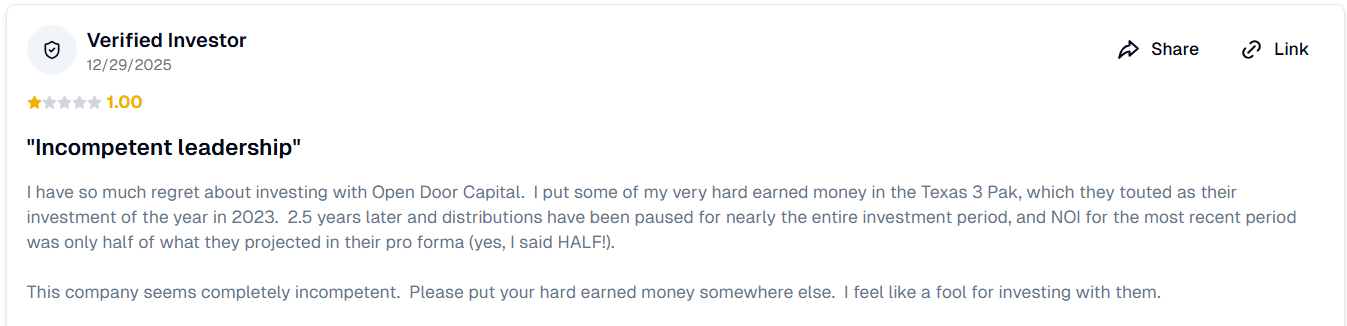
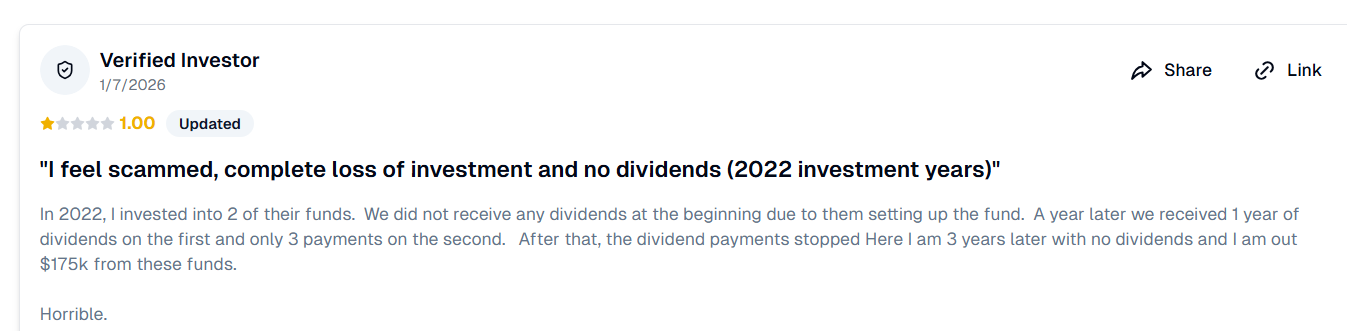
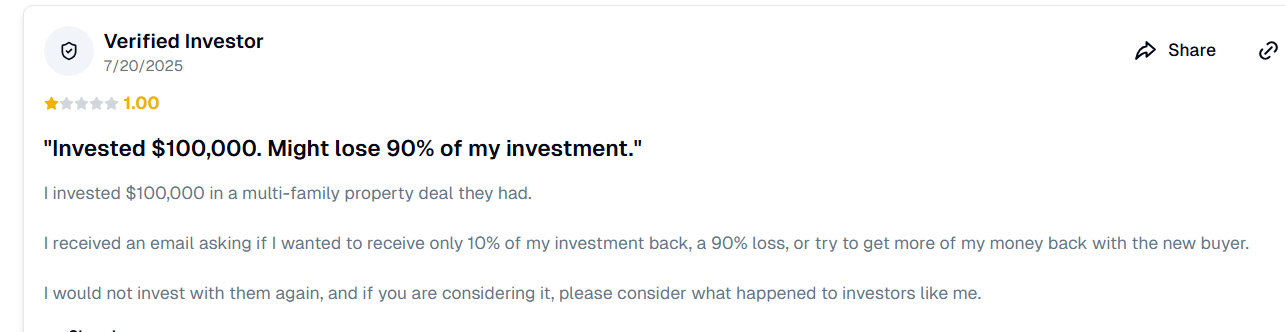

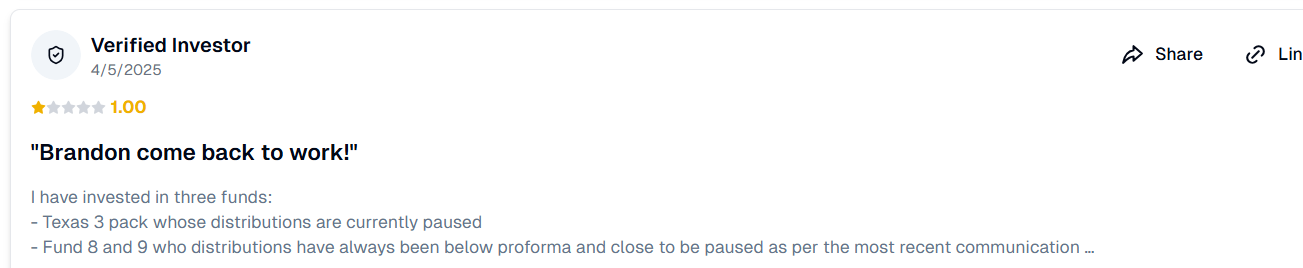
Most Popular Reply
Stuart UdisPro Member
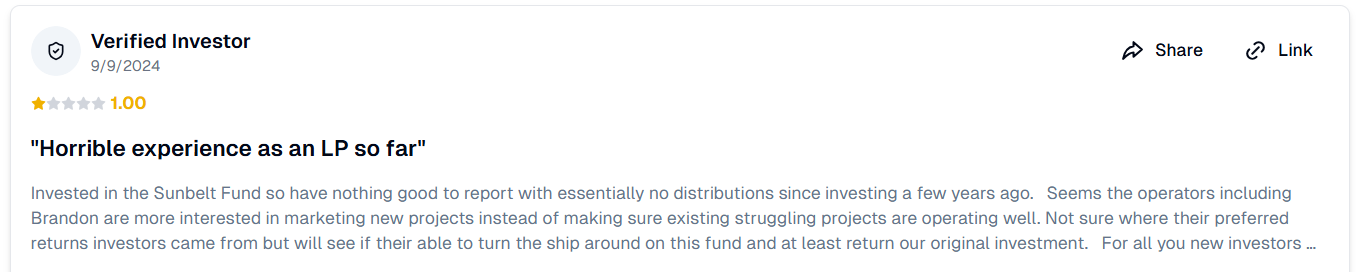
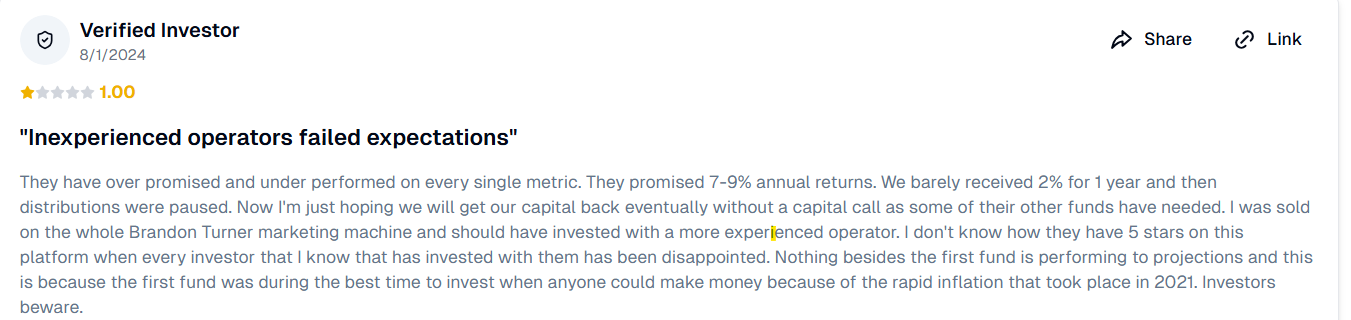
Attorney · Philadelphia · Member since 2018 · 2k+ posts · 3k+ votesNever invested with ODC and my knowledge of the syndication firm is limited to what I've read on Bigger Pockets but what’s the point of this post besides being deliberately provocative? ODC’s underperformance has been discussed extensively on BiggerPockets. Yet these threads predictably devolve into the same pattern. LPs who performed poor or no diligence at all and often cannot clearly articulate the business plan they invested in show up to point fingers, threaten SEC complaints, and talk lawsuits without being able to identify wrongdoing or fraud beyond the obvious. A weak investment thesis & underqualified management paired with aggressive underwriting.... What could possibly go wrong???
Rather than rehashing the same forum content yet again, let's try something different and reframe the discussion in a way that actually adds value for other BiggerPockets readers. This should be treated as a case study in how not to perform diligence before investing in a syndication & what red flags to look for and how to properly analyze syndication opportunities before making an investment. This has the opportunity to add real value.
Otherwise, the next voices to chime in will almost certainly be current LPs, and judging by the reviews you shared, it is difficult to see how additional commentary from investors who did not understand the strategy at entry will materially advance the discussion or add meaningful value. Unless you believe the people whose reviews you posted will advance the discussion in a meaningful way.....
1. Multiple reviewers explicitly stated they invested based on Brandon Turner’s name recognition from BiggerPockets. From what I can gather, his background was primarily single family investing alongside his responsibilities at BiggerPockets.
I would equate that to remembering your elementary school math teacher was good at teaching multiplication tables and then, years later, deciding to hire him/her as your financial advisor.
2. Several comments also criticize ODC for poor risk management due to the use of high leverage and adjustable rate debt. But this was not hidden or discovered after the fact. The capital stack and loan terms appear to have been known before anyone invested, and that risk was explicitly accepted at entry.
What is telling is the reversal that follows. When performance lags, the investor who knowingly bought into a highly levered, floating rate strategy suddenly disclaims all accountability and reframes the outcome as a GP failure to manage risk. That is not a risk management critique. It is hindsight revisionism.
3. Another reviewer claimed they were promised a 7% to 9% return. Which is it, 7% or 9%? And more importantly, I highly doubt there was a promised return at all.....maybe preferred? Projected? Targeted? . Beyond that, what sensible person invests equity in a real estate syndication believing they are getting a 7%-9S% guaranteed return?
Get my point that hearing from these investors adds little value to the forums? That's what your post intends to attract.
25 Replies
- 9moStuart UdisPro MemberAttorney · Philadelphia · Member since 2018 · 2k+ posts · 3k+ votes
Never invested with ODC and my knowledge of the syndication firm is limited to what I've read on Bigger Pockets but what’s the point of this post besides being deliberately provocative? ODC’s underperformance has been discussed extensively on BiggerPockets. Yet these threads predictably devolve into the same pattern. LPs who performed poor or no diligence at all and often cannot clearly articulate the business plan they invested in show up to point fingers, threaten SEC complaints, and talk lawsuits without being able to identify wrongdoing or fraud beyond the obvious. A weak investment thesis & underqualified management paired with aggressive underwriting.... What could possibly go wrong???
Rather than rehashing the same forum content yet again, let's try something different and reframe the discussion in a way that actually adds value for other BiggerPockets readers. This should be treated as a case study in how not to perform diligence before investing in a syndication & what red flags to look for and how to properly analyze syndication opportunities before making an investment. This has the opportunity to add real value.
Otherwise, the next voices to chime in will almost certainly be current LPs, and judging by the reviews you shared, it is difficult to see how additional commentary from investors who did not understand the strategy at entry will materially advance the discussion or add meaningful value. Unless you believe the people whose reviews you posted will advance the discussion in a meaningful way.....1. Multiple reviewers explicitly stated they invested based on Brandon Turner’s name recognition from BiggerPockets. From what I can gather, his background was primarily single family investing alongside his responsibilities at BiggerPockets.
I would equate that to remembering your elementary school math teacher was good at teaching multiplication tables and then, years later, deciding to hire him/her as your financial advisor.
2. Several comments also criticize ODC for poor risk management due to the use of high leverage and adjustable rate debt. But this was not hidden or discovered after the fact. The capital stack and loan terms appear to have been known before anyone invested, and that risk was explicitly accepted at entry.
What is telling is the reversal that follows. When performance lags, the investor who knowingly bought into a highly levered, floating rate strategy suddenly disclaims all accountability and reframes the outcome as a GP failure to manage risk. That is not a risk management critique. It is hindsight revisionism.
3. Another reviewer claimed they were promised a 7% to 9% return. Which is it, 7% or 9%? And more importantly, I highly doubt there was a promised return at all.....maybe preferred? Projected? Targeted? . Beyond that, what sensible person invests equity in a real estate syndication believing they are getting a 7%-9S% guaranteed return?
Get my point that hearing from these investors adds little value to the forums? That's what your post intends to attract.- 9moJay HinrichsBusiness MemberReal Estate Consultant · Summerlin, NV · Member since 2014 · 45k+ posts · 66k+ votes
Quote from @Stuart Udis:
Never invested with ODC and my knowledge of the syndication firm is limited to what I've read on Bigger Pockets but what’s the point of this post besides being deliberately provocative? ODC’s underperformance has been discussed extensively on BiggerPockets. Yet these threads predictably devolve into the same pattern. LPs who performed poor or no diligence at all and often cannot clearly articulate the business plan they invested in show up to point fingers, threaten SEC complaints, and talk lawsuits without being able to identify wrongdoing or fraud beyond the obvious. A weak investment thesis & underqualified management paired with aggressive underwriting.... What could possibly go wrong???
Rather than rehashing the same forum content yet again, let's try something different and reframe the discussion in a way that actually adds value for other BiggerPockets readers. This should be treated as a case study in how not to perform diligence before investing in a syndication & what red flags to look for and how to properly analyze syndication opportunities before making an investment. This has the opportunity to add real value.
Otherwise, the next voices to chime in will almost certainly be current LPs, and judging by the reviews you shared, it is difficult to see how additional commentary from investors who did not understand the strategy at entry will materially advance the discussion or add meaningful value. Unless you believe the people whose reviews you posted will advance the discussion in a meaningful way.....1. Multiple reviewers explicitly stated they invested based on Brandon Turner’s name recognition from BiggerPockets. From what I can gather, his background was primarily single family investing alongside his responsibilities at BiggerPockets.
I would equate that to remembering your elementary school math teacher was good at teaching multiplication tables and then, years later, deciding to hire him/her as your financial advisor.
2. Several comments also criticize ODC for poor risk management due to the use of high leverage and adjustable rate debt. But this was not hidden or discovered after the fact. The capital stack and loan terms appear to have been known before anyone invested, and that risk was explicitly accepted at entry.
What is telling is the reversal that follows. When performance lags, the investor who knowingly bought into a highly levered, floating rate strategy suddenly disclaims all accountability and reframes the outcome as a GP failure to manage risk. That is not a risk management critique. It is hindsight revisionism.
3. Another reviewer claimed they were promised a 7% to 9% return. Which is it, 7% or 9%? And more importantly, I highly doubt there was a promised return at all.....maybe preferred? Projected? Targeted? . Beyond that, what sensible person invests equity in a real estate syndication believing they are getting a 7%-9S% guaranteed return?
Get my point that hearing from these investors adds little value to the forums? That's what your post intends to attract.
The reality is this situation has run through the industry ODC is simply one of a LARGE number of operators that structured their deals the same way and have gotten the same results. Which unfortunately has been 100% wipe outs for the investors..
I have not personally invested with ODC either but have invested with 2 other companies that are talked about on BP and they have performed.. Not over the moon but stable and as of now no risk of loss of principal .. However being a conservative investor and one who can create my own deals and my own returns that are cash on cash or cash flow double or better than what syndicators do ( My private lending business and new home construction business) I only invested very small % of my net worth or available cash into these as I am used to 100% control and I learned very early on having worked with a big syndicator as a RE broker that when these go bad its very RARE that investors are going to get any return and will be damn lucky to just get some principal back. thats is the bottom line from my veiw point.
On another thread on ODC Mr. Turner it was mentioned moved from Maui to Texas to take the bull by the horns so to speak.. Living in Maui and showing pictures of snorkling etc probably is not great optics for investors who are upset .. good luck hope he can turn it around for everyones sake. - Member since 2026 · 1 post · 0 votes2w
I love this @Stuart Udis ! Many LPs call their sponsors 'fiduciaries' and don't do due diligence themselves. If you pay someone to advise you on investing who is not involved in the investment, they can be called a fiduciary...but not the sponsor or members of the GP team.
Stuart, I appreciate you being engaged with my post.
The purpose of the post is to spread awareness of the very poor returns being realized by the ODC deals. They do have prospective investors on this site, and it's important for them to be aware of the significant losses taken on ODC's funds.
Over the past 20 years, I have made many investments - in real estate, stocks, bonds, mutual funds, privately held companies, gold, crypto, commodities, syndicated real estate deals, and on and on. Some of my investments have generated very high returns and others poor returns.
But, never in my life have I made an investment whose value turned to $0 UNTIL I made investments with real estate syndications like ODC.
Taking a 100% loss on invested capital is a huge deal and a massive failure, and it's important to raise awareness to protect future potential investors from these substantial losses.
- 9moStuart UdisPro MemberAttorney · Philadelphia · Member since 2018 · 2k+ posts · 3k+ votes
Unless you are bringing forward new information that explains why these investments are underperforming, you are simply regurgitating points that have already been discussed repeatedly in the forums. That raises the question of what awareness you are actually adding, as opposed to recycling commentary that has been shared continuously.
As someone who invested with ODC and who also acknowledged investing with BAM and Praxis just the other day in another forum conversation, it would be more helpful if you shared why you made those investment decisions. In that earlier discussion, you even noted that you knowingly invested in comparable assets with Praxis and BAM while being aware that BAM was using a riskier debt structure which is seemingly very similar to the strategy ODC has used.
Given that these investments now appear to be performing below projections, what specifically drove your decision making at the time? You spoke in the past about mismanaged risk on the part of the GP's but it's the same risks you knowingly invested in (although you sidestepped acknowledgement in the earlier posts). Hearing from someone of your investment pedigree who decided to invest in these syndications can add value and education to those who read the forums.
Quote from @Stuart Udis:
Unless you are bringing forward new information that explains why these investments are underperforming, you are simply regurgitating points that have already been discussed repeatedly in the forums. That raises the question of what awareness you are actually adding, as opposed to recycling commentary that has been shared continuously.
As someone who invested with ODC and who also acknowledged investing with BAM and Praxis just the other day in another forum conversation, it would be more helpful if you shared why you made those investment decisions. In that earlier discussion, you even noted that you knowingly invested in comparable assets with Praxis and BAM while being aware that BAM was using a riskier debt structure which is seemingly very similar to the strategy ODC has used.
Given that these investments now appear to be performing below projections, what specifically drove your decision making at the time? You spoke in the past about mismanaged risk on the part of the GP's but it's the same risks you knowingly invested in (although you sidestepped acknowledgement in the earlier posts). Hearing from someone of your investment pedigree who decided to invest in these syndications can add value and education to those who read the forums.
The main lesson learned for me from the failure of Ashcroft's AVAF1 is the importance of interest rate caps. The fund closed in 2021 with a high LTV (80%), variable rate debt, and interest rate caps to hedge interest rate risk. This was all known and disclosed to investors.
In 2021, interest rates were very low and had been for some time. At the time, interest rate caps were very inexpensive, and the cheapest interest rate caps were short-term caps, which is what Ashcroft purchased. Interest rates proceeded to go through the roof in 2022, and the cost of interest rate caps skyrocketed exponentially. Rate caps that could have been purchased for tens of thousands of dollars in 2021 all of sudden cost $1M+ in 2022 and 2023. If Ashcroft had purchased either medium or long-term interest rate caps in 2021 (instead of short-term), they would have saved many millions of dollars and likely would have prevented what appears to be a 100% loss of capital for Class B investors.
Personally, when I made the investment in Ashcroft I did understand they had a high LTV with variable rate debt and interest rate caps to hedge rate risk. I did not understand the nuance of short-term versus medium-term versus long-term caps, and I only became aware that Ashcroft made the decision to purchase short-term caps after the fact.
- Investor · Indianapolis · Member since 2024 · 94 posts · 50 votes9mo
The Verification Workflow: A Practical Checklist
I've been looking into syndications gone wrong and feel that it's a lack of education of the investor.
I've been creating a series to try and help educate them, hope this helps.
Investors needn't run all these calculations independently. Instead, follow this practical workflow:
Step 1: Request the PPM and Full Pro Forma
Before making any investment commitment, insist on a detailed Private Placement Memorandum (PPM) and a complete multi-year pro forma. If the sponsor resists providing detailed assumptions, that's a major red flag.Step 2: Extract Key Assumptions
From the pro forma, identify the five critical assumptions: entry cap rate, exit cap rate, rent growth rate, expense growth rate, and hold period. Write these down clearly.Step 3: Validate Against Market Data
For each assumption, verify against market data:- Cap rates: Use CoStar, PropShark, or call a broker and get reports
- Rent growth: Use a Broker, Yardi, CoStar, or Fannie Mae multifamily rent growth reports
- Expense ratios: Compare to NMREIA (National Multi Housing Council) benchmarks or BOMA (Building Owners & Managers Association) publications
- Occupancy trends: Research submarket vacancy reports
- AI: Today, you can simply ask for this information, but please double-check it.
Step 4: Perform Sensitivity Analysis
Calculate how IRR changes if each assumption shifts by ±1-2 percentage points. If IRR swings from 18% to 10% with modest assumption changes, the deal is fragile and risky.Step 5: Compare to Sponsor's Track Record
Ask the sponsor: "Show me three past deals where you have exited. What were your original pro forma assumptions vs. actual results?" Sponsors with genuine track records can produce this data. If they hedge or claim "market conditions changed," be cautious.Step 6: Calculate Comps
Using publicly available data, research at least three comparable properties that have sold in the same market in the past 12-24 months. What cap rates did they trade at? What are their occupancy rates? What are their OER figures? This data provides an external reality check.Red Flags That Should Stop Your Investment Immediately
Certain patterns indicate that the pro forma is unreliable:
- No sensitivity analysis provided. If the offering materials show only one "base case" projection with no downside or "bear case" scenario, the sponsor is not planning for realistic alternatives.
- Exit cap rate significantly lower than entry cap rate without operational value creation. A syndicator projecting entry at 6.5% and exit at 4.5% (a 200 basis point compression) is betting purely on market appreciation, not value creation.
- Rent growth assumptions exceed historical market growth by more than 1 percentage point. If the market has averaged 2% annual rent growth and the sponsor projects 4%, they're assuming market conditions to improve without justification.
- Operating expense ratio significantly below benchmark for the property type and market. Multifamily properties with projected OERs below 32% in high-tax states are unrealistic; industrial properties with OERs above 25% are similarly suspicious.
- Break-even occupancy above 85%. High break-even occupancy means the property has little cushion for market downturns.
- Equity multiple and IRR don't correlate mathematically. If IRR is 18% over 5 years but equity multiple is only 1.4x, the math doesn't work; the projections may be corrupted.
- 9moJay HinrichsBusiness MemberReal Estate Consultant · Summerlin, NV · Member since 2014 · 45k+ posts · 66k+ votes
Quote from @Dennis Bamford:
The Verification Workflow: A Practical Checklist
I've been looking into syndications gone wrong and feel that it's a lack of education of the investor.
I've been creating a series to try and help educate them, hope this helps.
Investors needn't run all these calculations independently. Instead, follow this practical workflow:
Step 1: Request the PPM and Full Pro Forma
Before making any investment commitment, insist on a detailed Private Placement Memorandum (PPM) and a complete multi-year pro forma. If the sponsor resists providing detailed assumptions, that's a major red flag.Step 2: Extract Key Assumptions
From the pro forma, identify the five critical assumptions: entry cap rate, exit cap rate, rent growth rate, expense growth rate, and hold period. Write these down clearly.Step 3: Validate Against Market Data
For each assumption, verify against market data:- Cap rates: Use CoStar, PropShark, or call a broker and get reports
- Rent growth: Use a Broker, Yardi, CoStar, or Fannie Mae multifamily rent growth reports
- Expense ratios: Compare to NMREIA (National Multi Housing Council) benchmarks or BOMA (Building Owners & Managers Association) publications
- Occupancy trends: Research submarket vacancy reports
- AI: Today, you can simply ask for this information, but please double-check it.
Step 4: Perform Sensitivity Analysis
Calculate how IRR changes if each assumption shifts by ±1-2 percentage points. If IRR swings from 18% to 10% with modest assumption changes, the deal is fragile and risky.Step 5: Compare to Sponsor's Track Record
Ask the sponsor: "Show me three past deals where you have exited. What were your original pro forma assumptions vs. actual results?" Sponsors with genuine track records can produce this data. If they hedge or claim "market conditions changed," be cautious.Step 6: Calculate Comps
Using publicly available data, research at least three comparable properties that have sold in the same market in the past 12-24 months. What cap rates did they trade at? What are their occupancy rates? What are their OER figures? This data provides an external reality check.Red Flags That Should Stop Your Investment Immediately
Certain patterns indicate that the pro forma is unreliable:
- No sensitivity analysis provided. If the offering materials show only one "base case" projection with no downside or "bear case" scenario, the sponsor is not planning for realistic alternatives.
- Exit cap rate significantly lower than entry cap rate without operational value creation. A syndicator projecting entry at 6.5% and exit at 4.5% (a 200 basis point compression) is betting purely on market appreciation, not value creation.
- Rent growth assumptions exceed historical market growth by more than 1 percentage point. If the market has averaged 2% annual rent growth and the sponsor projects 4%, they're assuming market conditions to improve without justification.
- Operating expense ratio significantly below benchmark for the property type and market. Multifamily properties with projected OERs below 32% in high-tax states are unrealistic; industrial properties with OERs above 25% are similarly suspicious.
- Break-even occupancy above 85%. High break-even occupancy means the property has little cushion for market downturns.
- Equity multiple and IRR don't correlate mathematically. If IRR is 18% over 5 years but equity multiple is only 1.4x, the math doesn't work; the projections may be corrupted.
this all good but the average investor does not know how to do a lot of this stuff.. Or where to find the info.. I would the think the limited partners that have very little experience would or should hire someone who does have experience and pay them for a due diligence review. expecting your average investor to be able to do all that you describe to me as stated is not realistic at all. - Rock Star Extraordinaire · Northeast, TN · Member since 2015 · 10k+ posts · 16k+ votes9mo
Quote from @Jay Hinrichs:
Quote from @Dennis Bamford:
The Verification Workflow: A Practical Checklist
I've been looking into syndications gone wrong and feel that it's a lack of education of the investor.
I've been creating a series to try and help educate them, hope this helps.
Investors needn't run all these calculations independently. Instead, follow this practical workflow:
Step 1: Request the PPM and Full Pro Forma
Before making any investment commitment, insist on a detailed Private Placement Memorandum (PPM) and a complete multi-year pro forma. If the sponsor resists providing detailed assumptions, that's a major red flag.Step 2: Extract Key Assumptions
From the pro forma, identify the five critical assumptions: entry cap rate, exit cap rate, rent growth rate, expense growth rate, and hold period. Write these down clearly.Step 3: Validate Against Market Data
For each assumption, verify against market data:- Cap rates: Use CoStar, PropShark, or call a broker and get reports
- Rent growth: Use a Broker, Yardi, CoStar, or Fannie Mae multifamily rent growth reports
- Expense ratios: Compare to NMREIA (National Multi Housing Council) benchmarks or BOMA (Building Owners & Managers Association) publications
- Occupancy trends: Research submarket vacancy reports
- AI: Today, you can simply ask for this information, but please double-check it.
Step 4: Perform Sensitivity Analysis
Calculate how IRR changes if each assumption shifts by ±1-2 percentage points. If IRR swings from 18% to 10% with modest assumption changes, the deal is fragile and risky.Step 5: Compare to Sponsor's Track Record
Ask the sponsor: "Show me three past deals where you have exited. What were your original pro forma assumptions vs. actual results?" Sponsors with genuine track records can produce this data. If they hedge or claim "market conditions changed," be cautious.Step 6: Calculate Comps
Using publicly available data, research at least three comparable properties that have sold in the same market in the past 12-24 months. What cap rates did they trade at? What are their occupancy rates? What are their OER figures? This data provides an external reality check.Red Flags That Should Stop Your Investment Immediately
Certain patterns indicate that the pro forma is unreliable:
- No sensitivity analysis provided. If the offering materials show only one "base case" projection with no downside or "bear case" scenario, the sponsor is not planning for realistic alternatives.
- Exit cap rate significantly lower than entry cap rate without operational value creation. A syndicator projecting entry at 6.5% and exit at 4.5% (a 200 basis point compression) is betting purely on market appreciation, not value creation.
- Rent growth assumptions exceed historical market growth by more than 1 percentage point. If the market has averaged 2% annual rent growth and the sponsor projects 4%, they're assuming market conditions to improve without justification.
- Operating expense ratio significantly below benchmark for the property type and market. Multifamily properties with projected OERs below 32% in high-tax states are unrealistic; industrial properties with OERs above 25% are similarly suspicious.
- Break-even occupancy above 85%. High break-even occupancy means the property has little cushion for market downturns.
- Equity multiple and IRR don't correlate mathematically. If IRR is 18% over 5 years but equity multiple is only 1.4x, the math doesn't work; the projections may be corrupted.
this all good but the average investor does not know how to do a lot of this stuff.. Or where to find the info.. I would the think the limited partners that have very little experience would or should hire someone who does have experience and pay them for a due diligence review. expecting your average investor to be able to do all that you describe to me as stated is not realistic at all.Exactly and the real crux of the problem. There's no way the average person walking around has any kind of clue whether a REIT is going to be a good or bad investment. I've been doing this a long time and I still see and hear things on them that I don't understand, that I have to run past someone else to get a better handle on what they're trying to say or sell and how they arrived at numbers. It's a basic free-for-all and the accreditation process either needs to be tougher or the underlying regulations needs to be tougher, or both, or else there just has to be an acceptance of the fact that anyone who can gather up enough fools can open one and claim to be an operator. It's a little bit of tough love and course to say a fool and his (or her) money are soon parted, but that's about the truth of the matter in a lot of these funds.
Personally, I find it unethical and a little sleazy that these operators feel comfortable taking the money of the unwitting when their abilities are dubious at best, and I wonder how they sleep at night, but the people losing money really need to look in the mirror too. Everyone wants to be a big shot and what could be more big shot than telling people you're a real estate investor with X, without having to clean up after slob tenants?
 Skyline Properties
- 9moStuart UdisPro MemberAttorney · Philadelphia · Member since 2018 · 2k+ posts · 3k+ votes
@Ben D. That’s a valuable post and an important lesson that I suspect very few people who read this forum truly understand or even consider when making a syndication investment. Did you rely on a similar thought process when underwriting ODC as well?
To expand on your point, sources and uses and the capital stack more broadly are a critical part of the analysis that any LP investing in a syndication should pay close attention to.
One thing I’ve seen repeatedly in these forums is investors blaming higher interest rates for wiping out all the equity. That should never be the case. Real estate with strong fundamentals that was acquired or developed during the low interest rate environment prior to the 2022 rate increases should be able to withstand the rate environment we’ve since experienced. Equity may be trapped but it should not be wiped out unless there are other more fundamental issues with the real estate.
It’s important to take the following items into consideration:
-
Leverage including not just senior debt but also mezzanine or preferred equity that sits ahead of common LP equity in the capital stack
-
Lender quality and who the lender is. Is the sponsor working with a relationship based lender they have gone round trip with before especially through adversity which is actually a positive or are they relying on expensive debt because the deal or the GP does not qualify which is a major red flag
-
Fixed versus adjustable rates and length of runway including term length extension options and whether the deal was stress tested across different rate scenarios
-
Reserves and contingent funds and whether they are real and sufficient or merely cosmetic
-
Evaluation of how sources and uses are being allocated and whether the capital stack fully funds the business plan or leaves gaps with a "we will figure it out later mentality"
Quote from @Stuart Udis:
@Ben D. That’s a valuable post and an important lesson that I suspect very few people who read this forum truly understand or even consider when making a syndication investment. Did you rely on a similar thought process when underwriting ODC as well?
To expand on your point, sources and uses and the capital stack more broadly are a critical part of the analysis that any LP investing in a syndication should pay close attention to.
One thing I’ve seen repeatedly in these forums is investors blaming higher interest rates for wiping out all the equity. That should never be the case. Real estate with strong fundamentals that was acquired or developed during the low interest rate environment prior to the 2022 rate increases should be able to withstand the rate environment we’ve since experienced. Equity may be trapped but it should not be wiped out unless there are other more fundamental issues with the real estate.
It’s important to take the following items into consideration:
-
Leverage including not just senior debt but also mezzanine or preferred equity that sits ahead of common LP equity in the capital stack
-
Lender quality and who the lender is. Is the sponsor working with a relationship based lender they have gone round trip with before especially through adversity which is actually a positive or are they relying on expensive debt because the deal or the GP does not qualify which is a major red flag
-
Fixed versus adjustable rates and length of runway including term length extension options and whether the deal was stress tested across different rate scenarios
-
Reserves and contingent funds and whether they are real and sufficient or merely cosmetic
-
Evaluation of how sources and uses are being allocated and whether the capital stack fully funds the business plan or leaves gaps with a "we will figure it out later mentality"
The fund that I invested in with ODC actually has fixed rate debt, so there was not a similar learning point, although the ODC fund is also performing terribly.
The reason has more to do with rent growth. The fund closed 3 years ago and ODC underwrote 3 - 4% annual rent growth. Unfortunately there has been a significant increase in rental supply in those markets and rents have decreased materially from the time ODC acquired the properties. For the most recent month, NOI was only 50% of what ODC projected in their pro forma for the same period.
The markets have actually experienced population growth recently, so from that perspective it was not unreasonable to expect rent growth, but the issue is that multi family housing supply increased significantly.
Lesson learned for both LP and GP is to do a better job of forecasting supply of new rentals and to be more conservative in rent growth assumptions.
-
- Investor · VA · Member since 2015 · 21k+ posts · 19k+ votes9mo
Quote from @Ben D.:
Quote from @Stuart Udis:
@Ben D. That’s a valuable post and an important lesson that I suspect very few people who read this forum truly understand or even consider when making a syndication investment. Did you rely on a similar thought process when underwriting ODC as well?
To expand on your point, sources and uses and the capital stack more broadly are a critical part of the analysis that any LP investing in a syndication should pay close attention to.
One thing I’ve seen repeatedly in these forums is investors blaming higher interest rates for wiping out all the equity. That should never be the case. Real estate with strong fundamentals that was acquired or developed during the low interest rate environment prior to the 2022 rate increases should be able to withstand the rate environment we’ve since experienced. Equity may be trapped but it should not be wiped out unless there are other more fundamental issues with the real estate.
It’s important to take the following items into consideration:
-
Leverage including not just senior debt but also mezzanine or preferred equity that sits ahead of common LP equity in the capital stack
-
Lender quality and who the lender is. Is the sponsor working with a relationship based lender they have gone round trip with before especially through adversity which is actually a positive or are they relying on expensive debt because the deal or the GP does not qualify which is a major red flag
-
Fixed versus adjustable rates and length of runway including term length extension options and whether the deal was stress tested across different rate scenarios
-
Reserves and contingent funds and whether they are real and sufficient or merely cosmetic
-
Evaluation of how sources and uses are being allocated and whether the capital stack fully funds the business plan or leaves gaps with a "we will figure it out later mentality"
The fund that I invested in with ODC actually has fixed rate debt, so there was not a similar learning point, although the ODC fund is also performing terribly.
The reason has more to do with rent growth. The fund closed 3 years ago and ODC underwrote 3 - 4% annual rent growth. Unfortunately there has been a significant increase in rental supply in those markets and rents have decreased materially from the time ODC acquired the properties. For the most recent month, NOI was only 50% of what ODC projected in their pro forma for the same period.
The markets have actually experienced population growth recently, so from that perspective it was not unreasonable to expect rent growth, but the issue is that multi family housing supply increased significantly.
Lesson learned for both LP and GP is to do a better job of forecasting supply of new rentals and to be more conservative in rent growth assumptions.
Having worked in real estate on the building and development side, one thing that I thought was very common nature as for 3 different companies we always did this was perform a third party market study. You hire someone like John Burns to review the project and viability to confirm some of your main assumptions (rent rates per sf, absorption rates, other new units or other units coming to market, supply/demand, job trends etc). It cost back in the day $20k-ish and we did this for every development deal.
I am curious if these MF syndicators were doing any of this or providing this as part of their PPM? Its one thing to understand their track record but when its a syndication and everything rides on one investment and its tens of millions, do they perform any of these studies?
 7e investments53 Reviews
-
- 9moJay HinrichsBusiness MemberReal Estate Consultant · Summerlin, NV · Member since 2014 · 45k+ posts · 66k+ votes
Quote from @Ben D.:
Quote from @Stuart Udis:
@Ben D. That’s a valuable post and an important lesson that I suspect very few people who read this forum truly understand or even consider when making a syndication investment. Did you rely on a similar thought process when underwriting ODC as well?
To expand on your point, sources and uses and the capital stack more broadly are a critical part of the analysis that any LP investing in a syndication should pay close attention to.
One thing I’ve seen repeatedly in these forums is investors blaming higher interest rates for wiping out all the equity. That should never be the case. Real estate with strong fundamentals that was acquired or developed during the low interest rate environment prior to the 2022 rate increases should be able to withstand the rate environment we’ve since experienced. Equity may be trapped but it should not be wiped out unless there are other more fundamental issues with the real estate.
It’s important to take the following items into consideration:
-
Leverage including not just senior debt but also mezzanine or preferred equity that sits ahead of common LP equity in the capital stack
-
Lender quality and who the lender is. Is the sponsor working with a relationship based lender they have gone round trip with before especially through adversity which is actually a positive or are they relying on expensive debt because the deal or the GP does not qualify which is a major red flag
-
Fixed versus adjustable rates and length of runway including term length extension options and whether the deal was stress tested across different rate scenarios
-
Reserves and contingent funds and whether they are real and sufficient or merely cosmetic
-
Evaluation of how sources and uses are being allocated and whether the capital stack fully funds the business plan or leaves gaps with a "we will figure it out later mentality"
The fund that I invested in with ODC actually has fixed rate debt, so there was not a similar learning point, although the ODC fund is also performing terribly.
The reason has more to do with rent growth. The fund closed 3 years ago and ODC underwrote 3 - 4% annual rent growth. Unfortunately there has been a significant increase in rental supply in those markets and rents have decreased materially from the time ODC acquired the properties. For the most recent month, NOI was only 50% of what ODC projected in their pro forma for the same period.
The markets have actually experienced population growth recently, so from that perspective it was not unreasonable to expect rent growth, but the issue is that multi family housing supply increased significantly.
Lesson learned for both LP and GP is to do a better job of forecasting supply of new rentals and to be more conservative in rent growth assumptions.
for the FWIW file.. I worked with a Large syndication company in the late 80s they were in Northern CA had well over 100 assets of MF Mobil parks commercial etc.. I headed up their land divisions ( IN Northern CA). As Cap rates etc got squeezed they went to Texas like many do and bought apartments there. And it was those purchases that failed big time and literally started a snowball that got out of control and took the company down..
Exactly the scenerio your talking about buy one day and vacancy and rental rates dropped they had used buildings in those days it was a very simple process to buy land and build new.. New buildings popped up they raided existing buildings tenants and it just created a cascading effect on the entire operation. And they were not the only one Knew another Bay Area Syndication company that the exact same thing happened to in the same time frame.
So I have always been very leery about that market from those very tumultuous days and losing my job. And Watching these GPs go from being quite wealthy to in a very bad situation that they never recovered from.. In addition in those days the banks would sue on the notes and get judgements post foreclosure from the entity and thats a whole nother kettle of fish and risk for the GP.. I was early 30s and did not really understand the whole business model of syndication but what I learned is I dont want to ever be a GP in the event of a water landing like whats happening now is devastating to the GP both business personal and professionally many never recover Investors they dont care they just want their money and I understand that. -
-
- 9moStuart UdisPro MemberAttorney · Philadelphia · Member since 2018 · 2k+ posts · 3k+ votes
@Ben D. Another valuable piece of information learned from your experience investing in the current ODC syndications. Specifically the importance of having barriers of entry. Both Jay and Chris hit on this point.
People often talk about barriers to entry as if they are a bad thing or something that prevents development. I see them as one of the biggest advantages in real estate. When it is hard to add new housing because of zoning limits, lack of available land, neighborhood resistance, or long approval timelines and there is still demand to live there, existing properties benefit, and developments that get through the entitlement process are incredibly valuable. Fewer new buildings means less competition. That is usually why you see lower vacancy, more consistent rent growth, and stronger long term appreciation. From an investor’s perspective, difficulty bringing on new supply protects value over time, especially compared to markets where new housing can be built quickly and in large volume. That's what your investment group sadly experienced.You spoke of risk management in earlier posts. When supply is hard to add and demand stays strong, the market does most of the risk management for you.
I looked at a few Open Door Capital offerings, went as far as to have a video call with their head of IR at the time, but ultimately did not invest my own money. My thoughts at the time and as I looked at some deals coming in:
The Mobile Home Portfolio / Fund stuff was probably okay, but how scalable is remote management? The experience at the time was one park in Maine. I did due diligence on this, the time wasn't right for me to invest but someone else I knew did and my advice was "this is probably a good deal"
When the firm started doing "co-GP" work with Disrupt Equity, it just smelled of being a fundraising arm, not really having any operational involvement. The prices per unit paid looked high, especially relative to the gross rents achieved. You just can't pay $150,000+ per unit on 40yr old apartment products, especially those grossing under 1% of the per unit price. Paying 150k for a unit renting for $1,100 is insanity.
I asked for a copy of their projections on one of these deals, only to be told "this is proprietary information". Seeing expense projections is critical in a deal.
The absolute worst offering I saw was the "Cash Flow Fund", which permitted loans to related entities. This is a major no-no in the syndication / real estate world. Creditors / Debtors need to be arms length or things go very wrong, very quickly as soon as a deal struggles. No institutional investor permits this stuff, yet these were sold to individuals who didn't know any better. Deep in the PPM it specifically reads that the fund is essentially a bailout fund for other deals.
I socially met Brandon before this all got rolling (pre-COVID), and my takeaway is this isn't crooked, but he's an eternal optimist. If you started your investing career after 2008 and everything you touched worked, why would that pattern stop? The optimism combined with just how much money his reach could earn by being the fundraising arm for another group will permanently damage his reputation. He did make "walk away" money in this, so it'll be interesting to see how long he keeps going on this before just accepting reality and enjoying a retired life.- 9moJay HinrichsBusiness MemberReal Estate Consultant · Summerlin, NV · Member since 2014 · 45k+ posts · 66k+ votes
Quote from @Robert C.:
I looked at a few Open Door Capital offerings, went as far as to have a video call with their head of IR at the time, but ultimately did not invest my own money. My thoughts at the time and as I looked at some deals coming in:
The Mobile Home Portfolio / Fund stuff was probably okay, but how scalable is remote management? The experience at the time was one park in Maine. I did due diligence on this, the time wasn't right for me to invest but someone else I knew did and my advice was "this is probably a good deal"
When the firm started doing "co-GP" work with Disrupt Equity, it just smelled of being a fundraising arm, not really having any operational involvement. The prices per unit paid looked high, especially relative to the gross rents achieved. You just can't pay $150,000+ per unit on 40yr old apartment products, especially those grossing under 1% of the per unit price. Paying 150k for a unit renting for $1,100 is insanity.
I asked for a copy of their projections on one of these deals, only to be told "this is proprietary information". Seeing expense projections is critical in a deal.
The absolute worst offering I saw was the "Cash Flow Fund", which permitted loans to related entities. This is a major no-no in the syndication / real estate world. Creditors / Debtors need to be arms length or things go very wrong, very quickly as soon as a deal struggles. No institutional investor permits this stuff, yet these were sold to individuals who didn't know any better. Deep in the PPM it specifically reads that the fund is essentially a bailout fund for other deals.
I socially met Brandon before this all got rolling (pre-COVID), and my takeaway is this isn't crooked, but he's an eternal optimist. If you started your investing career after 2008 and everything you touched worked, why would that pattern stop? The optimism combined with just how much money his reach could earn by being the fundraising arm for another group will permanently damage his reputation. He did make "walk away" money in this, so it'll be interesting to see how long he keeps going on this before just accepting reality and enjoying a retired life.
The absolute worst offering I saw was the "Cash Flow Fund", which
permitted loans to related entities. This is a major no-no in the
syndication / real estate world. Creditors / Debtors need to be arms
length or things go very wrong, very quickly as soon as a deal
struggles. No institutional investor permits this stuff, yet these were
sold to individuals who didn't know any better. Deep in the PPM it
specifically reads that the fund is essentially a bailout fund for other
deals.
This is what took down a billion dollar GP firm I worked for in the late 80s.. Exactly that loans to entities .. loans from good projects to bad projects and took down the whole company. Quote from @Jay Hinrichs:
Correct. They aren't the only syndicator with this issue.
Devin Elder of DJE Investments in San Antonio is going to jail, their "Income Fund" became a ponzi after he elected to continue distributions / produce fake financials when the bailouts of other funds didn't go as planned. The San Antonio Business Journal has been all over this story.
Ashcroft and Lifebridge, as far as I know, haven't crossed the line into illegal but their "funds" are now caught up in bad loans / preferred equity investments in related party properties. These were permitted in the PPM, but very different from what was marketed to investors. I expect they'll be dealing with civil litigation for years over this, you can't produce an 80-100% loss for a bunch of wealthy LPs, doing things that weren't explicitly part of your investment presentation, without consequences. That's probably ODC's biggest risk, funds were marketed as one thing then deep into the PPM it has broad use provisions included related party investments.
The entire situation is unfortunate for everyone. Investors, GPs, and Institutional Bridge / Pref providers all concentrated too much capital into a narrow subset of multifamily, 1970s/1980s Class B & C apartment buildings. The worst deals at the end of 2021/2022 committed 100% of the cash flow to the senior lender and the pref providers, leaving zero cash flow for the common equity investors. They were basically selling a call option on value appreciation, despite the marketing stating a different risk profile.
The market didn't really "go against" these providers, it just returned to normal. Rent growth, vacancy, and interest rates returned to pre-2019/2008 levels. Insurance costs also caught up with replacement cost inflation.- 9moJay HinrichsBusiness MemberReal Estate Consultant · Summerlin, NV · Member since 2014 · 45k+ posts · 66k+ votes
Quote from @Robert C.:
Quote from @Jay Hinrichs:
Correct. They aren't the only syndicator with this issue.
Devin Elder of DJE Investments in San Antonio is going to jail, their "Income Fund" became a ponzi after he elected to continue distributions / produce fake financials when the bailouts of other funds didn't go as planned. The San Antonio Business Journal has been all over this story.
Ashcroft and Lifebridge, as far as I know, haven't crossed the line into illegal but their "funds" are now caught up in bad loans / preferred equity investments in underperforming properties. These were permitted in the PPM, but very different from what was marketed to investors. I expect they'll be dealing with civil litigation for years over this, you can't produce an 80-100% loss for a bunch of wealthy LPs, doing things that weren't explicitly part of your investment presentation, without consequences. That's probably ODC's biggest risk, funds were marketed as one thing then deep into the PPM it has broad use provisions included related party investments.
The entire situation is unfortunate for everyone. Investors, GPs, and Institutional Bridge / Pref providers all concentrated too much capital into a narrow subset of multifamily, 1970s/1980s Class B & C apartment buildings. The worst deals at the end of 2021/2022 committed 100% of the cash flow to the senior lender and the pref providers, leaving zero cash flow for the common equity investors. They were basically selling a call option on value appreciation.
The market didn't really "go against" these providers, it just returned to normal. Rent growth, vacancy, and interest rates returned to pre-2019/2008 levels. Insurance costs also caught up with replacement cost inflation.
In my real world experince with this company in the late 80s. they owned 100s of buildings in northern CA Sacramento area.. I was brought on to run their land development division as a 1099 consultant. However I had an office at headquarters and watched it un ravel. What I saw was what was a very successful company panic when one property was going bad or maybe a few of them.. And deep down in the PPM agreement they got their attorney to say it was legal to loan from the reserve accounts of property A to property B as long as they had a note and it was for business purposes etc etc.. Well N. CA experined a wicked earthquate ( loma Preita) the war started in Iraq and N. went into a very bad RE recession many on this board have never heard of or lived through.. so they had big problems. And since they marketed that they never had a loser.. And since in those days if an investor had say 100k they would typically put 10k into 10 of their deals so you had 5000 investors with basically small positions in multiple projects .. So anyone of them that would show that it was not working would then crush your credibility and their ability to continue to raise money for new deals.. So they started these internal loans and the bad ones got lost to the bank the good ones lost all their reserve money and they started to tumble and the whole thing fell in on itself.. And thats when I decided I would never be a GP and have 100s of investors.. I am ok with a few .. but when you grow in scale like they did and like many have done you lose control and all it takes today is one small investor who is keyboard warrior and hits the airwaves and now you are in forever damage control like what is happening to Mr. Turner today.. I agree I hope they can pull it out. Same with Mr. Fairless his pod cast was the very first I ever did. I will say though hindsight is 20/20 investors are quick to say If I knew this up front I would have never done it.. Chasing yield can cause these issues..
- 9moDoug SmithPro MemberLender · Tampa, FL · Member since 2013 · 2k+ posts · 2k+ votes
I don't know Mr. Turner personally, but I truly hope things turn around for him and his investors. Situations like this are a good reminder for all of us to look closely at their professional history, experience, and the path they've taken to get where they are. Spend a few minutes on LinkedIn and see what they were doing before launching a podcast or jumping into real estate investing. For example, I know a GC/Building Supervisor who has built more than 300 homes for a major tract builder and is now branching out on his own. That's someone who genuinely climbed the ladder and learned the business from the ground up. On the other hand, I've also seen someone mentioned on here who lost his professional license not long ago and is now teaching people about high‑LTV private lending—despite having no real credit or underwriting background. Those things matter. Before I ever accepted investor capital, I had already spent 15 years in banks and mortgage companies. Even then, when I laid out realistic return expectations, I'd still hear, "Well, so‑and‑so is offering me a bajillion percent return." That's usually the first sign to slow down and take a closer look. I'd suggest that investors keep two main things in mind. First, even if someone is doing something on their own for the first time, have they put in the years, built the skills, and progressively honed their craft? Second, does what they're presenting actually make sense—without letting an eye‑catching return cloud your judgment? And for those raising capital: make sure you genuinely have the experience and capability to do exactly what you're promising. Posts like this pop up often, and honestly, they make me sad because they're almost always preventable. That said, I sincerely wish ODC, Mr. Turner, and his investors the best. I hope things stabilize and that everyone involved gets a better outcome moving forward.
@Jay Hinrichs - What a painful experience to see from the inside.
I was fortunate to avoid this asset class all together, as a former debt guy I just couldn't get over the math not...mathing. I also missed some of the big wins from property appreciation.
I wasn't immune to underperforming syndications, I invested with a GP in a A location, older retail/office property, only to have the GP:
- Close the loan on different terms than presented (20% more interest expense)- Close the deal with less money raised then promised, so distributions immediately were reduced / suspended to build the remaining equity
- GP "founder" immediately leaves the company when new deals stop, leaving a smaller restructured company to the CFO.
The only reason I'll get my money back plus some return on this is the combination of luck with the CFO, an A location property staying occupied, and it being a CMBS loan with guardrails around reserves.- Real Estate Agent · Sisters, OR · Member since 2014 · 1k+ posts · 1k+ votes9mo
I liked Brandon Turner a lot. Really sad to see what is happening, he is a product of social media. His rapid (ridiculous) success raising money for these deals probably caught him just as off-guard as it did his investors.
- 9moJay HinrichsBusiness MemberReal Estate Consultant · Summerlin, NV · Member since 2014 · 45k+ posts · 66k+ votes
Quote from @Eric Bilderback:
I liked Brandon Turner a lot. Really sad to see what is happening, he is a product of social media. His rapid (ridiculous) success raising money for these deals probably caught him just as off-guard as it did his investors.
sometimes your company is only as good as the sum of its parts.. Brandons part was using his notoriety to raise funds from what I see from these posts .. I suspect he put his faith and trust into his teams picking the projects and then setting them up.. pure speculation on my part.. But now he is getting the blame which of course probably is not fair at all.. but it goes with the territory. - Blinded by optimism? Nowhere do I believe that ODC milked their investors for additional money on deals they know are going down. There are others I suspect that did, but I believe them to be people that are working hard despite the math going against them.
Quote from @Jay Hinrichs:
Quote from @Eric Bilderback:
I liked Brandon Turner a lot. Really sad to see what is happening, he is a product of social media. His rapid (ridiculous) success raising money for these deals probably caught him just as off-guard as it did his investors.
sometimes your company is only as good as the sum of its parts.. Brandons part was using his notoriety to raise funds from what I see from these posts .. I suspect he put his faith and trust into his teams picking the projects and then setting them up.. pure speculation on my part.. But now he is getting the blame which of course probably is not fair at all.. but it goes with the territory.
I'm just a debt guy who's seen this on small and larger scales before....it is difficult for an entrepenuer to have that moment and realize "this isn't working anymore". Then when that realization hits, the question becomes "what do I do?" Everyone reacts differently and you don't know how someone will react until it happens...and that may only be a handful of times in a career.
In these Class B/C, pre 1990 construction multifamily deals, the prices paid and macro environment became so bad the only "what do I do?" became buy time and hope interest rates go lower. A few projects were close enough where the sponsor could do a capital call, pay down their debt, and refinance it into a long term agency loan. Some did this, most did not. For others, the answer should have been to quickly agree to a deed in lieu with the lender and now throwing good cash after bad.
All of this is in hindsight, as the math of 3% rates would have resolved many problems.
Now we've lived in a +/-6% world for three years and the cash/equity bleed is such that low interest rates may not be enough, these properties just have to cylce through a price reset.
- Wholesaler, Rehabber and Landlord · San Antonio, TX · Member since 2014 · 2k+ posts · 2k+ votes9mo
As @Stuart Udis has mentioned, I dont think anything was done intentionally. Investors in syndications need to know what they are doing. For quite a few years, it was like shooting fish in a barrel. You could almost pick a property and you were guaranteed to make money. What investors did not realize was that there are lots and lots of factors that can make a property go bad in a hurry(property taxes go up, interest rates, more product coming on market, etc.). AND investing in equity is different from investing in debt. THAT, I think is the biggest problem that people dont realize. With equity, you can go to ZERO quite easily. Debt is tough to lose 60% or 70%.
When EVERYONE is doubling their money in 3 or 4 years, its hard to NOT get on that bandwagon.
- Real Estate Broker · Minneapolis, MN · Member since 2011 · 5k+ posts · 6k+ votes9mo
While I do believe in an axiom that LP's need to be self-accountable of their decisions, as an Accredited Investor myself I have seen some rather wild offerings and very well polished pitches that very easily would mislead many.
I used to get a lot of O&G offerings, and I'd play the fool through the whole pitch every time. Let them lay it all out. Only after confirming they were 100% done, and only seeking my decision, would I hit em with all the details they were lacking. Often, it was rather important details, the type that shed true light on the risk exposure and potential of the venture.
I could see the same happening in these Real Estate Syndications, especially ones utilizing some celebrity hook for LP's.
Simply having the financial capacity to weather a total loss is not a good measure for competency to enter without counsel.
I think that's the missing regulatory component, competent council.
Some are savvy enough to get it. From what I've heard on the forums, sounds like few to none ever do. Heck, just an attorney to advise of all the catches would have been at least something, and I've never heard anyone mention to doing even that.
I am a bit torn on it.
I mean, a know-nothing can go out and buy a food truck and get a baptism by fire, is what it is, so in a way this shouldn't be any different.
But for some reason I feel it should be different. My gut says there should be some mechanism to assure persons entered knowingly, actually knowingly not just yeah-yeah-yeah read it all but understood it. Or had competent council at time who advised of what it all meant.
I know, so many hate Real Estate agents but look, there is a reason agents exist and a reason you don't have 1k cases in court weekly over the same type of issues from residential transactions. Because there was competent council in it, on the transactions, on the close, making things clear and catching problems before they are a problem.
And issues are limited to when council wasn't competent, or was neglectful etc..
I am very VERY much in-the-know and I myself would still never enter a syndication as an LP until after I have it peer reviewed. Or who knows, maybe I'd still take it to an attorney as well.
Sure is a lot of people shooting themself in the foot though. I'm a bit surprised by the volume of it.

Join the conversationCreate a free account to reply, vote on answers and follow this thread.