Cash Flow Vs. Appreciation

Cash Flow Vs. Appreciation

Member since 2024 · 33 posts · 43 votes

Hi BP. Out of state beginner investor initially looking at single family/duplex in Cleveland area to rent to section 8.

The more research I’ve done and the deeper into the process I get I’ve noticed that I’m starting to lean towards appreciation instead of cash flow due.

Is this a natural line of thinking? My wife and I are high income w2 and thought it would be a good idea to expand our portfolio with real estate to help with taxes. However, we also don’t want to invest too much initially due to the learning curve of real estate so we figure starting out with a smaller budget and learn the ins and outs especially developing a team we trust before buying at higher price points.

So here’s the question, for someone not depending on the cash flow as income, is it better to find properties that will cash flow at lower purchase price and find ways to spend the income to avoid taxes or to give up some cash flow and possibly even be at a loss for a few years to buy at a more expensive price in a better neighborhood, be able to take the tax savings each year, but also have a better rate of appreciation? 


7Reply
129 views

Most Popular Reply

Investor · Las Vegas, NV · Member since 2013 · 8k+ posts · 10k+ votes
2y

At today’s high interest rates most bank cd’s have a higher “cash on cash”/ “cash flow” return than rental properties. (Are you finding rentals that cash flow more than than a 5.5% return on your down payment after ALL expenses? That would be very rare.)


you have to “count on appreciation” to justify real estate investing today. 
. 
IMHO the cash flow gives you financial freedom/independence (at least it used to with lower interest rates.), the appreciation makes you wealthy/rich. 

See this reply in the discussion

27 Replies

Jump to latestLatest
  • Investor · Greenville, SC · Member since 2016 · 5k+ posts · 13k+ votes
    2y

    There are thousands of posts and replies on cash flow vs appreciation.  It's one of the most discussed topics on the forums.  Both, done properly, can be successful strategies.

  • Investor · Las Vegas, NV · Member since 2013 · 8k+ posts · 10k+ votes
    2y

    At today’s high interest rates most bank cd’s have a higher “cash on cash”/ “cash flow” return than rental properties. (Are you finding rentals that cash flow more than than a 5.5% return on your down payment after ALL expenses? That would be very rare.)


    you have to “count on appreciation” to justify real estate investing today. 
    . 
    IMHO the cash flow gives you financial freedom/independence (at least it used to with lower interest rates.), the appreciation makes you wealthy/rich. 

  • Investor · Casper, WY · Member since 2020 · 43 posts · 19 votes
    2y

    When deciding between investing in properties that generate immediate cash flow versus those with higher appreciation potential, it largely depends on your long-term financial goals and risk tolerance.

    Cash Flow Properties:

    Pros: These properties generate consistent rental income, which can be used to cover expenses and potentially provide a steady stream of passive income. This approach can be particularly beneficial if you want to reinvest the income or use it to offset other taxable income.

    Cons: Properties with lower purchase prices may be in less desirable neighborhoods, which could mean slower appreciation and potentially higher maintenance costs.

    Appreciation Properties:

    Pros: Investing in more expensive properties in better neighborhoods can lead to significant appreciation over time. This strategy can result in substantial equity gains, which can be leveraged for future investments. Additionally, you can benefit from tax deductions related to property depreciation and other expenses.

    Cons: These properties might not generate positive cash flow initially, and you may need to cover any shortfalls out of pocket. This approach requires patience and a higher risk tolerance, as the return on investment is realized over a longer period.

    Ultimately, if you don’t rely on cash flow for income, investing in higher-priced properties with better appreciation potential might be more advantageous in the long run. This strategy can offer greater tax benefits and higher overall returns through property value increases.

    I pray this helped a bit!

  • Jack KrusinskiBusiness Member
    Realtor · Cleveland/Akron OH · Member since 2019 · 146 posts · 93 votes
    2y

    Hi Miguelli, to answer your question, " is it better to find properties that will cash flow at lower purchase price and find ways to spend the income to avoid taxes or to give up some cash flow and possibly even be at a loss for a few years to buy at a more expensive price in a better neighborhood, be able to take the tax savings each year, but also have a better rate of appreciation?" In the Cleveland market (where I live and invest in) I belive you can do a little bit of both. My suggestion would be to buy a property in a nicer area (or right outside a nicer area that is primed for appreciation) that either breaks even or makes a little bit of cash flow. That way, you can take the tax deduction and have a less risky investment that is primed for appreciation. You will also get some cash flow. 

  • Member since 2019 · 57 posts · 34 votes
    2y

    I agree with Jack 100%.   It's great to find something that will do both.   We invest in the Indianapolis Indiana market and focus on properties around the $150,000 to $190,000 range that are older homes in good areas that have updated roof, HVAC, plumbing, windows and those type of higher cost items to make sure it has good bones.   Ideally we lite to get either 2 or 3 BR 2 BA single level homes with mostly brick or stone (Low maintenance being to goal hear).   Cash flow in that price range we like to see $400 over mortgage cost including principle, interest, taxes and insurance.   It's been hard to find with these higher interest rates but date the rate and marry the property if you find the right home because you can refinance down the road but once rates come down there will probably be more competion to buy the home.   If they numbers work and you can do it today go with it.  The tax advantages and mortgage paydown are two things people often overlook when considering a deal.   Happy Investing!

  • Realtor · Cleveland, OH · Member since 2023 · 340 posts · 215 votes
    2y

    Hi, Welcome! It sounds like you should check out the real estate market in Ohio. Feel free to reach out with any questions. Thanks!

  • Theresa HarrisPro Member
    Member since 2019 · 15k+ posts · 11k+ votes
    2y

    You mention not wanting to invest a lot initially (which is good), but I'd still focus on location and the house itself.  Cheap is not always better.  A less expensive property (eg bad area, house in poor condition) may be less expensive to purchase or even look better on paper, but in reality it is not.  By all means buy the cheapest house on the block in a good area.

    also remember rents increase over time, so something that is not quite cash flowing may in a few years.

  • Joshua JanusBusiness Member
    Realtor · Cleveland, OH · Member since 2021 · 1k+ posts · 1k+ votes
    2y
    Quote from @Miguelli Fernandez:

    Hi BP. Out of state beginner investor initially looking at single family/duplex in Cleveland area to rent to section 8.

    The more research I’ve done and the deeper into the process I get I’ve noticed that I’m starting to lean towards appreciation instead of cash flow due.

    Is this a natural line of thinking? My wife and I are high income w2 and thought it would be a good idea to expand our portfolio with real estate to help with taxes. However, we also don’t want to invest too much initially due to the learning curve of real estate so we figure starting out with a smaller budget and learn the ins and outs especially developing a team we trust before buying at higher price points.

    So here’s the question, for someone not depending on the cash flow as income, is it better to find properties that will cash flow at lower purchase price and find ways to spend the income to avoid taxes or to give up some cash flow and possibly even be at a loss for a few years to buy at a more expensive price in a better neighborhood, be able to take the tax savings each year, but also have a better rate of appreciation? 


     Cash flow on paper gives you a cushion that you won't need to dip into your W2 income if major repairs are needed or maintenance over time. The more good real estate debt that you can get into that is tied to good rents that pay it down the better. That has nothing to do with appreciation and is guaranteed to get paid off in a 30 year mortgage along with the other tax and income benefits along the way. 

  • Randall AlanPro Member
    Investor · Lakeland, FL · Member since 2017 · 1k+ posts · 1k+ votes
    2y

    @Miguelli Fernandez

    This question ebbs and flows with how the economy and real estate market are flowing.  When you only see deals that offer appreciation, it is probably because interest rates are high - or the property is valued high compared to rents.  Three to five years ago you could get both because interest rates and property values were lower.  

    Only buying on appreciation really translates to "This deal isn't as good as it could be if it cash flowed."  You put yourself at risk of having to support the property's needs from your own money, instead of cash-flow in those low cash-flow situations.  

    The key to remember is that you only get appreciation once or twice - when you sell or maybe cash-out refinance the property... whereas cash flow is every month (on a good purchase).  Our portfolio is our full time job with 25 properties, so cash flow is a must for us.  If your goal is more FIRE oriented where you 'retire early' - cash flow pretty much has to be a part of that plan the way I see it.

    For me, cash flow is what justifies the 'daily grind' of being a landlord.  I don't think I could put in all the effort it takes with our portfolio to say, "One day - years down the line, this will all be worth it when I see a tangible return on my investment."  That works fine for stocks - which aren't 'needy'... and maybe having a few properties that would be ok.  But I think as you grow your portfolio "appreciation only" investing loses its appeal due to the demands the portfolio makes of your time and effort.

    All the best!

    Randy

  • Investor · Arroyo Grande, CA · Member since 2014 · 1k+ posts · 1k+ votes
    2y

    You want appreciation.

    Everyone should want appreciation because that's what ultimately is going to build outsized wealth.

    If you just want cash flow, heck... throw your cash into an ETF like $JEPI and be happy with your ~9% CoC annually.

    With real estate, all things being equal, you would want to buy in the highest appreciating market you can find. Think New York, San Diego, Los Angeles, etc.

    The problem with that though is a) You may not be able to afford anything there, or b) If you can afford a downpayment you'll be eating negative cash flow.

    In short, the highest appreciating markets may cost you too much per month to participate in because they have large negative cash flow.

    So you need to find a market that balances the two. Ideally, you operate as close to break even (or slightly better) in a market that's strongly appreciating. And it has to be something you can afford.

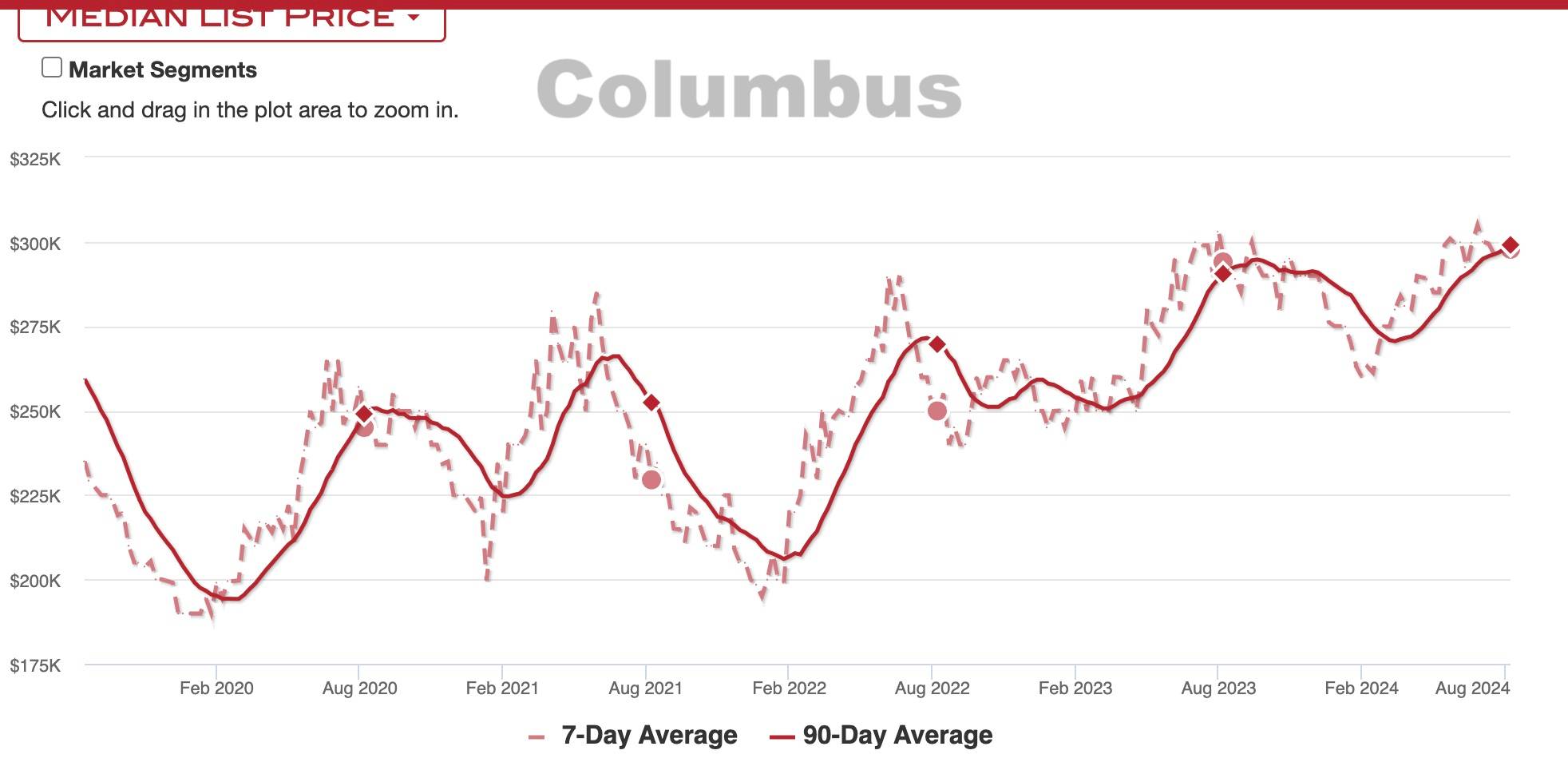
    If I had $100k - $200k to invest, that's Detroit for me all day long. Note, I have 12-doors there and I help investors get started in Detroit so I'm biased. But look at the charts of median list prices over the last 5 years. 

    I included Detroit, Columbus, Cleveland, and St Louis.

    Where would you rather put your money? The answer is obvious to me, but please do other research or DM me and I'm happy to send you a ton of resources.

    Detroit is the kind of market you want to be uncovering today. It has low purchase prices still and it's appreciating rapidly. Better yet, you can still find deals that will cash flow a bit or operate at break even, allowing you to ride the appreciation.

    And I'm very convinced we're still in the early innings for Detroit. The city is crushing it and folks are finally waking up to it. How does this trend not double home values there in the next 5 - 10 years?

    Once you create some decent wealth in a market like this and you feel the growth is slowing, that's the time to start thinking about moving that equity to another market that's probably more expensive.

    Rinse, repeat, and you'll build a ton of wealth.

    But it all starts with an appreciating market that you can afford to operate in.

  • Dan H.Pro Member
    Investor · Poway, CA · Member since 2015 · 7k+ posts · 8k+ votes
    2y

    Most RE investors when starting need the property to at least support itself.  Cash flow is important, maybe even critical.  

    After you hit a certain net worth, total return is what matters and in RE cash flow has the worst tax impact so trading cash flow for return elsewhere can make sense.  

    I have stated for years I would buy a negative cash flow property if my underwriting showed returns that met my requirements.  2.5 years ago, I purchased my first (and only) negative cash flow property.  The 50% rule was fairly accurate to my more detailed underwriting.  It now has some positive cash flow (poor for its equity), but I am up over $650k above costs (including rehabs in the costs).   I have nearly doubled my investment.  The total cash flow since ownership has been poor (but improving fairly fast), but the overall return has been good (not as good as my usual but this is because of the rates increased). 

    I think the cash flow versus appreciation is a function of where you are on your investment journey. 

    I recommend everyone start in a market they are familiar with regardless if it is cash flow, appreciation, or combination market.

    Good luck. 

  • Virtual Assistant · Philippines · Member since 2024 · 10 posts · 4 votes
    2y

    Hi Miguelli,

    If you’re not depending on rental income for immediate needs and are focused on long-term growth, prioritizing appreciation and accepting some short-term cash flow challenges could be a smart strategy. Just ensure you’re comfortable with the potential for initial losses and that you’ve built a reliable team to support you.

    Hope this helps!

  • Jimmy LieuBusiness Member
    Real Estate Agent · Columbus, OH · Member since 2019 · 3k+ posts · 2k+ votes
    2y
    Quote from @Miguelli Fernandez:

    Hi BP. Out of state beginner investor initially looking at single family/duplex in Cleveland area to rent to section 8.

    The more research I’ve done and the deeper into the process I get I’ve noticed that I’m starting to lean towards appreciation instead of cash flow due.

    Is this a natural line of thinking? My wife and I are high income w2 and thought it would be a good idea to expand our portfolio with real estate to help with taxes. However, we also don’t want to invest too much initially due to the learning curve of real estate so we figure starting out with a smaller budget and learn the ins and outs especially developing a team we trust before buying at higher price points.

    So here’s the question, for someone not depending on the cash flow as income, is it better to find properties that will cash flow at lower purchase price and find ways to spend the income to avoid taxes or to give up some cash flow and possibly even be at a loss for a few years to buy at a more expensive price in a better neighborhood, be able to take the tax savings each year, but also have a better rate of appreciation? 


    Hi Miguelli, why not look for markets where you can find deals for both cash flow and appreciation? One of them is Columbus OH - overall great macroeconomics and still growing as well as the population, job market, and the number of companies developing here like Intel, Amazon, Google, Meta, etc. My clients love it here because they are able to purchase deals in the $130k-$180k price point that hit the 1% rule and has lots of potential for appreciation. As a local investor here in Columbus myself, I have purchased rentals that are clean BRRRRs and grew my rental portfolio to over 7 figures. Now I help my clients do the same. Happy to connect and answer any questions you may have.

  • Bryan MartinBusiness Member
    Accountant · Springfield, IL · Member since 2022 · 189 posts · 100 votes
    2y

    There’s no right or wrong answer.  If you’re a high W-2 earner, $200 bucks a month in cash flow isn’t going to make much difference in your life.  Getting $200k in appreciation and $100k in loan pay down on 3 properties in ten years will though.

    Don’t get me wrong, I think you can have both, but appreciation is where wealth is built.  Just make sure you have a good plan to sell or refinance to take advantage of that wealth and not get hit with a huge tax bomb when you’re ready to get out.

  • Realtor · Boulder, CO · Member since 2016 · 3k+ posts · 5k+ votes
    2y

    When I first started investing, I built a portfolio consisting of a combination of "cash flow" properties and "appreciation" properties. I have since sold all of the "cash flow" properties. The properties bought strictly for appreciation ended up having not only much better overall returns thanks mostly to life-changing appreciation, but after a few years of strong rent growth due to being in good locations, not to mention less tenant issues and repair/capex issues, they actually spin off better cash flow than the properties bought for that purpose anyway. Location, location, location should be your biggest consideration and I'd strongly recommend staying within an hour of where you live. Read these forums for awhile and you'll notice a trend among new investors buying out of state in crappy locations strictly for cash flow (they tend to lose money for a few years then sell the properties at a loss). There are better ways to spend your hard-earned money. Hundreds of threads like this one on here to learn from other's mistakes rather than repeating them: https://www.biggerpockets.com/forums/12/topics/1133388-losin...

  • Alecia LovelessPro Member
    Member since 2019 · 3k+ posts · 2k+ votes
    2y

    @Miguelli Fernandez Even with current market conditions I wouldn’t buy a building that didn’t offer both cash flow and appreciation. I buy in an area that’s made up of 6 primary towns. Each has its own unique market even though they’re within a 45 mile radius. Since I started investing a little over 5 years ago my portfolio has appreciated by about 200% overall. Some buildings have only appreciated about 30% and some by close to 300%

    You can find properties that cash flow and appreciate. I would look for ones that do both.

    Personally I think it would be foolish to just invest trying to get tax write-offs as the primary benefit of your portfolio.

  • Member since 2024 · 33 posts · 43 votes
    2y
    Quote from @Jack Krusinski:

    Hi Miguelli, to answer your question, " is it better to find properties that will cash flow at lower purchase price and find ways to spend the income to avoid taxes or to give up some cash flow and possibly even be at a loss for a few years to buy at a more expensive price in a better neighborhood, be able to take the tax savings each year, but also have a better rate of appreciation?" In the Cleveland market (where I live and invest in) I belive you can do a little bit of both. My suggestion would be to buy a property in a nicer area (or right outside a nicer area that is primed for appreciation) that either breaks even or makes a little bit of cash flow. That way, you can take the tax deduction and have a less risky investment that is primed for appreciation. You will also get some cash flow. 


    Your reply is the strategy I had in mind but not able to actually come up with the words to describe.

  • Member since 2024 · 33 posts · 43 votes
    2y
    Quote from @Travis Biziorek:

    You want appreciation.

    Everyone should want appreciation because that's what ultimately is going to build outsized wealth.

    If you just want cash flow, heck... throw your cash into an ETF like $JEPI and be happy with your ~9% CoC annually.

    With real estate, all things being equal, you would want to buy in the highest appreciating market you can find. Think New York, San Diego, Los Angeles, etc.

    The problem with that though is a) You may not be able to afford anything there, or b) If you can afford a downpayment you'll be eating negative cash flow.

    In short, the highest appreciating markets may cost you too much per month to participate in because they have large negative cash flow.

    So you need to find a market that balances the two. Ideally, you operate as close to break even (or slightly better) in a market that's strongly appreciating. And it has to be something you can afford.

    If I had $100k - $200k to invest, that's Detroit for me all day long. Note, I have 12-doors there and I help investors get started in Detroit so I'm biased. But look at the charts of median list prices over the last 5 years. 

    I included Detroit, Columbus, Cleveland, and St Louis.

    Where would you rather put your money? The answer is obvious to me, but please do other research or DM me and I'm happy to send you a ton of resources.

    Detroit is the kind of market you want to be uncovering today. It has low purchase prices still and it's appreciating rapidly. Better yet, you can still find deals that will cash flow a bit or operate at break even, allowing you to ride the appreciation.

    And I'm very convinced we're still in the early innings for Detroit. The city is crushing it and folks are finally waking up to it. How does this trend not double home values there in the next 5 - 10 years?

    Once you create some decent wealth in a market like this and you feel the growth is slowing, that's the time to start thinking about moving that equity to another market that's probably more expensive.

    Rinse, repeat, and you'll build a ton of wealth.

    But it all starts with an appreciating market that you can afford to operate in.

    Great stuff. Some of the posts on this question including yours has helped me pivot. I heard somewhere buy C property in B area and attract A tenants. Supposedly its the formula to capture both cash flow appreciation.
  • Member since 2024 · 33 posts · 43 votes
    2y
    Quote from @Steve K.:

    When I first started investing, I built a portfolio consisting of a combination of "cash flow" properties and "appreciation" properties. I have since sold all of the "cash flow" properties. The properties bought strictly for appreciation ended up having not only much better overall returns thanks mostly to life-changing appreciation, but after a few years of strong rent growth due to being in good locations, not to mention less tenant issues and repair/capex issues, they actually spin off better cash flow than the properties bought for that purpose anyway. Location, location, location should be your biggest consideration and I'd strongly recommend staying within an hour of where you live. Read these forums for awhile and you'll notice a trend among new investors buying out of state in crappy locations strictly for cash flow (they tend to lose money for a few years then sell the properties at a loss). There are better ways to spend your hard-earned money. Hundreds of threads like this one on here to learn from other's mistakes rather than repeating them: https://www.biggerpockets.com/forums/12/topics/1133388-losin...


     If we could afford the price point in our local market we would stay in the Southern California market but its simply too expensive.  Also, the state is a tenant friendly state.  What's your take on buying in a good neighborhood out of state within our budget and ensuring that we break even or generate minimal cash flow?

  • Realtor · Boulder, CO · Member since 2016 · 3k+ posts · 5k+ votes
    2y
    Quote from @Miguelli Fernandez:
    Quote from @Steve K.:

    When I first started investing, I built a portfolio consisting of a combination of "cash flow" properties and "appreciation" properties. I have since sold all of the "cash flow" properties. The properties bought strictly for appreciation ended up having not only much better overall returns thanks mostly to life-changing appreciation, but after a few years of strong rent growth due to being in good locations, not to mention less tenant issues and repair/capex issues, they actually spin off better cash flow than the properties bought for that purpose anyway. Location, location, location should be your biggest consideration and I'd strongly recommend staying within an hour of where you live. Read these forums for awhile and you'll notice a trend among new investors buying out of state in crappy locations strictly for cash flow (they tend to lose money for a few years then sell the properties at a loss). There are better ways to spend your hard-earned money. Hundreds of threads like this one on here to learn from other's mistakes rather than repeating them: https://www.biggerpockets.com/forums/12/topics/1133388-losin...


     If we could afford the price point in our local market we would stay in the Southern California market but its simply too expensive.  Also, the state is a tenant friendly state.  What's your take on buying in a good neighborhood out of state within our budget and ensuring that we break even or generate minimal cash flow?


    Tenant friendly state shouldn’t be a concern IMO, just screen tenants well, be professional and buy in a good location and you probably won’t ever have to deal with the courts. I’d rather have a good property in a good location with tenant friendly laws than a bad property in a bad location with landlord friendly laws for sure. The goal should be avoiding court, reducing vacancy, etc. not doing a bunch of evictions where you need them to be quick. I’d save up until you can afford to buy close to home. 9 out of 10 out of state investors I’ve known have failed. The ones who have succeeded had a relative nearby in the area they were investing in, a child living in the home, or grew up in the area they invest in so they at least know it really well and know the difference between a good street and a bad one. You should know the area on a house by house level ideally, and you won’t get that kind of market knowledge by visiting a few times. Have you considered buying a primary then converting that to a rental and repeating that as a strategy? It’s a good way to go in an expensive market. I’ve been doing that in addition to other investment properties and our former primaries are our best rentals. 

  • Investor · Arroyo Grande, CA · Member since 2014 · 1k+ posts · 1k+ votes
    2y
    Quote from @Miguelli Fernandez:
    Quote from @Steve K.:

    When I first started investing, I built a portfolio consisting of a combination of "cash flow" properties and "appreciation" properties. I have since sold all of the "cash flow" properties. The properties bought strictly for appreciation ended up having not only much better overall returns thanks mostly to life-changing appreciation, but after a few years of strong rent growth due to being in good locations, not to mention less tenant issues and repair/capex issues, they actually spin off better cash flow than the properties bought for that purpose anyway. Location, location, location should be your biggest consideration and I'd strongly recommend staying within an hour of where you live. Read these forums for awhile and you'll notice a trend among new investors buying out of state in crappy locations strictly for cash flow (they tend to lose money for a few years then sell the properties at a loss). There are better ways to spend your hard-earned money. Hundreds of threads like this one on here to learn from other's mistakes rather than repeating them: https://www.biggerpockets.com/forums/12/topics/1133388-losin...


     If we could afford the price point in our local market we would stay in the Southern California market but its simply too expensive.  Also, the state is a tenant friendly state.  What's your take on buying in a good neighborhood out of state within our budget and ensuring that we break even or generate minimal cash flow?


    Right, I understand that. I'm also in California but invest in Detroit. I have 12-doors there.

    I don't know your budget, risk tolerance, etc. Investing out of state is a great option if you can't do anything locally. But you also need to work with folks that are trustworthy and intimately understand the market you're wanting to enter.

  • Rick BassettBusiness Member
    Property Manager · Greater New Haven, CT · Member since 2010 · 377 posts · 434 votes
    2y

    Miguelli - When I first got serious about RE investing it was about 2005 and the market looked a lot like it does today; prices were very high and cash flow was very low. Almost nothing penciled out and I wasn't interested in buying properties with negative cash or banking on the possibility of future appreciation.

    So I resisted buying bad deals and pretty much sat on the sidelines from 2005 to 2009 and continued to build up cash, contacts, my credit score, and my RE knowledge/education. 

    After the market crashed in 2008 we went on a buying spree from about 2009 until 2015/6 (buy & hold) until the numbers didn't make as much sense as the prices started creeping up again, rent prices were flat and many competitors started entering the marketplace.  

    Today feels a lot like the 2005ish market with very high prices, and very low, cash flow. On the plus side of where we are; rents have really shot up, we have far better RE investing tools, as well as better software and knowledge. But there are many more investors chasing every deal that's out there, repair costs are much higher, taxes are much higher, insurance is much higher, regulations are starting to become a bigger issue, and of course interest rates are an issue.

     So for now we continue to hunt for deals, but most do not pencil out. In the meantime we are building our resources to be ready for the next market reset (if it comes) so we are prepared to go on another buying spree if sensible opportunities present themselves.

    Bassett Property Management5108 Reviews
  • Investor · Costa Mesa, CA · Member since 2016 · 1k+ posts · 1k+ votes
    2y
    Quote from @Steve K.:

    When I first started investing, I built a portfolio consisting of a combination of "cash flow" properties and "appreciation" properties. I have since sold all of the "cash flow" properties. The properties bought strictly for appreciation ended up having not only much better overall returns thanks mostly to life-changing appreciation, but after a few years of strong rent growth due to being in good locations, not to mention less tenant issues and repair/capex issues, they actually spin off better cash flow than the properties bought for that purpose anyway. Location, location, location should be your biggest consideration and I'd strongly recommend staying within an hour of where you live. Read these forums for awhile and you'll notice a trend among new investors buying out of state in crappy locations strictly for cash flow (they tend to lose money for a few years then sell the properties at a loss). There are better ways to spend your hard-earned money. Hundreds of threads like this one on here to learn from other's mistakes rather than repeating them: https://www.biggerpockets.com/forums/12/topics/1133388-losin...

    This.
  • Drew SygitBusiness Member
    Property Manager · Royal Oak, MI · Member since 2012 · 12k+ posts · 9k+ votes
    2y

    @Miguelli Fernandez here's some other food for thought!

    Class A Properties:
    Cashflow vs Appreciation: Typically, 3-5 years for positive cashflow, but you get highest relative rent & value appreciation.
    Vacancy Est: Historically 10%, 5% the more recent norm.
    Tenant Pool: Majority will have FICO scores of 680+, zero evictions in last 7 years.

    Class B Properties:
    Cashflow vs Appreciation: Typically, decent amount of relative rent & value appreciation.
    Vacancy Est: Historically 10%, 5% should be applied only if proper research done to support.
    Tenant Pool: Majority will have FICO scores of 620-680, some blemishes, but should have no evictions in last 5 years

    Class C Properties:
    Cashflow vs Appreciation: Typically, high cashflow and at the lower end of relative rent & value appreciation. Can try to reposition to Class B, but neighborhood may impede these efforts.
    Vacancy Est: Historically 10%, but 15-20% should be used to also cover tenant nonpayment, eviction costs & damages.
    Tenant Pool: majority will have FICO scores of 560-620, many blemishes, but should have no evictions in last 2 years. Verifying last 2 years of rental history very important! Also, focus on 2 years of job/income stability.

    Class D Properties:
    Cashflow vs Appreciation: Typically, all cashflow with little, maybe even negative, relative rent & value appreciation
    Vacancy Est: 20%+ should be used to cover nonpayment, evictions & damages.
    Tenant Pool: majority will have FICO scores under 560, little to no good tradelines, lots of collections & chargeoffs, recent evictions. Verifying last 2 years of rental history and income extremely important to find the “best of the worst”.

  • Real Estate Consultant · Cleveland · Member since 2020 · 6k+ posts · 3k+ votes
    2y
    Quote from @Miguelli Fernandez:

    Hi BP. Out of state beginner investor initially looking at single family/duplex in Cleveland area to rent to section 8.

    The more research I’ve done and the deeper into the process I get I’ve noticed that I’m starting to lean towards appreciation instead of cash flow due.

    Is this a natural line of thinking? My wife and I are high income w2 and thought it would be a good idea to expand our portfolio with real estate to help with taxes. However, we also don’t want to invest too much initially due to the learning curve of real estate so we figure starting out with a smaller budget and learn the ins and outs especially developing a team we trust before buying at higher price points.

    So here’s the question, for someone not depending on the cash flow as income, is it better to find properties that will cash flow at lower purchase price and find ways to spend the income to avoid taxes or to give up some cash flow and possibly even be at a loss for a few years to buy at a more expensive price in a better neighborhood, be able to take the tax savings each year, but also have a better rate of appreciation? 


     Both, however, there is no guarantee there will be appreciation even though over the last 10 years prices have tripled or much more in all of the Cleveland markets.  I just picked up another duplex all in 90k, value about 125- 130k with 1800 in rent. SF all in 75k, value about 130k, rent will be 1600, So great equity in both and high returns. 

    Good luck 

Join the conversationCreate a free account to reply, vote on answers and follow this thread.