Entity Vesting for Investment Properties – Why Many Investors Use It
One topic that comes up often when working with real estate investors is entity vesting — purchasing or refinancing an investment property in an LLC instead of an individual name.
For most non-owner-occupied investment loans, entity vesting can be an option if the lender allows it. This includes many investor loan programs such as DSCR loans, bank statement loans, and other alternative documentation loans.
There are a few benefits investors like about entity vesting.
One of the biggest is that the loan is typically made to the entity, and in most cases the loan does not report on the borrower’s personal credit, since the borrower is signing as a personal guarantor rather than the primary borrower.
That can be helpful for investors who are trying to scale portfolios without stacking multiple mortgage tradelines on their personal credit profile.
One important thing to note: if the loan becomes delinquent, most lenders reserve the right to report late payments to personal credit because of the personal guarantee. As long as the loan performs, however, it usually remains off personal credit.
Another thing I always recommend to investors is to have their entity documents ready before they start shopping for financing. It saves a lot of time during underwriting.
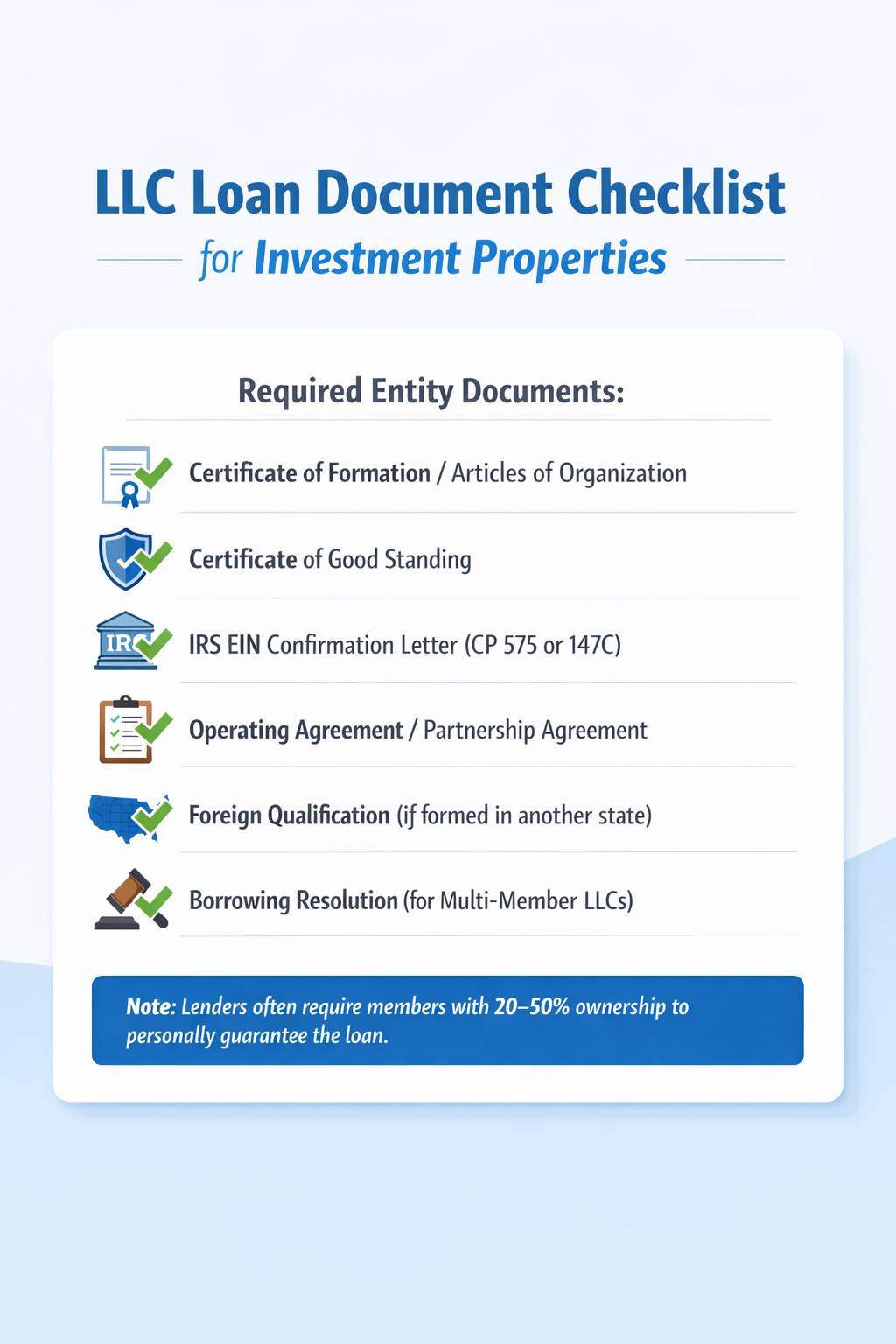
Typically lenders will ask for some version of the following entity documents:
• Certificate of Formation / Articles of Organization
• Certificate of Good Standing (or equivalent)
• IRS EIN Confirmation Letter (CP 575 or 147C)
• Certificate of Foreign Qualification if the entity was formed in a different state than where the property is located
Even for single-member LLCs, it’s a good idea to have an Operating Agreement or Partnership Agreement prepared.
That document usually outlines:
• Ownership percentage
• Authority to sign on behalf of the entity
• Who has control of the company
Most lenders will also require any member listed in the operating agreement above a certain ownership threshold to personally guarantee the loan. That threshold varies by lender but is commonly somewhere in the 20%–50% ownership range.
For multi-member LLCs, if the operating agreement requires member approval for borrowing, lenders will typically also request a Board Resolution or Borrowing Resolution authorizing the entity to enter into the loan.
None of this is particularly complicated, but having your entity package organized before you start a loan application can make the process much smoother.
Curious how others here are structuring their investment purchases.
Are you buying in your personal name or through an LLC?
Happy to help answer questions if anyone is navigating entity vesting or planning their next investment loan.
