Cost Segregation Example on SFH in Fort Worth, TX
A cost segregation study was performed on this single family home in Fort Worth, TX purchased in 2023 with a depreciable cost basis of $272,633. The home is 1,841 square feet and was constructed in 2009.
The use of the accelerated depreciation strategy helps real estate investors to reduce the tax liability immediately which therefore increases their bottom line due to the offsetting of income. An additional benefit of a detailed engineering-based Cost Segregation Study is that it can increase potential insurance premium savings as well as provides support for the property tax appeals process. Additionally, it can help maximize renovations and improvements.
A Cost Segregation study is an IRS approved federal income tax tool that increases near term cash flow by utilizing shorter recovery periods for depreciation to accelerate return on investment. For newly constructed, purchased or renovated properties and also retroactive generally over the last 10 years, building components are properly classified into individual units of property and accurate recovery periods for computing depreciation deductions. The study identifies with forensic engineering detail the immediate Bonus Depreciation 5, 7 and 15-year personal property class lives qualifying portions of a building that are normally buried in 27.5 year residential or 39 year commercial categories.
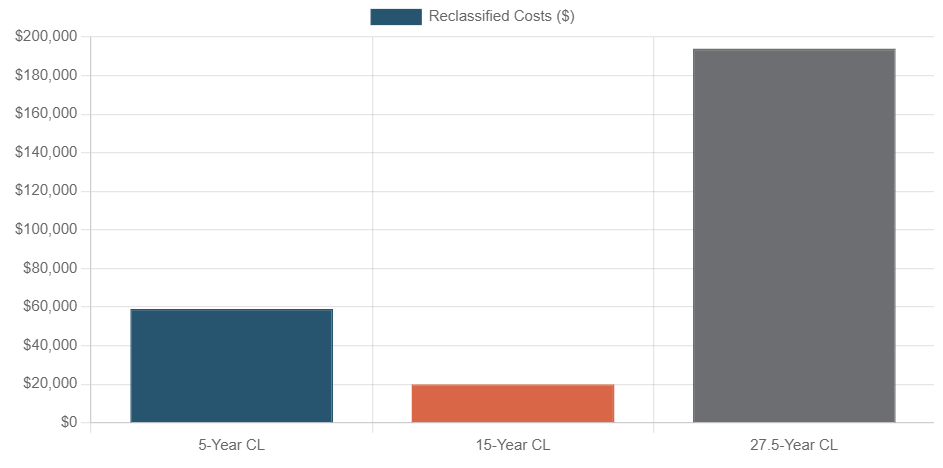
21.64% of the total depreciable basis was classified as 5-year class life. Assets identified in this study include:
- Appliances
- Electrical and communication systems
- Furniture and fixtures
- Ceiling fans
- Window treatments
- Office equipments
- Flooring
7.26% of the total depreciable basis was classified as 15-year class life. Assets identified in this study include:
- Concrete paving and pavers
- Fencing
- Equipment pads
- Concrete sidewalks
- Landscaping
This engineering-based cost segregation study included the following methodology:
- Physical Inspection through a site visit
- Documentation review including architectural plans, accounting records and construction documents
- A cost analysis which utilizes engineering principles in order to allocate costs to their applicable asset classifications
- Calculation of the depreciation schedule using MACRS
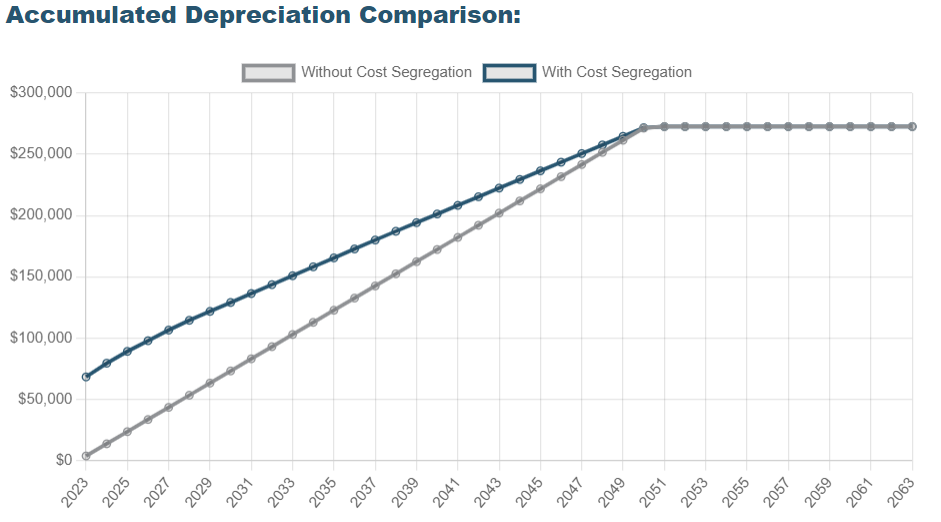
As a reminder, bonus depreciation started to phase out in 2023. It’s 100% bonus depreciation for properties placed into service in 2017-2022, 80% in 2023, 60% in 2024, 40% in 2025, 20% in 2026 and completely phased out in 2027. However, there are tax code changes every year. In the H.R. 3936, Built in America Act, it was proposed to extend the 100% bonus depreciation until January 1, 2027. This has the potential to be passed later this year.
For additional questions, checkout this article on Cost Segregation FAQs.
Have you had a cost segregation study performed on your single family home?