unamortized loan cost in balance sheet (Schedule L for Form 1065)
I have one question about treating unamortized loan cost in balance sheet (Schedule L for Form 1065).
Following is the details:
On April 4, 2025, I formed one partnership LLC to acquire one rental apartment with a bridge loan. The total loan cost is $18,000 : points ($16000) and processing fee ($2000), loan term: 18 months. The $18000 needs capitalized so I start amortization for loan cost from April with $1000 monthly.
On Nov 12, 2025 (7 months later), I refinaned with Chase, a new lender. Once refinance is done, the accumulated amortization of loan cost is $7000 and unamortized loan cost is $11000. From tax purpose, I did the following treatment:
(1) $7000 Accumulated amortization: It is recorded on Form 4562 Depreciation and Amortization. The amount will be used to recapture when selling the apartment
(2) $11000 Unamortized loan cost: It is classed as "Loss on Debt Extinguishment" and recorded on the "other expense" for Form 8825.
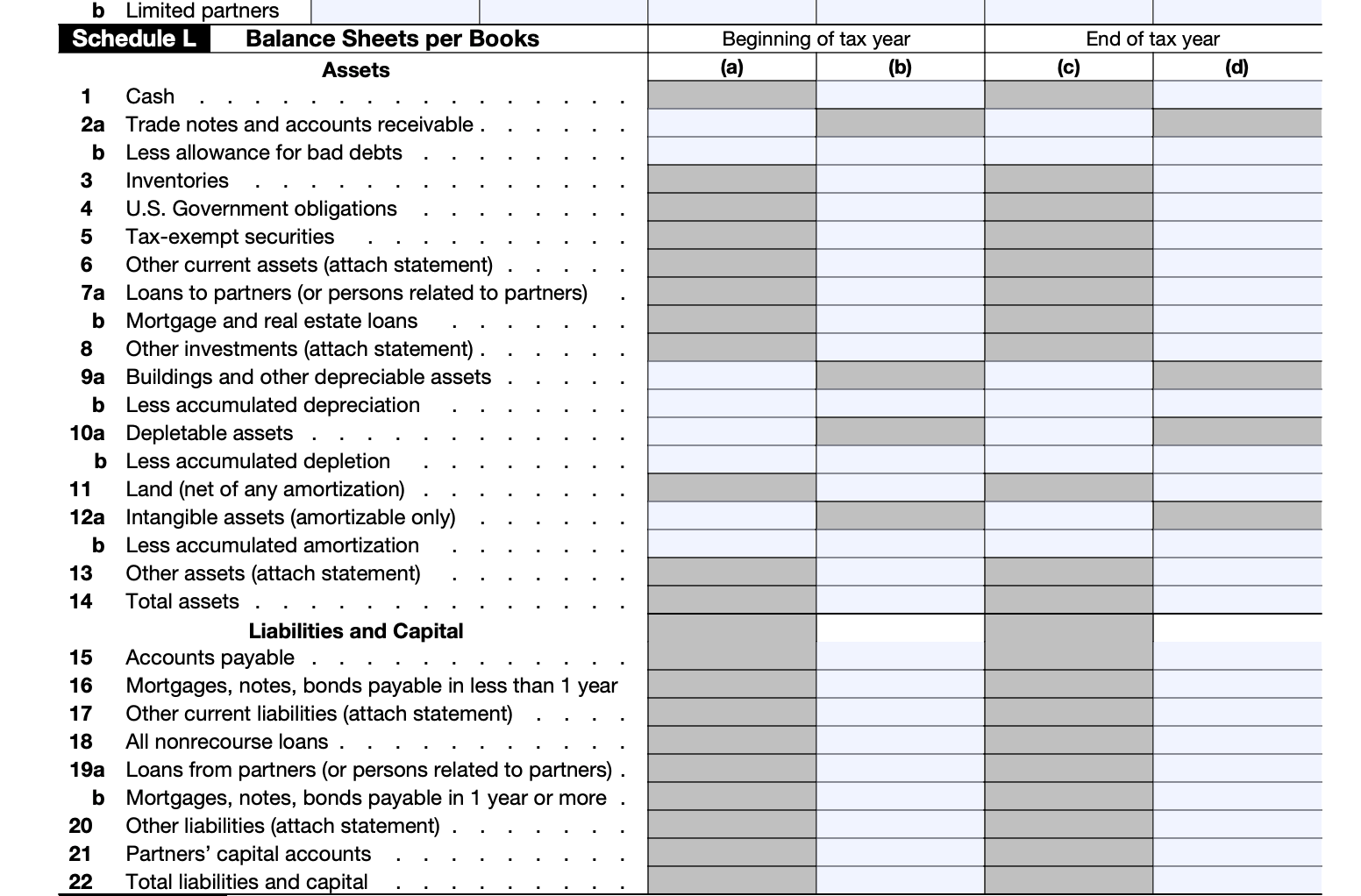
Because end-year asset value exceeds threashold, I have to submit Schedule L Balance Sheet when filling Form 1065.
There are two rows and two columuns in Schedule L. It looks like below:
End of tax year
(c) | (d)
12a Intangible assets (amortizable only) |
b Less accumulated amortization |
As the original loan cost has been fulled disposed. I have two options to record this on the Balance Sheet:
Method A: Adjust the original value of loan cost recorded in the Intangible asset by $11000 (Loss on Debt Extinguishment) and record the accumulated amortization $7000. So the net book value for this asset is $0. The problem of this method is that I adjusted the original value $18000 to $7000 which doesn't reflect the original $18000 asset value.
End of tax year
(c) | (d)
12a Intangible assets (amortizable only) $7000 |
b Less accumulated amortization . . $7000 | 0
Method B: Record the original value of loan cost as $18000 and the accumulated amortization $7000. This is in accord with actual value. The problem is that the net book value is $11000 which is not correct. I need to find out a way to reduce the new book value of this asset to 0.
End of tax year
(c) | (d)
12a Intangible assets (amortizable only) $18000 |
b Less accumulated amortization . . $7000 | $11000
Question:
The main difficulty is that: I want to achieve original value: $18000, accumulated amortization: $7000, net value of this asset: $0. However, they are not balanced. So my question is:
- How to treat this unamortized loan cost in balance sheet? Which method is proper?
- Even though this asset has been disposed, should I still keep the original value and accumulated amortization in the following years so that the accumulated amortization can reflect the total amorization I adopted to calculate the recapture when selling the apartment?
Regards, Zhenyang