For Self-Managing Landlords, What Accounting Software do you Use?

For Self-Managing Landlords, What Accounting Software do you Use?

Member since 2021 · 16 posts · 9 votes

I am curious which accounting and bookkeeping packages smaller landlords prefer to use? I have started using Tenant Cloud and have a paid subscription, but I'm having trouble with the accounting reports and bookkeeping. In particular, I'm working on year end financials and can't generate a Profit and Loss statement from their canned reports or a balance sheet. 

What other accounting systems do my fellow BiggerPockets colleagues prefer to use for smaller landlords. I only have 5 units and this is my first purchase so I'm managing the property myself for now, but will probably find a property manager in the next year or so. Any thoughts on accounting and bookkeeping platforms that are preferred for smaller businesses? Anyone using TenantCloud successfully to run these reports? How about Quickbooks, however, it seems pretty pricey? Has anyone tried Xero? I could really use some help to make a decision to stick with TenantCloud or to get a stronger package and hear Pros vs. Cons.

Happy New Year to all who have read this far and thanks in advance for any advice you can offer!
3Reply
233 views

Most Popular Reply

Member since 2020 · 3 posts · 3 votes
4y

Hello!

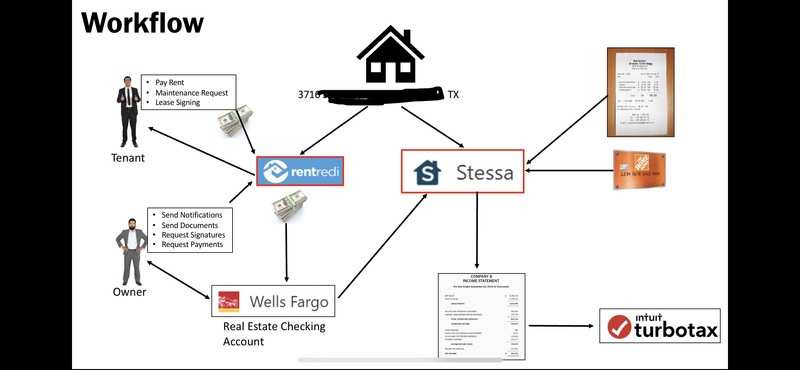
I use RentRedi + Stessa.  Rent Redi handles rent collection, maintenance requests, applications, and lease signing.  Stessa handles all the financial reports and expense tracking. I link both Stessa and Rent Redi to my real estate checking account.  Then, when a rent payment is made by I tenant through Rent Redi, it is also automatically synced in Stessa since it’s linked to the bank account where I received the money.

See some info attached and let me know if you have more specific question.

Note on application comparison: This comparison was made in May of 2021, so it’s possible that features and costs have changed on specific apps.


See this reply in the discussion

9 Replies

Jump to latestLatest
  • Member since 2020 · 3 posts · 3 votes
    4y

    Hello!

    I use RentRedi + Stessa.  Rent Redi handles rent collection, maintenance requests, applications, and lease signing.  Stessa handles all the financial reports and expense tracking. I link both Stessa and Rent Redi to my real estate checking account.  Then, when a rent payment is made by I tenant through Rent Redi, it is also automatically synced in Stessa since it’s linked to the bank account where I received the money.

    See some info attached and let me know if you have more specific question.

    Note on application comparison: This comparison was made in May of 2021, so it’s possible that features and costs have changed on specific apps.


  • Denver, CO · Member since 2022 · 200 posts · 77 votes
    4y

    Some property-management apps have Xero/QuickBooks integration so you can sync all transactions, suppliers, tenants, upload receipts, etc. 

    Xero and QuickBooks are great general accounting software options on their own but they aren't built for landlords so lack some of the features you'd want to help you manage your properties. So definitely look into more industry-specific platforms. This way, you can simplify your accounting, as well as screen tenants, create reports, etc. Some also allow you to give view-only access to your accountant too, so they can see your reports as well.

    Hope that helps!

  • Rachid AbadliBusiness Member
    Investor · Sacramento, CA · Member since 2024 · 129 posts · 36 votes
    3mo

    I tried QuickBooks for about 6 months and it was overkill for 4 residential units. The chart of accounts setup alone took me a weekend, and half the categories didn't apply to landlording.

    What I found works better is property management software that has accounting built in rather than accounting software that you try to adapt for properties. The difference is that PM software already thinks in terms of properties → units → leases → charges, which is exactly how landlord accounting works.

    My main criteria were:

    • Automatic categorization by property and unit
    • Tracks rent received vs. charged (not just deposits)
    • Handles security deposits as liabilities (California requires this)
    • Exports clean enough for my CPA at tax time

    Anyone else find that general accounting software just doesn't fit the landlord use case well?

    LeaseBase.ai
    View Page
    • Real Estate Consultant · Norfolk, VA · Member since 2017 · 345 posts · 200 votes
      2mo
      Quote from @Rachid Abadli:

      I tried QuickBooks for about 6 months and it was overkill for 4 residential units. The chart of accounts setup alone took me a weekend, and half the categories didn't apply to landlording.

      What I found works better is property management software that has accounting built in rather than accounting software that you try to adapt for properties. The difference is that PM software already thinks in terms of properties → units → leases → charges, which is exactly how landlord accounting works.

      My main criteria were:

      • Automatic categorization by property and unit
      • Tracks rent received vs. charged (not just deposits)
      • Handles security deposits as liabilities (California requires this)
      • Exports clean enough for my CPA at tax time

      Anyone else find that general accounting software just doesn't fit the landlord use case well?


      Accounting software is built for the general public—you have to customize it to fit your business, not the other way around.

      When you first set up QuickBooks Online, it gives you a default chart of accounts. In my experience, many of those accounts aren't relevant for real estate, while several important ones are missing.

      For my real estate clients, I use a standardized chart of accounts tailored to their investing strategy (flips, wholesaling, BRRRRs, long-term rentals, or STRs). I import that as the foundation, remove unnecessary accounts, and then customize it further by adding the appropriate fixed assets, equity accounts, loans, bank accounts, and credit cards.

      From there, I set up tenants, enter lease agreements so recurring rent invoices are generated automatically, organize the books to track each property and unit individually, record security deposits properly as liabilities, and build workflows that make the monthly bookkeeping as automated and efficient as possible.

      It typically takes a few hours to build a clean setup from scratch, but that upfront investment pays off. Once everything is structured correctly, you'll have reliable financials, accurate property-level reporting, and a system that can grow with your portfolio instead of working against it.


  • Gita FaustBusiness Member
    Accountant · Richboro - Philadelphia, PA · Member since 2008 · 901 posts · 246 votes
    3mo

    If you have 5 units, check out Zoho or Xero if QuickBooks is overkill, given the pricing. So my question is, are you growing, and how many units/buildings are you looking to add? This is what I mentioned in another post: 

    I would not base the decision only on the cost of the software. Look at what you will need as you grow. For example, today you may only need cash-basis books, but later you may need accrual-basis reporting, better property-level tracking, stronger financial reports, and cleaner records for your CPA.

    As your portfolio grows, your team will grow too. That means you will need proper user access, clear workflows, receipt management, reporting capabilities, and SOPs so that everything is not sitting in one spreadsheet or in one person’s head.

    The software matters, but the setup matters even more. Choose something that can grow with you, not just something that solves today’s problem.

  • Jason MalabuteBusiness Member
    Accountant · Los Angeles, CA · Member since 2016 · 2k+ posts · 898 votes
    2mo

    For a five-unit portfolio you're managing yourself, full QuickBooks can honestly be more than you need, and something lighter like Xero or Zoho Books will usually get the job done without the price tag or the setup headache. That said, I wouldn't pick based on cost alone, because the better question is where you're headed: today you might only need simple cash-basis books, but as you add units you may want accrual reporting, clean property-by-property tracking, stronger financial statements, and records tidy enough to hand your accountant at tax time without a cleanup project. It also helps to plan for access down the road so you can give your bookkeeper or CPA view-only rights and keep clear workflows as your team grows. In my experience the software you pick matters less than how well it's set up, so a solid chart of accounts and consistent categorizing from day one saves more headaches than any particular brand. Bottom line, choose something that can grow with you rather than just solving this year's problem, and if you're unsure, loop in your own CPA since the right fit really depends on your situation.

    Malabute & Company CPAs525 Reviews
  • Aaron WeikleBusiness Member
    Member since 2026 · 76 posts · 23 votes
    2mo

    For 5 units TenantCloud's accounting module genuinely isn't built for double-entry bookkeeping, so the missing balance sheet isn't a bug you can work around.  As mentioned in a couple of the other responses Quickbooks and Xero are like using Sledge Hammers for finishing nails.  Their flexibility is also their downfall.  They let users do whatever they want which is great, until it comes tax time and your spending hundreds if not thousands more on Bookkeeper and CPA clean-up just so you can file your taxes.

    I actually use RealBooks which is an up and comer for my accounting because its simple and easy to use. It leverages AI for the workflows where its built not just for tenant management accounting like Stessa but for the full lifecycle of Real Estate investing. Thats why I like RB for all phases of the asset management since it was built specifically for real estate books.  Also, the guided workflow ensures proper category classifications that match what the IRS is really looking for making Tax Season a lot easier to navigate.

    Worth a look if you want multiple company aggregated reporting, property-level reporting without mapping generic accounting categories to rentals yourself and AI agents that you talk to for information about your portfolio.

    RealBooks
Join the conversationCreate a free account to reply, vote on answers and follow this thread.