Advice on Investing in Detroit
Natalie AlliePro Member
Member since 2024 · 24 posts · 17 votesLooking for advice from seasoned investors in the Detroit area - specifically how investors mitigate risk when investing in the inner city and what the best solutions are to secure properties, avoid squatters, etc... Thanks!
Looking for advice from seasoned investors in the Detroit area - specifically how investors mitigate risk when investing in the inner city and what the best solutions are to secure properties, avoid squatters, etc... Thanks!
Some good advice so far from the responders.
Are you planning to DIY manage?
If so:
1) SCREENING IS UTMOST IMPORTANCE!
Application fraud is high and only getting worse.
SCORE-DRIVEN BACKGROUND CHECKS DO NOT WORK WELL WITH FICO SCORES UNDER 620!
Make sure you get a background check that shows you every tradeline, with criminal & background check, as well as all addresses applicant has disclosed in last 7 years.
- We cross-reference the last 3 years of addresses against addresses on application, paystubs, W-2 and bank statements.
Be careful of applicants with only Chime or Student Loan tradelines. They're pretty much worthless.
VERIFICATION OF RENT: major importance!
Common application fraud is to hide current landlord by claiming they "live with relatives".
- This is also were we use the history of addresses on the background check. We use Public Records to find the owners of the addresses in the last 2-3 years, then a Whitepages account to find their cell and contact that owner to see what they know about the applicant.
- If an apartment building we use Google Streetview to view the outside of the building for signage with a phone number we then call.
2-YEAR WORK HISTORY 2ND MOST IMPORTANT VERIFICATION!
How can you consistently pay rent on-time, when you don't consistently work?
- REQUIRE each applicant fill out COMPLETE 2-year working history! Many will complain, but do not bend.
- Get latest YTD paystub, W-2(s). Since at least 90% of employers now pay via direct deposit (https://www.nacha.org/news/direct-deposit-clear-choice-payda...) use bank statement to cross-reference payroll deposits to catch frauded paystubs & W-2s. There's often additional interesting info on a bank statement - if you know how to intrepret the data.
- Also, average their income over at least 3-4 months, do NOT assume they always work 40 hours/week, 52 weeks/year!
---Easy to do with a YTD paystub after April of any year, but Jan-March means you should average YTD paystub AND last year's W-2.
---WHY? Many jobs ebb & flow on working hours seasonally or have layoffs. Also, some applicants have ongoing medical issues - or just miss a lot of work.
USE DEBT-TO-INCOME RATIO INSTEAD OF SILLY INCOME = 3X RENT!
What do you think a tenant will prioritize, rent or car payment?
- Many will prioritize their car, because they need it for work and they know their car can often be repossessed faster than they can be evicted:(
So, why ignore the car payment - which the silly, income must = 3x rent does?
Don't be afraid to require an ACCEPTABLE cosigner if an applicant doesn't meet your requirements!
- Every month we get a few applications where the applicant has little to no credit, lives at home (verified), has only been on their current job a few months and has no stable work history.
--- Why would any landlord take a chance on them without a strong cosigner?
- The other type of application we get that we carefully scrutinize is the applicant living at home (verified), has little to no credit, has a steady job, but ZERO savings. You look at their bank statement and see they've got collections they should be paying off, but they're spending their money on doordash, casino, clothes, etc.
--- What are the chances they are going to suddenly change their lifestyle and somehow pay $1,000 or so in rent consistently?
2) SECURE VACANT PROPERTIES OR LOSE MECHANICALS OR DEAL WITH SQUATTERS
Best to remove the mechanicals, store them and reinstall DAY TENANTS MOVES IN.
- We've tried reinstalling the day before the tenant moves in and sometimes they get stolen THAT NIGHT:(
Who knew we installed them?
- Only the neighbors!
This what many OOS investors don't understand about deep urban areas - the neighbors and family & friends of the tenants are often all working against the "rich landlords".
Reinforce your door jambs: https://www.homedepot.com/p/Jamb-Repair-and-Reinforcement-Ki...
Temporarily install double-sided deadbolts with tamper-proof screws.
Turn off water at the street.
Even this may not be enough - dealing with squatters right now that broke in, installed their own mechanicals(!), used a fake lease to turn water back on and then showed fake lease to police we called to remove them - so now we have to evict in court.
OTHER OPTIONS:
- DAWGS metal doors - thieves have bent them to gain access. Also difficult for agents to access for showings.
- Alarms - thieves are gone by time police respond - if they respond.
- Actual dogs left overnight - pain to manage and they can defecate and cause other damages.
- Housesitters - we had two actually steal the mechanicals! (what type of person will camp out overnight in a vacant property for $10-15/night?) So, we rarely use them anymore.
DM us if you'd like further tips.

Looking for advice from seasoned investors in the Detroit area - specifically how investors mitigate risk when investing in the inner city and what the best solutions are to secure properties, avoid squatters, etc... Thanks!
The most important thing with Detroit is you have to be very careful with who you work with (agents, property managers, contractors, tenants, etc.). This will make or break your strategy and while the numbers can look very tempting, the realities can be very scary (stolen hot water heaters/hvac, squatters, fires, non-paying tenants, scammer PMs and contractors who want to steal your money). You want to have a team in place that you can really trust, which is a difficult ask to be honest! Happy to dive deeper into my experience in the city, feel free to reach out.
Detroit can be a very strong market, but it’s not forgiving if you approach it like a generic Midwest rental play.
A few things that matter more than the purchase price there:
1. Block selection beats zip codes
Two streets apart can be night and day. You mitigate risk by:
Buying near owner-occupied pockets
Avoiding “checkerboard” vacancy blocks
Verifying who actually lives on the block, not just comps on paper
If locals wouldn’t walk the block at dusk, that’s a red flag.
2. Speed to occupancy is everything
Vacancy is the biggest risk driver.
Secure the property immediately after closing
Board properly, not just plywood slapped on
Get utilities on quickly
Move fast to tenant placement
Empty houses attract problems far more than occupied ones.
3. Physical deterrents work
Nothing fancy, just consistent:
Reinforced doors and window bars where appropriate
Exterior lighting
Cameras during vacancy or rehab
Clear signage showing the property is monitored
You’re not trying to make it impenetrable, just a harder target than the next house.
4. Local boots on the ground are non-negotiable
Out-of-state owners fail in Detroit when they rely on:
Remote PMs with no accountability
One-off contractors
You need someone local who drives by, checks progress, and treats eyes-on as part of the system.
5. Tenant screening is your long-term defense
Strong screening and realistic rent levels matter more than squeezing top dollar.
A stable tenant prevents 90 percent of the issues people blame on “the market.”
Detroit rewards investors who:
Are disciplined
Move fast
Stay operationally involved (even if not personally managing)
It punishes investors who chase cheap prices without systems.
If you treat it like an operating business instead of a spreadsheet deal, the risk becomes very manageable.
Detroit can be a very strong market, but it’s not forgiving if you approach it like a generic Midwest rental play.
A few things that matter more than the purchase price there:
1. Block selection beats zip codes
Two streets apart can be night and day. You mitigate risk by:
Buying near owner-occupied pockets
Avoiding “checkerboard” vacancy blocks
Verifying who actually lives on the block, not just comps on paper
If locals wouldn’t walk the block at dusk, that’s a red flag.
2. Speed to occupancy is everything
Vacancy is the biggest risk driver.
Secure the property immediately after closing
Board properly, not just plywood slapped on
Get utilities on quickly
Move fast to tenant placement
Empty houses attract problems far more than occupied ones.
3. Physical deterrents work
Nothing fancy, just consistent:
Reinforced doors and window bars where appropriate
Exterior lighting
Cameras during vacancy or rehab
Clear signage showing the property is monitored
You’re not trying to make it impenetrable, just a harder target than the next house.
4. Local boots on the ground are non-negotiable
Out-of-state owners fail in Detroit when they rely on:
Remote PMs with no accountability
One-off contractors
You need someone local who drives by, checks progress, and treats eyes-on as part of the system.
5. Tenant screening is your long-term defense
Strong screening and realistic rent levels matter more than squeezing top dollar.
A stable tenant prevents 90 percent of the issues people blame on “the market.”
Detroit rewards investors who:
Are disciplined
Move fast
Stay operationally involved (even if not personally managing)
It punishes investors who chase cheap prices without systems.
If you treat it like an operating business instead of a spreadsheet deal, the risk becomes very manageable.
Looking for advice from seasoned investors in the Detroit area - specifically how investors mitigate risk when investing in the inner city and what the best solutions are to secure properties, avoid squatters, etc... Thanks!
Some good advice so far from the responders.
Are you planning to DIY manage?
If so:
1) SCREENING IS UTMOST IMPORTANCE!
Application fraud is high and only getting worse.
SCORE-DRIVEN BACKGROUND CHECKS DO NOT WORK WELL WITH FICO SCORES UNDER 620!
Make sure you get a background check that shows you every tradeline, with criminal & background check, as well as all addresses applicant has disclosed in last 7 years.
- We cross-reference the last 3 years of addresses against addresses on application, paystubs, W-2 and bank statements.
Be careful of applicants with only Chime or Student Loan tradelines. They're pretty much worthless.
VERIFICATION OF RENT: major importance!
Common application fraud is to hide current landlord by claiming they "live with relatives".
- This is also were we use the history of addresses on the background check. We use Public Records to find the owners of the addresses in the last 2-3 years, then a Whitepages account to find their cell and contact that owner to see what they know about the applicant.
- If an apartment building we use Google Streetview to view the outside of the building for signage with a phone number we then call.
2-YEAR WORK HISTORY 2ND MOST IMPORTANT VERIFICATION!
How can you consistently pay rent on-time, when you don't consistently work?
- REQUIRE each applicant fill out COMPLETE 2-year working history! Many will complain, but do not bend.
- Get latest YTD paystub, W-2(s). Since at least 90% of employers now pay via direct deposit (https://www.nacha.org/news/direct-deposit-clear-choice-payda...) use bank statement to cross-reference payroll deposits to catch frauded paystubs & W-2s. There's often additional interesting info on a bank statement - if you know how to intrepret the data.
- Also, average their income over at least 3-4 months, do NOT assume they always work 40 hours/week, 52 weeks/year!
---Easy to do with a YTD paystub after April of any year, but Jan-March means you should average YTD paystub AND last year's W-2.
---WHY? Many jobs ebb & flow on working hours seasonally or have layoffs. Also, some applicants have ongoing medical issues - or just miss a lot of work.
USE DEBT-TO-INCOME RATIO INSTEAD OF SILLY INCOME = 3X RENT!
What do you think a tenant will prioritize, rent or car payment?
- Many will prioritize their car, because they need it for work and they know their car can often be repossessed faster than they can be evicted:(
So, why ignore the car payment - which the silly, income must = 3x rent does?
Don't be afraid to require an ACCEPTABLE cosigner if an applicant doesn't meet your requirements!
- Every month we get a few applications where the applicant has little to no credit, lives at home (verified), has only been on their current job a few months and has no stable work history.
--- Why would any landlord take a chance on them without a strong cosigner?
- The other type of application we get that we carefully scrutinize is the applicant living at home (verified), has little to no credit, has a steady job, but ZERO savings. You look at their bank statement and see they've got collections they should be paying off, but they're spending their money on doordash, casino, clothes, etc.
--- What are the chances they are going to suddenly change their lifestyle and somehow pay $1,000 or so in rent consistently?
2) SECURE VACANT PROPERTIES OR LOSE MECHANICALS OR DEAL WITH SQUATTERS
Best to remove the mechanicals, store them and reinstall DAY TENANTS MOVES IN.
- We've tried reinstalling the day before the tenant moves in and sometimes they get stolen THAT NIGHT:(
Who knew we installed them?
- Only the neighbors!
This what many OOS investors don't understand about deep urban areas - the neighbors and family & friends of the tenants are often all working against the "rich landlords".
Reinforce your door jambs: https://www.homedepot.com/p/Jamb-Repair-and-Reinforcement-Ki...
Temporarily install double-sided deadbolts with tamper-proof screws.
Turn off water at the street.
Even this may not be enough - dealing with squatters right now that broke in, installed their own mechanicals(!), used a fake lease to turn water back on and then showed fake lease to police we called to remove them - so now we have to evict in court.
OTHER OPTIONS:
- DAWGS metal doors - thieves have bent them to gain access. Also difficult for agents to access for showings.
- Alarms - thieves are gone by time police respond - if they respond.
- Actual dogs left overnight - pain to manage and they can defecate and cause other damages.
- Housesitters - we had two actually steal the mechanicals! (what type of person will camp out overnight in a vacant property for $10-15/night?) So, we rarely use them anymore.
DM us if you'd like further tips.
Looking for advice from seasoned investors in the Detroit area - specifically how investors mitigate risk when investing in the inner city and what the best solutions are to secure properties, avoid squatters, etc... Thanks!
Some good advice so far from the responders.
Are you planning to DIY manage?
If so:
1) SCREENING IS UTMOST IMPORTANCE!
Application fraud is high and only getting worse.
SCORE-DRIVEN BACKGROUND CHECKS DO NOT WORK WELL WITH FICO SCORES UNDER 620!
Make sure you get a background check that shows you every tradeline, with criminal & background check, as well as all addresses applicant has disclosed in last 7 years.
- We cross-reference the last 3 years of addresses against addresses on application, paystubs, W-2 and bank statements.
Be careful of applicants with only Chime or Student Loan tradelines. They're pretty much worthless.
VERIFICATION OF RENT: major importance!
Common application fraud is to hide current landlord by claiming they "live with relatives".
- This is also were we use the history of addresses on the background check. We use Public Records to find the owners of the addresses in the last 2-3 years, then a Whitepages account to find their cell and contact that owner to see what they know about the applicant.
- If an apartment building we use Google Streetview to view the outside of the building for signage with a phone number we then call.
2-YEAR WORK HISTORY 2ND MOST IMPORTANT VERIFICATION!
How can you consistently pay rent on-time, when you don't consistently work?
- REQUIRE each applicant fill out COMPLETE 2-year working history! Many will complain, but do not bend.
- Get latest YTD paystub, W-2(s). Since at least 90% of employers now pay via direct deposit (https://www.nacha.org/news/direct-deposit-clear-choice-payda...) use bank statement to cross-reference payroll deposits to catch frauded paystubs & W-2s. There's often additional interesting info on a bank statement - if you know how to intrepret the data.
- Also, average their income over at least 3-4 months, do NOT assume they always work 40 hours/week, 52 weeks/year!
---Easy to do with a YTD paystub after April of any year, but Jan-March means you should average YTD paystub AND last year's W-2.
---WHY? Many jobs ebb & flow on working hours seasonally or have layoffs. Also, some applicants have ongoing medical issues - or just miss a lot of work.
USE DEBT-TO-INCOME RATIO INSTEAD OF SILLY INCOME = 3X RENT!
What do you think a tenant will prioritize, rent or car payment?
- Many will prioritize their car, because they need it for work and they know their car can often be repossessed faster than they can be evicted:(
So, why ignore the car payment - which the silly, income must = 3x rent does?
Don't be afraid to require an ACCEPTABLE cosigner if an applicant doesn't meet your requirements!
- Every month we get a few applications where the applicant has little to no credit, lives at home (verified), has only been on their current job a few months and has no stable work history.
--- Why would any landlord take a chance on them without a strong cosigner?
- The other type of application we get that we carefully scrutinize is the applicant living at home (verified), has little to no credit, has a steady job, but ZERO savings. You look at their bank statement and see they've got collections they should be paying off, but they're spending their money on doordash, casino, clothes, etc.
--- What are the chances they are going to suddenly change their lifestyle and somehow pay $1,000 or so in rent consistently?
2) SECURE VACANT PROPERTIES OR LOSE MECHANICALS OR DEAL WITH SQUATTERS
Best to remove the mechanicals, store them and reinstall DAY TENANTS MOVES IN.
- We've tried reinstalling the day before the tenant moves in and sometimes they get stolen THAT NIGHT:(
Who knew we installed them?
- Only the neighbors!
This what many OOS investors don't understand about deep urban areas - the neighbors and family & friends of the tenants are often all working against the "rich landlords".
Reinforce your door jambs: https://www.homedepot.com/p/Jamb-Repair-and-Reinforcement-Ki...
Temporarily install double-sided deadbolts with tamper-proof screws.
Turn off water at the street.
Even this may not be enough - dealing with squatters right now that broke in, installed their own mechanicals(!), used a fake lease to turn water back on and then showed fake lease to police we called to remove them - so now we have to evict in court.
OTHER OPTIONS:
- DAWGS metal doors - thieves have bent them to gain access. Also difficult for agents to access for showings.
- Alarms - thieves are gone by time police respond - if they respond.
- Actual dogs left overnight - pain to manage and they can defecate and cause other damages.
- Housesitters - we had two actually steal the mechanicals! (what type of person will camp out overnight in a vacant property for $10-15/night?) So, we rarely use them anymore.
DM us if you'd like further tips.
Looking for advice from seasoned investors in the Detroit area - specifically how investors mitigate risk when investing in the inner city and what the best solutions are to secure properties, avoid squatters, etc... Thanks!
Some good advice so far from the responders.
Are you planning to DIY manage?
If so:
1) SCREENING IS UTMOST IMPORTANCE!
Application fraud is high and only getting worse.
SCORE-DRIVEN BACKGROUND CHECKS DO NOT WORK WELL WITH FICO SCORES UNDER 620!
Make sure you get a background check that shows you every tradeline, with criminal & background check, as well as all addresses applicant has disclosed in last 7 years.
- We cross-reference the last 3 years of addresses against addresses on application, paystubs, W-2 and bank statements.
Be careful of applicants with only Chime or Student Loan tradelines. They're pretty much worthless.
VERIFICATION OF RENT: major importance!
Common application fraud is to hide current landlord by claiming they "live with relatives".
- This is also were we use the history of addresses on the background check. We use Public Records to find the owners of the addresses in the last 2-3 years, then a Whitepages account to find their cell and contact that owner to see what they know about the applicant.
- If an apartment building we use Google Streetview to view the outside of the building for signage with a phone number we then call.
2-YEAR WORK HISTORY 2ND MOST IMPORTANT VERIFICATION!
How can you consistently pay rent on-time, when you don't consistently work?
- REQUIRE each applicant fill out COMPLETE 2-year working history! Many will complain, but do not bend.
- Get latest YTD paystub, W-2(s). Since at least 90% of employers now pay via direct deposit (https://www.nacha.org/news/direct-deposit-clear-choice-payda...) use bank statement to cross-reference payroll deposits to catch frauded paystubs & W-2s. There's often additional interesting info on a bank statement - if you know how to intrepret the data.
- Also, average their income over at least 3-4 months, do NOT assume they always work 40 hours/week, 52 weeks/year!
---Easy to do with a YTD paystub after April of any year, but Jan-March means you should average YTD paystub AND last year's W-2.
---WHY? Many jobs ebb & flow on working hours seasonally or have layoffs. Also, some applicants have ongoing medical issues - or just miss a lot of work.
USE DEBT-TO-INCOME RATIO INSTEAD OF SILLY INCOME = 3X RENT!
What do you think a tenant will prioritize, rent or car payment?
- Many will prioritize their car, because they need it for work and they know their car can often be repossessed faster than they can be evicted:(
So, why ignore the car payment - which the silly, income must = 3x rent does?
Don't be afraid to require an ACCEPTABLE cosigner if an applicant doesn't meet your requirements!
- Every month we get a few applications where the applicant has little to no credit, lives at home (verified), has only been on their current job a few months and has no stable work history.
--- Why would any landlord take a chance on them without a strong cosigner?
- The other type of application we get that we carefully scrutinize is the applicant living at home (verified), has little to no credit, has a steady job, but ZERO savings. You look at their bank statement and see they've got collections they should be paying off, but they're spending their money on doordash, casino, clothes, etc.
--- What are the chances they are going to suddenly change their lifestyle and somehow pay $1,000 or so in rent consistently?
2) SECURE VACANT PROPERTIES OR LOSE MECHANICALS OR DEAL WITH SQUATTERS
Best to remove the mechanicals, store them and reinstall DAY TENANTS MOVES IN.
- We've tried reinstalling the day before the tenant moves in and sometimes they get stolen THAT NIGHT:(
Who knew we installed them?
- Only the neighbors!
This what many OOS investors don't understand about deep urban areas - the neighbors and family & friends of the tenants are often all working against the "rich landlords".
Reinforce your door jambs: https://www.homedepot.com/p/Jamb-Repair-and-Reinforcement-Ki...
Temporarily install double-sided deadbolts with tamper-proof screws.
Turn off water at the street.
Even this may not be enough - dealing with squatters right now that broke in, installed their own mechanicals(!), used a fake lease to turn water back on and then showed fake lease to police we called to remove them - so now we have to evict in court.
OTHER OPTIONS:
- DAWGS metal doors - thieves have bent them to gain access. Also difficult for agents to access for showings.
- Alarms - thieves are gone by time police respond - if they respond.
- Actual dogs left overnight - pain to manage and they can defecate and cause other damages.
- Housesitters - we had two actually steal the mechanicals! (what type of person will camp out overnight in a vacant property for $10-15/night?) So, we rarely use them anymore.
DM us if you'd like further tips.
Fortunately, the Class A & B areas of Detroit are growing!
Class D areas still dominate, but a few slowly turning to Class C.
Just wish newbies would listen to us more about where to buy and where not to!
But, they'd rather listen to S8 gurus and the like that are only interested in a sale and NEVER have to manage what they promote buying:(
@Natalie Allie, most problems happen when a place sits empty and looks ignored, so I’d keep it clean, rekey it the day you close, add motion lights and a couple of cameras, and have someone do weekly drive-bys until it’s rented. I would also use tight screening and a strong local manager so late rent, damage, and “extra occupants” get handled fast instead of turning into a bigger issue.

@Natalie Allie
Know the street it's on, and the surrounding area. It needs to be made a priority with your team to make sure the necessary steps are being taken to avoid break-ins and budget for security updates before you buy.

So here are the rules for Inner City Detroit
1. You have to rehab "strategically". In the normal world or renovation you take care of the core items like Plumbing, electrical and mechanical first. This way you can test your systems before you start closing in the walls etc. In the inner city this is exactly what will get you hurt. Put a new furnace in a vacant house and its like nectar for thieves. The thieves will do more damage breaking into the house to steal a furnace and hot water tank than the value of the items. So don't make this mistake. begin your renovation with establishing electric and water service and use a gas stove for your gas connection
2. Place cameras on your home in very visible places and place signs on the house like "Smile you are on camera".
3. Avoid using boards on the exterior of homes under renovation. A boarded up home is perfect cover for someone who is ransacking the house.
4. Get to know the neighbors. Pass out cards and ask them to report any suspicious activity to you or your PM
5. Try to hire someone who lives in the neighborhood for basic tasks like exterior cleaning and or landscaping. A local face at the house will let any would be thieves know that someone who may recognize them or their vehicle is working on the house which complicates breaking in unnoticed.
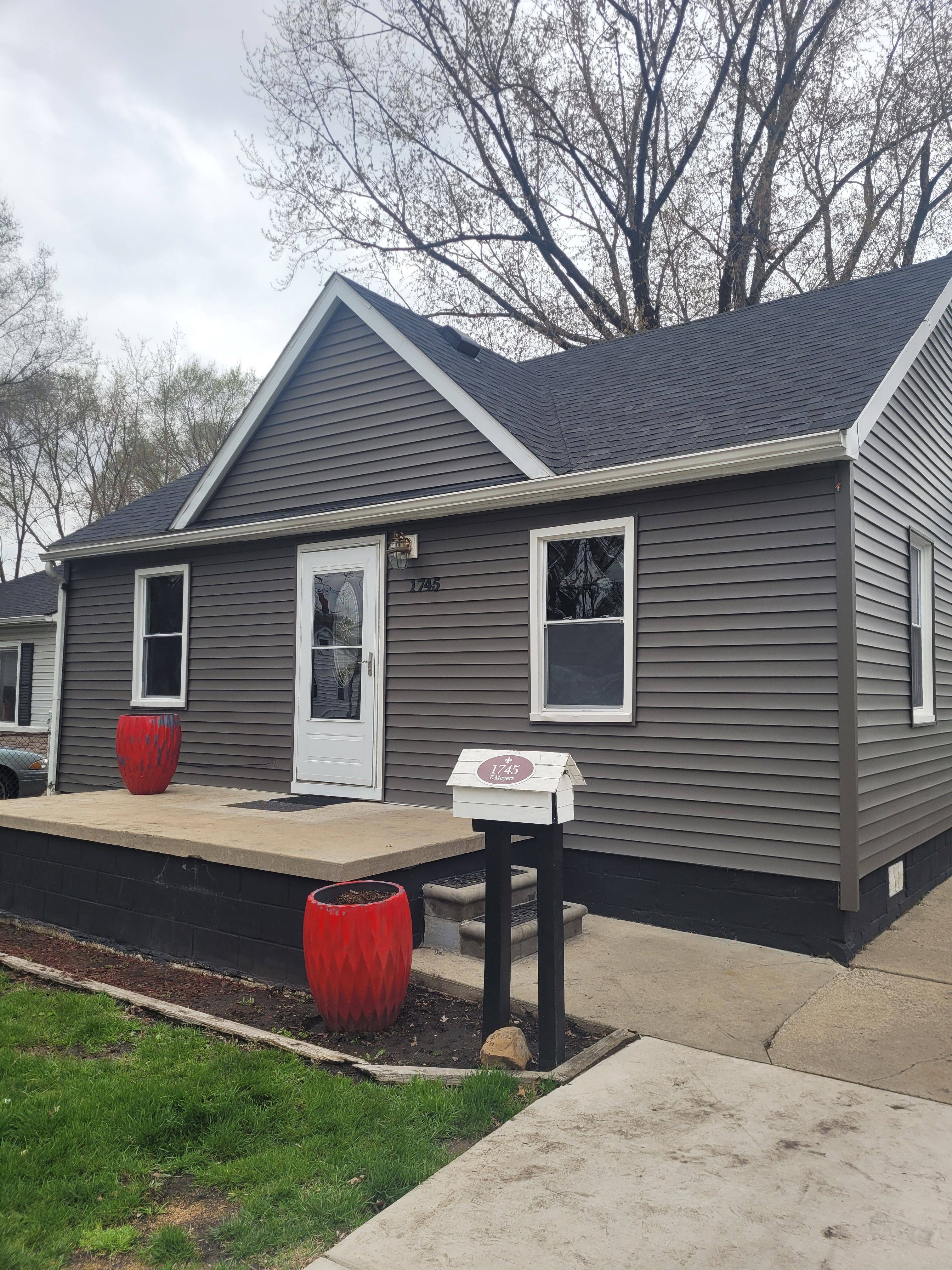
So those asking why go through the trouble? The answer is easy. Over the past 8 months we have helped one of our clients purchase, renovate and rent out over 25 SFH each using BRRRR strategy and every door all in under $90k. You cannot do that in the suburbs (Like The home below )