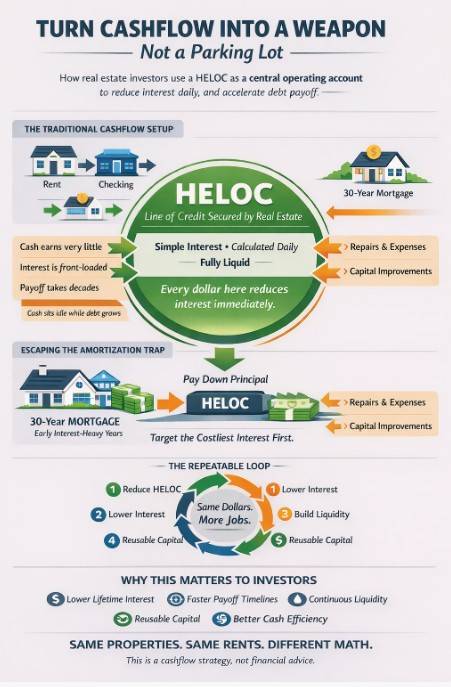
From a lender’s perspective: cashflow structure vs. loan structure
I’m a mortgage lender who works with a lot of real estate investors, and I’m curious how this group thinks about cashflow mechanics, not just financing terms.
Most discussions I’m part of revolve around:
-
interest rates
-
amortization schedules
-
leverage and qualification
But occasionally investors ask questions that sit outside the loan itself:
Where should rental cash sit between inflow and outflow?
I put together a one-page visual to help explain an approach some investors use:
treating a HELOC (simple interest, daily balance) as a central operating account rather than parking cash in checking/savings.
Conceptually:
-
Rent flows into the adjoined checking account of a HELOC
-
Expenses are paid from the same line
-
Daily balance math reduces interest automatically
-
Some pair this with targeted principal reduction on long-term 30 yr mortgages
From a lender’s seat, I’m not advocating this as an end all be all strategy — just trying to understand how investors are thinking about it operationally.
For those who’ve used something similar:
-
Where does this add real value?
-
Where does it introduce behavioral or liquidity risk?
-
Any operational friction worth calling out?
Genuinely interested in how experienced operators view this.