Handling Ungrounded Outlets in a 1950s Ranch
Kevin PolitePro Member
Investor · Decatur Atlanta, GA · Member since 2011 · 610 posts · 232 votesDon't cut corners with electrical stuff! My hair stands up when someone suggests that putting a label on something will prevent a lawsuit.
If the house is wired with BX, you can use the armor as ground. Pretty easy, we do it all the time.
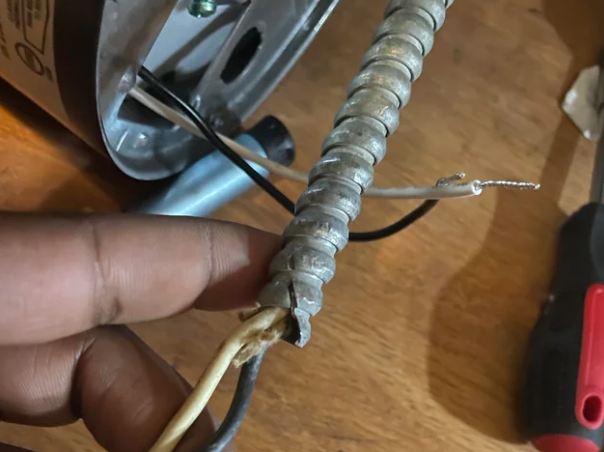
After doing a little more digging I've determined that the NEC explicitly allows GFCI protection with proper labeling on ungrounded circuits — that’s not a loophole, it’s straight code. I’m not claiming anything is grounded; the condition is disclosed and the shock risk is mitigated. Liability comes from misrepresentation or negligence, not from following accepted code and disclosure standards. If labeling alone created lawsuits, half the 1950s housing stock in Atlanta would be uninsurable.
> My hair stands up when someone suggests that putting a label on something will prevent a lawsuit.
It is insufficient and misleading if you just put the sticker on it. I saw no post advocating this. However, in my San Diego jurisdictions it is compliant to put a gfci first in circuit and label the outlets downstream as gfci protected and ungrounded. I had this signed off by inspection about 1.5 years ago on a unit. I did not pull the electrical permit solely to add gfci /3 prong outlets as I was adding a half bathroom and changing the layout to both the kitchen and existing bathroom so needed to pull electrical and plumbing permits for the other work being performed. Basically got my electrical all permitted on the same electrical permit.
If codes change, they are always changing, it could be important to document when the work was performed so that it can be proved it was compliant when performed. I learned this the hard way when I got a red tag for work that was compliant at the time but jurisdiction required me to prove when the work was done which I was unable to do and seems unreasonable. I had to get the work permitted and inspected to current code.
Okay, I believe you, but losing a lawsuit is not the main concern. Just having one is bad enough. A friend of mine lost his 4 family to a fire. Probable cause was an overloaded power strip. One dead, several insured. Smoke detectors had been removed by the tenants because of the batteries. The heat from the lower unit was so intense that in the upper unit while it did not burn, everything plastic was molten - like the TV on the wall looked like a Salvador Dali painting.
18 months of investigations, court hearings, attorney meetings, paperwork, insurance correspondence, the family of the victim sued him,... not to mention rebuilding after. Technically, he did everything right: no code violation, because everything was grandfathered in. But had the 1950's apartment building been upgraded to modern standards, provided enough outlets, the tenant would not have been using a power strip from the dollar store, and the building would not have burnt.
He is an engineer and a seasoned landlord with 100+ units, but he said it was the most stressful time of his life. I can guarantee you he would not be putting stickers on outlets to save a few bucks.
>I can guarantee you he would not be putting stickers on outlets to save a few bucks
If that is the case it is irrational.
It is to code in my jurisdictions (to the best of my knowledge all jurisdictions). Contractors do this regularly. I recently had a unit done this way pass an electrical inspection from the city and the inspector only checked 2 circuits (but I had the circuits fully documented to exactly what was on each circuit. This could make checking each circuit easy but it also conveyed that the job was done correctly). 2 circuits being done correctly and my documentation gave the inspector the confidence that all the circuits were done correctly. There is no additional risk versus having a ground. This same inspector required me to install integrated fire alarms even though my permit had nothing to do with the fire alarms (especially silly for this unit because it is a small unit).
Still if there is a valid ground in the j-box, then use it. If you are swapping the two prong outlet to 3 prong attaching a ground from the j-box is trivial and probably easier than determine the circuit run to find the initial outlet.
If valid ground is not in j-box, verify gfci with n lieu f ground is to code in your jurisdiction and use it if it is. The code should cover any future resulting issues.
Good luck
Dan, I think you are missing my point. I don't doubt that it meets code.
What I am saying is that I don't want to go through an 18-months investigation and having to defend myself in the first place. The stickers will be burnt off. Even if I walk away not guilty in the end, I'd rather do everything I can to prevent a hazardous situation in the first place. Safety has to come first. Also the financial damage: I am insured to purchase price, not the replacement value, a couple of hundred grand difference, plus lost rent, and a year to rebuild..
I understand your point but your 18 months investigation is no more likely to happen going the Gfci route than the actual ground route. The stickers are not what makes it safe. The stickers are there so inspectors can easily determine they are to code when the tester shows ungrounded and to know when there is no power at outlook to look for a tripped Gfci.
There is no safety difference. They are both to code in jurisdictions that I am aware of. There is no difference with regard to a lawsuit.
Here is an analogy: the beam table shows a 4x10 can be used or a 6x6 can be used. No matter which you choose, you are at code. No matter which you choose, if the beam breaks (should never happen) you are at risk of lawsuit. But one choice or the other does not increase/decrease the risk of being sued. In both cases your risk of losing the lawsuit is small especially if signed off by a city inspector (performed via permit).
Gfci in line is a safe and fairly easy way to address the missing ground issue. I have it in use in 3 of my units, one of which has been signed off by a city inspector.
I have seem cases where 2 prong outlets have been converted to 3 prong outlets with no protection, no Gfci protection up the line. That is incorrect and certainly has legal risks.