





Spreadsheet Deal Analysis
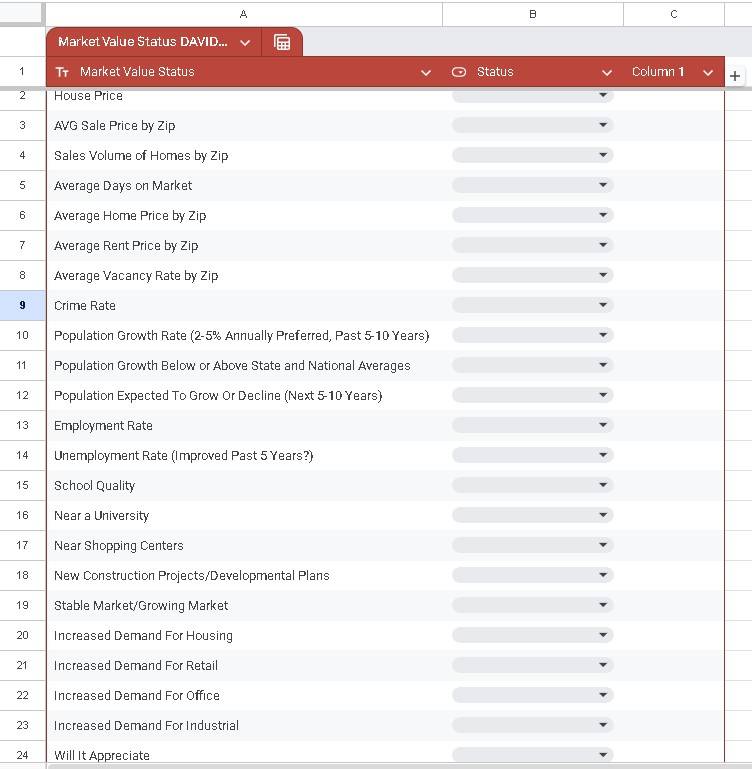
Hi, my name is David. I have not invested in real estate yet, but plan to in 2027. I've read a few books on multi-family properties, and I've come to the conclusion of creating a spreadsheet for analyzing potential deals. This may help someone else with real estate. As for all of the active real estate investors, feel free to give your opinion. Constructive criticism is accepted.
Link: https://docs.google.com/spreadsheets/d/1rTOXLvGGP6S8agF53RVg...
Most Popular Reply

Respect for building a tool before making an offer — that's the right habit. Too many first-time buyers underestimate and learn the expensive way.
1. DSCR explicit, not implied.
Lenders require 1.20–1.25+ DSCR on multi-family, so put it in the output — not as a side calc. If a deal pencils but DSCRs at 1.15, the bank kills it regardless. Show DSCR at both 75% and 80% LTV.
2. Split CapEx from R&M.
Most beginner sheets lump them. Roof / HVAC / parking / flooring run on ~20-year cycles and hit in lumps — reserve $250–500 per unit per year as its own line item, not buried inside "maintenance."
3. Re-underwrite property taxes at YOUR purchase price.
The seller's tax figure is based on their stale assessed value. In most states, reassessment on sale will bump taxes 20–40%+ on day one. Hard-code your estimate from the county mill rate × your projected assessed value.
4. Expense ratio sanity floor.
If total OpEx comes in under 40% of gross rents, something's missing — check insurance, water/sewer (often landlord-paid in older multis), snow/lawn, turnover. A true 30% expense ratio almost never exists in small multi-family.
5. Exit cap rate > entry cap.
Most beginner sheets assume you exit at the same cap you bought. Add 50–100 bps of conservatism. Rates can expand, and your exit year is rarely the best year.
One more that separates the tool from a spreadsheet: build in three columns on every deal — Base, Downside (10% vacancy, flat rent, +1% rate), Stress (all three combined). The base case isn't the one that kills deals. The downside is.
Happy to run a specific listing through a scoring framework (motivation, pricing edge, strategy fit, confidence) if you pick one to underwrite for practice before 2027 — good way to pressure-test your model against a real property.
- Jackie Carmichael
