Hypothetical - 15-Unit Apartment or 5 Single Family Homes (All numbers being equal)

Hypothetical - 15-Unit Apartment or 5 Single Family Homes (All numbers being equal)

Justin BrickmanBusiness Member
Realtor · San Antonio, TX · Member since 2021 · 502 posts · 274 votes

One of my client's asked me if I had to choose a portfolio between one 15-unit apartment or five single family homes, which would I choose? If all numbers were equal (purchase price, repairs, cash flow, expenses, etc). I know my answer, but I thought it was a good exercise to see how some of you would answer in today's market.

5Reply
281 views

Most Popular Reply

Investor · Las Vegas, NV · Member since 2013 · 8k+ posts · 10k+ votes
2y

SFR: better appreciation, less turnover (in raw numbers and average length of stay), better tenants, no tenant on tenant conflicts, better rate financing, longer term financing, more buyers if you want to sell, or need to sell, you can sell 20,40,60,80% or 100% of your investment not all or none, you have almost infinite cash out options, better and more insurance options, you can leave your investment to multiple heirs that will actually want a house instead of splitting an apartment building, when you sell you're probably selling to an owner occupant who loves the house/location not an investor looking only for the best deal they can find, more diversification, not responsible for landscaping/utilities/maintenance of "public areas", surrounded by other houses not other apartment buildings or businesses, one problem tenant doesn't affect the others, you could 1031 a portion of your investment, you could move in to one and get a tax break when you sell, I'm sure there's 10-20 more good reasons.

See this reply in the discussion

52 Replies

Jump to latestLatest
  • V.G JasonPro Member
    Investor · Member since 2022 · 3k+ posts · 3k+ votes
    2y

    The 15-unit comes with a 5-year commercial term you re-up versus a 30 year?

    Or are how you financing these? Also location of all these is paramount.

  • Justin BrickmanBusiness Member
    OP
    Realtor · San Antonio, TX · Member since 2021 · 502 posts · 274 votes
    2y

    Let's say it's cash.  I know there are a ton of factors that would go into this before you make an actual decision.  Just wanted to see what's more intriguing to investors on here.

  • V.G JasonPro Member
    Investor · Member since 2022 · 3k+ posts · 3k+ votes
    2y
    Quote from @Justin Brickman:

    Let's say it's cash.  I know there are a ton of factors that would go into this before you make an actual decision.  Just wanted to see what's more intriguing to investors on here.

    Again, we need a location and a lot more. There's pros and cons to both, even to the naked eye that thinks one is superior to the other. 
  • Investor · Coppell, TX · Member since 2018 · 311 posts · 166 votes
    2y
    Quote from @Justin Brickman:

    One of my client's asked me if I had to choose a portfolio between one 15-unit apartment or five single family homes, which would I choose? If all numbers were equal (purchase price, repairs, cash flow, expenses, etc). I know my answer, but I thought it was a good exercise to see how some of you would answer in today's market.

    Like V.G Jason says above, there is a lot of information missing that could help answer this properly. But considering this is all cash AND assuming that your client can qualify for a commercial mortgage (there are very different requirements and lenders want to see past experience managing similar size portfolio), then these are my thoughts:

    - If both 15-unit apartment and 5 x SFH homes cost the same, this may mean very different things in terms of valuation. Assuming both are selling for $1 million, then this means you have to assess whether the 15-unit apartment is truly valued at this based on cap rate and NOI. But your SFH portfolio valuation may be a combination of NOI and/or comps. So you have to figure out which is a better value. In addition, where they are located will also play into future appreciation.

    - Another factor to consider is efficiency. Obviously, an asset with one roof (assuming 15-unit has one large roof), one location, one insurance etc, is relatively easier and efficient to manage compared to dealing with 5 SFH roofs, different locations etc.

    - The most important exercise would also be to figure out exit strategy. In terms of 15-unit apartments, this is could be exit after BRRRR strategy. Which can be accomplished by forced appreciation, provided the market will bear possibility of higher rents. Similarly, SFH exit would be appreciation through higher rents/ improvements resulting in possible appreciation and exit after BRRRR.

    - Of course there are other ways to go around it, but based on the information listed, these are my thoughts..
  • V.G JasonPro Member
    Investor · Member since 2022 · 3k+ posts · 3k+ votes
    2y
    Quote from @Amir Khan:
    Quote from @Justin Brickman:

    One of my client's asked me if I had to choose a portfolio between one 15-unit apartment or five single family homes, which would I choose? If all numbers were equal (purchase price, repairs, cash flow, expenses, etc). I know my answer, but I thought it was a good exercise to see how some of you would answer in today's market.

    Like V.G Jason says above, there is a lot of information missing that could help answer this properly. But considering this is all cash AND assuming that your client can qualify for a commercial mortgage (there are very different requirements and lenders want to see past experience managing similar size portfolio), then these are my thoughts:

    - If both 15-unit apartment and 5 x SFH homes cost the same, this may mean very different things in terms of valuation. Assuming both are selling for $1 million, then this means you have to assess whether the 15-unit apartment is truly valued at this based on cap rate and NOI. But your SFH portfolio valuation may be a combination of NOI and/or comps. So you have to figure out which is a better value. In addition, where they are located will also play into future appreciation.

    - Another factor to consider is efficiency. Obviously, an asset with one roof (assuming 15-unit has one large roof), one location, one insurance etc, is relatively easier and efficient to manage compared to dealing with 5 SFH roofs, different locations etc.

    - The most important exercise would also be to figure out exit strategy. In terms of 15-unit apartments, this is could be exit after BRRRR strategy. Which can be accomplished by forced appreciation, provided the market will bear possibility of higher rents. Similarly, SFH exit would be appreciation through higher rents/ improvements resulting in possible appreciation and exit after BRRRR.

    - Of course there are other ways to go around it, but based on the information listed, these are my thoughts..
    Think OP is confused what advice to give and is asking us. Which is fine, just give us a lot more color.
  • Austin, TX · Member since 2019 · 5k+ posts · 5k+ votes
    2y

    15 units class B.

  • Justin BrickmanBusiness Member
    OP
    Realtor · San Antonio, TX · Member since 2021 · 502 posts · 274 votes
    2y

    Y’all love the numbers as you should lol. Really just asking would you prefer to get into an apartment or 5 single families if everything equaled out. 

  • Justin BrickmanBusiness Member
    OP
    Realtor · San Antonio, TX · Member since 2021 · 502 posts · 274 votes
    2y
    Quote from @Scott Mac:

    15 units class B.


    On Rainey St would be nice too lol 

  • Justin BrickmanBusiness Member
    OP
    Realtor · San Antonio, TX · Member since 2021 · 502 posts · 274 votes
    2y
    Quote from @Amir Khan:
    Quote from @Justin Brickman:

    One of my client's asked me if I had to choose a portfolio between one 15-unit apartment or five single family homes, which would I choose? If all numbers were equal (purchase price, repairs, cash flow, expenses, etc). I know my answer, but I thought it was a good exercise to see how some of you would answer in today's market.

    Like V.G Jason says above, there is a lot of information missing that could help answer this properly. But considering this is all cash AND assuming that your client can qualify for a commercial mortgage (there are very different requirements and lenders want to see past experience managing similar size portfolio), then these are my thoughts:

    - If both 15-unit apartment and 5 x SFH homes cost the same, this may mean very different things in terms of valuation. Assuming both are selling for $1 million, then this means you have to assess whether the 15-unit apartment is truly valued at this based on cap rate and NOI. But your SFH portfolio valuation may be a combination of NOI and/or comps. So you have to figure out which is a better value. In addition, where they are located will also play into future appreciation.

    - Another factor to consider is efficiency. Obviously, an asset with one roof (assuming 15-unit has one large roof), one location, one insurance etc, is relatively easier and efficient to manage compared to dealing with 5 SFH roofs, different locations etc.

    - The most important exercise would also be to figure out exit strategy. In terms of 15-unit apartments, this is could be exit after BRRRR strategy. Which can be accomplished by forced appreciation, provided the market will bear possibility of higher rents. Similarly, SFH exit would be appreciation through higher rents/ improvements resulting in possible appreciation and exit after BRRRR.

    - Of course there are other ways to go around it, but based on the information listed, these are my thoughts..
    I agree with many points here.  I kinda lean toward the SFH portfolio if all in great location for appreciation and increased rent. Especially going the midterm/longterm furnished route
  • Member since 2019 · 7k+ posts · 4k+ votes
    2y
    Quote from @Justin Brickman:

    One of my client's asked me if I had to choose a portfolio between one 15-unit apartment or five single family homes, which would I choose? If all numbers were equal (purchase price, repairs, cash flow, expenses, etc). I know my answer, but I thought it was a good exercise to see how some of you would answer in today's market.


     It depends on location.
    In appreciation state from NY to FL to California, the answer is 100 percent Single Family

    If it's alabama Class C, Dallas class B/C and/or Chicago then I may go 50% Single  Family 50% Multi Family

    There's easy answer for this, first you ask about SF, for single family asset class the comp is valuation based on demand, we have ZHI.  
    For multifamily, the comp is trend and cap rate trends.

    SF trend is going up nationwide.
    MF trend is going down nationwide.

    SF is not rate sensitive, MF is extremely rate sensitive.

    So strategy really depends on time AND location.

    IN 2025 I may invest at Multifamily.
    BUt in 2023 I would do Single Family.

    But then I live in California, so I would do Single Family day and night. If I live in Texas, I may reconsider MF.

  • Austin, TX · Member since 2019 · 5k+ posts · 5k+ votes
    2y
    Quote from @Justin Brickman:
    Quote from @Scott Mac:

    15 units class B.


    On Rainey St would be nice too lol 

    Just so others know what that means too:

  • John MorganPro Member
    Rental Property Investor · Grand Prairie, TX · Member since 2018 · 2k+ posts · 2k+ votes
    2y

    @Justin Brickman

    I’d go with single family any day. Less drama, and turnovers are very low compared to MF.

  • Member since 2019 · 7k+ posts · 4k+ votes
    2y
    Quote from @John Morgan:

    @Justin Brickman

    I’d go with single family any day. Less drama, and turnovers are very low compared to MF.

    Hundred percent accurate
  • Investor · Las Vegas, NV · Member since 2013 · 8k+ posts · 10k+ votes
    2y

    SFR: better appreciation, less turnover (in raw numbers and average length of stay), better tenants, no tenant on tenant conflicts, better rate financing, longer term financing, more buyers if you want to sell, or need to sell, you can sell 20,40,60,80% or 100% of your investment not all or none, you have almost infinite cash out options, better and more insurance options, you can leave your investment to multiple heirs that will actually want a house instead of splitting an apartment building, when you sell you're probably selling to an owner occupant who loves the house/location not an investor looking only for the best deal they can find, more diversification, not responsible for landscaping/utilities/maintenance of "public areas", surrounded by other houses not other apartment buildings or businesses, one problem tenant doesn't affect the others, you could 1031 a portion of your investment, you could move in to one and get a tax break when you sell, I'm sure there's 10-20 more good reasons.

  • Justin BrickmanBusiness Member
    OP
    Realtor · San Antonio, TX · Member since 2021 · 502 posts · 274 votes
    2y

    I wish I could pin this one. Beautifully said. 

  • Rental Property Investor · San Francisco Bay Area · Member since 2022 · 1k+ posts · 1k+ votes
    2y

    The 5 single family homes: better appreciation, better tenants, less turnover

  • Rental Property Investor · Member since 2018 · 826 posts · 810 votes
    2y

    @Justin Brickman I'd go with the 15 unit MFH. For SFH you cannot control the appreciation as it's more market based. For MFH you have more influence on the NOI through opex efficiency and rent improvement. Since the MFH will sell on a cap rate, you can get a 10-20x multiple on every $ NOI change.

  • Lagrangeville, NY · Member since 2017 · 144 posts · 218 votes
    2y

    @Justin Brickman

    15 unit all day long

  • Real Estate Broker · Coppell, TX · Member since 2011 · 5k+ posts · 4k+ votes
    2y

    Good question....still not enough info here to make a decision and there are a lot more questions....I'd probably go with the SGF if that is his only real estate investment and only choice.

    1. SGF exit strategy....sell to investor OR retail buyer.  Retail buyer almost always will pay more.  Who buys the 15 unit?  Investor.  Investors always want a deal, so rare they want to pay top of market.  So I think almost 100% dependent on how successful you are raising rents.

    2. I think probably overall less hassle with 5 single family.  5 rents to chase vs 15.  With 15 units you probably always have something for rent vs 5 single family.

    3.  On exit if you just want to liquidate one, you can do that on single family, tougher to do on 15 unit.  Let's say you want to go buy a vacation home.

    4.  Lots of people might qualify to buy single family in the future.  Commercial loan on 15 unit is tougher probably for many investors.  So much more limited buyer pool.

    5.  i think 15 units is probably buying yourself a job.   I worked for a guy in high school and college that had a bunch of small buildings like this.  and 40 years later I still see him (in my head) mowing the lawn at one of the places on a Saturday afternoon.  Here this multi-millionaire is out taking care of his properties.  Of course i was working too and going to check on him, but I was probably 16-17 at the time and he was certainly 60+.   15units is not big enough to hire full time PM or maintenance, so when there are things to be done, often you get to do them yourself.   I'm sure he was still out mowing lawns on the 15 unit at 80...never really enjoyed the fruits of his investments.   Nice to have a conservative mentor like this, but also think about his millions he never spent.   

    6.  Are there 15 waters heaters and 15 HVAC units?

  • Piitsburgh PA/Youngstown, OH · Member since 2018 · 2 posts · 2 votes
    2y

    All things being equal I'd invest in the MF. 

  • Member since 2019 · 7k+ posts · 4k+ votes
    2y
    Quote from @Allan C.:

    @Justin Brickman I'd go with the 15 unit MFH. For SFH you cannot control the appreciation as it's more market based. For MFH you have more influence on the NOI through opex efficiency and rent improvement. Since the MFH will sell on a cap rate, you can get a 10-20x multiple on every $ NOI change.


     This is where things getting quite interesting, I have question this myself in last three years. 

    Single Family Appreciation: the strongest 10 year adjusted average is 6% YoY, this is exponential remember, so If use the start from 2009, Typical return of SF for 14 year is 400-500 percent 

    Nationwide cap rate from 2009 to 2023 is running from 8.5 cap to 5.2 cap rate, I would guess if you are on LP side, the return investment of the same 100k would be similar to Single Family. With IRR of 12-14%, you keep doubling money every 5 or 6 year. The SF purchaser can beat this LP guy easily.

    But if you are GP to the same deals than in theory your return is 10 more than LP, than in this case your return is way higher due to pref/split/waterfall/etc/etc ....

    Here's some data, this is adjusted return benchmark for Apartment for last two years. You can actually beat the Apartment number return if you consistently buy-sell every few years multiple SF
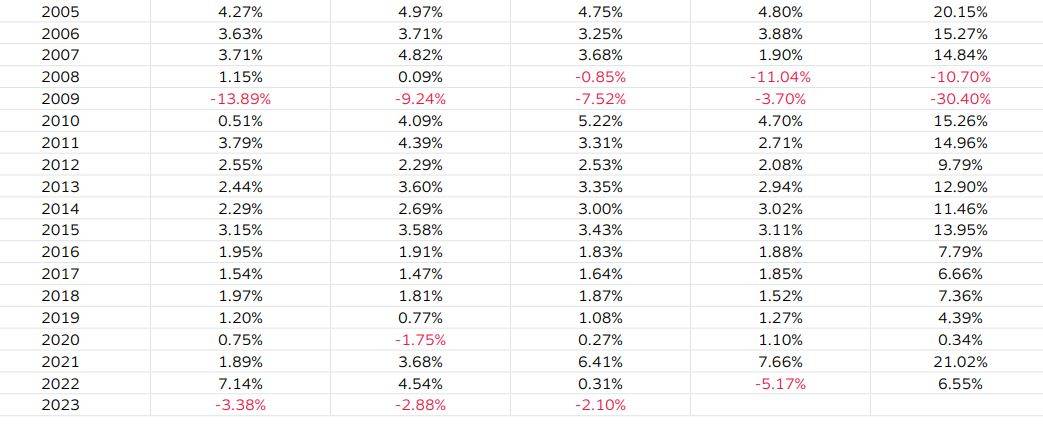
    Then Allan is correct, if you are GP you would be multimillionaire if you re-invest into multiple deal during money expansion phase. But if you are LP side then the SF folks would make more money. 

    IN summary the winner is the following (still need to get accurate number) :
    1. GP that keep invest in value add every 3-5 years during Fed low-rate cycle
    2. SF buyer that keep investing in higher appreciation market with over-leverage
    3. LP on case #1
    4. purchaser of one single family house
    5. cash-flow SF only would be the laggard in this case.

    Thing is, keep buying selling and rehab is easy job , rather than the GP that needs to upgrade apartment condition to increase rent.

    Also factor in mind that Apartment is interest-rate sensitive asset class while SF is more resilient due to supply issue.

  • Member since 2019 · 7k+ posts · 4k+ votes
    2y

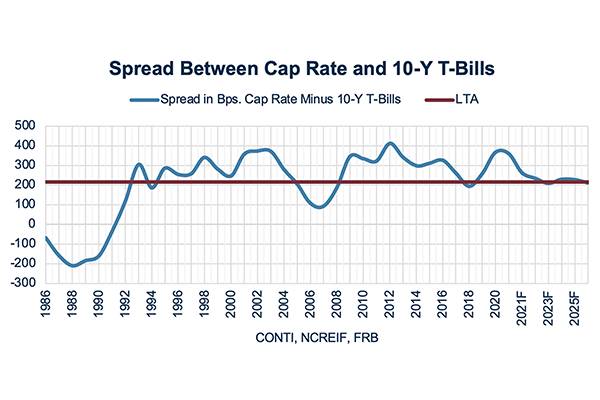
    This is additional data point, this is spread between apt cap and 10Y. If we use data from 2021, the spread is basically zero or even negative, while SF appreciation is running at 3-10% still. Ohio is running at 9% in last two years, Miami home appreciation is running at 40% from 2020.  On 2023 alone the SF appreciation is still at 6-7% so it's 150bps higher then yield. If we use this average data, than single family purchaser is winning big time than Multifamily investors/purchaser.

  • Justin BrickmanBusiness Member
    OP
    Realtor · San Antonio, TX · Member since 2021 · 502 posts · 274 votes
    2y

    Very good points Bruce, and  didn’t think about the difficulty to obtain a commercial loan for many investors. 

  • Justin BrickmanBusiness Member
    OP
    Realtor · San Antonio, TX · Member since 2021 · 502 posts · 274 votes
    2y
    Quote from @Willis Clanagan:

    All things being equal I'd invest in the MF.


    Hey Willis, quick question my man! So you’ve been on here since 2018 and this is your first post in the forums? I’m kinda flattered that it was on mine haha

  • Flipper/Rehabber · NC · Member since 2023 · 11 posts · 7 votes
    2y

    Great question that I've been thinking about for quite some time now. 

    Dont think I have a clear cut answer as it very much depends on various parameters, like location and what I like to call the headache factor, and will eventually fall on what is more important in your investor's eyes. 

    If you are after a more passive investment style, you better go for the SFH, if you are not afraid of messing around, and are confident in your ability to appreciate your MFH over time by increasing rents go for the MFH.

    As with anything else in life, there is no white or black answer but rather a very grey one...

    On a personal note, I will probably go for the 5 SFH investment if the terms are equal, but wont shy away from purchasing a 15 unit MFH if the numbers are favourable

Join the conversationCreate a free account to reply, vote on answers and follow this thread.