



Skip to content

Let's keep in touch

Subscribe to our newsletter for timely insights and actionable tips on your real estate journey.

By signing up, you indicate that you agree to the BiggerPockets Terms & Conditions
BPCON2026 Orlando

October 2 - 4 Early Bird tickets are now ON SALE. Purchase your tickets today and save $100!

Get tickets
BPCON2026 Orlando

October 2 - 4 Early Bird tickets are now ON SALE. Purchase your tickets today and save $100!

Get tickets
Followed Discussions Followed Categories Followed People Followed Locations
Market Trends & Data
All Forum Categories
Followed Discussions
Followed Categories
Followed People
Followed Locations
Market News & Data
General Info
Real Estate Strategies
Landlording & Rental Properties
Real Estate Professionals
Financial, Tax, & Legal
Real Estate Classifieds
Reviews & Feedback

Updated 4 months ago on .

User Stats

869
Posts
573
Votes
Michael Carbonare
  • Investor
  • Fort Lauderdale, FL
573
Votes |
869
Posts

Declining Birthrates: Demographic Shift For Housing
Michael Carbonare
  • Investor
  • Fort Lauderdale, FL
Posted

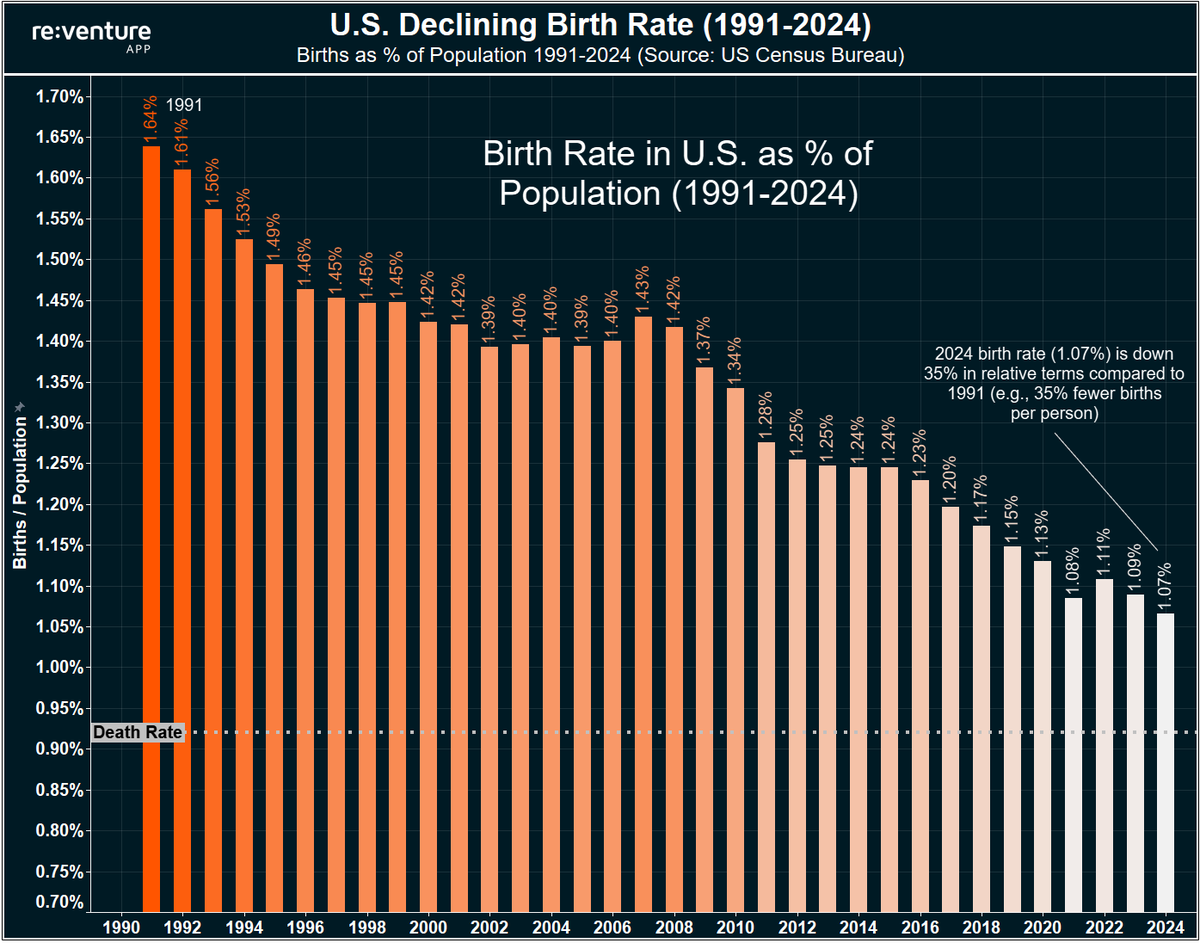
In 1991, the U.S. had:
4.3M births
252M people
Birth rate: 1.64%

In 2024:
3.6M births
343M people
Birth rate: 1.07%

That’s a 35% decline in births relative to population, and 16% fewer births in raw numbers.
This isn’t just another demographic stat. It’s a structural demand shift.

Fewer children means less family formation and less forced homeownership.
Instead of prioritizing square footage, schools, and permanence, more households are choosing flexibility, mobility, and convenience, all which favors renting.

If this trend continues, births will fall below deaths within a decade.
That likely means:
Higher rental demand
Less “must-own” housing demand
Home prices need to adjust to attract buyers

Rates, supply, and zoning get all the attention, but demographics like this cannot be ignored. Assuming homebuyer demand based on yesterday's family formation is an outdated mindset in a new reality.