
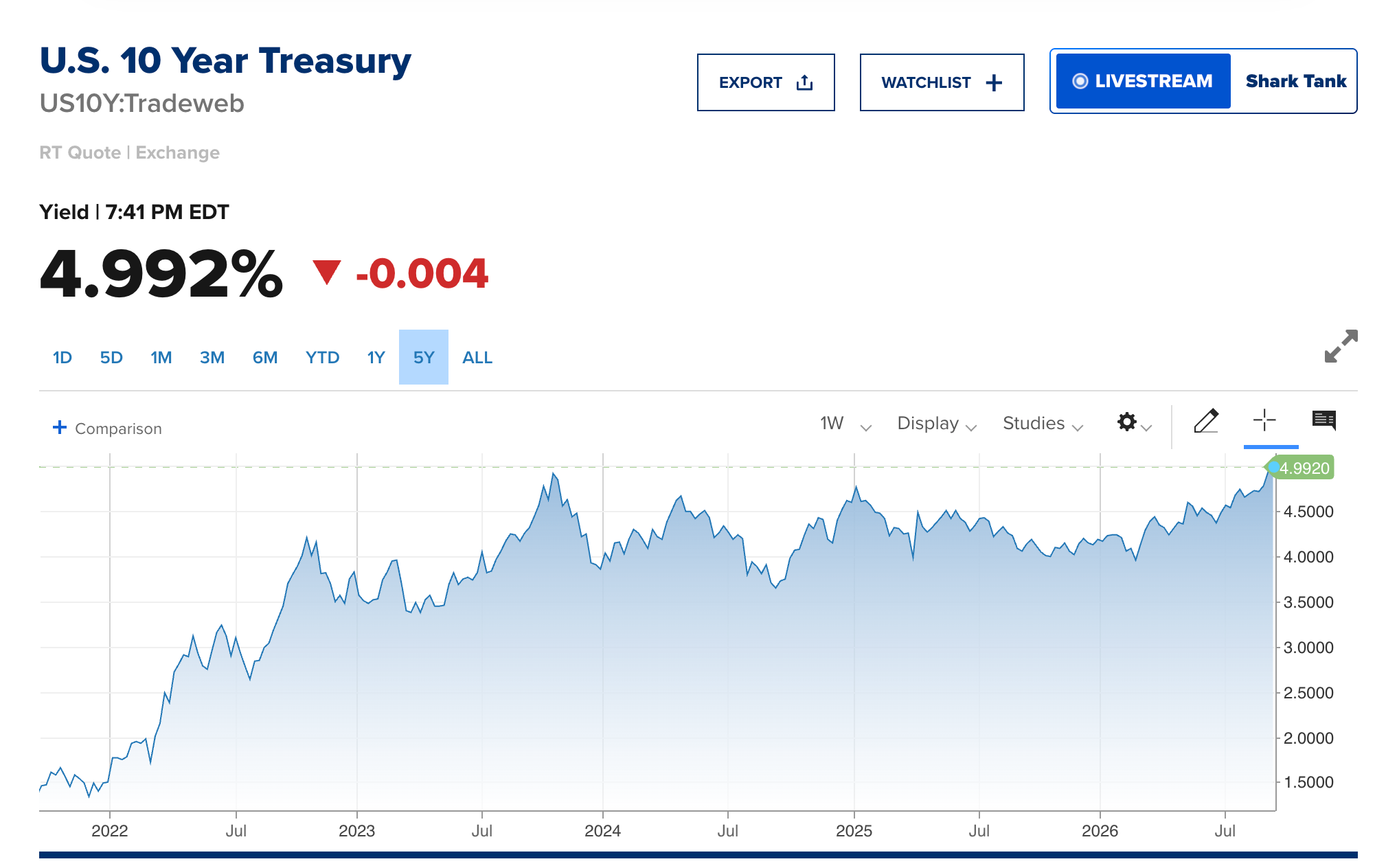
The 10-year Treasury just hit its highest level since 2007
The 10-year Treasury just hit its highest level since 2007 and 2023, just under 5%. If you're a real estate investor, flipper, builder, or developer, here are 3 things that means for you, in less than a minute.
I'm Luis Alejandro, a loan originator with one of the top private real estate lenders in the country. We originate half a billion in New Construction, Fix-and-flip, Bridge and DSCR loans per year.
(1) Your buyer can afford less. Mortgage rates follow the 10-year. A buyer paying $3,000 a month can borrow about $500,000 at 6%, but only about $450,000 at 7%. The fix: offer a seller-paid rate buy down instead of cutting your price.
(2): Your refi gets harder. Rental loan rates follow Treasury yields too. On a $300,000 loan, going from 7% to 8% adds about $200 to your monthly payment, which could cost you around $27,000 in cash-out. The fix: get a signed lease before you apply and run your numbers at today's rates.
(3): Property values can drop. When the government pays a safe 5%, investors want more from real estate. A buyer will want a higher cap rate, so they will negotiate a lower purchase price. For example: a building earning $100,000 a year drops from about $1.67 million to $1.54 million when the cap rate goes from 6% to 6.5%. The fix: underwrite your exit at a higher cap rate and make sure your loan has extension options.
And your flip or construction loan? It follows short-term rates, which move with the Fed, and the Fed meets this week. Follow for more!