
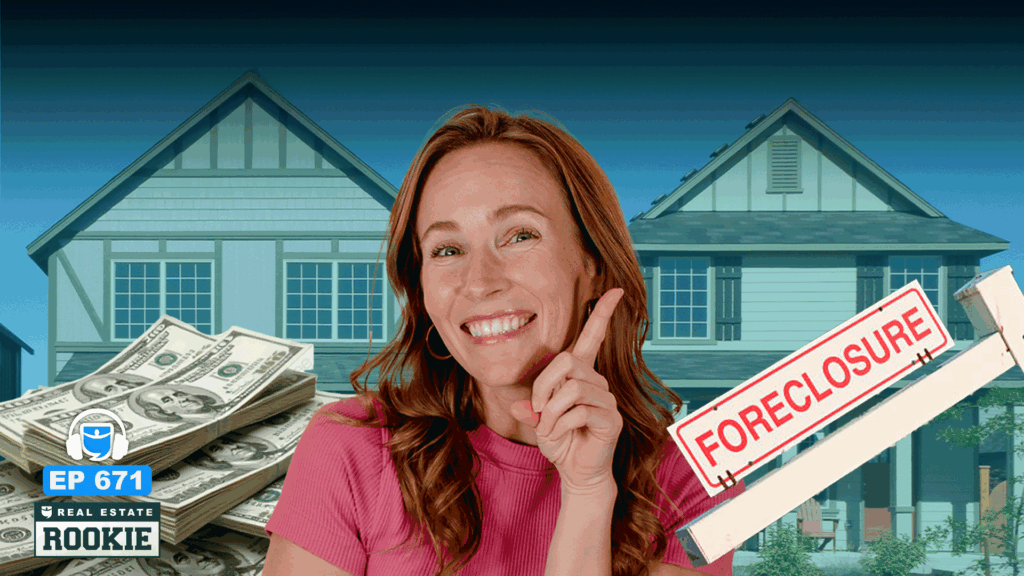
Fear you’ll never be able to invest in real estate because of money, credit, or bad timing? This single mom lost her house and had a 200 credit score, yet she was still able to rebuild her life and buy rental properties. If she can find a way to build wealth, so can YOU!
Welcome back to the Real Estate Rookie podcast! Just months before the 2008 housing market crash, Sarah Weatherbee found herself unable to make her mortgage payments. So, she rented out her home, moved to Nicaragua, and lived off the rental income until the dust settled. Unfortunately, shortly after returning to the U.S., she lost her home. The silver lining? Although things hadn’t panned out, Sarah had been given a small taste of what it’s like to own a rental property—with someone paying down your mortgage for you—and was determined to own real estate again one day.
And that’s exactly what she did by buckling down, rebuilding her credit, and stashing away money for her next property. Fast forward to today, and Sarah has bought multiple properties with low money down. Stay tuned as she shares the investing strategy she uses to do it!
Click here to listen on Apple Podcasts.
Listen to the Podcast Here
Read the Transcript Here
Ashley:
Today’s guest went from foreclosure, a credit score in the two hundreds and leaving the country to owning multiple properties, house hacking and dealing with the bats and her rentals.
Tony:
And what I love about this story is that it proves you don’t need to be perfect to start in real estate. You just need to keep going. And if you’ve ever thought, man, I’ve already messed up, so maybe this isn’t for me, then this episode is going to hit hope.
Ashley:
This is the Real Estate Rookie podcast, and I’m Ashley Kehr.
Tony:
And I’m at Tony j Robinson. And make sure to follow us on Instagram at BiggerPockets Rookie or Ashley at Wealth from Rens. Meet Tony j Robinson. And now let’s give a big warm welcome to today’s guest, Sarah. Sarah, thanks so much for joining us today.
Ashley:
Thanks for having me, guys. So Sarah, take us back to your very first home purchase. What did that deal look like and what went wrong with this property?
Sarah:
Hard to call it a deal and what didn’t go wrong? Well, it was definitely in my mind at the time that I was just buying my primary residence and I really found, I think on Zillow picked that realtor that they recommended to view the property and then followed them around to a few houses, pick their lender that they recommended. And I was sure just went along with the flow. They said, this is what I could afford. And so bought a cute little two bedroom, one bathroom bungalow in St. Petersburg, Florida, and it was great little house, super cute. The first year, it was right at the top of my budget. I was a science teacher at the time, and my partner was also a teacher, so we’re on teacher salaries. And then I didn’t know about homestead exemption, and I think the next year the rent went up even more and we were like, it’s really strapped.
And that was 2007 going into 2008, which we all know was the real estate bubble. And I was definitely a victim of that and it got out of my control. Couldn’t afford that property anymore. And so we thought, and also my partner’s school shutdown at the time and I got pregnant, so it was just this wild storm of events and we ended up moving to Nicaragua, which is where my partner is from. So I went down there, it was a honeymoon actually, and I was like, you know what? I’m just going to stay. Let’s rent the house. This seemed like the best alternative. And they had said, if you can’t afford the rent, don’t make partial payments, just don’t pay it all. So that’s what we did and kicked that can down the road, lived in Nicaragua, rented it for I think 900 a month when the rent was like 1500 a month at the time. Yeah.
Ashley:
So when you say the rent, you mean the mortgage payment?
Sarah:
The mortgage, yeah. I was still in rent mindset.
Ashley:
Yeah, so that’s a big difference. That’s they’re paying 900 and you are paying 1500 a month for the property,
Sarah:
But we didn’t pay, that was the advice. They said everyone’s kind of in the same boat so you can apply for forbearance. So that’s what I did. I applied for forbearance. The loan said I couldn’t pay, I was pregnant. The school shut down for my partner, we can’t pay right now. And we rented it and lived off that $900 a month down in Nicaragua.
Tony:
And how long did that go on for Sarah? How long were you out of the country for before you came back and rebuilt things here?
Sarah:
I did that for about a year and a half actually. And at that time we wanted to move back to the states and it seemed like we kind of kicked that can down the road maybe as long as we could and wanted to move back to the states. So we came back to that house. And it wasn’t shortly after coming back home to Florida that I applied for a deed in lieu of foreclosure that seemed like it might be a little better than foreclosure.
Tony:
And Sarah explain that. Actually you’d never heard that before. What is a deed in lieu of foreclosure?
Sarah:
So basically it means I was working with them, so a foreclosure, they’re kind of kicking you out at that point. So a deed in lieu was they had offered me this and I replied, yes, I will trade you the deed in lieu of foreclosure. It’s what it sounds like. So I said we’re even, they did end up selling that property for a ridiculous low amount, but I agreed to get out. I think a lot of times foreclosure, the tenants are destroying the property, they’re just not taking care of it maybe. So in that sense, I was willing to work with them and get out peacefully.
Ashley:
So basically you’re just, you’re cooperating and you’re just giving them the house back and then they’re washing out your debt and you’re starting over.
Sarah:
But it did count. I mean, it was a huge ding on the credit report. And it’s funny, at that time I didn’t believe in credit. I was like, I just pay for things with cash. And then when I had the house debt, that was really my only debt and it did show up as a foreclosure on my credit report. So that was something I had to work really hard to bring back up. I had to embrace credit after that. So it did show up negatively. It was a huge negative. I think my credit score might’ve gone down to 200. And I used Credit Karma. They were really super helpful in showing me you should have X number of credit card account or accounts, and here’s how length of credit history matters. Here’s how this hard inquiries or these negative reports affect your credit. So I was able to get a credit card for credit and I just put things on that and paid it off, put things on it and paid it off. And I did end up building my credit back up eventually. It does take seven years though. That was on my report for seven years. I wrote to the credit Experian and whatnot, and I asked to have it removed as it was deed in lieu of foreclosure, and I did get it removed,
Tony:
But that was after seven years of waiting
Sarah:
It was.
Tony:
So there are probably folks, Sarah, who are listening that might be in a similar situation where they’ve had some sort of life event that has had a negative impact on their credit. And I guess two questions I have for you. The first one is, if you were to give someone a roadmap on how to systematically build themselves back up, what would that roadmap look like?
Sarah:
That’s a great question. I think there’s many people in my situation from even the housing bubble or just normal life, but you do need to embrace credit. It’s real, can’t ignore it. So I followed, I thought Credit Karma had great advice. Dave Graham’s
Tony:
Turning over his grave, right? No, not in his grave because he’s still here, but Dave Ramsey’s skin is crawling here. And you say that right now, I’m not trying to wish death on Dave Ramsey, so please don’t take that
Ashley:
As that is going to be a viral clip right there.
Sarah:
Oh no.
Yeah, they had some great advice. You should have at least 11 lines of credit. I remember opening credit, I just, whoever would give me credit, I will take it and I will pay it off and a credit card just to put gas on and also maintain that first account you get, I got a credit card for rebuilding credit. They charge me an annual fee now and I hate that kind of, but also we’re keeping that one for, because that is my longest open account. So the credit history length of time is really important and just paying it off before it is due. So they will report to Experian and TransUnion and the credit bureaus maybe a week before it says it’s due to you. I pay them off so fast now. And so that’s important too, is paying it off before it is due. Who would’ve thought having the appropriate number of accounts and the length of credit history and then also hard inquiries.
So now that I’ve rebuilt my credit when I do need to apply for a loan, I am very strategic. You have maybe, I think it’s two weeks Credit Karma tells me they’re like, you have 11 days left to shop your loan. And I’m like, and I tell ’em, I’m like, don’t pull my credit yet. But when I say go pull my credit, and I try to get all these inquiries within that period of they know you’re shopping for a loan so you can do that. And because those stay on for the hard inquiries, stay on for a little bit. I think it’s six months or so.
Ashley:
It is really interesting to me the rebuilding of credit and just how credit works. I just learned about that. There’s a company called Smart Credit and I did a demo with them and one of the things was is they will literally tell you to pay off your credit card on this day, but pay this one on that day to play the game of credit utilization and your credit score to make it so you can get the most points. It would literally say if you paid your credit card balance on this day, you’ll get 12 points, but if you pay it the next day you’ll get three points. And I was just like, who has time for this? But I guess there’s software out there.
Sarah:
I like that you called it a game. I feel like this is a game and this is what I tell my kids. I have two kids, they’re teenagers now. I’m like, this is the game. I don’t know if it’s the game of life, but it’s the game of credit anyway. And you’re playing a game and you’ve got to be strategic if you want to rebuild from 200 credit score, which I think I’m at an 800 now, so I did pretty good.
Ashley:
Well, I think too, as far as being a landlord, this is a great tool to offer to tenants too. Some of my even they’ve come in with maybe not the best credit or whatever, but offer some of these softwares. It’s just like, here’s a nice thing that we as a property management company offer is to, here’s something to help you rebuild your credit if you want to buy a house today or something like that too. There really are so many good resources out there now too.
Tony:
So Sarah, I think the big question for me is after you go through all of that, your very first venture into real estate ends in foreclosure. I think for a lot of folks that would permanently scar them and discourage them from ever trying real estate again. So what was going through your mind after you cleaned up all of that to say, Hey, let me see if I can actually do this again the right way?
Sarah:
Yeah, it was a big fail. Big. I could have given up and been like, obviously this isn’t for me, but I’m resilient. I got a strong hustle gene in there. And I think just also I saw what they sold my house for in the end, I just signed it back over to them and I think they sold it for just dirt cheap. Maybe it was a 200 and something thousand dollars house at the time, and they sold it for 80 k maybe.
Ashley:
So you saw that potential of being the buyer of that property.
Sarah:
I’m like, Hmm, I’m no dummy. Okay, I see what, and if I had just waited a gosh darn year or two, I could have gotten one of those properties. And so for the seven years of rebuilding my credit, stockpiling just a little bit from every paycheck because I knew I was going to get a down payment, I knew I was going to do it again. I can do this and this time I’m going to be smart. I’m not just going to trust whatever my realtor to recommend the lender and just that, no, I’m going to shop the loan. The loan is the most important part. So I had in my mind that I can do this again, almost doubt me please, because I’m going to do better.
Tony:
Sarah, just last question. I just want to understand how do you separate failing at something from feeling like a failure? Because I think a lot of people can go through things where the results aren’t what they were hoping for, but they can’t separate that instance from their identity. So how did you do that? How did you separate man, this is a really big failure. You said wwo, which I like. How do you separate that instance from it becoming your identity?
Sarah:
Wow, that’s a really good point. I mean, I mentioned the hustle gene. I don’t really think it’s a gene. I think that you teach yourself to pick yourself up by your bootstraps and try again. You guys have said a lot of times I learn and I read and I get bolstered by others who have done it to know that it is possible. I just need to know the right way to do it. And I had built confidence in myself over the years through college and life, just knowing that if I put my mind to it, I can get it done. I can do that. So it was a belief in myself that maybe I had earned through other avenues. But I do think surrounding yourself with others who have done it can help bolster your confidence. You just need a little bit of confidence that this was a learning was experience. I made a mistake. Mistakes are kind of real negative connotation, but they’re all learning experiences that make you a better person. And now I’m going to do it. Good.
Ashley:
Coming up, Sarah shares the deal that completely changed her trajectory and how one decision funded everything that came next. We’ll be right back.
Tony:
Alright, so we’re back here with Sarah. So Sarah, I want to know about the deal that kind of got you back into the swing of things. So tell us about the property in St. Petersburg. What was this deal? How did you find it? Give us the initial backstory.
Sarah:
I’d say once I’d rebuilt my credit, saved up some amount for a down payment and I started looking with my realtor this time it was a realtor, it was a trusted friend. This time I had already started looking at lenders, plural, and I felt more ready. I had a letter of what I could afford, but I had in my mind of what I wanted to afford knowing what I learned with my first deal. So I looked at a lot of properties. I think maybe my poor realtor was tired of me. And then I was watching Zillow and the MLS. As soon as the property would come up, I was like, we need to jump on it at this time. This was 2018 and I’m ready to go. Properties are not staying on the market a long time at that point. And things are now in the 200 Ks.
We’re gone is the time of the housing bubble where you could get my house for 80 K. So I just kept looking and one day a property came on, it was 110 K. It was right by the water, but not in the flood zone. It was Goldilocks. And I called my realtor, I was like, we have to go look at this right now. And he’s like, no, we’ll go later. I’m like, I’m going without you. And he’s like, all right, fine, let’s go. And we went over there and I was like, this is the one. It was what I kind of, I think now I would call it a cosmetic rehab, but at the time I called it a grandma house. I’m like, it’s been well-maintained for her entire life, I can tell. But also it’s painted Pepto-Bismol pink. There’s quilts hung up.
Ashley:
I love those houses. Also taken care of immaculate and you got to take out the shag carpet. But
Sarah:
Yeah, well in this case it wasn’t shag. They had put tile over terrazzo, but terrazzo was coming back. So I was like, oh, we can bang out this tile and we can restore it. And I said, we got to put an offer in today. I think it was listed that day. And I said, we got to put an offer today. And we did. We put in an offer and sure enough, someone else had put in a cash offer. And here I am with now my little FHA loan and low down payment and I have all these requirements that are associated with that kind of loan and they could have taken that cash offer. But I actually asked my realtor, I was like, tell her, beg her. Tell her I love her plants. I will take care of her orchids in the side yard. I can tell this woman has the plant. The garden was beautiful. And so that worked. The letter to the realtor or from realtor to realtor to them worked and they picked me. And so that’s how we got the deal.
Ashley:
It’s always interesting to me to hear these stories of somebody cared so much about that thing and it swaying their decision on it. Because me as an investor, it’s like, I don’t care. Let the flowers die, pay me 10 grand more. But I do care about if they say, oh, no inspection, then I’ll be like, okay, I’ll take 10 grand last. I know this house needs a lot of work anyways. Yeah, but that’s interesting. But that just proves a point. You never know what someone’s motivation is or what they actually care about for the sale of the house, especially if it was their primary residence. I had a house before where, and wasn’t even a primary, it was a rental. It was a six unit and one lady in the six unit had lived there for 30 years and she played ridiculously low rent. And the owner of that property, the seller, it was so important to him that she knew that she was going to have a place to stay and just wanted me to assure. And here we are seven years later and she’s still living there. Great tenant. She is wonderful and takes care of the place. So you never know what someone actually cares about in their motivation.
Sarah:
If they have a lot of orchids, it’s probably plants.
Tony:
Sarah, aside from the letter to the seller, what else do you think made your offer competitive? Was the price the same or were you actually offering less? I’m just trying to understand if there were anything or any other elements in your offer that also kind of made it at least comparable to the cash offer.
Sarah:
I think it was just timing. I literally, I was living and breathing Zillow at the moment, and it was timing. My offer was in before theirs, but theirs came in shortly after for cash. So I think timing was pretty much the only other factor. And to my credit, I was on top of these dillow listings as soon as they would hit. I’m like, we’ve got to go. And just to be that first offer.
Tony:
So once you actually get this offer accepted, you mentioned it was a quote, grandma’s house. So I’m assuming that there was some renovation that went into bringing this property up to current standards. Now my understanding is you had never renovated a house before. So how did you even begin to unravel the process of your very first rehab?
Sarah:
I had been watching this, I think it was the Greater British Home Renovation Challenge show. And I was like, oh man, look at how they redo furniture. And they were talking about color schemes and what your accent color versus your main, just learning a little bit about making a house look nice and how to do that personally. And the property didn’t need a ton. I mean it was Pepto Bismol pink, the kitchen, I’m telling you it was pink cabinets, pink, pink on pink, and then a pink checkerboard tile. And I just did a lot of YouTube university and learned how to prime and paint tile and cabinets and put little knobs on them and just made the kitchen look really nice. Also, it was listed as a two bedroom, one bathroom and it was 1,200 square feet. And I was like, that’s kind of big for a two one because my previous was 900 square feet and that was a two one.
So I was a little bit like, and when I toured it, I saw opportunity for a third bedroom and there was a secret second bathroom or half bathroom, I don’t think it was to code. So that might be why it was listed as a two one. So we kind of fixed up. I was like, we can fix this up. We can close off this wall to make this a third bedroom. In my mind I’m like, Beepboop beep. And I think honestly, I’m a big, big fan of learning and I listened to a lot of podcasts, watch a lot of shows, and that gave me the confidence to be like, we can turn this grandma house around.
Ashley:
So once you’ve closed down the property, what was the first step? Are you doing these improvements yourself? Did you start finding contractors?
Sarah:
So funny. We literally, the first day, me and my kids went in there and I remember my son swinging a hammer at the tile. We were like, there’s terrazzo under here, let’s find it buddy. And he whacking at the tile and then he got hit with a little piece of tile and I was like, okay, maybe we should stop. But in advance of that, I had reached out to some contractors. I knew a guy who did floor and he had told me on another property, I looked at how much it would be to redo the wood floors. And I said, well, how about terrazzo? I’m looking at this property now. And so I think it was maybe 4K in the terrazzo also, I knew the AC was kind of limping along, so I got that replaced. That was another seven K. And then the rest of it, I mostly did myself closing up a wall, fixing up the bathroom, painting the cabinets and the tile. And you’d be surprised what a coat of paint can do for a place. It was in really good shape, honestly. It was just kind of ugly.
Ashley:
So closing up a wall, not it sounds like easy, but that’s not a simple feat. That’s framing drywall and then the painting. And so did you just figure it out or YouTube University,
Sarah:
Just figure it out. Yeah, no, this wall wasn’t that bad. I have since had to do the framing and that part, but this wall, at that time, it was more like a window in the kitchen to a dining room. And so we closed up that window so it wasn’t too bad and they had this huge tile table sticking out from it. And she was so proud that she had tiled that giant table that’s right in the way of the kitchen, totally non-functional, like talking to her at closing. Why’d you tile everything? Okay. And the first thing we did was bang out that table, close up the wall. I didn’t have the hard to tell her about that.
Ashley:
For the funding of this renovations, for the materials, any labor. How did you fund that? Was that just with savings on top of your down payment?
Sarah:
Yeah, I had saved up over those seven years. I was biding. My foreclosure time, I had saved up enough. I was only putting 3.5% down, so I had a little bit extra to fund the floor and the ac. So it was really only $11,000 out of my pocket for that.
Tony:
And how long in total did the renovation take you, Sarah?
Sarah:
Oh man. We did that the first year, probably within six months. There was a few other things that came up along the way that year. I remember our first heavy rain water, just sheet flowing into the Florida room and also ants. We had a lot of ants. Ants and water. It was a problem. I YouTubed French drains and I spent the summer digging a French drain and laying a little pipe and diverting water and now it doesn’t flood in the Florida room. So a lot of it was on me and just figuring it out.
Ashley:
And you guys were living there during this time that you were doing the renovation, but eventually you ended up renting out this property. So tell us about that experience.
Sarah:
Well, 2020 then happened. I’ve lived through so many things already, but yeah, 20, when 2020 occurred times were crazy. I’m from Maine originally and my kids had spent a couple summers when I was digging the french drain. They spent a summer in Maine and we’re like, let’s send the kids to Maine. They had two cases of COVID when St. Pete alone had 2000, something like that. So we sent the kids to Maine to do remote school at the time, and I was still living and working remotely, struggling a little bit in Florida and I was like, you know what? I’m going to try to get employment up there in Maine. And I did. I’m a natural resources scientist. I do a lot of permitting and things like that. So I found a company in Bangor, Maine and moved up here and I was like, I’m just going to rent the property, finally replace the trim on the house and listed it.
Well, I was going to list it. I didn’t even list it. My friend knew a realtor, she’s actually a realtor who was going to rent the property. And I said, okay. And I was not interested in making money at the time. To me, in my mind, I was just going to rent this to cover the mortgage, maybe a hundred dollars extra in case something happened. And also rent was really unaffordable for the average person in St. Pete at this time. So I felt like I was doing a service providing this property and someone’s going to help me pay the mortgage while I go up to Maine and wait this whole COVID thing out. So I did that and lived and worked up in Maine here in the Bangor area. And it seemed like maybe I was going to stay up here, but also renting was, I don’t know how you long-term rent Ashley. It is exhausting. People are just the dryer. We went through three dryers. I don’t even know how that’s possible. I’m cursed with dryers. That’s my curse.
Ashley:
It’s probably the difference is I had that problem too. And I don’t supply appliances anymore because that is addict. We have one vendor in our town that does the repairs for appliances. And so yeah, I don’t supply appliances anymore in my union because that was such a big headache for me.
Sarah:
I should have written that into the deal for sure. This was my first lease that I had a friend gave me, here’s a lease you could use. And I did have my lawyer friend up here look at it and I was like, I hope this is good. And then the microwave went out, she replaced that. The dog kind of tore up all that native landscaping that I had put in. And the orchids, the orchids are dead. And I was just like, Ugh. But I’m looking on Zillow and I’m like, man, the property value of this house, I paid one 10 and now it’s worth double at least.
Ashley:
So what year is this in now? Is this still 2020 or is this 2021 now?
Sarah:
This is 2020 the end. We’re 2021 now. We’re in 2021 now,
Ashley:
The great year to sell.
Sarah:
I am partially lucky or just really lucky person. My realtor though, I said she pulled comps for the area and she’s like, I think you could easily get 2 35, and this is when people are bidding, bid warring over properties. And I was like, I don’t know. I love that house. I have an emotional attachment to it. This is my win. No more. Wah, I did good. Part of me wants to keep this property forever and maybe we’ll go back to Florida, but we also had gotten really established up here in Maine, which is my home state after all. And in the end I remember talking to my friend, she’s like, well, you know what the market’s doing right now. You don’t know what it’s going to do in the future. And I was like, Hmm, truth. So let’s sell it. And I did a little research, when’s the best time to sell?
And it’s like, I think it’s March and April. You’re going to get the best. I’m like, okay, let’s plan for that. And also, how am I going to get this lady out? And I learned about cash for keys and I’m like, okay, we’ve got a plan. Meanwhile, my bestie down in Florida has been kind of property managing for me. I use that term loosely. Neither her nor I had done this before, but she’s over there helping get dryers on repeat. But she said, Sarah, I want to buy the house. I know this house and I love this house and I love this area. We were on the south side of St. Pete and it was just a beautiful up and coming kind of area. And I said, well, I would love for you to buy my house. And we decided my bestie would buy the house and we wouldn’t pay realtor fees.
Sorry realtor friend. We’re going to do this between us. And we didn’t really tell the tenant too much about that. She also wanted to buy it. She’s like, oh, you’re selling it. What if I bought it? Maybe we could work out an owner financing. I’m like, no, I’m good. So my Bessie ended up buying it for the 2 35. We had no realtor fees and she knew the state of the plants and everything, which by the way, the native landscaping has come back. When I go down there, I stay in my old house with my bestie and I still feel like it’s mine in a way. So that’s pretty great. She took the cash for keys and left, and then my bestie bought the house.
Tony:
So what did you end up netting on that deal after your friend bought it from you?
Sarah:
I was not even super keeping track of what’s my ROI and who knew, but I did know I had spent 11 K on those things and did most of the other things myself. And it was 110 plus I had paid the mortgage now for three years. In the end, I just checked my bank account today. I was like, how much money did I make? Exactly. It was $132,554 into my bank account. And I was just like, I feel as though someone’s going to catch me. What have I done? This is too much money. I was scared of that much money.
Tony:
Had you ever gotten a deposit that big in your life before?
Sarah:
No. Goodness. No. I think probably this lady’s deposit and maybe a tax refund. Maybe a tax refund was my biggest amount of money at that point in my life. And then I did give 2K back to the bestie. I wrote her a check for 2K to cover some of the things, and she had wanted me to replace the fans, I think. And I was like, sure. So I had done a few things. So really maybe I netted 130 K minus my 11 that I put in.
Ashley:
And this was tax free, correct. You had lived in the property for at least two years
Sarah:
And this was tax free. And so my first thought was like, oh no, I’m going to have to pay someone. What do I do about the taxes? And I started doing research after the fact and found out that if you’ve lived in the house for two out of the last five years, you do not pay capital gains tax. So this money was gifted to me tax free. And I did my own taxes TurboTax at the end of the year. And I put that, I think there was a question, have you lived there two out of the last five years? Yes. And that was it.
Tony:
So then you went out and bought your first Ferrari, I’m assuming
Sarah:
It’s a RAV4 actually.
Tony:
Close enough.
Sarah:
Yeah. I know you guys talk about lifestyle creep a lot. And I was raised to be very frugal and I had all that money. It was a scary amount of money. I’m like, what am I going to do with this money? And my first thought was a car actually, but that’s because I had just moved to Florida, to Maine from Florida, and I’m like, I kind of should have all wheel drive at this point. So I did upgrade the vehicle and actually I bought it in Florida, made a little road trip up to Maine with the bestie. We were both going to celebrate this money. And so a little bit went into the car, a lot of it went into the stock market. My dad had recommended Vanguard’s total stock market index fund that he had been a big fan of. And I had learned that that gives you maybe an 8% return over all the time. And so I had put most of the money in there, put some into 5, 2, 9 college savings accounts for my kids, my two kids, and then yeah, the rest of it just put in the stock, figure out what to do with that later.
Tony:
Well Sarah, what a phenomenal deal and congratulations to you for not only having the resilience to bounce back after that first deal that didn’t go as planned, but to have such a successful second deal, it’s got to be one of the greatest comebacks in the history of the Real Estate rookie podcast. So after the break, Sarah’s going to break down how she scaled into midterm rentals, house hacking, bird deals, and how she handles things when rentals don’t go according to plan. We’ll be right back after a quick word from today’s show sponsors.
Ashley:
Alright, let’s jump back in. So we’re here with Sarah and you basically have taken a bad deal, a WM pom deal, and then you had a very successful deal. So after that successful deal, what are your next steps in Maine? Did you end up buying another property there? Are you investing any more into any other real estate?
Sarah:
So yeah, I did actually think, well, I’m going to buy a property up here in Maine. I had been staying with my mom, which if you’ve ever moved back in with your mom that that’s not a long-term solution. So I very quickly was like, we’re going to buy. And I am on Zillow, man, I’m just on Zillow all the time. And I was like, man, you can get a whole lot of house up here for way less than Florida St. Pete prices and a lot more area, more land. And I had already been looking, and actually before I sold the Florida house, I bought a house up here in the Bangor area, it’s brewer and a big old 1900 colonial house, another grandma house. This time it was wallpaper and horse hair, plaster and that house. But we loved it. It spoke to us. It was also really big for the bedroom bathroom. And so I saw an opportunity there and I think we paid 170 5K for that. And it was a pretty big lot. It wasn’t super rural, which was going to be a good transition from St. Pete for me and my kids. So we bought that house and I remember owning two houses for a minute and was like, Hmm, that’s cool.
But had sold the other house. So I actually had, because I was staying with my mom during COVID, I did also have another down payment saved up, so I didn’t have to. But I remember not wanting to put down 3.5% because I was negotiating a better rate. And I know as you’re going to love this, I got a 3.3% interest rate on that one. Yeah. So we lived there. I renovated, I figured out how to take down wallpaper from horse hair, plaster. It’s very rum. I don’t know if you know horse hair. It’s literally made of horse hair and plaster.
Tony:
I had to actually Google that when you said it. I was like, I’ve never heard of horse hair plaster before. Were you familiar with that ash? Did you know horse hair or plaster? No.
Sarah:
Yeah, Florida, it was like concrete block home. Cool. It’s not made of wood, so the termites won’t eat it. That was pretty much what I was thinking in Florida when I came up here. Now you can have a timber frame house, not really a big concern for termites. And then I did not know it was horse hair plaster until after I bought it and I started taking down the wallpaper and someone said, horse hair plaster to me. I’m like, what’s that? And I also googled it and figured out, took down the wallpaper and primed it or there’s a special, it’s like primer to prepare a surface after wallpaper has been taken down because the glue can make your paint not stick. So I did that. Then I primed it and I painted it. I had to learn how to repair with sheet rock mud, figured all that out myself.
There was an old vintage tin ceiling, which I kind of restored and what else did I do? Oh, added a second half bathroom. A very unsexy renovation was replacing a rotten framing, important board underneath the front door that my dad observed was almost rotten through. It was maybe four grand of, and I call it not a sexy renovation because it didn’t improve the value, the face value, the curb appeal or anything really. But we knew the house wouldn’t fall down. So that was good. And then there was a third floor and they had painted the floors, which is a normal thing to do in a kind of attic, third floor space here in Maine. But I it off, I listened to so much Crime junkie podcast and I rented a floor sander and sanded the floor and varnished it. I added a heat pump, two heat pumps, they call ’em heat pumps here in Florida.
They call ’em mini splits or they do both AC and heat. So now I have this third floor, which is a heated and cooled space with a beautiful hardwood floor and a second half bathroom. So it’s 1.5, a four bedroom, 1.5 bath. And I was kind of like bored. What else do I do? I’m done. After I renovated, I thought, what else can I do? I’m getting a little bit bored. And actually I was out west, I remember very distinctly, this was September, 2023 and I was out west for work and I re-listened to Rich Dad Poor Dad, which I had listened to a long, long time ago. But it really hit different this time. And I thought, I’m working for this big tech company. I’m managing projects. Maybe I could manage my own projects. And I’m remembering the most money I’ve ever made was on real estate selling that house in Florida, and I should repeat this.
We should do this. And also what really hit home was thinking if something happened to me, I’m single mom with my kids. If anything happened to me, this all falls apart. If I can’t work, if I get sick. And I wanted something that could keep us all sustained if I got sick. Me too. And I was thinking the Rich Dad, poor Dad led me to the loopholes of real estate, which was a really great book for me. Just learning about you talks about living in a house too, had the last five years and not paying capital gains. Also, I learned about 10 31 exchanges and all these different tactics, the loopholes, the tax advantages, and just this light bulb went off that, I mean, and I love this, I also love this. I love the joy of renovating a house and restoring it to its glory and making it beautiful. And I could do this and I could do my regular job. So I came back with that epiphany and I was like, we’re going to rent this house and get a new one. And my kids, God bless ’em, they were on board. And I said, well, what if we get a house somewhere in another town, you’ll have to go to a new school. And they’re like, that’s cool. It’s aura, mom. We’re into it.
So we found, at first, I wasn’t sure, I didn’t, my goals were not set maybe super concrete. I didn’t have a buy box. It was like, I’m going to find another grandma house. I’m going to find another good deal and we’ll either move into it or we’ll stay here and rent that. I don’t know. I just love the primary owner financing that interest rate and the money you have to put down. It’s just such a good deal. And I loved my house. The only thing I wish I had was a view of the water. So I ended up finding a house in Hamden, Maine, just across the river and it’s on the river. And I was like, Ooh, this one, and this was my next. I was really nervous because this was quite a renovation. I didn’t know how big of a renovation it was until after the inspection.
And I realized this is like a camp. I don’t know if you guys know in Maine, everybody’s got a camp. Your camp is basically seasonal and you only go there during the good months of the summer unless it’s an ice fishing camp. But this was not no insulation. The walls were made of cardboard. I say it was built with cardboard and sticks. Literally the lumber was, you could see bark on some of the timbers in there, which is actually good. As it turns out it’s dimensional lumber. It’s like it holds up over time. But the cardboard walls and the lack of installation was a problem. So they had asked 1 99, I offered 1 95. And then after inspection, Tony, you say this all the time, you have a list and here’s the math, right? And I did that. I was like, here’s the math. By the way, we didn’t know about the suspected asbestos tiles.
We didn’t know there’s no insulation in the walls and this, this and this, because the roof had been leaking into one of the bedrooms. And you could see that, but you didn’t know it was because there’s no insulation and the roof is, anyways, so I had this 20 K that I wanted them to take off. I wanted 1 75, my realtor, and I joke, this is my magic number is 1 75. No. And she asked, she sent them this counter offer and they said, no, we do not accept. And I wrote to my realtor at the time and I said, I’m so sorry. The math just doesn’t math. We’ll find another deal. And I was really disheartened. I was like, I remember being in bed texting with her. We’re so close. We’ve looked at so many houses. And then maybe it wasn’t even an hour later, a half hour later, she said, they accept. So we called their bluff, or someone’s bluff was called and they accepted it. And my realtor say, congratulations on getting $20,000 off the price.
Tony:
I love the resilience. I think it goes back to that same mindset you had after the foreclosure of like, Hey, either things are going work out or things aren’t going to work out, but either way, I’m still moving forward. And I love that you didn’t get emotionally attached to the deal. Because I think that’s where we see a lot of rookies kind of go off the rails is that they spend all this time hunting and searching and they find something. They’re under contract, it feels like they’re so close. Then the inspection happens and big things pop up. They try and negotiate negotiations, break down, and they just still want to move forward for the sake of all the time they’ve put into it. But kudos to you for being willing to walk away and as you said, someone’s bluff got called, right. And the deal worked out in your favor. I want to fast forward though a little bit because I know you’ve got a crazy story about bats, actual bats, and I think that a lot of Ricks have this fear about crazy things happening to them inside of their rentals. And bats might be one of the more crazier things to happen. I’ve also had an experience with bats, my rentals, but what happened to you and how did you handle that as a landlord?
Sarah:
Yeah, everyone’s always worried about toilets. It’s the bats that we don’t talk about nearly enough. I want to hear your bat story too though. But yeah, that brewer house, man, we knew there were bats because I heard squeaky squeaking upstairs and I was like, well, we’ve got mice. And I remember my dad putting out mouse traps and we never caught a mouse. And I actually hear the little squeaking in the walls, and I think it was the summer we had a bat come in the house. It’s flying around in the middle of the night, which is a bit horrifying. You’re not expecting that. But also I’m a natural resources scientist. I’m like, oh, it’s a little bat. We caught it and released it. No big deal. And I didn’t even think of that when I rented the house. I didn’t even think that the bats would come back and maybe with a vengeance.
So this year, I’ve got a bat guy. Now. Bat guy says this has been the year of the bat. They were off the chain here in Maine. I don’t know if it was in other places as well, which is good because honestly, poor bats, they’re not doing well as a species. They’re not doing great. There’s several species in Maine and they’re all doing poorly. But my tenants in there, the first tenant, I get my first tenant, I’m so happy. She’s like, I hear squeaking. I think you have mice. You need to get pest control over here. And I was like, yeah, it’s probably bats.
Does that make you feel better? But she actually did make her feel a little bit better. They were really afraid of rodents, which mice are also really common here. But it wasn’t a super problem until the next tenant, this is now the season of the bat. And they came into the house and they called me. I got my son, my 17-year-old. I’m like, got the hoods, we got gloves. And I go in there with a cup and catch it and the proper PPE on, and we release the bat, no big deal. They’re like, oh, thank you so much. I’m like, yeah, no problem. And then literally a couple days later, there’s another bat, and now it’s in the main part of the house. And also what if it has rabies? And I was like, yeah, probably doesn’t, but let’s check. So the state will come and gather your bat and send it off for testing, which is kind of sad. I think the bat does have someone has to take one for the team. So they came over and caught the next bat, actually, is this the third bat? I lose track? They came over and caught the bat, sent it to the state for testing. It is negative, so likely the colony is negative. And then my current tenants, now it’s winter, they should be hibernating. My current tenant said, we heard mice. And I’m like, no, it’s bats.
Ashley:
That actually reminds me of a childhood memory. When I was younger, we would get bats in our house sometimes, and I think I was 15 and I was babysitting my siblings, and we got a bat in the house and I threw a blanket over my little brother, and I’m calling my friend down the street and I’m like, I need you and your brother to come over here. We have bats. They show up, dressed in his hockey gear. We have tennis rackets, the full face mask on from hockey. You’re like, okay, let’s get this thing. And we obviously did it. I think we chased it out the door maybe or something like that with a broom. But that was my bat memory. But Sarah, thank you so much for coming on the show today and sharing your story, your experience as a real estate investor. Where can people reach out to you and find out more information?
Sarah:
I’m on Instagram family Reno Bees for Weatherbee.
Ashley:
Well, thank you so much. We really appreciate you taking the time to share your journey with the real estate rookies. I’m Ashley. He’s Tony, and we’ll see you guys on the next episode.
Watch the Episode Here
Help Us Out!
Help us reach new listeners on iTunes by leaving us a rating and review! It takes just 30 seconds and instructions can be found here. Thanks! We really appreciate it!
In This Episode We Cover:
- How Sarah rebuilt her credit and bought real estate again after losing her home
- Making over $130,000 in pure profit from ONE real estate deal
- The investing strategy that allows you to buy multiple properties with low money down
- When to move to another area of the country to invest in real estate
- The one reason why Sarah didn’t quit real estate investing after failure
- And So Much More!
Links from the Show
- Ashley’s BiggerPockets Profile
- Tony’s BiggerPockets Profile
- Join BiggerPockets for FREE
- Real Estate Rookie Facebook Group
- Real Estate Rookie YouTube
- Ask Your Question for a Future Rookie Reply
- “Like” Real Estate Rookie on Facebook
- Follow Real Estate Rookie on Instagram
- Sign Up for the Real Estate Rookie Newsletter
- Real Estate Partnerships
- Sarah’s Instagram
- Real Estate Rookie 596 – From a $35,000 Salary to Quitting with 11 Rentals
- Connect with Sarah
Interested in learning more about today’s sponsors or becoming a BiggerPockets partner yourself? Email [email protected].
