Will housing crash in 2026 or has it already crashed? Expert called last two crashes.

Will housing crash in 2026 or has it already crashed? Expert called last two crashes.

Rental Property Investor · Seattle, WA · Member since 2014 · 1k+ posts · 1k+ votes

This guy called the last two crashes, says there will be one in 2026 too. https://www.thisismoney.co.uk/money/mortgageshome/article-12...

But we have the lowest demand since the 90's, even lower than the 2008 crash. Prices in Seattle dropped 20% since rates went up. Did we already see a crash in 2022 and start a new 18 year cycle?

9Reply
802 views

Most Popular Reply

Chris SeveneyBusiness Member
Moderator
Investor · VA · Member since 2015 · 21k+ posts · 19k+ votes
2y
Quote from @Jack B.:

This guy called the last two crashes, says there will be one in 2026 too. https://www.thisismoney.co.uk/money/mortgageshome/article-12...

But we have the lowest demand since the 90's, even lower than the 2008 crash. Prices in Seattle dropped 20% since rates went up. Did we already see a crash in 2022 and start a new 18 year cycle?


 No one can predict if we will have a crash because there are too many macroeconomic issues.

If the government keeps printing trillions a year then yeah we will not have a crash.

Let me tell you what I am seeing and people can make their own assumptions:

1. Asset based lenders / lender to lender financing (those who provide financing to companies for equipment, operations, etc. They will not touch real estate. They have stopped lending to real estate or even lenders who lend on real estate)

2. Commercial is worse than what the media is telling you. This includes self storage and multifamily. People do not understand how impactful commercial is on the banks. This is a big big deal.

3. A large percentage of small businesses are defaulting on rents and their loans.

4. The job market is seeing multiple applicants per opening. Why? because the only jobs that were hired in last six months were auto unions back to work, government workers and healthcare workers. Other sectors are shedding jobs. 

5. Incomes are not keeping up with the cost of housing. It is down from 38% to 32% but its still abnormally high.

6. In order to calm inflation, housing needs to soften as it comprises 30%+. So if housing stays strong, so does inflation and rates will remain higher. Fed will not cut rates if the economy is still "steaming along". Eventually the inflation and high rates is going to have ramifications.

Note this is not in every location nationwide, as some pockets are more resistant and some are less resistant.

7e investments53 Reviews
See this reply in the discussion

121 Replies

Jump to latestLatest
  • Rental Property Investor · Seattle, WA · Member since 2014 · 1k+ posts · 1k+ votes
    2y
    Quote from @Greg Scott:
    Quote from @Jack B.:

    No, it's not just my part of Seattle, we are the 6th most expensive housing market in the country, not Detroit or "SE Michigan" where you can buy a house for the price of a car. Interest rates have a bigger impact where houses are a million and up...

    FWIW, I don't actually own any rental property in Michigan.  I own property all over the country, including some expensive markets. 

    I still disagree with your premise.  Every year since 2012 I've been hearing the next housing crash is just a few months away.  If you study history, it is not a phenomenon that occurs regularly, at least not compared to the lifespan of a human being.

     It's not MY premise, it's that of the guy who supposedly called the last crashes. Who told you the next housing crash was a few months away since 2012? A taxi driver? What kind of person would think the housing market would crash after it already crashed a few months prior. Makes no sense. 

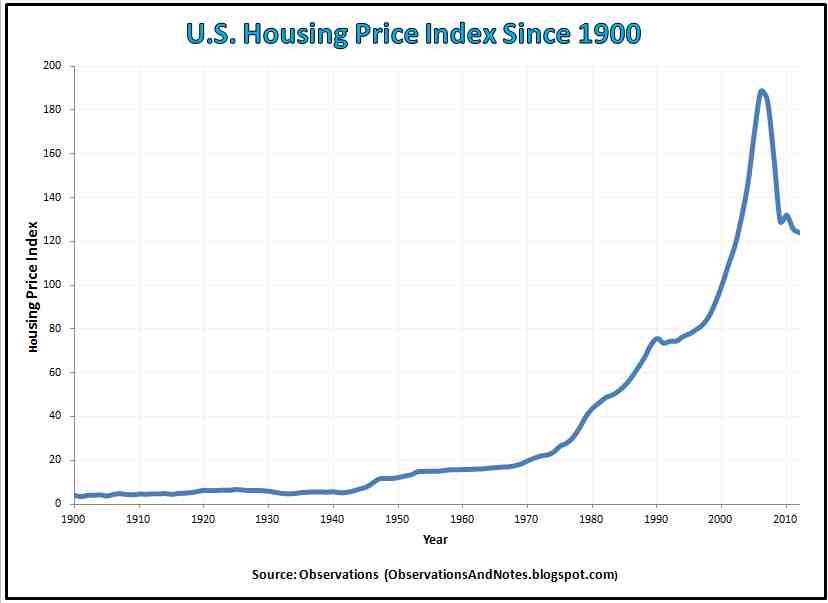
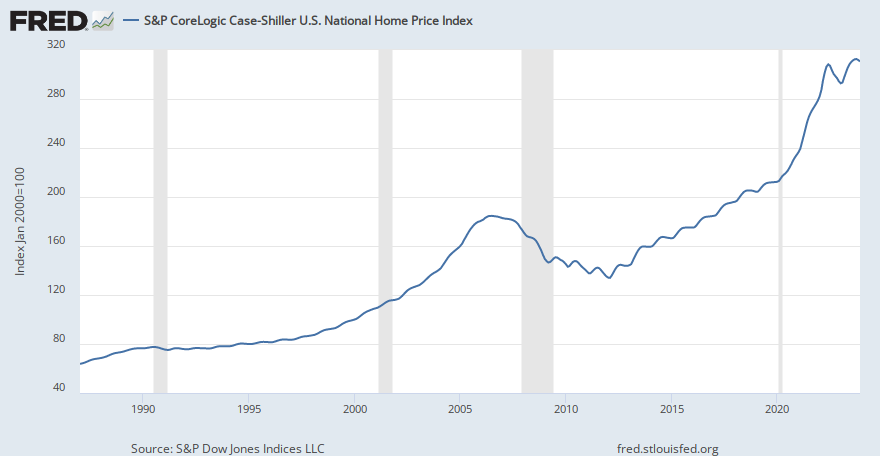
    I'm not saying the guy in the article is right, that's the point of this thread, to discuss and figure it out. For example, what is the source of your chart? You posted a chart that 1) doesn't have any sources which I pointed out earlier and you've yet to address who the source is and 2) I posted a chart from a famed Economist that shows different data than the one you provided, which you've also yet to address. All you say instead is that "you've heard" XYZ every few months since 2012, which isn't exactly some credible argument you're presenting here. Just because random taxi drivers told you the housing market will crash a few months after it crashed doesn't mean that economists and other experts are wrong.

    Here is yet another chart that paints a different picture than the random chart you cherry picked with no cited source which I am AGAIN calling out here...does it paint an exact 18 year cycle picture? No. But it doesn't show an up up up trend except for one period like the chart you posted either...

  • Nicholas L.Pro Member
    Flipper/Rehabber · Pittsburgh · Member since 2018 · 6k+ posts · 5k+ votes
    2y

    @V.G Jason

    yep agreed.  will become more and more important as every year goes by.  there is no sign that the birth rate in the US is going to increase.

  • Greg ScottPro Member
    Rental Property Investor · SE Michigan · Member since 2014 · 4k+ posts · 6k+ votes
    2y
    Quote from @Jack B.:

    You posted a chart that 1) doesn't have any sources which I pointed out earlier and you've yet to address who the source is and 2) I posted a chart from a famed Economist that shows different data than the one you provided, which you've also yet to address.


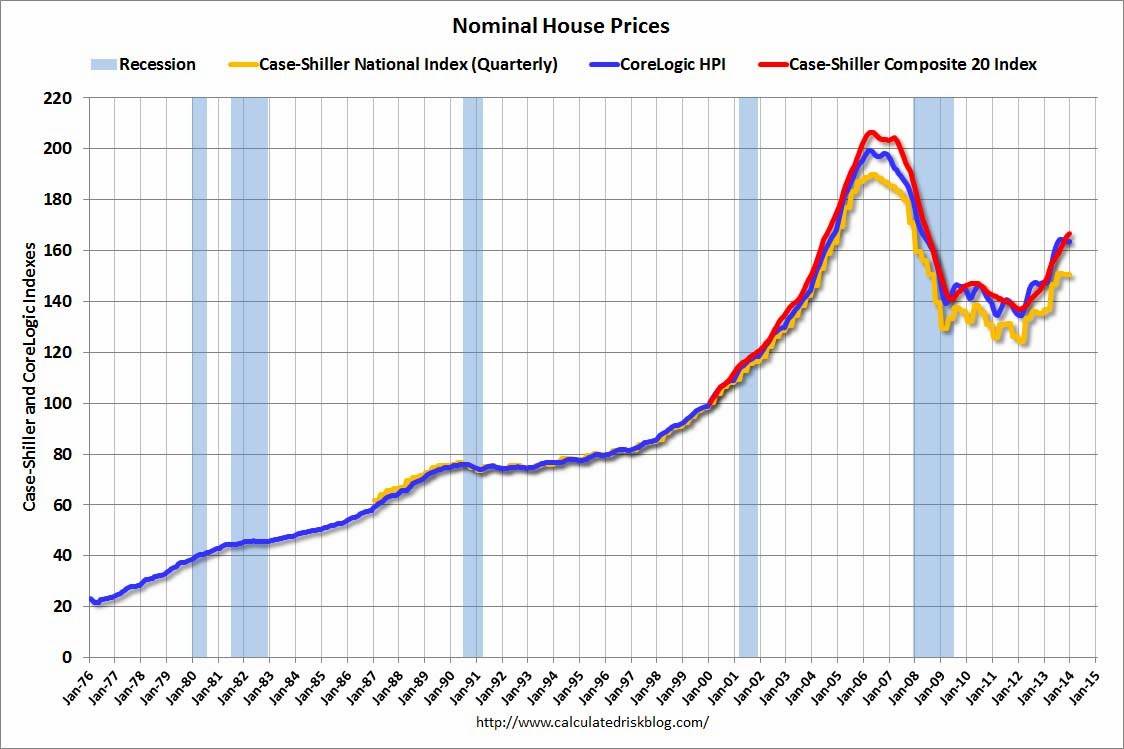
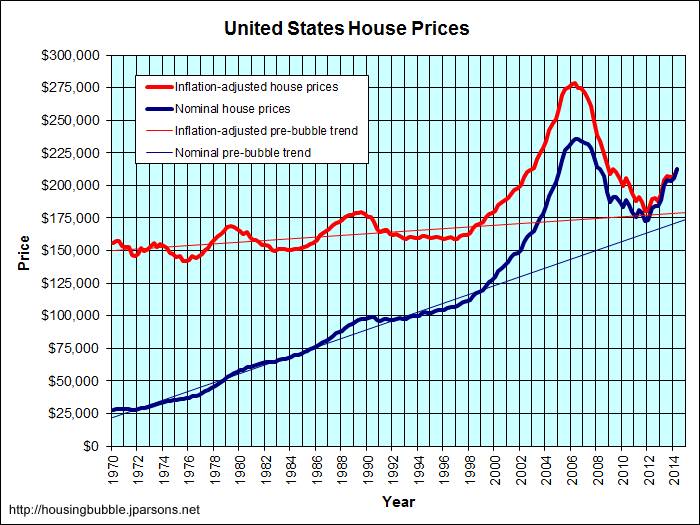
    It really isn't that hard to find an equivalent of the chart I posted just about everywhere.  I've pasted several below.  The top one is from the EXACT SAME SOURCE you cited.  If you still question the credibility of my data, you should start questioning yours.

    FWIW, looking at inflation adjusted pricing doesn't make sense since debt is set in nominal dollars.  I'd be totally fine if all my properties dropped 20% in real terms if the prices (and rents) go up more in nominal terms. I'm still winning.


  • Rental Property Investor · Boston, MA · Member since 2019 · 2k+ posts · 1k+ votes
    2y

    No. There is no crash coming.

  • Member since 2024 · 162 posts · 232 votes
    2y

    no need to squabble over the charts above, they are actually the same, both by Dr Robert Shiller at Yale, the only difference is that one backs out inflation. Shiller did his PHD at MIT in 60s w fellow student Dr Jeremy Seigel, whose latest edition of Stocks for the Long Run does a deep dive into US inflation, basically we had none from 1809 till 1945, house prices flat, then post WW2, lots of inflation and house prices up, if you remove the inflation, the red line in last chart above, house prices nearly flat again. Almost all real estate historical studies show all real estate appreciates at rate of inflation. The famous Amsterdam study looked at bills of sale for >400 years on canal front homes in Amsterdam, and price appreciation exactly mirrored inflation rate, ie residential real estate or any real estate never goes up in Value only in Price because the currency its denominated in loses its value at same rate. As real estate investors we carefully surf the micro-fluctuations over several years and use leverage to amplify them. 

  • Member since 2019 · 7k+ posts · 4k+ votes
    2y

    if you want home crash in US you could achieve it by the following :
    a) change every 30YFRM to 3YARM
    b) crash the nasdaq first, if nasdaq is still all time high home values goes up
    c) stop printing dollar, then home price going to go down

    the supply and demand is artificially created because of (a) + (c) and accelarated by (b)

    In some area, salary would not matter.....because affordability no longer create home price, but the money supply is. It's like saying if we have 5M dollar in circulation is owned by 100 people vs 8M dollar in circulation is owned by 4 people. What matter is the aggregated number of dollar in circulaton, not people salary.

    Almost everyon here in BP has more than 3 homes, for example LOL and we don't have to sell.

    Also home price in US is created using auction model with 30 y FIXED....so if 90% of folks within the region does not able to sustain the current home value, that does not even matter , because what matter is money in circulation in that area.

  • Member since 2019 · 7k+ posts · 4k+ votes
    2y
    Quote from @V.G Jason:
    Quote from @Nicholas L.:

    @David Avery

    do you follow Jason Hartman? he's had some great content tying together the economy, demographics, housing, etc.

    he thinks that the market will be fairly strong (with local corrections possible, of course) until the late 2030s / early 2040s due to the demographic pressure.  then... it will all depend on immigration.

    i just read that South Korea's birth rate has fallen below 1!  don't invest there.


     Immigration has been the forefront for the past 15 months, it's going to be more decisive sooner than that time period. It'll be a decisive factor on America here no later by the end of the decade.

    Partner at my old firm mentioned 15 months ago, immigration will be the new fight and some of the other stuff will die off. I think that view is correct.


     there're 3 million new immigrant in this country within the last few months that affect the rent/housing already, birth rate no longer matter.

    birth rate is just one of the metric, is it the most important ? no.

    someone cited south korea, do you know the south korea has the most appreciation lately in comparison to advanced countries ? birth rate even doesn't matter, if country economic activity is continue rising that's what matter and that's what drive real estate value, and that's south korea.

  • Nicholas L.Pro Member
    Flipper/Rehabber · Pittsburgh · Member since 2018 · 6k+ posts · 5k+ votes
    2y

    @Carlos Ptriawan

    agree - the problems in S Korea will start in 30-50 years.  but that's how far out I am trying to look

    I remain bullish on the US as a whole

  • Member since 2019 · 7k+ posts · 4k+ votes
    2y
    Quote from @Nicholas L.:

    @Carlos Ptriawan

    agree - the problems in S Korea will start in 30-50 years.  but that's how far out I am trying to look

    I remain bullish on the US as a whole


     true, thing is we can't predict more than 2-3 years from now. so we can't sa what happen in 30 years, if their economy is continue rising and they accept more immigration home price keep going up.

    in 2020 we thought the covid would bring everything down, but covid actually bring everything up lol

    also asia is extremely different than US, overthere, everyone is more cautious about money so they would chase real estate like crazy, especially in very limited constrained land like in seoul or busan (jeju maybe different lol).

    i am actually three times more bullish for south korea home price than detroit+indianapolis+denver real estate combined because south korea has the real economic productivity, unlike the old USA that only can print money to survive lol

  • Nicholas L.Pro Member
    Flipper/Rehabber · Pittsburgh · Member since 2018 · 6k+ posts · 5k+ votes
    2y

    @Carlos Ptriawan

    as always all really good points!  we truly don't know what's going to happen that far out.  it does seem, though, so far, that it's really, really hard to reverse a birthrate decline once it starts.

  • Member since 2019 · 7k+ posts · 4k+ votes
    2y
    Quote from @Nicholas L.:

    @Carlos Ptriawan

    as always all really good points!  we truly don't know what's going to happen that far out.  it does seem, though, so far, that it's really, really hard to reverse a birthrate decline once it starts.


     my point being is that birthrate is only one small factor that affect home price, there're 9999 other factor that drive up the price. The problem with one guy opinion is that many times, their view is too narrow or biased.

    Land size / population ratio and economic growth is one of the overlooked factor. The reason why people in US like to see birth rate is because land is vast, but in constrained limited land country/ciy like seoul,thailand,etc,etc that has much more population per density, birth rate does not really matter because there're already so many people right now. 

    For example, in seoul population density is 40K per sqm, in denver it's about 4k per sqm.

    that's why when we analyze other country or location, perspective should changes as well.

    By statistic, south korea is the most appreciated land since covid (compare to other country LOL)

  • Investor · Las Vegas, NV · Member since 2013 · 8k+ posts · 10k+ votes
    2y

    If you want me to believe that you believe there will be a crash I need a couple things. You must have 80%+ of your net worth in real estate pre-prediction. Then you must sell it all, including your primary and move in to a rental. Then I will believe you believe a crash is coming. But I’ll probably be buying the real estate you’re selling. 

    Ps. Were these “there’s a crash every 18 years” people telling everyone calling for a crash every year from 2010-2020 that they were wrong, it was too soon? When there’s zero penalty for being wrong I put zero value on the prediction. 

  • Investor · Fort Washington, MD · Member since 2014 · 1k+ posts · 1k+ votes
    2y

    People, every day and most likely every hour someone posts their personal prediction of a crash. I have been told   a crash is around the corner by hundreds of different people for the past decade and some change. They provide pretty charts, convoluted calculation and links to others who they feel are super smart. I have had people warn me on my last 10 deals, telling me to pull back because real estate will be worth 2 dollars in a month. People, dont waste your time on this. If anyone could predict this or had any idea they would be very wealthy themselves. Its like the stock market. They wished they knew. All these thousands of people who made these high level, guru oriented, educated guesses over a decade have all been wrong. Not good odds. Go play roulette and wherever the number falls, thats how many days it will be to then recession. For real though, just do what you do and let others debate with people that have no way of knowing what they are predicting. Eventually we will have one,  so someone amongst thousands of others will guess right but do you have time to really go through all that? 

  • Investor · Milwaukee - Mequon, WI · Member since 2010 · 5k+ posts · 7k+ votes
    2y
    Quote from @Jack B.:
    Quote from @Greg Scott:
    Quote from @Jack B.:

    What the inflation adjusted home price history does not account for is home sizes. A lot has changed since the 1960s.

    Most of the boomers grew up in a 1,200 sqft ranch with one bathroom on 0.1 acre. They also had only one car and a stay at home mom raising 3.6 kids.

    Today the average new built home is about 2,500 sqft, often 4 bed 3 bath for 1.9 kids. They have multiple cars, both spouses are working at least one job and they have multiple cars. Of course this costs more.

    Every comodity market has ebbs and flows, that's why people observe it as cyclical. But there is no pacemaker that drives 18 year cycles or any other number of year cycles.

    Home prices hinge on cost of labor and cost of materials plus cost of land. You can follow that metric. Existing homes are driven by supply and demand. We have underbuilt housing for 14 years following 2008 and now we are 3-4 million homes short (some banks say 5), that will take a decade to catch up as a nation.  

    However, some markets like TX have already built massive amounts of new homes (126,000 last year if I recall correctly), while my home State Wisconsin has built not even a tenth of that. In fact new construction in Milwaukee is almost non existant, so we have a chronic housing shortage (both for rent and for sale) but very little additional inventory. They build large homes in the suburbs, but with cost of labor and materials where they are these house are twice the median price for our market and provide no real inventory relief.  This is just an example how local markets can behave totally different.

    Home prices are what we call "downward sticky". You can say they go up like a rocket and come down like a feather. Sellers won't sell if they don't get what they expect, they just stay put and wait for the market to catch up (except 2008, when they were forced to sell). If they have the choice, they will just wait until inflation has brought wages up enough. We see a lot more of a cycle in home sales volume than we see with home prices - prices are much more linear than volume. 

  • Jay HinrichsBusiness Member
    Real Estate Consultant · Summerlin, NV · Member since 2014 · 45k+ posts · 66k+ votes
    2y
    Quote from @Marcus Auerbach:
    Quote from @Jack B.:
    Quote from @Greg Scott:
    Quote from @Jack B.:

    No, it's not just my part of Seattle, we are the 6th most expensive housing market in the country, not Detroit or "SE Michigan" where you can buy a house for the price of a car. Interest rates have a bigger impact where houses are a million and up...

    FWIW, I don't actually own any rental property in Michigan.  I own property all over the country, including some expensive markets. 

    I still disagree with your premise.  Every year since 2012 I've been hearing the next housing crash is just a few months away.  If you study history, it is not a phenomenon that occurs regularly, at least not compared to the lifespan of a human being.

     It's not MY premise, it's that of the guy who supposedly called the last crashes. Who told you the next housing crash was a few months away since 2012? A taxi driver? What kind of person would think the housing market would crash after it already crashed a few months prior. Makes no sense. 

    I'm not saying the guy in the article is right, that's the point of this thread, to discuss and figure it out. For example, what is the source of your chart? You posted a chart that 1) doesn't have any sources which I pointed out earlier and you've yet to address who the source is and 2) I posted a chart from a famed Economist that shows different data than the one you provided, which you've also yet to address. All you say instead is that "you've heard" XYZ every few months since 2012, which isn't exactly some credible argument you're presenting here. Just because random taxi drivers told you the housing market will crash a few months after it crashed doesn't mean that economists and other experts are wrong.

    Here is yet another chart that paints a different picture than the random chart you cherry picked with no cited source which I am AGAIN calling out here...does it paint an exact 18 year cycle picture? No. But it doesn't show an up up up trend except for one period like the chart you posted either...


    What the inflation adjusted home price history does not account for is home sizes. A lot has changed since the 1960s.

    Most of the boomers grew up in a 1,200 sqft ranch with one bathroom on 0.1 acre. They also had only one car and a stay at home mom raising 3.6 kids.

    Today the average new built home is about 2,500 sqft, often 4 bed 3 bath. They have multiple cars, both spouses are working at least one job and they have multiple cars. Of course this costs more.

    Every comodity market has ebbs and flows, that's why people observe it as cyclical. But there is no pacemaker that drives 18 year or any other number of year cycles.

    Home prices hinge on cost of labor and cost of materials plus cost of land. You can follow that metric. Existing homes are driven by supply and demand. We have underbuilt housing for 14 years following 2008 and now we are 3-4 million homes short (some banks say 5), that will take a decade to catch up as a nation. 

    However, some markets like TX have already built massive amounts (126,000 last year if I recall correctly), while my home State Wisconsin has built not even a tenth of that. In fact new construction in Milwaukee is almost non existant, so we have a chronic housing shortage (both for rent and for sale) but very little additional inventory. They build large homes in the suburbs, but with cost of labor and materials where they are these house are twice the median price for our market and provide no real inventory relief. 


    When I was doing foreclosure rescue prior to the laws changing on the west coast in 2008.. many of the folks i would sit with.. they owed more on their cars  boat  jet ski and RV than they did on their house..
  • Investor · Malakoff, TX · Member since 2017 · 2k+ posts · 2k+ votes
    2y
    Quote from @Marcus Auerbach:
    Quote from @Jack B.:
    Quote from @Greg Scott:
    Quote from @Jack B.:

    What the inflation adjusted home price history does not account for is home sizes. A lot has changed since the 1960s.

    Most of the boomers grew up in a 1,200 sqft ranch with one bathroom on 0.1 acre. They also had only one car and a stay at home mom raising 3.6 kids.

    Today the average new built home is about 2,500 sqft, often 4 bed 3 bath for 1.9 kids. They have multiple cars, both spouses are working at least one job and they have multiple cars. Of course this costs more.

    Every comodity market has ebbs and flows, that's why people observe it as cyclical. But there is no pacemaker that drives 18 year cycles or any other number of year cycles.

    Home prices hinge on cost of labor and cost of materials plus cost of land. You can follow that metric. Existing homes are driven by supply and demand. We have underbuilt housing for 14 years following 2008 and now we are 3-4 million homes short (some banks say 5), that will take a decade to catch up as a nation.  

    However, some markets like TX have already built massive amounts of new homes (126,000 last year if I recall correctly), while my home State Wisconsin has built not even a tenth of that. In fact new construction in Milwaukee is almost non existant, so we have a chronic housing shortage (both for rent and for sale) but very little additional inventory. They build large homes in the suburbs, but with cost of labor and materials where they are these house are twice the median price for our market and provide no real inventory relief.  This is just an example how local markets can behave totally different.

    Home prices are what we call "downward sticky". You can say they go up like a rocket and come down like a feather. Sellers won't sell if they don't get what they expect, they just stay put and wait for the market to catch up (except 2008, when they were forced to sell). If they have the choice, they will just wait until inflation has brought wages up enough. We see a lot more of a cycle in home sales volume than we see with home prices - prices are much more linear than volume. 


     There have been many changes in the nature of housing over the last century. Yet the prices have continued to regress to the inflation adjusted levels. And people continue to believe what makes them feel good about real estate.

  • Nicholas L.Pro Member
    Flipper/Rehabber · Pittsburgh · Member since 2018 · 6k+ posts · 5k+ votes
    2y

    @Eric James can you say more about what you mean by that?

    i worry a lot more about what my rental properties can rent for than I do about their 'price'

  • Investor · Malakoff, TX · Member since 2017 · 2k+ posts · 2k+ votes
    2y
    Quote from @Nicholas L.:

    @Eric James can you say more about what you mean by that?

    i worry a lot more about what my rental properties can rent for than I do about their 'price'


     Same here. How this mostly relevant for me is with regard to buying real estate when prices are far above the inflation index 

  • Andrew SyriosPro Member
    Moderator
    Residential Real Estate Investor · Kansas City, MO · Member since 2014 · 10k+ posts · 5k+ votes
    2y

    It certainly hasn't crashed yet. I doubt there will be a crash given how much more creditworthy borrowers have been and how the teaser rates are gone and everyone has 30-year fixed mortgages. There very well will be a general economic downturn which would pull real estate down with everything else, but even then I think it would be just a correction and a crash is highly unlikely. 

  • Rental Property Investor · Seattle, WA · Member since 2014 · 1k+ posts · 1k+ votes
    2y
    Quote from @Eric James:
    Quote from @Marcus Auerbach:
    Quote from @Jack B.:
    Quote from @Greg Scott:
    Quote from @Jack B.:

    What the inflation adjusted home price history does not account for is home sizes. A lot has changed since the 1960s.

    Most of the boomers grew up in a 1,200 sqft ranch with one bathroom on 0.1 acre. They also had only one car and a stay at home mom raising 3.6 kids.

    Today the average new built home is about 2,500 sqft, often 4 bed 3 bath for 1.9 kids. They have multiple cars, both spouses are working at least one job and they have multiple cars. Of course this costs more.

    Every comodity market has ebbs and flows, that's why people observe it as cyclical. But there is no pacemaker that drives 18 year cycles or any other number of year cycles.

    Home prices hinge on cost of labor and cost of materials plus cost of land. You can follow that metric. Existing homes are driven by supply and demand. We have underbuilt housing for 14 years following 2008 and now we are 3-4 million homes short (some banks say 5), that will take a decade to catch up as a nation.  

    However, some markets like TX have already built massive amounts of new homes (126,000 last year if I recall correctly), while my home State Wisconsin has built not even a tenth of that. In fact new construction in Milwaukee is almost non existant, so we have a chronic housing shortage (both for rent and for sale) but very little additional inventory. They build large homes in the suburbs, but with cost of labor and materials where they are these house are twice the median price for our market and provide no real inventory relief.  This is just an example how local markets can behave totally different.

    Home prices are what we call "downward sticky". You can say they go up like a rocket and come down like a feather. Sellers won't sell if they don't get what they expect, they just stay put and wait for the market to catch up (except 2008, when they were forced to sell). If they have the choice, they will just wait until inflation has brought wages up enough. We see a lot more of a cycle in home sales volume than we see with home prices - prices are much more linear than volume. 


     There have been many changes in the nature of housing over the last century. Yet the prices have continued to regress to the inflation adjusted levels. And people continue to believe what makes them feel good about real estate.


     Are you saying real estate tends to adjust to inflation adjusted price over the long run? According to Case-Shiller housing only keeps pace with inflation over the long run since 1915. It goes up and down but ultimately settles at inflation adjusted prices or .6% above.

    Makes you question whether real estate is worth it as a LONG term investment. It's great buying in 2012 and riding it until 2022 with leverage. 10X your money, but might be good to get out after a while, I have another thread about that.

  • Nicholas L.Pro Member
    Flipper/Rehabber · Pittsburgh · Member since 2018 · 6k+ posts · 5k+ votes
    2y

    @Jack B.

    it's a good question, since this is an RE site we focus on RE, but it's definitely worth talking about how RE fits into an overall portfolio.

  • Rental Property Investor · Seattle, WA · Member since 2014 · 1k+ posts · 1k+ votes
    2y
    Quote from @Paul Azad:

    no need to squabble over the charts above, they are actually the same, both by Dr Robert Shiller at Yale, the only difference is that one backs out inflation. Shiller did his PHD at MIT in 60s w fellow student Dr Jeremy Seigel, whose latest edition of Stocks for the Long Run does a deep dive into US inflation, basically we had none from 1809 till 1945, house prices flat, then post WW2, lots of inflation and house prices up, if you remove the inflation, the red line in last chart above, house prices nearly flat again. Almost all real estate historical studies show all real estate appreciates at rate of inflation. The famous Amsterdam study looked at bills of sale for >400 years on canal front homes in Amsterdam, and price appreciation exactly mirrored inflation rate, ie residential real estate or any real estate never goes up in Value only in Price because the currency its denominated in loses its value at same rate. As real estate investors we carefully surf the micro-fluctuations over several years and use leverage to amplify them. 

    That last sentence is key. It makes sense to buy and hold real estate at the right time, for a specific period. But over the long run, it's not the magic investment everyone thinks when you factor in that it merely keeps pace with inflation in the LONG run. If you time it right to get in and out, it's gold. But not holding forever.
  • Member since 2019 · 7k+ posts · 4k+ votes
    2y
    Quote from @Jack B.:
    Quote from @Eric James:
    Quote from @Marcus Auerbach:
    Quote from @Jack B.:

    Makes you question whether real estate is worth it as a LONG term investment. It's great buying in 2012 and riding it until 2022 with leverage. 10X your money, but might be good to get out after a while, I have another thread about that.


     I am on the same boat with that opinion LOL

  • Member since 2019 · 7k+ posts · 4k+ votes
    2y
    Quote from @Jack B.:
    Quote from @Paul Azad:

    no need to squabble over the charts above, they are actually the same, both by Dr Robert Shiller at Yale, the only difference is that one backs out inflation. Shiller did his PHD at MIT in 60s w fellow student Dr Jeremy Seigel, whose latest edition of Stocks for the Long Run does a deep dive into US inflation, basically we had none from 1809 till 1945, house prices flat, then post WW2, lots of inflation and house prices up, if you remove the inflation, the red line in last chart above, house prices nearly flat again. Almost all real estate historical studies show all real estate appreciates at rate of inflation. The famous Amsterdam study looked at bills of sale for >400 years on canal front homes in Amsterdam, and price appreciation exactly mirrored inflation rate, ie residential real estate or any real estate never goes up in Value only in Price because the currency its denominated in loses its value at same rate. As real estate investors we carefully surf the micro-fluctuations over several years and use leverage to amplify them. 

    That last sentence is key. It makes sense to buy and hold real estate at the right time, for a specific period. But over the long run, it's not the magic investment everyone thinks when you factor in that it merely keeps pace with inflation in the LONG run. If you time it right to get in and out, it's gold. But not holding forever.

     put it like this, any real estate investment is very very good when cap rate is above 4 ; or when interest rate is below cap rate, but when cap rate is below interest rate.....that becomes moot point, but single family housing at least is still "okay" due to classic demand/supply needs. but appreciation would be slower for sure.

  • Andrew SyriosPro Member
    Moderator
    Residential Real Estate Investor · Kansas City, MO · Member since 2014 · 10k+ posts · 5k+ votes
    2y
    Quote from @Eric James:
    Quote from @Marcus Auerbach:
    Quote from @Jack B.:
    Quote from @Greg Scott:
    Quote from @Jack B.:

    What the inflation adjusted home price history does not account for is home sizes. A lot has changed since the 1960s.

    Most of the boomers grew up in a 1,200 sqft ranch with one bathroom on 0.1 acre. They also had only one car and a stay at home mom raising 3.6 kids.

    Today the average new built home is about 2,500 sqft, often 4 bed 3 bath for 1.9 kids. They have multiple cars, both spouses are working at least one job and they have multiple cars. Of course this costs more.

    Every comodity market has ebbs and flows, that's why people observe it as cyclical. But there is no pacemaker that drives 18 year cycles or any other number of year cycles.

    Home prices hinge on cost of labor and cost of materials plus cost of land. You can follow that metric. Existing homes are driven by supply and demand. We have underbuilt housing for 14 years following 2008 and now we are 3-4 million homes short (some banks say 5), that will take a decade to catch up as a nation.  

    However, some markets like TX have already built massive amounts of new homes (126,000 last year if I recall correctly), while my home State Wisconsin has built not even a tenth of that. In fact new construction in Milwaukee is almost non existant, so we have a chronic housing shortage (both for rent and for sale) but very little additional inventory. They build large homes in the suburbs, but with cost of labor and materials where they are these house are twice the median price for our market and provide no real inventory relief.  This is just an example how local markets can behave totally different.

    Home prices are what we call "downward sticky". You can say they go up like a rocket and come down like a feather. Sellers won't sell if they don't get what they expect, they just stay put and wait for the market to catch up (except 2008, when they were forced to sell). If they have the choice, they will just wait until inflation has brought wages up enough. We see a lot more of a cycle in home sales volume than we see with home prices - prices are much more linear than volume. 


     There have been many changes in the nature of housing over the last century. Yet the prices have continued to regress to the inflation adjusted levels. And people continue to believe what makes them feel good about real estate.


    There was certainly systemic shift after WWII. Between 1915 and 1945, it was between 70 and 80. Then, after WWII it settled in at a higher mean around 100 to 120 (and before WWI at between 90 and 105). 

    I think we've reached a higher systemic mean *as long as* interest rates stay relatively low (in the 4 to 6% range) long term (I know they're higher than that now, but assuming they come down a bit over the next year.

    I do think it's too high now and will come down. But given how many people have fixed rate loans at low rates, I suspect it will mostly be because real estate stalls (or goes up slowly) while inflation outpaces real estate price appreciation. 

Join the conversationCreate a free account to reply, vote on answers and follow this thread.