Indianapolis (Marion County) Investors — Important Section 8 Update

Indianapolis (Marion County) Investors — Important Section 8 Update

Real Estate Consultant · Indianapolis, IN · Member since 2024 · 9 posts · 8 votes

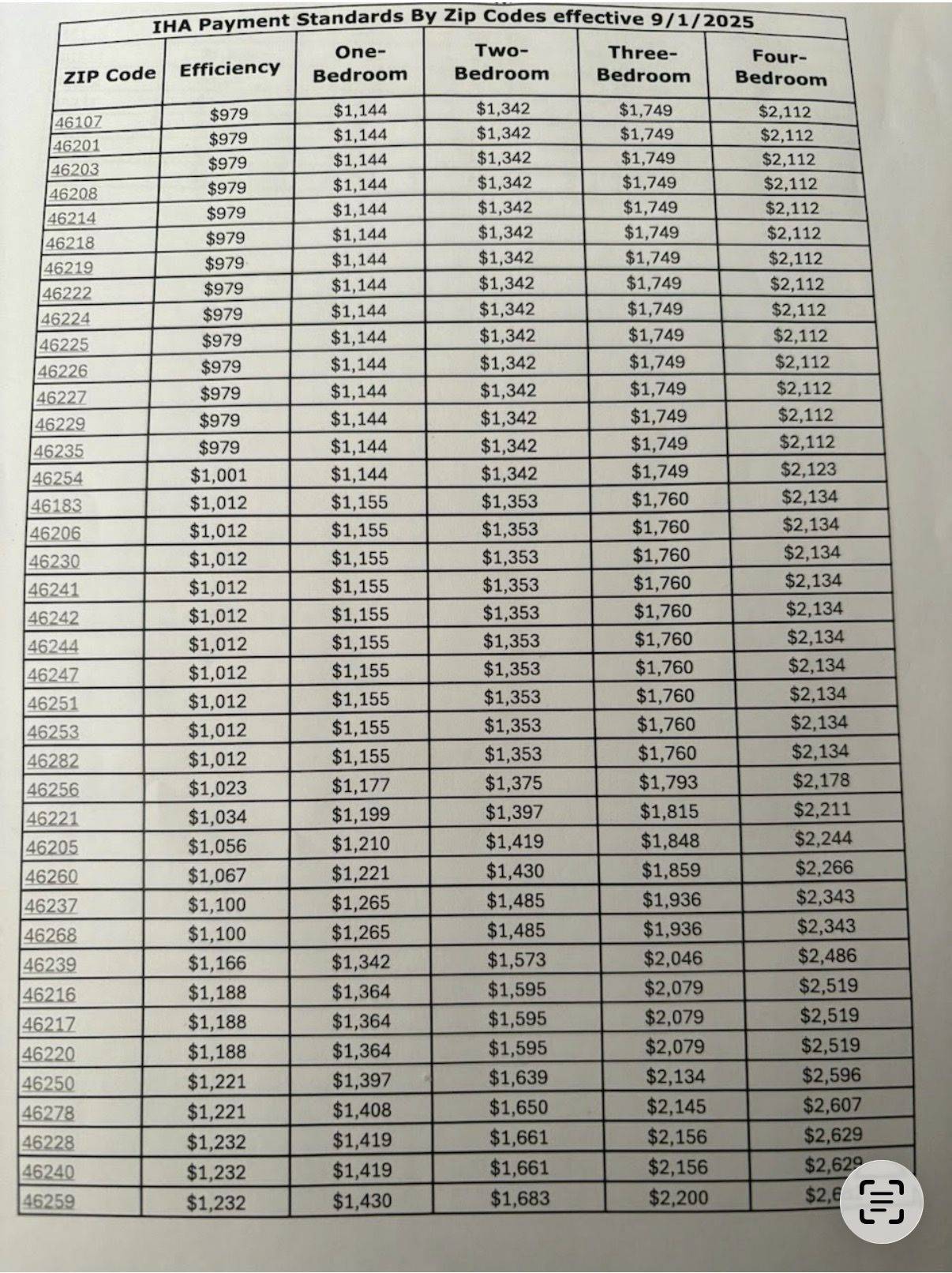
For anyone investing in Section 8 / HCV program in Indianapolis, there’s a major update that will directly impact rent projections, renewals, and long-term strategy.

Indy’s Section 8 payment standards have changed.
They are now LOWER in many areas and are calculated by ZIP CODE, not as a flat metro-wide standard.

Why this matters:

  • Two properties with similar specs can now have different max rents solely based on ZIP code

  • Some landlords may see reduced renewal amounts

  • Deal analysis that worked in prior years may no longer pencil out the same way

  • 2026 acquisition strategies may need to shift toward ZIP codes with stronger payment standards

If you’re buying, holding, or renewing Section 8 properties in Marion County, this change makes location-specific underwriting more important than ever.

What investors should be reviewing right now:

  • Current payment standards for the specific ZIP code of each property

  • Upcoming lease renewals and potential rent adjustments

  • Whether rehab budgets still justify projected rents

  • Which ZIP codes still support strong cash-flow under the new standards

How we help investors locally:

We work with investors who want a streamlined, boots-on-the-ground approach to buy-and-hold in Indianapolis.

While we do not provide property management, we act as a one-stop acquisition and leasing resource, including:

  • Identifying investment-grade properties that make sense under current Section 8 standards

  • Helping analyze ZIP-code-specific rent caps before purchase

  • Guiding buyers through acquisition and Section 8 readiness

  • Connecting investors with strong, experienced local property managers who actively place and manage Section 8 tenants in Marion County

If you already own Section 8 rentals or are considering adding them to your portfolio, now is a good time to re-evaluate strategy instead of relying on outdated rent assumptions.

Happy to connect with anyone looking to understand how these changes affect their current properties or future purchases in Indianapolis.

👉 www.AustynAvenue.com

1Reply
115 views

Most Popular Reply

Drew SygitBusiness Member
Property Manager · Royal Oak, MI · Member since 2012 · 12k+ posts · 9k+ votes
9mo

The fed government is cutting funding for agencies like S8, so expect more of this around the country.

Investors shoud also expect to see the S8 portion of rent paid decreasing, while the tenant portion increases - adding more risk for landlords on rent collection.

See this reply in the discussion

8 Replies

Jump to latestLatest
  • Frank PyleBusiness Member
    Specialist · USA · Member since 2024 · 279 posts · 130 votes
    9mo

    Appreciate you sharing this, Mia. This is a big deal for out of state investors I work with because a lot of them are underwriting from spreadsheets and pro formas before they ever fly in, and a ZIP code driven standard can change the whole cash flow story even when the house looks identical on paper. It can also impact DSCR qualification, refinance options, and hold strategy if renewals come in lower than expected. For anyone buying in 2026, I think the takeaway is you have to verify the exact ZIP code payment standard before you lock your offer and before you finalize rehab scope. I'm also still a bit unclear on the federal involvement with the Marion County Housing Authority and how that's continuing to affect how the Section 8 program is being administered locally, so I'm encouraging investors to be extra conservative on rent assumptions until everything is fully understood and confirmed. If anyone wants, I can help sanity check a deal with ZIP specific rent caps and a conservative underwriting so you are not basing a purchase on outdated assumptions.

    Frank Pyle at ExP Realty
    NEXA Lending- Investors Edge Concierge
    View Page
  • Drew SygitBusiness Member
    Property Manager · Royal Oak, MI · Member since 2012 · 12k+ posts · 9k+ votes
    9mo

    The fed government is cutting funding for agencies like S8, so expect more of this around the country.

    Investors shoud also expect to see the S8 portion of rent paid decreasing, while the tenant portion increases - adding more risk for landlords on rent collection.

    • Harvey LevinPro Member
      Property Manager · Indianapolis, IN · Member since 2012 · 208 posts · 160 votes
      9mo
      Quote from @Drew Sygit:

      The fed government is cutting funding for agencies like S8, so expect more of this around the country.

      Investors shoud also expect to see the S8 portion of rent paid decreasing, while the tenant portion increases - adding more risk for landlords on rent collection.

      I have not heard of an increase in the percent of  tenants income going toward market rent amounts. Is that happening in your market?
    • Drew SygitBusiness Member
      Property Manager · Royal Oak, MI · Member since 2012 · 12k+ posts · 9k+ votes
      9mo
      Quote from @Harvey Levin:
      Quote from @Drew Sygit:

      The fed government is cutting funding for agencies like S8, so expect more of this around the country.

      Investors shoud also expect to see the S8 portion of rent paid decreasing, while the tenant portion increases - adding more risk for landlords on rent collection.

      I have not heard of an increase in the percent of  tenants income going toward market rent amounts. Is that happening in your market?

       Happened after Trump's cuts during his previous term.

      So, anticipate it happening again.

      How else, will S8 Housing Commissions "stretch" their reduced funding?

      1) Nonrenew a percentage of existing vouchers.
      - How will they select who to cut?
      - VERY painful for landlords as most tenants will NOT move out, forcing landlords to evict them.

      2) "Share the pain" by cutting all vouchers by x%, forcing tenants to increase the amount of rent they pay.

      What options am I missing?

    • Harvey LevinPro Member
      Property Manager · Indianapolis, IN · Member since 2012 · 208 posts · 160 votes
      9mo
      Quote from @Drew Sygit:
      Quote from @Harvey Levin:
      Quote from @Drew Sygit:

      The fed government is cutting funding for agencies like S8, so expect more of this around the country.

      Investors shoud also expect to see the S8 portion of rent paid decreasing, while the tenant portion increases - adding more risk for landlords on rent collection.

      I have not heard of an increase in the percent of  tenants income going toward market rent amounts. Is that happening in your market?

       Happened after Trump's cuts during his previous term.

      So, anticipate it happening again.

      How else, will S8 Housing Commissions "stretch" their reduced funding?

      1) Nonrenew a percentage of existing vouchers.
      - How will they select who to cut?
      - VERY painful for landlords as most tenants will NOT move out, forcing landlords to evict them.

      2) "Share the pain" by cutting all vouchers by x%, forcing tenants to increase the amount of rent they pay.

      What options am I missing?


      The increase in % of income was changed to 30% in 1981. There are exceptions that can increase it to 40%, but that is rare. In 2016, several voucher rules were updated, but the 30% remained. Local Housing Authorities could apply to HUD for modifications that could affect the tenants' portion, but nothing came from HUD. I remember after the Obama administration took office, a cut was made to funding, and each local Housing Authority was forced to make changes. Indianapolis chose to keep everyone in the program but eliminated the rule of opposite sex people, no matter the age, could share a room. That reduced voucher size for a lot of tenants. That rule remains in Indianapolis. We also saw a cap on rent increases to a maximum amount of $27 per month.

       In Trumps 1st term, proposals were made for cuts, but Congress did not vote to approve any.

      Here is what I am expecting.

      1. A more strict review of local records by HUD, looking for waste and fraud. Housing Authorities are enforcing the rules about who should be removed from the vouchers. Indianapolis has been experiencing this because HUD placed the Housing Authority in receivership a couple of years ago.

      2. More attention as to who will be allowed onto the program.

      3. Housing Authorities managing and owning more apartments with Project-Based vouchers.

      4. More local and state funding to the Housing Authorities. 

      5. Rent Increases wil be slowed down by the Housing Authorities.

      6.  Cutting rents below market value would drive landlords away, causing housing shortages. In 2008, many Housing Authorities did this by allowing only 90% of the fair market rent. As soon as the economy improved, landlords fled to market tenants.

  • Frank PyleBusiness Member
    Specialist · USA · Member since 2024 · 279 posts · 130 votes
    9mo

    I keep getting asked by out of state investors coming into Indianapolis if they should target Section 8 and voucher rentals right now, and I am honestly torn.

    There is a lot of noise about federal funding and whether housing authorities will have to tighten up next year. I do not think it is as simple as Section 8 is getting cut everywhere, but there is real uncertainty and in some programs there may be fewer households served if funding does not keep up. On the landlord side the bigger practical risk I see is the tenant portion creeping up in some situations, which can increase collection risk compared to a deal where the voucher covers most of the rent. I also worry about admin friction if agencies get strained, slower inspections, slower paperwork, more delays.

    So here is my question to the room. If you are advising investors today, are you still recommending Section 8 as a core strategy in 2026, or are you telling clients to treat it as a bonus plan and underwrite the deal to work as a standard market rental first. And for Indianapolis specifically, are you seeing any changes in voucher demand, payment standards, or tenant portions that would change how you buy right now.

    Frank Pyle at ExP Realty
    NEXA Lending- Investors Edge Concierge
    View Page
  • Harvey LevinPro Member
    Property Manager · Indianapolis, IN · Member since 2012 · 208 posts · 160 votes
    9mo

    I have been a landlord with Indianapolis Housing Agency (IHA) for Section 8 tenants since 1985. As with all markets, there are up years and down years. The biggest profit is from the long term tenancy. Turnover costs (actual cost in preparation for the new tenant, marketing cost, Vacancy costs, especially in the slow leasing market in most markets currently) can destroy profits quickly. 

    That being said, IHA has been struggling internally since COVID 19. They have made a few very positive changes and I anticipate more. Current rents are based on the HUD Small Market rents which are per zip code plus IHA adds 10%. The Inspection protocol has changed for the United States. We have found it to be more reasonable and mostly it is close to the Marion County standards. Demand has dropped but that mirrors the non section tenants in Indianapolis. As far as underwriting, I have always recommended that underwriting should be based on market value regardless of who is paying.

  • Harvey LevinPro Member
    Property Manager · Indianapolis, IN · Member since 2012 · 208 posts · 160 votes
    9mo
    Quote from @Mia Chatman:

    For anyone investing in Section 8 / HCV program in Indianapolis, there’s a major update that will directly impact rent projections, renewals, and long-term strategy.

    Indy’s Section 8 payment standards have changed.
    They are now LOWER in many areas and are calculated by ZIP CODE, not as a flat metro-wide standard.

    Why this matters:

    • Two properties with similar specs can now have different max rents solely based on ZIP code

    • Some landlords may see reduced renewal amounts

    • Deal analysis that worked in prior years may no longer pencil out the same way

    • 2026 acquisition strategies may need to shift toward ZIP codes with stronger payment standards

    If you’re buying, holding, or renewing Section 8 properties in Marion County, this change makes location-specific underwriting more important than ever.

    What investors should be reviewing right now:

    • Current payment standards for the specific ZIP code of each property

    • Upcoming lease renewals and potential rent adjustments

    • Whether rehab budgets still justify projected rents

    • Which ZIP codes still support strong cash-flow under the new standards

    How we help investors locally:

    We work with investors who want a streamlined, boots-on-the-ground approach to buy-and-hold in Indianapolis.

    While we do not provide property management, we act as a one-stop acquisition and leasing resource, including:

    • Identifying investment-grade properties that make sense under current Section 8 standards

    • Helping analyze ZIP-code-specific rent caps before purchase

    • Guiding buyers through acquisition and Section 8 readiness

    • Connecting investors with strong, experienced local property managers who actively place and manage Section 8 tenants in Marion County

    If you already own Section 8 rentals or are considering adding them to your portfolio, now is a good time to re-evaluate strategy instead of relying on outdated rent assumptions.

    Happy to connect with anyone looking to understand how these changes affect their current properties or future purchases in Indianapolis.

    👉 www.AustynAvenue.com


     Great post.  I want to add that the prior rents were at an all time high because IHA was adding 20% to market rents. This was above and beyond the normal 10% as an incentive for more landlords to participate and was never meant to be a forever increase. One positive thing the new rents have is the utility allowance that is included in the market rent numbers have been lowered to allow more money to be directed towards rent .  

Join the conversationCreate a free account to reply, vote on answers and follow this thread.