C-, D, F-class neighborhoods
Most Popular Reply
Austin, TX · Member since 2019 · 5k+ posts · 5k+ votes
6yMy acronym is:
A = Almost everyone wishes they could live here.
B = Better area than a C.
C = Cages around window A/C units to prevent theft.
D = Dangerous.
F = Fear for your life 24/7.
34 Replies
- Specialist · Riverside, CA · Member since 2015 · 6k+ posts · 3k+ votes6y
It is totally subjective for the most part, F is where you do not feel safe, pretty much ever. D to me is pretty bad but you'll be okay at certain times of the day and don't mind going to those locations for limited amounts of time. C is not great but you feel safe, that may not bear out in the crime stats but you feel as if the area is safe. B is safe but generally older housing stock nothing wrong with it at all. A is completely safe, but usually not great for investing due to higher prices.
- CA & NV · Member since 2019 · 215 posts · 378 votes6y
Take a look at https://www.biggerpockets.com/...
Great explanation
- 6yTyler GibsonBusiness MemberReal Estate Agent · Orlando, FL · Member since 2017 · 1k+ posts · 2k+ votes
Originally posted by @Scott Mac:
My acronym is:
A = Almost everyone wishes they could live here.
B = Better area than a C.
C = Cages around window A/C units to prevent theft.
D = Dangerous.
F = Fear for your life 24/7.
This is great! I love F= Fear for your life 24/7
- 6yJim K.Handyman · Pittsburgh, PA · Member since 2018 · 5k+ posts · 13k+ votesOP
Originally posted by @Jeff Willis:
Take a look at https://www.biggerpockets.com/...
Great explanation
Thank you, Jeff. I've read that. I've even posted it in the past. I was hoping for something a bit more in-depth. You'll notice Brandon has no definition or provision for what I've called F-class properties. You may not be aware of this, but the average housing stock age in the USA has climbed to 37-years-old. This is more obvious and prevalent where I live, in Pittsburgh, versus many other places. Some of the most dsesirable areas in the city have housing stock that is 80-120 years old and has been repeatedly remodeled. Some of these places are on the National Registry, some are on the Pittsburgh Historical Society's registry. Down the street from where I am writing this from is a 6-bedroom palace Andrew Carnegie built for his brother. Is this a C-class in a C-class neighborhood? It's certainly old enough. A friend of mine (also a BP user) recently paid about half-a-million for a renovated 1910-built home in the East Liberty neighborhood. C-class? Half the mansions on our local Millionaire's Row, Shady Avenue, date from the same era.
I used to live in Providence, RI, in an area of the city called College Hill. Lots of 1850s construction, worth millions. People paying incredible sums to live in a nice place there. One of the other grad students in the department was the daughter of an oil sheik. I met a Russian count and two US Senators' daughters. Again, C-class? Really?
- Investor · Youngstown, OH · Member since 2017 · 2k+ posts · 2k+ votes6y
The problem with the grading system is that it's so subjective. Many people see C-areas as F's because they've lived next to Banks family in Bel Air their whole lives and assume any graffiti means someone is murdered every 3 hours.
I also think people fail to account for the average age of real estate when looking at grades and focus more on socioeconomics.
My rentals are in C+/B- neighborhoods. This is my personal rating system based off of both my own experiences and extensive networking with other investors:
A-neighborhoods are, well, Bel Air. Or something close. Lots of doctors, professors, and lawyers, meaning folks who aren't as likely to rent (although there are plenty of folks with money who don't want to/can't deal with maintenance). Everything is trendy, new, high quality, and expensive. In my discussions with fellow landlords, these tenants can be a pain because they have high tastes and are therefore more demanding.
B-neighborhoods are basically A's but slightly older. I don't really have a way of defining it other than not an A but not a C.
C-neighborhoods are my favorite. They're solid working class folk and young families or single young professionals. Buildings are older and maybe a little shabby, but still have great bones and are decently maintained. Most tenants don't call their landlord to fix little things like light bulbs or replacing an outlet because they already know how to do those things themselves. A lot of times, these are growing areas because millennials are attracted by the lower cost of living.
D-neighborhoods are where you start seeing a lot more neglect and crime rates start going up. These are great traps for inexperienced out-of-state investors. Again, this is one of those blurry grades. It's not a C, but it's not an F, and it's difficult to describe otherwise.
F-neighborhoods are war zones.
- 6yJim K.Handyman · Pittsburgh, PA · Member since 2018 · 5k+ posts · 13k+ votesOP
Originally posted by @Aaron K.:
It is totally subjective for the most part, F is where you do not feel safe, pretty much ever. D to me is pretty bad but you'll be okay at certain times of the day and don't mind going to those locations for limited amounts of time. C is not great but you feel safe, that may not bear out in the crime stats but you feel as if the area is safe. B is safe but generally older housing stock nothing wrong with it at all. A is completely safe, but usually not great for investing due to higher prices.
There it is again, the California view.
By that definition, every single place I own is D, 7/8 of greater Pittsburgh is D, and anybody who lives in the actual city proper has to settle for D unless they live in the newest multifamilies being constructed as infill by speculative syndicates. And I don't always feel safe in the areas where they are. So there's only one A area, and it's across the county line where the McMansions are going up. Believe it or not, there are people who object to living in a McMansion.
- CA & NV · Member since 2019 · 215 posts · 378 votes6y
Thank you for the feedback. I have found the ABCDF ratings to be somewhat subjective and is very geographic dependent. You cited the perfect example.
As an example, I use the city of San Marino, near Pasadena, CA, or Santa Barbara, CA. Neither meets the class A definition as to structure age (houses 30-120 years old) but meet the other definitions, both areas are A++. At the same time, Pacoima (part of Los Angeles, is a D/F to me even though there is new construction everywhere.
I think the definitions are more of a guideline and we use our judgment and experience to assign our class grades
- Specialist · Cleveland, OH · Member since 2018 · 1k+ posts · 666 votes6y
@Jim K. I never have nor will buy into that A B C D " SYSTEM" ITS ALL ( for the most part ) about pricing and the team around you. I was told years ago, stay away from certain areas, well, basically we have double our money an have consistently received 20% net caps. . Also everything in my market starts with a B, cant make any real money ( double digit net caps ) in A..... I go with 99% govt tenants as well..
All the best and good luck
- Specialist · Riverside, CA · Member since 2015 · 6k+ posts · 3k+ votes6y
@Jim K. I don't appreciate having my opinions judged based on where I live.
As I said in my post it is subjective and I highly doubt that most of your area and all of your properties feel unsafe most of the time. Even if that were the case there is nothing wrong with investing in D properties, you just have to expect a higher return for it to make sense.
- 6yJim K.Handyman · Pittsburgh, PA · Member since 2018 · 5k+ posts · 13k+ votesOP
Originally posted by @Aaron K.:
@Jim K. I don't appreciate having my opinions judged based on where I live.
As I said in my post it is subjective and I highly doubt that most of your area and all of your properties feel unsafe most of the time. Even if that were the case there is nothing wrong with investing in D properties, you just have to expect a higher return for it to make sense.
Aaron, if you lived in Jamaica I would have still called it "the California view." I could just as easily have called it "the Hawaiian view," since that's where Brandon lives now. Or "the Denver view," since that's where the Bigger Pockets HQ is based. I live in Pittsburgh. I can tell you with some certainty that negative opinions of Heinz ketchup are few and far between here. I once asked a young woman here who claimed half-Italian descent whether she would prefer to live without olive oil or ketchup for the rest of her life, and she professed she could not live without ketchup. As I am of 100% Greek descent and not a native of this city, I made the mistake of questioning her belief system. Hell hath no fury like a ketchup-swiller scorned.
I apologize, I meant no offense.
- Investor · Columbus, OH · Member since 2017 · 861 posts · 1k+ votes6y. For me in Columbus, A is going to be expensive and trendy, the hip new condos or old money neighborhoods. Short North, Upper Arlington, etc..
B is your average office worker type housing, good schools, grocery stores nearby, etc. Hilliard, Gahanna, Westerville, etc..
C has underperforming schools, but relatively safe neighborhoods, as long as you aren't a gangster yourself (eg, there is crime and shootings but its 'business' and more nuisance to the citizens than actual threat) .. blue collar, etc.
C+ has owner occupants with pride of ownership, people know eachother, but its live and let live and has a few antisocial folks and rundown houses.. renters are happy enough as long as the housing is kept up. It is relatively easy to find qualified renters here. This would be North Linden, certain parts of Hilltop, etc
C- is not as friendly. More trash blowing around, chain link fences in front yards, more sketchy people, more run down, but not outright unsafe. Mowers may get stolen in broad daylight. Renters would like to move out someday, but wont make too much effort unless their housing isnt kept up. harder to find good tenants unless you set your rent aggressively. Parts of North Linden and South Linden are like this.
D is poor, ugly and cheap. The tenant pool has many more folks that cant manage their lives, and crime is much eaiser to find. There is no pride of ownership and there may be external obselesce or factors like narrow one way roads, factories nearby, lack of access to public transportation and food. Lots of rundown duplexes and boarded homes. Older parts of South Linden, East Linden, Hilltop, etc.
F is a failed area. Gangs and/or Junkies operate openly and your property is likely to be vandalized and/or broken into as soon as you leave. Getting in or out may be confusing and more distance to anything you would want to get to.. Worst parts of Sullivant, Billiter, etc. Used to be Mt Vernon and Livingston was like that. - Investor · Columbus, OH · Member since 2017 · 861 posts · 1k+ votes6y
I was a little confusing with some of the areas falling into multiple classes, it can be very block to block in C and D areas. Also this website keeps getting buggier and buggier!
- Rental Property Investor · New York City · Member since 2019 · 703 posts · 538 votes6y
I think that answer is specific to each state because every area has its great/good/fair/bad. In NYC there is an Imaginary Dividing Line that are dictated by the cost of the properties. In a large perimeter area its easy to follow but when the dividing lines are block by block it becomes subjective and too general.
- Real Estate Appraiser · Isabella lake, CA · Member since 2018 · 628 posts · 491 votes6y
I agree with @Jeff Willis "
As an example, I use the city of San Marino, near Pasadena, CA, or Santa
Barbara, CA. Neither meets the class A definition as to structure age
(houses 30-120 years old) but meet the other definitions, both areas are
A++. At the same time, Pacoima (part of Los Angeles, is a D/F to me
even though there is new construction everywhere."Actual Age / Year Built does not necessarily mean much. Those areas are examples. I will cite Beverly Hills in the flats between Santa Monica Bl and Sunset Bl. Most house are 80 - 100 years old, but if this is not an A area, there is no such thing. Last I checked in this little area average SFR prices were around $9Mil.
- 6yRemington LymanBusiness MemberReal Estate Agent · Columbus, OH · Member since 2017 · 6k+ posts · 7k+ votes
@Account Closed What would you consider Olde North Columbus?
- Investor · Columbus, OH · Member since 2017 · 861 posts · 1k+ votes6y
Originally posted by @Remington Lyman:
@Account Closed What would you consider Olde North Columbus?
I'm not honestly sure! Its got so many different flavors of stuff going on. My quick guide was a really rough attempt at slicing up the more easily classified areas of Columbus, and that area has a little bit of everything.
If the schools are OK, I would think property value and rental $ wise it would look more like a B area, but in terms of character and nearby activities I'd actually peg it more of a low-key A-.... BUT then again its got the campus ghetto thing going on too, and that brings its own problems like noise and opportunistic criminals.
I spend 99% of my time in the Lindens (live and "work" over there) but I am frequently in that area getting food or whatever. I would happily live/invest over there if I could get housing as cheap as I can here :) Otherwise I would defer to someone with more experience..
- Rental Property Investor · Brooke Park Drive · Member since 2018 · 1k+ posts · 2k+ votes6y
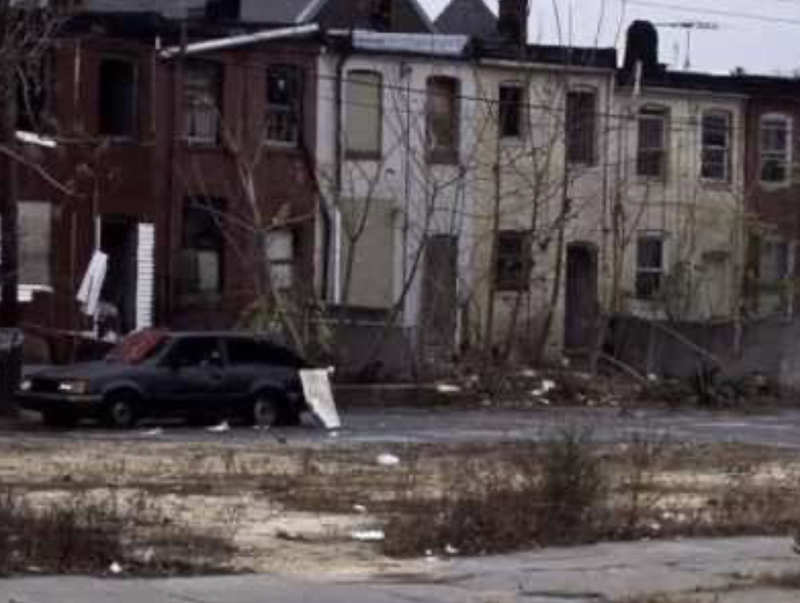
Baltimore definitely has some F class
- 6yJim K.Handyman · Pittsburgh, PA · Member since 2018 · 5k+ posts · 13k+ votesOP
My W2 job is an online gig. I work as a Speaking rater for the Test of English as a Foreign Language for Educational Testing Service, the same company that makes up the SAT for the College Board. I have to sign an NDA each time I log into the system we use, so there's not much I can disclose about my job. But I can say is that what I do is listen to people speaking and give them a score from 0-4.
In order to do this accurately, I have a descriptive rubric divided into sub-categories. Each of the people speaking is holistically rated on all three of these sub-categories. This makes it possible for an 02 response to have some 03 features or an 03 response to have 02 features. I worked with several rating systems like this in my time as a language teacher, with the two most prominent being the University of Cambridge Local Examination Syndicate in the UK and the University of Michigan English Language Institute here in the USA.
In starting this thread, I was thinking that the confusing task of trying to assign letter grades to neighborhoods accurately would be helped if we could come up with something like the rating rubric I use at my job, but instead applied to real estate. I think four bands, ABCD, just aren't enough. As @Account Closed very clearly showed, C really should be divided into multiple bands, C and C- at the least. I believe the others are a lot more cut and dried. And that's why I specifically tried to focus the thread on C-, D, and F neighborhoods.
This is what I've been thinking about subcategories:
- Age
- Apparent Condition
- Crime
- ProfitabilityWhat do you think?
- Mooresville, NC · Member since 2018 · 68 posts · 39 votes6y
F = At least 2 of these criteria are met:
within 2 blocks of a homeless shelter,
multiple houses within 2 blocks that are burned out/boarded up,
recent murders or shootings have taken place there;
while you were asleep, someone drove by your rental and shot at/through it,
a police officer was shot within 2 blocks
- 6yJim K.Handyman · Pittsburgh, PA · Member since 2018 · 5k+ posts · 13k+ votesOP
Originally posted by @Steve K.:
Here's what I use:
A= George Washington slept here
B= Jerry Garcia Slept here
C= A 90's porno was made here
D= Charlie Sheen slept here
F= I sleep there every Friday night
Uh-oh, this is not good, 2008's Zach and Miri Make A Porno was shot right here.
- 6yJim K.Handyman · Pittsburgh, PA · Member since 2018 · 5k+ posts · 13k+ votesOP
Originally posted by @Yvonne H.:
F = At least 2 of these criteria are met:
within 2 blocks of a homeless shelter,
multiple houses within 2 blocks that are burned out/boarded up,
recent murders or shootings have taken place there;
while you were asleep, someone drove by your rental and shot at/through it,
a police officer was shot within 2 blocks
By that definition, the duplex I'm renovating and will eventually move into is an F-class property. A dude was shot dead a block away from it last month and there are at least five houses within two blocks that are burned up/boarded out. Perhaps ten within four blocks. And I just replaced a window that someone seems to have busted the hell out of last month. I think there IS a religious-based homeless shelter about eight blocks away -- I know they run a soup kitchen.
And yet a $7.6M "educational clubhouse" built by a private foundation is going up across the street from my duplex, next to the municipal building/police station/firehouse.
The reason that your classification points won't always work is that the kind of activity I'm describing is, in this case, being caused by obvious gentrification next to an obvious lack of it. Eight houses in the last year have been flipped in that two-block radius you mentioned. Newcomers, like me, are resented. The existing criminal elements, in this case the drug trade, understand that they're being choked out and before they go, they occasionally do crazy things as a last hurrah.
Four blocks away is the municipal boundary, and on the other side of it, is one of the poorest and worst-run boroughs in greater Pittsburgh. Even that area's doing better, but it's clearly going to take more time. They don't have the infrastructure my borough does, they don't have the leadership, they certainly don't have the tax base, whereas the bulk of my borough is clear B and A-class properties, after a drive past a cemetery.
I would venture to say my situation is really not that unusual in the Rust Belt. I would likewise say that there really is no such thing as a very clearly monolithic 20-block F-class area in my city -- I wonder if other people from Pittsburgh disagree.
- Realtor · Boulder, CO · Member since 2016 · 3k+ posts · 5k+ votes6y
Originally posted by @Jim K.:
Originally posted by @Steve K.:
Here's what I use:
A= George Washington slept here
B= Jerry Garcia Slept here
C= A 90's porno was made here
D= Charlie Sheen slept here
F= I sleep there every Friday night
Uh-oh, this is not good, 2008's Zach and Miri Make A Porno was shot right here.
Zach and Miri? Sounds like C+ maybe B-
- Investor · Akron, OH · Member since 2016 · 2k+ posts · 4k+ votes6y
Originally posted by @Yvonne H.:
F = At least 2 of these criteria are met:
within 2 blocks of a homeless shelter,
multiple houses within 2 blocks that are burned out/boarded up,
recent murders or shootings have taken place there;
while you were asleep, someone drove by your rental and shot at/through it,
a police officer was shot within 2 blocks
LOL, my "D+" properties are F by that standard. LOL. But in those properties three out of the 8 tenants have bachelor's degrees and 2 of those are working on Master's degrees and another tenant is working on his Bachelors. I have great tenants in the property.


Join the conversationCreate a free account to reply, vote on answers and follow this thread.