Has Real Estate Ever Felt “Affordable”?
Ryan SpathBusiness Member
Real Estate Agent · Boise, ID · Member since 2017 · 577 posts · 379 votesCurious for the investors here who have been doing this longer than I have.
When you first started buying rentals, did it actually feel affordable at the time? Or did every deal feel like a stretch financially? When I bought my first property in 2013, it definitely did not feel “easy.” When I turned it into a rental instead of selling it, it didn’t cash flow the first year and barely broke even the second. Later I did a 1031 exchange into two more properties and even then the portfolio was only producing a couple hundred bucks a month. Today people constantly say real estate is too expensive. Honestly, I agree. But looking back, every property I bought felt expensive at the time I bought it. In hindsight, had I been a little more aggressive while still staying within my own risk tolerance, we probably would have ended up with a few more doors over time. That said, my goal was never 100s of doors. Just enough passive income to make life financially easier and create some freedom.
Curious if older/more experienced investors felt the same way in prior cycles or if there were actually times where deals felt obviously cheap and easy.
Curious for the investors here who have been doing this longer than I have.
When you first started buying rentals, did it actually feel affordable at the time? Or did every deal feel like a stretch financially? When I bought my first property in 2013, it definitely did not feel “easy.” When I turned it into a rental instead of selling it, it didn’t cash flow the first year and barely broke even the second. Later I did a 1031 exchange into two more properties and even then the portfolio was only producing a couple hundred bucks a month. Today people constantly say real estate is too expensive. Honestly, I agree. But looking back, every property I bought felt expensive at the time I bought it. In hindsight, had I been a little more aggressive while still staying within my own risk tolerance, we probably would have ended up with a few more doors over time. That said, my goal was never 100s of doors. Just enough passive income to make life financially easier and create some freedom.
Curious if older/more experienced investors felt the same way in prior cycles or if there were actually times where deals felt obviously cheap and easy.
My wife and I started investing in Atlanta, Georgia in 1999, just a few years after the city had hosted the '96 Summer Olympics and greatly raised its visibility and appeal as a business and social hub.
In the years that followed, we watched as real estate prices soared. Whole neighborhoods got gentrified and redeveloped, many by outside operators.
With each wave of hypergrowth, I'd hear local investors argue that rents and home prices had hit their limit and would never keep rising.
Sounds familiar, right?
Of course, Atlanta did ultimately hit the wall during the Great Recession, but so did every other real estate market.
But, since the end of the downturn around 2014, Atlanta has continued to soar!
Often, those closest to growth are the last to see it!
Great perspective, thank you for sharing. The closest to the growth speaks to my market. Micron is exploding and everything near that part of town is in high demand, it is pushing the affordability further out!
Depends on the market. I have owned property since 2001 and back then I thought when I was living in mass that unless you were an hour outside of boston, it was unaffordable. still think that this day. same thing when I moved to northern virginia - i find areas I feel are unaffordable and other areas that are more rural as affordable. but at end of day peoples opinions do not matter and it boils down to economics and perceived value of what people will pay for something - and at end of day it typically boils down to what we hvae heard for 100+ years in real estate - location location location

Depends on the market. I have owned property since 2001 and back then I thought when I was living in mass that unless you were an hour outside of boston, it was unaffordable. still think that this day. same thing when I moved to northern virginia - i find areas I feel are unaffordable and other areas that are more rural as affordable. but at end of day peoples opinions do not matter and it boils down to economics and perceived value of what people will pay for something - and at end of day it typically boils down to what we hvae heard for 100+ years in real estate - location location location
location, location, location is the key to success in my opinion too. You can literally change everything but the location. Thanks for sharing your perspective.
growing up in Cupertino and living in Palo alto the answer is NOPE.
@Ryan Spath
@Mitch Messer and you saw massive appreciation during the pandemic, and while I haven’t checked in a while, I’d guess there’s been some softness, with potential for further decline like in Texas and Florida. At the end of the day, that doesn’t matter. If you’re cash flowing every month, the price could drop to $1 and you still wouldn’t be forced to sell. Eventually, values will rebound and surpass current levels. Bottom line: cash flow is king.
If you have a GFC, it’s the same concept but in reverse. If a property is cash flowing, you buy it. Everyone claims that if they’d been around during the GFC, they would have bought a ton. But no, you probably wouldn’t have. People were panicking, losing jobs, retirement savings, and more. You likely would have been like everyone else, thinking real estate only goes down.
Nick, are you saying the price doesnt matter as long as you cash flow?
Curious for the investors here who have been doing this longer than I have.
When you first started buying rentals, did it actually feel affordable at the time? Or did every deal feel like a stretch financially? When I bought my first property in 2013, it definitely did not feel “easy.” When I turned it into a rental instead of selling it, it didn’t cash flow the first year and barely broke even the second. Later I did a 1031 exchange into two more properties and even then the portfolio was only producing a couple hundred bucks a month. Today people constantly say real estate is too expensive. Honestly, I agree. But looking back, every property I bought felt expensive at the time I bought it. In hindsight, had I been a little more aggressive while still staying within my own risk tolerance, we probably would have ended up with a few more doors over time. That said, my goal was never 100s of doors. Just enough passive income to make life financially easier and create some freedom.
Curious if older/more experienced investors felt the same way in prior cycles or if there were actually times where deals felt obviously cheap and easy.
It seemed expensive but I could project positive cash flow with conservative underwriting.
Today it seems expensive and virtually every market is cash negative at my conservative underwriting and those that are not negative project worse long term return than those that project negative cash flow
Two recent studies both show this is the worse RE cash flow market across large US cities since records have been kept.
My primary market, non-commercial MF sales have come to a virtual stop. It makes sense because rates have doubled since early 2022 increasing costs significantly but rents have barely increased. Investors do not invest in RE to lose money. Without a value add, virtually all mls LTR purchases will produce returns below what would justify the effort and risk of residential RE. So far the RE prices have not fallen significantly in my primary market but they are sitting on the market for increasingly longer DOM.
I see little action in my market for buy and hold. Most of the buy and hold investors in my market from 4 years ago are either taking a hiatus or have pivoted to flipping; flipping is a job, stop flipping and you stop earning.
Good luck
Dan, thanks for sharing. I am a residential person. In my market it appears as though people put larger amounts down to make cash flow, often tomes people pay in all cash. It also appears that people are getting more creative, rent by the room strategies, and Furnished MTR near micron have become more popular, we have seen alot more furnished housing for insurance temp folks too.
>In my market it appears as though people put larger amounts down to make cash flow, often tomes people pay in all cash.
The math shows buying cash flow is a ROI killer. I question if anyone taking this approach has done thorough and accurate underwriting.
>It also appears that people are getting more creative, rent by the room strategies, and Furnished MTR near micron have become more popular, we have seen alot more furnished housing for insurance temp folks too.
All those efforts take significantly more effort and have more risk than LTR. In my market MTR PM rates are 2x LTR PM rates. It is real challenging to find rent by room PM. This means most local investors taking these routes self manage with the associated work (but typically allocated nothing in the underwriting for them doing this job) and typically are unaware of the associated risks. In addition, both those routes in my market typically have landlord pay utilities. Then there is the cost of the furnishings. When allocating for the effort involved and including the additional costs and risks, those approaches typically are not producing significantly better return than LTR.
It is a challenging RE investor market. In terms of cash flow, the most challenging ever per 2 separate studies. This does not change by rent model. The current RE opportunities are sophisticated value adds (my initial protege sold a property ~$500k above comps by selling to highest value use), knowing obscure laws/regulations that provide buy opportunities, or understanding and using non traditional financing options.
Good luck
Curious for the investors here who have been doing this longer than I have.
When you first started buying rentals, did it actually feel affordable at the time? Or did every deal feel like a stretch financially? When I bought my first property in 2013, it definitely did not feel “easy.” When I turned it into a rental instead of selling it, it didn’t cash flow the first year and barely broke even the second. Later I did a 1031 exchange into two more properties and even then the portfolio was only producing a couple hundred bucks a month. Today people constantly say real estate is too expensive. Honestly, I agree. But looking back, every property I bought felt expensive at the time I bought it. In hindsight, had I been a little more aggressive while still staying within my own risk tolerance, we probably would have ended up with a few more doors over time. That said, my goal was never 100s of doors. Just enough passive income to make life financially easier and create some freedom.
Curious if older/more experienced investors felt the same way in prior cycles or if there were actually times where deals felt obviously cheap and easy.
It seemed expensive but I could project positive cash flow with conservative underwriting.
Today it seems expensive and virtually every market is cash negative at my conservative underwriting and those that are not negative project worse long term return than those that project negative cash flow
Two recent studies both show this is the worse RE cash flow market across large US cities since records have been kept.
My primary market, non-commercial MF sales have come to a virtual stop. It makes sense because rates have doubled since early 2022 increasing costs significantly but rents have barely increased. Investors do not invest in RE to lose money. Without a value add, virtually all mls LTR purchases will produce returns below what would justify the effort and risk of residential RE. So far the RE prices have not fallen significantly in my primary market but they are sitting on the market for increasingly longer DOM.
I see little action in my market for buy and hold. Most of the buy and hold investors in my market from 4 years ago are either taking a hiatus or have pivoted to flipping; flipping is a job, stop flipping and you stop earning.
Good luck
Dan, thanks for sharing. I am a residential person. In my market it appears as though people put larger amounts down to make cash flow, often tomes people pay in all cash. It also appears that people are getting more creative, rent by the room strategies, and Furnished MTR near micron have become more popular, we have seen alot more furnished housing for insurance temp folks too.
Even a couple of years ago felt a little bit different but it's also a perspective of stage of life/business/investing. I'm not sure that it ever felt easy, it's just a matter of doing the work and finding cash-flowing properties that are good investments. And learning how to be in the game.
I know the "it depends" answer is difficult to hear but it does... it depends on your strategy, on your location, on your personal stage of life, on your goals and values... it's still possible. It's always been difficult. If it were an easy, no-brainer activity, everyone would be investing in property. It takes some hustle and drive no matter how you work it.
Totally agree. thanks for shzring
Curious for the investors here who have been doing this longer than I have.
When you first started buying rentals, did it actually feel affordable at the time? Or did every deal feel like a stretch financially? When I bought my first property in 2013, it definitely did not feel “easy.” When I turned it into a rental instead of selling it, it didn’t cash flow the first year and barely broke even the second. Later I did a 1031 exchange into two more properties and even then the portfolio was only producing a couple hundred bucks a month. Today people constantly say real estate is too expensive. Honestly, I agree. But looking back, every property I bought felt expensive at the time I bought it. In hindsight, had I been a little more aggressive while still staying within my own risk tolerance, we probably would have ended up with a few more doors over time. That said, my goal was never 100s of doors. Just enough passive income to make life financially easier and create some freedom.
Curious if older/more experienced investors felt the same way in prior cycles or if there were actually times where deals felt obviously cheap and easy.
In 2011 there were markets that had properties with 2% monthly rent ratios. This is the same as purchase price 50 times the rent. These same markets are now challenging to find properties with 1% monthly rent ratios and in those markets, 1% monthly rent ratio typically does not provide a good ROI.
@Ryan Spath To be blunt, I do not care whether it seems expensive if it projects a great return. Unfortunately, finding residential RE that projects a great return is challenging especially if using traditionally purchase methodologies. It has been many years since I have purchased a property using only traditional purchase methodologies.
Best wishes
"
"To be blunt, I do not care whether it seems expensive if it projects a great return."
Yes I agree with this, thanks for sharing your perspective..
Yes and no.
In 2010 it felt like catching a falling knife, in 2012 it started feeling expensive and in 2015 it felt too expensive. I could also not imagine that these homes I was buying for 150k (ARV) could go up that much higher - now we are 300k plus in my market.
But cash flow was easier.
I remember $900-ish PITI and $1400-ish rents. And that was with 6% financing. Now prices have doubled, but rents have not. Only about +50% and straining affordability. Salaries up 40% in the same time.
Thanks for sharing the perspective in your market
I’ve been saying this for years! There were no “good old days” when it came to investor confidence. Certain asset types may have traded in previous markets with a higher margin for many investors, but that doesn’t always tell the whole story. It’s always taken guts and confidence in the future market to justify a real estate investment, even while hindsight can make purchasing in the past a “no brainer”.
How many investors sitting on the sidelines today would have had the guts to buy in 2011 at the bottom of my local market? Hardly any. Even today we are seeing more deals in the small multifamily space due to certain economic uncertainties and interest rates - the reason why these deals exist is due to lack of buyers willing to roll the dice! You cannot have your cake (low interest rates, economic confidence) and eat it (buyers market, high margins) too.
Good point, when times are bad, most people are afraid to make a move...
This is a Time magazine cover from 1977
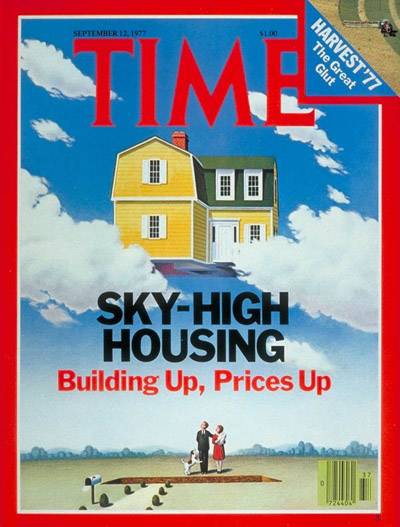

@Ryan Spath I think you're really close to hitting on the core of it all, just need a minor tweak.
I started in flipping, and as much as it felt like a kid in a candy-shop with Daddy's Amex in '09'-'10' I still never felt the price was oh-so-great.
Now, key item, I never lost 1 cent on a flip, ever. Yes, I cleared profit 100%, perfect batting average. yeah, some were just a few thousand, some were near 6 figures, but NEVER in the red.
So, I was always wanting better. As I think any intelligent investor would.
Because more margin = more safety/security in the venture.
I, by nature, am very conservative. Hence the perfect batting average. But yes, I passed on a ratio of about 20:1 to preserve that batting average.
So is there a component today of just FEELING prices are "too high" that stems from the investors eternal desire for a "perfect" sure-fire "can't go wrong" margin? Sure, no doubt there is always some of that.
BUT..... but, but, but..... There is also a very dangerous surrendering of the 20:1 too 10:1 too 4:1. the getting into a "deal" just to be into something. Justifying a foolish price.
Cash-flow focused or appreciation focused, flip, hold, hack...... None of these differentiators matter at all in manner of the foundational "law" of acquisition:
You make $ when you buy....
Grow it in your operational leg.....
Reap it in your monetization component.
When you buy WRONG, over-pay, everything that follows is FUBAR.
It all converts to actions of mitigation, attempting to dig UP too solid ground.
Ever try to get out of a hole via a shovel? Yeah, it's doesn't have a good track record of success.
In truth, price does not matter, it's just a detail.
Those following 2 phases will determine your ALLOWABLE price.
Way WAY too many come at it backwards.
You START, at the end......
What's the exit/monetization?
What's the operational leg?
What acquisition price does that afford. MAO.
And you ignore feeling. Feeling has no place in math, 1+1 has no care how you feel about it's output being 2 vs 2.5, it just is.
Start at the end, follow the math, ignore the noise. Signal signal signal.
Follow that, and success becomes a natural conclusion.
@Ryan Spath
Obviously you can take anything to an extreme but if I said if you buy this house and make 8% CoCr and the loan costs you 6% how many of those houses would you buy? I would assume pretty much as many of them that you can. Just like the inverse if you could buy a house for cheap but it costs you money to hold the property every month you probably would not want to buy as many of them.
Almost at every time span I bought real estate(prior to being a REI), I thought this was ridiculous. And for the following 2-5 years it was-- just after closer to year 10-12 it was amazing. In between that, it made sense.
This time is different--my favorite line tongue in cheek-- it's truly 1980s level of affordability and I am starting to believe we're passing the K and going into the I economy. I really just focus on what I am buying and how I am entering it, from there I let time take's course.
This has been my experience with the timeline as well.
In the early 2010s, when foreclosures were still common and many investors were avoiding certain parts of town, some of my deals actually did feel cheap at the time. I decided to buy when prices were still depressed but the signs of future growth were starting to appear.
I was buying in neighborhoods where I believed the neighborhoods were beginning to change. none hit the 2% rule but were close at approx 1.5ish After rehabbing I could often rent them within weeks, and the numbers worked. They cash flowed well from the start, and I was flipping houses in the same areas, watching renovated homes sell for more each year as demand steadily increased.
Looking back, those opportunities feel like once-in-a-generation opportunities. My only regret is that I didn’t buy more of them.
Ryan, your own story already answers your question, and it's worth seeing why. The 2013 house felt expensive, barely broke even, and still became the portfolio that funds the freedom you were after. The feeling was wrong and the structure was right.
Here's the mechanism everyone above is circling. "Feels expensive" compares today's price to your memory of recent prices. Underwriting compares today's price to the property's future performance. Two different measurements, and only one contains information. In 2013 you were anchored to 2011 prices, so a sound deal felt like a stretch. Buyers in 2031 will be anchored to today.
That's why Dan's line is the keeper: he doesn't care whether it seems expensive if it projects a great return. And James's version is the discipline that makes it safe. Start from the exit, work back through operations, let that set your maximum allowable offer. Between those two you never need the feeling at all.
V.G.'s timeline rings true too: most purchases feel dumb in years two through five and obvious by year ten. So the real skill isn't buying what feels cheap. It's writing down the test before you shop, and trusting the written test over the churn in your stomach.
One trap worth naming, since "everything always feels expensive" can quietly become the justification for overpaying anything: the math sets the price. The feeling doesn't get a vote in either direction, in or out.

