US Economy: The Leviathan Stirring Underneath
Welcome to the weekly Skeptical Investor Article, right here on BP!
For investors, by investors.
-----------------------------------------------------------------------------------------------
This week, we’re talkin’ global oil panic and …you know what…
....never mind that. The oil price and inflation story has been told ad nauseam to scare us adults at night. It will not be the crisis the talking heads on the tele are bloviating.
We will soon look back on this inflation scare as a fleeting concern.
So today I’m reminding myself to look for contrarian signals. And I see some real green shoots in the economy. A leviathan is stirring deep down.
And what does a potential economic boom start with?
Trucking.
Followed closely by construction and manufacturing.
Let’s get into it.
-----------------------------------------------------------------------------------------------
Today’s Interest Rate: 6.55%
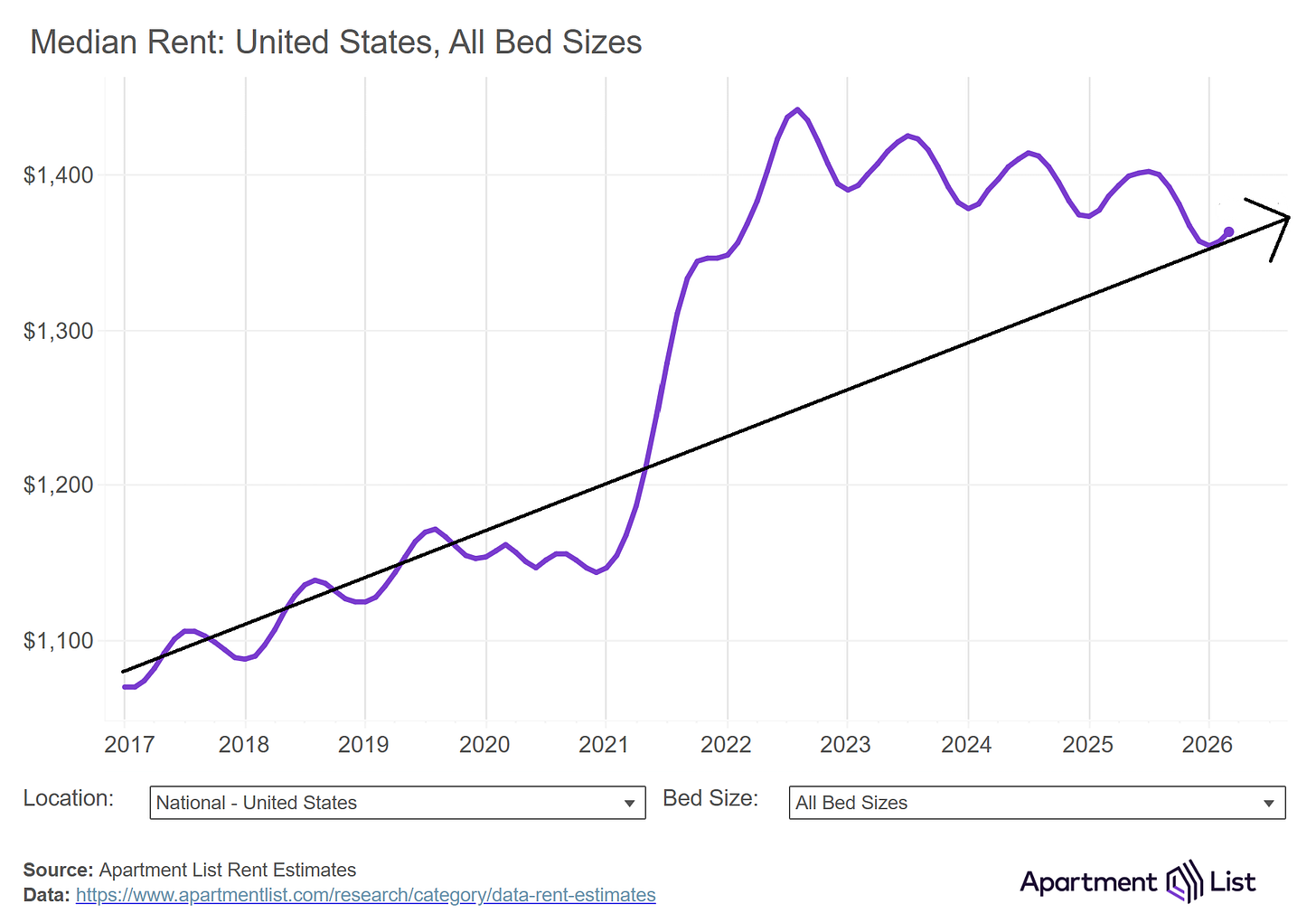
(👆.06% from this time last week, 30-yr mortgage) ------------------------------------------------------------------------------- The Weekly 3 in News:- Rental growth rates have normalized, back to their pre-COVID trendline of 3% (ApartmentList).
- Saudi Reroutes Oil to Offset Gulf Disruption. Saudi Arabia is boosting crude exports from its Red Sea ports toward 5 million barrels a day, according to ship tracking data (Bloomberg).
- Renovation Tip - Use wood/cedar soffits. Changes the whole project without immense cost (Picture Credit).

-----------------------------------------------------------------------------------------------
Brent crude oil has climbed sharply prompting fresh hand-wringing about sticky prices/inflation.
Yet history suggests this scare will prove more fleeting than fundamental. We have heard these narratives often enough to recognize them for what they are: useful headline fodder, not a reliable guide.
Instead, this Skeptical Investor turns his attention to contrarian signals bubbling up from deep beneath the surface.
The Leviathan is Stirring
Early 2026 data from the real economy—trucking, construction, and manufacturing—point to a leviathan awakening, one that may be quietly underpinning a broader expansion, as the headline commentariat fixates on oil barrels and CPI prints.
A potential boom almost always begins with freight. Trucking volumes and rates serve as the economy’s early-warning system, after all, to produce stuff, you need stuff.
A lot of stuff.
Trucking Demand is Going Parabolic
Orders for large Class 8 trucks (aka “semis”) exploded in February to 46,200 units—a 156% surge from the prior year—as manufacturers position for higher volumes ahead (ACT).
Ford is ramping Super Duty truck production by more than 50,000 units in 2026, adding capacity at key heavy-duty plants (Ford).
Volvo had its "strongest February ever" for Class 8 truck orders.
Hyundai Translead announced two new trailer manufacturing facilities in Illinois this month, a $450 million investment that will create 2,500 jobs and boost U.S. capacity for dry vans and refrigerated units (Illinois EDC).
And GM just announced it will operate it’s heavy duty truck production plants 6-days a week to keep up with demand (WSJ).
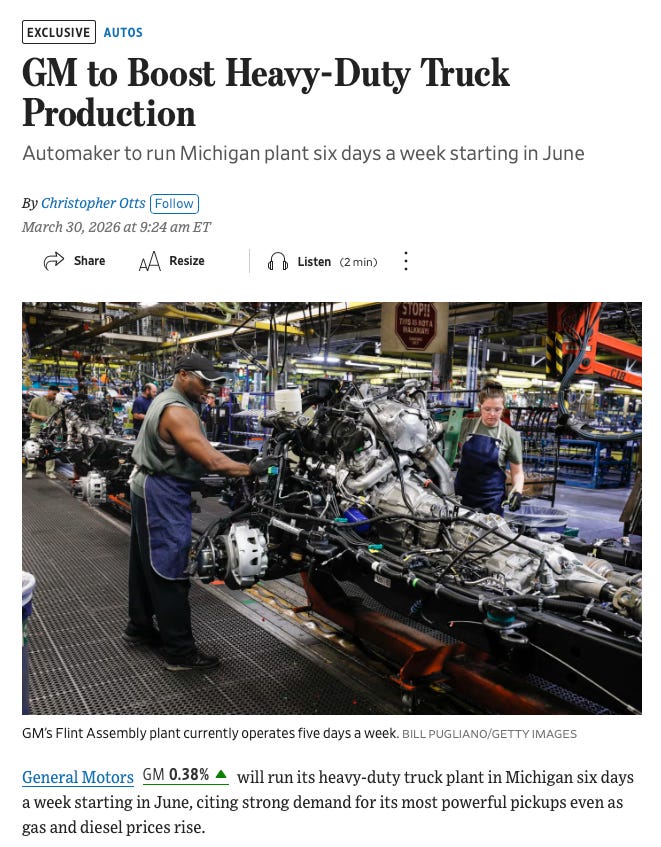
Remember, this is all happening right in the face of high gas/diesel prices.
Fleets put off purchases until they had confidence in the future demand.
That is happening now.
Rejection is Positive
Let’s look at the primary/services side of freight trucking, aka when you hire that truck to get you what you need to the job site.
As I’ve recently learned, there are 3 other types of trucking too, not just those big Class 8 semis.
We have flatbeds, reefer (that’s refrigerated, not the other reefer, kids) and vans.
And, right now, all 3 of these freight truckload modes are seeing new rate cycle highs (Fuller).
- Flatbeds up to $3.83/mile
- Reefers up to $3.30/mile
- Vans up to $3.00/mile for the first time since 2022
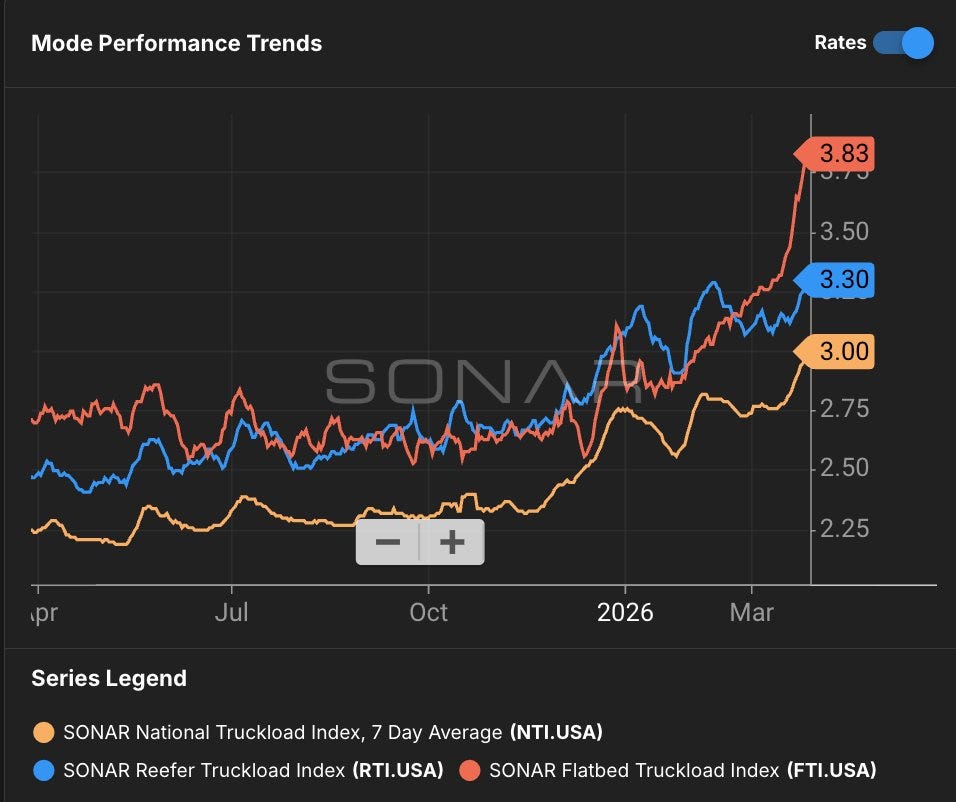
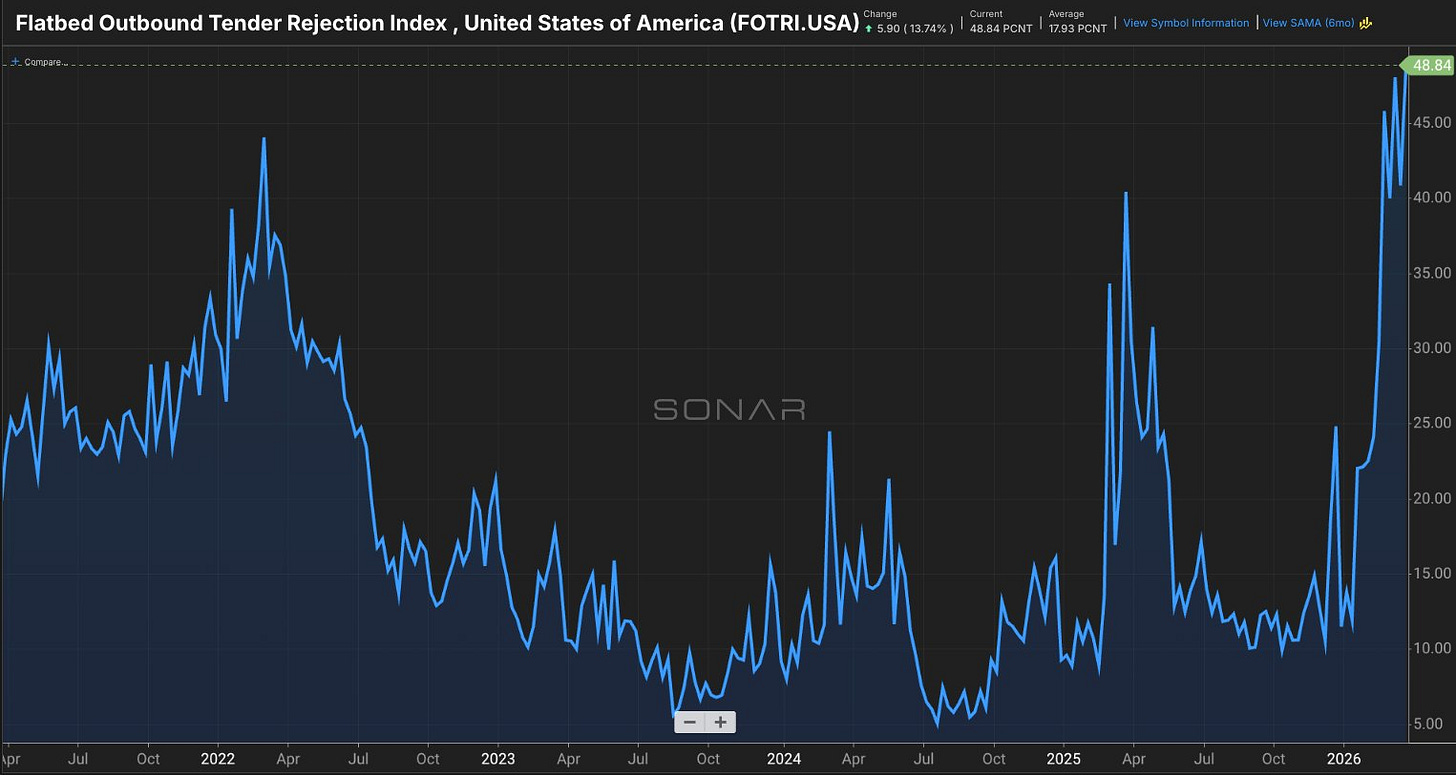
These rates are up because of wild demand. In fact, the demand is so strong that almost HALF of all orders are being rejected.
Let’s look at that: flatbed tender rejection rates:
This is a major bullish signal.
Why are Trucking Rejections Positive?First, I know what you’re asking: What the hell is a trucking rejection rate?
Flatbed rejection rates are actually key metrics in the freight and logistics industry. They measure the % of contracted flatbed truckload tenders (offers from shippers to carriers to haul specific loads) that carriers decline or reject.
High rejection rates indicate a tightening of capacity in the market—meaning there are fewer available flatbed trucks relative to higher demand—allowing carriers to be more selective about which loads they accept, often in favor of higher-paying spot market opportunities.
For context, as of early 2026, flatbed rejection rates have surged to ~50%, which is unusually high and signals strong demand. This isn’t just a seasonal blip.
And just overnight, daily trucking van spot rates exploded +$.16/mile to $3.17/mile.
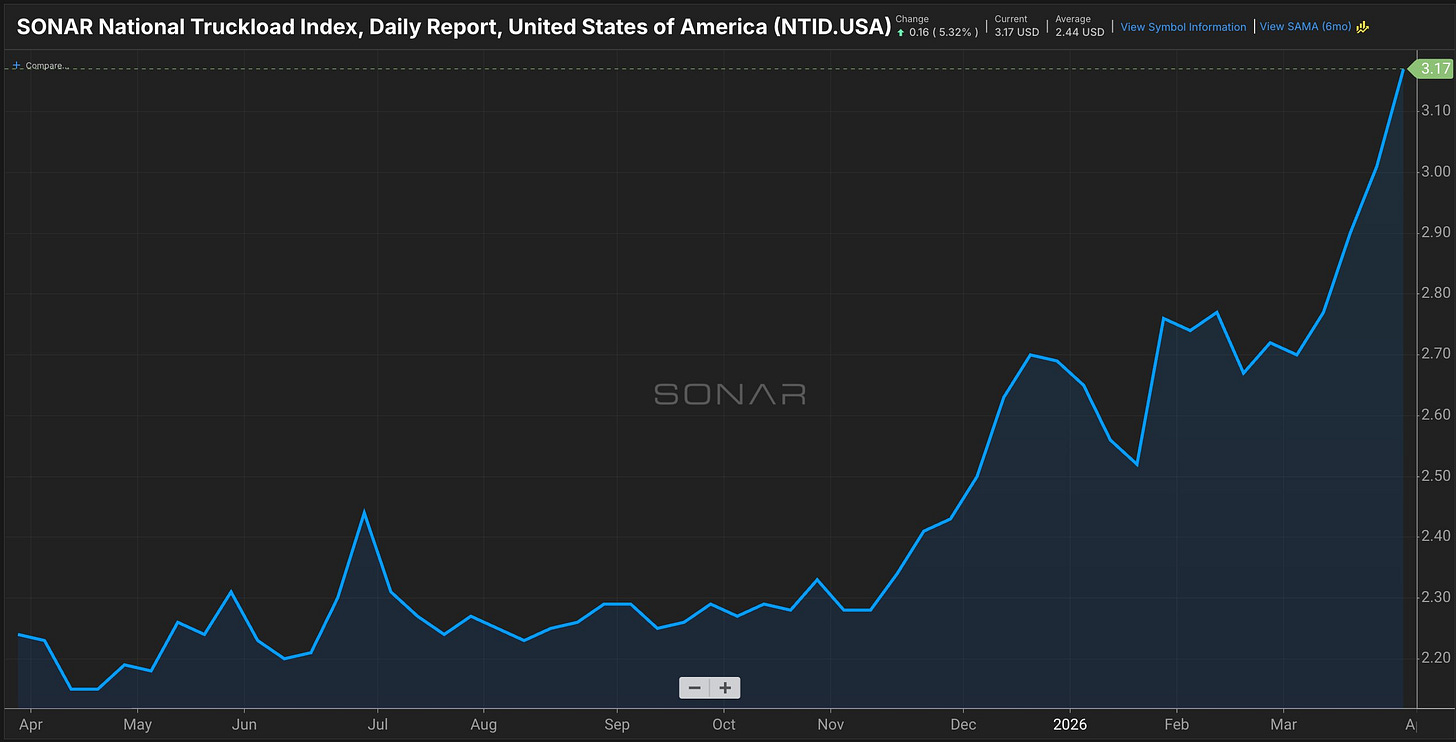
This rally is historic.
And as such, we are seeing some of the most aggressive freight demand and bullish industry indicators, really, since COVID.
And what’s interesting about it, trucking demand is plowing right through high diesel prices ($5/gal now).
And a point on oil prices.
Analysts have said anywhere from $130 to $170 for WTI (crude oil) is really the tipping point where you see demand destruction for trucking services.
Except for the past 20 years.
Why?
We are fossil fuel independent.
“[In the U.S., fuel prices are insulated from high oil prices because the US produces so much of its own oil, so much of its natural gas, that our products globally become more competitive as you have issues around the world, and it actually drives manufacturing], rather than destroy it (Fuller).”
This is a big deal for US GDP growth expectations, relative to the bad news we see in the press/headlines/pundits, etc...
Add to this a full year (2025) of demand that was destroyed over concerns from liberation-day tariffs, the upcoming 2026 boon from the 2025 tax cuts for capital investment (Big Beautiful Bill Act) and we have quite the bullish setup for the next 18+ months.
According to trucking analyst Craig Fuller, “If we were having an industrial renaissance, a manufacturing surge, you would see it in the flatbed data first. This is exactly what we are seeing right now — that flatbed is surging because it is the raw materials going into production.”
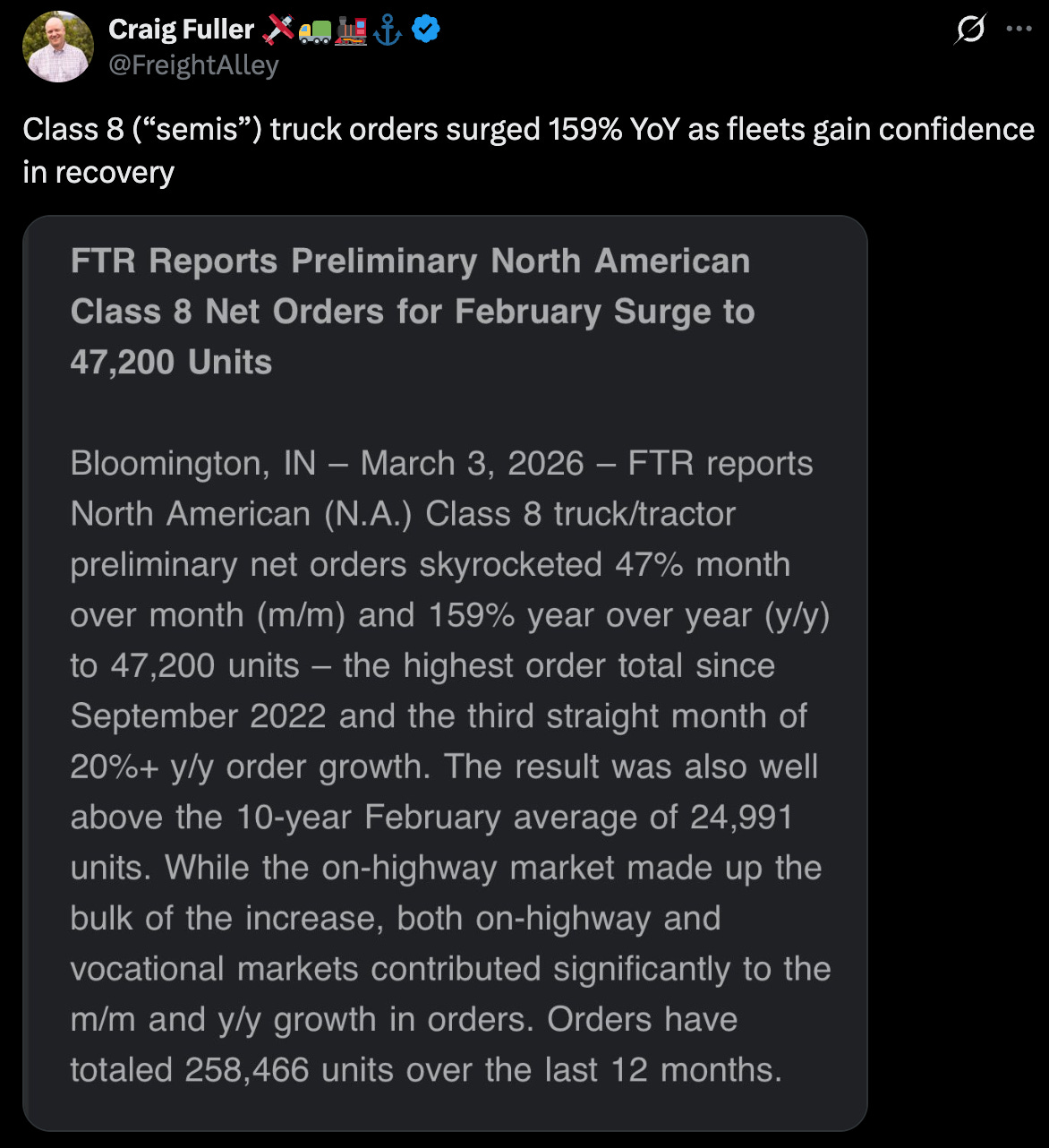
Translation: Even if you are bullish, “you are not bullish enough.”
Send it.
What else is cookin’? Rail Traffic.Up 6.3%+ (AAR).
Weekly rail traffic for most everything is UP, led by chemical demand (doubly good for manufacturing).
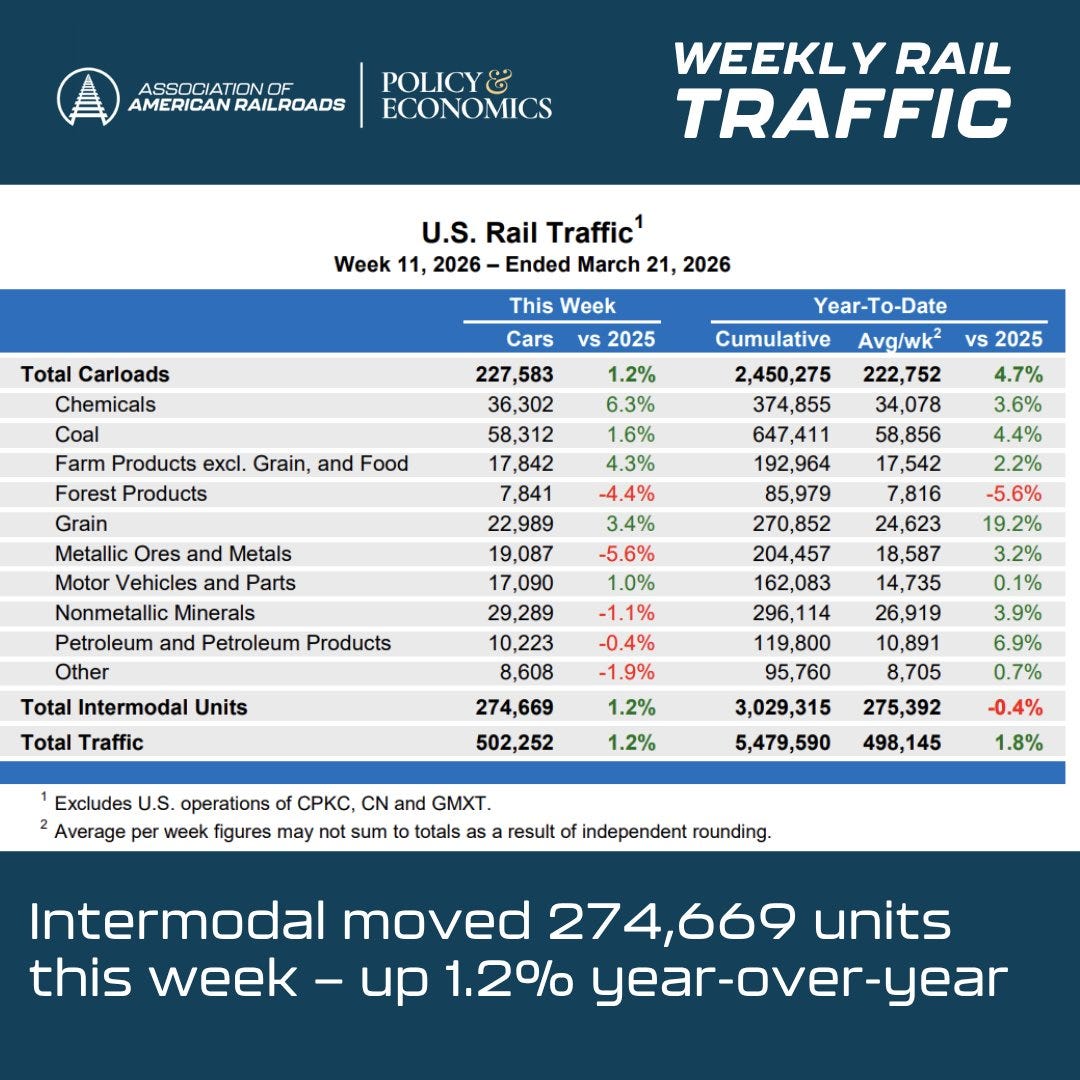
Again, flatbed trucking and rail traffic are key indicators of manufacturing and construction demand in the economy.
After all, you need to move big stuff to build big stuff.
Let’s take a look at what’s starting to sprout in both of these sectors:
Construction
Construction spending is near record territory at a seasonally adjusted annual rate of $2.190 trillion in January 2026—up 1.0% from a year earlier despite a modest monthly dip. Public highway work advanced 3.3% month-over-month, while private residential and nonresidential segments remain substantial contributors to overall activity (Census).
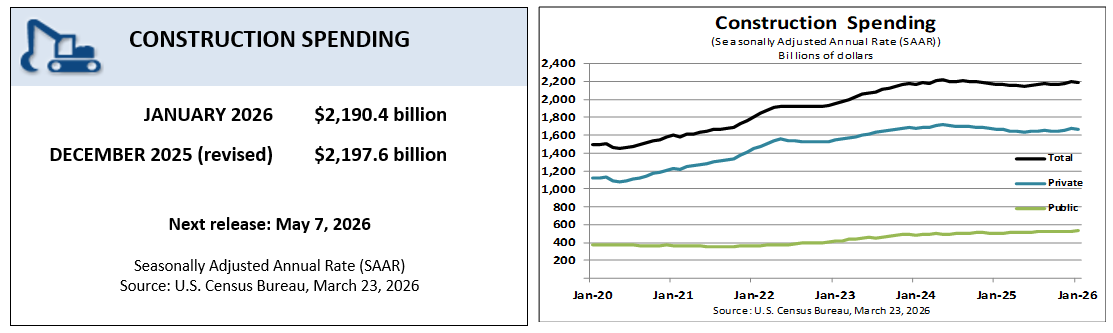
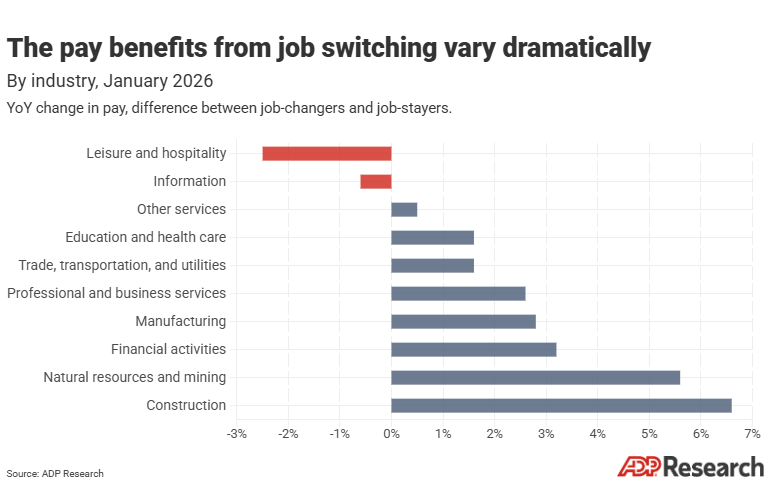
A labor shortage in residential construction has contributed to strong job growth, robust wages, and bonuses for workers. Hiring for construction workers jumped in the beginning of the year, and construction firms still can’t get enough. Skilled workers are demanding a premium. YoY pay increase among job-changers was 6.6% in January.
After seeing a break in growth in 2025, which saw stagnation for much of last year, construction jobs are reaccelerating, adding 33,000 jobs in January, one of the strongest monthly increases in recent years.
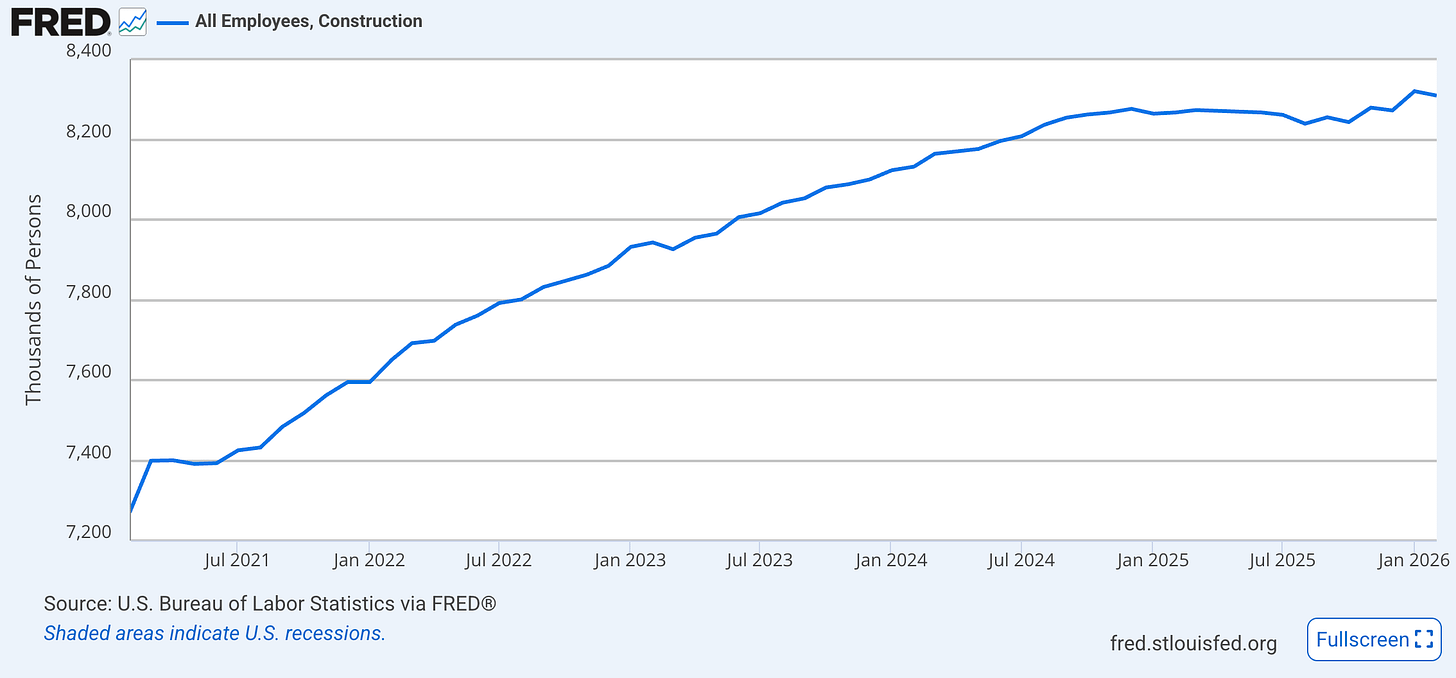
The Associated Builders and Contractors estimates the industry will need to attract 349,000 net new workers this year simply to meet demand (TCA).
Timberrrrrr
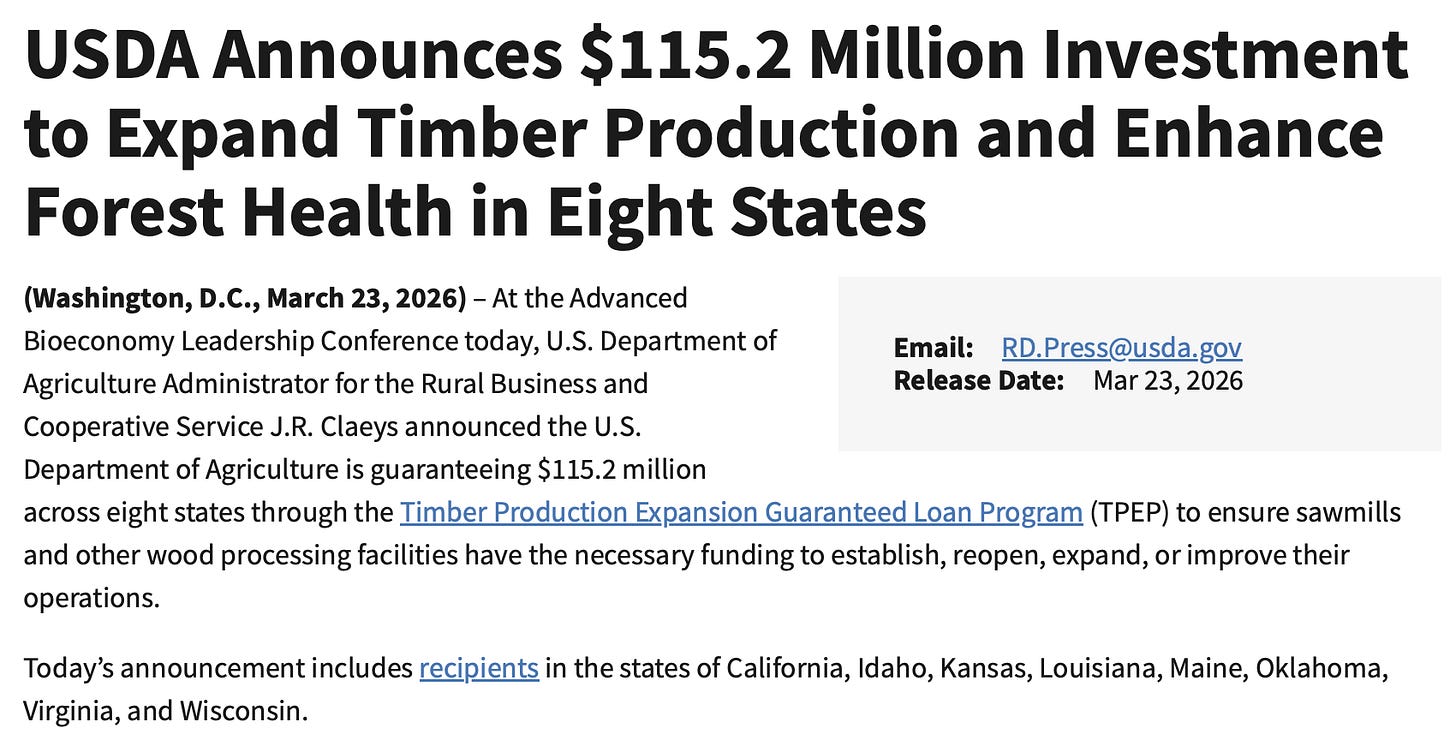
The US Department of Agriculture is stepping in by buttressing construction, too, this time via lumber.
USDA will fund $115.2M across eight states to boost sawmills and wood processing, expanding timber production by 25%.
Wow.
Manufacturing has now posted back-to-back months of expansion, with the ISM Manufacturing PMI at 52.4 in February—above the key 50 threshold and supported by rising new orders (55.8) and a backlog index that climbed to 56.6, its highest reading since May 2022 (ISM).
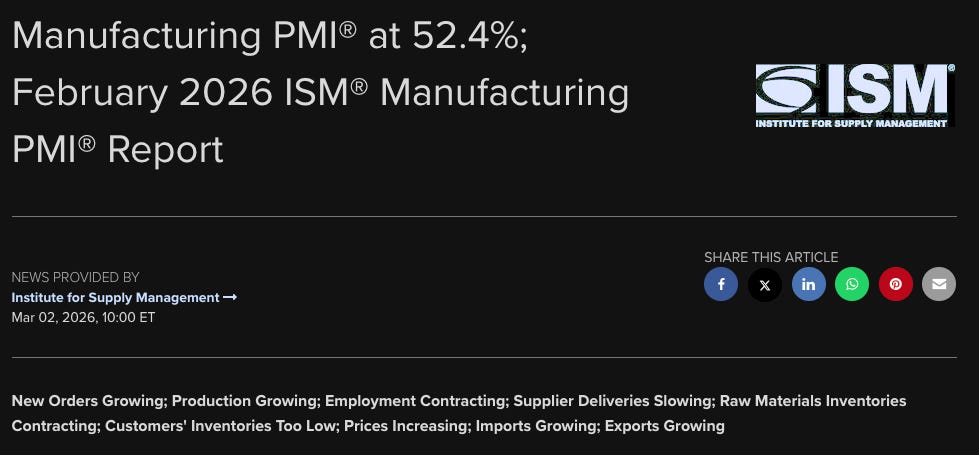
And it may be this demand for manufacturing that is driving the construction industry to explode higher.
Announcements continue for new facilities across pharmaceuticals (Eli Lilly), semiconductors (Micron), and heavy equipment, adding billions in U.S. production capacity (IS).
Manufacturing activity in March expanded at the fastest pace in months. Both manufacturing and services are up. You’ll need to go back to May 2021 to find a hotter manufacturing print.
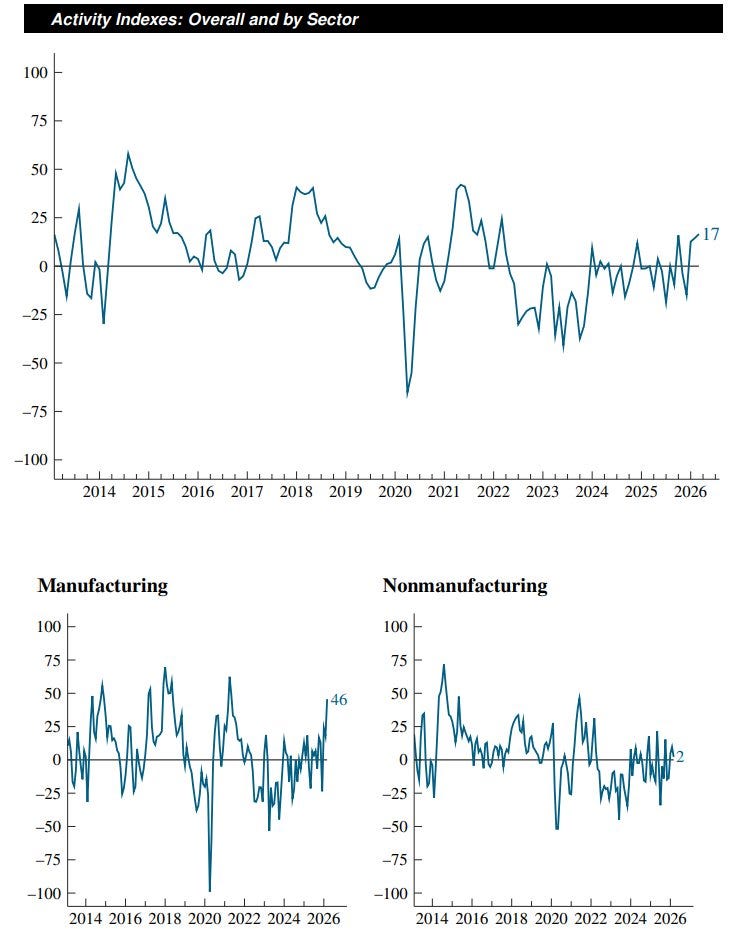
And US business confidence, profit outlooks and real net wages are rising.
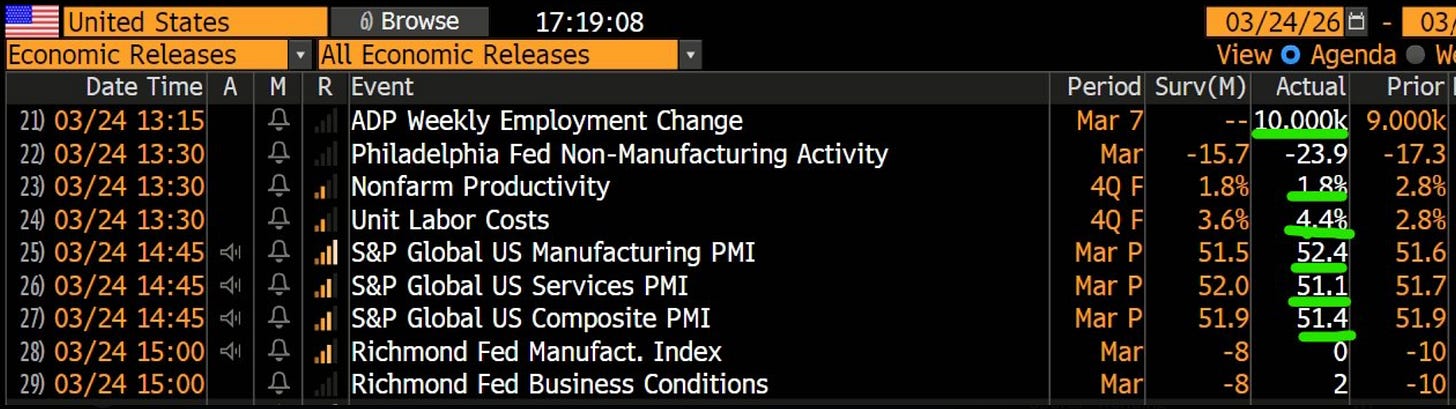
It’s early, but the manufacturing economy may be setting up to absolutely roar in 2026+.
-------------------------
My Skeptical Take:
Again, sprouts. Green shoots. Seedlings germinating… The figures above are signals of what may be to come.
Rising demand for freight drives warehouse and distribution-center leasing. New plants and construction hiring translate into industrial space requirements and supporting infrastructure.
But the cycle remains early and fragile—none of this guarantees a full boom—but the real-economy signals under the surface are worth far more attention than the latest oil-price hysteria.
Economic growth turns before the headlines catch up.
A Note On Inflation
It is also true that a spiking demand, such as for trucking, is likely inflationary, but it’s not what you think. Historically, even if transportation costs doubled, it would lead to an increase in food prices of about 5%, and total consumer prices of abut 1% only (Fuller, Fuller).
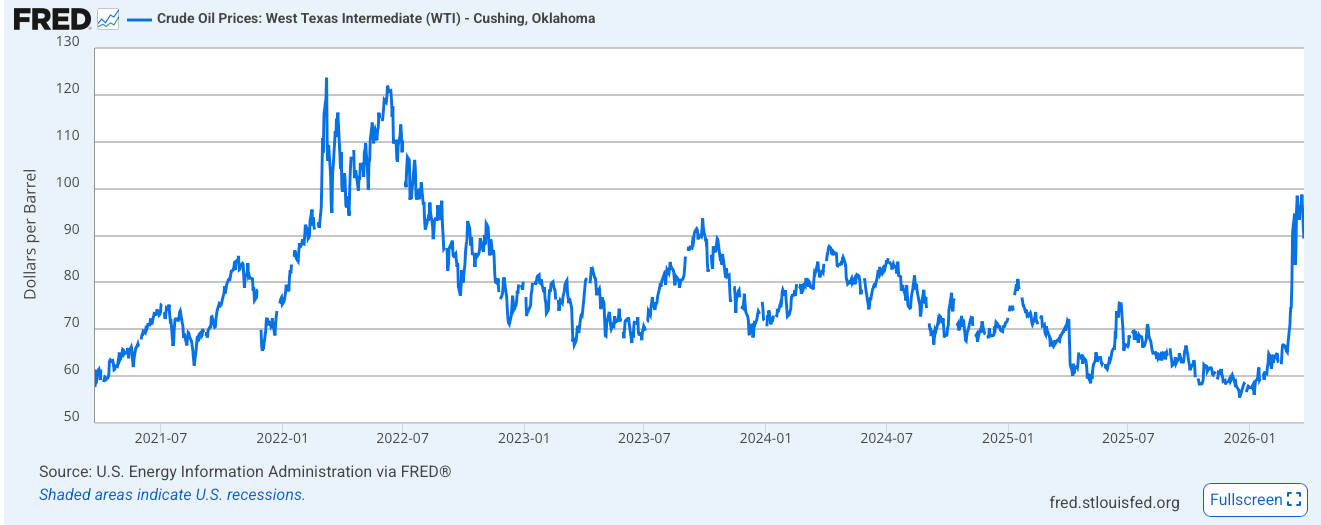
Remember, oil prices today are about the same as they were three years ago.
Total price.
And as a % YoY change.
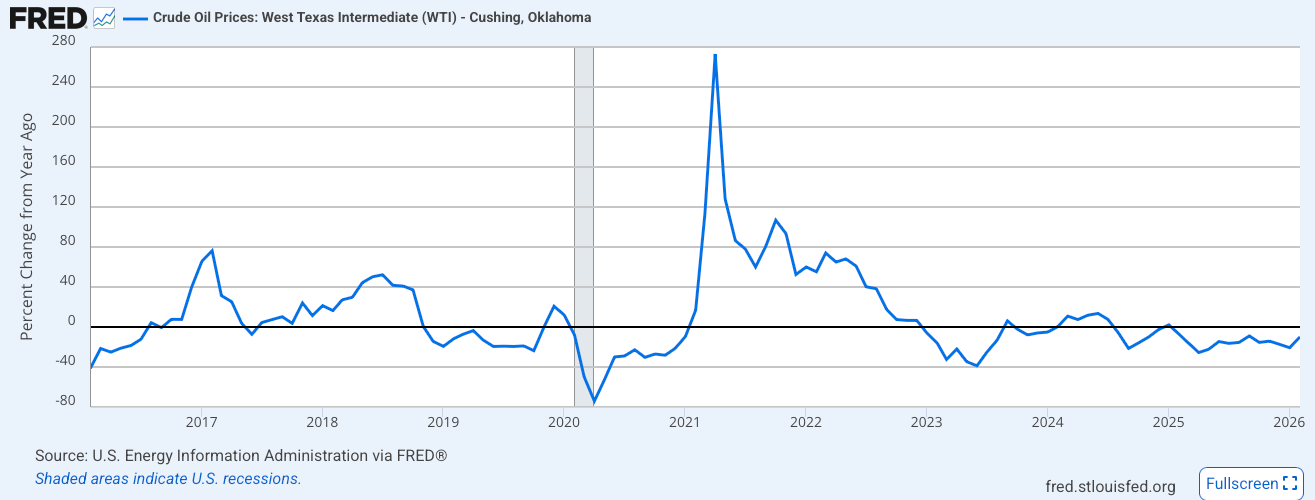
Again, these are not yet roaring numbers, but a contrarian/skeptical investor would be well paid to watch early economic signals closely, before the leviathan reveals itself...
Are these signals portending an economic boom?
Or will an extended conflict in the Middle East, high fuel prices, and long-term inflation nip those economic green shoots in the bud?
It is inevitable that we face problems, but no particular problem is inevitable.
I see this data as bullish rather than confirmation of either disaster or euphoria. The real economy—freight moving, plants expanding, workers being hired—often foreshadows good times before the headlines adjust their narrative. For real estate investors, that means keeping a measured eye on industrial and warehouse demand, construction employment, infrastructure projects, and the supporting buildout in trucking and manufacturing capacity.
I will continue tracking these indicators in the weeks ahead, separating signal from noise.
Until next time. Stay Curious. Stay Skeptical.
Herzliche Grüße,
-The Skeptical Investor