
Austin Market Report - January 2026
The January 2026 report from the Austin Board of REALTORS® reflects a typical start to the year, with lower sales activity compared with last January and continued price softness across both Austin and the greater metro. January is traditionally one of the slower months for closings, and year-over-year comparisons often reflect that seasonal pattern. At the same time, early indicators suggest buyers are beginning to re-enter the market ahead of the spring season. Here are some key highlights from the report, which compares January 2026 with January 2025:
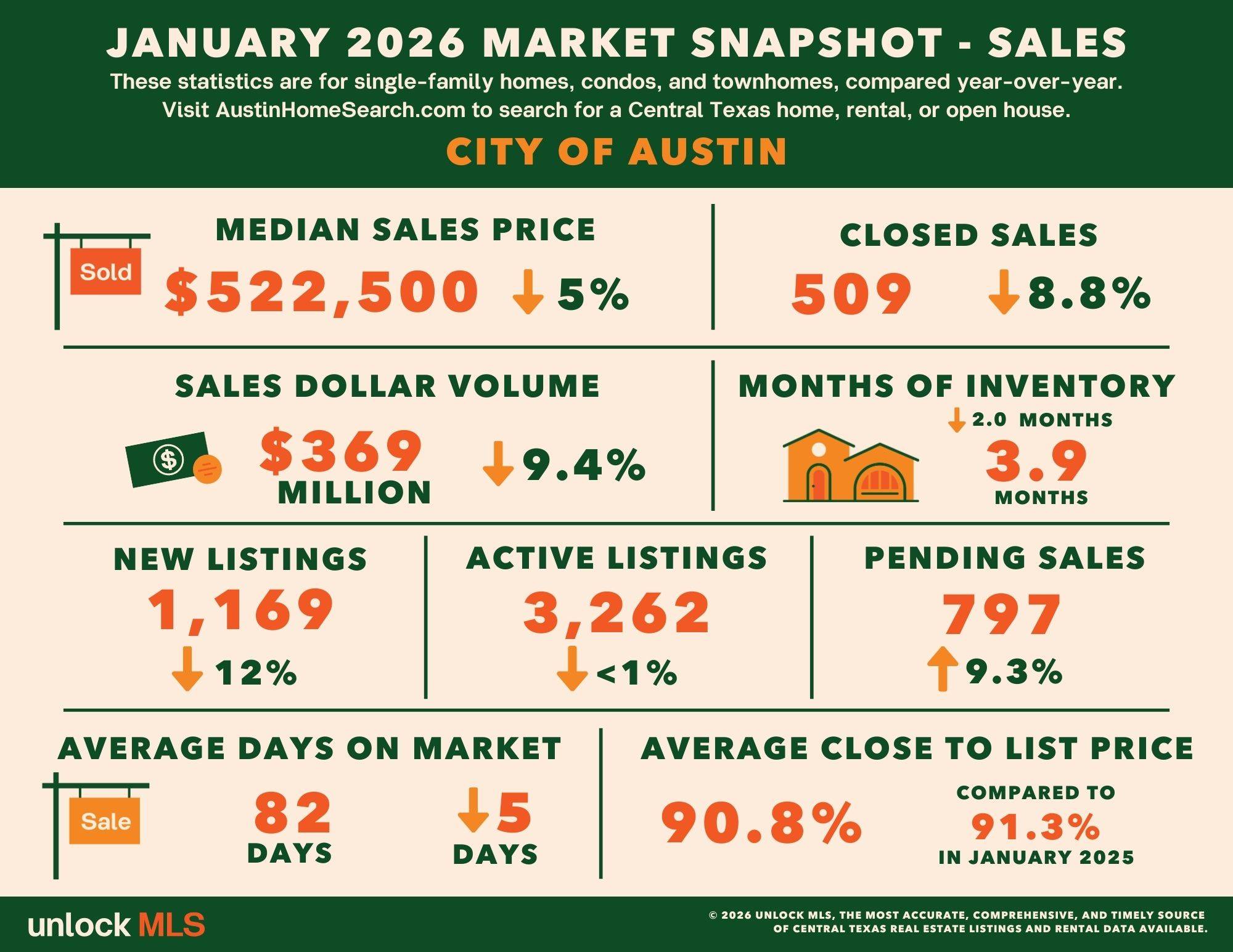
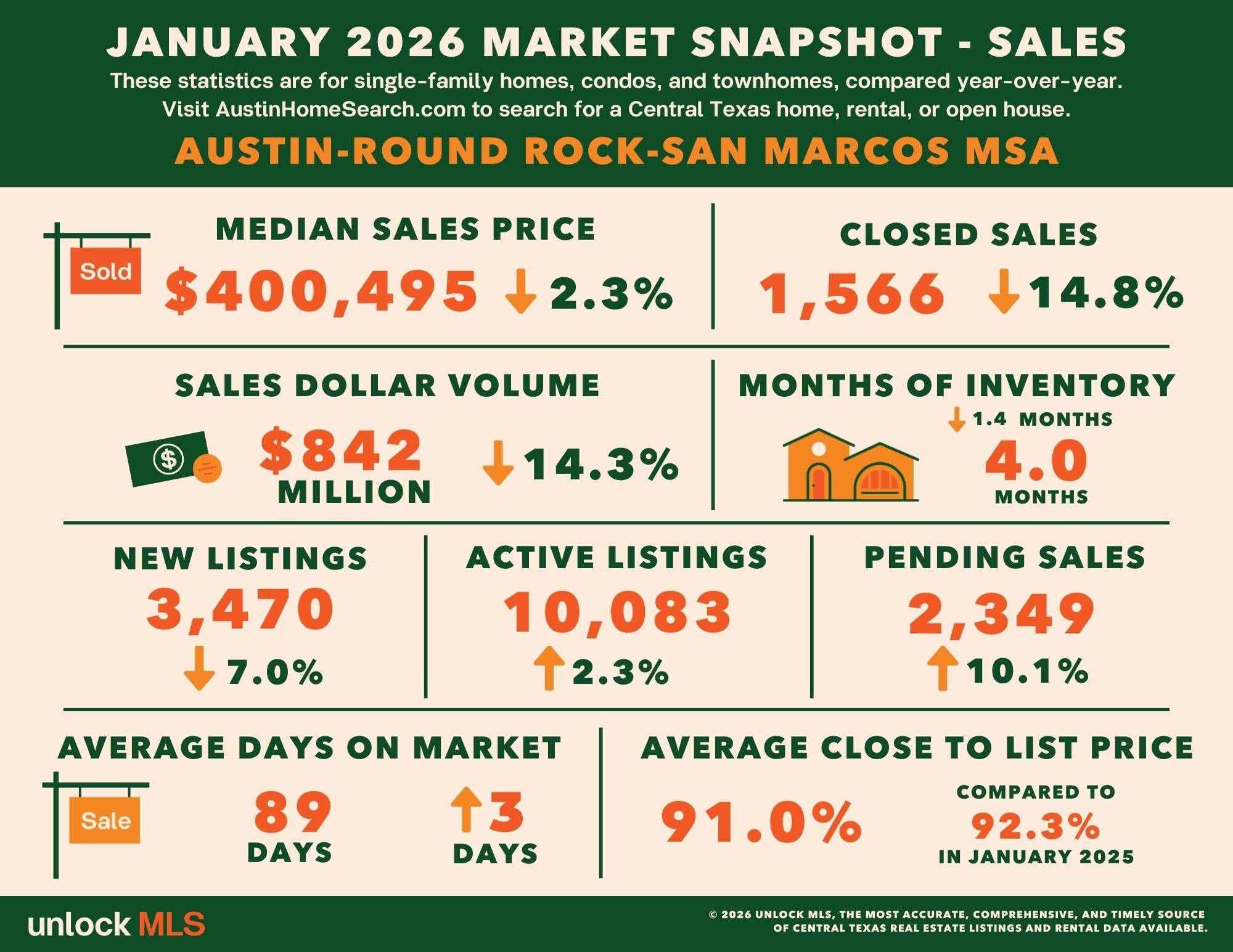
• Median price: The median sales price in the City of Austin declined 5% to $522,500, while the greater Austin metro fell 2% to $400,495, continuing a pattern of modest year-over-year softening and relatively stable pricing overall.
• Closed sales and volume: Closed sales declined 9% in Austin to 509 transactions, while the metro fell 15% to 1,566. Sales dollar volume dropped 9% in Austin to $369 million and declined 14% across the metro to $842 million, reflecting fewer completed transactions during a seasonally slow closing period.
• Buyer activity and listings: Pending sales increased 9% in Austin and 10% across the metro, indicating buyer activity is picking up early in the year. New listings declined year over year, down 12% in Austin and 7% metro-wide, while active listings were essentially flat in Austin and increased 2% across the metro, suggesting demand is beginning to absorb available inventory.
• Inventory: Inventory tightened compared with last year. The City of Austin reported 3.9 months of supply (down 2 months), while the metro stood at 4 months (down 1.4 months). Metro-wide inventory remains near the range the Texas A&M Real Estate Center considers a balanced market, while Austin proper is slightly below that level.
• Market time and pricing: Homes spent 82 days on the market in Austin (down 5 days) and 89 days across the metro (up 3 days). Sellers received about 91% of list price in both Austin and the metro, slightly below last year’s levels, reflecting continued negotiation as a standard part of most transactions.
Overall, the January data reflects a seasonally slow start to 2026, with lower closed sales and dollar volume, modest year-over-year price changes, and inventory levels that tightened compared with a year ago. Rising pending sales and steady inventory levels suggest a market that is active, balanced, and moving through its typical early-year cycle.
Here are the January 2026 stats for Austin and the greater metro:
Here are the leasing numbers for the City of Austin and the greater Austin metro area:
A 30-year fixed rate mortgage is currently around 6.12% interest, down a full point from the 7.13% high seen over the past 12 months. This is the lowest level since February 2025.

What if I’m a buyer?
This continues to be a favorable market for buyers compared with the tight conditions of 2021 and 2022. Inventory remains near balanced levels, giving buyers more choice and generally less competition than in recent years. Prices are modestly softer year over year and remain below peak 2022 levels, while longer days on market and lower average sale-to-list ratios indicate that negotiation is still common. Homes are closing at roughly 91% of list price on average, and buyers typically have time to evaluate options, request repairs, or negotiate concessions. That said, well-priced homes in desirable locations can still attract quick interest. Buyers planning a move this year may benefit from getting financing and timing lined up early so they are ready when the right opportunity appears.
What if I’m a seller?
Austin’s housing market continues to show steady buyer activity and generally stable pricing, and most homeowners still hold meaningful equity. At the same time, buyers are more selective and deliberate than in recent years and often expect concessions, particularly when homes are not priced or prepared appropriately. Homes are taking longer to sell than during the peak years, and price reductions remain common when listings start above market expectations. For sellers planning to list in the coming months, preparation and pricing discipline are especially important. Under today’s more balanced conditions, homes that are well positioned and realistically priced continue to attract buyers, while overpricing can lead to extended market time and lower net proceeds.
Real estate is highly local and situation-specific. If you’d like to talk through your plans or timing, or how current market trends may affect your situation, I’m always happy to be a resource.