New investor advice
Member since 2026 · 2 posts · 9 votes
Hey everyone,
I recently started listening to the BiggerPockets Podcast and I’m very new to real estate investing. I live in Big Sky, MT, am married, and have a one month old baby girl.
I have been very interested in real estate in general but when I came upon this company it really sparked something inside me.
Where I live there is a high barrier for entry in the housing market. Everything is overpriced as it’s a resort town, so I know investing here wouldn’t be ideal.
I’d like to hear from other investors who have purchase out of state and lived elsewhere and any advice they’d have for getting started, where to invest, and how to manage from afar. I want to know more about long term rentals and flipping specifically.
Thank you in advance!
I see responses from lenders and agents (note their professional bias) stating you can cash flow in these various cheaper OOS markets. I state this is unusual for an mls purchase at high LTV, market financing, and without a value add.
The 50% rule (expenses other than P&I and vacancy will be 50% of the rent) is aggressive in virtually all cheaper rent markets.
OOS RE investing has always been challenging/risky, but perhaps never more so than in this challenging RE market.
Now my thoughts on cash flow (to summarize: initial cash flow has a terrible relationship to actual cash flow over a long hold).
I am all about total return and do not give a $hit about initial cash flow.
1) There is poor correlation between initial cash flow and actual long term cash flow. The reason for this is that RE market prices are based on numerous criteria. Some of the big ones are expected appreciation, expected rent growth, and risks. In most markets, the market with the highest rent to price ratio is the lowest class areas. This is because of the risks and effort to have rentals in that market. Similarly, the markets with the best initial cash flow typically have poor historical appreciation and rent growth. The properties with poor initial cash flow often have good/great historical appreciation. Rent growth has a strong relationship to appreciation. To use real numbers, in a recent year (2022?) Core Logic showed that the average SFH year over year rent increase in my market was $700/month. Imagine how this rent growth improves the cash flow. The better appreciating property is likely to have the better cash flow over a long hold.
2) cash flow is taxed annually. Appreciation gets taxed at property sale and there are legal means to avoid paying the taxes upon selling. RE investors often are in high tax brackets and those that are not strive to get into high tax brackets. My goal is to obtain return while minimizing taxes. If I have to pay taxes of 40% on cash flow but nothing on the appreciation (even extracted appreciation), then the cash flow only provides 60% value compared to the value achieved from appreciation. Appreciation accomplishes paying less taxes much better than cash flow.
3) Some people act as though cash flow is guaranteed. At the Great Recession (GR), there were many markets that suffered increased vacancy and reduction in rents. Detroit, Las Vegas, much of Arizona, etc had actual cash flow reduced due to the GR. In contrast there are many cities that have not had a single 10 year period since the numbers were tracked without appreciation (my market is one such market). Appreciation may not be guaranteed, but it has yet to not happen for a 10 year span in my market.
4) the reality is cash flow cannot match the return from leveraged appreciation. My lowest appreciating property has appreciated $2.6k/month (on a total purchase price of $167k with no closing costs that I purchased leveraged). I have multiple that have appreciated over $10k/month, one of which was purchased at $640k at 80% LTV (so $128k invested plus closing costs). Cash flow simply cannot match the return from a high appreciation property.
5) I do not need the cash flow. If you require the cash flow to live and hold the properties, then cash flow has to be a priority. If you are fortunate enough to be able to handle negative cash flow, you can concentrate on total returns If you concentrate on total returns, the best total returns happen with high appreciation.
Now to show that my actions match my post…
One of my more recent purchases was the most negative cash flow non-commercial property I have heard of. $2.35m with fully occupied rent of $6k. My initial plan was to brrrr, but when rates rose I decided that I would do the value add without the refi. This removed some of the urgency and I had another large rehab going at the same time. So it took us 3 years to stabilize. Outcome: property is worth over $1m more than purchase and rehab costs and I expect rents to average over $20k/month this year (PITI is just under $9.5k). I purchased leveraged. My already achieved return far exceeds my total investment and it now has modest cash flow (modest for its equity (my underwriting shows $1230/month cash flow)). Principle pay down is currently $2675/month. Current value exceeds $3.5m. My return so far has exceeded 50%/year.
I appreciate you value your current market but feel it is out in of reach. However, Montana has cities with less costly RE. Is there a market an hour or so drive that would be a possibility? the ability to easily get to a property, meet your core team, etc. has a lot of value.
Good luck
Brandon,
I have had clients over the years switch gears and "Only" buy out of state due to lack of inventory or over priced market and the properties will barely debt service itself even with 20-25% Down. That tells you that it is not an investment opportunity in terms of ARV or immediate cash flow. Big Sky, Mountain Village, Moonlight Basin all are over priced and instead of spending $950K to $1.2M you can buy 3-4 homes in other states.
States Like FL, IN, OH, TX, TN, IA, NV, OK and a few other offer better deals. If you look at the purchase to cash flow ratio in these states its a better choice. You can buy a Duplex (2) unit in FL, IN, OH for under $225K and they can be either LTR or daily STR's. The Daily Short term rentals are the bigger cash cow but which ever is your comfort zone.
You also have options on property type, number of units, rental type, ARV options and Value add. These properties can also be found with larger lots where you can add an ADU or Carriage home to add value and additional passive income. If you ever have any questions on states, neighborhoods or just want to talk REI feel free to reach out I enjoy helping other bigger pockets members save time and money and learn more loopholes!
Check out my profile or send me an email or message...
Hey Jason!
Thanks for the reply. I appreciate all of the insight. I would like to target Big Sky later down the road once I acquire more capital but right now it’s not the move.
I am interested in TN, FL, or SC as potential starting points for my first deal. Do you know any cities in those states that are optimal for creating cash flow? I am open to STR but I am unsure of how to operate it remotely. I'm guessing I would need to hire a property manager. My biggest hurdle right now is getting money for my down payment and renovation costs. My plan is to start setting money aside but I am 31 years old and want to get the ball rolling as soon as I can so I can try to be financially free by age 45.
Hi Brandon from Gallatin County, Montana-
Congratulations! You have a young family and are interested in getting started in real estate investing but the real estate but where you are at is too expensive for you to invest and are looking at out-of-state markets. You are not alone in this struggle.
There are many markets where you can still buy cash flowing properties affordably or properties to fix and flip affordably.
The Midwest is historically affordable and has not seen cyclical price action like other areas of the country as much but more consistent linear appreciation.
The market I represent in Michigan offers a good mix of college towns, resort towns, traditional workforce type housing, and commercial activity and development to drive housing demand, rent growth, and appreciation.
Happy to help!
I see responses from lenders and agents (note their professional bias) stating you can cash flow in these various cheaper OOS markets. I state this is unusual for an mls purchase at high LTV, market financing, and without a value add.
The 50% rule (expenses other than P&I and vacancy will be 50% of the rent) is aggressive in virtually all cheaper rent markets.
OOS RE investing has always been challenging/risky, but perhaps never more so than in this challenging RE market.
Now my thoughts on cash flow (to summarize: initial cash flow has a terrible relationship to actual cash flow over a long hold).
I am all about total return and do not give a $hit about initial cash flow.
1) There is poor correlation between initial cash flow and actual long term cash flow. The reason for this is that RE market prices are based on numerous criteria. Some of the big ones are expected appreciation, expected rent growth, and risks. In most markets, the market with the highest rent to price ratio is the lowest class areas. This is because of the risks and effort to have rentals in that market. Similarly, the markets with the best initial cash flow typically have poor historical appreciation and rent growth. The properties with poor initial cash flow often have good/great historical appreciation. Rent growth has a strong relationship to appreciation. To use real numbers, in a recent year (2022?) Core Logic showed that the average SFH year over year rent increase in my market was $700/month. Imagine how this rent growth improves the cash flow. The better appreciating property is likely to have the better cash flow over a long hold.
2) cash flow is taxed annually. Appreciation gets taxed at property sale and there are legal means to avoid paying the taxes upon selling. RE investors often are in high tax brackets and those that are not strive to get into high tax brackets. My goal is to obtain return while minimizing taxes. If I have to pay taxes of 40% on cash flow but nothing on the appreciation (even extracted appreciation), then the cash flow only provides 60% value compared to the value achieved from appreciation. Appreciation accomplishes paying less taxes much better than cash flow.
3) Some people act as though cash flow is guaranteed. At the Great Recession (GR), there were many markets that suffered increased vacancy and reduction in rents. Detroit, Las Vegas, much of Arizona, etc had actual cash flow reduced due to the GR. In contrast there are many cities that have not had a single 10 year period since the numbers were tracked without appreciation (my market is one such market). Appreciation may not be guaranteed, but it has yet to not happen for a 10 year span in my market.
4) the reality is cash flow cannot match the return from leveraged appreciation. My lowest appreciating property has appreciated $2.6k/month (on a total purchase price of $167k with no closing costs that I purchased leveraged). I have multiple that have appreciated over $10k/month, one of which was purchased at $640k at 80% LTV (so $128k invested plus closing costs). Cash flow simply cannot match the return from a high appreciation property.
5) I do not need the cash flow. If you require the cash flow to live and hold the properties, then cash flow has to be a priority. If you are fortunate enough to be able to handle negative cash flow, you can concentrate on total returns If you concentrate on total returns, the best total returns happen with high appreciation.
Now to show that my actions match my post…
One of my more recent purchases was the most negative cash flow non-commercial property I have heard of. $2.35m with fully occupied rent of $6k. My initial plan was to brrrr, but when rates rose I decided that I would do the value add without the refi. This removed some of the urgency and I had another large rehab going at the same time. So it took us 3 years to stabilize. Outcome: property is worth over $1m more than purchase and rehab costs and I expect rents to average over $20k/month this year (PITI is just under $9.5k). I purchased leveraged. My already achieved return far exceeds my total investment and it now has modest cash flow (modest for its equity (my underwriting shows $1230/month cash flow)). Principle pay down is currently $2675/month. Current value exceeds $3.5m. My return so far has exceeded 50%/year.
I appreciate you value your current market but feel it is out in of reach. However, Montana has cities with less costly RE. Is there a market an hour or so drive that would be a possibility? the ability to easily get to a property, meet your core team, etc. has a lot of value.
Good luck
Out-of-state investing is 100% doable, and from my experience the key is picking a landlord-friendly market with strong rental demand and lower price points (think Midwest cities like Columbus, Cleveland). I'd recommend starting with a long-term rental over a flip since it's much easier to manage remotely and gives you steady income while you learn the market before taking on the added complexity of a renovation from afar.

Hey everyone,
I recently started listening to the BiggerPockets Podcast and I’m very new to real estate investing. I live in Big Sky, MT, am married, and have a one month old baby girl.
I have been very interested in real estate in general but when I came upon this company it really sparked something inside me.
Where I live there is a high barrier for entry in the housing market. Everything is overpriced as it’s a resort town, so I know investing here wouldn’t be ideal.
I’d like to hear from other investors who have purchase out of state and lived elsewhere and any advice they’d have for getting started, where to invest, and how to manage from afar. I want to know more about long term rentals and flipping specifically.
Thank you in advance!
Hey Brandon, welcome to BiggerPockets! Congrats on the baby girl! You're actually in a pretty common situation where your local market doesn't make the most sense, so don't feel like you have to invest where you live. I'd focus on learning how to analyze deals first, then build a team in one market instead of trying to watch five different cities. A good local agent, property manager, contractor, and lender can make long-distance investing much easier. For long-term rentals, look for stable job growth, population growth, reasonable property taxes, and numbers that cash flow from day one. If you're interested in flipping, I'd wait until you've built a solid network since rehabs are much tougher to manage remotely. I moved from Portland to Columbus in 2020 and started investing from there, so I've seen how valuable it is to stay focused on one market. If you're looking for cities to research, Columbus is worth a look because it has strong population and job growth with companies like Intel, Google, Amazon, Honda, LG, Microsoft, and Nationwide continuing to invest there. There are still neighborhoods where homes in the $120K-$180K range can get close to or meet the 1% rule, making long-term rentals much more attainable than in many resort or coastal markets. Take your time, keep learning, and don't rush into your first deal just because you're excited. Happy to connect and answer any questions you have!

Hey everyone,
I recently started listening to the BiggerPockets Podcast and I’m very new to real estate investing. I live in Big Sky, MT, am married, and have a one month old baby girl.
I have been very interested in real estate in general but when I came upon this company it really sparked something inside me.
Where I live there is a high barrier for entry in the housing market. Everything is overpriced as it’s a resort town, so I know investing here wouldn’t be ideal.
I’d like to hear from other investors who have purchase out of state and lived elsewhere and any advice they’d have for getting started, where to invest, and how to manage from afar. I want to know more about long term rentals and flipping specifically.
Thank you in advance!
Good question @Brandon Dunn . Find a good market in the midwest where your investments would make sense from both cashflow vs. appreciation.
You want a market that is tech driven, landlord friendly, and affordable. That will mean more jobs, more income, higher property prices, and better opportunity for your rental to perform better.
Any state in the midwest works. Find a major city and only invest there. Connect with a good investor-focused agent who is also an investor themselves. Have him connect you with his team of contractors, lenders, property managers. Go visit the market.
Your agent will send you good investment opportunities off-market and on-market. Ask for rent comps, sales comps, info on mechanicals, and have agent find out how far on the price you guys can go to make it make sense.
Get inspection/contractor walkthrough, speak to PM on rents, and that is all.

Hey everyone,
I recently started listening to the BiggerPockets Podcast and I’m very new to real estate investing. I live in Big Sky, MT, am married, and have a one month old baby girl.
I have been very interested in real estate in general but when I came upon this company it really sparked something inside me.
Where I live there is a high barrier for entry in the housing market. Everything is overpriced as it’s a resort town, so I know investing here wouldn’t be ideal.
I’d like to hear from other investors who have purchase out of state and lived elsewhere and any advice they’d have for getting started, where to invest, and how to manage from afar. I want to know more about long term rentals and flipping specifically.
Thank you in advance!
Congratulations on the new baby. One thing I'd avoid early on is trying to become an expert in five different markets at once. We made a lot more progress once we picked a handful of cities and underwrote deals every week using the same criteria. That made the differences between markets much easier to see.
We looked closely at Cleveland, Jackson, Baltimore, and a few others before settling into St. Louis for the type of workforce housing we were targeting. It wasn't because one city was perfect. We just kept finding a lower acquisition basis, manageable rehabs, and another property that fit the same buy box. That repeatability became more important than chasing the highest projected cash flow.
Since you're still building your down payment, I'd spend this time getting really comfortable underwriting deals. By the time the capital is ready, you'll have a much better feel for what actually makes a property worth buying.
Are you leaning more toward building a long-term rental portfolio first and adding flips later, or do you see flipping as the way to generate capital for future rentals?

Hey everyone,
I recently started listening to the BiggerPockets Podcast and I’m very new to real estate investing. I live in Big Sky, MT, am married, and have a one month old baby girl.
I have been very interested in real estate in general but when I came upon this company it really sparked something inside me.
Where I live there is a high barrier for entry in the housing market. Everything is overpriced as it’s a resort town, so I know investing here wouldn’t be ideal.
I’d like to hear from other investors who have purchase out of state and lived elsewhere and any advice they’d have for getting started, where to invest, and how to manage from afar. I want to know more about long term rentals and flipping specifically.
Thank you in advance!
Welcome to BP @Brandon Dunn. I got started off by investing out of state back in 2021 and help a lot of other investors do the same. I was in a similar situation with a high barrier of entry in the Bay Area and numbers didn't make sense at all. I'd recommend choosing a market that is showing good future growth, while still giving you the lower barrier of entry. If you're able to do that locally (even if it's few hours away), that would be best. If that's not an option then look at states like Ohio and others.
Managing units from afar can be a little intimidating but if you've got a good property manager with local resources, you should be able to manage it effectively. It's definitely not a set it and forget it thing though. You'll still need to monitor your property manager.
I wouldn't necessarily recommend flipping right out of the gates as an OOS investor. I'd recommend more long term buy & hold investments while you build your teams. Very easy to trust the wrong contractor and get taken for a ride.
Happy to share some of my OOS investing experiences and how my clients have been able to succeed.

Hey @Brandon Dunn, I had the same issue when I got started while living in NYC. I had to look 30 mins outside the city in northern Jersey to find anything that cashflowed. Since then I've bought 3 out-of-state properties.
I personally use reputable property managers for out-of-state since they already have tons of connections in the area and will keep a close eye on your property. For me that's well worth the 8% fee.
Another tip - make sure you have plenty of cash flow built into the deal, since every little repair will need a vendor. For example if a tenant can't reach a fire alarm to change the battery, you'll need to send a handyman who might charge ~$150 for the visit. For local properties you can handle these yourself.
If you need help choosing the best markets for out-of-state investors message me, happy to share the tools I use. Best of luck!
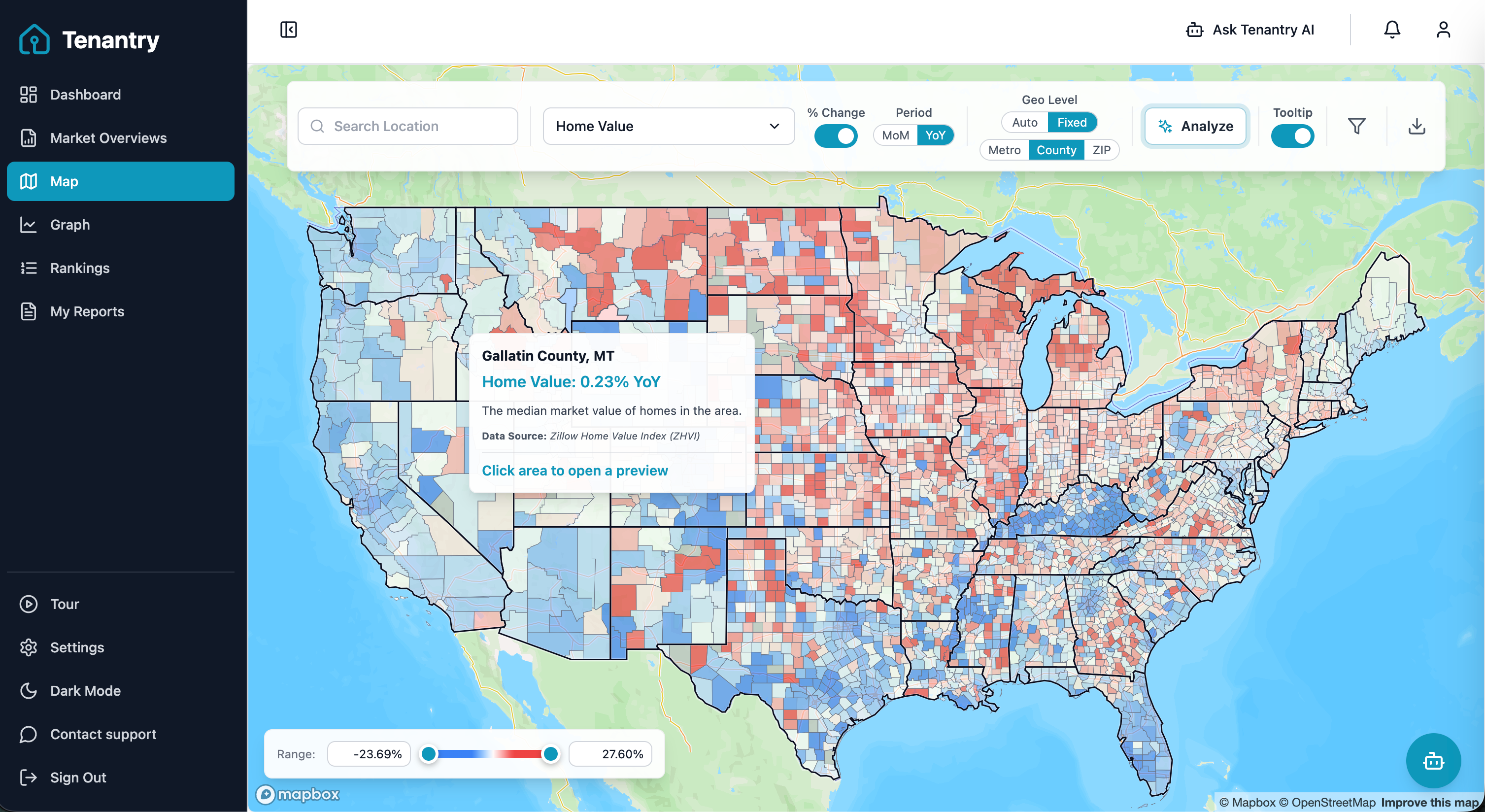
I am originally from CT. I moved to Ohio and started investing here. It has better cash flow and has seen great appreciation
Hey everyone,
I recently started listening to the BiggerPockets Podcast and I’m very new to real estate investing. I live in Big Sky, MT, am married, and have a one month old baby girl.
I have been very interested in real estate in general but when I came upon this company it really sparked something inside me.
Where I live there is a high barrier for entry in the housing market. Everything is overpriced as it’s a resort town, so I know investing here wouldn’t be ideal.
I’d like to hear from other investors who have purchase out of state and lived elsewhere and any advice they’d have for getting started, where to invest, and how to manage from afar. I want to know more about long term rentals and flipping specifically.
Thank you in advance!
Your best bet would be to start looking into the midwest. I own 30+ rental units in my market and built a large 7-fig portfolio in just few years through ownership of house-hacks, brrrr method, and sales.
Most OOS investors tend to look at a few states in the midwest. Properties are cheaper, landlord-friendly, job/tech/population growth, and it is easy to build an OOS team of contractors,lenders,pm through a good investment realtor.
Hey everyone,
I recently started listening to the BiggerPockets Podcast and I’m very new to real estate investing. I live in Big Sky, MT, am married, and have a one month old baby girl.
I have been very interested in real estate in general but when I came upon this company it really sparked something inside me.
Where I live there is a high barrier for entry in the housing market. Everything is overpriced as it’s a resort town, so I know investing here wouldn’t be ideal.
I’d like to hear from other investors who have purchase out of state and lived elsewhere and any advice they’d have for getting started, where to invest, and how to manage from afar. I want to know more about long term rentals and flipping specifically.
Thank you in advance!
A common issue, so Copy & Paste info below:
You’re ALWAYS better off investing locally, where it’s easier to:
Next best location is somewhere else you lived, where you have an existing network of family & friends to help you as accomplish the above list as needed.
If you invest OOS, your biggest challenge won't be finding properties to meet your goals on paper, it’ll be successfully building a knowledgeable & trustworthy local team.
The biggest mistake we see OOS investors making in our market, over and over again, is not fully understanding Neighborhood/Property/Tenant Classes and how they impact your probability of success!
They all run their ROI numbers assuming Class A results – when buying Class B, C & even D rentals.
Then they’re shocked when their performance expectations aren't met😞
If you choose to invest OOS, and have little to no landlord experience, we highly recommend targeting Class B Neighborhoods/Properties/Tenants. If you target Class C, you better be prepared emotionally & financially for plenty of challenges.
You can find Class B properties in the Midwest to BRRRR, but it will take more digging and YOU will need to understand how to analyze & identify them - because a lot of agents, wholesalers, PMCs, etc. will try to sell you Class C or D misrepresented as Class B:
Why is Property Class so important for investors to understand and apply in their investing strategies?
Because the Property Class dictates the Class of the tenant pool that the property will attract.
The Tenant Class greatly impacts rental income stability and property maintenance/damage by tenants.
Both Property Class and Tenant Class will affect what type of contractors, handymen and property management companies you should target and be willing to deal with a property.
The Property Class will also impact the maintenance & renovations you do to, “Maintain to the Neighborhood”.
Why is that important?
Well, if you buy & renovate a property in Class D area to Class A standards, what Tenant Class will actually rent it?
Or, if you put several Class D tenants in a Class A four-plex, what do you think will happen to the property?
So, if you fail to apply the correct assumptions to a property, your expectations won’t be met, and it may even be a financial disaster.
We use the following to rank Property Classes, in order of importance:
Key metrics for each Property Class:
Class A Properties:
Tenant Pool: Majority of FICO scores 680+, no convictions/evictions in last 7 years.
Tenant Default: 0-5% probability of eviction or early lease termination.
Section 8: Class A rents are too high and won’t be approved.
Vacancies: 5-10%, depending on market conditions.
Cashflow vs Appreciation: Typically, 3-5 years for positive cashflow, but you get highest relative rent & value appreciation.
Class B Properties:
Tenant Pool: Majority of FICO scores 620-680, some blemishes, no convictions/evictions in last 5 years.
Tenant Default: 5-10% probability of eviction or early lease termination.
Vacancies: 10-15%, depending on market conditions.
Cashflow vs Appreciation: Typically, 1-3 years for positive cashflow, balanced amounts of relative rent & value appreciation.
Section 8: Class B rents are usually too high for the Section 8 program.
Class C Properties:
Tenant Pool: Majority of FICO scores 560-620, many blemishes, but should have no convictions/evictions in last 3 years. Verifying recent 2-years of rental history very important! Same for 2-years of job/income stability.
Tenant Default: 10-20% probability of eviction or early lease termination.
Section 8: Class C rents usually meet program requirements, proper screening still recommended.
Vacancies: 10-20%, depending on market conditions and tenant screening.
Cashflow vs Appreciation: Should cashflow immediately, at the lower end of relative rent & value appreciation.
Class D Properties:
Tenant Pool: Majority of FICO scores under 560, little to no good tradelines, lots of collections & chargeoffs, but should have no convictions/evictions in last 12 months. Verifying last 2-years of rental history and income/employment extremely important to find the “best of the worst”.
Tenant Default: 20-30% probability of eviction or early lease termination.
Section 8: Class D rents meet program requirements, often challenges to pass Section 8 inspection.
Vacancies: 20%+, depending on market conditions and tenant screening.
Cashflow vs Appreciation: Typically, all cashflow with little, maybe even negative, relative rent & value appreciation.
Where did we get our FICO credit score information from?
Check out this chart:
|
FICO Score |
Pct of Population |
Default Probability |
|
800 or more |
13.00% |
1.00% |
|
750-799 |
27.00% |
1.00% |
|
700-749 |
18.00% |
4.40% |
|
650-699 |
15.00% |
8.90% |
|
600-649 |
12.00% |
15.80% |
|
550-599 |
8.00% |
22.50% |
|
500-549 |
5.00% |
28.40% |
|
Less than 499 |
2.00% |
41.00% |
Make sure you understand the Class of properties you are looking at and the corresponding results to expect.
For example, Metro Detroit has 132 cities and the City of Detroit 183 Neighborhoods, which we’re analyzing and classifying to make better investing decisions.
Horror Stories from those that did NOT Understand What they were Buying:
https://www.biggerpockets.com/forums/48/topics/1137397-baltimore-a-path-to-never-ending-pain
https://www.biggerpockets.com/forums/432/topics/1231840-sell-at-a-loss-or-rent-at-a-loss
https://www.biggerpockets.com/forums/311/topics/840134-memphis-turnkey-tenant-turnover-costs

Hey @Brandon Dunn! Welcome to the community, and congratulations on your new baby girl!
Living in a high-cost market like Big Sky definitely makes investing locally more challenging, but it also opens the door to exploring out-of-state markets where your money can go further. Many investors successfully build portfolios remotely by choosing one market, learning it well, and surrounding themselves with a strong local team.
If you're interested in long-term rentals and flipping, I'd recommend deciding which strategy you want to master first. Long-term rentals are often a great way to build steady cash flow and learn the fundamentals, while flipping can be rewarding but usually requires more capital and carries more risk.
I'm a real estate agent based in Memphis and work with out-of-state investors building rental portfolios. Memphis is a market many out-of-state investors consider because of its affordability, strong rental demand, and cash-flow potential. The key to managing remotely is having trusted professionals in place. An investor-friendly agent, property manager, contractor, and lender can make investing from afar much more manageable.
You're getting started at an exciting time. Keep learning, analyze as many deals as you can, and don't feel pressured to rush into your first purchase. If you ever want to learn more about out-of-state investing or explore opportunities in Memphis, I'd be happy to connect and help however I can.
Hi Brandon, congrats on your baby girl! I also live in Big Sky, and have invested locally in the surrounding counties in the past several years. Would love to grab coffee and chat. I'm currently wholesaling and have a property in Kalispell available as well.
There are areas and property specifics in Montana that make it possible to invest without the high barrier and take advantage of the market.
